首頁coach

搜尋歷史
熱門搜尋
經銷商登入 / 註冊

7月乘联会数据出炉,中国车市“国内承压、海外猛涨”的剧情再度上演。当月,国内乘用车零售150.6万辆,同比下降18%;其中,新能源车零售97万辆,同比微降2%,渗透率提升至64.4%。
视线转向海外,却是完全相反的滚烫行情:7月中国汽车出口达109.2万辆,同比大涨57%,并且已连续两个月出口突破100万辆;截至7月,2026年累计出口已达640万辆。按当前增速推演,全年出口销量冲击1000万辆,已从行业预判变成了清晰可触的现实。
这也意味着,中国将会成为世界上第一个年出口1000万辆汽车的国家,这一数字相当于全球最大汽车制造商丰田的年度总销量,为日本汽车年度出口总量的2.5倍。
宏观数字的涨跌固然直观,但7月车市两起标志性事件,或许为观察当下中国汽车产业提供了更具体的切口。其一,在重重设防的欧洲市场,五家主流中国车企销量已经连续两个月超过六家主流日系车企,中国汽车开始真正与全球传统强手正面交锋;其二,零跑汽车全球交付突破10万辆,海外销量快速增长,“技术输出+全球渠道”的反向合资模式,展现出新的增长潜力。
超越日系
出海下半场,要争夺全球份额
2026年5-6月,欧洲31国的销量榜单上,出现了一个颇具标志性的变化。
5月,比亚迪、上汽、吉利、奇瑞、零跑五家中国车企合计销售13.84万辆,同比增长65%;同期丰田、日产、铃木、马自达、本田、三菱六家日系车企合计销售13.04万辆,同比下滑3%。到了6月,中国车企阵营销量进一步攀升至17.16万辆,实现连续两个月对日系品牌的超越。
在欧洲“超越日系”,意义非同一般。
欧洲是全球汽车工业的发源地,日系品牌在这里深耕数十年,依靠可靠性、经济性和精细化的渠道运营,打下了极其稳固的基本盘,是公认的“全球化标杆”。中国车企能在这样的市场中,与日系车企正面交锋并实现反超,意味着中国车企正在加速进入全球主流竞争行列。
中国车企背后最突出的优势,是更快的新能源产品响应能力。中国市场的高强度竞争和完整的产业链,让车企能够更快地把新技术转化为新产品。与此同时,这些优秀的产品和体验,也在重塑海外消费者的认知,让中国汽车从相对陌生的选项,变成了消费者的主动选择。

全新MG4就是一个典型代表。这款在国内红海中厮杀出来的产品,转身以MG4 Urban之名登陆英国、澳大利亚、巴西等市场,首发便跻身多地纯电紧凑车型第一梯队。比亚迪的海外攻势同样迅猛,从面向欧洲市场的插混SUV,到针对日本开发的K-Car,多款车型在发布后迅速成为海外汽车媒体和社交平台的热门话题。
从被看见、被讨论,到被认可、被购买,这种认知层面的转变,意味着中国汽车出海的评判标准正在提高。过去,我们关注“进入了多少个国家、出口了多少辆车”,而今天,更应该关心的是:中国品牌能否进入海外消费者的购车清单,能否与欧洲、日韩品牌正面竞争。
中国汽车出海的下半场,已经不只是寻找海外增量,而是开始争取全球汽车市场的既有份额。
反向合资
跳出存量博弈的新途径
在国内大盘收缩的背景下,总有企业能找到新的增长路径。
7月份,零跑汽车全球交付突破10万辆、同比大增102%。翻倍增长的背后,不只是零跑低调深耕国内市场,更离不开“技术输出+全球渠道”的反向合资新模式。
2023年,零跑与斯特兰蒂斯建立合作关系,到2026年,合作成果迎来丰收。反映到销量结构上,是零跑海外销量占比的快速提升。7月零跑海外销量超1.7万辆,占总销量接近两成,成为新的增长支点。
零跑与Stellantis的合资模式与传统模式完全相反:零跑输出核心技术与产品,Stellantis拿出海外渠道、品牌运营经验等,共同开拓全球主流市场。这种“中方出技术、外方出渠道”的模式,颠覆了延续数十年的合资格局。

零跑能够成为这种模式的先行者,靠的是国内市场练出来的体系能力。平台化研发、零部件通用和供应链协同,让它能够不断摊薄成本、加快产品迭代,当这些优势走向海外,就转化成了更有竞争力的产品和价格。
更值得关注的是,这并不是零跑的孤例。就连过去以“引进来”为主的传统合资车企,如今也开始主动把中国市场变成立足全球的研发、生产和出口基地。
今年以来,上汽大众将途观L Pro、帕萨特Pro出口至乌兹别克斯坦,本土研发的ID. ERA 9X也将登陆越南市场;上汽通用计划从今年10月起,将中国团队主导研发的别克至境E7出口韩国;广汽丰田生产的铂智3X已实现对香港的出口;日产更是直接将中国定位为“全球创新和出口基地”,明确N7车型将从中国出口拉美与东盟。

如果把视线拉到全球维度就会发现,国内市场的承压必然残酷,但也锻造了中国车企的竞争力,并以不同方式向全球市场外溢。一边,是中国品牌直接进入欧洲、日本等成熟市场,与全球强手争夺用户;另一边,是越来越多合资车企借助中国技术参与全球竞争。
两条路径指向的是同一个变化:中国汽车产业的增长战场,早已不再局限于本土市场。一场关乎全球产业格局的重构,才刚刚拉开序幕。
In the Malaysian SUV market, many buyers compare Proton X90 and Mazda CX-5 when choosing a car. These two cars are quite close in price and positioning, today we will make a detailed comparison from multiple aspects to help you save time on research.
The OTR price of Proton X90 in Malaysia is RM 106,800 - 122,800, with a total of 4 versions, including 2026 1.5T Prime X (RM 122,800), 2026 1.5T Prime (RM 116,800), 2026 1.5T Lite (RM 106,800), etc.
The OTR price of Mazda CX-5 in Malaysia is RM 135,469 - 166,760, with a total of 3 versions, including 2025 2.0L AT 35th Anniversary (RM 316,154), 2025 2.0L AT (RM 296,154), 2025 2.0L MT (RM 294,154), etc.
In terms of price, the starting price of Proton X90 is indeed RM 28,669 cheaper than Mazda CX-5. If your budget is limited, the entry-level Proton can already meet daily needs. But you should also note, the price difference of a few thousand might involve trade-offs in features, depending on your specific needs.

The safety rating of Proton X90 is 5★ (ASEAN NCAP), active safety systems include ADAS (ACC, AEB, LKA, LDA, BSM, RCTA).
The safety rating of Mazda CX-5 is 5★ (ASEAN NCAP), active safety systems include .
Both cars have the same safety rating, safety features in this class are considered quite comprehensive. New cars nowadays are generally safe, so no need to worry too much about this point.

Proton X90 body length 4400 mm, trunk 400 L.
Mazda CX-5 body length 4500 mm, trunk 450 L.
In terms of space, the Mazda CX-5 body is 100 mm longer than the Proton X90, having an advantage in passenger space. However, the Proton X90 is more flexible for parking in the city, each has its trade-offs.

Proton X90 adopts FWD drivetrain.
Mazda CX-5 adopts FWD drivetrain.
Both cars have the same drivetrain, both are FWD, there won't be much difference in daily driving experience.

Overall, Proton X90 and Mazda CX-5 are both very good models in the Malaysian market. Which one to choose mainly depends on your personal needs and budget. It is recommended to do your research, compare quotes from multiple dealerships, and test drive before making a final decision. Buying a car is a big matter, taking some time to research will never be wrong.


喺馬來西亞嘅 SUV 市場,好多買家喺揀車嗰陣都會拿 Proton X90 同 Honda WR-V 做比較。呢兩款車喺價位同定位上都好接近,今日我哋就從多個方面做一個詳細嘅比較,幫你節省咗做功課嘅時間。
Proton X90 喺馬來西亞嘅 OTR 售價係 RM 106,800 - 122,800,總共有 4 個版本,包括 2026 1.5T Prime X(RM 122,800)、2026 1.5T Prime(RM 116,800)、2026 1.5T Lite(RM 106,800) 等。
Honda WR-V 喺馬來西亞嘅 OTR 售價係 RM 89,900 - 107,900,總共有 4 個版本,包括 2023 1.5L V(RM 99,900)、2023 1.5L E(RM 95,900)、2023 1.5L S(RM 89,900) 等。
從價錢睇,Honda WR-V 嘅起步價比 Proton X90 平咗 RM 16,900。講真嘅,喺呢個價位段,幾千蚊嘅差距其實唔算大,關鍵仲係睇整體嘅性價比同長遠使用成本。
Proton X90 搭載 1.5L Turbo,馬力 140 hp。官方油耗 7.0 公升/100km。
Honda WR-V 搭載 1.5L 4-cyl,馬力 105 hp。官方油耗 6.0 公升/100km。
動力方面,Proton X90 嘅 1.5L Turbo 比 Honda WR-V 嘅 1.5L 4-cyl 多咗 35 匹馬力,中段加速更有信心,尤其係行高速超車嗰陣。不過 Honda WR-V 嘅油耗可能更友好,平日市區通勤差別唔會太大。
Proton X90 嘅安全評級係 5★ (ASEAN NCAP),主動安全系統包括 ADAS (ACC, AEB, LKA, LDA, BSM, RCTA)。
Honda WR-V 嘅安全評級係 5★ (ASEAN NCAP),主動安全系統包括 Honda SENSING。
兩款車嘅安全評級一樣,喺呢個級別入面安全配備都算好齊全。而家嘅新車安全性都唔差,唔使太擔心呢一點。
Proton X90 保養 5 年/150,000km,保養間隔 每 10,000km 或 6 個月。
Honda WR-V 保養 5 年/無限制里程,保養間隔 每 10,000km 或 6 個月。

Proton X90 同 Honda WR-V 都係馬來西亞市場嘅主流選擇,適合家庭用途、平日通勤。如果你更睇重品牌聲譽同二手價,可以優先考慮聲譽更好嗰一款;如果你更重視性價比同配備,那就揀配置更豐富嗰款。最終都係建議兩款都去試駕,親身體驗先係最重要。

總體嚟講,Proton X90 同 Honda WR-V 都係馬來西亞市場幾唔錯嘅車型。揀邊一輛,關鍵仲係要睇你嘅個人需求同預算。建議大家做足功課,多比較幾間車行嘅報價,先至去試駕做最終決定。買車係件大事,花少少時間做功課絕對唔會錯。

In Malaysia's SUV market, many buyers compare the Proton X70 and Subaru Crosstrek when choosing a car. These two models are quite close in price and positioning. Today, we will make a detailed comparison from multiple aspects to help you save time on research.
The OTR price of the Proton X70 in Malaysia is RM 106,800 - 122,300. There are 3 versions in total, including 1.5L Standard 2WD (RM 106,800), 1.5L Executive 2WD (RM 115,800), 1.5L Premium 2WD (RM 122,300), etc.
The OTR price of the Subaru Crosstrek in Malaysia is RM 145,000 - 160,000. There is 1 version in total, including 2.0L e-Boxer (RM 150,000), etc.
In terms of price, the starting price of the Proton X70 is indeed RM 38,200 cheaper than the Subaru Crosstrek. If your budget is limited, the entry-level version of Proton is already enough for daily needs. But be aware that the few thousand dollars cheaper might involve trade-offs in features, depending on your needs.

The Proton X70 body length is 4400 mm, trunk 400 L.
The Subaru Crosstrek body length is 4400 mm, trunk 400 L.
The dimensions of both cars are almost the same, with little difference in interior space. For cars in this class, daily use is completely sufficient.

The Proton X70 warranty is 5 years / 150,000 km, maintenance interval every 10,000 km or 6 months.
The Subaru Crosstrek warranty is 3 years / 100,000 km, maintenance interval every 10,000 km or 6 months.

Both the Proton X70 and Subaru Crosstrek are mainstream choices in the Malaysia market, suitable for family use and daily commuting. If you value brand reputation and resale price more, consider the one with better reputation first; if you care more about value for money and features, choose the model with richer configuration. Ultimately, it is recommended to test drive both models, as personal experience is the most important.
In general, both the Proton X70 and Subaru Crosstrek are very good models in the Malaysia market. Which one to choose depends on your personal needs and budget. It is recommended to do your homework, compare quotes from multiple dealerships, and then test drive to make a final decision. Buying a car is a big deal, spending time on research will never go wrong.


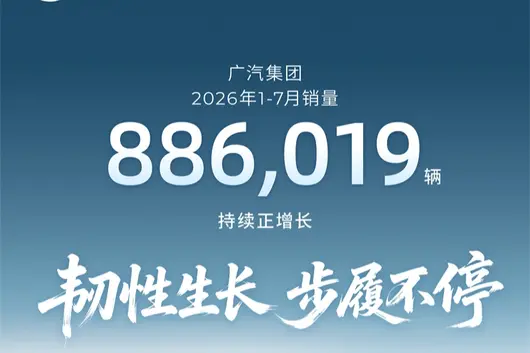
On August 4, GAC Group released the production and sales announcement for July. Data shows that from January to July, GAC Group's automobile sales exceeded 886,000 units, a year-on-year increase of 1.28%. New energy vehicle sales reached 311,700 units, up 66.20% year-on-year. The share of energy-saving and new energy vehicles further increased to 63.96%. The cumulative export volume of independent brands reached 145,000 units, a 130% year-on-year increase, already exceeding the full year 2025 level.

In July this year, GAC Group welcomed an important milestone in development, with cumulative production and sales exceeding 30 million units, entering a new stage of scaled development. At the same time, GAC Group has also appeared on the Fortune Global 500 list for 14 consecutive years.
Independent Brands Show Strong Growth
Joint Venture Brands Consolidate the Core
Since the beginning of this year, independent brands have maintained strong growth momentum, becoming the core growth engine for GAC Group. From January to July, the cumulative sales of independent brands exceeded 400,000 units, a significant year-on-year increase of 33.31%. Among them, July sales exceeded 54,200 units, a 19.91% year-on-year increase.
The Hyper AION Business Unit's cumulative sales from January to July reached 210,400 units, surging 62.08% compared to the same period last year, and continued to maintain double-digit growth momentum in July, with sales increasing 36.37% year-on-year to 28,807 units. Among them, AION i60 monthly sales continued to exceed 10,000 units; AION N60 launched for two months and cumulative deliveries have already broken through 12,000 units, occupying 73.3% of the 100,000-150,000 RMB Laser Radar Intelligent Driving Pure Electric SUV market segment; Hyper S600 simultaneously started launch delivery. In addition, the AION product matrix was upgraded again in July, debuting the AION Ray series, injecting new vitality into brand development.

Hyper S600

AION Ray 7
GAC Trumpchi's cumulative sales so far this year have exceeded 187,100 units, up 9.83% year-on-year, of which July sales reached 22,739 units. In July, GAC Trumpchi product lineup welcomed dual vehicle updates. The 2027 Trumpchi Vision S7 PHEV officially went on sale, and the Fifth Generation Trumpchi GS4 arrived cross-level with an 79,800 RMB affordable threshold, meeting users' diverse car buying needs.

Trumpchi Vision S7 PHEV
Qijing Automotive is a high-end smart EV brand jointly created by GAC Group and Huawei Qiankun. The first model, Qijing GT7, was officially launched at the end of June and started user delivery in July. In the first month after launch, Qijing GT7 sales reached 2,658 units, gaining market and consumer recognition. Enjoy Huawei Qiankun Intelligent Driving ADS 5, leading intelligent experience, extreme handling performance, extraordinary aesthetic design immediately upon delivery, combined with GAC's solid quality and safety endorsement, jointly becoming the core factors that move users to place orders. In terms of channels, Qijing has landed in nearly 300 stores in over 90 cities nationwide. With Qijing GT7 delivery proceeding steadily, the brand's second model Qijing GX7 is also fully accelerated, to be officially launched within the year. Qijing's "One brand, two top-tier flagship models" product matrix is gradually taking shape, and the brand is officially heading towards a brand new development stage.

Qijing GT7
Joint venture brands continue to rely on flagship models to consolidate the core business. GAC Toyota's cumulative sales from January to July have exceeded 402,500 units, of which July sales reached 46,500 units. Camry, Highlander, and Sienna, the three flagship models, had monthly sales of 22,843 units, with sales share reaching 49%; the bZ Series continued to maintain the momentum of monthly sales breaking 10,000 units, with July sales of 12,002 units, accounting for over 25%. The mainstream model bZ3X sales were 9,546 units, consistently ranking in the top tier of joint venture new energy vehicle sales for consecutive months.

GAC Toyota bZ Series
GAC Honda sales in July were 11,686 units. The "2026 First Half China Car Resale Value Report" shows that Accord won the champion of joint venture mid-size sedans again with a 55.90% three-year resale value rate; Breeze ranked second in joint venture compact SUVs with a 58.19% three-year resale value rate. In July this year, GAC Honda's cumulative sales broke through 11 million units, and simultaneously both parties' shareholders signed a renewal agreement, extending the cooperation period to 2038, jointly accelerating electrification and intelligence transformation. According to the plan, GAC Honda will launch 5 new models in the next two years, including two localized new energy vehicle models and brand new hybrid products.

GAC Honda Breeze
Independent Brands Accelerate Overseas
Cumulative Exports Break 140,000 Units, Up 130% Year-on-Year
Going global is becoming GAC's "First Growth Curve". In July, GAC independent brands' export volume reached 23,575 units, a 119% year-on-year increase; cumulative export volume from January to July was 145,000 units, a 130% year-on-year increase, already exceeding the full year 2025 level.
In July this year, GAC globally accelerated expansion in five major regional markets along three dimensions: localized production, new product launch, and policy coordination. Among them, the Americas market's terminal sales increased 139% year-on-year, with sales in Uruguay, Costa Rica, Colombia, Brazil and other markets achieving multi-fold year-on-year growth, simultaneously approved to join Brazil's "Green Mobility and Innovation Plan", deeply integrating into the local national green development strategy; CIS region terminal sales increased 112% year-on-year, the 7th KD plant globally landed in Kazakhstan, GS8 was launched on the line simultaneously.

GAC GS8 Output Line at Kazakhstan Production Base
In the Asia-Pacific market, GAC's July terminal sales increased 78% year-on-year, the Thailand factory has cumulatively produced over 10,000 units, with multiple new cars landing in the Philippines; in the Middle East and Africa regions, GAC terminal sales increased 51% year-on-year, officially landing in the Morocco market in July, the first batch will launch three SUVs, covering fuel, hybrid, plug-in hybrid diverse power sources. At the same time, GAC is steadily breaking through in Europe. In the Greek pure electric passenger car market, GAC's market share has increased to 7.7%, ranking second in the market, while models in multiple countries are preparing for launch.

Thailand Rayong Factory Completed 10,000th Vehicle Output
Investment Ecosystem Shows Results
Charging Network Speeds Up Again
GAC Group continues to deepen industry chain layout around the future development trend of automobiles, solidifying the autonomous and controllable foundation in key fields such as chips, autonomous driving, embodied intelligence, aerospace, etc. In July this year, GAC densely collected multiple industrial investment results.
On July 27, the domestic DRAM memory chip enterprise ChangXin Technology, in which GAC participated in 2021, landed on the STAR Market, creating the highest capital raising record in A-shares this year and STAR Market. At the beginning of the same month, early invested silicon carbide power device manufacturer Basic Semiconductor and autonomous driving technology company Momenta both landed on the Hong Kong Stock Exchange, navigation positioning chip manufacturer Heron Electronics' ChiNext IPO was accepted.
So far, GAC has invested in over 140 high-quality enterprises including Horizon Robotics, YueXin Semiconductor, Pony.ai, WeRide, Qingtao Energy, etc., cumulatively培育 (cultivated) at least 48 invested enterprises to go public.
Outside of investment layout, GAC simultaneously accelerated the landing of charging ecosystem supporting facilities. So far, GAC's "9 Vertical 10 Horizontal" charging network has covered 31 provinces and 213 cities nationwide, achieving "guaranteed station within a straight-line 1 km" in core urban areas; self-operated charging piles exceed 27,000 units, among which ultra-fast charging piles have broken through 20,000 units; in addition, China's electric vehicle charging pile 3C certification was implemented starting from August 1st, GAC's multiple charging pile products were among the first to obtain 3C certification, covering public fast charging, heavy truck refueling, destination slow charging and other scenarios, providing convenient and safe refueling services for new energy car owners.

GAC Energy "9 Vertical 10 Horizontal" Charging Network
In the second half of this year, GAC will heavily launch multiple models such as Trumpchi's first hard-core off-road SUV Yue 7, AION's new super pure electric coupe RAY 7, Qijing GX7, etc., to respond to market expectations with product upgrades. Behind this, GAC Group is grabbing the opportunities of automobile industry intelligence and globalization, simultaneously promoting three core tasks of "Stabilize Joint Ventures, Strengthen Independence, Expand Ecosystem", accelerating overseas market development and industry chain deep layout, with systematic measures to continuously solidify future competitiveness.

8月1日,香港足球文化节迎来一场精彩对决,英超曼城与意甲国际米兰展开季前热身赛。比亚迪作为两支球队的官方合作伙伴,同时也是本次赛事赞助商,全程助力本次比赛,让中国新能源品牌和世界顶级足球赛事完成了一次良性联动。

赛事期间,比亚迪为参赛队伍提供了全面的出行后勤保障,旗下车型负责球队通勤、赛事物资运输等工作,用成熟的新能源技术保障赛事顺利开展,也将绿色出行理念融入体育赛事场景中。

比赛在香港启德主场馆举行,现场座无虚席。两大欧洲豪门同场竞技,攻防节奏流畅,现场氛围热烈。最终,国际米兰在点球大战中取胜,以总比分4-2击败曼城。两队专业的战术配合和赛场表现,让现场观众收获满满。


本次赛事还有暖心一幕,比亚迪邀请了多名青少年足球运动员现场观赛,其中包含中国足球小将队员,以及来自新疆、贵州、陕西等地的山区小球员。多年来,比亚迪持续带领足球少年走进各类国际顶级赛场,让孩子们近距离感受专业足球氛围,积累实战见闻。


彰显中国品牌的全球格局!此次活动可以说是新能源企业与顶级足球IP的跨界合作。依托自身全球化发展布局与技术实力,比亚迪借助体育平台展示中国品牌面貌。未来品牌也将持续深耕体育公益,为青少年足球发展提供更多对外交流、开阔视野的机会。

In the Malaysian SUV market, many buyers compare the Proton X70 and Chery Tiggo 8 when choosing a car. These two models are quite close in price and positioning. Today, we will do a detailed comparison from multiple aspects to help you save time doing research.
The Proton X70 OTR price in Malaysia is RM 106,800 - 122,300, with a total of 3 versions, including 1.5L Standard 2WD (RM 106,800), 1.5L Executive 2WD (RM 115,800), 1.5L Premium 2WD (RM 122,300), etc.
The Chery Tiggo 8 OTR price in Malaysia is RM 129,750 - 129,750, with a total of 1 version, including 2026 1.6T Standard (RM 129,750), etc.
From a price perspective, the starting price of the Proton X70 is indeed RM 22,950 cheaper than the Chery Tiggo 8. If your budget is limited, Proton's entry-level version is already sufficient for daily needs. But also note, the few thousand cheaper might involve trade-offs in features, it depends on your specific requirements.

The Proton X70 safety rating is 5★ (ASEAN NCAP), active safety systems include ADAS (ACC, AEB, LKA, LDA, BSM, RCTA).
The Chery Tiggo 8 safety rating is TBD, active safety systems include Basic.
Regarding safety features, both cars have received good ratings. However, there are some differences in functionality between the Proton X70's ADAS (ACC, AEB, LKA, LDA, BSM, RCTA) and the Chery Tiggo 8's Basic. If you value active safety highly, you can carefully compare their feature lists.
The Proton X70 uses FWD drive mode.
The Chery Tiggo 8 uses FWD drive mode.
Both cars have the same drive mode, FWD, so the daily driving experience will not differ too much.

Proton X70 warranty 5 years/150,000km, maintenance interval every 10,000km or 6 months.
Chery Tiggo 8 warranty 3 years/100,000km, maintenance interval every 10,000km or 6 months.
Both Proton X70 and Chery Tiggo 8 are mainstream choices in the Malaysian market, suitable for family use and daily commuting. If you value brand reputation and resale value more, you can prioritize the one with better reputation; if you care more about value for money and features, then choose the one with richer configuration. Ultimately, it is recommended to test drive both, as personal experience is the most important.
Overall, both Proton X70 and Chery Tiggo 8 are very good models in the Malaysian market. Which one to choose mainly depends on your personal needs and budget. We suggest doing your research, comparing quotes from multiple dealerships, and then test driving to make a final decision. Buying a car is a big matter, spending some time doing research is never wrong.


In the Malaysian SUV market, many buyers compare Proton X70 and Chery Tiggo 8 when choosing a car. These two cars are quite close in price and positioning, so today we will make a detailed comparison from multiple aspects to help you save time doing your research.
The OTR price for Proton X70 in Malaysia is RM 106,800 - 122,300, with a total of 3 versions, including 1.5L Standard 2WD (RM 106,800), 1.5L Executive 2WD (RM 115,800), 1.5L Premium 2WD (RM 122,300), etc.
The OTR price for Chery Tiggo 8 in Malaysia is RM 129,750 - 129,750, with a total of 1 version, including 2026 1.6T Standard (RM 129,750), etc.
In terms of price, the starting price of Proton X70 is indeed RM 22,950 cheaper than Chery Tiggo 8. If your budget is limited, Proton's entry-level version can already meet daily needs. However, note that the few thousand difference might involve trade-offs in features, depending on your specific needs.
Proton X70 body length 4400 mm, trunk 400 L.
Chery Tiggo 8 body length 4400 mm, trunk 400 L.
The dimensions of both cars are almost the same, and the interior space is not significantly different. For this class of cars, it is fully sufficient for daily use.
Proton X70 uses FWD drive system.
Chery Tiggo 8 uses FWD drive system.
The drive system for both cars is the same, both are FWD, so there won't be much difference in daily driving experience.
Both Proton X70 and Chery Tiggo 8 are mainstream choices in the Malaysian market, suitable for family use and daily commuting. If you value brand reputation and resale value more, prioritize the one with better reputation; if you care more about cost-performance and features, choose the one with richer specifications. Ultimately, it is recommended to test drive both, as personal experience is the most important.
Overall, both Proton X70 and Chery Tiggo 8 are quite good models in the Malaysian market. Which one to choose ultimately depends on your personal needs and budget. It is recommended to do your homework, compare quotes from several car dealers, and then test drive to make a final decision. Buying a car is a major decision, spending time on research will definitely not go wrong.

In Malaysia's SUV market, many buyers compare the Proton X70 and Mazda CX-8 when choosing a car. These two cars are quite close in price and positioning. Today we will do a detailed comparison from multiple aspects to save you time doing your research.
The OTR price of Proton X70 in Malaysia is RM 106,800 - 122,300, with a total of 3 versions, including 1.5L Standard 2WD (RM 106,800), 1.5L Executive 2WD (RM 115,800), 1.5L Premium 2WD (RM 122,300) etc.
The OTR price of Mazda CX-8 in Malaysia is RM 165,360 - 201,360, with a total of 5 versions, including 2025 2.5T 4WD High Plus Petrol (RM 201,360), 2025 2.2L 2WD High Plus Diesel (RM 193,123), 2025 2.5L 2WD High Plus Petrol (RM 186,360) etc.
From the price perspective, the starting price of Proton X70 is indeed RM 58,560 cheaper than Mazda CX-8. If your budget is limited, the entry-level version of Proton can already meet daily needs. However, you should also note that the cheaper amount might have trade-offs in features, depending on your specific needs.

The safety rating of Proton X70 is 5★ (ASEAN NCAP), active safety systems include ADAS (ACC, AEB, LKA, LDA, BSM, RCTA).
The safety rating of Mazda CX-8 is 5★ (ASEAN NCAP), active safety systems include Brand ADAS.
Both cars have the same safety rating, and safety features are quite comprehensive in this class. New cars nowadays are not lacking in safety, so there is no need to worry too much about this point.
Proton X70 adopts FWD drive system.
Mazda CX-8 adopts FWD drive system.
Both cars have the same drive system, both are FWD, daily driving experience won't have too much difference.

Proton X70 warranty 5 years/150,000km, service interval every 10,000km or 6 months.
Mazda CX-8 warranty 5 years/150,000km, service interval every 10,000km or 6 months.
Both cars have the same warranty conditions, no need to struggle with this aspect. Actual maintenance cost depends on the brand's service network and parts prices, suggest asking car owner groups for real owner experience.
Proton X70 and Mazda CX-8 are both mainstream choices in the Malaysian market, suitable for family use, daily commute. If you value brand reputation and resale price more, you can prioritize the one with better reputation; if you care more about cost-performance and features, then choose the one with richer configurations. In the end it is still recommended to test drive both, personal experience is the most important.
Overall, Proton X70 and Mazda CX-8 are both very good car models in the Malaysian market. Which one to choose, the key is still to look at your personal needs and budget. Suggest everyone do homework well, compare quotes from a few dealerships, then go test drive to make final decision. Buying a car is a big matter, spending some time doing homework will definitely not be wrong.


喺馬來西亞嘅 SUV 市場,好多買家在揀車嘅時候都會拿 Proton X50 同 MG MG HS 做比較。呢兩部車喺價位同定位上都幾接近,而家我哋就由多個方面做一個詳細嘅比較,幫住你節省做功課嘅時間。
Proton X50 喺馬來西亞嘅 OTR 售價係 RM 89,800 - 113,300,一共有 4 個版本,包括 1.5T Executive(RM 89,800)、1.5T Premium(RM 101,800)、1.5T Flagship(RM 113,300) 等。
MG MG HS 喺馬來西亞嘅 OTR 售價係 RM 130,450 - 146,450,一共有 2 個版本,包括 1.5L Standard(RM 105,000)、1.5L Executive(RM 115,000) 等。
由價錢睇嚟,Proton X50 嘅起價真係比 MG MG HS 平咗 RM 40,650。如果你預算有限,Proton 嘅入門版已經可以滿足日常需要。不過都要留意,嗰幾千蚊嘅差價,喺配備度會有取舍,具體睇你嘅需要。

Proton X50 嘅安全評級係 5★ (ASEAN NCAP),主動安全系統包括 ADAS (ACC, AEB, LKA, LDA, BSM, RCTA)。
MG MG HS 嘅安全評級係 TBD,主動安全系統包括 Basic。
安全配備方面,兩部車都拿到唔錯嘅評級。不過 Proton X50 嘅 ADAS (ACC, AEB, LKA, LDA, BSM, RCTA) 同 MG MG HS 嘅 Basic 喺功能上有啲差異,如果你比較重視主動安全嘅話,可以仔細對比下兩者嘅功能列表。
Proton X50 車身長 4400 mm,行李箱 400 L。
MG MG HS 車身長 4400 mm,行李箱 400 L。
兩部車嘅尺寸幾乎一樣,車內空間分別唔大。呢個級別嘅車,日常使用完全夠用。

Proton X50 採用 4WD 驅動方式。
MG MG HS 採用 FWD 驅動方式。
Proton 嘅 4WD 同 MG 嘅 FWD 喺操控上會有唔同感覺,建議試駕對比。
總括嚟講,Proton X50 同 MG MG HS 都係馬來西亞市場幾唔錯嘅車型。揀邊一部,關鍵仲係要睇你嘅個人需要同預算。建議大家做足功課,多比較間車行嘅報價,先再試駕做最後決定。買車係一件大事,花少少時間做功課絕對無問題。


In Malaysia's SUV market, many buyers compare the Proton X50 and Honda CR-V when choosing a car. These two models are quite close in price and positioning. Today, we will do a detailed comparison from multiple aspects to save you time doing research.
The OTR price of the Proton X50 in Malaysia is RM 89,800 - 113,300, with a total of 4 versions, including 1.5T Executive (RM 89,800), 1.5T Premium (RM 101,800), 1.5T Flagship (RM 113,300), etc.
The OTR price of the Honda CR-V in Malaysia is RM 178,200 - 195,900, with a total of 4 versions, including 2026 e:HEV 2.0L 2WD RS (RM 195,900), 2026 1.5T 4WD V (RM 181,900), 2026 e:HEV 2.0L 2WD E (RM 178,200), etc.
In terms of price, the starting price of the Proton X50 is indeed RM 88,400 cheaper than the Honda CR-V. If your budget is limited, the Proton's entry-level version can already meet daily needs. However, note that the few thousand cheaper might have compromises in features, depending on your needs.
The safety rating of the Proton X50 is 5★ (ASEAN NCAP), active safety systems include ADAS (ACC, AEB, LKA, LDA, BSM, RCTA).
The safety rating of the Honda CR-V is 5★ (ASEAN NCAP), active safety systems include Honda SENSING (ACC, CMBS, LKAS, RDM).
Both cars have the same safety rating, and safety features are quite comprehensive in this class. New cars nowadays generally have good safety, so there is no need to worry too much about this.
The Proton X50 uses 4WD drive.
The Honda CR-V uses FWD drive.
The Proton's 4WD and Honda's FWD will have different handling experiences, test drives are recommended for comparison.
Proton X50 warranty 5 years/150,000km, service interval every 10,000km or 6 months.
Honda CR-V warranty 5 years/unlimited mileage, service interval every 10,000km or 6 months.

Both Proton X50 and Honda CR-V are mainstream choices in the Malaysian market, suitable for family use and daily commuting. If you value brand reputation and resale value more, consider the one with better reputation; if you care more about cost-performance ratio and features, choose the one with richer configuration. Ultimately, it is recommended to test drive both models, as personal experience is the most important.
Overall, both Proton X50 and Honda CR-V are very good models in the Malaysian market. Choosing either one mainly depends on your personal needs and budget. It is recommended to do your research, compare quotes from several car dealerships, and then test drive to make the final decision. Buying a car is a big matter, spending time doing research will never be wrong.

喺馬來西亞嘅 SUV 市場,好多買家喺揀車嘅時候都會拿 Perodua Aruz 同 Subaru Crosstrek 黎做比較。這兩款車喺價位同定位上都幾接近,今日我哋就從多個方面做一個詳細比較,幫你省返做功課嘅時間。
Perodua Aruz 喺馬來西亞嘅 OTR 售價係 RM 72,900 - 77,900,一共有 2 個版本,包括 1.5L X(RM 72,900)、1.5L AV(RM 77,900)等。
Subaru Crosstrek 喺馬來西亞嘅 OTR 售價係 RM 145,000 - 160,000,一共有 1 個版本,包括 2.0L e-Boxer(RM 150,000)等。
由價錢嚟睇,Perodua Aruz 嘅起步價真係比 Subaru Crosstrek 平咗 RM 72,100。如果你預算有限,Perodua 嘅入門版已經可以满足日常需求。但都要留意,平嗰幾千蚊,可能喺配備上面會有取舍,具體要睇你嘅需求。

Perodua Aruz 配備 1.5L 4-cyl,馬力 105 hp。官方油耗 6.0 L/100km。
Subaru Crosstrek 配備 1.5L Turbo,馬力 140 hp。官方油耗 7.0 L/100km。
動力方面,Subaru Crosstrek 嘅 1.5L Turbo 比 Perodua Aruz 嘅 1.5L 4-cyl 多咗 35 匹馬力。不過日常喺市區行,兩款車嘅動力都夠用,唔會覺得唔夠力。
Perodua Aruz 車身長 4400 mm,行李箱 400 L。
Subaru Crosstrek 車身長 4400 mm,行李箱 400 L。
兩款車嘅尺寸幾近一樣,車內空間差別唔大。呢個級別嘅車,日常使用完全夠用。

Perodua Aruz 採用 FWD 驅動方式。
Subaru Crosstrek 採用 FWD 驅動方式。
兩款車嘅驅動方式一樣,都係 FWD,日常駕駛感受唔會有太大區別。
Perodua Aruz 同 Subaru Crosstrek 都係馬來西亞市場嘅主流選擇,適合家庭使用、日常通勤。如果你更加重視品牌口碑同二手價,可以優先考慮口碑更好嗰一款;如果你更加在意性價比同配備,就選配置更豐富嗰款。最後始終建議兩款都去試駕,親身體驗先係最重要嘅。
總而言之,Perodua Aruz 同 Subaru Crosstrek 都係馬來西亞市場幾唔錯嘅車款。揀邊一輛,關鍵始終要睇你嘅個人需求同預算。建議大家做好功課,多比較幾間車行嘅報價,再去試駕做最終決定。買車係件大件事,花少少時間做功課絕對唔會錯。


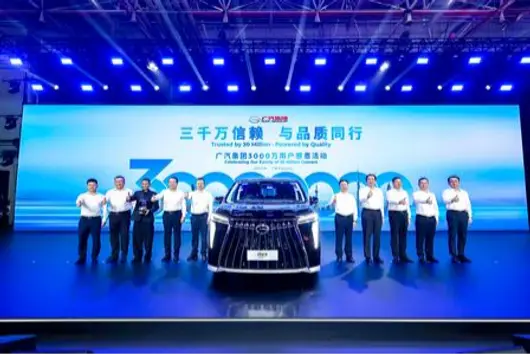
On July 16, GAC Group's 30 Million User Gratitude Event was grandly held at GAC Trumpchi Factory. Leaders from Guangdong Province, Guangzhou City, and Panyu District, Fu Bingfeng Executive Vice President and Secretary-General of China Association of Automobile Manufacturers, GAC Group Chairman Feng Xingya, General Manager Ge Xianqing and the Group's leadership team, industry partners, upstream and downstream suppliers, dealer representatives, owners from home and abroad, enterprise employees, and media representatives gathered on site, jointly witnessing GAC's delivery of the 30 millionth vehicle and an important milestone of gaining the trust of 30 million users.

I. 29 Years of In-depth Cultivation Finally Welcome 30 Million Vehicle Production Line, New Energy Vehicle Matrix Confirms the Path of Electrification Transformation
From the first vehicle off the production line to the delivery of the 30 millionth vehicle, GAC has walked a 29-year development journey. The number 30 million carries the recognition and trust of hundreds of millions of users, demonstrating GAC's long-term determination to uphold quality and safety, clearly conveying the firm determination of the enterprise to fully transform towards electrification and intelligence, and is also a typical microcosm of the Chinese automobile industry moving from scale expansion to value upgrading and from becoming big to becoming strong.
The event site connected simultaneously with multiple GAC global production bases; GAC Honda P7, GAC Toyota BZ7, Qijing GT7, GAC AION N60, GAC Hyper S600 went off the line one by one as the 29,999,995th to 29,999,999th vehicles; on the stage, the right-hand drive GAC Trumpchi M8 PHEV officially debuted as the Group's 30 millionth vehicle. The entire line of new energy models appeared together, intuitively demonstrating GAC's implementation results in fully accelerating new energy transformation.

During the ceremony, GAC Group Chairman Feng Xingya handed the key of the 30 millionth vehicle to Thai owner Tony Jaa, becoming a warm witness to GAC's in-depth cultivation of the global market and a two-way rush with domestic and overseas users. An honor owner award ceremony was carried out simultaneously on site, where Group General Manager Ge Xianqing presented commemorative trophies to honor owners of all GAC brands from all over the world.

Market data confirms GAC's transformation results: In the first half of 2026, GAC Group's cumulative sales reached 773,100 vehicles, a year-on-year increase of 2.35%; among them, new energy vehicle sales surged 68.8% year-on-year; overseas exports exceeded 120,000 vehicles, a year-on-year increase of 132%, maintaining a steady growth trend during the industry's deep adjustment cycle.
II. Adhering to Quality Bottom Line, Building Full-Chain Strict Control and Full-Area Safety Technology System
Feng Xingya clarified in his speech: Quality is the core bottom line that GAC will never yield. For years, GAC has adhered to the core criterion of "Quality First", integrating Honda's TQM Total Quality Management, Toyota's TPS Lean Production Mode, and Lingnan local culture to create a "Integration and Innovation" characteristic quality management system, with all R&D and manufacturing work revolving around creating safe, worry-free, and comfortable travel products.
Full-Process Strict Manufacturing Verification StandardsGAC has built a quality control system covering the entire R&D and production chain:
1. Before new car launch, high cold, high heat, high altitude, high humidity, high corrosion, mountainous area, dust and sand "Five Highs One Mountain One Dust" extreme environment tests must be completed, and two rounds of winter, one round of summer actual vehicle road tests must be completed;
2. Enterprise test grounds and laboratories cover 12 major categories of vehicles and over 1,500 verification items, achieving full-dimensional standardized quality verification;
3. GAC AION Intelligent Eco-Factory, as the world's first new energy vehicle lighthouse factory, relies on a digital intelligent manufacturing system to stably control the quality of mass-produced vehicles.
On site, GAC frontline production craftsmen, National Excellent Engineers Powertrain R&D team, and Vehicle Styling Design Team took the stage one by one to share the enterprise's development journey of in-depth quality cultivation, independent innovation, and iterative design, conveying the brand core of "Craftsmanship in Heart, Quality in Action", and making a development commitment of continuous breakthroughs and never settling for users.

GAC created the Star Spirit Security Guard System, covering four protection dimensions: intelligent driving assistance safety, intelligent chassis safety, active-passive fusion safety, and battery safety, with eight core systems adopting dual redundancy design. This system has guarded nearly 2 million users, cumulatively avoiding 6.28 million potential driving risks; self-developed magazine batteries have been installed in 1.5 million vehicles cumulatively, with total safe driving mileage exceeding 160 billion kilometers.
Supporting guarantee policies were synchronized on the service side, where GAC took the lead in launching the self-owned brand "Three Responsibilities" service policy, proactively covering the two key user concern areas of batteries and intelligent driving assistance, comprehensively eliminating user concerns about using the vehicle.
III. User-Centered, Building a Full-Cycle, Full-Scenario Warm Service Ecosystem
GAC has always practiced the corporate philosophy of "People as the Foundation, Trust as the Way, Innovation as the Priority", taking user-centricity as the core gene of development and perfecting the full-cycle service system from three dimensions: communication channels, offline services, and charging/refueling networks.
Regularly listen to user demands and hold offline communication meetings called "All Users Open Microphone", inviting users to visit the corporate headquarters for face-to-face communication, establishing a full-process closed-loop processing mechanism for user suggestions, and quickly optimizing all series of products for common problems; simultaneously established an independent user insight department, ensuring from the organizational structure that every user demand receives a response and every matter is settled.

Downward channels + ultra-fast response service channel level accelerated downward county market, planning to add 1,000 county-level authorized stores within the year; online launch of "Super Butler" exclusive service, achieving 5-second fast response, 2-hour completion of user requests, shortening service processing links.
Full-area charging network covering the country built a "9 Vertical 10 Horizontal" national charging network, as of June 2026, charging stations reached 2,099, total charging piles 27,107 (super charging piles 20,323), V2C piles 386, covering 31 provinces and 213 cities nationwide, domestic core urban areas achieve that there must be a charging station within a straight 1 kilometer, fully meeting the charging needs of new energy vehicle owners.

To thank the 30 million users for their long-term support, GAC officially launched the 30 Million Vehicles Off Line・Renewal Gratitude Season at the event site (event period from today to the end of August). GAC Honda, GAC Toyota, GAC Trumpchi, GAC AION, GAC Hyper, and Qijing Auto six passenger car brands will launch exclusive preferential policies for new car purchases, vehicle trade-ins, and additional purchase scenarios to fully return user trust.

Driven by Technology Forward, Consolidating Electrification and Intelligence Underlying Technology Strength, Planning Long-term Development
Taking 30 million users as a new starting point, GAC will continue to take technological innovation as the core grasp, accelerate the implementation of electrification and intelligence, and transform cutting-edge technology into peace of mind and convenient experiences perceptible by users.
1. Star Source Power Full Coverage of Diverse Travel Needs
Relying on the National Excellent Engineers team to create the Star Source Power technology platform, including Star Source Extended Range, Star Source Plug-in Hybrid, Star Source Super Dual Engine three major technology routes, which will be massively equipped on all series of models in the future. The entire power system has undergone 100,000 hours of bench testing, equivalent to over 10 million kilometers of whole vehicle verification mileage, guaranteeing stable output performance in all regions and scenarios.

2. Continued Breakthroughs in Three-Electric and Intelligent Connected Technology
Three-Electric Field: Tackling battery ultra-fast charging and low-temperature range industry pain points, building a full-solid-state battery pilot production line; mass production Quark electric drive motor highest efficiency breakthrough 99%, reaching industry top level;
Intelligent Architecture: Star Spirit Architecture continues to iterate and upgrade, connecting Intelligent Driving, Cockpit, Power, Chassis, Body, and Vehicle Networking six major systems, whole vehicle comprehensive performance increased by 40%; Galaxy Smart Cockpit achieves terminal-cloud integration, creating an intelligent mobile space with perception and thinking capabilities;
Ecological Co-construction: Jointly with Huawei, CATL, Didi, Tencent, Alibaba and other leading enterprises to co-build the automotive AI intelligent ecosystem.
3. Long-term R&D Investment Builds a Solid Foundation for Innovation
As of now, GAC Group's cumulative R&D investment has exceeded 62 billion yuan, with the global R&D team scale exceeding 6,800 people. Continuously increasing investment in technological innovation, promoting the products under its brand from basic commuting tools to intelligent travel partners, mobile smart spaces, and green energy ecological carriers for comprehensive evolution.
V. Future Development Direction
Facing the next stage of development, GAC will continue to anchor user real needs, take extreme quality as the foundation of development, take autonomous technological innovation as the core driving force, rely on global market layout to expand steadily, accelerate transformation into an eco-type technology enterprise, join hands with tens of millions of users worldwide, and rush to a new intelligent and green travel future.

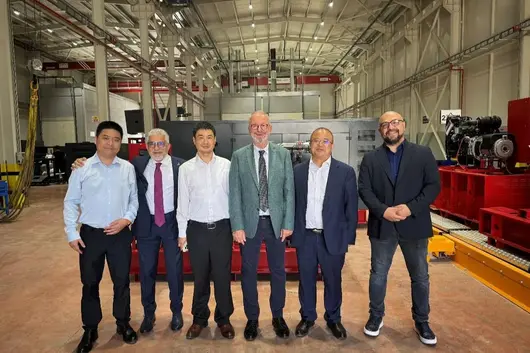
6 月,新動力科技發動機銷量達到 17966 臺,按年增長 26.9%,連續 6 個月維持兩位數增長;1—6 月累計銷量 110533 臺,按年增長 28.1%。當中,自營出口按年增長 121.6%,成為拉動增長最明顯嘅板塊之一。
但對於一家發動機企業嚟講,更多產品運去海外,唔止係銷量數字嘅變化。
一台發動機裝進發電組、工程機械或船舶之後,真正面對係當地複雜嘅工況、分散嘅客戶同漫長嘅供應鏈。設備發生故障嗰陣,配件幾耐先攞到?維修人員喺邊度?當地合作夥伴有無能力處理?呢啲問題,往往比產品本身更能決定一個品牌有無喺海外市場長期留落嚟。
這亦係新動力科技過去幾年加快建設海外辦事處、服務站同備件前置體系嘅原因。出口跑得更快之後,呢間傳統動力企業開始補海外經營中最需要時間嘅一環:服務。

由賣發動機,到跟住主機廠走向海外
新動力科技嘅海外業務並非近年先至開始。新動力國際銷售事業部總經埋秦衛衛表示,新動力科技早在上世紀 90 年代便開始從事進出口業務,初期更偏貿易型。
真正推動新動力科技海外業務進入新階段嘅,係搭上中國主機廠集體出海嘅東風。
過去幾年,工程機械、商用車同發電設備企業開始更大規模咁進入東南亞、非洲、中東、拉美等市場。作為動力配套供應商,新動力科技嘅發動機亦跟隨整機一齊走出去。按企業提供嘅數據,2026 年上半年,海外業務已覆蓋全球 100 多個國家,擁有近 70 家長年客戶同 15 家核心 OEM。
目前,企業出口產品仍以發電組用發動機為主,佔比約 90%;船機、泵機同工程機械用發動機約佔 10%。呢啲產品普遍應用於電信基站、醫院、酒店、港口、石油探勘、畜牧物流、風電同數據中心等場景。
發動機係典型嘅中間工業品,客戶買嘅唔止係一個動力總成,而係一整套持續運作嘅能力。特別係喺基礎設施相對薄弱嘅市場,一台設備停機,可能意味著通訊、醫院供電、港口作業或礦區生產都要受到影響。
因此,海外客戶對產品嘅要求,亦係由「可以交付」轉向「可以長期保障」。

由項目制支援,到將服務能力前置
2024 年以前,新動力科技海外服務主要採取兩種模式:一種係 OEM 買斷服務費用後自行負責出口產品嘅售後;另一種係喺海外重大項目入面,由企業派人駐點支援。隨著產品進入更多國家,呢種偏項目制嘅服務方式開始難以適應越嚟越分散嘅市場。
2024 年,企業喺原海外銷售事業部下設立海外服務科。成立之初,團隊只有 4 人,海外辦事處僅 2 間,主要依靠經銷商網絡開展服務;到 2026 年 6 月,海外辦事處已增至 20 間,海外常住人員達到 17 人,海外銷售服務網絡達到 211 間。
這並唔意味著新動力科技喺海外完全照搬國內嘅自建網絡模式。更多情況係,企業負責提供技術、培訓、配件同服務標準,由當地合作方承擔現場服務同客戶連接。對於發動機企業嚟講,呢種係更現實嘅方式:要快啲形成服務能力,又要令服務真正融入當地市場。
由 2024 年至 2026 年上半年,企業累計新建 120 間服務站,並持續擴大海外培訓規模。2024 年,開展培訓 32 期,2025 年 36 期,2026 年上半年已完成 21 期。與此同時,海外 7 天修復率由 2024 年嘅 77% 提升至 2025 年嘅 88%,到 2026 年 6 月進一步升至 90%。
服務能力提升背後,仲有更加基礎嘅配件問題。

新動力國際銷售事業部高級經理馮春表示,喺國內,一啲常用件可能兩三日就嚟得及送達;但喺非洲、拉美等市場,海運週期可能長達數月,緊急空運仲會受到通關、航班同當地基礎設施條件影響。採訪中,相關海外服務人員提到,面對跨境物流嘅不確定性,企業唔得唔增加備件冗餘,將常用配件同部分整機提前放喺海外節點。
目前,企業已喺印尼、越南、尼日利亞、巴西、哈薩克斯坦、土耳其等國家同地區市場進行配件同整機前置佈局。20 個海外市場節點嘅現有配件前置金額已超過 270 萬元,並規劃繼續補充;同時,海外已有 46 臺整機前置庫存。
對於海外客戶嚟講,呢啲庫存看似並唔起眼,卻直接決定設備故障之後,係要等待數週、數月,定係可以喺較短時間內恢復運作。
喺土耳其,一位當地長期合作經銷商曾表示,佢將呢間新動力科技當做「屋企嘅一員」。喺佢睇嚟,新動力科技產品嘅口碑唔只關係到單次銷售,亦關係到當地客戶有無願意持續選擇呢一品牌。即使部分終端用戶並非佢直接銷售對象,只要涉及產品使用體驗同品牌聲譽,佢亦願意主動協助溝通。
經過長期嘅產品使用同市場積累,新動力科技喺海外已擁有一批認可佢可靠性、願意共同維護口碑嘅忠實合作夥伴。對於發動機呢類工業產品嚟講,呢種信任並唔來自單純嘅交易行為,而係來自長期穩定嘅產品表現,以及持續兌現嘅服務承諾。
海外經營,拼嘅唔止係產品同價格
隨著服務網絡不斷鋪開,新動力科技面對嘅挑戰亦變得更加複雜。
海外市場並唔係將國內經驗簡單複製出去。唔同國家嘅氣候、海拔、油品、操作習慣同語言環境各不相同。即便維修工程師具備豐富嘅國內經驗,到咗當地市場之後,都需要重新適應用戶需求同現場工況。特別係喺終端客戶主要使用本地語言嘅地區,單靠英語同臨時翻譯,好難真正完成服務下沉。
因此,產品本身亦需要針對海外場景做適應性開發。新動力科技提供嘅發電組用發動機覆蓋 10—3000kW 功率段,均經過 5000 米高原測試,並標配適應 50 攝氏度環境溫度嘅散熱器;針對高粉塵同特殊油品工況,仲提供相應嘅選配方案。
喺傳統工程機械同發電組市場之外,數據中心亦正在成為新嘅增量方向。隨著 AI 算力基礎設施建設升溫,數據中心對於穩定供電同備用電源嘅需求不斷提升。新動力科技正開拓 12VK、16VK 等 1.8—2.4MW 嘅中壓電机组喺海外數據中心領域嘅機會。2026 年上半年,企業發電組銷售額達到 329 萬美元,按年增長 21%。
不過,無論係傳統電站動力產品,定係面向數據中心嘅大功率產品,海外市場競爭嘅底層邏輯並冇改變:產品賣出出去只係開始,後續嘅服務、配件、培訓同本地合作能力,先至決定品牌有無可以形成長期口碑。

對於新動力科技嚟講,出口增長帶來咗新嘅市場空間,亦逼佢要補足海外服務呢門「慢功夫」。當越來越多中國製造進入海外市場,競爭亦將唔再只係價格、性能同交付速度,而係邊個能將服務能力真正留喺當地。

In Malaysia's SUV market, many buyers compare Perodua Aruz and Mazda CX-5 when choosing a car. These two models are quite close in price and positioning. Today, we will make a detailed comparison from multiple aspects to help you save time on research.
The OTR price of Perodua Aruz in Malaysia is RM 72,900 - 77,900, with a total of 2 versions, including 1.5L X (RM 72,900), 1.5L AV (RM 77,900) 等.
The OTR price of Mazda CX-5 in Malaysia is RM 135,469 - 166,760, with a total of 3 versions, including 2025 2.0L AT 35th Anniversary (RM 316,154), 2025 2.0L AT (RM 296,154), 2025 2.0L MT (RM 294,154) 等.
From a price perspective, the starting price of Perodua Aruz is indeed RM 62,569 cheaper than Mazda CX-5. If your budget is limited, Perodua's entry-level version can already meet daily needs. But keep in mind, that few thousand savings might involve trade-offs in features, depending on your specific needs.
Perodua Aruz is equipped with a 1.5L 4-cylinder, 105 hp. Official fuel consumption 6.0 L/100km.
Mazda CX-5 is equipped with a 1.5L Turbo, 140 hp. Official fuel consumption 7.0 L/100km.
In terms of power, the Mazda CX-5's 1.5L Turbo has 35 hp more than the Perodua Aruz's 1.5L 4-cylinder. However, for daily city driving, both cars have sufficient power, you won't feel it's lacking.
Perodua Aruz's safety rating is 5★ (ASEAN NCAP), active safety systems include 。
Mazda CX-5's safety rating is 5★ (ASEAN NCAP), active safety systems include 。
Both cars have the same safety rating; safety features are considered quite comprehensive in this class. New cars today generally don't have poor safety, so don't worry too much about this.
Perodua Aruz uses FWD drive system.
Mazda CX-5 uses FWD drive system.
Both cars have the same drive system, both are FWD, there won't be much difference in daily driving experience.
Both Perodua Aruz and Mazda CX-5 are mainstream choices in the Malaysian market, suitable for family use and daily commuting. If you value brand reputation and resale value more, prioritize the one with better reputation; if you care more about value for money and features, choose the one with richer configurations. Ultimately, it is recommended to test drive both, personal experience is the most important.

Overall, Perodua Aruz and Mazda CX-5 are both very good models in the Malaysian market. Which one to choose depends mainly on your personal needs and budget. It is recommended to do your research, compare quotes from several dealerships, and then test drive to make the final decision. Buying a car is a big matter, taking time to research is never wrong.


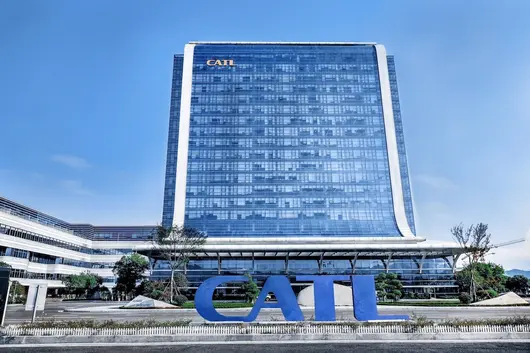
Today let's talk about the battery industry.
The supply chain landscape of the current new energy vehicle industry is undergoing a disruptive reversal.
Many car manufacturers are accelerating their "reducing reliance on CATL".
This trend is not just empty talk in the industry, but is implemented in the new car iterations and supply chain adjustments of major car manufacturers.
Many top car manufacturers, who have long been deeply bound to CATL, are introducing diversified battery suppliers to break the exclusive supply pattern, with typical cases seen across independent high-end, new forces, and mainstream new energy brands.
Harmony Intelligence, which once used "deep binding with CATL" as a supply chain advantage, has completely reversed the cooperation model.
Previously, all AITO models used CATL batteries, with both parties locking in an exclusive supply agreement for a long time, which was a benchmark cooperation case in the industry.
But the 2026 new AITO M6 Pure Electric version completed the core supply chain switch and officially adopted Gotion batteries.
Luxeed and Stelato also completed battery supplier expansion simultaneously: Luxeed included Gotion and Sunwoda, and Stelato supplemented Gotion's capacity.
Completely ending the single reliance on CATL.

The adjustment of Li Auto, the benchmark of new vehicle manufacturers, is even more thorough, known as a landmark move in the industry "de-CATL-ization".
The older model Li Auto L8 adopted a tiered supply strategy, high and mid-spec models exclusively equipped with CATL batteries, only low-spec versions used other brand cells, CATL has always been the core support for its high-end models.
The new Li Auto L8 completed a full switch, all systems uniformly equipped with Sunwoda cells, the battery PACK was jointly built by the Li Auto and Sunwoda joint venture company, externally marked with Li Auto self-developed battery logo.
Xiaomi Automotive also started supply chain diversified layout, breaking reliance on a single battery supplier during the startup phase.
The flagship model SU7 Standard Edition adapts to CATL and BYD Fin Dream batteries, Pro and Max versions retain CATL high-end cells, spreading supply chain risk through dual supplier layout.
Arriving at the latest second sequenceXiaomi Pengcheng, differentiation went further. The new series fully no longer uses CATL batteries, but chooses CALB and Sunwoda batteries.
Former comrades, why have they become so different in mind while sleeping in the same bed?
Behind this, it is actually CATL's increasingly expanding domination, which made car manufacturers feel the dual fear of profits being hollowed out and souls being controlled.
Car manufacturers collectively started "reducing reliance on CATL", which is not an accidental supply chain adjustment, but a inevitable counterattack on the long-term imbalance of industry chain interests and misplaced discourse power.
Profit Black Hole: Who is working hard and sweet for whom?
In 2025, CATL's full-year net profit attributable to parent company reached a high of 72.201 billion yuan.
In the first quarter of 2026, the net profit attributable to parent company for the single quarter reached 20.738 billion yuan. This valueexceeded the total first quarter net profit of seven mainstream independent car manufacturers BYD, Geely, Chery, SAIC, Great Wall, Seres, and Changan.
Data shows that in 2026, the average profit margin of the domestic automobile whole vehicle industry is only about 3.4%, continuously at a historical low, while CATL maintains a sales net profit margin of above 17% for years, the difference is significant.
Simply put, many car manufacturers spend huge R&D expenses, bear the loss of intense price wars, carry the pressure of terminal market sales, and the total profit from hard operation for the whole year is still less than the profit scale of one enterprise CATL.
At the 2022 World Power Battery Conference, GAC Group former Chairman Zeng Qinghong said, "The cost of power batteries has accounted for 40%-60% of the cost of the whole vehicle, and it is increasing continuously, so am I not working for CATL now?"
Still ringing in the ears.
Transgression of Definition Power: My High-End, Defined by You?
If the uneven distribution of profits is the underlying contradiction that car manufacturers tolerate, then CATLcrossing boundaries to grab automotive high-end definition power, has completely touched the core bottom line of car manufacturers, becoming the key fuse for the breakdown of the relationship between the two parties.
According to industry division of labor, batteries are core parts of the whole vehicle, car manufacturers as the first party control the final definition power of vehicle positioning, product pricing, high-end attributes, battery enterprises only need to provide matching technical solutions and products.
But now CATL is gradually breaking industry boundaries, attempting to control the high-end standard discourse power of new energy vehicles.
At the 2026 April CATL Super Tech Day, CATL CTO Gao Huan publicly threw out controversial views, stating directly "For high-end new energy vehicles worth more than 250,000 yuan, using Lithium Iron Phosphate batteries is a disguised reduction in configuration, Ternary Lithium is the only optimal solution for high-end long-range models".
This statement directly denied the high-end product positioning of many car manufacturers, forcibly dividing the whole vehicle high-end grade by battery material, completely overstepping boundaries to interfere with car manufacturers' product definition.
In response, at the Beijing Auto Show, BYD Battery Business Group CTO Sun Huajun strongly counterattacked, clearly stating "Battery manufacturers do not have the right to define high-end cars", hitting the core contradiction of the industry.

Also giving Denza Z a free ad, this car has started pre-sale, starting from 680,000 yuan.
Track version domestic pre-sale price is even over one million (1.18 million, excluding optional).
This car uses Lithium Iron Phosphate batteries (BYD Second Generation Blade Battery).
In addition, CATL, relying on technology and capacity advantages, formed invisible industry rules: high-end cells have adopted limited supply and priority bargaining models for a long time.
This situation where Party A is counter-constrained by Party B, and core discourse power is encroached, is what all car manufacturers cannot tolerate for a long time.
But constrained by CATL's technology barriers and capacity advantages, for the past few years car manufacturers could only passively compromise and swallow their anger, while supply chain diversification became the only way out for car manufacturers to break the passive situation.
To break through the dual dilemma of squeezed profits and encroached discourse power, domestic car manufacturers started all-round "de-CATL self-rescue".
First, fully introducing second-tier and third-tier battery suppliers, building a multi-tier supply system, achieving supply chain risk diversification and cost control.
Previously, most car manufacturers adhered to the "Ning Stable Not Change" principle, prioritizing binding CATL to ensure quality, but now actively started supplier expansion.
Supporting Gotion, Sunwoda, CALB and other high-quality battery enterprises, forming a diversified pattern of "Main Supply + Second Supply + Third Supply".
Leapmotor Chairman Zhu Jiangming previously stated in an interview: "For each type of cell, we will configure multiple suppliers, on one hand it can enhance procurement bargaining power, on the other hand it can also balance different enterprise capacities, achieving comprehensive control of quality, cost and supply risk."
In addition to Li Auto, Harmony Intelligence, and Xiaomi mentioned before, many car manufacturers have completed supply chain adjustments.

At the same time, the technical iteration of second-tier battery manufacturers continues to accelerate, product cost-effectiveness advantages highlighted, quotes generally lower than CATL by about 10%, sufficient to meet the performance needs of home use and mid-range models, providing solid support for car manufacturers' supply chain replacement.
Through diversified procurement, car manufacturers effectively lowered battery procurement costs, reversing the passive bargaining situation of a single supplier.
Second, large-scale layout of battery self-research and self-production, grasping the autonomy of core parts, escaping external dependence from the root.
More and more car manufacturers realize that power batteries as core parts accounting for 30%-60% of whole vehicle costs, long-term reliance on external procurement, inevitably falling into passivity.
For this, top car manufacturers have invested huge funds to build self-developed battery systems, creating exclusive battery technology and capacity.
BYD is the first car manufacturer to achieve battery autonomy and control, its subsidiary Fin Dream batteries not only fully supply own models but also open supply to the outside, completely escaping external dependence.

Great Wall has SVOLT, Geely has Jiyao Tongxing, GAC has its own Yinpai battery, three car manufacturers already have a considerable proportion of batteries that can be supplied by themselves.
Li Auto deeply binds Sunwoda through joint venture mode, while promoting battery self-developed packaging technology, new model battery packs are all marked with self-developed logos, gradually mastering battery core packaging and adaptation technology.
SAIC Group and Qingtao Energy jointly developed semi-solid power batteries, completed multi-model adaptation testing.
Dongfeng then started layout on solid-state batteries from 2019, this year second half new generation semi-solid batteries will welcome mass production and assembly.
The core logic of car manufacturers' self-developed batteries is not only reducing procurement costs, but more importantly taking back the core discourse power of battery technology adaptation, product definition, cost control, completely ending the situation constrained by battery giants.
Facing car manufacturers' collective "de-CATL-ization" moves, CATL did not respond passively, but consolidated its leading position through two major measures: capacity expansion and C-end mind occupation, continuously reinforcing its own industry barriers.
But the overly dominant layout and boundary-crossing industry intervention also gradually consumed the cooperation trust of car manufacturers.
On one hand, CATL continues to increase investment in capacity expansion, maintaining absolute scale advantages.
The company continues to invest huge funds to expand domestic and overseas production bases, laying out capacity in multiple provinces and cities in China and overseas regions such as Germany, Hungary, Indonesia, diluting production costs through scale production, guaranteeing global supply ability, relying on huge capacity to continuously consolidate market share, guarding the industry basic position.
At the same time, it continues to lead in frontier technology fields such as solid-state batteries, condensed-state batteries, ultra-fast charging batteries, technology barriers are difficult to subvert in the short term, still the optimal choice for core batteries of high-end models.

On the other hand, CATL strives to deeply cultivate the C-end market, seize user minds, and create the public cognition of "Battery High-end Benchmark".
In the past, parts enterprises mostly focused on B-end car manufacturers, rarely faced terminal consumers directly, while CATL broke industry conventions, starting all-round C-end marketing layout.
In recent years, continuously sponsoring, embedding various popular variety shows, high-frequency exposure of brand image; setting up independent brand booths at major international auto shows, separating from car manufacturers to display battery technology and products separately, directly conveying "CATL Battery = High Quality, High Range, High Safety" brand cognition to consumers.
This C-end gameplay effect is extremely significant. When terminal consumers choose cars now, they have formed the habit of actively identifying battery brands, "Equipped with CATL batteries" has become an important bonus item for many users to buy cars, even many consumers default "Only CATL batteries are reliable, only high-end".
Data shows that in 2025, in high-end luxury electric cars over 300,000 yuan, "Ning Content" reached as high as 60%, and most were exclusive supply, consumers' mind binding, reverse prompting car manufacturers not dare to completely break away from CATL.
In fact, up to this step, no fault to blame.

But after speaking the statement "Using LFP over 250,000 is reducing configuration", CATL's boundary-crossing behavior directly triggered industry resistance.
A parts supplier attempted to forcibly define whole vehicle high-end standards, dividing car model grades by battery technology, intervening in car manufacturers' product positioning and pricing system.
Completely broke the division of labor boundaries between whole vehicle and parts enterprises.
This "Party B managing Party A" mismatched pattern is the bottom line that car manufacturers cannot accept.
Car manufacturers can tolerate CATL earning reasonable profits, maintaining technology advantages, but cannot tolerate their own product definition power, high-end discourse power being completely deprived.
It is also CATL's over-expansion and boundary-crossing that let the originally benign supply-demand cooperation be completely unbalanced, accelerating the process of car manufacturers' "de-CATL-ization".
Car manufacturers' "de-CATL-ization" has never been a thorough "breakup revolution", but is therational reconstruction of discourse powerof the new energy industry chain.
Objectively speaking, CATL's technology accumulation, capacity scale and quality control capabilities are still at the top level of the industry, cannot be completely replaced in the short term, high-end flagship models still need its core batteries to support product power.
Therefore, the core demand of car manufacturers is not to completely discard CATL, but to take back "Choice Power" and "Definition Power":
I can choose you, but I must have a backup; I use your battery, but the soul of high-end brands must be defined by me.

It is foreseeable that the next new energy vehicle supply chain will completely say goodbye to the monopoly era of "One Enterprise Dominance", stepping into the new pattern of "Diversified Competition, Autonomous Control, Equal Symbiosis".
CATL will still be an industry core player, but will no longer be able to exclusively enjoy industry dividends, controlling industry rules.
Car manufacturers, through supply chain diversification and technology self-research, gradually escape the predicament, achieving profit repatriation and discourse power return.
This "de-CATL-ization" wave will ultimately push the entire new energy industry chain towards a healthier, more balanced, and more sustainable new development stage.
The End.


Surprisingly, this year's World Cup soccer tournament actually had a 'negative impact' on car sales.
The market analysis report for June released by the CPCA mentioned that with the World Cup starting, the time and budget of car buyers were diverted. Implicitly, cars aren't selling well, and even the World Cup is to blame.
This is not just passing the buck. In the first half of this year, the China auto market was indeed very difficult, where any minor factor could affect final transactions.
According to data, national passenger car retail sales were 8.701 million units in the first half, a year-on-year drop of 20.2%. The drop in June alone widened to 23.2%. Statistics from CAAM also show that total vehicle sales including exports were 15.017 million units, a year-on-year decline of 4.1%.
Fortunately, just like a football match, halftime does not mean the end. In the first 100 matches of this World Cup, based on 90-minute results, 40 matches had different halftime win/draw/loss outcomes compared to the final result.
The second half for automakers has just begun. Whether they can rewrite the score depends on what cards each company holds. But one thing is unquestionable: Only leading automotive enterprises that seriously 'prepare' and have a stable 'chassis' have the opportunity to continue leading.
More Difficult Than Sales Decline is Profit Squeezing
A retail drop of 20.2% is already enough to catch the eye, but the more troublesome pressure compared to sales decline is hidden in the automakers' profit statements.
Data from the National Bureau of Statistics shows that in the first five months of this year, industrial enterprise profits above a certain scale nationwide increased by 18.8% year-on-year, while automobile manufacturing industry profits fell by 19.8%.
During the same period, the automobile industry achieved revenue of 420.96 billion yuan, a 1.4% year-on-year increase, but the profit margin was only 3.4%. Back in 2017, this figure was around 8%.

Revenue barely grew while profits plummeted, indicating that insufficient demand is only part of the pressure. Price competition continues, raw material prices like lithium carbonate and aluminum have risen, and R&D, channel, and marketing investments are hard to shrink synchronously with sales. For many automakers, even if cars are sold, the profit remaining on the balance sheet is decreasing.
This pressure is more intuitive when falling on specific enterprises.
In the first half, Li Auto delivered a cumulative 193,500 units, down 5.13% year-on-year, and saw single-month sales decline for two consecutive months; XPeng delivered 165,000 units, down 15.8% year-on-year. New force automakers that used to maintain high-speed growth are also beginning to face growth pressure brought by the expansion of sales volume bases and intensified product competition.
The situation on the profit side is even more severe.
On July 12, Seres released performance forecasts, expecting a net loss of 1.5 billion to 1.8 billion yuan in the first half, while the net profit for the same period last year was 2.941 billion yuan. This means its performance decreased by more than 4.4 billion yuan compared to the same period last year. Price hikes in raw materials such as memory chips and lithium carbonate have pushed up costs, compounded by book adjustments of certain existing assets, significantly impacting its profitability.
The pressure is also transmitting to the channel end. In June, the dealer inventory warning index reached 57.2%, continuing to remain above the prosperity-thriving line; more than 70% of dealer stores did not complete their half-year sales targets. Slower inventory turnover and expanded terminal discounts further compressed the profit space for dealers and automakers.
The new energy market is no exception either. The penetration rate of new energy in June has reached 62.8%, but new energy passenger car retail sales still dropped by 14% in the first half. The substitution of new energy for fuel vehicles continues, but no longer naturally equates to the total growth of the auto market.
Insufficient domestic market growth has also made exports an important direction for automakers to seek new growth and diversify operational pressure.
Exports Contribute Growth, Going Overseas Shifts to Local Operation
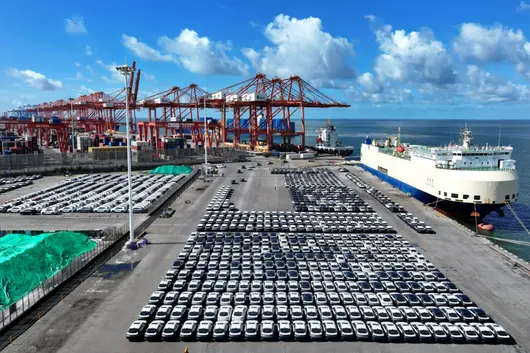
Data from CAAM shows that in the first half of the year, China's auto exports reached 5.096 million units, a 65.3% year-on-year increase; June alone exports were 1.037 million units, a 75.1% year-on-year increase, with monthly export volume standing at the million-unit level for the first time.
While domestic demand shrinks, exports have become an important fulcrum for many automakers to maintain scale. However, from exporting whole vehicles to building factories overseas to opening channels with international partners, the paths chosen by each company are not the same.
Chery remains the vanguard of exports. In the first half, Chery Group exported 943,800 units, accounting for nearly 70% of total sales; June alone saw exports of 191,100 units, breaking the record for single-month exports by Chinese automakers.
BYD's overseas focus is shifting from whole vehicle exports to local manufacturing. In the first half, BYD sold 789,400 units overseas, a 68% year-on-year increase; June overseas sales accounted for more than 40% of its total monthly sales. With factories in Brazil and Thailand coming into production successively, BYD is gradually spreading capacity 'beyond tariff barriers'.

Geely and Leapmotor's export growth rates are equally outstanding. Geely exported 474,200 units in the first half, a 158% increase year-on-year; first-half export volume has already exceeded that of the full year of 2025. Leapmotor utilized Stellantis' channels and factory layout to go overseas, exporting nearly 100,000 units in the first half, also exceeding the full previous year. Borrowing from a mature global system allowed Leapmotor to save the time needed to build its own channels and capacity.
SAIC's overseas sales in the first half were 735,000 units, a 48.7% year-on-year increase, accounting for about 36% of the group's total sales. Overseas manufacturing, channel, and brand systems accumulated over the years have become an important buffer in this round of domestic market adjustments.
Changan is also accelerating the transformation from product exports to local operations. The 2.0 version of the 'Sea Accepts Rivers' plan released in April proposed long-term, local, and systematic approaches, promoting global business extension into manufacturing, investment, service, and brand operations. With the landing of multiple results such as Brazilian President witnessing the Brazil factory production start, the 20,000th whole vehicle coming off the line at the Thailand factory, and Qiyuan Q05 launching in Uzbekistan, overseas localization layout is gradually showing results. In the first half, Changan delivered 402,000 units overseas, a 35.1% year-on-year increase, accounting for about one-third of the group's delivery volume.
In May, Changan reached a global official cooperation agreement with the Portuguese National Football Team. Carrying out sports marketing in the World Cup year can also be seen as a step where its overseas investment extends from channel construction to brand operations.
As the proportion of overseas sales in the enterprise's total portfolio continues to increase, export numbers are no longer the only standard for measuring the effectiveness of globalization.Tariff policies, certification standards, and consumption habit differences in different markets are significantly distinct. Channels, after-sales, local production, and brand building all require long-term investment, and may not directly translate into profits in the short term.
Therefore, in the second half of the year when evaluating automakers' overseas performance, sales volume is still the foundation, but local operation efficiency, brand recognition, and profit quality will become more important. Whether exports can truly precipitate into long-term growth depends on whether automakers can move from 'selling cars' to 'operating locally'.
Viewing Sales Proportion: Domestic Market Is Still the Main Battlefield
The rapid growth of overseas markets has not changed the basic proportion of the domestic market.
Data from CAAM shows that domestic car sales in the first half were 9.921 million units. Although down 21.1% year-on-year, the scale is still close to twice that of exports, accounting for about two-thirds of total auto sales. Calculated by half-year alone, one percentage point of market share is close to 100,000 units. No mainstream automaker would give up easily.
Domestic market competition is already fierce, but overseas giants have also not chosen to leave.
Data from the CPCA shows that in June, domestic retail of mainstream joint venture brand new energy passenger cars increased by 45% year-on-year. Volkswagen plans to launch more than 20 electrified models in China this year. The locally developed CEA electronic/electrical architecture has entered mass production with the first model, and subsequent models will also be launched successively within the year. As joint venture brands accelerate local R&D and new energy transformation, competition intensity in the domestic market will continue to increase.

Facing internal demand pressure, domestic independent brands are also looking for breakthrough points from different directions such as products, technology, organization, and capacity.
BYD stabilizes the sales basic disk while supplementing infrastructure. June sales reached 403,500 units, achieving year-on-year positive growth again; Megawatt flash charging is also starting to move from conferences to implementation, and charging networks are gradually spreading nationwide.
Geely is asking internal efficiency.Li Shufu proposed 'stopping, merging, transferring, and transforming' redundant entities, compressing repeated brand and R&D investments, and concentrating resources further on main platforms. In the first half, Geely stabilized overall sales volume with 1.423 million units.
New forces in the growth phase have also not stopped expanding. Leapmotor delivered 356,500 units in the first half, a 60% year-on-year increase, becoming the new force with the highest sales volume. The A10 launched in March entered the top three in SUV sales in three months, and the flagship model D19 cut into the fiercely competitive mid-to-large SUV market, promoting volume sales and brand elevation along two lines simultaneously.

Xiaomi delivered more than 180,000 units cumulatively in the first half. Compared to the 550,000 annual target set at the beginning of the year, monthly delivery volume in the second half needs to be increased to above 60,000. Expanding capacity and accelerating deliveries will become the core task of its second half.
Changan Auto achieved deliveries of 1.1956 million units in the first half, with 402,000 units delivered overseas (up 35.1% year-on-year), and new energy deliveries of 456,000 units (up 5.2% year-on-year). In the second half of this year, Changan Auto will concentrate on promoting product launches and technology implementation, continuously promoting the strategic synergy of Avatr and Deepal frontend independence and backend integration, while accelerating the application of self-developed intelligent technology.Currently, the Tiandu intelligent driving assistance function has been successively applied to Qiyuan Q07, A06, and the new Q05. According to the mass production plan announced in May this year, the Qiyuan Q06 launching in the second half will be equipped with Tiandu Pilot on all models, becoming an important node for Changan's self-developed assisted driving solution to further expand its application.

The domestic market still has a semi-annual scale of nearly 10 million units, and replacement demand will not disappear into thin air. The issue is, facing the increasingly dense new car launches and continuously increasing price pressure, automakers not only need to compete for sales but also need to try to repair profits.
In the second half, whether new cars can quickly gain volume, whether technology can be converted into experiences consumers are willing to pay for, and whether scale growth can bring operational efficiency improvements will jointly determine the performance of automakers in the domestic market.
Final Remarks:
In the first half of this year, the pressure on China's auto industry was reflected simultaneously at both sales and profit ends.Exports grew rapidly, providing a new scale fulcrum for automakers; but the domestic market still determines the basic disk of most enterprises and is the most intensely competitive main battlefield in the second half of the year.
The key to follow lies in whether overseas layout can precipitate into continuous orders and local operating capabilities, whether domestic new products can form scale delivery, and whether technology investment can truly be converted into revenue and profit.
For automakers that have completed a certain amount of preliminary layout, subsequent performance depends on whether products, technology, and global reserve can be timely redeemed for sales and income.
For the entire industry, simply pursuing sales volume is no longer enough; delivery speed, cost control, and profit quality will become equally important.
Halftime has passed, but the outcome has not yet been determined.

喺馬來西亞嘅 SUV 市場,好多買家喺揀車嘅時候都會拿 Perodua Ativa 同 Honda WR-V 來做比較。這兩款車喺價位同定位上都相當接近,今日我就從多個方面做一個詳細嘅對比,幫你省下做功課嘅時間。
Perodua Ativa 喺馬來西亞嘅 OTR 售價係 RM 62,500 - 73,400,合共有 3 個版本,包括 1.0L Turbo X(RM 62,500)、1.0L Turbo H(RM 67,300)、1.0L Turbo AV(RM 73,400) 等。
Honda WR-V 喺馬來西亞嘅 OTR 售價係 RM 89,900 - 107,900,合共有 4 個版本,包括 2023 1.5L V(RM 99,900)、2023 1.5L E(RM 95,900)、2023 1.5L S(RM 89,900) 等。
從價錢嚟睇,Perodua Ativa 嘅起步價的確比 Honda WR-V 平咗 RM 27,400。如果你預算唔多,Perodua 嘅入門版已經可以滿足日常需要。不過亦都要留意,平嘅那幾千塊,可能喺配備上會有取舍,具體要睇你需要。

Perodua Ativa 搭載 1.5L 4-cyl,馬力 105 匹。官方油耗 6.0 公升/100 公里。
Honda WR-V 搭載 1.5L 4-cyl,馬力 105 匹。官方油耗 6.0 公升/100 公里。
兩款車用嘅係同一套動力系統,日常開起嚟嘅感覺基本無差別。油耗方面都差唔多,唔使太糾結呢點。
Perodua Ativa 嘅安全評級係 5★ (ASEAN NCAP),主動安全系統包括 ASA 3.0 + ACC + LDA + LKA + BSM + RCTA。
Honda WR-V 嘅安全評級係 5★ (ASEAN NCAP),主動安全系統包括 Honda SENSING。
兩款車嘅安全評級一樣,喺呢個級別入面安全配備都算畀得好齊全。而家嘅新車安全性都唔差,唔使太擔心呢一點。
Perodua Ativa 車身長度 4400 毫米,尾箱 400 公升。
Honda WR-V 車身長度 4400 毫米,尾箱 400 公升。
兩款車嘅尺寸幾乎一樣,車內空間差別唔大。呢個級別嘅車,日常使用完全夠用。
Perodua Ativa 保修 5 年/150,000 公里,保養間隔 每 10,000 公里或 6 個月。
Honda WR-V 保修 5 年/無限里程,保養間隔 每 10,000 公里或 6 個月。
總括嚟講,Perodua Ativa 同 Honda WR-V 都係馬來西亞市場好唔錯嘅車型。揀邊架,關鍵仲係要睇你嘅個人需要同預算。建議大家做好功課,多比較幾間車行嘅報價,先試車先做最終決定。買車係件大事,花少少時間做功課絕對唔會錯。


喺馬來西亞嘅 SUV 市場,好多買家喺揀車嘅時候都會拿馬自達 CX-5 同富士 Outback 嚟做比較。呢兩款車喺價錢同定位上都幾接近,今日我哋就從多個方面做一次詳細比較,幫你省返做功課嘅時間。
馬自達 CX-5 喺馬來西亞嘅 OTR 售價係 RM 135,469 - 166,760,一總共有 3 個版本,包括 2025 2.0L AT 35th Anniversary(RM 316,154)、2025 2.0L AT(RM 296,154)、2025 2.0L MT(RM 294,154)等。
富士 Outback 喺馬來西亞嘅 OTR 售價係 RM 260,000 - 280,000,一總共有 2 個版本,包括 2025 2.4T R-Touring EyeSight(RM 310,340)、2025 2.5L Touring EyeSight(RM 280,340)等。
由價錢睇,馬自達 CX-5 嘅起步價確實比富士 Outback 平咗 RM 124,531。如果你預算有限,馬自達嘅入門版已經可以滿足日常需要。但亦都要注意,平嗰幾千蚊,可能喺配備上會有所取捨,具體要睇你嘅需要。
馬自達 CX-5 採用 FWD 驅動方式。
富士 Outback 採用 FWD 驅動方式。
呢兩款車嘅驅動方式一樣,都係 FWD,日常駕駛感覺唔會有太大分別。
馬自達 CX-5 保修 5 年/150,000km,保養間隔 每 10,000km 或 6 個月。
富士 Outback 保修 3 年/100,000km,保養間隔 每 10,000km 或 6 個月。

馬自達 CX-5 同富士 Outback 都係馬來西亞市場嘅主流選擇,適合家庭使用、日常通勤。如果你更睇重品牌口碑同二手價,可以優先考慮口碑更好嗰一款;如果你更在意性價比同配備,就揀配備更豐富嗰款。最後仲係建議兩款都去試駕,親身感受先至最重要。

總嚟講,馬自達 CX-5 同富士 Outback 都係馬來西亞市場好唔錯嘅車型。揀邊一輛,關鍵仲係要睇你嘅個人需要同預算。建議大家做足功課,多比較幾間車行嘅報價,先至去試駕做最終決定。買車係件大事,花少少時間做功課絕對無錯。


7月刚至,新能源车企集中交出最新答卷。
根据乘联会预测,1-6月全国乘用车市场累计零售约865万-870万辆,同比下降约19%,行业从增量扩张迈入存量洗牌新周期。在整体承压的背景下,以东风系、吉利系、广汽系为代表的“大厂新实力”却交出了较为亮眼的成绩单——极氪、昊铂埃安、岚图、奕派、深蓝等品牌全线飘红,增速跑赢大盘。
这场逆势增长并非偶然,当造车新势力努力改写市场格局,“大厂新实力”虽后发而至,但却依托母公司体系优势、技术积淀与全球化布局,走出一条截然不同的增长路径,并用实力证明:存量时代,短期销量红利只是表象,全价值链体系、长期技术与全球化布局,才是穿越周期的核心硬实力。
销量、产品、技术构筑增长基本盘
从交付数据来看,“大厂新实力”上半年的表现可圈可点。

作为增长势头最猛劲的品牌,极氪上半年累计交付178370 辆,同比增长97%。其中,6月单月交付 35169 辆,全年30万辆目标达成率接近60%;昊铂埃安BU逆势而上,6月终端销量达33682辆,同比增长21%。上半年累计销量达174938辆,同比增长15%,C端零售占比突破81%,摆脱对公采购依赖,销量结构完成根本转变;岚图深耕30万以上高端细分赛道,上半年累计交付76264辆,同比增长 36%。
此外,深蓝实现全球放量,上半年全球累计销量164156辆,同比增长14.6%。其中,6月单月全球销量突破3.3万辆,连续四个月站稳3万销门槛;东风奕派上半年累计交付132857辆,同比增长21%,海外市场更是迎来爆发式增长,销量同比增长186%。
亮眼的销量数据背后,是匹配市场需求的产品矩阵,以及“自研深耕+产业协同”的护城河。其中,极氪依托吉利全域整车技术底座,持续迭代高性能纯电架构与高阶智能驾驶方案,自研电池、电驱核心部件,为全系高端性能输出提供支撑。8系、9系旗舰车型持续拉高品牌均价,产品同步布局纯电、增程双动力路线,兼顾家用、商务多元需求。

昊铂埃安依托整合后的双品牌战略完成市场分层,埃安扎根国民家用赛道,i60、N60 组成的“双 60”组合持续走量;昊铂聚焦20万级精英高端市场,3月推出的A800主打新豪华舒适与高阶智驾,6月上市的S600通过“全系满配”填补了20万级市场在高性能底盘与高阶智驾上的空白,两者共同完善了品牌在20万+市场的产品矩阵。
岚图坚持全栈自研路线,自主掌握三腔空气悬架、全铝合金航空底盘、EDC 魔毯减震等核心技术,坚守30万以上豪华差异化赛道,构建起“SUV+MPV + 轿车”高端产品矩阵。其中,梦想家长期位居30万-70 万级高端 MPV 销冠,市场占有率接近三分之一;泰山X8上市即热销,超九成用户选择高配版本;全新纯电轿跑SUV追光S已于近日全球首秀,完善高端产品布局。
东风奕派手握16000 吨一体化压铸、马赫动力等自研核心技术,同时深度绑定华为乾崑智能体系,旗舰车型搭载全套华为智能六件套,兼顾短期产品智能竞争力与长期技术自主布局。全新中大型SUV奕派M8瞄准25万级六座智能家用市场,成为品牌向上突破的核心载体。

深蓝汽车则深耕技术普惠,搭载长安自研原力增程系统,同步联合华为落地乾崑 ADS Pro智驾方案,将长续航、高阶智能两大核心技术平价下放,践行技术普惠的品牌核心思路,走量车型S05月销稳定破万;L06增程版依托专属线上渠道实现增量突破;新款S07将华为乾崑高阶智驾下放主流价位。
改革初见成效,深耕全球化布局
销量、产品、技术构筑起品牌增长底层逻辑,而一系列组织、渠道、品牌、出海落地动作,则是将技术与产品优势转化为市场增量的关键抓手。
具体来看,各大品牌先后完成组织架构与渠道体系革新,从内部提升响应市场的效率。昊铂埃安落地广汽“番禺行动”战略,昊铂埃安BU被赋予研发、生产、销售、服务全链路完整自主决策权,大幅缩短内部决策链条;线下渠道全面打通扩容至超千家网点,实现全国四线及以上城市100%覆盖,昊铂、埃安双品牌门店双向互通,兼顾高端用户服务与大众用户体验。

岚图市场化改革成效获得认可,连续第五年入选国资委“双百企业”标杆名单,国际合作同步落地,与Stellantis 集团敲定欧洲本地化生产合作,6月正式登陆沙特,完成中东市场布局,线下高端服务体系全面升级。
此外,东风汽车已于2025年6月完成风神、奕派、纳米三大自主乘用车的改革,实现全价值链统一管理。整合后品牌协同效应显现,奕派M8预售24小时订单破万;极氪优化整车交付体系,将平均交付周期从20周压缩至11-14 周,6月借香港车展发布完整全球化战略,同步完善高端车主私域专属服务体系;深蓝创新渠道合作模式,与京东达成独家战略合作,海外端落地泰国罗勇工厂,右舵车型本地化生产顺利投产。
依托战略布局的深化,下半年上述品牌也将在国内深耕、全球化扩张、技术迭代等维度持续加码,释放全新增长势能。
国内市场上,新品集中投放、渠道持续下沉是主线。昊铂埃安将持续推出全新车型与年度改款,全面覆盖10万-30 万主流消费区间,线下渠道进一步下沉至五线城市,扩充用户体验中心与 AED 公益站点,伴随品牌用户规模即将突破 200 万,持续优化 C 端销量结构。
岚图追光S计划7月开启全国预售,年内推出岚图梦想家右舵版,国内持续深耕30 万以上高端商务市场,拓展高端专属体验中心;东风奕派年内推出华为智能赋能大五座 SUV、性能轿跑,旗舰车型奕境X9冲击50万高端市场,线下渠道向县域市场下沉,完善线上线下一体化购车服务。

此外,极氪持续投放9系旗舰右舵车型,国内加速自有能源补能网络布局,目标将整车交付周期压缩至8周,全力冲刺全年30万辆交付目标;深蓝三季度推出搭载激光雷达的G318升级款,同步投放全新长续航增程车型,线上持续深化与京东的独家合作,线下扩充一二三线城市商超门店布局。
全球化布局成为下半年各大品牌共同的增量突破口。昊铂埃安依托广汽即将达成 3000万辆整车产销的制造积淀,同步推动埃安大众车型、昊铂高端车型登陆东南亚、中东市场,实现双品牌海外同步输出。
岚图落地“深耕欧洲、布局中东、进军右舵市场” 三大全球战略,依托 Stellantis 法国雷恩工厂完成本地化生产,同步开拓英国、澳大利亚右舵市场,海外延续国内豪华商务定位,避开低端市场内卷;东风奕派短期向东南亚、中东投放高性价比奕派007、纳米系列车型,中长期向海外输出 M8、奕境 X9 高端智能车型,依托东风全球制造基地落地本地化组装。

极氪则以香港作为全球豪华车型出海核心桥头堡,9 系旗舰右舵车型分批投放欧洲、中东、拉美高端市场,计划 2026 年底完成德国五大核心都市圈门店布局,优先突破企业高端车队市场,再渗透私人消费领域,海外市场更高的毛利率将成为品牌全新增长引擎。
此外,深蓝依托“海纳百川”全球出海规划,深耕欧洲、东南亚两大核心区域,扩大泰国、巴基斯坦本地整车产能,持续投放右舵车型,加码海外本地化体育营销与售后服务体系。
总的来看,2026上半年国内车市呈现分化格局,本质是行业加速出清、市场资源持续向头部集中的深度洗牌过程。上半年的逆势增长,是“大厂新实力”体系能力的阶段性验证。存量竞争时代,单一爆款车型带来的短期红利早已难以为继,新能源赛道的终极竞争,早已演变为销量结构、产品矩阵、底层技术、组织效率、全球布局的全方位体系对抗。而手握整车制造积淀、完整自研技术能力、清晰中长期发展战略的“大厂新实力”,如何打响一手好牌,也值得关注。