首頁Zotye

搜尋歷史
熱門搜尋
經銷商登入 / 註冊


Some days ago, Zotye Auto announced that the Wink Y01 International Edition entered mass trial production. In the two trading days before the news broke, Zotye Auto's stock price hit the limit up consecutively, and the cumulative price deviation exceeded 20%, triggering an abnormal fluctuation announcement for stock trading.
After five years of production halt, total vehicle sales in 2024 were only 14 units, with zero production. Such a company has thus returned to the public eye.
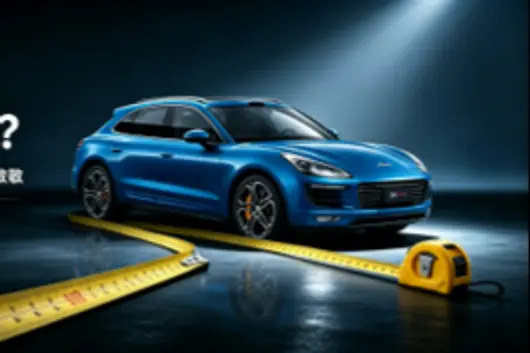
Thus, that old question was brought up again. Back then, Zotye relied on the reputation of the "Ruler Department" to copy the face of the Porsche Macan almost perfectly, but the underlying chassis, power, and tuning could not keep up, and even the engine was purchased from others. If Zotye was born in the new energy era, where motors, batteries, intelligent driving, and intelligent chassis have ready-made solutions for purchase, and now even the "Ruler" is called "Tribute", can Zotye win?
What Zotye lost back then was far more than just that face
Back then, Zotye SR9 copied the Macan, dubbed "Porsche Tai", with annual sales once surging to over 300,000 units. In that era, a car that looked like a luxury vehicle could indeed exchange appearance for orders.

But Zotye only copied the exterior. How to tune the chassis, how to calibrate the power, these things Zotye failed to make its own highlights. As for how to manage million-unit level quality control and supply chain, it was even less imaginable.
Regarding powertrains back then, Zotye indeed couldn't make them. The 2.0T engine of the SR9 came from Shenyang Aerospace Mitsubishi's 4G63S4T, 190 horsepower, 250 N·m, the gearbox was provided by SAIC, and Zotye itself provided only the body shell and interior. The same engine was installed on Landwind X7, Leopard CS10, and Southeast DX7 at the time. The cars from these few brands looked different, but the heart was the same.
This was not a choice made only by Zotye. From the 1990s to around 2010, over half of domestic automotive powertrains came from Mitsubishi. The two joint ventures in Shenyang and Harbin cumulatively supplied over 7 million units. Mitsubishi sold products but not technology; the most advanced combustion control and structural design remained in Japan. Models released in China were often already in service for 5 to 8 years. Electronic control parameters were not open to the public; to make minor tweaks to the power curve, approval had to be sought from the Japanese headquarters. Some models saw price hikes of 43% over 3 years. Whether a car could be released, how many, and when, half the decision-making power lay on others' production schedules.
The difference in these matters is clear from the numbers below. Sales in 2018 were halved to 154,800 units. In 2020, the parent company Tieniu Group went bankrupt due to insolvency, entering bankruptcy proceedings. In June 2021, the Jinhua Intermediate Court accepted the reorganization. In October, Jiangsu Shen Shang Holdings entered with 2 billion yuan. In December, the reorganization plan was approved.
This doesn't mean Zotye never touched electrification. In earlier years, Zotye launched small pure electric vehicles like Cloud 100 and E200. In 2017, it also signed a new energy joint venture agreement with Ford, planning to establish a joint venture company, but the project eventually came to nothing.

Copying a face takes a few months. Tuning a chassis is a feel built up from decades of data and engineering experience. The former can be reverse-engineered, but the latter cannot.
So what Zotye lost back then was far more than just that face. It lost the whole set of things beyond the face, and it had none of them.
Today, building a car, almost all missing parts can be purchased
But what Zotye lacked back then counts for nothing in the new energy era.
If we only talk about whether a car can be built, the new energy era has indeed broken down the hurdle a beginner needs to cross into a pile of standard parts available for purchase.

For example, Era Smart under CATL created a CIIC integrated intelligent chassis, also called PanStone Chassis, which can save OEMs 60% to 70% of development costs, reduce BOM costs by another 5%, and compress the vehicle mass production cycle from 36 months to 12 to 18 months. At the same time, this chassis can absorb 85% of the impact energy of the whole vehicle, while ordinary chassis only absorb about 60%.
In the past, the chassis has always been one of the core technologies of car companies. Now, outsourcing to third parties weakens R&D autonomy to some extent. Interface standards are hard to unify, and defining liability after accidents is also difficult. More awkwardly, if everyone uses the same chassis, cars look identical. Being able to buy is one thing; how much of your own stuff is left after buying is another.
Powertrains can also be purchased. Inovance Power's electric drive assemblies, Huawei's DriveONE, FinDreams Power, Jingjing Electric, there are several on the shelf. In the first half of 2026, among third-party electric drive installations, Huawei Digital Energy ranked 262,000 units, Inovance Power 311,000 units. Huawei DriveONE shipments exceeded 1 million units in 2025, collaborating with over 10 car companies, covering more than 50 models.
Acceleration is even more notable. 200,000 yuan level 4WD pure electric, 0-100 km/h acceleration is generally pressed to 2 to 3 seconds. Avatr 06T 4WD 2.78 seconds, BYD Seal 08 Pure Electric 4WD 3.3 seconds, Zeekr 007 4WD entered the 2-second level. This achievement, put in the year Zotye copied the Macan, is a number only performance cars dared to write.
The links that held Zotye back back then mostly have ready-made suppliers today.

The change in design is even greater. What Zotye did alone back then, now mainstream players are doing.
Porsche's frog-eye headlights and fastback, Land Rover's boxy body, Rolls-Royce's Parthenon grille, Aston Martin's front face. These elements can be seen on many popular models today. The names "Certain Range Rover", "Certain Cullinan" are even directly used by the official as propaganda language.
Tang Fengliang, Vice President of Media and PR for Porsche China, publicly stated that Porsche's design sparked highly unified aesthetics in the Chinese automotive industry, which makes it both honored and helpless. It is easy for design languages to be paid tribute and imitated, but the soul behind the design will not be easily substituted.
So if Zotye were put into today, it truly lacks nothing, and even the "Ruler Department" is no longer something shameful, because that is called "Tribute".
There is a time difference here. Zotye was remembered for a face for 10 years back then. Today's tributes stand on a more complete supply chain, copying more effortlessly and more decently. Using names like "Certain Range Rover", "Certain Cullinan" as propaganda language, something unthinkable in 2016.
Cars need more than just being built
But "Tribute" is just a ticket to entry. Survival depends on those things beyond tribute.
Car buyers also won't look at whose chassis you used or whose cells you bought. They look at whether the car is worth the price, dare to buy, looks good driving it out, and can it sell for a price after 3 years. These few things, suppliers cannot substitute.

Look at Zotye's real financial report today.
Net profit attributable to parent company for the first half was 80.39 million yuan, which looks like a turn to profit. But deducting non-recurring items, net loss was 152 million yuan, and losses widened year-on-year by 40.31%.
Where did that 80.39 million yuan come from? The answer lies in non-operating income. Canceling subsidiaries obtained 200 million yuan in compensation, plus a 30 million yuan litigation settlement, totaling 235 million yuan.
These money have nothing to do with car manufacturing. Zotye's current revenue mainly comes from auto parts and door industries, and the vehicle business has not yet recovered its cash generation.
Another consequence of the 5-year production halt is that channels and after-sales are basically zeroed out. Most of the dealers who sold Zotye cars back then are no longer there. Old car owners find it hard to find parts. For a new brand to build a sales service network covering the whole country usually takes several years; Zotye has to start all over from zero.

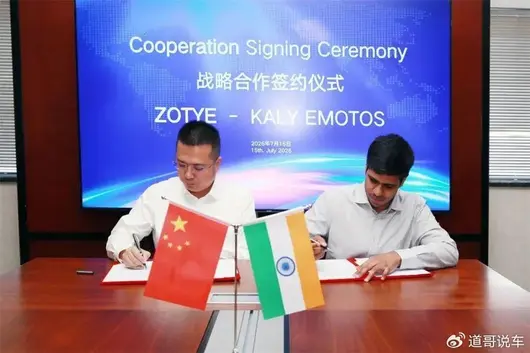
In India, on July 15, it signed a master agreement for KD semi-knocked-down assembly with Kaly Emotors, planning an SKD project with an annual production of 30,000 sets. In Indonesia, at the end of June, it reached a full industry chain cooperation with BPKN. The first to roll off the line in Yongkang was the overseas version of the old T300.
The reason for going overseas first is because the domestic window is basically closed. Li Bin had a saying that the major players for the next 3 to 5 years are basically determined, and the recent 2 years are the critical period for staying at the table. The top threshold for new car makers is 100,000 units, the survival line is 30,000 units.
Zotye's current scale is far from both these lines.
Overseas is not a haven; this reminder needs to be said upfront.
Neta once accounted for over 10% of the pure electric share in Thailand. After the capital chain broke, only 365 units were sold in Thailand in the first half of 2026. Local consumers are exceptionally sensitive to the stability of the brand, which is more fatal than price.

Back to that question, was Zotye really born at the wrong time?
To put it plainly, Zotye did touch upon being born at the wrong time.
These four characters "born at the wrong time" mean everything is ready except the favorable circumstances. What Zotye lacked back then was exactly that wind. Powertrains had to be bought from Mitsubishi, and it had to be queued behind others' capacity. Calibration had to be approved by the Japanese headquarters; this hurdle could not be passed by effort alone. Today the wind has changed; motors, batteries, electronic controls, and intelligent driving are on the shelves; what is missing is supplemented. What truly held Zotye back has become, after building it, why would anyone be willing to pay.
The first threshold can be bought; the second cannot.
So it does not lack a ruler.
What it lacks is the part that a ruler cannot measure.
The feel of the chassis, the experience of tuning, user trust, and the reason why a car company can be remembered.
Suppliers do not sell these things.
The new energy era did not waive this lesson either, it just changed the exam room.
The exam paper back then tested whether you could build a car. Zotye could not answer some questions because the answers were in others' hands. Today a different question is asked; it is no longer hard to build a car, it is to make car buyers remember you.
So give Zotye a suggestion: if it really comes back, everything else can be saved, but a marketing master must be hired with heavy money. Make the tribute sound more moving than anyone; this skill works better than technology in today's market.
Products can be purchased externally, stories can be outsourced. Calculated this way, there is indeed still a chance to win.


Auto-First|Samar
September 10, Apple released the foldable screen phone iPhone Duo.
In an instant, "Duo" topped the hot search, and Nissan, Toyota Prado in the automotive circle followed, all creative and full of fun. However, the most interesting part is that Zotye Auto and Nezha Auto, which had disappeared from the public eye for a long time, also announced their rebirth almost simultaneously. One announced a new car entering the trial production stage, and the other secured 3 billion yuan in restructuring funds.

On September 9, Zotye Auto announced that the new A0-class pure electric model Wink Y01 International Edition entered the mass production trial stage. Once the news broke, the company's stock price deviated by a cumulative total of more than 20% for two consecutive trading days, triggering an announcement of abnormal trading fluctuation.
The bankruptcy reorganization of Nezha Auto also saw new developments recently. On September 11, the fourth creditors' meeting for the bankruptcy reorganization case of Nezha Auto's parent company Hozon New Energy was held online. The draft restructuring plan shows that Zhejiang Taiyi Shenglian Enterprise Management Partnership (Limited Partnership) (hereinafter referred to as Taiyi Shenglian) intends to contribute 3 billion yuan to take control, exchanging for about 70.62% of Hozon New Energy's equity.
Coming back together, staging a real-life version of "My Fate is DuoDuoDuo"......
Reading this, the emotions are somewhat complex for a moment. Building cars is no longer a good business. Compared to battery supplier CATL, compared to the trends of this era such as AI, robots, and a bunch of companies standing in the "light", car building seems so outdated, remaining only simple. Apart from a few individual companies, profits are left only as a longing.
Even so, Nezha Auto and Zotye Auto are going to be reborn gloriously, walk the Jianghu again, and ask, "Do you know how I lived these few years?" According to recent slang, these two companies are really bold.
Whether Nezha Auto or Zotye Auto, at least, considering the issues of three levels.
Revival at this time, things are no longer the same as before
Should we be on alert? Who should be on alert
A more realistic answer lies overseas
Regarding the first question, Zotye and Nezha chose to return in the autumn of 2026, but the table is accelerating narrowing.
In the first seven months of 2026, the new force camps have completed structural stratification. 100,000 units became the threshold for the top, and 30,000 units is the increasingly clear survival line. Leapmotor's monthly deliveries broke through 100,000 units. HarmonyOS Intelligent, "Nio, Xpeng, Li Auto, Xiaomi" faced each other in the 30,000 to 45,000 unit range.
The big autonomous fish like BYD and Geely are even more attacking and conquering in the new energy market. Nio's Li Bin stated directly that the main market players for the next 3 to 5 years will be basically determined. The recent two years are a critical period for automakers to see if they can stay on the table.
How are the bottom cards of these two companies exactly? Zotye's situation is particularly worth reviewing. Net profit attributable to the parent company in the first half was 80.38 million yuan, seemingly turning a profit, but net profit after deducting non-recurring items was -152 million yuan, with the loss expanding 40.31% year-on-year. The profit source is a 200 million yuan compensation from cancelling subsidiaries and 30 million yuan revenue from lawsuit settlements. In simple terms, it was "earned" by selling assets and lawsuits, having nothing to do with car building. The whole vehicle business has not yet contributed revenue. The company is essentially still a "Parts + Doors" company.

Nezha's situation isn't much better. Hozon New Energy's cumulative net loss is 18.3 billion yuan. In January 2025, single-month sales plummeted to 110 vehicles, and three major domestic production bases stopped all production. Of the 3 billion yuan restructuring funds, 1.167 billion yuan was used to settle claims, and the actual working capital available for resuming production was only 1.833 billion yuan. And its first stage production resumption target is only annual sales of 10,000 vehicles.
Who should be alert?
On the surface, the revival of Zotye and Nezha is the "return of old friends", but in fact, standing behind this round of restructuring are new players.
Nezha's acquirer Taiyi Shenglian, registered and established in April 2026, was formed as a partnership by two companies controlled by Shanzi Technologies Chairman Ye Ji and the Chairman's Office Head Yu Shuxin. Shanzi Tech's predecessor was the old real estate firm Yinyi Shares. It entered the automotive track by acquiring overseas automotive parts companies in 2016. In 2023, it acquired Xingtai Longgang to obtain car manufacturing qualifications. The first mass-produced model rolled off the line in 2024, and it also revitalized Yunfeng Auto produced by the former Hafei Auto factory for export to Russia.

In other words, what is truly worth paying attention to is not whether Nezha as a brand can survive, but what game Shanzi Tech is playing. From parts to whole vehicle manufacturing, from domestic qualifications to the Russian export channel, Ye Ji's layout has covered multiple links in the automotive industry chain. The value of Nezha Auto may not lie in the two words "Nezha", but in the two car-making qualifications in Hozon New Energy's hands and the Tongxiang production base.
The revival paths of both car companies point in the same direction: overseas.

Zotye positions 2026 as the "Overseas First" development year, focusing on layout in Africa, Southeast Asia, Central and South America, and South Asian markets. India is the most concrete direction currently being promoted. Kaly Emotors has signed the main agreement for the KD cooperation project, planning an SKD loose parts assembly project with an annual output of 30,000 sets. This model has light asset investment, flexible exit, and can avoid India's high automotive import tariffs.
Nezha's three-stage plan is also centered on overseas: The first stage is the production resumption of Nezha X for the overseas market. The second stage focuses on launching models suitable for Asia, Africa, Latin America, etc., with an annual output target of 300,000 units.
Going overseas is indeed a path for these brands to bypass domestic fierce competition. But this path is not easy to walk. Nezha was once successful in the Thai market. In 2023, its pure electric market share in Thailand exceeded 10%. But as the domestic capital chain broke, sales in Thailand plummeted. Cumulative sales in the first half of 2026 were only 365 vehicles. Local consumers' high sensitivity to brand stability means the overseas market is not a haven, but the ultimate test of corporate comprehensive strength.
Zotye's KD model seems light, but since the agreement signing, the partner's project implementation in India is still on pause. Production capacity is planned but no mass production signal is awaited. Many Southeast Asian countries are also tightening import conditions for Chinese electric vehicles, raising the threshold and tax burden for whole vehicle imports, requiring automakers to increase local production and parts procurement.
The overseas market gives these brands not an easy way out, but a window to prove themselves again. The window is small, and there is not much time left. Whether to squeeze in depends on whether funds are available, whether the supply chain can be rebuilt, and whether products can pass the regulatory certification of the target market.
Auto-First Observation: Revival is not difficult, the difficulty is living differently this timeWhether Zotye and Nezha can turn "Duo"'s extra fate into their true second life, the market will vote with its feet.

[Lead: Zotye Auto, dormant for many years, is attempting to return to the auto market. However, today's China auto market is no longer the market when Zotye rose years ago. Facing industry overcapacity, price wars, and restructuring, can Zotye make a comeback? Now, can this industry still accommodate Zotye?]
Zhang Dachuan
Recently, Zotye Auto announced that its all-new A0-segment Wink Y01 has completed styling freezing and officially entered the batch trial manufacturing phase. According to the plan, Zotye hopes to promote the model for mass production in 2026.

△Zotye Auto announced the all-new A0-segment Wink Y01 has completed styling freezing
It is worth noting that to get rid of the market image of the past "Measuring Tape Department", Zotye repeatedly emphasized in its publicity that the Wink Y01 is an "All-New Independently Developed" model, trying to rebuild the market's cognition of its independent R&D ability. Zotye Auto, which was once a prominent figure in the China auto market, is now sending out signals of returning to the market. However, for the China auto market which has undergone profound changes, re-launching a new model is just the beginning. Whether Zotye can truly achieve a resurgence still faces significant challenges.

△To get rid of the market image of the past "Measuring Tape Department", Zotye repeatedly emphasized the Wink Y01 as an "All-New Independently Developed" model
Can Zotye Flip with One New Car?
The Wink Y01 body dimensions are 3912×1745×1545mm, wheelbase 2520mm, overall dimensions between BYD Seagull and Dolphin. As a pure EV positioned in the A0 segment, although the threshold for manufacturing NEVs has been greatly reduced compared to the traditional fuel vehicle era, for Zotye, it is not easy to achieve "mass sales" with such a model.
A0-segment pure EVs are becoming one of the fast-growing yet most fiercely competitive sub-segments in the China NEV market. With consumers' requirements for space, range, safety, and intelligent configurations continuously improving, A0-segment models are gradually replacing some traditional A00-segment products, becoming an important choice for urban commuting and family second cars. Currently, models like Seagull, Xingyuan, and Wuling Bingo, backed by major car companies like BYD, Geely, and SAIC, have already occupied the main positions of this market. The price range of mainstream products has generally entered the 60,000–100,000 yuan range, with some models further dropping to around 60,000 yuan. More importantly, competition in this market has no longer just been simple "low price + range", but gradually shifted to comprehensive competition in space, intelligent cockpit, assisted driving, configurations, design, and overall product power.

△The A0-segment pure EV market is one of the most competitive sub-segments
Contrast the Zotye Wink Y01; to break out in such a market environment, it first needs to have enough obvious advantages in pricing, and at the same time must find its differentiated selling points in product configurations and user experience.
Compared to top car companies like BYD and Geely, Zotye has almost no scale advantage. Especially BYD has already formed a highly vertically integrated industry chain, possessing strong cost control capabilities from batteries, motors, and electronic control to a large number of core components. In this situation, if Zotye wants to keep the selling price of the Wink Y01 at a level that is sufficiently attractive while guaranteeing product quality, it is actually not easy.

△Currently, the gap in technology reserves between Zotye and mainstream car companies like BYD is obvious
And in terms of technology reserves, the gap between Zotye and current market mainstream car companies may be even more obvious. Especially in the fields of intelligent cockpits and intelligent driving, large car companies like Geely and BYD can already rapidly downscale mature technical solutions from mid-to-high-end models to entry-level models. For these enterprises, a set of software, algorithms, and electronic/electrical architectures that have completed R&D and verification can quickly amortize costs through massive sales. This is exactly the weakness Zotye finds hardest to make up.
Therefore, the real issue for the Wink Y01 is not whether "it can be built", but after it is built, whether it can provide a product power that is sufficiently competitive with a sufficiently low price, and whether consumers are willing to choose it. For Zotye today, this is likely much more difficult than simply restarting the production line itself.
Overseas Markets Are Not a Safe Haven
In the information disclosed by Zotye, the overseas market layout has attracted considerable attention.
In June this year, Zotye and Indonesia's BPKN preliminarily reached a consensus on a strategic cooperation of the whole new energy vehicle industry chain, planning to promote SKD assembly, annual production of 150,000 intelligent complete vehicles and battery-pack integrated factories in stages, and layout for Southeast Asia export; in July, it signed a main KD cooperation agreement with India's Kaly Emotors, planning to build an SKD project with an annual production of 30,000 sets, introducing A0-segment models and gradually expanding to A-segment and B-segment models.

△Zotye layout of overseas markets
However, at present, Zotye's overseas business is still at a very early stage. From cooperation agreements to truly achieving mass production and scaled sales, there is still a long way to go. In addition to meeting local regulatory certification requirements, it is also necessary to establish sales, after-sales, and supply chain systems, and to rebuild brand cognition in the fiercely competitive Southeast Asia market. It is especially worth noting that Southeast Asia is not a "blank market"; Chinese brands like BYD, MG, Great Wall, and Geely have entered and established a certain market foundation first.
At the same time, ASEAN main markets are also gradually shifting from purely encouraging NEV imports to paying more attention to local production and industrial investment. If Chinese car companies hope to develop long-term in the future, relying solely on complete vehicle export is not easy. KD/SKD, local production, channels, and after-sales systems all need continuous investment.

△Chinese car companies entering overseas markets is not smooth sailing
More importantly, the overseas market is also not a "back road" that can be easily walked. Neta Auto is a typical case. Neta's delivery volume in 2022 once reached about 150,000 units, after which it quickly fell into business difficulties. Although it invested heavily in overseas markets like Thailand, it did not change the overall operating situation, and its market share in Thailand dropped from about 12% in 2023 to about 4% in early 2025. This shows that having an overseas market and having factories does not mean getting sales volume, and certainly does not mean being able to sustain profitability. For Zotye, the overseas market can become a breakthrough point for restarting, but at least for now, it cannot be said to be the company's "safe haven".
What is the Significance of Zotye's Resurrection?
For Zotye's shareholders and local governments hoping to save jobs, taxes, and local auto industry chains, Zotye resuming production is certainly significant. But if looking at the entire China auto industry, Zotye's comeback is hard to say there is any positive significance.

△Zotye production resumption is significant for shareholders and local governments
Because the China auto industry today, most does not lack capacity, the most lack is products and enterprises that can truly create value. In 2025, China auto production and sales volume reached 34.531 million units and 34.4 million units respectively, breaking through 30 million units for the third consecutive year, NEVs also entered a high-speed popularization stage. But at the same time, price wars, overcapacity, and enterprise elimination are still the most prominent keywords of the industry.
Zotye's own situation also illustrates this point. In 2025, the company's operating income was only 521 million yuan, and the net loss attributable to the parent company was 367 million yuan; the complete vehicle business was basically in a stagnant state. More importantly, the current auto competition environment is completely different from the era when Zotye was rapidly developing. BYD, Geely, Chery, Changan, and many new force brands have already established obvious advantages in new energy, intelligence, and supply chains. For Zotye returning to the market, the real question is not "whether there are factories", but what to produce, what products to sell, and why consumers should choose Zotye.

△Domestic mainstream car companies already have obvious advantages in the smart electrification track
Therefore, for Zotye, resuming production is just the first step. The real challenge is to rebuild R&D, product, supply chain, channel, and brand capabilities. If it is just reactivating factories and then participating in domestic and international market price competition again, what it brings is likely just more capacity, not the incremental value that the industry truly needs. So, from the perspective of the entire China auto industry, what is truly worth paying attention to is not "another car company resuming production", but whether Zotye can truly create new products, technology, and business value. After all, the auto industry needs more competitive enterprises, not more factories that can produce cars.
Comment
Zotye Auto is attempting to return to the China auto market again, but in today's auto industry, resuming production is just the beginning and does not represent how many opportunities. In the past few years, too many car companies and brands have fallen. With the domestic market tending to be saturated and overcapacity, enterprises like Zotye re-entering the field, if lacking true product and technology competitiveness, may only further intensify the price war and overcapacity of the low-end market. Currently, the auto market competition is especially cruel. Zotye urgently needs to think clearly; only by finding new paths and new models is there a chance for rebirth.
(This article is original from "Heyan Reads Cars", unauthorized, no reprinting)
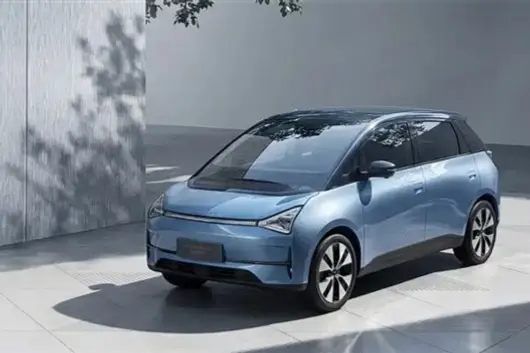

After a long period of dormancy and a lengthy bankruptcy reorganization process, Zotye Auto has finally launched the all-new Wink Y01 International Edition. Currently, the new car has entered the batch trial production phase, and the SOP mass production countdown has officially launched. This automaker, once jokingly dubbed the "Copycat Department," is attempting to return to the center of the industry stage with a small pure electric model focused on overseas markets.

The fluctuations in the capital market have sparked widespread attention, with many views regarding the appearance of Wink Y01 as a key opportunity for Zotye Auto to achieve reconstruction. However, successful product trial production is only the beginning; it cannot quickly fill the huge gap left by damaged brand reputation, historical debts, and dislocated industry chains. Even if Wink Y01 proceeds smoothly to mass production, Zotye still needs to face numerous historical legacy problems and embark on a challenging recovery journey.
The trust rifts left by the replication era are difficult to erase with just one new car
When mentioning Zotye, people's first impression often fails to shake off the "Porsche Copycat" label. Over ten years ago, Zotye quickly opened up the market by copying the exterior design of mature overseas models. Sales of models such as T600 and SR9 surged, successfully ranking within the top ten of domestic brand sales. However, taking shortcuts brought short-term dividends but also buried potential for the brand's decline. As the industry entered the new energy transformation period, the drawbacks of Zotye's long-term reliance on exterior copying and lack of underlying technology accumulation were fully exposed. Issues such as quality complaints and a weak after-sales service system emerged continuously. Subsequently, the parent company Tieniu Group faced a crisis, factories were largely shut down, distributors left the network one after another, and many old car owners fell into a dilemma of finding spare parts or maintenance, causing the brand image to plummet.

Many people regard Wink Y01 as strong evidence of Zotye's transformation and upgrading. This new car is built on the new S pure electric small car platform, using minimalist tech aesthetic design. Iconic triangular headlights are paired with a three-segment through LED light strip, supplemented by a four-wheel four-corner body layout, maximizing cabin space. From the appearance alone, past traces of imitation and plagiarism are hard to find, and the product thinking has clearly shifted to positive R&D. Zotye specifically prioritized launching the Wink Y01 International Edition to overseas markets, targeting regions like India, and actively avoided the domestic market. This choice was a deliberate strategic trade-off. Domestic consumers' inherent impressions of Zotye are deeply rooted; rebuilding user trust in the local market is much harder than opening up incremental overseas markets.

Rebuilding brand trust is definitely not something that can be achieved overnight with just one new car. The accumulation of a car manufacturer's good reputation relies on consistent product quality control, reliable long-term after-sales support, and a solid foundation of enterprise operation. After years of restructuring, Zotye's whole vehicle business has nearly stalled, and the dealer network that once spanned the country has also disintegrated. Even if Wink Y01 launches overseas, if it faces issues such as parts supply cutoff or slow after-sales response, past negative impressions will instantly trigger a brand crisis. At that time, the market is bound to have deep doubts: Does Zotye now truly possess stable supply chain control and good whole vehicle consistency manufacturing capabilities?

Currently, the industry landscape has undergone profound changes. While competition in the global small pure electric vehicle market is at its height, domestic independent brands are moving overseas with strong momentum, and overseas local car manufacturers are also busily laying out the economy electric vehicle field. Given that Wink Y01 is positioned as a city commuter small electric vehicle, its products have not yet built significant technical advantages; core performance parameters such as the three-electric system and smart cockpit have not been fully disclosed. Therefore, relying solely on unique exterior design, it may be difficult to establish a lasting foothold in the fiercely competitive overseas market.
Debt, Capacity, and Supply Chain Form Realistic Barriers After Mass Production
The successful completion of the product is only the beginning. In fact, the continuous operation of the entire commercial system after mass production is the real test facing Zotye; in comparison, historical operational burdens are far more tricky than product R&D. In the financial field, Zotye has accumulated huge historical losses, and the asset-liability ratio remains high; many historical debts and judicial disputes have not been fully resolved. Even if bankruptcy reorganization is completed, capital pressure has not dissipated—all-vehicle manufacturing belongs to the heavy asset industry. From mold maintenance and production line debugging to parts procurement, overseas market certification, and the construction of logistics channels, every link requires continuous cash flow support. Especially for Wink Y01 sold overseas, it also needs to cope with certification and localization adaptation work in various countries, which also causes capital consumption to accumulate continuously.

Capacity and supply chain systems are undoubtedly a major weakness of Zotye. Although some production bases have been retained, years of production halt have led to long-term idleness of production lines, and equipment maintenance and personnel recruitment take time. Whole vehicle production is far from simple parts splicing; it relies on a stable supply chain ecosystem. When Zotye was deeply in crisis, many suppliers stopped cooperation, and most parts companies still harbor doubts about it. New cooperation often requires flexible payment terms and performance guarantees as prerequisites. With the Wink Y01 model entering batch trial production, it marks that sample car manufacturing has become feasible.

Channel construction is also a huge test. Zotye's domestic dealer network has almost completely disintegrated, while the sales and maintenance system in the overseas market starts from zero. Not only is the investment huge, but the construction cycle is also very long. Zotye plans to leverage cooperation with local overseas enterprises to solidify market landing with local partners. While this can reduce risks, it also limits profits and cedes brand control to the partner. In contrast, other domestic car companies going overseas mostly have long-term plans, having already built overseas showrooms, after-sales centers, and spare parts warehouses, constructing a complete localized service system.

In addition, the stability of corporate governance is also a hidden danger that cannot be ignored. Looking back at Zotye's past collapse, its root causes lie not only in the product but also in disorderly governance and blind expansion. Although the new team after restructuring has streamlined the structure and stripped inefficient assets, long-term operation of the automotive industry cannot do without persistent strategic focus. Given that micro electric vehicles have meager profits, if Wink Y01's sales in the overseas market fail to cross the break-even line, the enterprise will find it difficult to maintain the R&D of the next generation of models.
Summary
The smooth mass production of Wink Y01 is not only a key milestone in Zotye Auto's bankruptcy reorganization process but also an important sign of its determination to show transformation to the global market. As a small electric vehicle developed purely through positive R&D, its landing in overseas markets means Zotye is bidding farewell to the past path of imitation and returning to the whole vehicle manufacturing track with a brand new posture. However, the launch of the new car is far from the end of brand reconstruction; Zotye still needs to face long-term accumulated dilemmas, including deeply rooted public negative perceptions, heavy historical financial burdens, and supply chain and channel systems that need urgent repair. These historical baggage still exist and cannot dissipate instantly with the vehicle leaving the production line.
The overseas market has built a buffer zone for Zotye, allowing it to temporarily avoid strict brand scrutiny from the domestic market. However, looking at the global electric vehicle market, competition has long entered a saturated competition stage. If the new car wants to take root here, stable quality control, reliable after-sales, and continuous capital investment are indispensable. Zotye's self-redemption is definitely not relying on a single model's short-term counterattack, but a long-distance race of endless duration and continuous hard work.
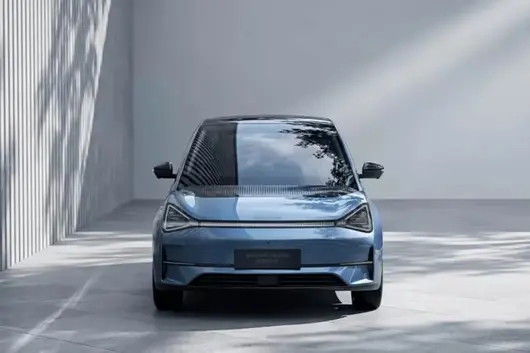
After years of silence, Zotye Auto finally presented the new Wink Y01 International Edition during the long cycle of bankruptcy reorganization. The new vehicle has entered the batch trial production phase, with the SOP mass production countdown initiated. This automaker, once labeled with the 'Copycat Department' tag, attempts to return to the industry's focus with a compact pure electric model aimed at the overseas market.

Capital markets fluctuated accordingly. Many voices viewed the Wink Y01 as a signal of Zotye's rebirth. However, product trial does not equal commercial success. A brand-new design blueprint cannot instantly wipe out the brand's reputation trauma, debt legacy issues, and broken industrial support accumulated over the years. Even if the Wink Y01 is mass-produced as scheduled, Zotye still faces a long road to redemption filled with historical baggage.
Trust Cracks Left by the Past Are Hard to Smooth with a Single New Car
When mentioning Zotye, the public's first impression often revolves around the 'Porsche Ty' label. Over ten years ago, relying on imitating the appearance of mature overseas models, Zotye quickly leveraged the market. Models like the T600 and SR9 saw sales peak, entering the top ten among domestic brand sales. Shortcuts brought short-term dividends but buried fatal brand original sins. When the industry entered the new energy transformation phase, shortcomings such as reliance on appearance imitation and lack of underlying technical accumulation exploded. Quality complaints and weak after-sales systems continued to ferment. Parent company Tianniu Group's debt crisis broke out, factories halted production on a large scale, dealers withdrew en masse, and many old car owners fell into a dilemma of hard-to-find parts and no maintenance support, dragging brand reputation to rock bottom.

Many see the Wink Y01 as proof of Zotye's thorough reform. This new car is built on a new S pure electric small car platform, adopting a minimalist tech aesthetic design. Iconic triangular headlights paired with a three-segment full-width LED light strip, and a four-wheel four-corner body layout maximize cabin space. From the exterior, no shadow of past imitation or plagiarism is visible; the product concept has clearly shifted to independent R&D. Zotye chose to prioritize the Wink Y01 International Edition for overseas markets, targeting regions like India, deliberately avoiding the domestic market temporarily. This itself is a strategic choice. Domestic consumers' stereotypes of Zotye are deeply rooted, and rebuilding user trust in the local market is far more difficult than developing overseas incremental markets.

But repairing brand trust has never been an engineering task completable by a single new car. Automaker reputation building relies on continuous stable product quality control, long-term reliable after-sales support, and a stable enterprise operating status. Zotye has been reorganizing for years, with vehicle business nearly stalled. The dealer network that once covered the country has long dissolved. Even if Wink Y01 lands for sale overseas, if issues such as insufficient parts supply or slow after-sales response occur, past negative memories will immediately bite back at the brand. The market will naturally question: Does the current Zotye possess stable supply chain control capabilities and whole vehicle manufacturing consistency?

The industry environment has undergone earth-shattering changes. Currently, global competition in the compact pure electric track is fierce. Domestic independent brands' overseas offensives are strong, and overseas local car companies are also rapidly laying out economy electric vehicles. Wink Y01 is positioned as a city commuter compact electric vehicle; the product itself has not formed a crushing-level technical barrier. Core parameters such as the three-electric system and smart cockpit have not been fully disclosed to date. Relying solely on exterior design, it is hard to maintain a foothold in the fierce overseas market.
Debt, Capacity, and Supply Chain Form Realistic Thresholds After Mass Production
Product successful production line exit is just the starting point. What truly tests Zotye is the entire business system operating continuously after mass production. Historical management baggage is far more tricky than product R&D. Financially, Zotye has accumulated huge historical losses, with the asset-liability ratio long-term at a high level. Vast historical debts and legal disputes are still being resolved. Completing the bankruptcy reorganization and sorting debts does not mean capital pressure disappears. Whole vehicle manufacturing belongs to the heavy asset industry. Mold maintenance, production line debugging, parts procurement, overseas market certification, and logistics channel construction—every link requires continuous cash flow investment. Wink Y01 targets overseas sales, also needing to cope with different countries' regulation certification and localization adaptation, continuously consuming funds.

Capacity and supply chain systems are another major shortcoming for Zotye. After stopping production for years, although some production bases were retained, production lines have been idle for a long time. Equipment inspection and worker team reconstruction take time. Whole vehicle manufacturing is not simple assembly; it needs a complete set of stable supplier ecosystems. When the past Zotye crisis broke out, many supporting suppliers terminated cooperation. Many parts enterprises still maintain a cautious attitude towards Zotye. New supply chain cooperation often requires payment terms and performance capability backing. Wink Y01 entering the batch trial phase means sample cars can be produced.

Channel level is also a huge challenge. Zotye's domestic dealer network has basically scattered, while building sales and maintenance networks from zero in overseas markets is high cost and long cycle. Zotye chose to cooperate with overseas local enterprises, relying on local partners to complete sales landing. This is a method to reduce risk, but it also means profit space is compressed and brand discourse is in the partners' hands. Comparing domestic automotive companies going overseas, most have laid out overseas showrooms, after-sales centers, and spare parts warehouses years in advance, forming a complete localized system.

There is another layer of hidden risk: enterprise governance stability after reorganization. In the past, Zotye's collapse was not only a product issue; chaotic enterprise governance and blind expansion were important inducements. After reorganization, new management completed organizational streamlining and shut down inefficient assets. However, automotive operations need long-term stable strategic determination. Small electric vehicles themselves have limited gross margin space. If Wink Y01 overseas market sales do not reach the break-even point, the enterprise will find it hard to continuously invest in next-generation vehicle R&D.
Public Car Review
Wink Y01 smooth mass production is undoubtedly an important milestone on the reorganization road for Zotye, which has experienced bankruptcy reorganization. This compact electric vehicle with positive R&D and focusing on overseas markets represents Zotye's attempt to say goodbye to the old path of imitation and return to the whole vehicle manufacturing track. But the landing of a new car does not equal the completion of brand redemption. The historical baggage that has wrapped Zotye for many years, including the solidified negative brand impression in the public's mind, huge historical financial legacy issues, and broken supply chain and channel systems, will not disappear as new cars roll off the line.
The overseas market provided Zotye a buffer zone, avoiding the strict brand scrutiny domestically. However, the global electric vehicle market competition has entered a stock-based game stage. For a new car to stand, it needs stable quality control, reliable after-sales, and continuous capital investment. Zotye's redemption is not a counterattack completed by relying on a single vehicle model, but a long, continuous marathon.
1
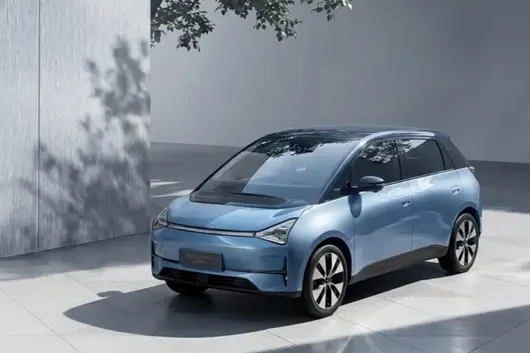

On September 9, Zotye Automobile announced that the all-new A0 pure electric model Wink Y01 International Version has entered the batch trial production phase. Once the news broke, the company's stock price had a cumulative deviation value increase exceeding 20% for two consecutive trading days, triggering an announcement of abnormal trading fluctuations. Market sentiment moved first, but looking calmly, whether this automaker once known as the "Ruler Department" can become the nightmare of new forces, the answer is much more complex than the emotion.

First look at the basics: Qualifications and production lines are assets, technology and channels are gaps
Zotye holds scarce full vehicle production qualifications, production lines at the Yongkang base, and a verified "low price high configuration" strategy; what is lacking is technology, capital, channels, and trust. In the first half of this year, the company's operating revenue was 190 million yuan, down 32% year-on-year; 80.39 million yuan of net profit attributable to shareholders was supported by 200 million yuan in asset disposal compensation and 30 million yuan in litigation settlement, with a net loss of 152 million yuan after deducting non-recurring gains and losses, an expansion of 40% year-on-year. R&D scale and channel network are not on the same level as leading enterprises. With such a foundation, talking about a "nightmare" is still too early.
The real threat: Not technology, but price anchoring
Zotye has no brand premium to defend and no market share to protect; the only way to attack is to drive prices lower. Once a low price appears in a certain price band, it will redefine the competition rules for that price band.
Who should be vigilant? Not leading players like Li Auto, NIO, XPeng who have established brand and intelligence barriers, but second and third-tier brands with the same situation as Zotye: similarly lacking a technology moat, similarly relying on price-performance to sell volume, similarly having not yet perfected the profit model. When an opponent who is "afraid to lose nothing" appears in the track, the one losing blood first is always the one who "cannot afford to lose". The A0 pure electric market below 100,000 yuan targeted by Zotye is exactly the most intensive battlefield for such brands.
Low prices today are not the same as they were ten years ago
Back then Zotye won by relying on information asymmetry—consumers bought the illusion of "looking like a luxury car"; now the new energy penetration rate has exceeded 50%, three-electric systems, smart cockpits, and assisted driving have become hard indicators, and the weight of original design and intelligent experience for users has increased significantly. BYD presses costs to the extreme with the whole industry chain, Wuling guards the entry market with scale, price reduction space for leaders comes from efficiency, and Zotye's price reduction can only come from profit concession. Industry profit margins are already below 4%. Low prices without cost advantage are exchanging cash flow for market share, unable to exchange for profit.
A more realistic answer lies overseas
Zotye itself clearly knows that a direct confrontation in the domestic market is not likely to succeed, so it set 2026 as the first year of "overseas priority", using KD parts assembly in India and whole industry chain cooperation in Indonesia as entry points, avoiding domestic close combat with a light asset model. The real opponents on this path are Chinese brands that also deepen investment in ASEAN and Africa in the 70,000 to 100,000 yuan price band, not new forces. In the more distant future, it is more likely to play the role of a capacity supplier, rather than a brand competitor.
Conclusion: What is worth attention is not "who is unlucky"
What Zotye's revival truly deserves attention from the industry is not "who is about to be unlucky", but that it reminds everyone again: prices can grab temporary market share, but not long-term trust. Low price is a tactic, not a moat. When technology, quality, and service become the new entry tickets, any player who only wants to return to the table relying on price—whether it is Zotye or a new force that is currently slowing down—will find that what keeps people awake is never the opponent, but the part of capability that is missing in themselves.
Data for this article comes from Zotye Automobile public announcements and public reports, as of September 10, 2026, and does not constitute any investment advice.
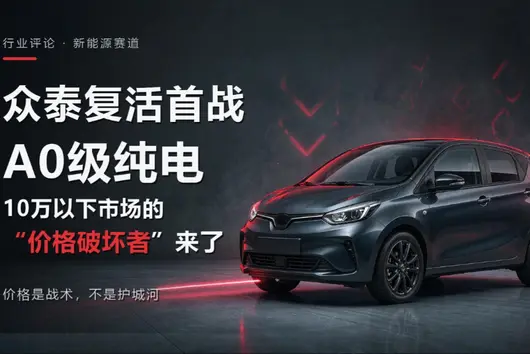

【Written by/ Caiquan Circle&Dao Ge Auto Talk Ma Jianyu】In the first half of 2026, the most surreal story in the automotive industry is that Zotye Automobile, which produced no cars, achieved profitability. Referring to other automakers that continued to lose money or turned from profit to loss in the first half of 2026, if ranking automakers by profit, Zotye Automobile that produced no cars would even leave everyone far behind.
Even more surreal is that Zotye Automobile, which has paused its whole-vehicle business for a long time, is beginning to export its car-making capabilities to overseas markets. This is also a slap in the face to many domestic automakers, because Zotye Automobile proved one thing to them — exporting KD for Chinese automotive enterprises is not difficult, and automakers that have been out of production for years can also achieve it.

On July 16, Zotye Automobile's official public account published a post stating that Zotye Automobile and India Kaly Emotors formally signed a KD strategic cooperation master agreement, planning to jointly build an SKD construction cooperative project with an annual capacity of 30,000 sets. This means Zotye Automobile's car-making capabilities are starting to be exported to Indian local automakers.
And will this also become the beginning of Zotye Automobile transitioning from inflated profits to real profits?
Exporting Car-Making Capabilities to India, Just Connected with Indonesia Not Long Ago
As the global automotive industry enters the transformation of electrification and intelligence, China's automotive industry is rising quietly, and Chinese automobiles have gained an unprecedented status in the global automotive market with the three words "New Energy". Against this backdrop, China's automobile exports have repeatedly hit new highs, ranking first in the world for three consecutive years. Even many automakers are starting to support sales with exports.
Against this backdrop, Chinese automakers' car-making capabilities have been recognized by overseas markets, even Zotye Automobile which has been out of production for many years. According to the cooperation signed between Zotye Automobile and India Kaly Emotors, both parties will fully integrate Zotye Automobile's existing industrial resources, carry out all-around deep collaboration in the fields of production line construction, special equipment supporting, parts localization adaptation, sales channel expansion, cloud platform construction, and quickly import Zotye Automobile's A0-class models, planning to achieve the SOP mass production off the line for this model in the Indian market.

In addition, start the development of other A0-class and B-class models at an opportune time, planning to continue to expand Zotye Automobile's market share and industry influence in the Indian market. Looking at Zotye Automobile's history, it has certain experience in New Energy A0-class models, having introduced models such as Zotye E200 and Cloud 100 in the early stage, and later also introduced models such as Jiangnan U2. To a certain extent, Zotye Automobile has a foundation in A0-class new energy models.
At the same time, as communicated by both parties, India's new energy vehicle market also indeed has good growth potential. Data shows that the penetration rate of electric vehicles (EV) in India's passenger car market in 2025 was 4.0%. It is worth mentioning that deepening the overseas market layout is one of the strategic priorities of Zotye Automobile. Not long ago, Zotye Automobile also reached a consensus on strategic cooperation for the new energy vehicle whole industry chain with Indonesia BPKN.

According to official statements, both parties initially discussed the phased promotion plan of the project: Phase I plans to adopt the SKD model to explore a fast production path, gradually increasing the localization rate of parts; Phase II preliminarily plans to explore the investment and construction of an integrated smart factory with an annual production capacity of 150,000 units, supporting four major processes of whole vehicle manufacturing and power battery production lines, laying out the landing of home, logistics, and pickup series new energy models.
Zotye Restart Beginning? Can Overseas Markets Redeem its "Chaotic" Self?
According to Zotye Automobile's 2025 annual report, in 2026, Zotye Automobile will persist in the overall idea of focusing on main business, low-cost operation, rapid resumption of production, and overseas priority, with molds and stamping parts as cash flow support, and whole vehicle resumption and new energy model landing as long-term directions. From the trends within the year, Zotye Automobile is indeed moving towards this plan.
However, whether Zotye Automobile can be re-redeemed by overseas markets still faces many tests. First, Zotye Automobile in 2026 can be described as "chaotic" to a certain extent. In June this year, Zotye Automobile fell into a boardroom "internal struggle" storm, three directors jointly proposed to remove current Chairman Han Biwen, followed by shareholders stepping in to support Han Biwen, requesting the removal of the above three directors (due to one resignation canceling the removal against them), and then the three directors who originally proposed to remove the chairman were ousted.

As the saying goes, when it rains it pours. On the evening of July 10, Zotye Automobile announced in a notice that the company received the "Filing Notice" issued by the China Securities Regulatory Commission, and due to suspected information disclosure violations, the China Securities Regulatory Commission decided to file against Zotye Automobile. Of course, the more important thing is financial support, after all, Zotye Automobile has lost money for too long.
Financial data shows that since 2019, as of the end of 2025, Zotye Automobile has had annual losses for seven consecutive years, with a total net loss exceeding 25 billion yuan. At the same time, the 2025 annual report shows that the company achieved operating revenue of 521 million yuan, a year-on-year decrease of 6.66%; net loss of 367 million yuan, a year-on-year shrinkage of 63.29%; as of the end of the reporting period, the company's asset-liability ratio reached 96.54%. These directly led to Zotye Automobile's inability to restart whole vehicle manufacturing business.
Despite the fact that in the first half of 2026, Zotye Automobile achieved profitability, "far ahead" among a group of loss-making automakers. But this time the profit is quite inflated, according to the profit forecast, Zotye Automobile expects the net profit attributable to shareholders of the parent company in the first half of the year to be between 78 million and 105 million yuan. But the core reason is that the company carried out business contraction, cancelled a large number of long-term idle, no operating activities subsidiaries and production sites, obtained compensation income of about 200 million yuan. At the same time, a number of past lawsuits reached settlements, bringing additional income of about 30 million yuan. The sum of the two one-time incomes exceeds 230 million yuan.
In other words, Zotye Automobile's main business or car-making business has made no significant progress. And will the cooperation with Indian local automakers become the beginning of Zotye Automobile's restart?