首頁Zotye Auto

搜尋歷史
熱門搜尋
經銷商登入 / 註冊

After a long period of dormancy and a lengthy bankruptcy reorganization process, Zotye Auto has finally launched the all-new Wink Y01 International Edition. Currently, the new car has entered the batch trial production phase, and the SOP mass production countdown has officially launched. This automaker, once jokingly dubbed the "Copycat Department," is attempting to return to the center of the industry stage with a small pure electric model focused on overseas markets.

The fluctuations in the capital market have sparked widespread attention, with many views regarding the appearance of Wink Y01 as a key opportunity for Zotye Auto to achieve reconstruction. However, successful product trial production is only the beginning; it cannot quickly fill the huge gap left by damaged brand reputation, historical debts, and dislocated industry chains. Even if Wink Y01 proceeds smoothly to mass production, Zotye still needs to face numerous historical legacy problems and embark on a challenging recovery journey.
The trust rifts left by the replication era are difficult to erase with just one new car
When mentioning Zotye, people's first impression often fails to shake off the "Porsche Copycat" label. Over ten years ago, Zotye quickly opened up the market by copying the exterior design of mature overseas models. Sales of models such as T600 and SR9 surged, successfully ranking within the top ten of domestic brand sales. However, taking shortcuts brought short-term dividends but also buried potential for the brand's decline. As the industry entered the new energy transformation period, the drawbacks of Zotye's long-term reliance on exterior copying and lack of underlying technology accumulation were fully exposed. Issues such as quality complaints and a weak after-sales service system emerged continuously. Subsequently, the parent company Tieniu Group faced a crisis, factories were largely shut down, distributors left the network one after another, and many old car owners fell into a dilemma of finding spare parts or maintenance, causing the brand image to plummet.

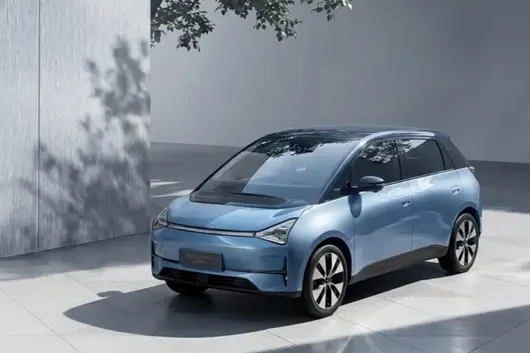
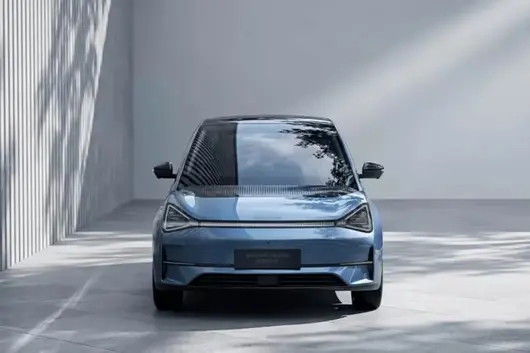
Many people regard Wink Y01 as strong evidence of Zotye's transformation and upgrading. This new car is built on the new S pure electric small car platform, using minimalist tech aesthetic design. Iconic triangular headlights are paired with a three-segment through LED light strip, supplemented by a four-wheel four-corner body layout, maximizing cabin space. From the appearance alone, past traces of imitation and plagiarism are hard to find, and the product thinking has clearly shifted to positive R&D. Zotye specifically prioritized launching the Wink Y01 International Edition to overseas markets, targeting regions like India, and actively avoided the domestic market. This choice was a deliberate strategic trade-off. Domestic consumers' inherent impressions of Zotye are deeply rooted; rebuilding user trust in the local market is much harder than opening up incremental overseas markets.

Rebuilding brand trust is definitely not something that can be achieved overnight with just one new car. The accumulation of a car manufacturer's good reputation relies on consistent product quality control, reliable long-term after-sales support, and a solid foundation of enterprise operation. After years of restructuring, Zotye's whole vehicle business has nearly stalled, and the dealer network that once spanned the country has also disintegrated. Even if Wink Y01 launches overseas, if it faces issues such as parts supply cutoff or slow after-sales response, past negative impressions will instantly trigger a brand crisis. At that time, the market is bound to have deep doubts: Does Zotye now truly possess stable supply chain control and good whole vehicle consistency manufacturing capabilities?

Currently, the industry landscape has undergone profound changes. While competition in the global small pure electric vehicle market is at its height, domestic independent brands are moving overseas with strong momentum, and overseas local car manufacturers are also busily laying out the economy electric vehicle field. Given that Wink Y01 is positioned as a city commuter small electric vehicle, its products have not yet built significant technical advantages; core performance parameters such as the three-electric system and smart cockpit have not been fully disclosed. Therefore, relying solely on unique exterior design, it may be difficult to establish a lasting foothold in the fiercely competitive overseas market.
Debt, Capacity, and Supply Chain Form Realistic Barriers After Mass Production
The successful completion of the product is only the beginning. In fact, the continuous operation of the entire commercial system after mass production is the real test facing Zotye; in comparison, historical operational burdens are far more tricky than product R&D. In the financial field, Zotye has accumulated huge historical losses, and the asset-liability ratio remains high; many historical debts and judicial disputes have not been fully resolved. Even if bankruptcy reorganization is completed, capital pressure has not dissipated—all-vehicle manufacturing belongs to the heavy asset industry. From mold maintenance and production line debugging to parts procurement, overseas market certification, and the construction of logistics channels, every link requires continuous cash flow support. Especially for Wink Y01 sold overseas, it also needs to cope with certification and localization adaptation work in various countries, which also causes capital consumption to accumulate continuously.

Capacity and supply chain systems are undoubtedly a major weakness of Zotye. Although some production bases have been retained, years of production halt have led to long-term idleness of production lines, and equipment maintenance and personnel recruitment take time. Whole vehicle production is far from simple parts splicing; it relies on a stable supply chain ecosystem. When Zotye was deeply in crisis, many suppliers stopped cooperation, and most parts companies still harbor doubts about it. New cooperation often requires flexible payment terms and performance guarantees as prerequisites. With the Wink Y01 model entering batch trial production, it marks that sample car manufacturing has become feasible.

Channel construction is also a huge test. Zotye's domestic dealer network has almost completely disintegrated, while the sales and maintenance system in the overseas market starts from zero. Not only is the investment huge, but the construction cycle is also very long. Zotye plans to leverage cooperation with local overseas enterprises to solidify market landing with local partners. While this can reduce risks, it also limits profits and cedes brand control to the partner. In contrast, other domestic car companies going overseas mostly have long-term plans, having already built overseas showrooms, after-sales centers, and spare parts warehouses, constructing a complete localized service system.

In addition, the stability of corporate governance is also a hidden danger that cannot be ignored. Looking back at Zotye's past collapse, its root causes lie not only in the product but also in disorderly governance and blind expansion. Although the new team after restructuring has streamlined the structure and stripped inefficient assets, long-term operation of the automotive industry cannot do without persistent strategic focus. Given that micro electric vehicles have meager profits, if Wink Y01's sales in the overseas market fail to cross the break-even line, the enterprise will find it difficult to maintain the R&D of the next generation of models.
Summary
The smooth mass production of Wink Y01 is not only a key milestone in Zotye Auto's bankruptcy reorganization process but also an important sign of its determination to show transformation to the global market. As a small electric vehicle developed purely through positive R&D, its landing in overseas markets means Zotye is bidding farewell to the past path of imitation and returning to the whole vehicle manufacturing track with a brand new posture. However, the launch of the new car is far from the end of brand reconstruction; Zotye still needs to face long-term accumulated dilemmas, including deeply rooted public negative perceptions, heavy historical financial burdens, and supply chain and channel systems that need urgent repair. These historical baggage still exist and cannot dissipate instantly with the vehicle leaving the production line.
The overseas market has built a buffer zone for Zotye, allowing it to temporarily avoid strict brand scrutiny from the domestic market. However, looking at the global electric vehicle market, competition has long entered a saturated competition stage. If the new car wants to take root here, stable quality control, reliable after-sales, and continuous capital investment are indispensable. Zotye's self-redemption is definitely not relying on a single model's short-term counterattack, but a long-distance race of endless duration and continuous hard work.
After years of silence, Zotye Auto finally presented the new Wink Y01 International Edition during the long cycle of bankruptcy reorganization. The new vehicle has entered the batch trial production phase, with the SOP mass production countdown initiated. This automaker, once labeled with the 'Copycat Department' tag, attempts to return to the industry's focus with a compact pure electric model aimed at the overseas market.

Capital markets fluctuated accordingly. Many voices viewed the Wink Y01 as a signal of Zotye's rebirth. However, product trial does not equal commercial success. A brand-new design blueprint cannot instantly wipe out the brand's reputation trauma, debt legacy issues, and broken industrial support accumulated over the years. Even if the Wink Y01 is mass-produced as scheduled, Zotye still faces a long road to redemption filled with historical baggage.
Trust Cracks Left by the Past Are Hard to Smooth with a Single New Car
When mentioning Zotye, the public's first impression often revolves around the 'Porsche Ty' label. Over ten years ago, relying on imitating the appearance of mature overseas models, Zotye quickly leveraged the market. Models like the T600 and SR9 saw sales peak, entering the top ten among domestic brand sales. Shortcuts brought short-term dividends but buried fatal brand original sins. When the industry entered the new energy transformation phase, shortcomings such as reliance on appearance imitation and lack of underlying technical accumulation exploded. Quality complaints and weak after-sales systems continued to ferment. Parent company Tianniu Group's debt crisis broke out, factories halted production on a large scale, dealers withdrew en masse, and many old car owners fell into a dilemma of hard-to-find parts and no maintenance support, dragging brand reputation to rock bottom.

Many see the Wink Y01 as proof of Zotye's thorough reform. This new car is built on a new S pure electric small car platform, adopting a minimalist tech aesthetic design. Iconic triangular headlights paired with a three-segment full-width LED light strip, and a four-wheel four-corner body layout maximize cabin space. From the exterior, no shadow of past imitation or plagiarism is visible; the product concept has clearly shifted to independent R&D. Zotye chose to prioritize the Wink Y01 International Edition for overseas markets, targeting regions like India, deliberately avoiding the domestic market temporarily. This itself is a strategic choice. Domestic consumers' stereotypes of Zotye are deeply rooted, and rebuilding user trust in the local market is far more difficult than developing overseas incremental markets.

But repairing brand trust has never been an engineering task completable by a single new car. Automaker reputation building relies on continuous stable product quality control, long-term reliable after-sales support, and a stable enterprise operating status. Zotye has been reorganizing for years, with vehicle business nearly stalled. The dealer network that once covered the country has long dissolved. Even if Wink Y01 lands for sale overseas, if issues such as insufficient parts supply or slow after-sales response occur, past negative memories will immediately bite back at the brand. The market will naturally question: Does the current Zotye possess stable supply chain control capabilities and whole vehicle manufacturing consistency?

The industry environment has undergone earth-shattering changes. Currently, global competition in the compact pure electric track is fierce. Domestic independent brands' overseas offensives are strong, and overseas local car companies are also rapidly laying out economy electric vehicles. Wink Y01 is positioned as a city commuter compact electric vehicle; the product itself has not formed a crushing-level technical barrier. Core parameters such as the three-electric system and smart cockpit have not been fully disclosed to date. Relying solely on exterior design, it is hard to maintain a foothold in the fierce overseas market.
Debt, Capacity, and Supply Chain Form Realistic Thresholds After Mass Production
Product successful production line exit is just the starting point. What truly tests Zotye is the entire business system operating continuously after mass production. Historical management baggage is far more tricky than product R&D. Financially, Zotye has accumulated huge historical losses, with the asset-liability ratio long-term at a high level. Vast historical debts and legal disputes are still being resolved. Completing the bankruptcy reorganization and sorting debts does not mean capital pressure disappears. Whole vehicle manufacturing belongs to the heavy asset industry. Mold maintenance, production line debugging, parts procurement, overseas market certification, and logistics channel construction—every link requires continuous cash flow investment. Wink Y01 targets overseas sales, also needing to cope with different countries' regulation certification and localization adaptation, continuously consuming funds.

Capacity and supply chain systems are another major shortcoming for Zotye. After stopping production for years, although some production bases were retained, production lines have been idle for a long time. Equipment inspection and worker team reconstruction take time. Whole vehicle manufacturing is not simple assembly; it needs a complete set of stable supplier ecosystems. When the past Zotye crisis broke out, many supporting suppliers terminated cooperation. Many parts enterprises still maintain a cautious attitude towards Zotye. New supply chain cooperation often requires payment terms and performance capability backing. Wink Y01 entering the batch trial phase means sample cars can be produced.

Channel level is also a huge challenge. Zotye's domestic dealer network has basically scattered, while building sales and maintenance networks from zero in overseas markets is high cost and long cycle. Zotye chose to cooperate with overseas local enterprises, relying on local partners to complete sales landing. This is a method to reduce risk, but it also means profit space is compressed and brand discourse is in the partners' hands. Comparing domestic automotive companies going overseas, most have laid out overseas showrooms, after-sales centers, and spare parts warehouses years in advance, forming a complete localized system.

There is another layer of hidden risk: enterprise governance stability after reorganization. In the past, Zotye's collapse was not only a product issue; chaotic enterprise governance and blind expansion were important inducements. After reorganization, new management completed organizational streamlining and shut down inefficient assets. However, automotive operations need long-term stable strategic determination. Small electric vehicles themselves have limited gross margin space. If Wink Y01 overseas market sales do not reach the break-even point, the enterprise will find it hard to continuously invest in next-generation vehicle R&D.
Public Car Review
Wink Y01 smooth mass production is undoubtedly an important milestone on the reorganization road for Zotye, which has experienced bankruptcy reorganization. This compact electric vehicle with positive R&D and focusing on overseas markets represents Zotye's attempt to say goodbye to the old path of imitation and return to the whole vehicle manufacturing track. But the landing of a new car does not equal the completion of brand redemption. The historical baggage that has wrapped Zotye for many years, including the solidified negative brand impression in the public's mind, huge historical financial legacy issues, and broken supply chain and channel systems, will not disappear as new cars roll off the line.
The overseas market provided Zotye a buffer zone, avoiding the strict brand scrutiny domestically. However, the global electric vehicle market competition has entered a stock-based game stage. For a new car to stand, it needs stable quality control, reliable after-sales, and continuous capital investment. Zotye's redemption is not a counterattack completed by relying on a single vehicle model, but a long, continuous marathon.
1