首頁Zhari

搜尋歷史
熱門搜尋
經銷商登入 / 註冊

In Malaysia's SUV market, many buyers compare the Proton X70 and Chery Tiggo Cross when choosing a car. These two models are quite close in price and positioning. Today, we will make a detailed comparison from multiple aspects to help you save time on research.
The OTR price for the Proton X70 in Malaysia is RM 106,800 - 122,300. There are 3 versions in total, including 1.5L Standard 2WD (RM 106,800), 1.5L Executive 2WD (RM 115,800), 1.5L Premium 2WD (RM 122,300), etc.
The OTR price for the Chery Tiggo Cross in Malaysia is RM 88,750 - 99,750. There are 2 versions in total, including 2025 HEV 1.5L CSH (RM 99,750), 2025 1.5T Standard (RM 88,750), etc.
In terms of price, the starting price of the Chery Tiggo Cross is RM 18,050 cheaper than the Proton X70. To be honest, at this price range, a difference of a few thousand isn't really significant. The key is to look at the overall value for money and long-term ownership costs.

The Proton X70 is equipped with a 1.5L Turbo, producing 140 hp. Official fuel consumption is 7.0 L/100km.
The Chery Tiggo Cross is equipped with a 1.5L 4-cyl, producing 105 hp. Official fuel consumption is 6.0 L/100km.
In terms of power, the Proton X70's 1.5L Turbo has 35 more horsepower than the Chery Tiggo Cross's 1.5L 4-cyl, offering more confidence in mid-range acceleration, especially when overtaking on highways. However, the Chery Tiggo Cross may have better fuel consumption, and the difference in daily city commuting is not significant.

The Proton X70 body length is 4400 mm, trunk 400 L.
The Chery Tiggo Cross body length is 4400 mm, trunk 400 L.
The dimensions of both cars are almost the same, with little difference in interior space. For a car of this class, it is more than enough for daily use.

Both the Proton X70 and Chery Tiggo Cross are mainstream choices in the Malaysian market, suitable for family use and daily commuting. If you value brand reputation and resale price more, you can prioritize the one with better reputation; if you care more about value for money and features, choose the one with richer configurations. Ultimately, it is recommended to test drive both models, as personal experience is the most important.
Overall, both the Proton X70 and Chery Tiggo Cross are quite good models in the Malaysian market. Choosing which one depends on your personal needs and budget. We suggest doing your research, comparing quotes from multiple car dealerships, and then test driving before making a final decision. Buying a car is a big matter; spending some time doing research will never be wrong.


In Malaysia's SUV market, many buyers compare the Proton X70 and Mazda CX-8 when choosing a car. These two cars are quite close in price and positioning. Today, we will do a detailed comparison from multiple aspects to save you time on research.
The Proton X70 OTR price in Malaysia is RM 106,800 - 122,300. There are 3 variants in total, including 1.5L Standard 2WD (RM 106,800), 1.5L Executive 2WD (RM 115,800), 1.5L Premium 2WD (RM 122,300), etc.
The Mazda CX-8 OTR price in Malaysia is RM 165,360 - 201,360. There are 5 variants in total, including 2025 2.5T 4WD High Plus Petrol (RM 201,360), 2025 2.2L 2WD High Plus Diesel (RM 193,123), 2025 2.5L 2WD High Plus Petrol (RM 186,360), etc.
In terms of price, the Proton X70's starting price is indeed RM 58,560 cheaper than the Mazda CX-8. If your budget is limited, the Proton entry-level version is sufficient for daily needs. However, note that the few thousand dollars saved may involve trade-offs in features, depending on your needs.

The Proton X70 is equipped with a 1.5L Turbo engine, with 140 hp. Official fuel consumption is 7.0 L/100km.
The Mazda CX-8 is equipped with a 2.0L 4-cylinder, with 170 hp. Official fuel consumption is 8.0 L/100km.
In terms of power, the Mazda CX-8's 2.0L 4-cylinder has 30 more horsepower than the Proton X70's 1.5L Turbo. However, for daily city driving, both cars have sufficient power and won't feel underpowered.

The Proton X70 safety rating is 5★ (ASEAN NCAP). Active safety systems include ADAS (ACC, AEB, LKA, LDA, BSM, RCTA).
The Mazda CX-8 safety rating is 5★ (ASEAN NCAP). Active safety systems include Brand ADAS.
Both cars have the same safety rating. For this class, safety features are quite comprehensive. New cars nowadays have good safety standards, so no need to worry too much about this.

The Proton X70 warranty is 5 years/150,000km. Service interval is every 10,000km or 6 months.
The Mazda CX-8 warranty is 5 years/150,000km. Service interval is every 10,000km or 6 months.
Both cars have the same warranty conditions, no need to worry about this. Actual maintenance costs depend on the brand's service network and spare part prices. It is recommended to ask real owners in car owner groups for their experience.
Overall, the Proton X70 and Mazda CX-8 are both excellent models in the Malaysian market. Which one to choose depends mainly on your personal needs and budget. We suggest doing your research, compare quotes from several dealers, and then test drive before making a final decision. Buying a car is a big deal, spending time on research will never go wrong.


喺馬來西亞嘅 SUV 市場,好多買家喺揀車嘅時候都會用 寶騰 X70 同 奇瑞 Tiggo Cross 黎做比較。呢兩款車喺價位同定位上都幾接近,今日我哋就從多個方面做一次詳細比較,幫你省咗做功課嘅時間。
寶騰 X70 喺馬來西亞嘅 OTR 售價係 RM 106,800 - 122,300,一總有 3 個版本,包括 1.5L Standard 2WD(RM 106,800)、1.5L Executive 2WD(RM 115,800)、1.5L Premium 2WD(RM 122,300) 等。
奇瑞 Tiggo Cross 喺馬來西亞嘅 OTR 售價係 RM 88,750 - 99,750,一總有 2 個版本,包括 2025 HEV 1.5L CSH(RM 99,750)、2025 1.5T Standard(RM 88,750) 等。
從價錢睇落,奇瑞 Tiggo Cross 嘅起步價比 寶騰 X70 平咗 RM 18,050。坦白講,喺呢個價位段,幾千蚊嘅差距其實唔算大,關鍵始終係睇整體嘅性價比同長遠使用成本。
寶騰 X70 車身長 4400 mm,行李箱 400 L。
奇瑞 Tiggo Cross 車身長 4400 mm,行李箱 400 L。
兩款車嘅尺寸幾乎一樣,車內空間差別唔大。呢個級別嘅車,日常使用完全夠用。
寶騰 X70 保修 5 年/150,000km,保養間隔 每 10,000km 或者 6 個月。
奇瑞 Tiggo Cross 保修 3 年/100,000km,保養間隔 每 10,000km 或者 6 個月。
寶騰 X70 同 奇瑞 Tiggo Cross 都係馬來西亞市場嘅主流選擇,適合家庭使用、日常通勤。如果你更睇重品牌口碑同二手價,可以優先考慮口碑更好嗰一款;如果你更在意性價比同配備,嗰就揀配備更豐富嗰款。最終始終建議兩款都去試駕,親身體驗先係最緊要。
總括嚟講,寶騰 X70 同 奇瑞 Tiggo Cross 都係馬來西亞市場唔錯嘅車型。揀邊一輛,關鍵始終都要睇你嘅個人需求同預算。建議大家做足功課,多比較幾間車行嘅報價,再去試駕做最後決定。揸車係件大事,攞少少時間做功課肯定唔會錯。

In the Malaysian SUV market, many buyers compare Perodua Aruz and Chery Tiggo 8 when choosing a car. These two cars are quite close in price and positioning. Today we will make a detailed comparison from multiple aspects, helping you save time on research.
Perodua Aruz's OTR price in Malaysia is RM 72,900 - 77,900. There are a total of 2 versions, including 1.5L X (RM 72,900), 1.5L AV (RM 77,900) etc.
Chery Tiggo 8's OTR price in Malaysia is RM 129,750 - 129,750. There is a total of 1 version, including 2026 1.6T Standard (RM 129,750) etc.
From a price perspective, Perodua Aruz's entry price is indeed cheaper by RM 56,850 compared to Chery Tiggo 8. If your budget is limited, Perodua's entry version can already meet daily needs. But also note that the few thousand savings might involve trade-offs in features, depending on your specific needs.

Perodua Aruz's safety rating is 5★ (ASEAN NCAP). Active Safety Systems include.
Chery Tiggo 8's safety rating is TBD. Active Safety Systems include Basic.
Perodua Aruz uses FWD drive system.
Chery Tiggo 8 uses FWD drive system.
Both cars have the same drive system, both are FWD, the daily driving experience will not differ significantly.

Perodua Aruz and Chery Tiggo 8 are both mainstream choices in the Malaysian market, suitable for family use and daily commuting. If you value brand reputation and resale value more, you can prioritize the one with better reputation. If you care more about value for money and features, choose the one with richer configuration. In the end, it is recommended to test drive both, hands-on experience is the most important.

Overall, Perodua Aruz and Chery Tiggo 8 are both very good models in the Malaysian market. Which one to choose, the key depends on your personal needs and budget. It is recommended to do your research, compare quotes from several dealerships, and then test drive to make the final decision. Buying a car is a big matter, spending time researching is never wrong.

喺馬來西亞嘅 SUV 市場,好多家買家喺揀車嗰陣都會將 Honda WR-V 同 MG MG HS 嚟做比較。呢兩款車喺價位同定位上都幾接近,今日我哋就從多個方面做一個詳細嘅比較,幫你慳返啲做功課嘅時間。
Honda WR-V 喺馬來西亞嘅 OTR 售價係 RM 89,900 - 107,900,總共有 4 個版本,包括 2023 1.5L V(RM 99,900)、2023 1.5L E(RM 95,900)、2023 1.5L S(RM 89,900) 等。
MG MG HS 喺馬來西亞嘅 OTR 售價係 RM 130,450 - 146,450,總共有 2 個版本,包括 1.5L Standard(RM 105,000)、1.5L Executive(RM 115,000) 等。
從價錢嚟睇,Honda WR-V 嘅起歩價的確比 MG MG HS 平咗 RM 40,550。如果你預算有限,Honda 嘅入門版已經可以滿足日常需求。但係都要注意,平嗰幾千蚊,可能喺配備上會有取舍,具體要睇你嘅需求。

Honda WR-V 搭載 1.5L 4-cyl,馬力 105 hp。官方油耗 6.0 L/100km。
MG MG HS 搭載 1.5L Turbo,馬力 140 hp。官方油耗 7.0 L/100km。
動力方面,MG MG HS 嘅 1.5L Turbo 比 Honda WR-V 嘅 1.5L 4-cyl 多咗 35 匹馬力。不過日常喺市區開,兩款車嘅動力都夠用,唔會覺得唔夠力。
Honda WR-V 採用 FWD 驅動方式。
MG MG HS 採用 FWD 驅動方式。
兩款車嘅驅動方式一樣,都係 FWD,日常駕駛感受唔會有太大分別。
Honda WR-V 保修 5 年/無限制里程,保養間隔 每 10,000km 或 6 個月。
MG MG HS 保修 7 年/150,000km,保養間隔 每 10,000km 或 6 個月。
Honda WR-V 同 MG MG HS 都係馬來西亞市場嘅主流選擇,適合家庭使用、日常通勤。如果你更重視品牌口碑同二手價,可以優先考慮口碑更好嗰一款;如果你更在意性價比同配備,那就揀配置更豐富嗰款。最終都係建議兩款都去試駕,親身體驗先係最重要嘅。
總體嚟講,Honda WR-V 同 MG MG HS 都係馬來西亞市場唔錯嘅車型。揀邊輛,關鍵仲係要睇你嘅個人需求同預算。建議大家做足功課,多比較幾間車行嘅報價,再去試駕做最終決定。買車係件大事情,花啲時間做功課絕對唔會錯。


喺馬來西亞嘅 SUV 市場,好多買家喺揀車嘅時候都會拿 MG MG HS 同 GWM Haval H6 嚟做比較。這兩款車喺價位同定位上都幾接近,今日我哋就由多個方面做一個詳細嘅比較,幫你省返做功課嘅時間。
MG MG HS 喺馬來西亞嘅 OTR 售價係 RM 130,450 - 146,450,一共有 2 個版本,包括 1.5L Standard(RM 105,000)、1.5L Executive(RM 115,000) 等。
GWM Haval H6 喺馬來西亞嘅 OTR 售價係 RM 139,750 - 139,750,一共有 2 個版本,包括 1.5L Turbo Standard(RM 140,000)、1.5L Turbo Premium(RM 155,000) 等。
從價錢嚟睇,MG MG HS 嘅起價確實比 GWM Haval H6 平咗 RM 9,300。如果你預算有限,MG 嘅入門版已經可以滿足日常需求。但都要注意,平嗰幾千塊,可能喺配備上會有取捨,具體要睇你嘅需求。
MG MG HS 搭載 1.5L Turbo,馬力 140 hp。官方油耗 7.0 L/100km。
GWM Haval H6 搭載 Hybrid,馬力 170 hp。官方油耗 4.5 L/100km。
動力方面,GWM Haval H6 嘅 Hybrid 比 MG MG HS 嘅 1.5L Turbo 多咗 30 匹馬力。不過日常喺市區開,兩款車嘅動力都足夠,唔會覺得唔夠力。
MG MG HS 車身長 4400 mm,行李箱 400 L。
GWM Haval H6 車身長 4400 mm,行李箱 400 L。
兩款車嘅尺寸幾乎一樣,車內空間分別唔大。呢個級別嘅車,日常使用完全夠用。
MG MG HS 採用 FWD 驅動方式。
GWM Haval H6 採用 FWD 驅動方式。
兩款車嘅驅動方式一樣,都係 FWD,日常駕駛感覺唔會有太大分別。
MG MG HS 同 GWM Haval H6 都係馬來西亞市場嘅主流選擇,適合家庭使用、日常通勤。如果你更加睇重品牌口碑同二手價,可以先考慮口碑更好嗰一款;如果你更加在意性價比同配備,那就揀配備更豐富嗰款。最終都係建議兩款都去試駕,親身體驗先最重要。
總嚟講,MG MG HS 同 GWM Haval H6 都係馬來西亞市場幾唔錯嘅車型。揀邊一輛,關鍵仲要睇返你嘅個人需求同預算。建議大家做好功課,多比較幾間車行嘅報價,再去試駕做最終決定。買車係件大事,花少少時間做功課絕對無錯。

喺馬來西亞嘅汽車市場,好多買家揀車嗰陣都會拿富豪 XC60 PHEV 同 寶馬 X3 做比較。而家我哋由多個角度做詳細比較,幫你省返做功課嘅時間。


富豪 XC60 插電混合動力車喺馬來西亞嘅落地價係 令吉 362,888 - 362,888,總共有 2 個版本,包括 2025 2.0T 89 公里 Ultra(令吉 362,888)、富豪 XC60 插電混合動力車邊啲安全配備?(令吉 296,610) 等。
寶馬 X3 喺馬來西亞嘅落地價係 令吉 325,800 - 358,800,總共有 2 個版本,包括 xDrive20i(令吉 320,000)、xDrive30e(令吉 360,000) 等。
從價錢嚟睇,寶馬 X3 嘅起步價比 富豪 XC60 插電混合動力車平咗 令吉 37,088。老實講,喺呢個價位段,幾千蚊嘅差距其實唔算大,關鍵仲係睇整體嘅性價比同長期使用成本。

富豪 XC60 插電混合動力車採用 前輪驅動 方式。
寶馬 X3 採用 前輪驅動 方式。
兩款車嘅驅動方式一樣,都係 前輪驅動,日常駕駛感受唔會有太大分別。

富豪 XC60 插電混合動力車 保養 5 年/無限里程,保養間隔 每 10,000 公里或 6 個月。
寶馬 X3 保養 5 年/無限里程,保養間隔 每 10,000 公里或 6 個月。
兩款車嘅保養條件一樣,呢方面唔使糾結。實際保養仲睇品牌嘅服務網絡同零件價格,建議去車友群問吓真實車主嘅經驗。

富豪 XC60 插電混合動力車同 寶馬 X3 都係馬來西亞市場嘅主流選擇,適合家庭使用、日常通勤。如果你更睇重品牌聲譽同二手價,可以優先考慮聲譽更好嗰一款;如果你更在意性價比同配備,就揀配備更豐富嗰款。最後都係建議兩款都去試駕,親身體驗先係最重要。

總體嚟講,富豪 XC60 插電混合動力車同 寶馬 X3 都係馬來西亞市場好唔錯嘅車型。揀邊一輛,關鍵仲係睇你嘅個人需求同預算。建议大家做好功課,多比較幾間車行嘅報價,再去試駕做最終決定。買車係件大事,花少少時間做功課絕對無錯。


As the 2026 USA, Canada, and Mexico World Cup approaches, Chinese football achieves a highlight moment on the distant European stage. The team that won the championship is the Chinese "Boy Football" Football Juniors 2014 (U12) team.

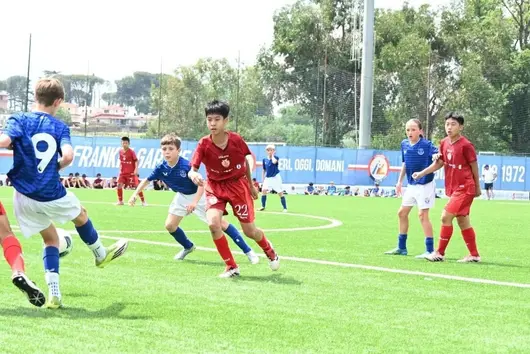
On June 2 Beijing Time, the Italy SIGISMONDI International Youth Cup concluded. Led by Dong Lu, the Chinese Football Juniors 2014 (U12) team went through seven grueling matches, defeating the Premier League powerhouse Everton youth squad 5-4 in a penalty shootout. With a dominant performance of seven wins from seven games, 21 goals scored and only 2 conceded, they lifted the championship trophy, becoming the first Asian team to reach the summit since the event was founded, with the Five-Star Red Flag flying high on the European U12 "Little World Cup" stage.

This tournament brought together 48 top youth training teams from around the world. Youth squads from multiple long-established European clubs such as Everton, Fiorentina, Copenhagen, and Braga all participated, making the tournament highly competitive. In the group stage, the Chinese Juniors surged forward, defeating Italy TTT 2-0, sweeping Denmark Copenhagen 5-0, and crushing GGR 7-0. They kept a clean sheet in three matches, scoring 14 goals, and advanced strongly to the knockout stage as group winners.

Entering the knockout stage, the team continued to play steadily, displaying maturity and resilience beyond their years.
They defeated the Italy Serie A Fiorentina squad 3-1 in the Round of 16 and secured a 1-0 win against Braga in the Portuguese Super League in the Quarter-finals. They defeated Copenhagen 2-0 again in the Semi-finals. With 6 matches played and only 1 goal conceded, they strongly entered the final. The final was a showdown of champions. Everton scored first in regular time. Just as everyone thought victory was slipping away, the Chinese Juniors quickly leveled the score within 6 minutes, dragging the match into a grueling penalty shootout.

Finally defeating the Everton U12 squad, they won the tournament championship with seven wins in seven matches, using their impressive record to validate the growth potential of grassroots youth training.

About the Chinese Football Juniors 2014 Team
The Chinese Football Juniors 2014 Team is composed of a group of young players born in 2014 (currently 12 years old). The English alias is Chinese Football Boy 2014. It is a grassroots youth training boys' football team founded by Dong Lu in 2017.
Unlike the selection mode of various sports schools and football association squads, the members of the Football Juniors 2014 Team are recruited through open nationwide auditions. Selection has no restrictions on household registration or region. Children of appropriate age from all over the country can sign up for trials.

Players selected for the team do not need to pay training fees. The club will not sign restrictive long-term bundled contracts that limit player development, reserving the children's right to choose themselves to the maximum extent.
In terms of daily training mode, the team adopts a characteristic mode of dispersed schooling and phased concentration. Young players stay in their registered residence to attend school normally, and daily basic training relies on local venues and coaches. The whole team organizes a centralized training camp every three to four months. After the training ends, they move to domestic and foreign events in a batch, adhering to the training philosophy of using matches as training.

BYD Makes a Great Contribution
Behind the Chinese Football Juniors winning the championship is a new energy vehicle brand providing silent support, using green transportation to escort the dream.
Team operating funds do not rely on government allocation, mainly supported by revenue sharing from event streaming platforms and corporate commercial sponsorships. BYD, as a core partner sponsor, has long-term supported and guaranteed the team's expenses for away competitions and training camps.
Since officially sponsoring the Chinese Football Juniors in 2025, BYD has supported grassroots youth training with solid actions. Every time the Football Juniors go abroad to play matches, besides regular transportation vehicles which are all handled by BYD, BYD also connects with high-quality overseas football resources like the Italian Serie A to help children broaden their horizons and accumulate international match experience.

Earlier this month, BYD escorted another batch of Chinese Football Juniors to depart for Brazil and Mexico, continuing their overseas study and training journey. This attitude of "doing practical work" is exactly BYD's consistent approach.
Football and cars, seemingly two unrelated fields, have surprising similarities—both require technical accumulation and long-term persistence and long-term investment, neither has a shortcut.
BYD's support for football, like R&D, is a long-term strategic layout, definitely not a short-term game, investing in the future of Chinese football.

Nowadays, BYD has become the world's largest electric vehicle manufacturer. Products have entered 119 countries and regions globally. The overseas dealer network has exceeded 2,000 stores. The European market achieves a dual-line layout for mass and high-end consumers.
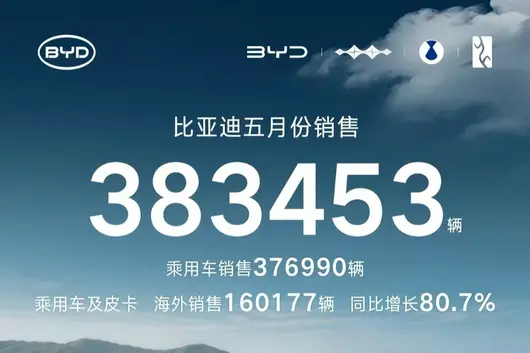
May 2026 new energy vehicle exports 160,644 units, accounting for 41.9% of the total sales of 383,453 units in the month, an 80.7% year-on-year increase, creating a historical high for monthly exports. January to May BYD overseas cumulative sales reached 614,470 units. At the same time, established production bases in Thailand, Brazil, Hungary, etc. 2026 export target adjusted from 1.3 million units to 1.5 million units.

Regarding overseas production bases, BYD has already formed four core manufacturing bases:
① Thailand Rayong Factory (Production started July 2024, annual capacity 150,000 units) focuses on right-hand drive models radiating ASEAN, localization rate reaches 70%, employee localization exceeds 90%;
② Brazil Camaçari Factory (Production started July 2025) covers 4 million square meters, initial capacity 150,000 units. By the end of 2026, it will expand to 300,000 units, becoming the largest EV manufacturing center in Latin America;
③ Hungary Szeged Factory (Production started Q1 2026) serving as the European headquarters, annual capacity 150,000 units, can avoid EU 38.1% anti-subsidy tariff, delivery cycle shortened from 45 days to 15 days; Uzbekistan Factory Phase 1 capacity 50,000 units, Phase 3 plan reaches 300,000 units, covering Central Asia and Eastern Europe markets.


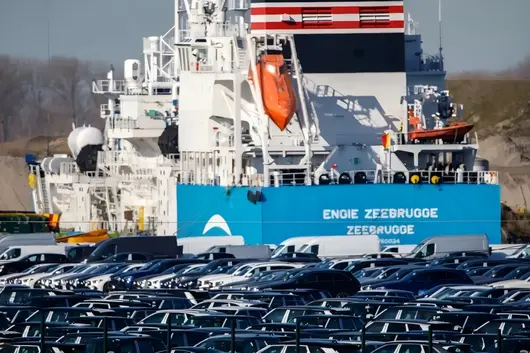
In terms of logistics, BYD has formed a self-operated RoRo fleet, having invested 8 large RoRo ships (including 3 with 9,200 vehicle slots, the largest in the world). Annual capacity exceeds 1 million units. It has already shed reliance on third-party logistics, significantly reducing sea freight costs (by approximately 50%) and improving delivery efficiency.
As the 2026 USA-Canada-Mexico World Cup approaches, the Chinese Football Juniors' championship victory has shown us a spark of hope. And BYD's staunch support is adding fuel to this spark, so that one day it can ignite into a vast fire, illuminating the future path of Chinese football.

Have you ever seen the roads in India?
I've seen them online.
The scene is usually like this: a sedan blocked behind a cow, motorcycles running wild nearby, even milk tea vendors nearby, so "clean and hygienic".

However, in a place where many feel physically uncomfortable after watching, Toyota, Suzuki, Honda and other Japanese car companies decided to bet on India.
According to the Indian "Brand Quality Foundation" website, the three car companies will invest nearly $11 billion to build factories, increase capacity, and develop exports in India.
Some netizens commented: Did the three Japanese car companies have too much money?
In fact, they didn't have endless money to spend, nor were they bewildered by Indian curry. These Japanese car executives are much clearer than us.
Current Japanese car revenue and market share are declining. Raw material costs are soaring. Looking at the world map, finding a market that can accommodate capacity, expand share, and has gentle competition is not easy.
So, it wasn't that Japanese car companies chose India, but because they had no choice.
The Pain of Japanese Car Companies
Past Japanese cars were truly the envy of others.
Ask old drivers who drove Japanese cars over ten years ago, talking about Japanese cars, almost no one doesn't give a thumbs up, cheap price, fuel saving, durable...
Even many Japanese cars needed to be bought at a markup, but who would think this iron fortress would be beaten out of sight in a few short years.
With the wave of new energy vehicles coming, electrification and intelligence became the goal for many domestic car companies to "leapfrog". Relying on China's strong new energy vehicle industry chain advantages and car companies' own persistence on R&D and technology, Chinese independent brands quickly achieved "leapfrogging".
Domestic cars once criticized are now becoming more and more common on the roads, even surpassing joint ventures in share.
According to CPCA data, in April 2026, the share of independent brands reached as high as 62.5%, far exceeding Japan's 13.1%.

You need to know, the Chinese car market is the largest car market in the world. Losing speed in the Chinese market is like losing a huge piece of cake.
Meanwhile, the main theme of the Chinese market in recent years is still price wars. Racing on configuration, price, and service has become a normal state, which also had a huge impact on Japanese cars' profits.
Apart from China, Japanese cars are also not doing well in the US.
On January 20, 2025, Trump swore in as the 47th US President, starting a series of chaotic operations, including imposing additional car tariffs in the name of national security, causing the tariff rate for imported Japanese cars to reach as high as 27.5% at one point. Although it decreased later, it was still far higher than the initial tax rate.
This operation directly led to a tariff loss of over 2 trillion yen for seven Japanese car companies in fiscal year 2025.
Looking at Japan itself, it is actually not easy either.
Middle East geopolitical conflicts blocked shipping in the Strait of Hormuz, transportation costs and raw material costs soared, Japanese car companies also had to suffer in silence.

Executives looking at the reports, their backs went cold, only to find a new growth curve.
So, Japanese car companies didn't fall in love with India, there was nowhere else to go.
Deep Thought on Choosing India
So, what magic does India have, to make Japanese car companies invest heavily?
The first advantage is big. In 2025, the Indian car market achieved 5.517 million new car sales, up 6% year-on-year, breaking the historical record, ranking as the third largest car market in the world, exceeding Japan for four consecutive years, second only to China and the United States.
The value of this doesn't need me to say much. India achieved this result mainly because India has been promoting tax reduction policies to promote consumption, which led to a significant increase in domestic consumption willingness.
The second advantage is close, meaning it is close to places where Japanese cars sell well, such as Africa.
So, India for Japanese car companies is more like a convenience store built in the center of a crossroad. You don't need to ship cars to eight countries separately, just build well at this stop in India, then unload ship by ship, and you can save a lot of costs.

The Nikkei also believes that India is expected to become its global car supply center.
The third advantage is stability. You know, Japanese cars' advantage is fuel cars, after all, the three major components of engines, gearboxes, and chassis, they have played for many years, technology accumulation is number one in the world.
But the Chinese car market has fully promoted electrification and intelligence development, leading to Japanese cars' advantage becoming weaker and weaker, impossible to play out. But India is different, it has the characteristics of few charging piles and slow electrification process. Indian old people buying cars still look for cheap, fuel saving, easy to fix, and these three points are exactly Japanese cars' old trade.
Especially Suzuki, always been India's car market evergreen, almost always sitting on the best-selling model throne, reputation of being worry-free, better than any advertisement.
So, Japanese car companies' vigorous layout of the Indian market is obviously carefully considered.
But, is the Indian market really that easy to mix?
The Hard-to-Bite Indian Market
Of course, India is not perfect like a hot commodity, its disadvantages are as obvious as its advantages, and every one is enough for Japanese car companies to face a hard time.
First talk about electrification. Yes, right now India has few charging piles and electric cars don't sell well, it is indeed a shelter for Japanese fuel cars. But you have to think, how long can this "shelter" avoid?
India previously shouted the slogan of 30% of new cars being electric vehicles by 2030. Although it sounds like bragging, but can't help but they really give subsidies, really build charging stations.
Imagine, what if one day India suddenly wakes up, starts vigorously promoting electrification, doing infrastructure, charging piles popping out like mushrooms after rain, then Japanese cars will be dumbfounded?
Isn't this a version of the Thai market?
Back then Japanese cars in Thailand won easily. The entire Southeast Asian market was called Japanese cars' backyard. Result Thailand took the lead in promoting electrification. Chinese electric vehicles came in, directly became a hot commodity. Look at Japanese cars again, share in Thailand falling down rapidly.

If India accelerates electrification, history will likely repeat, and this time, Japanese cars don't even have a place to flee, how to prevent will become the first problem for Japanese car companies.
Next talk about policy. India's policy is like a pot of curry, you never know if you will eat chicken or potato next time.
This magical country, today low tariff encourages building factories, tomorrow may fine you a huge amount. What's more annoying is mandatory joint venture. Foreign car companies want to sell cars in India, have to find local partners to partner up. When your factory is built, supply chain is done, India directly backstabs you. At that time whether adding money or withdrawing capital, what you get is heartache.
So you see, this market like India is like a mango that looks very sweet, bite the first mouth it's okay, chew two more mouths hit the hard core.
Japanese cars now is calculating, while the core hasn't bit the tooth, hurry up to nibble a few more mouths, but the core will bite sooner or later, just don't know which day.
Epilogue
Japanese cars this trip to India, not go for tourism, is go to make a living.
Chinese and Southeast Asian dining tables are more crowded, production and transportation costs have risen. Looking around the world, only this pot in India is still steaming, even if what is boiling inside is curry-flavored stones, have to bite hard and chew down.
Japanese car companies want to expand market, India wants to pull economy, solve employment, both sides have their own thoughts.
As for the ending is Japanese cars in India regain their glory, or like past competitors shamefully walk away, then is not known.
But no matter how, this play just started, we slowly watch is okay.
Anyway India's story, never bored.

From a loss of 326 million baht in the previous quarter to a windfall of 645 million baht in a single quarter, the global natural rubber giant, Thai Shidong Rubber, staged a stunning turnaround in just one quarter.
Recently, Shidong Rubber released its Q1 2026 financial report: net profit attributable to the parent company reached 645.4 million baht (approximately 130 million RMB), successfully turning losses into profits; EBITDA skyrocketed 307.4% quarter-over-quarter to 2.3693 billion baht.

Turnaround Strategy One: Production Zone Restrictions, Surge in Tire Raw Material Rubber Prices
The primary driver of Shidong's performance turnaround was the strong recovery of the natural rubber business, triggered by shortages in core tire raw materials.
Previously, rubber prices were plagued by speculative disturbances. However, Shidong CEO Veerasith pointed out that rubber prices in the first quarter had "shifted from speculative to real," returning to industry fundamentals. He emphasized: "The total supply of natural rubber from several major producing countries has not increased significantly, especially in Thailand and Indonesia, where production restrictions remain."
For downstream tire companies, this means the hard constraint of tight core raw material supply remains unsolved. Data confirms this trend: In the first quarter, the average price of TSR20 rubber (commonly used for tires) on the SICOM market reached 191.5 US cents/kg, a 10.6% surge quarter-over-quarter. Riding this wave, Shidong sold 341,800 tons of rubber, and the gross profit margin of this business jumped from 5.7% to 8.7%, becoming the most profitable cash cow.

Turnaround Strategy Two: Recovery of Glove Production Capacity, Icing on the Cake
Another engine is the comprehensive recovery of the medical glove business. Heavy flooding severely damaged production lines at the end of last year, but with operations restored, glove sales in the first quarter reached 9.159 billion pieces, a 4.6% increase quarter-over-quarter; capacity utilization rose significantly from 78.2% to 84.2%, directly converting into profit increments. Additionally, the gradual recognition of insurance claim proceeds from flooding further bolstered the current performance.

Conclusion: Cost Pressures for Tire Manufacturers Continue to Accumulate
From huge losses to windfall profits, Shidong's turnaround is a resonance of improved supply and demand and capacity recovery. However, for downstream tire manufacturers, this is by no means a relaxed signal. The persistent supply restrictions in the main production areas of Thailand and India suggest that the bottom support for tire raw materials remains strong. Against the backdrop of rubber prices returning to fundamentals and supply difficult to increase, the huge profits of the rubber giant may well herald the beginning of a new round of cost battle in the tire industry chain.


In May, China's automotive market overall presented a gentle recovery trend, with domestic brands still being the sales backbone of the market. Recently, BYD, Geely, Chery, Changan, and Great Wall, the top 5 domestic automakers, successively released their monthly performance reports. From the data, these five companies show a general characteristic of "stable total growth, divergence between domestic and international markets, and accelerated new energy penetration". Overseas exports and new energy vehicles have become the most core growth engines; export business has evolved from a "bonus item" to the "core foundation" for some companies. BYD's "dominant leader" status is further consolidated, Chery achieved high growth via exports, Geely's new energy penetration rate broke 56%, Changan focused steadily on balanced development, while Great Wall appeared slightly under pressure during structural transformation.
BYD: Export Hits New High Becomes Biggest HighlightIn May, BYD stood firmly at the top of domestic brands with a monthly sales volume of 383,500 vehicles, maintaining positive growth both year-on-year and month-over-month under a large base. Its two main brands, Dynasty and Ocean, sold a combined 330,200 vehicles, contributing 86.1% of total sales; Fangchengbao's monthly sales broke 30,000 units to reach 30,200, a year-on-year increase of 139.7%, setting a new high for the year; Denza sold 16,300 vehicles, and Yangwang delivered 286 vehicles. From a model perspective, BYD had eight models in May with monthly sales exceeding 20,000 vehicles. The Song Family and Yuan Family both broke 50,000 units, selling 51,370 and 56,691 vehicles respectively. The Sea Lion Family followed closely with 42,615 vehicles, and Seagull sales were also close to 40,000 vehicles.

BYD's biggest highlight in May was exports. Overseas new energy vehicle sales reached 160,600 units, an 80.4% year-on-year increase, accounting for about 42%. The sharp expansion of export scale effectively countered the phased weakness in domestic demand. Cumulative exports from January to May exceeded 620,000 vehicles. High export growth mainly benefited from continued ramping up of overseas factory capacity, improved ocean shipping capacity, and accelerated channel network expansion. In the domestic market, BYD promoted Megawatt Super Charging and intelligent strategies simultaneously—Megawatt charging achieved about 90% charge in 9 minutes; 20,000 super charging stations are planned to be built by 2026; all series models are available with Sky Eye B intelligent driving solutions and city navigation safety fallback plans, accelerating the popularization of high-level intelligent driving. As Gen 2 Blade Battery capacity gradually releases, the company's orders are expected to continue rising.
Chery: Sales Growth Leads the Top 5Chery Group's total sales volume in May was 247,800 vehicles, a significant year-on-year increase of 20.5%, ranking first in growth speed among the top 5. Exports remained its most core growth engine—May exports reached 181,900 vehicles, an 80.5% year-on-year increase, accounting for 73.4% of total sales that month, continuously breaking the single-month export record for Chinese brands for three months. In terms of new energy, Chery New Energy sold 100,300 vehicles, a 58.8% year-on-year increase. April and May consecutively saw monthly new energy sales breaking 100,000 vehicles.

The strong performance in exports benefited from Chery's long-term deep cultivation of overseas channel advantages and localized operation capabilities. While overseas orders continued to rise, high export growth formed a sharp contrast with domestic sales—Chery's domestic sales in May were only 60,000 vehicles, accounting for one-quarter of total sales. From cumulative data, Chery Group accumulated 1.101 million sales from January to May, but against the annual goal of 3.2 million vehicles, monthly averages need to reach about 420,000 vehicles later, and pressure remains significant.
Geely: New Energy Penetration Rate Breaks 56%Geely Auto's total sales volume in May was 237,600 vehicles, a 1% year-on-year increase, achieving month-over-month double growth for three consecutive months. In terms of structure, Geely's "New Four Transformations" transformation showed significant results: new energy vehicle sales reached 133,400 units, accounting for 56% of total sales, with new energy share exceeding 50% for four consecutive months.

From sub-brands, performance was significantly divergent. Zeekr brand sales in May reached 34,400 vehicles, a 82% year-on-year increase; Zeekr 9 Series and 8 Series models combined sales approached 50% of total sales, showing bright performance in the high-end market; Galaxy brand sales were 81,700 vehicles; Geely brand sales were 182,500 vehicles, among which China Star Series sales reached 100,800 vehicles; Lynk & Co brand sales were 20,700 vehicles, with new energy vehicle sales share rising to 71%.
In terms of exports, Geely's overseas vehicle exports in May reached 85,100 vehicles, a explosive 184% year-on-year increase, setting a brand single-month export record high. Among exported products, new energy vehicles reached 40,800 units, accounting for nearly half; hybrid and pure electric products have successively landed in Southeast Asia, Middle East, Latin America, and other markets, highlighting the results of global strategy implementation.
Changan: Multi-brand Matrix Balanced EffortChangan Auto's delivery volume in May was 209,100 vehicles, among which new energy deliveries were 92,400 vehicles, a 5.8% year-on-year increase, with new energy share about 44%. In terms of exports, overseas deliveries reached 70,700 vehicles, a 38% year-on-year increase, becoming another major growth highlight for Changan in May.
In the sub-brand matrix, Changan Qiyuan delivered 34,500 vehicles in May; All-New Q05 delivered 15,800 units, with orders breaking 3,000 units within three days of listing in Thailand; Deepal sales in May were 33,200 vehicles, a 30% year-on-year increase; January to May overseas cumulative sales were 28,700 vehicles, a significant 167% year-on-year increase; Avatr delivered 7,336 vehicles in May; Changan Auto (Gravity) delivered nearly 49,000 vehicles in May.

Changan Auto's balanced layout was fully reflected in May: the fuel car base remained stable, new energy brands Deepal and Qiyuan accelerated volume growth, high-end brand Avatr continued to break through in technical cooperation, and overseas markets simultaneously achieved breakthrough growth. The pattern of five brands working together, driven by both new energy and exports, is initially taking shape.
Great Wall: Overseas Sales Growth Year-on-Year 46.75%Great Wall Motor's sales in May were 100,400 vehicles, slightly down compared to last May's 102,200 vehicles, making it the only company among the top 5 to show a year-on-year negative growth. From sub-brands, Haval brand sales in May were 55,500 vehicles, remaining Great Wall's most important sales pillar; Tank brand sales were 17,100 vehicles; both Haval and Tank brand sales showed year-on-year declines; Wey brand sold 8,119 vehicles, a 31.78% year-on-year increase, achieving growth against the trend; Ora brand performance was most stunning, with sales of 6,018 vehicles, a significant 206.88% year-on-year increase. In terms of new energy, Great Wall sold 30,400 new energy vehicles in May, with new energy vehicle transformation gradually accelerating.

The overseas market became Great Wall's biggest highlight in May, with overseas sales growing 46.75% year-on-year. Against the background of pressure on the domestic market, strong growth in overseas business effectively made up for the decline in the domestic market. Great Wall Motor's current core contradiction lies in: Haval and Tank, the two traditional main-selling brands, face weak growth, while Wey and Ora brands, although growing notably, have relatively small volume and are not yet enough to support overall growth. How to complete the "relay" between old and new brands is the key issue Great Wall must solve subsequently.
Final ThoughtsFrom May data, the growth pattern of the top 5 domestic brands has clearly diverged, but there are three common trends worth noting: First, exports have become a key engine for domestic brands to seek stability and growth. Second, new energy transformation is still accelerating, but paths differ among enterprises. Third, technological innovation continues to deepen brand moats. Looking ahead to the second half of the year, competition in the automotive industry will continue to upgrade around these three trends. Although everyone has a common direction, these three trends are all competing for the entire enterprise's industrial chain strength, and the strong will remain strong, which has almost become an inevitable outcome.