首頁Zeekr

搜尋歷史
熱門搜尋
經銷商登入 / 註冊

Recently, an owner drove a Zeekr vehicle from Henan, entered Kazakhstan, and after that, smart functions such as vehicle navigation, audio-visual entertainment, etc., triggered backend security risk control strategies, resulting in a strong prompt interface. After the owner posted their experience to social media, it quickly triggered widespread discussion.
It needs to be clarified that this restriction only targets vehicle interface interaction functions. The vehicle's core driving systems such as power, steering, and braking operated normally throughout the journey. There was no situation of "unable to drive". The involved vehicle has completed verification, and the strong vehicle interface prompt has been resolved.

Facing user feedback, Zeekr official quickly launched optimization measures early on the morning of July 26. The brand acknowledged that although this vehicle interface restriction was intended to protect user property safety, there was indeed room for improvement in terms of user experience. Based on suggestions from users and netizens, Zeekr immediately promoted function iteration.
This attitude of "treating user voices as an evolution guide" reflects the brand's respect for real feedback. In the era of smart cars, every user feedback could become an opportunity to promote product and service upgrades.

The optimization plan launched by Zeekr this time is core to returning the "right of choice" to the vehicle owner:
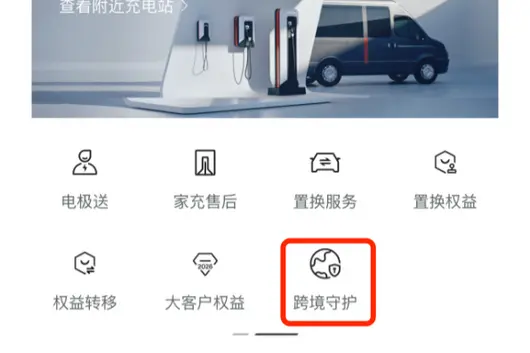
Step 1, the Zeekr App officially launched the "Cross-border Guard" function entry. Owners only need one click to submit, quickly get the verification code, complete self-service unlocking, and significantly simplify the original verification process.
Step 2, the developing "Cross-border Guard Function Switch" will be pushed via OTA. This function will be turned off by default. Before crossing the border, owners can manually choose to turn it on or off on the mobile device according to their needs. If owners actively enable this function, they can still perform self-service unlocking through the App "Cross-border Guard" entry.
Step 3, for users who have already crossed the border or are about to cross the border, Zeekr opened a 24-hour customer service hotline 400-003-6036, providing a priority access channel. If unlocking fails or an emergency occurs, Zeekr will provide remote assistance immediately.
This series of measures balanced security guarantees and convenient experience, realizing the shift from "passive triggering" to "active service".
III. Industry Background: Cross-border risk control is not "overstepping one's authority"In fact, new energy vehicle enterprises deploying cross-border risk control systems is not redundant control, but a "firewall" to deal with cross-border automotive black and gray industry. In recent years, cross-border theft and robbery of new energy vehicles, dismantling and smuggling chaos are not uncommon. Previously, a flagship model of a new force brand was stolen and then transported overseas. The vehicle was transferred quickly, vehicle interface accounts and filing information were remotely tampered with, leading to owners having no way to defend their rights. Many places have also solved cases of mass new car cross-border loss, behind which are exactly the security loopholes left by the lack of security protection mechanisms.
Industry data shows that vehicle interface restriction is essentially a mature global vehicle security protection strategy of the vehicle enterprise. Mercedes-Benz, BMW, Porsche, Tesla and other global top vehicle enterprises have deployed similar mechanisms. During the Russia-Ukraine war, these brands, lacking backup communication mechanisms and intelligent fault tolerance design, caused the anti-theft system to trigger security control mechanisms due to external signal interruption or interference, thereby forcibly locking the vehicle.
Some lawyers pointed out that vehicle enterprise geographic fencing risk control only restricts vehicle interface entertainment, navigation and other auxiliary functions, and does not intervene in core hardware related to driving safety such as steering, braking, and power throughout the journey. Owners can unlock the restriction after providing materials such as passports, customs clearance certificates, and purchase proofs to complete verification, which does not constitute an infringement of property rights. Conversely, if vehicle enterprises let vehicles flow overseas without control, they will face high administrative penalties from customs.
IV. Safety Bottom Line: Protecting Property and Data Security is a Legal ResponsibilityAt a deeper level, vehicle positioning trajectories and vehicle-mounted surveying geographic information belong to nationally mandated important data. According to the "Data Security Law", "Several Provisions on the Safety Management of Automotive Data (Trial)", "Guidelines for Automotive Data Outbound Security (2026 Version)", "Surveying Law" and other relevant laws and regulations, relevant data is strictly prohibited from unauthorized cross-border transmission. Geographic fencing risk control is a necessary measure for vehicle enterprises to implement national data security and surveying confidentiality responsibilities. Moreover, in 2026, the domestic implementation of pure electric passenger car export license management system, vehicles without formal licenses are prohibited from flowing out, and vehicle enterprise risk control is also a necessary measure to cooperate with national import and export supervision and avoid compliance risks. In addition, overseas vehicle interface audio-visual and traffic services involve copyrights and local regulations of various places, and disorderly opening functions will also bring compliance troubles to owners.
Zeekr's optimization this time is not a concession to the safety bottom line, but finding a better solution between "safety backstop" and "convenient experience". The risk control logic remains unchanged, but the process is more transparent and the operation is more autonomous, truly achieving "safety not missing, experience not discounted".
V. Advanced Significance: The Inevitable Path for Chinese New Energy GlobalizationFrom a long-term industry perspective, this event was a "stress test" in the process of Chinese high-end new energy vehicle globalization. Currently, domestic high-end new energy brands are accelerating going global, and the huge price difference between domestic and foreign markets creates a huge arbitrage space: Zeekr 009 domestic selling price over 400,000 yuan, Singapore market over 2 million yuan; Zeekr 9X overseas terminals generally mark up 400,000 yuan, Mansory custom modified version overseas selling price reached 400,000 US dollars, equivalent to more than 2.7 million yuan RMB. The huge price difference bonus makes domestic high-end luxury cars the key target of cross-border black and gray industry and illegal resale dealers. Various illegal cross-border reselling, whole vehicle smuggling, and parts dismantling arbitrage behaviors are endless.
Perfect risk control mechanism is exactly the core confidence for Chinese vehicle brands to walk steadily and far. This Zeekr "listen to advice upgrade" made a positive demonstration for the whole industry: safety risk control is not unnecessary restraint, but indispensable infrastructure for Chinese vehicle brands globalization. In the future, with domestic high-end new energy vehicles continuously deepening cultivation of overseas markets such as Southeast Asia, Middle East, Singapore, the industry will surely refer to this optimization paradigm and unify and improve the standardized system of "risk control backstop + user autonomy + convenient unlocking".
VI. Brand Sincerity: User Voices are the Evolution CoordinatesThe Zeekr brand, known for global security, is hailed by users as "Highway Tank Zeekr". Not only pursuing leading technology configurations in body structure, intelligent obstacle avoidance, etc., but also walking in the forefront of the industry in privacy protection, anti-lost and anti-theft. But even the best original intention must avoid excessive protection similar to "There is a kind of cold called 'Mom fears you are cold'". Cars are essentially user property, and security strategies should not make users feel disturbed.
Reviewing the past year, Zeekr has continued to transform user voices into brand evolution drivers. From clarifying "model modifications need advance notice and no more than once a year", to launching "Zeekr Zero Distance" communication mechanism, releasing "Sunshine Service Convention", to this morning's rapid launch of "Cross-border Guard" — behind every measure is the sincerity of handing the right to speak back to users. It is this honest communication without evasion or buck-passing that has allowed the Zeekr brand NPS (Net Promoter Score) to rise significantly and formed a strong word-of-mouth effect in the market.
Market recognition is the most real. In the first half of this year, Zeekr cumulatively delivered 178,370 vehicles, an increase of 97% year-on-year, becoming the only enterprise among new force brands to complete more than half of the annual sales target. This is not only the victory of the product, but also the result of the "two-way rush" between the brand and users.
ConclusionAn overseas risk control trigger exchanged for an industry-leading outbound security guarantee system; one user feedback promoted a brand service upgrade. Zeekr proved with action: true "global security" lies not only in the hard protection of the vehicle structure, but more in the reverence for user voices. In the journey towards globalization, Chinese new energy vehicle enterprises need such confidence, and also need such warmth.

One was scolded for being locked, one was scolded for not being locked. Whose interests are the automakers' "digital fences" actually protecting?
Recently, two strange things happened in the automotive circle, and they must be viewed together.
A Zeekr, the owner drove abroad themselves, got locked for over 30 hours right after entering Kazakhstan. A Li Auto L9, the owner said the car was stolen domestically, but the location also appeared in Kazakhstan.
One actively locked, one not locked. Regarding vehicle cross-border, should automakers lock them?
Zeekr: Self-driving abroad, locked for 30 hours
On July 16, Henan owner Mr. Liu drove a Zeekr 9X to start a Eurasian self-driving tour. As soon as the car entered Kazakhstan, the next day the car system popped up a bunch of prompts——
Navigation unusable, music unplayable, storage box stuck, documents cannot be retrieved. 
Even more extreme, the fuel cap won't open, cannot refuel. This car only has one basic driving function remaining.
Lasting over 30 hours, the in-car screen repeatedly popped up prompts "Vehicle status abnormal, please contact official customer service", to unlock must return to domestic authorized store.
Mr. Liu told the store he was going abroad before departure, but no one reminded him about locking the car. 
Zeekr responded: Vehicles sold domestically only have authorization for use within the country, triggering security protection mechanisms after leaving the border to prevent theft, robbery, and illegal export. Car owner wants to unlock? Yes, submit passport, customs documents, purchase contract, invoice, driver's license, visa... full set of materials.
Netizens exploded: I spent 500,000 to buy this car, and going abroad I still have to report to you?
Li Auto: L9 disappears into thin air, theft or debt?
Look at Li Auto again.
Hangzhou owner Mr. Luo, received system notification in March this year: Li Auto L9 APP control permissions expired.
Where is the car? Car is gone. Location shows, this car appeared in Kazakhstan.
Owner questioned: Did Li Auto remotely unlock it and smuggle the car out of the country? Public opinion rapidly fermented, "Disappearing Li Auto" topped the hot searches.
Interestingly, this came out exactly on the day of the Li Auto L6 launch, the timing was quite delicate.
But the situation quickly reversed — police and media investigation found: This car was mortgaged three times.
First time mortgaged to WeBank, loaned 300,000; second time mortgaged to Zhenong Microcredit, loaned 200,000; third time directly pledged to private lending party, even the physical key was handed over. 
This isn't over. The owner also did something: Replaced the third physical key, causing the keys in the pledge party's hand to fail directly. Pledge party found car keys unusable, drove the car away overnight, transported all the way to Horgos, cleared customs overnight. Upon arriving in Kazakhstan, to allow local buyers to use it normally, the pledge party also applied to unbind the original owner's account permissions. This is not car theft, this is a debt dispute.
Li Auto legal department issued a statement on April 22: Never participated in illegal transfer, no hacker cracking involved, remote operations were all executed by the actual registered person's own account.
Locked or Not Locked, Both Scolded
Putting two things together for comparison, it's interesting.
Zeekr locked — scolded.
Owner went abroad for self-driving, inexplicably locked for 30 hours, even fuel cap won't open, experience extremely poor.
Li Auto didn't lock — also scolded. 
Some comments said: Geely too proactive, locked as soon as going abroad; Li Auto too passive, watched the car drag from Hangzhou to the seaside, transported to Horgos, exited country. Later, to let overseas buyers use it, even unbound the original owner account permissions.
Locked gets scolded, not locked also gets scolded. Whatever automakers do is wrong. But is the problem really that simple?
Why do automakers set up "digital fences"?
This thing really isn't automakers being idle. Behind it there are three layers of logic:
First, black and gray industries are rampant
The price difference between domestic and foreign new energy vehicles is huge.
Zeekr 009 domestic over 400,000, Singapore sells over 2 million; BYD Han domestic over 200,000, Europe sells to over 500,000. Smuggling cars abroad, profit space is how big, you calculate. One car smuggled out, profit can double or triple. The black industry chain behind this is far bigger than imagined.

Second, regulatory hard requirements
February this year, Ministry of Industry and Information Technology and other eight departments jointly issued "Safety Guidelines for Automotive Data Outbound (2026 Edition)", vehicle location, trajectory, mapping data, cannot be casually sent abroad. Automakers without geographic fences, they violate the law themselves first.
Third, industry common practice
Tesla, BMW, Mercedes-Benz have similar restrictions in border areas. Same logic as remote locking phones lost — not to harm you, but to protect you. Prevent vehicles from being illegally sold, or stolen and then sold abroad.
July 26, Zeekr announced emergency rectification:
First, APP launched "Cross-border Protection" function, one-click self-service unlock.
Second, develop "Cross-border Protection Function Switch", default off, owner decides to open or not before leaving country.
Third, 24-hour customer service priority channel.
Say simply — return the initiative of locking car back to owner.
As for Li Auto, legal department clarified in April, but public opinion storm continues. 
The core contradiction of these two things is actually just one:
Automakers' geographic fences, are they protecting owners, or restricting owners? The answer might be — both.
Without this mechanism, smuggling, theft, data violations would be rampant. But execution methods are too crude, indeed let compliant users suffer losses in silence. 
So Zeekr's rectification direction is right: default no lock, let owner choose before leaving country. Handing choice rights to users is more reliable than any "thinking for you". After all, car belongs to user, not automaker.

Recently, an event where new energy vehicles purchased domestically triggered security protection strategies due to long-term driving overseas, resulting in restrictions on in-vehicle network related functions, has reached a satisfactory conclusion.

Previously, the car owner triggered the vehicle enterprise's backend risk control mechanism due to the vehicle being long-term located in an overseas area, and smart functions such as in-vehicle audio and video entertainment were temporarily restricted. After the owner posted their experience on social media, it sparked widespread discussion.
In response, Zeekr officially clarified and quickly launched optimization measures early in the morning on the 26th. Zeekr acknowledged that although this in-vehicle restriction was intended to protect users' property safety, there is indeed room for improvement in terms of user experience. Combining feedback from users and netizens, optimization was immediately advanced.
The core measure is to optimize the cross-border security protection experience. The Zeekr App adds an entry point for the "Cross-Border Guardian" function. The owner only needs to trigger it with one click to quickly complete self-unlocking, simplifying the process. The "Cross-Border Guardian Function Switch" currently under development will be pushed via OTA later.
This module has become the industry's first comprehensive cross-border security protection system and is also a typical case of users, netizens, and vehicle manufacturers jointly promoting industry progress.
Official Rapid Response, Step-by-Step Optimization of Security Protection ExperienceIt is understood that this car owner drove a self-drive journey starting from Henan. After entering Kazakhstan, the in-vehicle system popped up a strong prompt interface, and smart functions such as navigation and audio/video were restricted. The reporter verified that the vehicle's power, braking and other core driving systems were always normal, and there was no situation of "unable to drive". Currently, this vehicle has completed verification, and the in-vehicle strong prompt has been lifted.
After the incident occurred, Zeekr listened to user suggestions humbly, responded quickly to public opinion appeals, and implemented an optimization plan step-by-step, balancing vehicle security protection and car owner usage experience.
The specific optimization plan includes: First, the Zeekr APP officially launched the "Cross-Border Guardian" function entry point. The owner only needs to trigger it with one click to quickly obtain the verification code, complete self-unlocking, simplify the process, and improve response efficiency. Second, the "Cross-Border Guardian Function Switch" currently under development will be pushed via OTA later. After the switch function is launched, "Cross-Border Guardian" will be in the closed state by default. Before going overseas, the car owner can manually choose to open or close it on the mobile phone according to their own needs. If the car owner actively opens this function, they can still perform self-unlocking through the APP "Cross-Border Guardian" entry point. Third, for users who have gone overseas or are about to go overseas, Zeekr has opened a 24-hour customer service hotline (400-003-6036) which will provide a priority access channel. If unlocking fails or an emergency occurs, Zeekr will assist remotely at the first time.
Zeekr side stated that the brand adheres to the original intention of extreme full-domain safety, always puts user experience and safety first, and always attaches importance to every real voice. In the future, it will continue to collect and listen to car owner feedback on a normalized basis, iterate and optimize security risk control strategies and cross-border travel service processes, and continue to find a more perfect balance point between building a security and data safety defense line and optimizing user travel experience.
Reporter Investigation: New Energy Industry Universally Uses Risk Control Design, But Experience Needs ImprovementIn fact, new energy vehicle enterprises deploying cross-border risk control systems are not redundant control means, but a necessary guarantee to cope with the current automotive cross-border black and gray industry and protect car owner rights and interests. In recent years, the chaos of cross-border theft and robbery of new energy vehicles, dismantling and smuggling has occurred frequently. Previously, a flagship model of a new force brand was stolen and then transported overseas, the vehicle was transferred quickly, the in-vehicle account and filing information were tampered with remotely, resulting in the car owner having no way to defend their rights. Many places have also cracked down on cases of batch new cars flowing overseas, behind which is the security loopholes left by the lack of security protection mechanisms.
Industry data shows that in-vehicle restrictions are essentially a mature global vehicle security protection strategy of vehicle enterprises. Mercedes-Benz, BMW, Porsche, Tesla and other global head vehicle enterprises have deployed similar mechanisms. During the Russia-Ukraine War, the above brands, lacking backup communication mechanisms and intelligent fault tolerance design, triggered security prevention and control mechanisms due to external signal interruption or interference, thereby forcibly locking the vehicle.
But for a long time, most vehicle enterprises only focus on risk control implementation, neglect user notification and experience adaptation, imperfect processes and non-transparent mechanisms, leading to the general public to produce a misunderstanding that "enterprises overstep their authority and excessively intervene in property rights". Essentially, this kind of risk control logic is the same source as iPhone device positioning anti-theft, electronic fence lock machine mechanisms, the core is to provide a safety net for user property safety, and can be unlocked after user reporting.
Industry and Legal Experts: Security Strategies and User Privacy Protection Are Very NecessaryMany senior figures in the automotive industry interviewed stated that this Zeekr rapid optimization measure has, to a certain extent, promoted the progress of the new energy industry security risk control system.
In the era of smart cars, the core responsibility of vehicle enterprises has long been limited to driving operation safety, but extended to the full-domain security protection system: it includes not only basic driving safety such as steering, braking, and power, but also vehicle property anti-theft safety and car owner personal data privacy safety. Zeekr's optimization of cross-border risk control rules this time is essentially finding the optimal balance point between safety compliance baseline, property protection mechanism and user experience, truly handing back the vehicle control right to users, achieving "safety in place, experience not discounted".
For the viewpoint questioning whether vehicle enterprises have the right to restrict vehicle functions unilaterally. Some lawyers stated: The enterprise's geofencing risk control only restricts in-vehicle entertainment, navigation and other additional functions, and never interferes with core hardware related to driving safety such as steering, braking, and power. After the car owner provides passports,通关 vouchers, car purchase proof and other materials to complete verification, the restriction can be unlocked, which does not constitute an infringement of property rights. On the contrary, if the vehicle enterprise allows vehicles to flow overseas without control, it will face high administrative penalties from customs.
The real feedback of front-line car owners further confirms the necessity of industry optimization. Many Zeekr car owners interviewed stated that they chose Zeekr precisely because they appreciated the brand concept of extreme safety. Relevant industry persons believe that the full-domain electronic fence, cross-border risk control mechanism is a necessary safety configuration for high-end luxury cars, and is consistent with the anti-theft lock machine logic of various digital products. High-end luxury cars have high value and large cross-border arbitrage space, and a perfect risk control mechanism can effectively avoid the risk of vehicles being stolen, robbed, and illegally resold, making daily car use and long-distance cross-border travel safer and more reassuring.
Behind the Controversy: The Inevitable Step for Chinese High-End New Energy GlobalizationFrom the perspective of the long-term trend of the industry, this vehicle enterprise's upgrade measure is the inevitable way for Chinese high-end new energy vehicles to go global. Currently, domestic high-end new energy brand acceleration to go out of the country, the huge difference in price between domestic and foreign markets has formed a huge arbitrage space: Zeekr 009 domestic price is more than 400,000 yuan, Singapore market is more than 2 million yuan; Zeekr 9X overseas terminals generally add 400,000 yuan, Mansory custom modified version overseas price reaches 400,000 US dollars,折合 to more than 2.7 million yuan RMB. The huge price difference dividend makes domestic high-end luxury cars the key coveting target of cross-border black and gray industry and illegal reselling dealers, and various illegal cross-border reselling, whole vehicle smuggling, parts dismantling arbitrage behaviors are emerging.
At the same time, vehicle positioning trajectory, in-vehicle surveying and mapping geographic information belongs to national statutory important data. According to the "Data Security Law", "Provisions on Several Issues Concerning the Safety Management of Automotive Data (Trial)", "Guidelines for Automotive Data Cross-Border Security (2026 Version)", "Surveying and Mapping Law", relevant data are strictly prohibited from non-compliant cross-border transmission, geofencing risk control is the statutory responsibility of vehicle enterprises to implement national data security and surveying and mapping confidentiality. And in 2026, domestic pure electric passenger car export license management system will be implemented, and vehicles without formal licenses are prohibited from flowing out, and vehicle enterprise risk control is also a necessary measure to cooperate with national import and export supervision and avoid compliance risks. In addition, overseas in-vehicle audio and video, traffic services involve copyright and local laws in various places, and disorderly opening of functions will also bring compliance troubles to car owners.
Zeekr brand, known for full-domain safety, is praised by users as "Road Zeekr". Not only does it pursue leading technology configuration in body structure, intelligent obstacle avoidance and other aspects, but it is also at the forefront of the industry in privacy protection, anti-loss and anti-theft. But no matter how good the original intention is, it must avoid excessive protection similar to "there is a kind of cold called mom is afraid you are cold". Cars are essentially users' property, and security strategies should not make users feel disturbed.
This controversy turned from public opinion crisis to industry upgrade opportunity. Zeekr's "listening to advice upgrade" also made a positive demonstration for the whole industry: Security risk control has never been a redundant restraint, but the core confidence and necessary infrastructure for the globalization of Chinese automobile brands. In the future, as domestic high-end new energy vehicles continue to deeply cultivate overseas markets such as Southeast Asia, Middle East, Singapore, the industry will definitely refer to this optimization paradigm, uniformly improve the "risk control bottom-line + user autonomy + convenient unlocking" standardization system.
Looking back at the past year, Zeekr has transformed user voices into the driving force for brand evolution step by step. From clarifying that "model changes need to be announced in advance and no more than once a year" in response to the problem of too fast model change rhythm, to launching the "Zeekr Zero Distance" communication mechanism and publishing the "Sunshine Service Convention" - every measure behind it is the sincerity of giving the right to speak back to users. It is this frank communication that does not avoid and does not shirk that made Zeekr brand NPS (Net Promoter Score) soar greatly, and formed a strong word-of-mouth effect in the market. In the first half of this year, Zeekr cumulative delivery 178,370 vehicles, year-on-year growth of 97%, becoming the only enterprise among new force brands that completed more than half of the annual sales target. Market recognition is the best reward.