首頁Yuan Up

搜尋歷史
熱門搜尋
經銷商登入 / 註冊

【Auto Market Insider】BYD's factory construction plan in Malaysia has changed. According to reports, BYD has shelved the plan to build its own vehicle assembly plant in Malaysia and instead entered into "in-depth negotiations" with local partners to achieve local production goals. This decision was revealed by Jacob Ma, Managing Director of BYD Malaysia.
Previously, BYD announced in August 2025 that it planned to build an assembly plant in Tanjung Malim, Perak, Malaysia. Now, Ma clearly stated: "The Tanjung Malim plant will not proceed."

BYD's alternative is to cooperate with a "mature local enterprise".
Ma stated that this partner "has the capacity and capability to meet BYD's requirements and support a complete local assembly business", and discussions have "entered a very deep stage".
According to reports from May this year, this partner is likely Sime Motors, the official distributor of BYD in Malaysia. Cooperation might utilize a factory owned by a subsidiary of Sime Motors located in Kulim, Kedah, for contract assembly.
Shifting from "Self-Build Plant" to "Local Contract Manufacturing", BYD's logic is very pragmatic: not bearing the heavy assets of building a factory, yet quickly achieving local assembly, bypassing policy thresholds.

Why did BYD give up building its own factory? The answer lies in policy.
Malaysian financial media "The Edge" reported in March this year that BYD failed to reach an agreement with the Ministry of Investment, Trade and Industry of Malaysia on relevant conditions. One of the disputes involved the export quota requirement for locally assembled vehicles—the highest requirement may be to export 80% of locally assembled vehicles.
An 80% export requirement means if BYD builds its own factory, most capacity must be used for exports rather than supplying the local Malaysian market. For a car company wanting to "dig deep" locally, this cost structure is not cost-effective.
Another background is: Starting from July 1 this year, Malaysia requires the minimum CIF (Cost, Insurance, and Freight) for imported complete electric vehicles to reach 200,000 Ringgit (approximately $49,000 USD), and the minimum power output must be 245 horsepower. Some of BYD's main electric vehicle models sold in Malaysia are priced below 200,000 Ringgit—this means if these cars continue to be imported, they will be blocked by policy thresholds, highlighting the importance of local assembly even further.

Despite the adjustment to the factory construction plan, BYD's performance in Malaysia is not bad.
Since entering the Malaysian market in 2022, BYD has cumulatively sold over 35,000 electric vehicles. Last year, BYD sold 14,407 electric vehicles locally, becoming the highest-selling electric vehicle brand in Malaysia. In the first half of this year, sales exceeded 7,000 units.
Premium brands are also advancing: In July this year, the Denza Z9GT was launched in Kuala Lumpur with a price of 358,800 Ringgit, and the first batch sold out.
Ma emphasized that BYD "will continue to dig deep in Malaysia": "The specific location of the factory and the method of cooperation may change, but our goal has not changed."

BYD canceling the self-built factory in Malaysia is a pragmatic adjustment from "Heavy Assets to Light Cooperation".
Its logic is very clear: Malaysia's "80% export requirement" and "200,000 Ringgit CIF threshold" make the economic math of self-building a factory not add up, and make local assembly a necessity. Rather than carrying heavy assets to meet export requirements, it is better to borrow existing capacity from local partners to quickly achieve localized production.
This is actually a microcosm of Chinese automakers going global: Going global is not simply copying the domestic model abroad, but adapting to the target market's policies, costs, and localization rules. BYD's shift in Malaysia is "flexible adjustment" rather than "retreat"—its sales foundation (number one locally) remains, and the premiumization of Denza is also advancing.
From "Self-Build" to "Cooperation", it reflects the maturity of BYD's global strategy: no longer pursuing the form of "building a factory oneself", but result-oriented, obtaining localization benefits in a lighter way.

US Treasury Secretary Bessent recently stated directly in a speech at the Charlotte Economic Club that BYD is the "best car at the $70,000 value level that a consumer can buy for $35,000". This evaluation quickly went viral on networks in both China and the US.

As one of the top US economic policymakers, Bessent usually talks more about tariffs, exchange rates, and the macroeconomy, rarely making such specific evaluations on a single brand or product. More noteworthy is that he is evaluating a Chinese automotive company—at just the time when BYD's overseas market is surging continuously. As of August, BYD's overseas monthly sales were 189,000 units, a year-on-year increase of 134.6%, breaking overseas sales records for five consecutive months; cumulative overseas sales from January to August reached 1.158 million units, exceeding the total of the previous year. On one side is the rare praise from the US Treasury Secretary, and on the other is the solid leap in global sales; the convergence of these two threads constitutes the most powerful evidence of BYD moving from a Chinese brand to a global brand.

In fact, this is not the first time Bessent has turned his attention to BYD. Earlier this April, when Bessent was interviewed by US media, he mentioned that the BYD Seal model "looks pretty good" and "if it were to be sold in the US, tariffs would need to be paid". From "looks pretty good" in April to "$70,000 value for $35,000" in September, within just five months, Bessent continued to track and upgrade his evaluation of the same brand, itself conveying a clear signal: BYD's product strength has made it impossible for traditional players and policymakers in the global automotive industry to ignore.
More importantly, what Bessent said was not diplomatic pleasantries, but a price anchor based on real experience—"at the $70,000 level" refers to the niche market long occupied by traditional luxury brands, and "$35,000" is BYD's actual selling price to global consumers. This short sentence is equivalent to declaring in the most straightforward way: under equal product strength, the brand premium system maintained by traditional automakers for decades has become invalid.

The recognition BYD receives from global high-level officials extends far beyond this. US California Governor Newsom, after personally experiencing the Yangwang U8, praised it as "a breakthrough technology across generations"; the President of Uzbekistan awarded BYD the national "Medal of Friendship", recognizing its contribution to the local industry; Brazilian President Lula, Thai Prime Minister Anutin, former Chilean President Piñera and other political figures from various countries also praised BYD's technological innovation and green transformation results. From developed countries to emerging markets, from personal experience-based evaluations to national honorary awards, BYD is receiving multi-party authoritative certifications across regions and levels. This can no longer be explained by coincidence or individual cases—when a Chinese car brand continuously receives active positive reviews from political figures of different countries, the only reasonable explanation is that the product strength is sufficiently solid.
This affirmation from the official side is also transmitted to the ordinary consumer level. Bessent's evaluation continues to ferment in the US public opinion field, with a large number of netizens leaving comments to express resonance: "Bessent is BYD's best salesperson", "I just want a car like this", "Let them build a factory in the US, this will stimulate our innovation and competition". Public consensus is forming—user perception of car quality is being peeled away from brand history and circle premiums, returning to core technology, real configuration, and daily usage experience itself. BYD gains global user recognition with solid product strength and is continuously reconstructing the value evaluation standards of the global automotive industry.

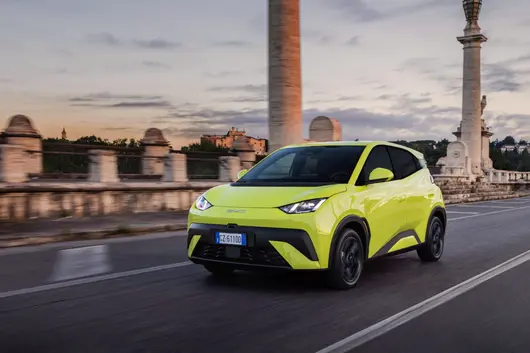
Sales are the most direct realization of reputation. In Thailand, Singapore, Italy, Spain, Brazil, Saudi Arabia, UAE, South Africa and other countries, BYD has topped the local new energy vehicle sales list. Yuan UP, Dolphin family, Song PLUS and other main models are becoming the "national face" of city streets globally. Behind this achievement is BYD's full-stack independent R&D in the three core fields of batteries, motors, and electronic control—the safety breakthrough of Blade Batteries, energy efficiency optimization of the DM-i Super Hybrid System, and architecture integration capability of the e-Platform 3.0, together forming an irreplaceable industrial moat.
From Bessent's continued attention, to public praise from political figures of multiple countries, to the real purchases of millions of overseas users, Chinese smart manufacturing represented by BYD is undergoing a profound role transformation: from a follower of the global automotive industry to gradually becoming a definer of value standards. When "$70,000 value for $35,000" becomes an international consensus, the moat built by traditional brand premiums is no longer unbreakable—and this, perhaps, is the industrial signal behind Bessent's comment most worthy of repeated interpretation.

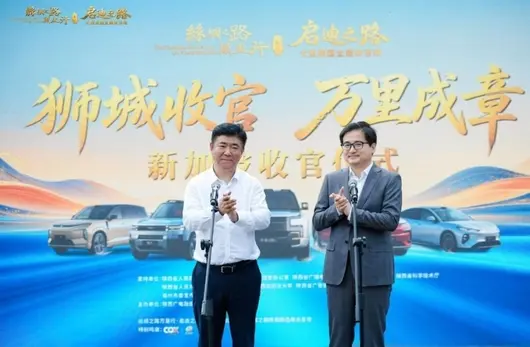
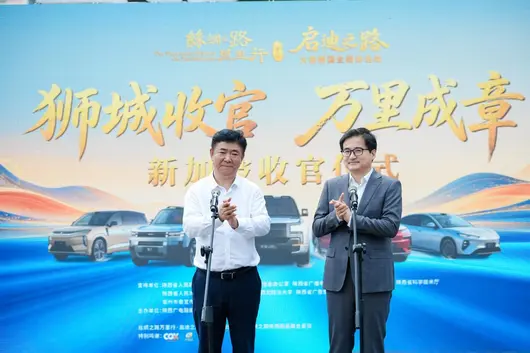
August 25, the highly anticipated "2026 Silk Road 10,000-Mile Journey · Enlightenment Road" event concluded successfully in Singapore, with BYD providing backing for the entire travel cooperation. Green energy accompanies the Silk Road journey, this 33-day Silk Road trip was full of highlights, the convoy started from Xi'an, spanning six provinces within the country, crossing Thailand and Malaysia along the way, traveled over 10,000 kilometers, eventually arrived in Singapore, successfully completing the cross-border journey.

This year marks the fifth anniversary of the establishment of comprehensive strategic partnership between China and ASEAN. This event was themed "Technology Innovates · Civilization Converges", connecting land and maritime Silk Roads, integrating cultural exchange, tech dialogue and economic trade connectivity, vividly showcasing the new development vitality of the "Belt and Road".

This journey was also a 10,000-mile real-world test of BYD's hard-core technology. BYD gathered five brand models to form a new energy vehicle fleet, adapting to various complex road conditions such as highways, mountain roads, and urban congestion. Its flash charging capability of "5 minutes for good charge, 9 minutes for full charge", relying on the network layout of nearly 10,000 flash charging stations across the country, solved the long-distance energy replenishment challenge, intelligent driving also significantly reduced driving pressure.


BYD's deep cultivation in the Singapore market achieved remarkable results, consecutively securing the first place in local passenger car sales for 19 months. In 2026, BYD's overseas business grew even faster, best-selling in over 100 countries worldwide, topping the new energy sales list in multiple countries.

This Silk Road journey not only demonstrated the solid strength of Chinese new energy vehicles, but also allowed the world to see the strong power of Chinese brands helping the "Belt and Road" green development.
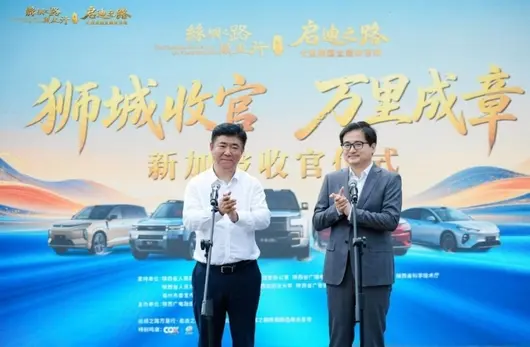

August 25, the 2026 Silk Road 10,000 Li · Inspired Road Event concluded smoothly in Singapore, with all travel services throughout the journey exclusively provided by BYD. Green energy accompanied the Silk Road journey, and this 33-day international trip concluded successfully. The convoy departed from Xi'an, crossed six provinces domestically, passed through Thailand and Malaysia, and finally arrived in Singapore, driving over 10,000 kilometers in total, perfectly completing the land-sea Silk Road route of the new era.

This event closely followed the theme "Technology Towards New · Civilization Towards Core". Coinciding with the 5th anniversary of the establishment of the comprehensive strategic partnership between China and ASEAN, it combined Silk Road cultural exchange, technological interaction, and trade connectivity, vividly showcasing the brand new development outlook of the land-sea linkage of the "Belt and Road". Numerous guests, overseas Chinese compatriots, and media from both home and abroad jointly witnessed this grand event.


The lineup of the convoy for this expedition was very complete, gathering models from BYD's full brand series including Dynasty, Ocean, Denza, Fang Cheng Bao, and Yangwang, smoothly handling complex road conditions such as highways, mountainous areas, and urban congestion. The convoy tested and verified BYD's two core hardcore technologies throughout the journey: the flash charging capability of a 5-minute fast charge and 9 minutes to full charge, completely resolving the anxiety about energy replenishment for long-distance travel. At the same time, the God's Eye assisted driving system iterated and upgraded based on massive amounts of real road condition data, greatly reducing the pressure of long-distance driving and ensuring smooth travel throughout the journey.

In the high-standard Singapore market, BYD's strength has long established a foothold. As of July 2026, it has ranked first in local passenger car sales for 19 consecutive months, with the pure electric market share reaching as high as 40.3%. The local threshold for buying a car is extremely high, and consumers are very cautious when choosing cars. Yet, BYD still leads in sales, and has also laid out 16 offline retail touchpoints, with brand recognition continuing to rise.


Not just in Singapore, this year BYD's overseas market saw a comprehensive breakthrough. From January to July, overseas sales exceeded 970,000 units, surging 76% year-on-year. Products cover more than 120 countries and regions globally, topping the new energy vehicle sales list in multiple countries such as Thailand, Spain, and Brazil. This Silk Road journey was not only an international test drive but also allowed the world to see the technological strength of Chinese new energy brands, empowering China Intelligent Manufacturing to boost global green transportation upgrades.

Recently, BYD's first half 2026 financial report was released.
In the first half, BYD achieved operating revenue of 344.815 billion yuan, net profit attributable to parent company of 12.325 billion yuan, scale continued to firmly rank at the forefront of the domestic automotive industry; R&D investment was 28.9 billion yuan, cash reserves 167.4 billion yuan, one side is actual cash technology investment, one side is a solid cash foundation.
On the sales front, in the first half, total vehicle sales exceeded 1.8 million units, continuing to firmly hold the top spot in global new energy vehicle sales. Putting these numbers together, the silhouette of a leader with a massive scale, stable cash flow, and continuing high-intensity investment is basically established.

Everyone has seen this market trend this year. The price war has been raging since the beginning of the year until now. Revenue and profits of mainstream domestic and foreign automakers have been affected to varying degrees. At this time, reviewing the leader's financial report actually best reveals who is holding on hard and who is building momentum.
Why does the current period profit not look impressive?
Many people ask this question; it is actually due to two factors:
First is exchange rates,during the same period last year, the RMB contributed over 3.1 billion yuan in exchange gains to BYD. This year, it recorded losses of several billion in reverse. One in, one out, totaling nearly 8 billion, all reflected in financial expenses. This part has nothing to do with the profitability of the main business;
Second is R&D,the 28.9 billion investment in the first half was 16.5 billion higher than the net profit in the same period, of which the expensed portion directly reduced the current period profit.
One is external disturbance, one is active spending, neither represents a problem with the main business. Whether the main business is actually good or not, Q2 data is the most honest. Single quarter net profit increased 30% year-on-year, gross margin 18.9%, reaching a new high in nearly a year. The signal of profitability recovery is quite clear.

Looking at the sales structure again, in recent years BYD has firmly pursued the premiumization strategy.
These three high-end brands Fang Cheng Bao, DENZA, and YANGWANG sold a combined 228,000 units with a year-on-year growth of 61%, accounting for 12.6% of the group's total sales. On average, 1 out of every 8 cars sold is a premium car.
Fang Cheng Bao is the strongest, 160,000 units in half a year, year-on-year 163%; DENZA monthly sales first broke 20,000 in June, average price stood around 360,000 yuan; YANGWANG in the million-level segment, is the fastest to sell 10,000 units among domestic new energy.
The premium matrix volume increase directly steadily lifted the average price per vehicle. This item is already ranked at the forefront among mainstream automakers.

The internationalization section is the part with the highest value in my opinion.
Overseas sales in the first half reached 790,000 units, a year-on-year increase of 68%. Business expanded to over 120 countries. UK, Brazil, Thailand several core markets directly won new energy sales champions. The more critical watershed is at the revenue end. For the first time, the proportion of overseas revenue in the first half exceeded half, for the first time surpassing the domestic market.
Some institutions calculated a figure. BYD's overseas average vehicle price is about 184,400 yuan, domestic is 127,200 yuan. The difference is nearly half. Selling the same car overseas is more profitable.
BYD is still moving factories overseas. Brazil and Thailand are already in production. Hungary will follow in the second half. Moving from product export to capacity export gives the confidence to bypass the tariff hurdle.

R&D investment of 28.9 billion yuan, where did it all go?
BYD invested 28.9 billion in R&D in the first half, cumulative total exceeds 270 billion. The second-generation Blade Battery and Flash Charging unveiled in March pushed mass production refueling speed to the global top tier. 10,000 Flash Charging stations built, covering 332 cities. In May, it became the only automaker globally to provide backing for both Smart Parking and City Navigation. China's first self-developed 4nm intelligent driving chip Xuanji A3 is already in mass production. By the end of July, 3.52 million vehicles equipped with assisted driving have run on the roads.
These investments consume money in the short term, but looking long-term they are all moats. It was not vague with upstream suppliers either. Payment terms for SMEs suppliers are pressed to 60 days cash payment. Accounts payable and note turnover days are 141 days, which is at a low level among mainstream automakers.

When the industry slows down as a whole, it is precisely the window for companies to separate themselves.
BYD's path in this semi-annual report is clear. On one side, rely on premiumization to raise the vehicle price. On the other side, rely on internationalization to open up profit space. At the same time, use R&D far exceeding current profit to build high future barriers, demonstrating a continuous and steady development foundation.
That profit curve rising again in the second quarter is the first signal that this strategy is starting to pay off. For the following few quarters, it is worth continuing to watch.

A thousand years ago, camel caravans carried silk, porcelain, aromatic herbs, tea, slowly completing the long Silk Road journey.
In the summer of 2026, a new energy vehicle fleet composed of four brands from five networks: BYD Dynasty, Ocean, Denza, Fang Cheng Bao, and Yangwang, departed from the Tang West Market in Xi'an. Over 33 days and tens of thousands of kilometers, crossing six provinces in China, passing through Thailand and Malaysia, finally arriving in Singapore.
On the same road, camel bells turned into motor sounds, and stations became flash charging stations.
Green Energy Accompanies the Journey on the Silk Road, the protagonist on this ancient millennium-old road has changed to Chinese smart manufacturing. 
At the closing ceremony, the four major Silk Road civilization tokens: aromatic herbs, porcelain, silk, and tea made their first collective debut overseas.
A thousand years ago, these were the most precious hard currencies of East and West. What about today?
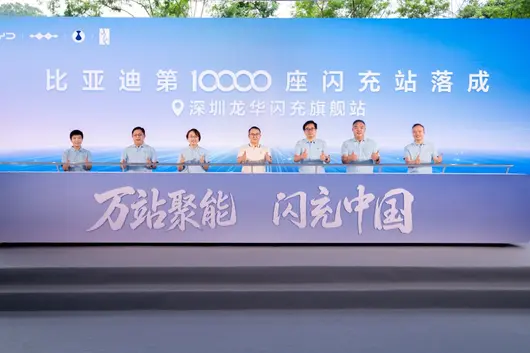
Aromatic herbs replaced by flash charging technology — 5 minutes to charge well, 9 minutes to charge full. Models equipped with the second-generation Blade Battery achieved charging from 10% to 70% in 5 minutes and up to 97% in 9 minutes at normal temperature. Even at 30 degrees Celsius below zero, it only adds 3 minutes. The fleet crossing six countries relied on the network support of nearly 10,000 flash charging stations nationwide, never being choked on energy replenishment. On August 28, BYD's 10,000th flash charging station was completed in Shenzhen.
Porcelain replaced by Sky-Eye Intelligent Driving — Over 220 million kilometers of real driving data daily are continuously iterated. For multi-thousand kilometer cross-country long trips, drivers do not need to stay tense throughout, the system shares most of the pressure. If this were in ancient times, how much would the camel herders envy this.
Silk replaced by Singapore sales champion for 19 consecutive months — As of July 2026, BYD ranked first in passenger car sales across all brands in Singapore for 19 consecutive months. From January to July this year, the market share reached 24.7%, accounting for 40.3% of the pure electric vehicle market. In a market like Singapore where car buying costs are among the highest in the world, BYD is not sold cheaply, but it sells well. Silk a thousand years ago was a luxury good; today, Chinese cars in Singapore are also "high-end goods".
Tea replaced by industrial output in 120 countries globally — Overseas cumulative sales exceeded 970,000 units in the first 7 months of this year, up about 76% year-on-year; 179,800 units in July alone, a surge of 124.3%. Thailand and Singapore top new energy sales, Italy and Spain top the new energy list, 38,000 units sold in the UK, nearly 100,000 units in Brazil continue to lead. 
Ancient Silk Road trade was just about shipping things over and finishing.
Today's BYD is different. It doesn't just sell cars in Singapore and stop; it takes technical standards with it. Flash charging stations are deployed to 10,000 domestically, and overseas are landing synchronously. Brazil even incorporated BYD's charging standards into local regulations — This is not selling products, it is exporting rules.
16 retail touchpoints, core shopping center stores, high-end brand displays. In Singapore, BYD is not setting up street stalls, it is entering malls openly.
The Silk Road of a millennium ago exported produce, today's Silk Road exports technology, industry, and ecosystem.
33 days, tens of thousands of kilometers, from Xi'an to Singapore.
This road was walked by Xuanzang, Marco Polo walked it, countless camel caravans walked it. They carried silk, porcelain, faith, and stories.
Today, BYD has brought Chinese new energy vehicles through. Flash charging, intelligent driving, sales champion, global layout — these are "Silk Road specialties" of the new era.
The event theme is called "Tech for Innovation · Civilization for Unity". I think it's quite accurate. Technology changes, but the mission of this road connecting East and West remains unchanged. Previously it was camel caravans and station replenishment, today it is flash charging station energy supplementation. Only the method changes, the determination of Chinese brands going out does not.
Green Energy Accompanies the Journey on the Silk Road. A thousand years ago it was camel bells, today it is motors. Chinese brands will continue to walk this road. 
💡 Interaction Topic: Do you think BYD's flash charging stations will one day be as widespread on the Silk Road as ancient stations? Chat in the comments.
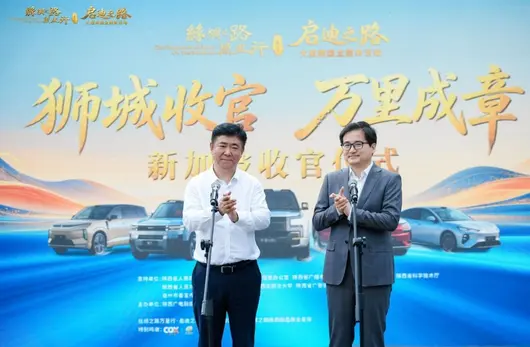

Recently, BYD's "2026 Silk Road 10,000-Mile Journey" event concluded. BYD led a fleet departing from Xi'an, passing through six provinces domestically, and crossing Thailand and Malaysia along the way, finally arriving in Singapore, with the entire journey taking 33 days;
On the domestic route, relying on BYD's Super Flash Charging technology and coverage of flash charging stations, the overall driving efficiency was very high. After all, BYD has built 10,000 BYD Super Flash Charging stations in just half a year; this experience is even more satisfying than refueling.
On the overseas route, the countries passed were mostly markets where BYD has already established a presence, even having factories. BYD traveled the entire way using new energy vehicles to inform everyone that nowadays, long-distance Silk Road travel is accompanied by green energy.

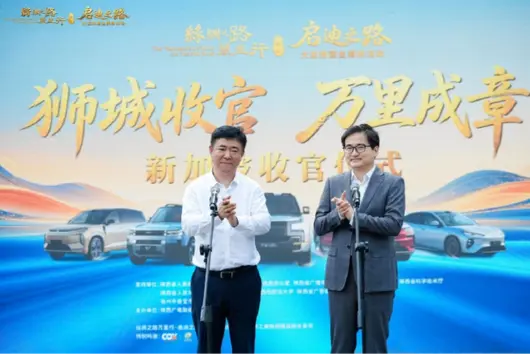

The Silk Road 10,000-kilometer ASEAN route expedition, which took a total of 33 days, successfully concluded in Singapore, the Lion City. The BYD new energy vehicle fleet departed from Xi'an, traversed domestic Silk Road cities, traveled through Thailand and Malaysia, completing an ultra-long cross-border self-driving tour of over 10,000 kilometers, with green energy accompanying the Silk Road journey.

Thousands of years ago, aromatic herbs, porcelain, silk, and tea flowed along the Silk Road. Nowadays, the BYD multi-brand new energy vehicle fleet has taken the baton to go global, staging a modern dialogue of civilizations. Along the way, flash charging technology shone brightly, with an ultra-fast energy replenishment efficiency of 5 minutes to charge well and 9 minutes to charge fully, leaving everyone's charging anxiety behind.


Many people might not know that the cost of using a car in Singapore is particularly high, so local consumers are extremely picky when choosing cars. BYD did not win over the market by lowering prices; instead, with prices higher than domestic ones, it secured the sales champion for all brands for 19 consecutive months. Even many stores directly entered popular shopping malls, firmly establishing itself in the high-end market in Singapore.

Unlike simply exporting goods in the early years, Chinese car companies now export the entire package directly. From hard-core tri-electric technology to offline retail networks and overseas factory layouts, Chinese smart manufacturing is also gaining increasing recognition overseas!
BYD has quietly become the choice for government vehicles in various countries, and this is true.
Even the African island nation of Cape Verde, with a local population of only over 500,000, has fully replaced its government vehicles with BYD cars;

Pakistan has procured nearly 100 BYD police cars, and Mexico, Australia, Hungary, Austria and other countries have also procured BYD vehicles for official use such as policing, firefighting, and diplomatic reception.
Furthermore, high-level officials such as the Brazilian President, Thai Prime Minister, Uzbek President, and Queen of Jordan have chosen BYD as their personal vehicles, covering multiple continents including Asia, Europe, Africa, Latin America, and Australia.
Domestically, BYD has topped the sales list of government-procured new energy official vehicles for consecutive years; in the first half of this year, the market share exceeded 22%.

From the coast to the interior, and even in areas with significant climate and terrain changes such as the Northwest, one can also see large numbers of BYD government vehicles, deeply involved in work such as reception, policing, aerospace escort, and emergency handling.
The reasons behind this are first, BYD's R&D expenses exceeding 250 billion over the years, creating a full-chain self-developed supply chain with exclusive technologies such as Divine Eye, Second-Generation Blade Battery, Flash Charging Technology, DM-i Technology, etc., and being durable and easy to use, which can match the high standards of government procurement.

Secondly, BYD's global sales, production, and service systems are constantly strengthening; sales in the first half of the year reached 2.146 million vehicles, of which overseas sales reached 789,400 vehicles, a year-on-year increase of 68%.
Especially by building factories in multiple countries to solve local problems such as employment and industrial upgrade, promoting synergistic development, local governments naturally are more willing to support.
BYD not only sells well globally but also appeals to government official procurement in various countries, highlighting strong brand and technical capabilities, helping to promote global green environmental protection, and naturally meeting the needs of various consumers.