首頁Yuan Plus

搜尋歷史
熱門搜尋
經銷商登入 / 註冊

August 2026, BYD sold 440,300 vehicles, a year-on-year increase of 17.84%. This number itself isn't surprising, after all, BYD has held the top spot in China's new energy vehicle monthly sales for 63 consecutive months. The real highlight lies in the structure.

In August, BYD's overseas sales reached 189,500 units, a surge of 134.45% year-on-year, accounting for 43.03% of total sales. This marks the fifth consecutive month BYD's overseas sales set a historical record. From January to August this year, BYD's overseas cumulative sales reached 1.158 million units, surpassing the 1.0496 million units level of the full year 2025.
Completing last year's full overseas volume in eight months indicates that the overseas market is becoming the biggest variable for BYD's growth. Against the backdrop of slowing domestic market growth, the significance of these 189,500 units is far more worth analyzing than the total of 440,000 units.
What Is Sold Overseas Is Not "Domestic Inventory", But Localized Products
Many people have a misconception about BYD's overseas expansion, thinking it is simply loading cars sold domestically onto ships for export. Actually, it is not like that.
Let's look at several key models: Yuan Plus (called ATTO 3 overseas), Dolphin, Song PLUS, Yuan UP. These are the mainstays of the overseas market, but for every regional market, BYD has implemented deep localization adaptation. This is much harder than simply selling cars.
First, let's talk about ATTO 3. This model underwent a comprehensive evolution in the European, UK, and Australian markets from 2025 to 2026. It was not just a simple logo change, it involved re-adapting at the product capability level. The European market has high standards for safety certification and energy consumption, so BYD had to make adjustments according to the EU certification system. In terms of pricing, ATTO 3's starting price in many European countries is about 38,000 euros, approx. 270,000 RMB; in Australia 45,000 AUD, approx. 208,000 RMB; in Colombia, the starting price is approx. 213,000 RMB. Same product, three markets, three pricing logics. This was not decided casually, calculated based on local purchasing power, competitor prices, and tariff costs.

Next, Southeast Asia. The Rayong factory in Thailand started production in 2024, with an annual capacity of 150,000 units, specially producing right-hand drive models like Dolphin and ATTO 3, covering the entire ASEAN market. Localized delivery share is close to 40%. Why build a factory locally? Transporting RHD cars from domestic sources is costly, local production saves on freight and enjoys tax incentives under Thailand's EV 3.0 policy.

Over in Europe, the Hungary factory is not just for building cars but also positioned as the European headquarters, responsible for EU certification testing, model localization design, and function development. Simply put, BYD is not in Europe to "sell and leave", it is to take root. So you see, BYD's overseas expansion is not just moving domestic models overseas intact, but relying on a mature product system -- e-Platform, Blade Battery, DM-i Hybrid Technology -- for localization matching. The product foundation is its own, but targeted adjustments were made for different regional users' range needs, configuration preferences, and regulatory standards. This is "product export," not "inventory liquidation."
Domestic Competition Intensified to the Extreme, Overseas Opens Second Growth Curve
Why is BYD so aggressive in overseas markets? Because the domestic market has indeed reached the limit of competition.
In 2025, BYD's global sales were 4.602 million units, a year-on-year growth of 7.7%. Compared to the performance of doubling growth in previous years, this growth rate has significantly slowed down. The penetration rate of the domestic new energy vehicle market has passed 60%, and the incremental space is narrowing. The price war has lasted from the beginning to the end of the year, profits are getting thinner. Under these circumstances, "seeking increments overseas" is not an optional question, but a mandatory one.
Of course, BYD is not the only one thinking this way. Currently, multiple automakers are competing in overseas markets. Chery has always been the "leader in going overseas", BYD's 189,500 units overseas in August are already closing in on Chery. The competition between the two in the overseas market is essentially a contest of globalization capabilities among Chinese automakers. Whoever can truly export the product system globally will get the entry ticket to the next decade.

But BYD's approach has its uniqueness. It does not rely on low-price dumping, but on product system output. In terms of pure electric vehicles, BYD's pure electric sales in 2025 exceeded 2.25 million units, a year-on-year increase of 28%, exceeding Tesla's 1.64 million units at the same time. This product capability foundation is the premise for its global localization adaptation. If the product is not good, localization adaptation is empty talk.
The logic of the overseas market is different from the domestic one. In the domestic market, "cost-performance ratio is king", overseas markets value brand, after-sales, and localized services more. BYD building factories, dealership networks, and localized designs overseas is essentially catching up on these lessons. Short-term investment is large and results are slow, but long-term, this is the only path to building brand barriers.
Opportunities Are Real, Challenges Are Also Significant
Saying BYD's overseas expansion is going great is flattery. Objectively speaking, opportunities and challenges coexist.
Opportunities are very significant. BYD new energy vehicles have entered 120 countries and regions globally, January to August overseas sales 1.158 million, year-on-year growth 134.6%, this growth curve is indeed steep. The overseas market's recognition of Chinese new energy products is improving, this is a fact. European consumers are starting to accept Chinese electric vehicles, Southeast Asian and Latin American markets are becoming more open to Chinese brands.

But challenges also exist. Trade barriers are the first hurdle. The EU has imposed additional tariffs on Chinese electric vehicles, the US market is basically closed off, these cannot be solved just by having good products. Localization factory investment is huge; Hungary factory, Thailand factory, Brazil factory, each is a heavy asset investment with a long payback period. Brand recognition also takes time to accumulate; European consumers' bias against "Chinese cars" cannot be eliminated in a day.
However, BYD's product export path does provide a reference sample for independent brand globalization.
Its core has three points: First, the product system must be mature, and the technology foundation must be strong, which is the basis for localization adaptation; Second, cannot simply export, must make localization adjustments for products, configurations, and range for different markets; Third, must be prepared for long-term investment, building factories, building networks, building brands, cannot be rushed.
Final Thoughts
BYD's August overseas sales of 189,500 units is not the end, but a new starting point. Chinese new energy vehicles moving from domestic competition to global competition, this road has just begun. BYD is running ahead, but the road ahead is long. The real test of the overseas market is not whether it can be sold, but whether it can take root. This point is more worthy of attention than single-month sales figures.
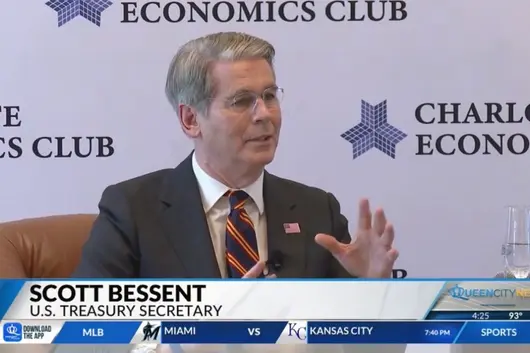
In a major speech at the Charlotte Economics Club (Charlotte Economics Club) in the US, US Treasury Secretary Scott Bessent (Scott Bessent) focused his attention on the Chinese automotive brand BYD. This move itself sends a strong signal: in the current landscape of drastic restructuring of the global automotive industry, Chinese brands can no longer be ignored.

Bessent bluntly pointed out in the speech that BYD is an excellent car that consumers can buy for $35,000 with a 70,000-level experience value. This public evaluation from a senior US official quickly sparked widespread attention in the international public opinion arena. It is not only an endorsement of a single brand's product power, but also reflects the global market's re-examination of Chinese new energy vehicle technology accumulation and manufacturing standards.
This evaluation is not an isolated praise but is based on solid market performance. Data shows that as of August, BYD passenger car and pickup overseas sales reached 189,000 units, a year-on-year increase of 134.6%, adding more than 100,000 units compared to the same period last year, breaking overseas sales records for five consecutive months. More notably, cumulative overseas sales of BYD from January to August reached 1.158 million units, a number that has already surpassed the overseas sales expectation target of 1.0496 million units for the full year of 2025. Models such as Yuan UP, Dolphin family, Song PLUS, etc., have become the main force in the overseas market, demonstrating strong market penetration power in multiple regions such as Southeast Asia, Europe, South America, etc.
Why can BYD stand out in fierce international competition? The core lies in its deep technological moat. BYD has achieved full independence and controllability in three core technologies: batteries, motors, and electronic control. This ability of full industry chain self-research enables BYD to control cost and quality at the source. Through large-scale precision manufacturing, it converts technological advantages into product advantages. In the overseas market, the high-end driving experience marked at about $70,000, BYD offers it to global consumers at a price of $35,000. This is not a simple price war, but a rewriting of the traditional overseas brand premium logic.

In the global automotive value chain long dominated by traditional European and American automakers, brand premiums are often built on decades of history. However, with the promotion of electrification and intelligence waves, the core elements of competition have shifted fundamentally. Consumers no longer pay for the brand logo alone, but pay more attention to the three-electric efficiency of the vehicle, intelligent assisted driving capabilities, space utilization, and overall vehicle ownership costs. BYD, relying on the safety of Blade Battery, the low fuel consumption of the DM-i super hybrid system, and the efficient integration of e-Platform 3.0, provides a user experience surpassing traditional fuel cars of the same price level.
The "value 70,000-level" mentioned by Bessent refers to BYD's level in terms of configuration richness, power performance, quietness, and technology configuration, reaching the standard of medium-to-high-priced models of traditional luxury brands. For example, its equipped DiSus system can significantly improve driving quality, and the DiLink intelligent connected system provides a smooth human-machine interaction experience. These functions once considered exclusive to luxury cars have now become standard features on BYD models, greatly enhancing the product's cost-performance perception.
Facing the stereotype of "low price low quality" from the outside, BYD gave a strong response with real delivery results. In the European market, BYD ATTO 3 (i.e., domestic Yuan PLUS) has topped the sales list of pure electric SUVs in multiple countries many times; in emerging markets such as Thailand and Brazil, BYD has quickly taken a leading position in market share. The achievement of these results is inseparable from BYD's strategic determination to persist in compliance and deepen the overseas market. From establishing a localized sales network to improving the after-sales service system, from participating in local infrastructure construction to complying with laws and regulations of various countries, BYD is gradually building up global operational capabilities.
Chinese new energy vehicles run towards the new global track with hard strength. This track is no longer a simple scale expansion, but a comprehensive competition of technology, brand, and services in all aspects. BYD's successful case shows that Chinese manufacturing is accelerating its transformation to "Chinese Intelligent Manufacturing", enhancing value-added through technological innovation, and enhancing risk resistance capabilities through global layout.
It is worth noting that BYD's rapid expansion overseas has also triggered anxiety among some traditional stakeholders. Non-market means such as trade barriers and anti-subsidy investigations have emerged one after another. However, market laws are ultimately decided by consumer voting. When a product can provide higher value at a lower cost, any administrative means are difficult to long-term block its trend of popularity. Bessent's remarks, although made by a US official, reflect the global rational consumers' desire for quality products.
In the future, BYD will continue to increase investment in the overseas market. In addition to whole vehicle exports, BYD is also building production bases in Hungary, Thailand, Brazil, etc., promoting localized production. This "Global Manufacturing, Global Sales" model will further reduce logistics costs, shorten delivery cycles, and better adapt to local market needs. At the same time, BYD is also strengthening cooperation with well-known international component suppliers, integrating into the global supply chain system, and achieving mutual benefit and win-win.
Starting from Shenzhen to walking into the world, the growth trajectory of BYD is a microcosm of the rise of China's automotive industry. It proves that as long as you persist in technological innovation, stick to quality bottom lines, and respect market rules, Chinese brands have the ability to win respect on the global stage. Bessent's mention is just the beginning. As more Chinese enterprises like BYD go overseas, the map of the global automotive industry will be redrawn. For global consumers, this means more choices, better prices, and better experiences. And this, is exactly the huge dividend brought by free trade and technological progress.

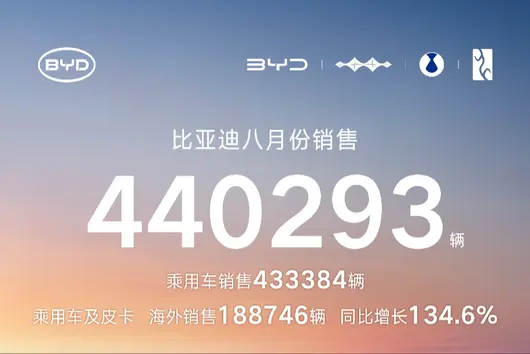
September 1st BYD officially released the August 2026 production and sales report, and the release of this performance report immediately sparked widespread industry attention. Data shows that in August, the overall sales of BYD Group reached 440,293 vehicles, of which passenger car sales were 433,384 units, a year-on-year increase of 16.7%, and a month-on-month increase of 5.4%, refreshing the brand's August sales record for all years. The most eye-catching performance is undoubtedly the overseas market. In August, overseas sales of passenger cars plus pickups reached 188,746 units, soaring 134.6% year-on-year, setting a new historical high for monthly exports. The proportion of overseas sales in total sales has already approached 40%. Going global has evolved from BYD's supplementary business into one of the core engines driving growth. As of now, BYD's cumulative global sales of new energy vehicles have broken through 17.8 million units, continuing to firmly hold the position of the global new energy vehicle sales champion.
 Breaking down by brand, the Dynasty Network plus Ocean Network remain the absolute core base of sales. In August, they sold a total of 375,373 units, accounting for more than 80% of total sales. These two networks cover the mainstream home market from 100,000 to 300,000 level, with sedan, SUV, MPV categories complete. Qin PLUS, Song PLUS, Yuan PLUS, Seal these classic models long time occupy the sales forefront in their respective sub-markets. Recently revised models have been launched successively, product strength further upgraded, plus adjustments to terminal price policies, continue to solidify the basic base of the mass market. For ordinary family consumers, Dynasty and Ocean series models, relying on mature DM hybrid technology, e-Platform 3.0 pure electric architecture, and user-friendly pricing, remain one of the first choices for home new energy vehicles.
 Fang Cheng Bao brand August sales 41,568 units, continue to maintain a stable growth trend. Since the launch of Bao 5 opened the market, Fang Cheng Bao's product matrix has been expanding rapidly. Bao 3, Bao 8 launched successively, covering the tough off-road and SUV market from 100,000s to 300,000 level. Different from traditional tough off-road vehicles, Fang Cheng Bao focuses on DMO super hybrid off-road platform, having both off-road capability and the economy and comfort of city commuting, precisely hit the user needs of many who long for outdoor life but do not want to sacrifice daily commuting experience. Now Fang Cheng Bao has become the absolute main force in the domestic tough off-road new energy market. Subsequently with the launch of Ti 9 and other higher-end models, the brand's ceiling will continue to improve further.
 Denza brand August sales 16,001 units, maintaining the first tier of the high-end new energy market. Denza D9 long time occupies the top of high-end MPV sales, N7, N8 are continuously exerting force in the SUV market, forming an MPV plus SUV product combination. Denza's positioning is very precise, focusing on the 300,000 to 500,000 high-end home and business market, having both BYD's technical endorsement, and services and luxury higher than ordinary BYD brand, precisely accepting the user needs of consumption upgrade. Many people upgrade from ordinary domestic brands, or come from joint venture luxury brands, Denza is always a very important alternative option.
 Yangwang brand August sales 442 units, as a million-level high-end brand, this sales performance is already quite stable. Yangwang U8, U9, U7 three models respectively cover tough off-road, hypercar, luxury sedan market, showed the limit of BYD's technology to the whole world. e4, DiSus, Blade Battery these top technologies, all first verified landing on Yangwang brand, then gradually deployed to lower-priced models, forming technical feedback. Yangwang's significance is not only about how many cars sold, but also lies in that it broke the price ceiling of domestic brands, proving Chinese brands can also make million-level high-end cars.
 In the whole sales data, the most worth deep interpretation is the explosive growth of the overseas market. August 188,700 export volume, year-on-year growth 134.6%, January to August cumulative exports have reached 1.158 million units, only used eight months to surpass the total export volume of all of 2025. This growth rate placed in the overall Chinese auto company going global big picture, is also a leading level. Different from many auto companies' pure whole vehicle export model, BYD follows the route of technology plus capacity full ecosystem going global, building local factories in Thailand, Brazil, Hungary and other countries, gradually shifting from whole vehicle export to local production local sales, not only can avoid tariff barriers, but also can better adapt to local market needs.
At the same time BYD is also outputting domestic technical standards overseas, Blade Battery, e-Platform 3.0, DM hybrid technology, and the latest Megawatt-level fast charging, all being gradually equipped on overseas version models. In main markets such as Europe, Southeast Asia, Latin America, Middle East, BYD's market share is steadily rising, from previous mainly economic small cars, gradually shifting to mid-to-high-end models. The high growth of overseas market also well counteracted the competition pressure of domestic market. When domestic price wars intensify, overseas market has become BYD's important incremental source and profit buffer.
 From the power structure perspective, August pure electric vehicle sales 256,230 units, year-on-year increase 28.38%, month-on-month increase 9.92%; Plug-in hybrid vehicle sales 177,154 units, year-on-year increase 3.05%. Clearly can see, pure electric vehicle growth speed is accelerating, on one hand because overseas market pure electric vehicle demand is booming, on the other hand domestic market pure electric vehicle product matrix is also constantly improving. Seagull, Dolphin, Yuan PLUS these entry-level pure electric vehicle sales stable, Seal, Han EV these mid-to-high-end pure electric also continuously exerting force. Plug-in hybrid models although growth speed slowed, but still remains BYD's basic base. DM technology fuel consumption low, no range anxiety advantages, for many users who find charging inconvenient, still an irreplaceable choice.
Looking at January to August cumulative, BYD Group cumulative sales 2,668,015 units. Although cumulative year-on-year slightly declined, but this is mainly because 2025 same period base is too high. Placed in whole industry view, BYD still firmly ranks first in domestic new energy vehicle sales, and leading advantage is very obvious. More importantly sales structure is changing, overseas proportion continuously rising, high-end brand proportion getting higher and higher, average price per vehicle also steadily rising. Not relying on low price to exchange sales, but transforming towards high quality development.
 Looking forward to the second half of the year, BYD's product rhythm remains dense. Dynasty Network 3rd Gen Tang, Han revised models, Ocean Network Sea Lion 07, Sea Lion 08, Fang Cheng Bao Ti 9, and Denza, Yangwang new models will be launched successively. Domestic market product strength will be further enhanced. Overseas market aspect, as more local factories put into production, and more regional market development, export sales probability will still maintain high growth. Current BYD is no longer pure Chinese auto company, but is growing into a global auto group. Domestic and foreign two markets dual wheel drive, risk resistance ability will become stronger and stronger.
Of course also need to see, global new energy market competition is also becoming more and more intense. Traditional auto companies accelerate electrification transformation, New EV brands also continuously catching up, BYD also cannot take lightly. Technology research, product iteration, channel construction, brand construction, every link cannot loosen. But at least from current sales data view, BYD's strategic rhythm is steady. Multi-brand matrix, full technology route, globalization layout, these long-term layouts are gradually realizing results. Next September and October peak sales season, BYD sales probability will rise to another level. Whole year performance is worth looking forward to.

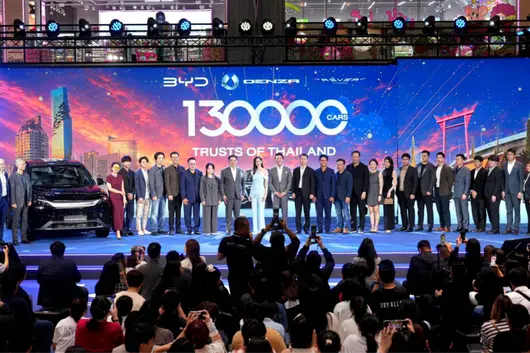
BYD officially announced the latest overseas market data on July 12. The brand's cumulative new energy vehicle deliveries in the Thailand market officially exceeded 130,000 units. Coinciding with the second anniversary of BYD's Thailand CKD factory production launch, the event also saw the regional premiere of the new model BYD SEALION 5 DM-i. With the dual achievements of a sales milestone and a new car launch, the brand's deep foundation in the Southeast Asian market was verified. During the offline delivery ceremony on the day, the commemorative 130,000th new energy vehicle was the newly released SEALION 5 DM-i. The vehicle was delivered to well-known Thai film and television actress Usa Sencan. She became well-known to locals for her role as Grandma in the film A Letter to Grandma. Selecting a popular local actor as the milestone owner effectively narrows the distance between the brand and local ordinary consumers, further shaping a brand image that fits local Thai life.

BYD Thailand factory is located in Rayong Province WHA Industrial Park, which is also the brand's first overseas passenger car production base globally. The factory's planning and design annual production capacity is 150,000 units. Since production launch, the factory has steadily promoted the localization process of whole vehicle manufacturing. Five main models have been locally produced. The product matrix covers compact pure electric sedans, city pure electric SUVs, and multiple household plug-in hybrid SUVs, namely DOLPHIN, ATTO 3, SEAL 5 DM-i, SEALION 5 DM-i, SEALION 6 DM-i. They comprehensively cover mainstream commuting and multi-person family travel needs in the Thailand market. These five locally produced models have successfully obtained the MiT Thailand Made Certification granted by the Thailand Industrial Federation (FTI). This certification is a key qualification for local new energy vehicles to enjoy car purchase subsidies and tax preference. At the same time, it represents that the whole vehicle manufacturing process and parts supply standards perfectly fit local Thai industrial specifications, which can effectively control terminal selling prices and enhance product competitiveness in the local market.

Reviewing the factory's two-year development journey, BYD's sales growth momentum in Thailand has been very rapid. In November 2025, the factory completed the delivery of the 70,000th whole vehicle. The delivery model was SEALION 6, and the owner was an excellent local employee of the factory, Pattaraporn. In just eight months, the cumulative market delivery volume climbed from 70,000 units to 130,000 units, adding 60,000 new deliveries, which intuitively reflects that Thai consumers' acceptance of new energy vehicles continues to improve. Charging facilities distribution for new energy vehicles in Southeast Asian cities is uneven. Long-distance travel with pure electric models often faces power replenishment difficulties. BYD's mature DM-i super hybrid system happens to solve this pain point. Short-term commuting relies on pure electric mode to reduce vehicle usage costs, while long-distance travel relies on the fuel system to eliminate range anxiety. This power technology adapted to regional travel scenarios is the core factor for continued strong sales of several hybrid SUVs under the brand.
Beyond production capacity and sales growth, BYD Thailand factory continues to promote supply chain and talent localization construction. During the two-year production launch, the factory created a large number of local jobs. The proportion of Thai employees in grassroots and technical positions exceeds 90%. At the same time, the local parts procurement ratio continues to be improved, driving the synchronized development of Thailand's local auto parts supporting industry, and helping the local industry to improve the new energy vehicle upstream and downstream industry system. The official launch of the SEALION 5 DM-i this time further perfects the brand's compact hybrid SUV product line, which can compete head-on with local mainstream fuel and hybrid models, enriching Thailand consumers' new energy vehicle purchasing choices.

From the landing of the first overseas whole vehicle manufacturing base to exceeding 130,000 deliveries in two years and five models achieving local mass production, BYD has firmly occupied the mainstream position in the Thailand new energy market by relying on the local production model and hybrid products tailored to regional travel needs. Relying on mature overseas manufacturing bases and a complete product layout, the brand will continue to launch new models in the future, continue to dig deep into the ASEAN market, use Thailand as a fulcrum to radiate the entire Southeast Asia, continuously improve the overseas influence of Chinese new energy vehicle brands, and provide reliable solutions for green transportation transformation in the Southeast Asia region.

In 2025, BYD Yuan family cumulative sales exceeded 430,000 units, accounting for about 9.3% of BYD's total annual sales, contributing greatly to BYD reaching the top five globally.
After entering 2026, BYD needed to find a carrier for the second-generation Blade Battery and new-generation Flash Charge technology within the Yuan family, so the Third-Generation Yuan PLUS was born.
This product with the largest iteration range in the history of the BYD Yuan family has maintained high discussion levels since its debut at the Beijing Auto Show.
At the same time of the new car launch, the 2025 model Yuan PLUS dropped prices wildly. Now, the naked car price has lowered to over 70,000 yuan. Comparing vertically with the previous generation Yuan PLUS and horizontally with competitors from other car companies, is the Third-Generation Yuan PLUS truly more worth buying?
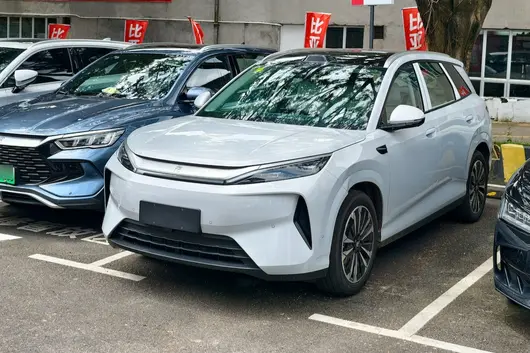
Size explosion, DiSus-C downshifted, BYD squeezes toothpaste dryWhen I arrived at the BYD store to experience the Third-Generation Yuan PLUS, coincidentally, a previous generation Yuan PLUS owner also came to see the car. Their car was parked next to the new model. In front of the massive body of the Third-Generation Yuan PLUS, the previous generation Yuan PLUS looked like an "elderly leisure vehicle".

(Image Source: EV Tong Photography)
The Third-Generation Yuan PLUS, with a 210mm increase in length and a 50mm increase in wheelbase, has a more majestic appearance, with an aura comparable to a mid-size SUV. The interior space has also increased significantly, with ample legroom in the rear and acceptable trunk capacity. It is worth noting that the Third-Generation Yuan PLUS supports an electric sunshade, protecting us from sunlight intrusion during hot summers.
"Large" is the most intuitive feeling the Third-Generation Yuan PLUS gives EV Tong (ID: dianchetong233), but as a product with huge upgrades, its highlights go far beyond this.
Although the experience time was not long, the details of the Third-Generation Yuan PLUS still made EV Tong very satisfied. For example, the front memory seats can adjust automatically, facilitating users getting on and off. The passenger leg rest, 12-inch HUD, hot and cold refrigerator, and other configurations show BYD's sincerity everywhere.
Regarding range, chassis suspension, power, etc., the Third-Generation Yuan PLUS has also been comprehensively upgraded. The downshift of DiSus-C, range up to 630 kilometers, and optional DiPilot 300 (except for the lowest trim) make its experience compared to the previous generation undergo a qualitative leap.

(Image Source: EV Tong Photography)
As the BYD Yuan family, and even the entire Dynasty series, the product with the largest upgrade range, Yuan PLUS performs better than the previous generation in all aspects. Especially after experiencing the comfort brought by large space, even though the previous generation product price dropped by tens of thousands of yuan directly, EV Tong still more recommends consumers buy the new generation product.
Moreover, the Third-Generation Yuan PLUS has no real cars in the showroom of this store, the only display car is the test drive car. Combining this car's orders breaking through 10,000 units in the first week of launch and orders breaking through 50,000 units in less than a month, EV Tong has reason to believe that BYD is too late to lay out more display cars in the store to deliver to consumers as soon as possible.
Both the experience of EV Tong (ID: dianchetong233) and the hot orders can prove the strength and market performance of the Third-Generation Yuan PLUS.
The Third-Generation Yuan PLUS perfectly carries the new generation of BYD's three-electric technology and flash charge technology, making up for the Yuan family's long-standing product shortcomings, enabling this popular home SUV to complete the transformation from "Qualified Commuter EV" to "All-around Home Pure Electric SUV". This car is expected to carry the sales banner of the Yuan family, continuously consolidating BYD's dominant position in the 100,000-150,000 RMB mainstream home pure electric SUV market.
Perhaps some people are curious, even if only upgrading size, battery, fast charging, Yuan PLUS is still highly competitive in the 100,000-150,000 price segment, why does BYD want to comprehensively upgrade this car from start to finish, even to the extent of downshifting DiSus-C, advanced intelligent driving, HUD, and other configurations. In the view of EV Tong, BYD might also want to make money lying down, but market changes are forcing BYD to change.
Facing double-sided clamping, BYD responds with "Change"BYD's Seagull, Dolphin, Yuan UP, Yuan PLUS and other models once had a dominant position in the A00 to A-class new energy vehicle market. However, the situation changed this year. Geely Galaxy Star Wish, Leapmotor A10, Changan Qiyuan Q05 and other products, relying on the characteristics of good quality and cheap price, conquered the mid-to-low-end market.
Not only that, joint venture brands also showed their fangs. Some joint venture models, using Chinese suppliers such as Momenta and Huawei, improved product hardness, and Volkswagen ID.3, Bozhi 3X and other products became increasingly competitive.
BYD is facing a double-sided clamp from independent brands and joint venture brands, needing stronger products to consolidate its dominant position in the 100,000-150,000 RMB SUV market. Although the previous generation Yuan PLUS had no inferior competitiveness, it showed weakness facing larger and smarter competitors.

(Image Source: EV Tong Photography)
Taking Bozhi 3X as an example, this car is equipped with Momenta intelligent driving technology, and the car length is as high as 4600mm, slightly higher competitiveness compared to the previous generation Yuan PLUS. The Third-Generation Yuan PLUS not only surpassed in size and led in range, but the price was also relatively affordable, capable of suppressing most peer products.
BYD's overseas strategy also needs the Third-Generation Yuan PLUS as a mainstay. Yuan PLUS is named ATTO 3 overseas, with excellent performance in many countries and regions such as South Korea, Thailand, Brazil, UK, New Zealand, etc., and is BYD's main export model.
After entering 2026, the domestic car market size declined year-on-year. Many car companies chose to break the game overseas. Changan, Geely, Great Wall, Li Auto, Leapmotor, Xiaomi and other car companies are all accelerating their layout of the overseas market. Multiple foreign-funded and joint venture brands will also use China as a production base, using China's complete industrial chain advantage to build cars and then transport them to the overseas market for sale.
In the past, BYD could use China's industrial chain advantage to form dimensional striking attacks in the overseas market. But with domestic car companies collectively accelerating the overseas layout pace, BYD will also face competition from independent brands in the overseas market.
For this reason, whether domestically or overseas, BYD needs products with stronger competitiveness to cope with models from global car companies. EV Tong (ID: dianchetong233) believes that the Third-Generation Yuan Plus is just the beginning. When BYD's other products are updated and iterated in the future, the upgrade range will also increase.

(Image Source: EV Tong Photography)
In the mid-to-high end and high-end markets, BYD is already laying out through the launch of new cars rather than upgrading original products, such as the Ocean Series's Seal 08, Sea Lion 08, Dynasty Network's Tang, Han models. In the mid-range market, Han, Tang, Song and other family mid-range models are expected to have comprehensive upgrades in configurations during the next update iteration.
What might make BYD feel the most tricky is the low-end market. The 100,000 yuan and below market, product profit space is small, but competition intensity is very high. BYD's Seagull, Dolphin, Yuan UP domestic market competitiveness continues to decline. Geely Galaxy Star Wish, Leapmotor A10 and other models have such high cost-performance ratio that BYD is helpless.
The reason why the Third-Generation Yuan PLUS upgrade range is unprecedented is mainly that BYD needs to respond to market changes through product configuration changes. The current 100,000 yuan to 150,000 yuan pure electric SUV track competition is white-hot, independent new cars continue to press down, joint venture models make up for intelligent shortcomings. The shortcomings of the old Yuan PLUS size, chassis, energy replenishment, intelligent driving are gradually exposed. The terminal can only rely on large price reductions to exchange for sales. The Third-Generation Yuan PLUS faces overseas and domestic dual competition through comprehensive upgrades with stronger product power.
Third-Generation Yuan PLUS, A High-Score Answer SheetBYD Dynasty Network Sales Division General Manager Lu Tian stated on Weibo that in May this year, the Yuan family cumulative delivery was 56,691 vehicles, among which Yuan PLUS delivered 15,277 vehicles, Yuan UP delivered 41,414 vehicles. Compared with the peak monthly delivery of over 40,000 units, even with overseas market assistance, Yuan PLUS sales still declined significantly.
The comprehensively upgraded Third-Generation Yuan PLUS is expected to achieve BYD's expected goals, defeating many competitors at home and abroad, but it is difficult to help Yuan PLUS return to the state of monthly delivery over 40,000 units.
On the one hand, new cars from other car companies are launched continuously, constantly competing with Yuan PLUS for the market. On the other hand, there is relatively obvious competition within BYD. Above is Song PLUS, Song Pro, below is Yuan UP. Many of Yuan PLUS's crises come from its own products.

(Image Source: EV Tong Photography)
It can also be seen from the sales released by Lu Tian that the Yuan family cumulative delivery is still very high, but among them, most delivery models are cheaper Yuan UP. In addition to improving product competitiveness, BYD may also need to re-organize the product line, reduce internal competition, and avoid internal friction.
Now the new energy market is no longer the era of BYD's exclusive dominance. Externally, competitors continue to engage in close-quarters combat, internally, its own models flow up and down. Even if product power fully crosses levels, Yuan PLUS is unlikely to replicate the brilliant sales of monthly breakthrough 40,000. After all, consumers are increasingly rational in buying cars now. Low-price commuter needs will directly choose the lower threshold Yuan UP. Pursuing larger space and higher specifications will directly choose the Song series step by step. Yuan PLUS exactly stays in the awkward interval in the middle.
The greater value of this car lies in undertaking two major tasks of technology popularization and overseas offensive: Internally, put the second-generation Blade Battery, 800V Flash Charge, DiSus-C and other high-end technologies down to mainstream home models, letting ordinary people also experience BYD's top-tier car building technology; Externally, iterate the overseas version ATTO 3, relying on stronger comprehensive product power, hold on to core overseas markets such as Southeast Asia, Europe, Japan & Korea, etc. In the wave of collective overseas rolling of independent brands, stabilize its own overseas basic disk.

【Lead: May 2026, BYD delivered a sales report of over 380,000 units, among which overseas sales exceeded 160,000 for the first time; however, BYD's single-month sales historical peak remained at 514,800 units in December 2024, with 57,200 units exported that month. These two sets of data reflect that BYD, sitting in the top chair of the new energy sector, is undergoing structural changes. BYD that grabbed the export dividend, exports soared; meanwhile, the domestic car market is experiencing a change from incremental to stock even possibly to shrinking volume. Even BYD cannot escape the pain of involution, presenting the "double life" of the industry leader, half smooth, half rough.】
Author: Li Suwan
According to April imported new car registration data released by the Korean Association of Import Cars (KAIDA), Chinese brand registration volume surpassed Japanese brands in the South Korean market for the first time, ranking in the top three countries for imported car sales. Of note, BYD's sales of 2,023 units exceeded the combined sales of the three Japanese brands Lexus (1,079 units), Toyota (829 units), and Honda (66 units) (1,974 units). Korean media generally regard this ranking as an important signal of the shift in the structure of the imported car market in South Korea.

Directly raising the cloud sail to cross the vast sea, BYD's overseas market continued to maintain high growth in May this year. Passenger cars and pickups overseas sales reached 160,177 units, an 80.7% increase year-on-year, setting a new historical record. Seagull, Song PLUS, Yuan Series and other models continued to sell well, with SHARK pickup truck volume exceeding 4,000 units for two consecutive months. With the product matrix continuously enriching and the global layout continuing to deepen, BYD's globalization process is advancing rapidly.
Benefiting from overseas market pull, BYD's total sales increased slightly by 0.26% year-on-year in May this year, ending the consecutive 8 months of year-on-year decline, and continued to win the champion of Chinese automotive enterprises' new energy vehicle sales with 383,453 units. Thus far, BYD has remained in the first place of domestic new energy vehicle monthly sales for a consecutive 60 months.

Relying on the "systematic ecological export" strategy from technology, production, channels to brand, BYD is becoming more and more brave in the overseas market. However, BYD's life situation at this time is like two sides of a coin. It advances boldly in the overseas market, but encounters cruel new tests in the domestic market. The current monthly sales in China are almost halved compared to the peak period. Structural adjustments are a mixture of joy and worry, and BYD is once again standing at a critical crossroads.
Can BYD Weld the Highlight Moment?
In the new energy track, BYD is the undisputed "Di King" in China and even globally. So far, its cumulative new energy vehicle sales have exceeded 16.5 million units. In recent years, while a group of international traditional car giants failed in the transition to electrification, leading enterprises such as "Di King" drove China's automotive industry to accelerate overtaking on a bend.
BYD's boss Wang Chuanfu has a forward-looking strategic vision, allowing this car company to catch the dividends of new energy and export two wind vane points. Relying on Blade Battery, DM-i Super Hybrid, e Platform and other full-stack self-developed systems, BYD has built cost moats that many car companies cannot cross through vertical integration of the industry chain, quickly grabbing the pure electric and hybrid market, gradually mastering strong pricing power in the 100,000-200,000 yuan main force model market, and further diluting R&D and production costs with scale effects, constantly pushing the cost advantage to the extreme.
While holding the "Price Slaughter Knife" to expand in the domestic car market, BYD also accelerated its extension of its entire industry chain layout, full-stack self-research, and cost advantages to the overseas market, precisely adapting to the needs of global diversified markets with a full price product matrix. In Southeast Asia/South America/Middle East markets, Yuan PLUS (ATTO3), Seagull focus on entry-level commuting, cost-performance ratio crushes Japanese fuel small cars, BYD's market share in Brazil's EV market exceeds 70%; in European and other markets, Seal, Song PLUS, Sea Lion 07EV constitute a core competitive matrix against Volkswagen ID series, Tesla Model 3/Model YCore Competitive Matrix. BYD's high-end models are gradually breaking the overseas market's stereotype that "Chinese cars rely on low prices", such as Denza focusing on European mid-to-high-end niche markets. Also, BYD commercial vehicle coordination, electric buses, forklifts go out simultaneously, such as Singapore electric bus market share exceeds 60%, passenger vehicles + commercial vehicles double pull local reputation.

Not only did products go out, BYD also accelerated localization of production globally, breaking tariff and delivery problems. Its four complete vehicle factories in Thailand, Brazil, Hungary, and Uzbekistan have started production, with Malaysia and Cambodia under construction. In addition, BYD's own RoRo fleet guarantees stable export capacity, solving industry sea transport bottlenecks, and signed top local automotive groups in each country as agents, gradually building thousands of brand direct + authorized stores in Europe, Southeast Asia, Middle East, and Latin America. With a set of combinations hitting, BYD's export has obviously accelerated.
After exports increased by about 1.4 times year-on-year in 2025 and broke the one million unit threshold for the first time, BYD's sales overseas continued to rise this year, largely buffering the pressure of BYD's sales decline in the domestic car market. However, for BYD to weld the highlight moment or even sprint to higher goals, it is inevitable to withstand the current cruel tests of domestic price wars backlash, narrowing technology advantages, and brand upward obstacles, breaking the dilemma of "defenders".

Can we find the key to value upward?
This year's domestic car market, how can it be described with a single word "hard". According to CPCA weekly report, national passenger car market retail in May was 1.545 million units, down 20% year-on-year, cumulative retail in the first 5 months of this year was 7.15 million units, down 19% year-on-year.
Due to weak consumption and car market shrinkage, car companies were forced to cut prices to grab market share, dozens of models collectively cut prices, exchanging price for volume diluted profits. At the same time, car companies also encountered unfavorable factors such as price increases in upstream lithium carbonate, non-ferrous metals and other raw materials. Price wars, high costs and weak demand are like three big mountains, further squeezing the profit space of the automotive industry. January to April 2026, automotive industry profit margin 3.4%, total profit 111.9 billion yuan, down 17% year-on-year, profitability pressure is still relatively large. In such a big environment, as the Leader BYD cannot be immune. In the first quarter this year, the company's net profit attributable to shareholders of the listed company was 4.085 billion yuan, down 55.38% from 9.155 billion yuan in the same period last year.
In the most competitive Chinese car market globally, in white-hot competition, BYD faces competitors like Geely Galaxy with nearly "pixel-level" benchmarking, plus the fierce attacks of new forces such as Leapmotor and Xiaomi, the difficulty to break the situation is not small. For example, Geely Galaxy's Xingyuan grabbed the Seagull's sales champion in the under 100,000 yuan niche market in 2025, in the 100,000 to 200,000 yuan core area, BYD even encountered more fierce encirclement and suppression by Leapmotor and other brands. Previously, BYD relied on Blade Battery and Super Hybrid to laugh off the Jianghu, but now Geely has Thor EM-i Super Electric Hybrid, SAIC has DMH, plus CATL's Qilin Battery, Shenhang Battery, Xiaoyao Battery and other technologies and products empowering many car companies, new energy sector hundreds of flowers blooming, BYD's technology is no longer unique. In addition, BYD also faces the challenge of user demand iteration. With new energy penetration rate exceeding 50%, the market moves from "trying new things" to "picky" stage, consumer car buying logic is also changing. BYD has room for improvement in smart cockpit, chassis tuning and other details, and its ride-hailing image is also difficult to support higher brand premium.
How to break the situation? BYD launches a combo, besides accelerating the promotion of globalization process, the more important measure is to focus on internal improvements, accelerate the iteration and upgrade of various technologies. In terms of intelligence, as of May 28, the number of BYD vehicles with assisted driving has exceeded 3.15 million units, Heavenly Eyes generates more than 200 million kilometers of data daily. On May 28, BYD announced the launch of urban pilot safety backup service, becoming the first car company in the world to realize both urban pilot and intelligent parking "double backup" at the same time. Three days after the conference, the daily active user volume of urban pilot for models equipped with Heavenly Eyes A, B assisted driving system increased by 50%. Previously, after the intelligent parking safety backup was launched, the function usage rate has increased from 21% to more than 90%. Wang Chuanfu said: "Dare to back it up, is true safety."

In the field of power technology, after the launch of the second-generation Blade Battery and Flash Charge technology, BYD is tightly rolling to continuously convert technological innovation into product competitiveness. Third-generation Yuan PLUS, Fang Cheng Bao Bao 5 Flash Charge version, Bao 8 Flash Charge version, Denza N9 Flash Charge version and other models have successively launched. At the same time, Dynasty Network Great Tang will be launched in mid-June, Denza N8L Flash Charge version, Seal 08, Sea Lion 08 will also be launched successively, further expanding BYD's Flash Charge product matrix.

In addition, BYD increased the intensity of high-endization, Denza, Fang Cheng Bao and Yangwang gradually have results, May Fang Cheng Bao, Denza combined sales 46,489 units. Among them, Fang Cheng Bao sales 30,186 units, up 139.7% year-on-year, creating a new high this year; Denza sales 16,303 units, continuing to maintain growth trend; Yangwang sales 286 units, up 105.8% year-on-year. The three high-end brands join forces, finally breaking the bottleneck of their proportion in BYD's total sales of less than one tenth.
Although the cruel fact is if export volume is excluded, BYD's sales in the domestic market in May are still far from the peak period, but its total sales year-on-year bottoming out slightly rising is still a positive signal. BYD is empowering products through new technologies such as second-generation Blade Battery and Flash Charge. With the "Great Tang" known as the most cruel "Value Assassin" in the full-scale market, holding 100,000 pre-sale orders, coming soon, and other new models successively launched, BYD is launching a new round of offensive value upward. It has come to a critical crossroads again, needing to use patience, wisdom and courage different from the past to deal with this profound change from "Scale Priority" to "Value Supreme", even not limited to the car making field. Recently, BYD announced making humanoid robots, perhaps starting to speed up the exploration and transformation towards technology companies outside the automotive congestion space, wanting to catch the new trend of AI.
Review
Currently, the domestic car market is declining, car prices are falling, and car company profits are declining. In such a big environment, car companies led by BYD face severe challenges while opening up a new round of continuous upward exploration of China's new energy vehicle industry. Going overseas is one of the breakthrough paths, but more importantly, how to find the key to value upward through technical innovation in this most competitive market in China.
(This article is original to "Heyan Yueche", without authorization, shall not be reproduced)

【Lead: May 2026, BYD delivered a sales report of over 380,000 units, among which overseas sales exceeded 160,000 for the first time; however, BYD's single-month sales historical peak remained at 514,800 units in December 2024, with 57,200 units exported that month. These two sets of data reflect that BYD, sitting in the top chair of the new energy sector, is undergoing structural changes. BYD that grabbed the export dividend, exports soared; meanwhile, the domestic car market is experiencing a change from incremental to stock even possibly to shrinking volume. Even BYD cannot escape the pain of involution, presenting the "double life" of the industry leader, half smooth, half rough.】
Author: Li Suwan
According to April imported new car registration data released by the Korean Association of Import Cars (KAIDA), Chinese brand registration volume surpassed Japanese brands in the South Korean market for the first time, ranking in the top three countries for imported car sales. Of note, BYD's sales of 2,023 units exceeded the combined sales of the three Japanese brands Lexus (1,079 units), Toyota (829 units), and Honda (66 units) (1,974 units). Korean media generally regard this ranking as an important signal of the shift in the structure of the imported car market in South Korea.
Directly raising the cloud sail to cross the vast sea, BYD's overseas market continued to maintain high growth in May this year. Passenger cars and pickups overseas sales reached 160,177 units, an 80.7% increase year-on-year, setting a new historical record. Seagull, Song PLUS, Yuan Series and other models continued to sell well, with SHARK pickup truck volume exceeding 4,000 units for two consecutive months. With the product matrix continuously enriching and the global layout continuing to deepen, BYD's globalization process is advancing rapidly.
Benefiting from overseas market pull, BYD's total sales increased slightly by 0.26% year-on-year in May this year, ending the consecutive 8 months of year-on-year decline, and continued to win the champion of Chinese automotive enterprises' new energy vehicle sales with 383,453 units. Thus far, BYD has remained in the first place of domestic new energy vehicle monthly sales for a consecutive 60 months.
Relying on the "systematic ecological export" strategy from technology, production, channels to brand, BYD is becoming more and more brave in the overseas market. However, BYD's life situation at this time is like two sides of a coin. It advances boldly in the overseas market, but encounters cruel new tests in the domestic market. The current monthly sales in China are almost halved compared to the peak period. Structural adjustments are a mixture of joy and worry, and BYD is once again standing at a critical crossroads.
Can BYD Weld the Highlight Moment?
In the new energy track, BYD is the undisputed "Di King" in China and even globally. So far, its cumulative new energy vehicle sales have exceeded 16.5 million units. In recent years, while a group of international traditional car giants failed in the transition to electrification, leading enterprises such as "Di King" drove China's automotive industry to accelerate overtaking on a bend.
BYD's boss Wang Chuanfu has a forward-looking strategic vision, allowing this car company to catch the dividends of new energy and export two wind vane points. Relying on Blade Battery, DM-i Super Hybrid, e Platform and other full-stack self-developed systems, BYD has built cost moats that many car companies cannot cross through vertical integration of the industry chain, quickly grabbing the pure electric and hybrid market, gradually mastering strong pricing power in the 100,000-200,000 yuan main force model market, and further diluting R&D and production costs with scale effects, constantly pushing the cost advantage to the extreme.
While holding the "Price Slaughter Knife" to expand in the domestic car market, BYD also accelerated its extension of its entire industry chain layout, full-stack self-research, and cost advantages to the overseas market, precisely adapting to the needs of global diversified markets with a full price product matrix. In Southeast Asia/South America/Middle East markets, Yuan PLUS (ATTO3), Seagull focus on entry-level commuting, cost-performance ratio crushes Japanese fuel small cars, BYD's market share in Brazil's EV market exceeds 70%; in European and other markets, Seal, Song PLUS, Sea Lion 07EV constitute a core competitive matrix against Volkswagen ID series, Tesla Model 3/Model YCore Competitive Matrix. BYD's high-end models are gradually breaking the overseas market's stereotype that "Chinese cars rely on low prices", such as Denza focusing on European mid-to-high-end niche markets. Also, BYD commercial vehicle coordination, electric buses, forklifts go out simultaneously, such as Singapore electric bus market share exceeds 60%, passenger vehicles + commercial vehicles double pull local reputation.
Not only did products go out, BYD also accelerated localization of production globally, breaking tariff and delivery problems. Its four complete vehicle factories in Thailand, Brazil, Hungary, and Uzbekistan have started production, with Malaysia and Cambodia under construction. In addition, BYD's own RoRo fleet guarantees stable export capacity, solving industry sea transport bottlenecks, and signed top local automotive groups in each country as agents, gradually building thousands of brand direct + authorized stores in Europe, Southeast Asia, Middle East, and Latin America. With a set of combinations hitting, BYD's export has obviously accelerated.
After exports increased by about 1.4 times year-on-year in 2025 and broke the one million unit threshold for the first time, BYD's sales overseas continued to rise this year, largely buffering the pressure of BYD's sales decline in the domestic car market. However, for BYD to weld the highlight moment or even sprint to higher goals, it is inevitable to withstand the current cruel tests of domestic price wars backlash, narrowing technology advantages, and brand upward obstacles, breaking the dilemma of "defenders".
Can we find the key to value upward?
This year's domestic car market, how can it be described with a single word "hard". According to CPCA weekly report, national passenger car market retail in May was 1.545 million units, down 20% year-on-year, cumulative retail in the first 5 months of this year was 7.15 million units, down 19% year-on-year.
Due to weak consumption and car market shrinkage, car companies were forced to cut prices to grab market share, dozens of models collectively cut prices, exchanging price for volume diluted profits. At the same time, car companies also encountered unfavorable factors such as price increases in upstream lithium carbonate, non-ferrous metals and other raw materials. Price wars, high costs and weak demand are like three big mountains, further squeezing the profit space of the automotive industry. January to April 2026, automotive industry profit margin 3.4%, total profit 111.9 billion yuan, down 17% year-on-year, profitability pressure is still relatively large. In such a big environment, as the Leader BYD cannot be immune. In the first quarter this year, the company's net profit attributable to shareholders of the listed company was 4.085 billion yuan, down 55.38% from 9.155 billion yuan in the same period last year.
In the most competitive Chinese car market globally, in white-hot competition, BYD faces competitors like Geely Galaxy with nearly "pixel-level" benchmarking, plus the fierce attacks of new forces such as Leapmotor and Xiaomi, the difficulty to break the situation is not small. For example, Geely Galaxy's Xingyuan grabbed the Seagull's sales champion in the under 100,000 yuan niche market in 2025, in the 100,000 to 200,000 yuan core area, BYD even encountered more fierce encirclement and suppression by Leapmotor and other brands. Previously, BYD relied on Blade Battery and Super Hybrid to laugh off the Jianghu, but now Geely has Thor EM-i Super Electric Hybrid, SAIC has DMH, plus CATL's Qilin Battery, Shenhang Battery, Xiaoyao Battery and other technologies and products empowering many car companies, new energy sector hundreds of flowers blooming, BYD's technology is no longer unique. In addition, BYD also faces the challenge of user demand iteration. With new energy penetration rate exceeding 50%, the market moves from "trying new things" to "picky" stage, consumer car buying logic is also changing. BYD has room for improvement in smart cockpit, chassis tuning and other details, and its ride-hailing image is also difficult to support higher brand premium.
How to break the situation? BYD launches a combo, besides accelerating the promotion of globalization process, the more important measure is to focus on internal improvements, accelerate the iteration and upgrade of various technologies. In terms of intelligence, as of May 28, the number of BYD vehicles with assisted driving has exceeded 3.15 million units, Heavenly Eyes generates more than 200 million kilometers of data daily. On May 28, BYD announced the launch of urban pilot safety backup service, becoming the first car company in the world to realize both urban pilot and intelligent parking "double backup" at the same time. Three days after the conference, the daily active user volume of urban pilot for models equipped with Heavenly Eyes A, B assisted driving system increased by 50%. Previously, after the intelligent parking safety backup was launched, the function usage rate has increased from 21% to more than 90%. Wang Chuanfu said: "Dare to back it up, is true safety."
In the field of power technology, after the launch of the second-generation Blade Battery and Flash Charge technology, BYD is tightly rolling to continuously convert technological innovation into product competitiveness. Third-generation Yuan PLUS, Fang Cheng Bao Bao 5 Flash Charge version, Bao 8 Flash Charge version, Denza N9 Flash Charge version and other models have successively launched. At the same time, Dynasty Network Great Tang will be launched in mid-June, Denza N8L Flash Charge version, Seal 08, Sea Lion 08 will also be launched successively, further expanding BYD's Flash Charge product matrix.
In addition, BYD increased the intensity of high-endization, Denza, Fang Cheng Bao and Yangwang gradually have results, May Fang Cheng Bao, Denza combined sales 46,489 units. Among them, Fang Cheng Bao sales 30,186 units, up 139.7% year-on-year, creating a new high this year; Denza sales 16,303 units, continuing to maintain growth trend; Yangwang sales 286 units, up 105.8% year-on-year. The three high-end brands join forces, finally breaking the bottleneck of their proportion in BYD's total sales of less than one tenth.
Although the cruel fact is if export volume is excluded, BYD's sales in the domestic market in May are still far from the peak period, but its total sales year-on-year bottoming out slightly rising is still a positive signal. BYD is empowering products through new technologies such as second-generation Blade Battery and Flash Charge. With the "Great Tang" known as the most cruel "Value Assassin" in the full-scale market, holding 100,000 pre-sale orders, coming soon, and other new models successively launched, BYD is launching a new round of offensive value upward. It has come to a critical crossroads again, needing to use patience, wisdom and courage different from the past to deal with this profound change from "Scale Priority" to "Value Supreme", even not limited to the car making field. Recently, BYD announced making humanoid robots, perhaps starting to speed up the exploration and transformation towards technology companies outside the automotive congestion space, wanting to catch the new trend of AI.
Review
Currently, the domestic car market is declining, car prices are falling, and car company profits are declining. In such a big environment, car companies led by BYD face severe challenges while opening up a new round of continuous upward exploration of China's new energy vehicle industry. Going overseas is one of the breakthrough paths, but more importantly, how to find the key to value upward through technical innovation in this most competitive market in China.
(This article is original to "Heyan Yueche", without authorization, shall not be reproduced)

Chinese car companies going global are becoming increasingly powerful; recently even Singapore, this "classic petrol paradise", has been captured by Chinese cars in the last two years.
In Q1 2026, the share of pure EVs in new car sales in Singapore surged to 57.6%. This is the first time in history that pure EVs sold more than the combined total of petrol cars and hybrids.
What does this mean? Now when people buy cars, EVs have become the default first choice.
This shift is directly reflected in the sales rankings; I organized a table to make it clearer:
 From this list, you can most intuitively feel the impact of Chinese brands.
In the top 10, Chinese brands took four seats. Besides BYD at the top, Chery, GAC, and MG broke into the top 10 for the first time collectively, directly squeezing out several old rivals from Korean and Japanese series.
What's more terrifying is the overall momentum. In January 2023, the market share of Chinese brands in Singapore was a pitiful 3.3%; by February 2026, this figure surged to 39.5%.
A 10-fold leap over three years, this is no longer "grabbing a piece of cake", this is simply "making a whole new table of dishes".
And this is not the end. By April, the monthly market share of Chinese brands even surged to 48.5%, just a step away from half the market.
Behind this is the collective charge of more than ten brands such as Zeekr, XPeng, Dongfeng, and Leapmotor. It can be said that in Singapore, buying Chinese cars has become a very mainstream, even fashionable thing.
So, do you know which Chinese car models Singaporeans love to buy the most?
I did some research; the following models are currently the undisputed "stars":
 BYD Atto 3: This is BYD's absolute mainstay. It can be said that it alone drove the entire EV trend in Singapore. It was the sales champion for 14 consecutive months in Singapore; just knowing that tells you how deeply rooted it is locally.
Chery Omoda E5: This is Chery's "secret weapon" for breaking records. From selling 90 units a month to 600 units in a quarter, it relies on this precisely positioned electric SUV.
GAC Aion Y Plus: GAC's sales are almost entirely supported by it. Its advantage is: competitive price, and it perfectly fits the standard for Singapore's Class A Certificate of Entitlement, immediately lowering the car purchasing threshold.
MG 4 Electric: This hatchback electric small car sold very well in Europe, and it is the same in Singapore.
It looks stylish, handles flexibly, and has a fair price, making it especially popular among young people.
Honestly, the explosion of Chinese brands in Singapore absolutely did not rely on the old impression of "dumping low prices".
First, they fully mastered the policy. The Singapore government offers up to 30,000 SGD in subsidies for EVs, but levies a surcharge of up to 35,000 SGD on high-emission vehicles.
With this inflow and outflow, it is clear who is more cost-effective. Chinese brands are also smart, focusing on models that meet the Class A Certificate of Entitlement standards, directly saving users a large sum of money.
Second, the product power has truly improved. In a mature market like the Lion City, consumers are very shrewd. Now Chinese EVs, range anxiety is basically solved, and charging networks are expanding rapidly. Most importantly, for the same money, the infotainment system, intelligent assisted driving, and that smooth large screen you get offer an experience far superior to Japanese or even German cars at the same price.
Finally, it is a shift from "single combat" to "group fight". Previously relying on just BYD, now Chery, GAC, Zeekr are all here, forming a brand matrix.
When everyone goes into the store and sees, everywhere are Chinese cars, this "momentum" rises. On the contrary, old brands like Mercedes-Benz and BMW, although also good cars, clearly lagged half a beat in reaction speed to electrification. Sales dropped nearly 40% year-on-year, this is the most direct price.
Looking forward, although the Singapore market is not huge, only over 50,000 vehicles a year, it is the benchmark for Southeast Asia.
Being able to stand firm in Singapore is like holding a "passport" to the global high-end market. For Chinese car brands, this is not just selling cars, but also proving brand value.
The upcoming battle is about competing in service, charging ecosystem, and user reputation. However, from what we see now, Chinese brands have already run far ahead; traditional car companies really need to step up their game.