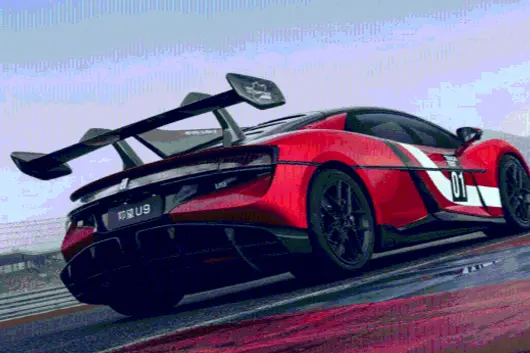
首頁Yangwang U9 Xtreme

搜尋歷史
熱門搜尋
經銷商登入 / 註冊


When the light show under the Burj Khalifa lit up, many hadn't realized that this time, Chinese cars weren't here to sell vehicles, but to rewrite the rules.
The U9X pushed the production car's top speed to 503.17 km/h. Dingyao had its global premiere at the Emirates Palace in Abu Dhabi, with a pre-launch price touching over 2 million.
Putting these two things together, on the surface it seems BYD created another big event, but looking deeper, it's the first time Chinese cars in the ultra-luxury segment are not learning jargon from behind Europe and America, but are establishing their own new market framework.
In the past, when we talked about high-end, we spoke of "Benchmarking Whom". Benchmarking Maybach's size, benchmarking Rolls-Royce's quietness, benchmarking Bentley's prestige. This time Yangwang didn't say that. Hu Xiaoqing was very direct: "Yangwang is Yangwang, not someone's copycat. It never speaks of benchmarking."
This sentence sounds arrogant, but it's actually a breath held for a long time.
Ding is not just a sticker, it's redefining "expensive"
The name Dingyao is the most thought-provoking signal of this launch.
In the past, ultra-luxury car naming was either letter-number combinations (W223, Ghost) or founder surnames (Bentley, Maybach). Chinese brands aspiring to the high end tended to follow suit, appearing "international". BYD did not. Dingyao, two characters, paired with a Latin Altior, meaning "Higher Power".

The car emblem is Oracle Bone Script made of 24K real gold. The front grille is embedded with 137 gemstones, the air vents are inlaid with Hetian jade, and cloud patterns are embroidered thread by thread using the Su embroidery splitting silk technique. These are not just piling materials; they translate the "Ding", the heaviest symbol in Chinese civilization, into a space modern people are willing to sit in.
Hu Xiaoqing shared a detail: during the first half of the press conference, almost no parameters were discussed; it was all about Oracle Bone Script, the Ding, the phrase "one word is worth nine tripods", and "a gentleman is like jade". "We initially used technology to build cognition, then it was a learning process. The entire group is adjusting rapidly, and the narrative style is part of it."
This sentence is crucial. The early problem with BYD was strong technology but weak storytelling. Engineers could build the car, but couldn't clearly explain "why it's worth this price". Dingyao shifted the narrative focus from "What do I have" to "Who am I" — I am not a faster or cheaper substitute; I am another system coming with the logic of 3,000-year-old ritual vessels.
Western ultra-luxury talks about individualism, freedom, conquest, crown. Dingyao talks about order, stability, peace. The "Ding" was a ritual vessel in ancient times, used for sacrifices, praying for good weather and harvest. Li Yunfei explained this line clearly: What Chinese people express to the world with technology is the hope for fewer conflicts.

This isn't soft packaging. When a 2-million car dares to put "peace" in its brand core, it's actually doing an adventurous but smart move: bypassing the "showing off wealth narrative", to attract buyers who have already owned all Western luxury cars and are starting to look for spiritual identification.
The Middle East happens to have this group of people. The locality doesn't lack Rolls-Royce, doesn't lack Maybach, but lacks a car that "makes me feel I am participating in a new civilization expression". U8 has already run in the royal circle; Dingyao smoothly takes the baton, the logic is very smooth.
What's truly difficult is not making the car expensive, but making the expense have a source. This time BYD found the source.
The technology foundation has finally grown into luxury
Culture alone is not enough. Buyers in the ultra-luxury market talk about aesthetics on their lips, but their hands feel the technology foundation.
This time, Yangwang played three technology cards consecutively in the UAE.
The first is U9X's 503.17 km/h. The significance of this number is not in "fast", but in "boundary". Hu Xiaoqing mentioned a detail: the team did crash tests in Shaoxing. Others' first reaction was "Such an expensive car crashed", her first reaction was "How are the people". Behind the top speed is safety redundancy, the battery pack not catching fire after a 360 km collision, and four motors with independent millisecond-level control. Fast is the result; stable is the product.

The second is Dingyao's powertrain and chassis. e4 four-motor independent drive, DiSus full active suspension, 2nd Gen Blade Battery, flash charge technology, CLTC range breaking 1000 km, 10% to 70% charging in about 5 minutes. First equipped with self-developed Xuanji A3 smart driving chip, Heavenly Eyes A system. These technologies are not stoves built specifically for Dingyao, but the feedback from BYD's 120,000 engineers and over a decade of technology pool.
The third card is the most underrated: Integrated light-storage-charge.
In the Abu Dhabi desert, BYD set up a flash charge demonstration station — solar power generation, energy storage, flash charge, robotic arm auto-plugging, the owner doesn't need to get out of the car. Middle Eastern sunlight is a natural resource, villas come with parking spots, the energy replenishment logic is completely different from domestic. Liu Xueliang explained clearly: Solar, energy storage, and EVs are BYD's three major green dreams, not limited to a specific country, landing wherever needed.

This proves one thing: BYD thinking in the Middle East is not "how many cars to sell", but to move the entire energy ecosystem over. The car is just the entry point; behind it is a closed loop of power generation, storage, and usage.
Traditional luxury car brands have been selling in the Middle East for over a hundred years, still selling "mechanical art". BYD sells "the operating system of a future lifestyle". This dimensional difference is the real confidence behind Dingyao's 2 million price tag.
If flash charge can't keep up, the best car is just decoration. BYD first buries the piles in the desert, then lets the car drive in. The order is correct.
What does Chinese automotive really rely on to stay overseas
Regardless of the hype, Liu Xueliang said a very clear sentence on-site: "Chinese car brands going overseas started from negative numbers. In these five years, represented by BYD, we have finally returned to 0, and walked to 1 and 2 based on different markets."
This sentence removed all romantic filters.
Overseas is not a blue ocean; it's someone else's home ground. Political-business environment, tariffs, cognitive bias, service systems, every hurdle is a hard bone. BYD's strategy has three very "earthy" but extremely effective moves.

First, build trust with public transport first. Buses, taxis, V2L external discharge. These things aren't sexy, but can save lives. A blizzard in New Zealand cut power, a child relied on a dialysis machine to survive, no electricity at home meant life or death. The owner remembered the salesperson saying "This car can discharge", plugged a wire in, the car became a life support system. Australian bushfires, Nepal mudslides, BYD owners drove cars door-to-door delivering power.
When the technology narrative reaches this step, it moves more than any press conference. Cars are no longer transportation tools; they are the lamp in the disaster.
Second, truly treat users as humans. Nepal mudslides washed away over 800 cars. According to the contract, writing "Force Majeure" exempts liability. BYD didn't do this, shifted production capacity, transit at checkpoints, hired hundreds of drivers at high salaries to drive the cars back to Kathmandu one by one. Liu Xueliang said: "One sentence of Force Majeure won't explain it." Just this one sentence weighs more than ten thousand brand slogans.

Third, willing to change products for different markets. The Sea Otter was originally developed for the Japanese K-Car market, now brought to Macau and Sri Lanka. The Japanese market was ignored by Western brands for decades. BYD really made a car again according to local living habits, not just changing the label on an existing domestic model. This "technical equal rights" hard work is what long-termism looks like.
Challenges are also obvious. Li Yunfei judged, the window period for global mainstream brand electrification transformation, "might be only two or three years". Once Toyota, Volkswagen, BMW full-electric products are fully rolled out, competition will return to a hard fight. Whether the positions won by Chinese brands through first-mover advantage and tech generation gap can be held depends on overseas production capacity, channels, service, and reputation landing simultaneously.

BYD's strategy is clear: domestic multi-brand (Dynasty, Ocean, Yangwang, Denza, Fang Cheng Bao), overseas consolidated into three brands, Fang Cheng Bao merged into Denza, resource focus, dealer relief. Not greedy for many, first make each market thorough.
Singapore share surged to nearly 30%, Nepal overturned from India brand's backyard to become Chinese car owners' field, Japan bus market share over half. These achievements are not won by one press conference, but by ten years of bus electrification, by discharging in every natural disaster, by carrying it over car by car.
Written at the end
This 72 hours in Abu Dhabi, top speed, premiere, flash charge coming consecutively, looking like BYD's highlight moment. But pushing aside fireworks, there is only one true historical move.
Chinese cars finally no longer explain "why I am cheap", start answering "why I am worth it".
Dingyao is not perfect, brand thickness can't compete with century-old tycoons, circle cognition needs to be polished bit by bit. But it packed Oracle Bone Script, Ding, Su Embroidery, Flash Charge, 120,000 engineers for the first time into something you can sit in, placed in front of the world's most picky buyers.
Once this step is taken, there is no turning back. Nor is turning back needed.
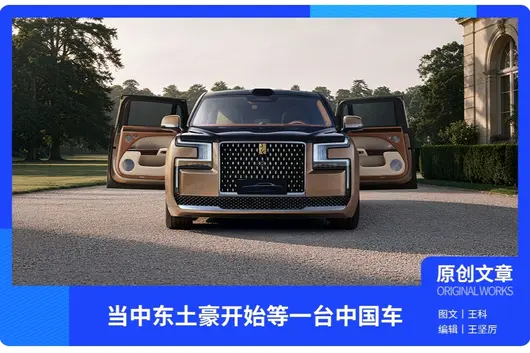

On November 6, BYD announced the latest results for its Yangwang U9 Xtreme (shortened to U9X). The car set a new world record for the one-way top speed of mass-produced vehicles at 503.17 km/h. On November 7, the Yangwang ultra-luxury flagship sedan Dingyao made its global premiere in Abu Dhabi, UAE.
This speed challenge was completed on November 1 on a closed section of Abu Dhabi's E11 Highway. The results were verified by the FIA, surpassing the 496.22 km/h set by U9X last year. Breaking through 500 km/h requires continuous output from the electric drive and battery, as well as coordinated work between thermal management and chassis control under high load. This achievement provides a quantifiable reference for the overall vehicle engineering capabilities of Chinese automakers.

Dingyao extends Yangwang's technology applications to the ultra-luxury executive sedan market. The new vehicle adopts pure electric drive, drawing design inspiration from the traditional Chinese ritual vessel "Ding", and is equipped with the e4 independent drive system with four motors and the new generation DiSus full-active chassis control system. For executive sedans, the value of chassis technology lies in allowing passengers to ride smoothly and comfortably under different road conditions.

Overseas Sales Growth, Localization Operations Follow Up
As Yangwang expands into overseas high-end markets, BYD's overseas business has entered the million-unit level. According to BYD disclosures, in the first 10 months of 2026, its overseas sales of passenger cars and pickup trucks reached 1.5074 million units, surpassing the 1.0496 million units for the whole of 2025. This scale is about 27 times that of the full year 2022.

According to event materials, in the first three quarters of this year, BYD sold 11,495 units in the UAE. Choosing Abu Dhabi for the premiere of the flagship sedan allows Yangwang to directly showcase products to local high-end customers. Converting premiere attention into long-term business results depends on whether store experience, delivery, and after-sales service can keep up.
BYD is also advancing localized production. The company's half-year report shows that factories in Brazil, Thailand, and other places are now in operation, supporting overseas supply. At the product level, Dynasty and Ocean cover mainstream markets, Denza and Fang Cheng Bao expand into different high-end niche segments, while Yangwang further enters the high-performance and ultra-luxury fields. Different brands serving different needs also provide more application scenarios for the group's R&D and manufacturing accumulation.
From an industry perspective, sales volume helps amortize R&D costs, while high-end models show the global market how Chinese automakers use independent technology to solve specific problems. U9X converts overall vehicle engineering capabilities into verifiable performance results, while Dingyao brings technology and Chinese design into the ultra-luxury executive sedan market. Whether these breakthroughs can consistently deliver product and service experiences overseas will determine to what extent they highlight the global value of Chinese brands.

Giti Tires stated: Previously you said I am low-end goods, I won't pick faults with you. But today, please call me a performance god tire.
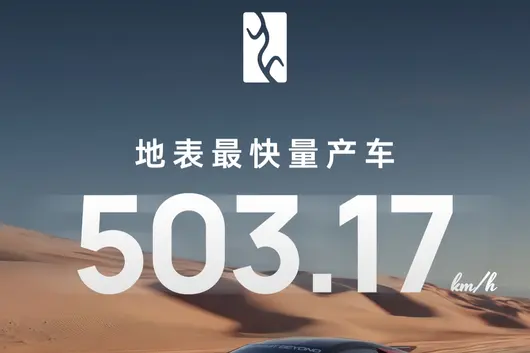
On the closed test section of E11 Highway in Abu Dhabi, UAE, Yangwang U9X reached 503.17 km/h, advancing about 139.8 meters per second. Guinness confirmed four records: Fastest Production Car, Fastest Electric Car, Fastest Electric Car Tire, Fastest Road Car Tire. Tire supplier is Giti.
Many people hear Giti and think it's a domestic tire. Actually, it is a Singapore brand, but this tire was developed in the China R&D center, strictly speaking, it was created together with Yangwang.
Many people don't know what a speed of 500 means, how high the requirements are for tires.
Simply put, the tire must bear a load of over 2 tons, and also bear the huge centrifugal force brought by vehicle speed. Bugatti challenged 431 km/h back then, tire centrifugal force was close to 5000 G. A small defect could cause delamination or explosion. So strength, stability, heat resistance, must all be maxed out.
Bugatti Veyron Super Sport's 431 km/h used Michelin custom tires, single tire $25,000, four tires $100,000, close to a Porsche 911.
So what does Yangwang U9X use? GitiSport e·GTR² Pro semi-slick tires jointly developed by Giti and Yangwang.
The core material is high-strength aramid fiber, the kind used for bulletproof vests, anti-tension, heat resistant, can suppress expansion at extreme speeds. Plus asymmetric track pattern, straight line stable, cornering has grip. This is also the world's first electric car tire designed for 500 km/h, directly exceeding conventional speed ratings.
For this tire, Yangwang and Giti made nearly 40 plans, dynamometer testing, track matching, repeated iteration. Finally: Nylon main body, impact resistance improved by 45% compared to traditional polyester; Belt steel wires changed from ST to UT, impact resistance improved by another 10%; Steel bead structure improves lateral stiffness by more than 10%; Aramid fiber binds the wheel body, almost no deformation at high speed, suppresses standing waves. Formula-wise, rubber tensile and tear strength improved by 20%, imported track-grade carbon black shortens heating time by 40%. Final safety speed increased by 27% compared to last year.
So, this time Giti has taken off the hat of "low-end goods". In the past you said it was cheap, low-end, it didn't pick faults with you. But today, U9X top speed 503, Guinness four records, the tire supplier written is Giti.
In the past you called me low-end goods, today please call me "Performance God Tire".