首頁Xpeng GX

搜尋歷史
熱門搜尋
經銷商登入 / 註冊

[CNMO Tech News] July 29, according to data collated and released by @EVOverseas, the ranking of overseas pure electric cumulative sales for ten Chinese new force automakers from 2020 to the first half of 2026 has been announced. The list covers sales data from 39 countries and regions, among which XPeng Auto ranks first with 105,245 units, and is also the only brand on the list with cumulative sales exceeding 100,000 units.

XPeng
Leapmotor Auto ranks second with 77,279 units, forming the first tier of the list alongside XPeng. Ora has cumulative sales of 51,653 units, ranking third, and is also the only brand other than XPeng and Leapmotor to break 50,000 units. The fourth to sixth places are Aion, Zeekr, and Deepal in order, with cumulative sales of 44,047 units, 39,899 units, and 31,588 units respectively. Among them, Aion is still about 6,000 units short of 50,000, while Zeekr is close to 40,000. The results of these three brands are concentrated in the 30,000 to 45,000 units range. Denza ranks seventh with 15,427 units. NIO and IM Motors have relatively close cumulative sales, at 7,502 units and 7,049 units respectively, ranking eighth and ninth; Voyah has cumulative sales of 3,247 units, ranking tenth.


According to analysis, XPeng's significant sales lead is closely linked to its in-depth layout in Europe and Asia-Pacific. Data shows that 60% of XPeng's overseas sales come from Europe. In the first half of this year, 21 European countries sold around 18,000 units, with sales across all 21 countries surging, a year-on-year growth of 154%. At the same time, the Asia-Pacific market is also gaining momentum, with countries such as Thailand, Malaysia, Singapore, and Australia contributing 20% of the sales.



Is the Mixue-style approach really effective?
In 2026, the new energy poker table is undergoing drastic restructuring by the month.
The China Passenger Car Association predicts that the new energy penetration rate will exceed 62% in May, with the fuel vehicle share compressed to less than 40%.
More importantly, 30,000 vehicles—the figure once seen as the top-tier threshold—is now squeezed into 7 brands. And the top Leapmotor raised this threshold to over 80,000.
The landscape is thinning and thickening. Thinning, because the leaders are far ahead; thickening, because the chasing echelons have never been so crowded. Is there only one path to success? Who could know before the main drama ends?
Leapmotor's '80,000+' Moment
Leapmotor sold 81,500 units in May, up 81% YoY.

For a long time in the past, EV new forces loved to talk about high-end, smart, and brand upgrade. As if the higher you stand, the more story you have. However, Leapmotor took another path, almost adopting the 'Mixue Bingcheng' approach, focusing on family users in the 100,000 to 200,000 RMB price range.
Users in this price range have broader coverage but are more sensitive to price, and at the same time, it is hard to tell a particularly 'sexy' capital story. However, the operational logic must be very grounded. The return is that once costs, reputation, and channel efficiency reach a certain level, sales elasticity will also be larger.

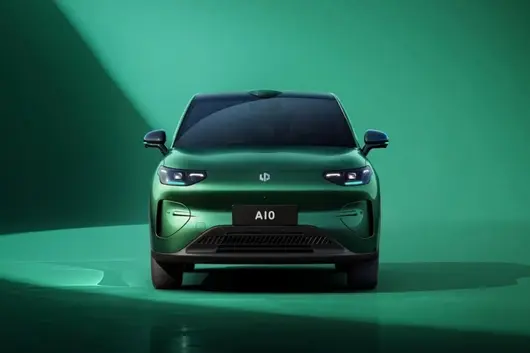
For example, A10 delivered over 20,000 units in a single month, squeezing LiDAR and Qualcomm 8295 chip into under 100,000; C Series global cumulative sales exceeded 800,000; D19 new orders maintained above 10,000. Three product lines, three price bands, precisely locking three key nodes of the mainstream family market.
For this reason, Leapmotor's lead is not 'single hit driving', but the result of 'matrix synergy'.
But the hidden worry lies in: should we still pursue brand upgrade? Should we still pursue high profits? In the high-end market, will the 'Mixue Bingcheng' approach still work? Actually, Leapmotor knows all this, otherwise it wouldn't have proposed the idea of 'launching a new brand independently'.
Nio approaches 40,000, Li Auto under pressure, Xpeng slight increase
May's second tier is worth detailed tasting.
Nio delivered 37,705 vehicles, up 62.3% YoY, and up 28.4% MoM, with the synergy effect of the multi-brand strategy beginning to materialize.
Among them, Nio brand 20,013, Onvo 12,029, Firefly 5,663. Three brands, three niche tracks, three-level ladder user acceptance.

But there is still one unresolved problem: Can Onvo's brand independence and user perception really work through? If it relies solely on main brand downward channel and resource funding, multi-brand might drag overall efficiency.
To a certain extent, Onvo must move volume, and with this wave of model refresh, let's see the results.
Li Auto delivered 33,350 vehicles in May, down 18% YoY, and down about 0.2% MoM.
Having said that, Li Auto's historical cumulative deliveries broke 1.7 million and is still one of the most substantial new forces. But there are two signals worth being vigilant: first, two consecutive months both YoY and MoM decline; second, with competitors' intensive launches in the same price band, Li Auto's differentiation barrier is being eroded.

i6 deliveries broke 20,000 for three consecutive months, L9 new model release 2 weeks orders broke 10,000, but whether incremental volume can timely fill the basement decline is still unknown.
More worthy of attention is the financial aspect: Li Auto turned from profit to loss in Q1, net loss of 2.276 billion RMB, vehicle gross margin plummeted from 19.8% to 6.1%. Loss of the profit benchmark may impact the capital market more than the sales slowdown.
Xpeng delivered 32,158 vehicles in May, up 3.6% MoM, setting the monthly high since 2026.

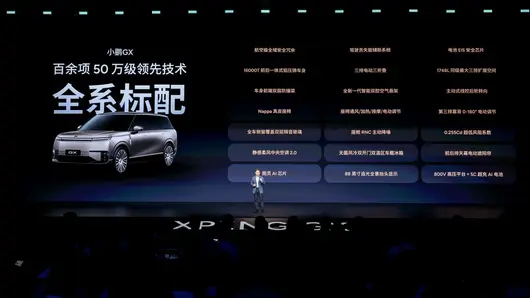
Among them, Xpeng GX launched on May 20, 12 hours large deposits 24,863, Ultra Flagship version proportion over 80%, after June mass delivery expected to pull overall data.
MONA Family will continue to introduce new members, including L03 and L05, having the opportunity to grow MONA's potential market together.
Xiaomi stood firm on the 30,000+ step for two consecutive months, from single car brand heat to multi-model product layout, Xiaomi is completing the role switch from 'topic creators' to 'market participants'.
This year's full year sales target is 550,000, Jan-May completed 140,000 to 150,000, estimated 400,000 'gap' remains,

So, in the remaining months, average monthly sales need to exceed 50,000, pressure is not small. Perhaps, after EREV products hit the market, there should be a chance to capture a new group of users again.
Harmony Intelligent Mobility delivered 46,122 vehicles in May, up 41% MoM, returning to the top of the list.
Special mention: AITO M6 first complete delivery month broke 20,000 units, Shangjie Z7 delivery started on May 30, 2 days delivery over 2,000. Huawei ecosystem brand call power plus multi-brand matrix approach is forming a unique competitive barrier.

Second-Gen Startups, Waist Explosion
First, let's look at a 'Second-Gen' May sales express:
Zeekr: 34,377, YoY surge 81.8%, consecutive 4 months both YoY and MoM growth, creating historical high. 9 Series and 8 Series flagship models sales share nearly 50%, single car transaction average price over 360,000 RMB; Zeekr 009 in Singapore market starting price as high as 409,900 SGD (then equivalent to 2.21 million RMB).

This group of numbers shows Zeekr has not only broken through of domestic brands, but entered global luxury car market mainstream view. Volume and price rise together logic is not complex: flagship builds reputation, mid-range moves scale. When 9X, 009 ultra-high ticket price anchors brand premium capability, 8X, 001 volume models user acceptance cost naturally declines.
Deepal: 33,243, YoY growth 30%, consecutive 3 months over 30,000, cumulative deliveries broke 850,000.
Deepal's path worth chewing repeatedly: its rhythm is not 'hit explosion', but 'three lines push'. S05, S07, S09 three models simultaneously hot selling, product lines cover 100,000 to 200,000 main range.

This approach has no hit one night godhood drama, but in stock competition, multi-product lines synchronous volume, supporting each other, system resilience is stronger.
GAC Aion: 33,140, YoY growth 23.8%, consecutive months YoY positive growth.
Aion N60 officially launched, full series standard equipped LiDAR, WeRide L4 shared algorithm, Zero Gravity Seats, Five-link rear suspension, price 109,800-129,800 RMB, first month sales broke 5,000. This 'Technology universality' approach, identical with Leapmotor A10 underlying logic.

Voyah: 13,003, YoY growth 30%. More important than sales numbers, Voyah offline touchpoint coverage over 100 cities, self-built charging stations reached 130. When energy replenishment system and channel network truly formed, sales ceiling naturally will be pushed open.

IM Motors: 10,023, consecutive 2 months broke 10,000, Jan-May cumulative sales YoY surge 115%. IM Motors LS8 post launch pulled a wave order volume recovery, let's see sustainable explosive power later.

Avatr: 7,336 created annual high, and showing month-by-month acceleration trend, overall is positive.

To be honest, 'Second-Gen' held their own positions, not completely overturned in landscape change, as for those who can carry the flag already diffused from Zeekr, Deepal two heads to multiple nodes at the waist.
Written at the end
2026 new energy market, experiencing drastic change from 'inclusive growth' to 'stock battle'. Price war normalized, most car companies contract front line, profit as first goal. Elimination round rules are simple: sell and live, can't sell and quit. And can't sell signal, often hidden in consecutive two or three months MoM decline.
May data, is this elimination round a clear report card: Leapmotor first to work through 'mainstream market scale' path, Nio multi-brand synergy saw first light, Li Auto facing replacement pain, Xpeng still looking for new incremental explosion points, Xiaomi continuously holding 30,000 level. And 'Second-Gen' collective volume increase, is building a wide moat at the waist of new energy market.
Electric competition second half, variables both from new forces aggressive acceleration, also from 'Second-Gen' steady advance. Multiple heads advance landscape once formed, future competition will not be single dimension speed race, but full chain system war covering R&D, manufacturing, channel, service.
And such competition, will evolve how, wait and see.
Author of this article is Ti Che Bang Xi Bei

"Xpeng GX sales data is at least exceeding my expectations, perhaps the product matrix head's expectations might be even higher." On May 21, He Xiaopeng, Chairman and CEO of Xpeng Group, stated that Xpeng GX large orders reached 24,863 units in 12 hours since launch, with two purchased by himself.
On May 20, Xpeng Auto's first all-size new tech flagship SUV — Xpeng GX went heavy launch. The new car is positioned as a new tech flagship facing the physical AI era, launching pure electric and super extended range dual power systems, limited-time equity price starting from 269,800 yuan.
He Xiaopeng stated: "Regarding the pricing of GX, we went through multiple rounds of fierce discussions, and ultimately gave a very sincere price based on ensuring a certain profit." Xpeng Group Product Matrix General Manager Wu Anfei revealed: "From a product power perspective, Xpeng GX targets 'Series 9' SUVs, but from a pricing perspective, Xpeng GX targets 'Series 8' SUV products."

With the announcement of Xpeng GX large order data, Xpeng Group's stock price also surged on May 21. As of the close on May 21, Xpeng Group Hong Kong stock price rose 4.57%, quoted at 60.6 HKD/share, with intraday gains exceeding 8% at one point.
As the culmination of Xpeng's 12 years of technical accumulation, GX integrates three core technologies: Robotaxi intelligent driving, flying car safety redundancy, and embodied intelligence chip architecture, directly addressing seven industry pain points — large cars should be easy to drive, interior has quality but not showy, driving is enjoyable, safe enough, low energy consumption, smart enough, sufficient space. The entire series is standard-equipped with over 100 leading technologies at the 500,000 level, redefining the 300,000 level flagship standard.
Xpeng GX body size reaches 5,265×1,999×1,800mm, wheelbase 3,115mm, imposing presence. Universal Sky-Ground front and rear through lights paired with aerospace-grade ceramic 24K gold logo, identification maxed out; four-door electric doors support anti-clamp anti-drop, active obstacle avoidance, designed for next-gen unmanned driving. Exterior offers Peak White, Polar Black, Fjord Gray, Danxia Red, Cloud Desert Gold (Matte), Kunlun Cloud Realm (Silver Grey Bi-color) 6 color schemes, among which Matte Cloud Desert Gold uses BASF top matte clearcoat, paint film quality benchmarked against ultra-luxury brands.
To solve the pain points of difficult turning and parking for large cars, GX full series standard-equipped rear-wheel steering, achieving 5.4m minimum turning radius, flexibility comparable to A0-class sedans, turning and parking calmly. At the same time equipped with million-pixel AI digital projection headlights, possessing 1.3 million pixel-level precise shading capability, can achieve following distance warning, driving intention projection, welcome light carpet, etc.; UWB key links electric side steps, sensing welcome from 3.5 meters away, matched with industry-leading 6 sets of external microphones and 2 external interactive speakers, external voice vehicle control is convenient, ritual sense full.
Xpeng upholds the "Technology Luxury" concept, rejecting piled-up flashy configurations, carrying hardcore technology with simple design. Interior offers Dawn White, Forest Mist Purple, Platinum Brown three color schemes, utilizing a star-soft translucent leather craftsmanship where ambient lighting is hidden beneath the leather. When lit, it shines like a galaxy; when off, it blends seamlessly.

In terms of space, GX creates a cross-level experience of "First row beyond Series 7, Second row Maybach, Third row Alphard". 180mm ultra-wide second-row central aisle + 1,324mm open height, elderly and children pass freely; Third row is the widest in class, and is the only third row in class that can lie flat, seats support 0-180 degrees backrest and headrest electric stepless adjustment, full heating function, equal rights with first and second row.
Storage capabilities are equally impressive; with 6 people fully loaded, the trunk capacity reaches 673 L (best in class). After folding the third row in a 50:50 independent electric manner, it can switch between a large five-seat or super large four-seat mode, with a maximum expansion capacity of 1,748 L, easily accommodating large items. Additionally, there are 62 high-precision storage spaces throughout the car plus 3,180W of interior power supply, suitable for diverse scenarios like outdoor office work and travel photography.
As the first mass-produced Robotaxi model featuring full-stack self-developed technology, GX is equipped with the Turing AI chip across the series, offering up to 3,000 TOPS computing power. Empowering the second-generation VLA intelligent driving system, it achieves a leap from "having roads to travel" to "traveling even where there are no roads". Capabilities such as navigation-free roaming in park garages and starting from a standstill in all scenarios lead the class.
Regarding safety, GX adopts a 16,000T front-and-rear integrated die-casting "Castle Body" with a torsional stiffness of 56,000 Nm/deg, capable of withstanding a 720° five-link chain extreme collision test. It covers 11 airbags across all three rows and debuts the "All-Weather, All-Scenario Steady Ride System," which automatically executes "Warning - Lane Change - Parking - Help Call," protecting the whole family during travel.
In terms of power and range, pure electric four-wheel drive version CLTC range 750 km, energy consumption 15.2 kWh/100km, 5C supercharge 12 minutes recharge 525 km; Super Extended Range version comprehensive range 1,585 km, zero to hundred acceleration 4.98 seconds, balancing long range and strong power.

Xpeng GX takes "Dedicated to all people struggling for themselves and for the era" as the core proposition, accurately anchoring user groups balancing family responsibility and self pursuit. In the large six-seat SUV red ocean market, GX jumps out of traditional "configuration piling" logic, taking Physical AI technology as the core, achieving "Easy to drive, easy to use, safe, smart" full dimension breakthrough, ending high-end SUV "Trade-off Difficulty".
From industry layout perspective, GX is not only a key model for Xpeng brand upward, but also an important landing carrier for its transformation from car company to "Physical AI Company". As of now, Xpeng has built 9 major R&D centers globally, R&D personnel ratio over 40%, and started localization production projects in Indonesia, Austria, Malaysia, globalization strategy continues to advance.
In the future, Xpeng GX will, with high-level technology standard across series, cross-level product power and sincere pricing, reconstruct the 300,000 level flagship SUV value benchmark, accompany users carrying worries and love, calmly rushing to mountains and seas, exploring infinite boundaries of life.