首頁Wuling

搜尋歷史
熱門搜尋
經銷商登入 / 註冊

September in Guangxi sees two important milestones for Chinese automobile exports one after another
On September 8, a batch of auto parts departed from Guangxi to Vietnam via the Pinglu Canal. Compared to previous exports via Guangzhou and Shenzhen, this new route is expected to reduce logistics costs by 18%. Nine days later, at the 23rd China-ASEAN Expo, SAIC-GM-Wuling officially released its Global 5 global strategy and signed a strategic cooperation agreement with Malaysia Chan Chang Group on the localized battery CKD project.

One is a logistics channel connecting to the sea, and the other is a corporate strategy facing the global market. Seemingly belonging to different dimensions, they both point to the same proposition: How Chinese automobiles can shift from "going out" to "going deep" in the global market, thereby achieving long-term, stable, and sustainable operations.
In recent years, Chinese automobile exports have grown rapidly, with new energy vehicles becoming an important incremental factor. However, with intensifying international market competition, rising tariffs, regulations, supply chain security requirements, and localization demands, the model of opening markets solely through whole vehicle trade is facing challenges. The export of Chinese automobiles has entered a new phase of competing on system capabilities: it requires not only products but also the ability to implement manufacturing, supply chains, services, talent, finance, and standards collaboratively.
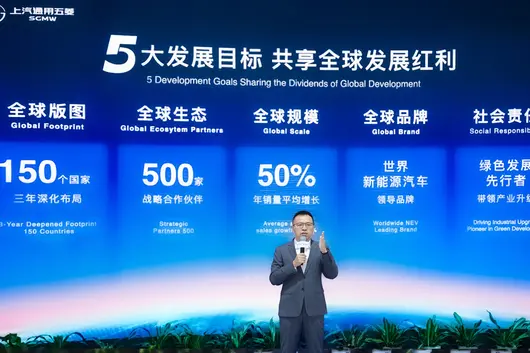
SAIC-GM-Wuling's release of the Global 5 global strategy at this juncture is a systematic response to changes in the industry environment. With the core "5S System" comprising five strength foundations, five cooperation models, five service guarantees, five market layouts, and five development goals, SAIC-GM-Wuling has built a new globalization concept. In the next 3 years, it will deepen its layout in 150 countries, expand 500 strategic partners, achieve an average annual sales growth of 50%, and strive to become a leading global brand in new energy vehicles.

This is both a grand plan and reflects new thinking by Chinese automakers on the logic of globalization development: overseas markets are not simply an extension of domestic competition, and going out cannot be limited to increasing export quantities. Instead, it must establish operating systems rooted locally around the industrial foundations, policy environments, and consumption demands of different countries.
Going Out Is Not Just About Selling Cars, But Building an Ecosystem
SAIC-GM-Wuling's globalization did not start from scratch. After 31 years of exploration, its products have entered over 120 countries and regions, with cumulative overseas sales exceeding 1.6 million units (sets), and overseas exports growing for 10 consecutive years. From January to August this year, SAIC-GM-Wuling's exports exceeded 240,000 units (sets), with monthly exports surpassing 30,000 units (sets) for 5 consecutive months. To date, SAIC-GM-Wuling's global cumulative production and sales have exceeded 32 million units, with cumulative new energy vehicle sales exceeding 4 million units.
Scale is the foundation for enterprises to further globalize, but scale itself does not equal global competitiveness. What truly deserves attention is that SAIC-GM-Wuling is converting the product, technology, and industrial chain advantages accumulated domestically into a system that can be replicated, adapted, and operated continuously overseas.
"Behind this is the systematic overseas expansion of SAIC-GM-Wuling with 'Five Chains Integration' as the core." Liu Yan, Deputy Secretary of the Party Committee of the Overseas Division of SAIC-GM-Wuling, told reporters from China Automotive News, "SAIC-GM-Wuling is promoting the synergy and overall implementation of the intelligent manufacturing chain, supply chain, sales chain, talent chain, and financial chain—the 'Five Chains'—to complete the leap from whole vehicle exports to ecosystem construction."
The intelligent manufacturing chain is a key support for the implementation of the overseas system. Backed by the world-first I²MS intelligent island manufacturing system, SAIC-GM-Wuling has built I²MS-NKD intelligent island semi-knock-down assembly workshops with an annual packaging and shipping capacity of 250,000 units (sets). Compared with traditional fixed assembly lines, the intelligent island model emphasizes flexible organization and modular production, which is conducive to adapting to the needs of the overseas market for multiple varieties, small batches, and rapid switching. Through the interconnection of domestic and overseas manufacturing nodes, multimodal transport costs via road, rail, and water can be reduced by 30%.

The value of this model lies not only in improving production efficiency but also in reallocating the functions of domestic bases and overseas factories. SAIC-GM-Wuling's Liuzhou headquarters undertakes R&D, technology and standard output, talent empowerment, and supply chain coordination, while overseas bases focus on local production, local supply chain cultivation, and market operations. Liu Yan summarized it as "Capability Output + Local Adaptation": the headquarters outputs product platforms and process standards, while overseas bases conduct adaptive development combining local needs, achieving bidirectional synergy in R&D, manufacturing, and supply chains.
The supply chain is the foundation of system overseas expansion. Acting as the "chain owner," SAIC-GM-Wuling led 17 domestic core suppliers to jointly layout overseas, covering core components such as batteries, motors, and electronic control. It also independently developed over 100 local suppliers in Indonesia, increasing the localization rate of local factories to over 60%. For parts enterprises following the OEMs overseas, this synergy can reduce the cost of independently opening up markets and improve order stability. For whole vehicle enterprises, it can shorten logistics cycles, reduce tariff expenses, and enhance supply chain resilience.
"Five Chain Synergy" has not stopped at the production stage. In the sales chain, SAIC-GM-Wuling entered the market in the mode of "Vehicle + Charging Facilities", currently having built over 200 dealer stores and more than 1,000 public charging piles, and providing free home charging pile installation for 15,000 users. In the talent chain, it trained local technical talents through education and training centers and industry-education integration projects, cumulatively training over 400 international students. In the finance chain, Indonesia's diversified finance company provides financing and insurance services for 150 local dealers and end consumers.

This means that as a vehicle enters the overseas market, supporting manufacturing capabilities, supply systems, sales channels, charging facilities, vocational education, and financial services also land synchronously. Compared to traditional whole vehicle exports, although this model involves heavier investment and a longer construction cycle, it enhances the connection between the enterprise and the local industry, employment, and consumption systems.
Liu Yan believes that localization is "not just about building factories, but building ecosystems." Only by cultivating local suppliers, co-building infrastructure, and training local talents, allowing the local area to share the value of industrial development, can enterprises change from "guests" of the market to "family" of the industry. This judgment grasps the core change in current Chinese automobile exports: competitiveness is shifting from the "cost-performance ratio of a single car" to the "synergy of an industrial chain" and the depth of rooting locally.
Promoting Deep Localization with ASEAN as a Fulcrum
In the global automobile market, different countries have significant differences in market size, industrial foundation, investment policies, tariff systems, and consumption habits. If globalization is promoted with a single model, it will not only be costly but also prone to mismatches between production capacity, channels, and market demand.
SAIC-GM-Wuling's Global 5 strategy proposes five cooperation models for this: trade, distribution, production and sales, full industrial chain, and technology licensing, flexibly adapting by depth according to the development stage of different markets. Liu Yan introduced that for markets that do not yet have local manufacturing conditions, trade or distribution models can be adopted first; for countries with certain industrial foundations and localization policy requirements, production and sales models such as KD and CKD assembly can be adopted; in markets with relatively complete industrial chain foundations, full industrial chain cooperation can be further promoted; in some markets, products, management experience, and talent capabilities can be exported through technology licensing.
From the existing layout, the Philippines focuses on distribution cooperation, with the enterprise providing market, brand, channel, and service support to partners. Markets such as Thailand, Vietnam, Cambodia, and Myanmar adopt production and sales models more frequently, reducing comprehensive costs through KD or CKD assembly and meeting local manufacturing requirements. Indonesia has become a representative of the full industrial chain model, promoting manufacturing, supply chain, sales, talent, finance, and standard construction synchronously. Markets such as India and Malaysia have also formed practices in technology licensing cooperation.
This differentiated path addresses the problem of how to balance "wide coverage" and "high-quality growth" in global operations. Trade and distribution models have relatively lighter investment, conducive to quickly entering markets and verifying demand. Production and sales and full industrial chain models can form long-term capabilities in key markets. Technology licensing helps integrate local partner resources and reduces the uncertainty of independent investment. Different models are not isolated but can be upgraded gradually as market size and industrial conditions change.
ASEAN is an important testing ground for this model and also the bridgehead for SAIC-GM-Wuling's global layout. On one hand, China and ASEAN are geographically close with complementary industries, and regional economic and trade ties continue to deepen. On the other hand, the market maturity, localization policies, and industrial capabilities of ASEAN countries differ significantly, providing application space for various cooperation models. Currently, SAIC-GM-Wuling has laid out CKD factories in Indonesia, India, Egypt, Malaysia, Vietnam, and other places, and is promoting "Indonesia-Malaysia-Thailand Integration" with Indonesia as an anchor, further radiating to markets such as Vietnam and the Philippines.

The cooperation this time with Malaysia's Chan Chang Group to build a battery localization CKD production line is the first landed project after the release of the Global 5 global strategy, also reflecting the enterprise's localization thinking extending from whole vehicle manufacturing to core components. Facing the rising thresholds for battery and whole vehicle localization in ASEAN countries, battery localization production can reduce import taxes, improve cost structures, and enhance the stability of core component supply.
Liu Yan stated that this project will export the core component supply chain, build a Malaysia-based autonomous supply chain system, and further improve SAIC-GM-Wuling's industrial map in ASEAN. Its significance is not only to reduce the production costs of a single vehicle model but also to form battery support capabilities that can serve the regional market and drive the Guangxi new energy vehicle industry chain to participate in cross-border synergy.
From a deeper level, the value of the ASEAN market for Chinese automakers is no longer just sales growth. Here is a market where new energy vehicle demand is growing rapidly, and also an important platform for testing Chinese automakers' global manufacturing, local operations, and cross-cultural adaptation capabilities. Only by establishing mature models in the complex and diverse environment of ASEAN can these capabilities be further replicated to other global regions.
Local Adaptation and Standard Output Advance Together
System overseas expansion ultimately needs to be implemented into user value. The demand of ASEAN consumers for new energy vehicles can be summarized as high cost-performance, high reliability, high convenience, and high adaptability. Purchase and usage costs remain important decision factors, but high temperature and high humidity climate, complex road conditions, multi-language environments, as well as charging and after-sales networks, also put more detailed requirements on products.
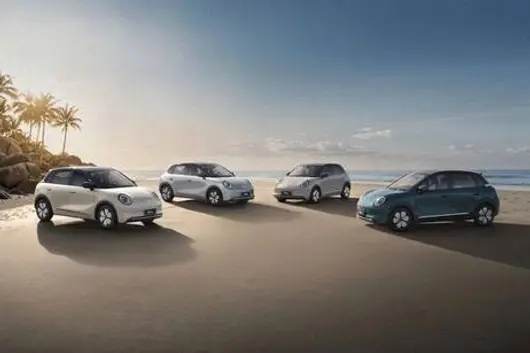
To this end, SAIC-GM-Wuling formed a "5+N" global product layout, with five global products: Starlight 560, Starlight 730, 5th Gen Wuling Hongguang MINIEV, Bingo Family, Yangguang EV, covering SUV, MPV, micro mobility, urban new energy, and commercial vehicle markets, and developing niche demands through other categories. Products are not simply exporting domestic models with changed badges, but emphasize "Global Platform, Local Adaptation".

Taking Indonesia as an example, the local population is dense and family sizes are relatively large, with stable demand for MPVs. Starlight 730 has undergone more than a dozen optimizations for Indonesian usage scenarios. The enterprise also adjusted interior materials, air conditioning systems, car systems, and AI voice interaction around Islamic culture worship needs, high temperature and high humidity climate, local network conditions, and dialect accents. From this, it can be seen that localization capabilities have penetrated into product definition and R&D front ends, not just the production stage.
Beyond product adaptation, the output of technical standards is becoming new content for Chinese automobile globalization. In the past, Chinese automobiles entering overseas markets mainly met local existing regulations. Now, with the expansion of leading advantages in new energy vehicle technology and industrial scale, Chinese enterprises are beginning to participate in regional rule and technical standard construction.
SAIC-GM-Wuling jointly established the China-ASEAN Automobile Standard and Regulation Research Platform with relevant institutions, promoting the passage of Chinese DC fast charging equipment through Indonesia's SNI certification, enabling national standard DC fast charging piles to be legally deployed locally; the safety design of Air ev has been included in relevant ASEAN technical specifications. In Thailand, the enterprise participated in standard policy discussions around battery sustainable management, power battery recycling, and battery passport tracing, and carried out cooperation on ASEAN electric vehicle standard systems, technical terminology, and talent training.
"For Chinese automobile brands, technical standard output is the symbol of going from 'following and running alongside' to 'leading'." Liu Yan stated that co-building standards can reduce repeated testing and certification, lowering the institutional costs for enterprises entering the ASEAN market; at the same time, it can also export new energy vehicle regulations, testing, and certification experiences locally, promoting the co-construction and sharing of regional testing and certification capabilities.
For the entire industry, China and ASEAN strengthening standard acceptance and mutual recognition of testing helps reduce repeated investment and provide convenience for more Chinese brands to enter regional markets; for the host country, it can accelerate the construction of new energy vehicle industry infrastructure and regulatory systems. Standard co-building promoted by enterprises should ultimately form public value for industrial cooperation, not just the company's own competitive barriers.

From this perspective, the novelty shown in the Global 5 strategy lies in including products, manufacturing, supply chains, and market layouts into the same globalization framework, and placing services, talent, finance, standards, and sustainable development in positions equally important to sales volume. What it pursues is to form a long-term mechanism that benefits enterprises, partners, suppliers, and local society together.
Chinese automobile exports are still in a growth period, but the industry's evaluation scale is changing. In the future, the standards for measuring an automaker's globalization level will not only include export volume and overseas revenue, but also include local manufacturing capabilities, supply chain resilience, brand recognition, compliance capabilities, standard participation, and contributions to local industry and society.
Starting from Liuzhou, connecting to ASEAN via Pinglu Canal, and radiating to five continents from ASEAN, SAIC-GM-Wuling is exploring an advanced path from product trade, capability output to ecosystem co-construction. Its value lies not only in the enterprise opening up new growth space for itself, but also in providing an observable, verifiable, and replicable practical sample for Chinese automobile exports.
Globalization has never been a sprint. The Global 5 strategy proposes goals for the next 3 years, but what truly needs to be established is operational capability facing a longer cycle. For Chinese automobiles to go steady and far in the global market, they must not only maintain product and technology advantages but also learn to grow together with local industries. From "selling out" to "staying", and then to "joint development", this might well be the most important direction for the next stage of Chinese automobile exports.


On September 17, SAIC-GM-Wuling officially released the Global 5 Global Strategy at the China-ASEAN Expo, while signing a cooperation agreement with Malaysia's Choon Seng Group to launch local industrial localization layout.
If only looking at the surface, this is a routine global strategy release. But judging from the content proposed by Wuling, what it aims to solve is no longer selling more cars overseas, but how to transform the R&D, manufacturing, supply chain, and channel capabilities formed domestically in the past into a business system that can be replicated across different markets.
This is actually an unavoidable question for China's automotive overseas expansion up to this point.
Beyond Export Scale, Localization is HarderWuling has a long-established overseas business foundation. According to official disclosures, as of now, its global cumulative production and sales have exceeded 32 million units, new energy vehicle sales exceeded 4 million units, and overseas cumulative export sales exceeded 1.6 million units/sets, maintaining overseas export growth for 10 consecutive years.
At this scale, simply emphasizing export numbers no longer holds as much significance as in the early days.
In the past round of overseas expansion, China's automobiles relied largely on complete supply chains, cost control, and new energy technology advantages. But as the market progresses, localization issues become more prominent. Regulations, tariffs, after-sales, supply chains, financial systems, and even local employment and industrial policies will directly determine whether a car manufacturer can stay for the long term.
One point worth noting in Global 5 is that Wuling divided globalization into five cooperation modes: trade, distribution, production and sales, entire industry chain, and technology licensing.
This shows it is not preparing to copy one fixed model globally.
Some markets are suitable for direct export, some require local assembly, and some need further entry into the supply chain or even technical cooperation. For many Chinese car companies, overseas expansion in the past was more like "products go out first, then complement the system"; now it is increasingly necessary to design entry methods in advance according to different markets.
Although this step may not be as intuitive as sales growth, it determines how far globalization can go.
What Wuling Truly Starts to Export is the "System" Accumulated Over Past DecadesAnother change in Global 5 is that it does not only talk about products.
Wuling proposed "Smart Manufacturing Chain, Supply Chain, Sales Chain, Talent Chain, Finance Chain" five-chain synergy, while putting the intelligent manufacturing system, technology brand, and full-category products into the same global framework.
The logic behind this is clear. China's automotive industry's current biggest competitive advantage is no longer just that a certain car is cheap or a certain configuration is higher, but the complete industrial system behind it.
Fast R&D speed, fast supply chain response, high manufacturing efficiency, and mature new energy technology, these capabilities have been repeatedly verified in long-term domestic competition. But to truly become a global competitive edge, this capability needs to be moved overseas.
This cooperation with Malaysia's Choon Seng Group is a very specific landing point. Both sides plan to expand cooperation around battery local CKD and core component supply chains. Wuling hopes to gradually build a local independent supply chain system.
This is already significantly different from simply exporting complete vehicles in the past.
When supply chains, manufacturing, and talent systems truly enter the local area, the relationship between enterprises and markets will also change. Cars will no longer be goods shipped from China but become part of the local industrial system.
ASEAN Will Become an Important Testbed for Chinese Automakers' GlobalizationWuling placing the Global 5 at the ASEAN Expo for release and positioning ASEAN as the bastion of globalization also has strong practical significance.
There are huge differences in development levels, industrial foundations, and policy environments among ASEAN countries. There are both mature automotive industrial markets and markets still in the rapid automotive popularization stage. For Chinese car companies, this region is actually a very typical globalization testbed.
Here, relying solely on low prices is difficult to build long-term advantages; local supply chains, channel networks, and service capabilities will become increasingly important.
Wuling proposed to deepen layout in 150 countries over the next 3 years, expand to 500 strategic partners, and set a target of 50% average annual growth in overseas sales. Whether these goals can be finally accomplished depends on the specific landing speed of different markets, but the strategic direction is already relatively clear: Wuling is not satisfied with being a Chinese brand with a larger export scale but hopes to enter the local industry chain.
This is also a watershed that China's automotive globalization is currently appearing.
The first phase compares who can sell cars out. The second phase starts to compare who can produce, serve, and operate continuously locally. Further on, it compares who can truly build brand and industrial influence.
For Wuling, what Global 5 truly needs to verify is exactly this point.
1.6 million overseas sales have already proven that products can go out. What is harder next is whether the supply chain, manufacturing system, talent, and brand can stay together.
If this step can be run through, Wuling's globalization will be considered truly moved from "export business" to a long-term business.

September 17, Nanning, Guangxi, SAIC-GM-Wuling, with the theme "Global Wuling, Shining in ASEAN", appeared at the 23rd China-ASEAN Expo. The Global 5 Global Strategy was launched on site, and an in-depth strategic cooperation agreement was signed with Malaysia's Chunchang Group.
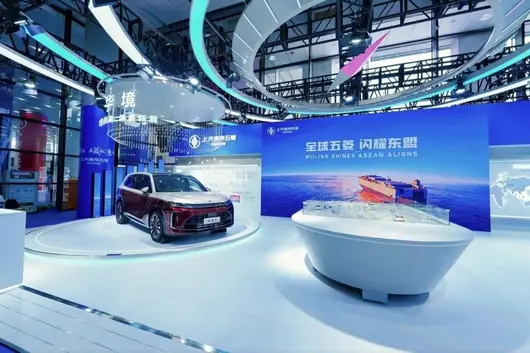
As a benchmark enterprise for the collaborative global expansion of China's automotive industry, SAIC-GM-Wuling concurrently occupied the two featured exhibition halls of the "New Energy and Intelligent Connected Vehicles" Zone and the "Advanced Technology" Zone at this ASEAN Expo, presenting users with the flagship large 6-seater Hua Jing S equipped with Huawei Qiankun Technology, the G20 Summit Official Vehicle Air ev, the "Tian", "Ling", "Shen" technology brands, as well as the I²MS Smart Island Manufacturing System and other achievements, comprehensively showcasing SAIC-GM-Wuling's global strength from products to technology, and from brand to ecosystem.

SAIC-GM-Wuling "New Energy and Intelligent Connected Vehicles" Zone

SAIC-GM-Wuling "Advanced Technology" Zone
Currently, the global new energy transformation is facing the three gaps of "large affordability gap, high localization threshold, and ecosystem chain break". Facing the questions of the era, SAIC-GM-Wuling convened a global strategy press conference and officially launched the Global 5 Global Strategy. With a new posture, it joins hands with ASEAN and global partners to co-draw a new blueprint for the global new energy vehicle ecosystem.
China's automotive industry is moving from a "Major Automobile Power" to an "Automobile Powerhouse". On this road to a powerhouse, SAIC-GM-Wuling submitted a brilliant report card: cumulative global production and sales surpassed 32 million units; new energy vehicle sales exceeded 4 million units; overseas exports grew continuously for 10 years, with cumulative exports surpassing 1.6 million units/sets. From initially leveraging partnerships to go global, to today relying on the advantages of the New Land-Sea Corridor, smart manufacturing, and green manufacturing, SAIC-GM-Wuling has grown into a global car company leading in both scale and growth rate, and is also one of the Chinese brands favored by ASEAN users. In the future, SAIC-GM-Wuling will plan the globalization path from five dimensions of strength, model, market, guarantee, and goal, defining new standards for high-quality development of the global automotive industry.
The Global 5 Global Strategy is the China solution contributed by SAIC-GM-Wuling for the Chinese automotive industry to move towards a full-chain ecosystem export. SAIC-GM-Wuling brings full-scenario mobility solutions with a full-category product layout, builds pragmatic and reliable core technologies centered on the "Tian Ling Shen" technology system, breaks the century-old assembly line convention with the globally first I²MS Smart Island Manufacturing System, constructs a full-industry-chain ecosystem layout with the synergy of the "Smart Manufacturing Chain, Supply Chain, Sales Chain, Talent Chain, and Finance Chain", casts extreme trust and reputation with 68 years of car-making history and 32 million units of cumulative production and sales, constructs five major strength bases, and systematically converts full-link independent research and construction capabilities into overseas market competitiveness. At the same time, SAIC-GM-Wuling, targeting the development stages and policy environments of different global markets, launched five open cooperation models of trade, distribution, production and sales, full industry chain, and technology licensing. It goes from shallow to deep, adapts flexibly, and partners can choose freely according to their own needs.
In addition, SAIC-GM-Wuling also constructed five major service guarantee systems including global quality guarantee, supply chain guarantee, partner empowerment guarantee, localized after-sales guarantee, and sustainable operation guarantee, covering the entire lifecycle of cooperation; with ASEAN as a bridgehead, it continues to deepen the layout of five major markets in Asia, Africa, the Americas, Europe, and Oceania; formulated five major development goals of deepening the layout of 150 countries in 3 years, expanding 500 strategic partners, an annual sales growth rate of 50%, becoming a world new energy leader brand, and becoming a pioneer in industrial upgrading and green development, to achieve a win-win pattern of the "Wuling Development Wing" and the "Wuling Partner Wing" flying together with both wings.

SAIC-GM-Wuling Global 5 Global Strategy
As the first landing result after the launch of the Global 5 Global Strategy, SAIC-GM-Wuling and Malaysia's Chunchang Group signed an in-depth strategic cooperation agreement on site at the press conference, officially launching the local industrial layout in Malaysia. Relying on the export of the core parts supply chain, SAIC-GM-Wuling will build a Malaysia local independent supply chain system, continue to improve the industrial map of the ASEAN region, and promote international capacity layout and cross-border industrial coordinated development.

G20 Summit Official Vehicle


SAIC-GM-Wuling Global Product Matrix Makes A Grand Debut at China-ASEAN Expo
Summary:
SAIC-GM-Wuling fully presented the system upgrade of China's automotive industry from product export to full-chain ecosystem export, providing a replicable experience sample for local enterprises and manufacturing to "go out" at high quality.
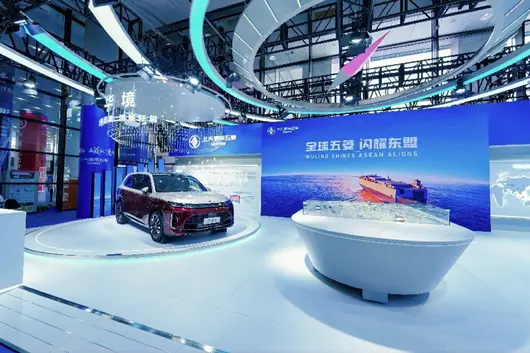

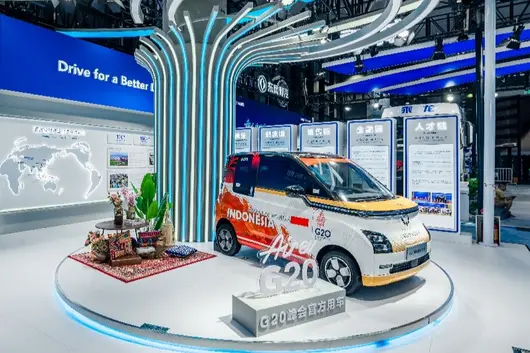
At the Nanning International Convention and Exhibition Center, on the opening day of the 23rd China-ASEAN Expo, SAIC-GM-Wuling's exhibition stands appeared simultaneously in two exhibition halls, the New Energy and Intelligent Connected Vehicle Exhibition Area and the Advanced Technology Exhibition Area. A flagship large six-seater Hua Jing S equipped with Huawei Qiankun technology was parked in a prominent position, next to which was the G20 Summit official vehicle Air ev. Walking further in, models of the three technology brands Tian, Ling, Shen and the I²MS Smart Island Manufacturing System occupied nearly half of the display space.

 Moving the manufacturing system into the auto show is a signal in itself. The theme of SAIC-GM-Wuling's participation this time is called 'Global Wuling Shines in ASEAN', but the core exhibit on the stand was not a single car, but a complete export logic, shifting from product output to full-chain ecosystem output.

This logic was named the Global 5 Global Strategy on site at the Expo. At the press conference, Zhao Xiaobin, Vice President of SAIC-GM-Wuling Motor Co., Ltd., did the math: cumulative global production and sales exceeded 32 million units, New Energy vehicle sales exceeded 4 million units, overseas exports grew for 10 consecutive years, cumulative exports exceeded 1.6 million units/sets. "From initially borrowing ships to go to sea, to today relying on the New Land-Sea Corridor in Western China, intelligent manufacturing, and green manufacturing advantages," he said, "we are no longer just selling cars overseas."

The '5' in Global 5 has five layers of meaning. Shi Jiangong, Vice President of SAIC-GM-Wuling's Overseas Division, broke down the implementation path of this strategy at the press conference: Five major strength bases, Five open cooperation models, Five major service guarantee systems, Five major regional market layouts, Five major development goals.

Among these, the design of the cooperation mode is most noteworthy. For the development stages and policy environments of different markets, SAIC-GM-Wuling launched five models: trade, distribution, production and sales, full industrial chain, and technology licensing, from shallow to deep, partners can choose freely. This means going overseas is no longer a single 'selling cars' logic, they can do only trade, build distribution networks, establish joint ventures, move the entire industrial chain over there, or even only output technology.
Supporting this flexibility is 'Five-Chain Collaboration': Smart Manufacturing Chain, Supply Chain, Sales Chain, Talent Chain, Financial Chain. Shi Jiangong summarized it as 'systematically transforming full-link self-research and self-construction capabilities into overseas market competitiveness'. Specifically on the product side, it is a full-category layout covering SUV, MPV, micro transportation, urban new energy, commercial vehicles, and other scenarios; on the technology side, it is the 'Tian-Ling-Shen' technology system; on the manufacturing side, it is the globally first I²MS Smart Island Manufacturing System, this system breaks the assembly line production method used for a century.

On the day the strategy was released, the first landing project was signed. SAIC-GM-Wuling signed a deep strategic cooperation agreement with Malaysia Chan Tong Group, launching the Malaysia localization industrial layout. Liu Zhijun, Director of the Marketing and Service Department of Liuzhou Sake Technology, and Yun Weishan, General Manager of TQWULING, signed on behalf of both parties. Shi Guoyong, Member of the Party Committee of SAIC-GM-Wuling, Party Secretary of Liuzhou Sake Technology, and Vice President, Executive Vice President Huang Yaosong, Vice President Zhao Xiaobin witnessed it together.
The key of this signing was not in the complete vehicle, but in the supply chain. Relying on the core parts supply chain going overseas, SAIC-GM-Wuling will build a local independent supply chain system in Malaysia. This is exactly the typical path from 'product going overseas' to 'ecosystem going overseas', not transporting cars made in China to sell there, but taking manufacturing capabilities, supply chain systems, talent, and financial services together over there, forming an industrial loop locally.

On the same day, a think tank report was also released. SAIC-GM-Wuling collaborated with People's Forum, inviting three industry experts to jointly release the 'New Paradigm for Collaborative Overseas Expansion of Green Manufacturing and Automotive Industry'. The report refined SAIC-GM-Wuling's practice into three major paths: 'New Quality Ecosystem, New Quality Brand, New Quality Product', and specifically mentioned the deep binding of corporate globalization paths with Guangxi's 'Beijing-Shanghai-Guangdong R&D + Guangxi Integration + ASEAN Application' development path.
Zhang Lei, Director of the Artificial Economy Research Room of the Institute of Economics, Chinese Academy of Social Sciences, said at the press conference, SAIC-GM-Wuling, through Five-Chain Collaboration, systematically transformed domestically accumulated technology, manufacturing, and supply chain advantages into global competitive advantages. Zhou Changping, Executive Vice President of the National Bamboo Industry Research Institute, paid attention to another detail: SAIC-GM-Wuling led the integration of the country's first auto parts 'Bamboo instead of Plastic' full industrial chain. Zhao Xinli, Dean of the School of Advertising and Branding at Communication University of China, interpreted from a brand perspective, believing that SAIC-GM-Wuling broke the low-end prejudice of overseas markets against Chinese brands with high cost-performance and deep scenario adaptation.


Looking at these pieces of information together, the goal of the Global 5 strategy becomes clear. According to the plan, SAIC-GM-Wuling will take ASEAN as a bridgehead, deepening the layout of five major markets in Asia, Africa, America, Europe, and Oceania, covering 150 countries in 3 years, expanding 500 strategic partners, achieving an annual sales growth rate of 50%, finally becoming a world leader in new energy brands and a pioneer in industrial upgrade and green development. Zhao Xiaobin called this layout the 'Two Wings Flying Together' of 'Wuling Development Wing' and 'Wuling Partner Wing'.
China's automotive overseas expansion has gone through several stages. Earliest was complete vehicle export, comparing who's cars were cheaper; later was building factories, doing localization, comparing who has stronger manufacturing capabilities; now it has reached the third stage, outputting standards, outputting supply chains, outputting ecosystems, comparing who can move a whole system overseas and make it run. What SAIC-GM-Wuling displayed at this ASEAN Expo, is exactly a sample of this stage.
Facing the '15th Five-Year Plan', how far this system can go depends on the actual landing effect of Five-Chain Collaboration in the overseas market, and also depends on whether the five cooperation models can truly adapt to the differentiated needs of different countries. But at least looking from the stand in Nanning, the narrative of China's automotive overseas expansion has changed, no longer 'where our cars are sold', but 'where our systems are operating'.
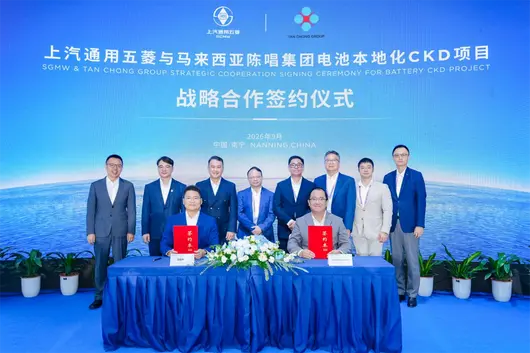


From "relying on others to go global" to "full-chain ecosystem" global expansion. On September 17, at the 23rd China-ASEAN Expo held in Nanning, SAIC-GM-Wuling officially released the Global 5 global strategy, and drew a clear scale for this transformation: 3 years to deepen layout in 150 countries, expand 500 strategic partners, and achieve an average annual sales growth of 50%.

At the press conference, Wuling signed a battery local CKD project agreement with Malaysia's Tan Cheng Group, becoming the first result of the new strategy implementation.
Detailed explanation of the Global 5 global strategy. The first is five major strength foundations: All-category products covering SUV, MPV, micro-commuting, urban new energy, and commercial vehicles, "Tian, Ling, Shen" technology system, the world's first MS Smart Island manufacturing system, synergy of "Smart Manufacturing Chain, Supply Chain, Sales Chain, Talent Chain, Finance Chain", plus 68 years of car manufacturing reputation and global cumulative sales and production of 32 million units.

The second is five major cooperation models: Open trade, distribution, production-sales, full industry chain, and technology licensing five paths for different markets, shallow to deep, selected on demand — among which "technology licensing" means Wuling not only exports products but also starts to export manufacturing and technology capabilities.
In addition, the strategy is also supported by five major service guarantees covering the full lifecycle of cooperation, five major markets ranging from ASEAN bridgehead to Asia, Africa, Americas, Europe, and Oceania, and a set of goals supported by a foundation: Wuling products are currently sold in more than 110 countries and regions, overseas marketing outlets exceed 230, and in the next 3 years, the layout will be deepened to 150 countries, 500 strategic partners will be expanded, and annual sales will grow by 50% on average — equivalent to taking nearly 40 new markets on the existing map.

Zhao Xiaobin, Vice General Manager of SAIC-GM-Wuling, provided the foundation data for the Global 5 strategy: global cumulative sales and production exceeded 32 million units, new energy vehicle sales exceeded 4 million units, overseas exports grew continuously for 10 years, and cumulative breakthrough exceeded 1.6 million units/sets. Shi Jiangong, Vice General Manager of the Overseas Business Department, stated that Wuling will transform the full-link self-research and self-construction capabilities into overseas market competitiveness systematically.
This strategy's weight must be viewed in the big picture of Chinese automotive exports. Data from China Association of Automobile Manufacturers shows that in the first 8 months of 2026, Chinese automobile exports reached 7.153 million units, up 66.7% year-on-year, exceeding the total amount of the whole year last year; monthly exports stood on the million-unit level for 3 consecutive months; new energy vehicle exports reached 3.435 million units, accounting for more than half for 3 consecutive months. Chen Shihua, Deputy Secretary-General of CAAM, judged that Chinese automotive exports are shifting from short-term sales expansion to a more stable scale stage, and enterprises need to move from "selling products" to "building systems."

Wuling's choice happens to step on this node. It did not stop the strategy at export targets, but packaged manufacturing, supply chain, finance, talent, and after-sales as a whole, and then used the five-level ladder from trade to technology licensing to adapt to markets at different development stages. This is exactly the typical play of "ecosystem going global."
ASEAN is the most realistic model: Wuling entered Indonesia in 2017. The Cikarang plant produced 200,000 units cumulatively over nine years, driven 16 domestic three-electric enterprises to land, cultivated over 100 local suppliers; from January to July this year, the enterprise's overseas sales exceeded 200,000 units/sets, and monthly sales exceeded 30,000 for 4 consecutive months. This Malaysia CKD project signing is replicating this localization play in another country.

When tariff barriers and localization requirements become the new normal for going global, the window for simply shipping cars out is narrowing. The significance of the Global 5 global strategy lies in equipping Wuling's overseas business with a replicable "systematic operating system" — foundation in ASEAN, protection of five chains, three years as the goal. In the second half of Chinese automotive globalization, the competition is no longer about who sells more, but who can truly take root overseas. Wuling's step is aimed at "rooting."
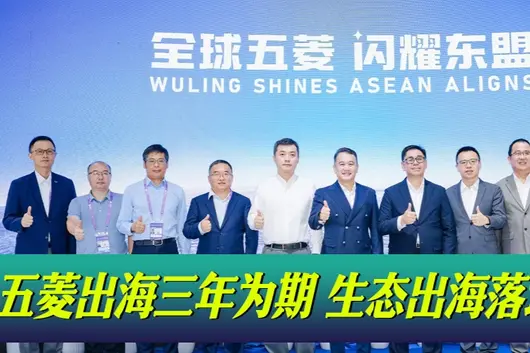

Today, the 23rd China-ASEAN Expo opened in Nanning, Guangxi. SAIC-GM-Wuling appeared at this Expo with the theme "Global Wuling, Shining in ASEAN", heavily launching the Global 5 Global Strategy on site, signing a deep strategic cooperation agreement with Malaysia Chuanhang Group, and collaborating with People's Forum to release the think tank report "New Paradigm of Collaborative Overseas Expansion in Green Manufacturing and Automotive Industry", showcasing new quality achievements of Chinese automobiles leaping from product overseas expansion to full-chain ecosystem overseas expansion to the world.

"Global Wuling, Shining in ASEAN" SAIC-GM-Wuling Appears at the 23rd China-ASEAN Expo
As a benchmark enterprise for the collaborative overseas expansion of China's automotive industry, SAIC-GM-Wuling concurrently participated in the "New Energy and Intelligent Connected Vehicles" exhibition zone and the "Advanced Technology" exhibition zone at this ASEAN Expo, bringing users flagship large six-seater Huanjing S equipped with Huawei Qiankun technology, G20 Summit official vehicle Air ev, "Tian", "Ling", "Shen" technology brands, and I²MS Intelligent Island manufacturing system and other results displays, comprehensively presenting SAIC-GM-Wuling's globalization strength from products to technology, from brand to ecosystem.

SAIC-GM-Wuling "New Energy and Intelligent Connected Vehicles" Exhibition Zone

SAIC-GM-Wuling "Advanced Technology" Exhibition Zone
Global 5 Global Strategy Release, SAIC-GM-Wuling Contributes Chinese Solution for High-Quality Development of Global Automotive Industry
Currently, the global new energy transition faces three major gaps: "large inclusive disparity, high localization threshold, and ecosystem chain fragmentation". Facing the questions of the times, SAIC-GM-Wuling convened a global strategy release conference, officially releasing the Global 5 Global Strategy. With a new posture, joining hands with ASEAN and global partners, it co-draws a new blueprint for the global new energy vehicle ecosystem. Mr. Zhao Xiaobin, Vice President of SAIC-GM-Wuling Automobile Co., Ltd., stated in his speech that the Chinese automotive industry is moving from a "large automotive country" to a "powerful automotive country". On this path to becoming powerful, SAIC-GM-Wuling has delivered a brilliant report card: cumulative global production and sales have exceeded 32 million units; new energy vehicle sales exceeded 4 million units; overseas exports have grown for 10 consecutive years, with cumulative export sales breaking through 1.6 million units/sets. From initially relying on others' ships to go overseas to today relying on the New International Land-Sea Trade Corridor, intelligent manufacturing and green manufacturing advantages, SAIC-GM-Wuling has grown into a global automaker with both scale and growth rate leading, and is also one of the Chinese brands loved by ASEAN users. In the future, SAIC-GM-Wuling will plan the globalization path from five dimensions: strength, model, market, guarantee, and goals, defining new standards for high-quality development of the global automotive industry.

SAIC-GM-Wuling Vice President Zhao Xiaobin Speech
The Global 5 Global Strategy is SAIC-GM-Wuling's Chinese solution contributed to the Chinese automotive industry's journey towards full-chain ecosystem overseas expansion. At the press conference, Shi Jiangong, Vice President of SAIC-GM-Wuling Overseas Business Department, detailed the implementation path of the Global 5 Global Strategy. He stated that SAIC-GM-Wuling brings full-scenario mobility solutions through a full-category product layout, builds pragmatic and reliable core technologies with the "Tian Ling Shen" technology system as the core, breaks the century-old assembly line convention with the world-first I²MS Intelligent Island manufacturing system, constructs a full-industry chain ecosystem layout through the "Intelligent Manufacturing Chain, Supply Chain, Sales Chain, Talent Chain, Finance Chain" five-chain synergy, casts extreme trust and reputation with 68 years of car-making history and 32 million cumulative production and sales, builds five strength bases, and systematically converts full-link self-research and self-construction capabilities into overseas market competitiveness. At the same time, SAIC-GM-Wuling has launched five open cooperation models including trade, dealership, production-sales, full-industry chain, and technology licensing targeting the development stages and policy environments of different global markets, progressing from shallow to deep, flexibly adapting, allowing partners to choose according to their own needs.

SAIC-GM-Wuling Overseas Business Department Vice President Shi Jiangong Speech
In addition, SAIC-GM-Wuling has also built five major service guarantee systems including global quality guarantee, supply chain guarantee, partner empowerment guarantee, localized after-sales guarantee, and sustainable operation guarantee, covering the full lifecycle of cooperation; with ASEAN as a bridgehead, continuously deepening the layout of five major markets: Asia, Africa, Americas, Europe, and Oceania; formulated five major development goals including deepening layout in 150 countries in 3 years, expanding 500 strategic partners, annual sales average growth of 50%, becoming a world new energy leadership brand, becoming a pioneer in industrial upgrading and green development, to achieve a win-win pattern where both "Wuling Development Wing" and "Wuling Partner Wing" fly together.

SAIC-GM-Wuling Global 5 Global Strategy
As the first implementation result after the Global 5 Global Strategy release, SAIC-GM-Wuling signed a deep strategic cooperation agreement with Malaysia Chuanhang Group on site at the press conference, officially launching the Malaysia localized industry layout. Liu Zhijun, Director of Marketing and Service Department of Liuzhou Saike Technology, and TQ WULING General Manager Yun Weishan represented both parties to complete the signing; Shi Guoyong, Member of the Party Committee of SAIC-GM-Wuling, Party Secretary of Liuzhou Saike Technology, Vice President, Huang Yaosong, Executive Vice President of SAIC-GM-Wuling, Zhao Xiaobin, Vice President of SAIC-GM-Wuling jointly witnessed this signing. Relying on the overseas expansion of core component supply chains, SAIC-GM-Wuling will build a Malaysia local independent supply chain system, continuously improve the ASEAN regional industry map, and promote international capacity layout and cross-border industry collaborative development.

SAIC-GM-Wuling and Malaysia Chuanhang Group Battery Localized CKD Project Strategic Cooperation Signing Ceremony
"New Paradigm of Collaborative Overseas Expansion in Green Manufacturing and Automotive Industry" Think Tank Report Released, SAIC-GM-Wuling Creates New Quality Chinese Automotive Overseas Expansion Sample
At the site of this China-ASEAN Expo, SAIC-GM-Wuling, collaborating with People's Forum, invited three industry experts to jointly release the "New Paradigm of Collaborative Overseas Expansion in Green Manufacturing and Automotive Industry" think tank report. The report systematically elaborates on the new paradigm of China's automotive industry collaborative overseas expansion constructed by SAIC-GM-Wuling through three paths: "New Quality Ecosystem, New Quality Brand, New Quality Product", and the practical experience of deeply binding the enterprise's globalization path with the Guangxi "Beijing-Shanghai-Guangzhou R&D + Guangxi Integration + ASEAN Application" development path.

G20 Summit Official Vehicle
The three paths of New Quality Ecosystem, New Quality Brand, and New Quality Product complement each other. Its New Quality Ecosystem constructs a complete system for Chinese automotive overseas expansion through five-chain synergy and green manufacturing. The New Quality Brand relies on five co-benefit results to break overseas "low-end bias". The New Quality Product responds to diverse global mobility needs with "5+N" global layout. Zhang Lei, Director of the Artificial Intelligence Economy Research Office of the Institute of Economics, Chinese Academy of Social Sciences, emphasized in the report release that SAIC-GM-Wuling systematically converts domestic accumulated technology, manufacturing, and supply chain advantages into global competitive advantages through the "Intelligent Manufacturing Chain - Supply Chain - Sales Chain - Talent Chain - Finance Chain" five-chain synergy; Zhou Changping, Executive Vice President of the National Bamboo Industry Research Institute, pointed out that SAIC-GM-Wuling took the lead in connecting the country's first "bamboo replacing plastic" full industry chain for automotive parts, setting a benchmark for green manufacturing. Zhao Xinli, Dean of the School of Advertising and Branding, Communication University of China, stated in the report interpretation that SAIC-GM-Wuling broke overseas low-end bias with high cost-performance ratio and deep scene adaptation, centrally demonstrating the effectiveness of Chinese automotive brands "going global", and at the same time through five major global products covering SUV, MPV, micro mobility, urban new energy, commercial vehicles and other full scenarios, ensuring every mobility has Wuling, and developing the market blue ocean with differentiated and multi-category advantages.


SAIC-GM-Wuling Global Product Matrix Makes Heavy Appearance at China-ASEAN Expo
From the forward-looking planning of the global strategy to the systematic summary of the People's Think Tank, SAIC-GM-Wuling fully presented the systematic upgrade of China's automobiles from product overseas expansion to full-chain ecosystem overseas expansion, providing replicable experience samples for local enterprises and manufacturing industries to "go out" high quality. Facing the new journey of the "15th Five-Year Plan", SAIC-GM-Wuling will lead with the Global 5 Global Strategy, walk steadily and go far with global partners, write the answer of "Chinese Intelligence Manufacturing" on a broader world stage, inject powerful Chinese automotive power into the next decade of high-quality joint construction of "Belt and Road", and for China-ASEAN opening cooperation to go deeper and become more realistic.

Wuling is experiencing a strange misalignment in Southeast Asia.
The micro EV nicknamed 'Diced Pepper Fish Head' domestically has a rather limited presence in the Chinese market. However, in Indonesia, it is the 'national miracle car' that has entered thousands of homes. Meanwhile, in Thailand, the Wuling Starlight 730 MPV quietly took the sales crown, even local officials started riding it for outings.
However, just as Wuling started to taste the sweetness, a bucket of cold water from Southeast Asia was already ready.
'Diced Pepper Fish Head' Finds Second Spring in Southeast Asia
Wuling Air EV, called Clear Sky domestically, sold only about 50 units in China throughout 2025, basically equivalent to 'non-existent'.
But in Indonesia, this is the true 'national miracle car'.
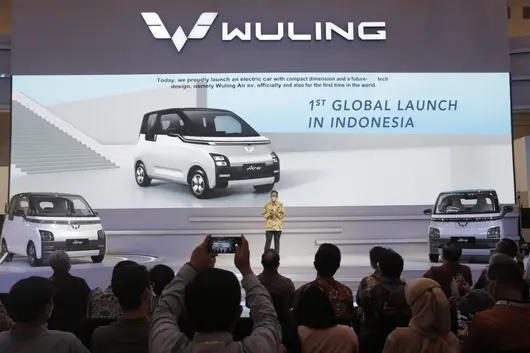
In 2022, Air EV entered the Indonesian market, selling over 8,000 units that year, capturing 68.7% of Indonesia's annual EV market share.

By 2025, Air EV was still the number one in Indonesia's urban micro EV sub-market, with annual sales nearing 3,900 units, far leaving VinFast VF3 and Seres E1 behind. From entering Indonesia in 2022 to 2025, Air EV cumulatively wholesale about 22,000 units.
A micro EV that almost no one wanted in China has become the 'national EV' in Indonesia. The reason is simple: cheap. Except for Indonesia, in Southeast Asian countries like Vietnam and Thailand, the price of micro EVs is becoming increasingly 'very low price'. Buying a four-wheeled electric car that can shelter from wind and rain costs about the same as buying a high-end scooter.
For cities like Jakarta, Bangkok, and Hanoi with high population density and traffic congestion, micro EVs are naturally a better option.
MPV Tops Sales, Even Thai Officials Love to Ride It?
If Air EV is 'so cheap it's irresistible', then the rise of Starlight 730 in Thailand follows a different logic.
In August 2026, Wuling Starlight 730 sold 897 units in a single month, taking the Thailand MPV sales crown.

In Thailand, Starlight 730 is renamed Darion EV, focusing on pure electric models, competing with Toyota Alphard and other gasoline vehicles in a different segment.
Darion EV mainly targets business reception scenarios, especially enterprises and institutions that need dignified reception but don't want to spend too much money. In Thailand, MPVs are the main model for business and official travel. With the combination of pure electric + large space + side sliding doors, Starlight 730 entered the MPV market long dominated by Japanese cars.
Southeast Asia Suppresses Chinese Cars, Wuling's Cheap Cars May Bear the Brunt First
However, tall trees catch the wind; Southeast Asia has already started hitting Chinese cars hard.
Thailand is tightening tax policies on Chinese EVs. On September 10, the Thailand National Electric Vehicle Policy Committee agreed in principle to introduce a three-tier consumption tax rate structure, where the consumption tax for purely imported models increased from 10% to 31%-39%.
To put it plainly, whoever builds in Thailand enjoys low tax rates; whoever only imports complete vehicles from China has to pay heavy taxes.
For Chinese brands like BYD, Great Wall, and Changan that have already built factories in Thailand, this hurdle might be passed. But for Wuling, the situation is completely different.

Wuling's main products in Thailand are exactly those high-volume models launched in import form. The Starlight 730 took the sales crown in Thailand, relying on pure electric + large space + relatively affordable prices. If the consumption tax on imported complete vehicles is significantly raised, this price advantage will be directly eaten up.
More importantly, Wuling's core competitiveness is 'extreme cost-performance'. People who buy Wuling are very sensitive to prices. Fluctuations of a few thousand baht could change decisions, let alone increases of tens of thousands of baht.
Thailand is not the only tightening market. Although Wuling has already set up a factory in Indonesia, localization requirements are also continuously increasing. Malaysia and Vietnam are also raising the threshold for imported EVs. Southeast Asian countries are shifting from 'welcome Chinese cars to sell' to 'require Chinese car companies to build'.

The explosion in sales of Wuling's 'Diced Pepper Fish Head' and the MPV sales crown in Southeast Asia are real tangible achievements. But Thailand's new tax policy reminds us of one thing: In Southeast Asia, the window period of selling cars without building factories is closing.
For Wuling, whose core competitiveness is 'cheap', this problem is particularly difficult to solve. Building a factory in Thailand means higher fixed costs and a longer return cycle; not building a factory, price advantages will be quickly eaten up by taxes.
It can be said that what Wuling does next in Thailand will be a key sample for Chinese car companies in Southeast Asia shifting from 'selling cars' to 'taking root'.

Editor's Note: Wuling's "low-key adjustment" this time has pushed the person who understands Wuling the best to the most difficult yet most imaginative position.
Recently, SAIC-GM-Wuling completed a round of low-key personnel adjustments: former Deputy Party Secretary and Vice General Manager Han Dehong succeeded Yao Zuoping to serve as the company Party Secretary; Yao Zuoping was reassigned as General Manager Advisor and Director of the Technical Committee of the Smart Island Manufacturing System.

There was no high-profile press conference, nor lengthy press releases, but this step of "Deputy Secretary becoming Official Secretary" carries significant weight in the context of state-owned enterprise governance—it is both a handover between new and old generations, and a recalibration of organizational temperament amidst Wuling's triple pressures of new energy, overseas expansion, and brand elevation.
From Grassroots to Party Secretary
Han Dehong was born in 1982, joined SAIC-GM-Wuling in 2005, and has been within the system for 21 years by 2026. In the public resume, he did not follow a single technical line or single sales line, but was repeatedly "traversed across different terrains" by Wuling: early on, he went to the Indian joint venture company as General Manager Assistant, encountering emerging markets and cross-cultural joint ventures;
Back in China, he managed administration and public relations, understanding government, media, supply chain, and external relations; since 2016, he entered the sales system, serving as Vice General Manager of the Sales Company; during the New Baojun period, he worked on sales companies and brand communication, catching the wave when Wuling tested the shift from "cheap and usable" to "younger and intelligent"; then he went to the Indonesian market, participating in Southeast Asian localization operations; back at headquarters, he served as Deputy Party Secretary and General Manager Assistant, appearing publicly as Vice General Manager starting in 2024.
The keyword of this path is "full scenario": overseas, brand, sales, PR, party building, and operations are all covered. Compared to executives from pure technical or pure financial backgrounds, Han Dehong is more like an "organizational strategist"—this is what Wuling, such a "people's car company," needs now: to both defend the core market in lower-tier areas and articulate globalization, Smart Island, and new energy.
Behind the August Sales of 130,870 Units
When looking at sales, one cannot just look at the total number.

In August, SAIC-GM-Wuling's global sales were 130,870 units, of which new energy accounted for 83,788 units, representing about 64%—this shows that Wuling is no longer a company relying solely on the Hongguang MINIEV single product to rule the market, but new energy has become the main engine. More critically, the structure: Red Label Wuling 36,726 units, the core foundation still lies in commercial, county/township, and micro-business operator markets; Silver Label Wuling 47,139 units, undertaking household-oriented, quality-oriented;
Overseas exports 38,660 sets/units, cumulative overseas sales exceeded 1.6 million, exports have broken 30,000 for 5 consecutive months; Huajing S delivered 7,306 units, total deliveries since listing exceeded 25,000, climbing continuously for many months. The significance of Huajing S is not entirely in absolute volume, but in "whether Wuling can sell into the 100,000+ or even higher price bracket".
In the past, Wuling's strength lay in cost-performance and scale, weak in brand premium. If Huajing S can stabilize at 7,000-unit level monthly delivery, it proves Wuling is not only good at making "commuter miracle cars" but can also penetrate the mainstream new energy SUV market for family smart mobility.
But the risks are also clear: Silver Label and Red Label still face downward pressure year-on-year; traditional fuel micro-cars and entry-level markets are squeezed by price wars, channel inventory, and consumption segmentation. Wuling is currently not "without sales", but rather "sales structure is undergoing a transformation", and the transition period fears rhythm chaos most.
Han Dehong's appointment, on the surface is "44-year-old taking over 62-year-old"; the underlying layer is Wuling shifting from "lower-tier scale driven" to "new energy + overseas + intelligent manufacturing" three-line warfare.
Yao Zuoping's generation made Wuling a national brand where "whatever the people need, Wuling builds"; Han Dehong's generation needs to answer: when people need intelligence, need globalization, and need higher quality-price ratio, will Wuling dare to, and be able to, revolutionize once again.
Short-term, August data gave confidence: new energy nearly 84,000, overseas exceeded 1.6 million, Huajing S broke 7,306, the core foundation did not collapse. Medium-term, the real exam is three things—whether Huajing/Baojun can pull the brand price bracket up, whether Indonesia/India/Southeast Asia experience can become sustainable overseas profits, and whether the Smart Island manufacturing system can turn cost and flexible production into a moat.
Wuling's "low-key adjustment" this time is actually not low-key at all: it pushed the person who understands Wuling the best to the most difficult yet most imaginative position.
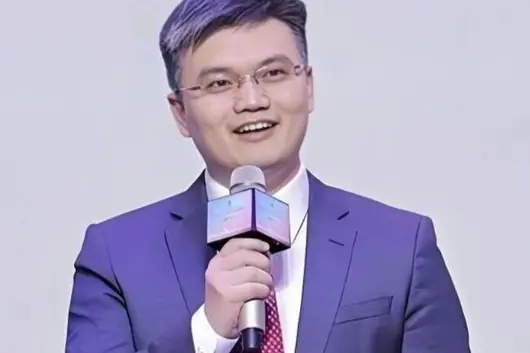

[Written by / Finance Circle & Dao Ge Auto Talk Ma Jianyu] Recently, SAIC-GM-Wuling completed a low-profile personnel adjustment. Han Dehong replaced Yao Zuoping as the Party Secretary of the company, and Yao Zuoping was transferred to serve as the General Manager Consultant of SAIC-GM-Wuling and the Director of the Technical Committee of the Smart Island Manufacturing System. According to public reports online, this adjustment took place at least half a month ago. However, the official side did not release relevant announcements, nor did it attract much media attention to the matter.
Public data shows that Yao Zuoping is now 62 years old, exceeding the statutory retirement age, and this job adjustment seems to be a transition towards retirement. Han Dehong, on the other hand, is a young-generation executive of SAIC-GM-Wuling, 44 years old this year, and is in the prime of his career. Before this adjustment, Han Dehong's public identity was the Deputy Party Secretary and General Manager of SAIC-GM-Wuling.
 In other words, Han Dehong's rank was further elevated after this adjustment. At the same time, considering that SAIC-GM-Wuling belongs to the SOE system, the step from "Deputy Secretary" to "Full Secretary" carries significant weight. Han Dehong, who is in the prime of his career, started serving as the Party Secretary of SAIC-GM-Wuling and concurrently as the Deputy General Manager, which also shows SAIC-GM-Wuling's emphasis on this young-generation executive.
It is worth mentioning that from Han Dehong's past experience, his appointment as the Party Secretary of SAIC-GM-Wuling also has greater practical significance in the background of the automotive sales "hot abroad but cold at home".
Over 20 Years of Service Young "Veteran" Upgraded
Public data shows that Han Dehong was born in 1982, is 44 years old this year, and there are no public records available regarding his educational background.
But his connection with SAIC-GM-Wuling is deep. In a media report from June 2025, Han Dehong recounted that he "just entered the company in 2005". In other words, the time Han Dehong entered SAIC-GM-Wuling has exceeded 20 years.
From his resume, Han Dehong has rich experience on the front lines of sales and brand communication. In June 2016, Han Dehong began to serve as the Deputy General Manager of SAIC-GM-Wuling Sales Company. After the launch of the New Baojun brand in 2019, he served as the Deputy General Manager of New Baojun Sales Company, and subsequently held positions such as Director of New Baojun Brand Communication, Deputy Party Secretary of SAIC-GM-Wuling, and General Manager Assistant, among others.
 Since September 2024, Han Dehong appeared publicly in the capacity of Deputy General Manager of SAIC-GM-Wuling. In terms of achievements, during Han Dehong's tenure as Deputy General Manager of SAIC-GM-Wuling Sales Company, SAIC-GM-Wuling consistently maintained the market position of the number one single automobile company in China. After the launch of the New Baojun brand, Han Dehong, as the core operator of New Baojun, helped New Baojun establish the brand positioning of "Pioneer of Smart Cars".
At the same time, Han Dehong repeatedly emphasized in public occasions that the mission of New Baojun is to "let intelligence no longer be the privilege of high-end cars", bringing higher-level automotive technology and products into a more affordable price range. It is worth noting that looking back from today's perspective, the brand positioning proposed by the New Baojun team represented by Han Dehong at that time was highly forward-looking. After 2020, the Chinese automobile market gradually began the trend of democratization of smart technology, and the weight of intelligence in influencing consumers' car purchase choices has become increasingly important.
After serving as the Deputy Party Secretary and Deputy General Manager of SAIC-GM-Wuling in 2024, Han Dehong became more like a "jack-of-all-trades". According to information released on the official WeChat account of SAIC-GM-Wuling, Han Dehong deeply participated in manufacturing, government-enterprise collaboration, Sino-foreign exchange, talent cultivation, ideological construction, marketing, etc., and made important contributions to the development of SAIC-GM-Wuling.
"Overseas Experience" Highly Aligned with Wuling's Business Focus
Placed in today's market background, what is most worth attention about Han Dehong is his experience in overseas markets. Public data shows that around 2010, Han Dehong was dispatched to India to serve as the Assistant General Manager of the Indian Joint Venture (General Motors India), following Yao Zuoping, then Deputy General Manager of SAIC-GM-Wuling, to jointly explore the Indian market.
In February 2021, Han Dehong was transferred to SAIC-GM-Wuling Indonesia Branch as Assistant General Manager, and was later promoted to Deputy General Manager of SAIC-GM-Wuling Indonesia Automotive Co., Ltd., responsible for the expansion and operation of the Indonesian market. In other words, whether it is the exploration of early markets or the expansion of overseas markets in the later new energy era, Han Dehong has relatively rich experience.
And this experience is particularly important in the current Chinese automobile industry. Data released by the China Association of Automobile Manufacturers on September 10 shows that the domestic market continues to face pressure, with the month-on-month decline in monthly sales exceeding 20% for 5 consecutive months; exports continue to maintain high growth, with monthly exports exceeding 1 million units for 3 consecutive months, becoming a key increment to stabilize the industry's overall performance.
 Specifically, from January to August, domestic automobile sales were 13.162 million units, a year-on-year decline of 21.8%; from January to August, automobile exports were 7.153 million units, a year-on-year increase of 66.7%. For most domestic automobile companies, seeking growth in overseas markets is no longer a choice question, but a mandatory question. According to official information from SAIC-GM-Wuling, in August, SAIC-GM-Wuling achieved sales of 130,870 units, among which the overseas market contributed 38,660 units/sets. At the same time, its cumulative overseas sales broke through 1.6 million units.
It is worth noting that the overseas market is one of SAIC-GM-Wuling's current business focuses. This year, SAIC-GM-Wuling formulated the "Overseas Doubling Project", anchoring an annual sales target of 400,000 units. Then, in this context, it has more practical significance for Han Dehong, who has "overseas experience", to serve as the Party Secretary of SAIC-GM-Wuling.
Furthermore, from the public activities Han Dehong appeared in throughout the year in recent years, those related to overseas business are also not few: attended the signing ceremony between SAIC-GM-Wuling and Saudi United Motors Group (UMG) on April 24; on April 3, received Glenn G.Peñaranda, Commercial Counselor of the Philippine Embassy in China, and a row of Wuling Automobile Philippines dealers to visit SAIC-GM-Wuling Liuzhou headquarters for field inspection and exchange... In September last year, SAIC-GM-Wuling management visited the Mexican market, Han Dehong was also among them.
Today, overseas markets have become a new track that Chinese automobile companies must participate in. With Han Dehong, who has "overseas experience", taking over as the Party Secretary of SAIC-GM-Wuling, what new ideas will it bring to SAIC-GM-Wuling's overseas business breakthrough?
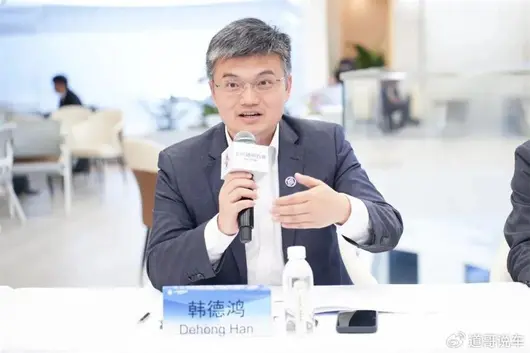
Recently, SAIC-GM-Wuling completed a highly watched high-level personnel adjustment. Former Deputy Party Secretary and Vice President Han Dehong officially succeeded Yao Zoping as the Company Party Secretary, while continuing to serve as Vice President. This 44-year-old executive born in the 1980s has thus completed a key leap from "Deputy Secretary" to "Party Secretary".

The other side of this adjustment is Yao Zoping moving to a secondary role. Yao Zoping was born in May 1964, has reached 62 years of age, exceeding the statutory retirement age. Following the adjustment, he was transferred to Consultant to the General Manager of SAIC-GM-Wuling and Chairman of the Technical Committee of the Smart Island Manufacturing System, no longer specifically responsible for operational matters, gradually transitioning toward retirement.
It is worth noting that Han Dehong has served SAIC-GM-Wuling for over twenty years and is a veteran with rich "overseas" experience. According to his resume, Han Dehong joined SAIC-GM-Wuling in 2005, was sent to India around 2010, served as Assistant General Manager of the India Joint Venture, and participated in developing the Indian market. The direct leader at that time was Yao Zoping.

After returning to China, Han Dehong successively served as Director of Administration and Public Relations of SAIC-GM-Wuling, Vice President of the Sales Company, etc. In June 2016, at the age of 34, he was promoted to Vice President of the Sales Company. After the New Baojun brand was launched in 2019, he transferred to Vice President of New Baojun Sales Company and Director of Brand Communication, accumulating rich experience in brand building.
In 2021, Han Dehong went overseas again to take up a post, serving as Assistant General Manager of SAIC-GM-Wuling Indonesia Branch, later promoted to Vice President of Indonesia Automotive Co., Ltd. This experience further solidified his management capabilities in the overseas market. Upon returning to headquarters, he successively served as Deputy Party Secretary and Assistant General Manager, and began appearing publicly as Vice President in September 2024.
Placing Han Dehong's resume against the backdrop of the current Chinese automotive industry, the deep meaning of this personnel layout is self-evident. With the domestic market陷入 fierce competition and major car companies regarding overseas expansion as a "second growth curve", a young leader with rich overseas market experience stepping into a core position is undoubtedly a key move by SAIC-GM-Wuling for the next stage of strategic transformation.

The Chinese automotive industry is experiencing an unprecedented wave of overseas expansion. According to data from the China Association of Automobile Manufacturers, in August 2026, China's car exports reached 1.01 million units, a year-on-year increase of 65.3%, marking the third consecutive month that Chinese car exports exceeded 1 million units. Cui Dongshu, head of the China Passenger Car Association, predicted that total car exports in 2026 are expected to reach 11.5 million to 12 million units.
More noteworthy is that new energy vehicles have become the absolute main force of exports, with an export share exceeding 50% for three consecutive months. This means that the globalization of the Chinese automotive industry is no longer the initial model of "low price for high volume", but rather high-quality overseas expansion centered on technology, brand, and intelligent capabilities.
However, the path to overseas expansion is not smooth. The "Guidelines on Overseas Competitive Behavior and Compliance Construction for the Automotive Industry" jointly released recently by the Ministry of Commerce, Ministry of Industry and Information Technology, and State Administration for Market Regulation clearly pointed out that some Chinese car companies face risks of disorderly competition in overseas markets. Simply copying the logic of domestic price competition overseas not only damages their own brand value but also lowers the overall perception of Chinese cars in the global market. This hints to us: true globalization capability is far more complex and arduous than the growth of export volume.

In this wave of overseas expansion, SAIC-GM-Wuling has performed impressively. As of August 2026, the company's cumulative overseas sales have officially broken the 1.6 million unit mark, with products sold to over 110 countries and regions. From January to August this year, Wuling exports exceeded 30,000 units monthly for 5 consecutive months, and overseas business has become an important engine for brand growth.
Currently, Chinese automotive overseas expansion is upgrading from "product overseas" to "brand overseas", shifting from simple trade exports to localized operations. SAIC-GM-Wuling's overseas strategy is also undergoing this transformation. Relying on the "India-Malaysia-Thailand" integrated strategy and the layout of three major brand channels, the enterprise is accelerating the upgrade from "product overseas" to "brand overseas".
At this critical juncture, Han Dehong possesses multiple experiences in sales, branding, and overseas markets, as well as a pragmatic background growing from the grassroots. He is undoubtedly the suitable choice to drive this strategic transformation. His deep understanding of overseas markets will help the enterprise better cope with complex challenges such as tariffs, compliance, localization, and supply chain security during the globalization process.

From a broader perspective, SAIC-GM-Wuling's personnel adjustment also reflects the enterprise's emphasis on and cultivation of young management talent. Han Dehong's growth from a grassroots employee to Party Secretary is both a manifestation of personal ability and reflects the company's strategic layout in talent ladder construction.
Going overseas is a marathon, not a sprint. The challenges faced by Han Dehong and his team have just begun. But at least from the personnel layout, SAIC-GM-Wuling is already prepared for this long run.
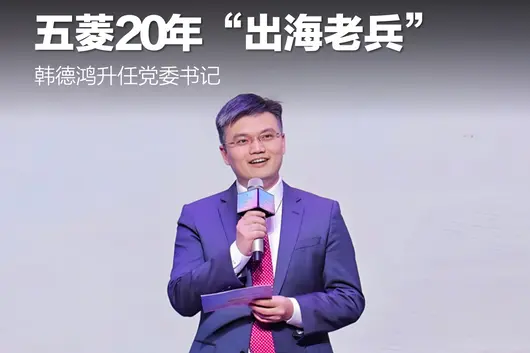

Operator Finance Net Auto Channel, Written by Li Guangyan
Operator Finance Net noted that recently SAIC-GM-Wuling quietly carried out personnel adjustments. Han Dehong succeeded Yao Zuoping to serve as the company's Party Secretary. Yao Zuoping was transferred to serve as SAIC-GM-Wuling General Manager Consultant and Chairman of the Intelligent Island Manufacturing System Technical Committee.

It is understood that Yao Zuoping was born in May 1964. He is now 62 years old, which has exceeded the statutory retirement age. Before this adjustment, he served as SAIC-GM-Wuling Party Secretary and Deputy General Manager. Now he is appointed as General Manager Consultant of the company, no longer specifically responsible for operational affairs, seemingly transitioning towards retirement.
Successor Han Dehong is a very young executive, born in 1982, currently 44 years old. Previously, Han Dehong revealed in a media interview that he joined SAIC-GM-Wuling in 2005. It can be seen that he has actually served Wuling for over twenty years.
Around 2010, Han Dehong was sent to India to serve as Assistant General Manager of the India Joint Venture Company, following Yao Zuoping to jointly expand the Indian market. Later, he also served as Director of Administration and Public Relations of SAIC-GM-Wuling. In June 2016, Han Dehong was promoted and appointed as Deputy General Manager of SAIC-GM-Wuling Sales Company.
In 2019, SAIC-GM-Wuling launched the New Baojun brand. Han Dehong subsequently took office as Deputy General Manager of New Baojun Sales Company. Subsequently, he also served as New Baojun Brand Communication Director, Deputy General Manager of SAIC-GM-Wuling Indonesia Company, Deputy Party Secretary of SAIC-GM-Wuling, and General Manager Assistant, until September 2024 when he began appearing publicly as SAIC-GM-Wuling Deputy General Manager.
Before this adjustment, Han Dehong's public identity was SAIC-GM-Wuling Deputy Party Secretary and Deputy General Manager. Now he is SAIC-GM-Wuling Party Secretary and Deputy General Manager. Clearly, his position has been promoted.
Public data shows that in August 2026, SAIC-GM-Wuling's sales volume was 127,100 units, a year-on-year increase of 1.51%. Cumulative new car sales for the first eight months were 916,500 units, a year-on-year decrease of 8.29%.


Within over a month, five lines launched simultaneously.
On September 1, Yangguang Pro Extended Range Version launched, benefit price 104,800 CNY;
On August 31, Huanjing S cumulative deliveries exceeded 23,000 units;
On July 31, Yangguang Pro Pure Electric Version launched, starting 94,800 CNY, JD Logistics on-site bulk car pickup;
On July 29, Right-hand drive new car Aira EV launched at Indonesia Auto Show, equivalent to starting 39,000 CNY;
On July 16, Xingguang L launched, 112,800 CNY starting large six-seat plug-in hybrid SUV, half month insured 5,650 units.
Commercial vehicles, passenger vehicles, premiumization, going global, SAIC-GM-Wuling rooted in Liuzhou, action density not like an old automaker, rather like a new force in second entrepreneurship.
Data also reveals 'contradiction': H1 sales 681,000 units, down 9.6% YoY; revenue grew counter-trend 7.2%, reaching 43.38 billion CNY. Cars sold less, money sold more — average vehicle value going up.
Behind this is Wuling's major strategic turn: trading small for large.
Champion's trouble: Track is collapsingWuling's specialty is timing, but more so making 'legendary cars'.
Hongguang series dominated the micro-car market for years, 'Mountain Top God Car' legend spread to present;
Hongguang MiniEV cumulative sales 1.95 million units, topped A00-class pure electric sales for 71 consecutive months;
A0-class pure electric Binguo family cumulative sales exceeded 750,000 units.

Walking around Liuzhou streets is more intuitive: MiniEVs are everywhere on the streets, painting and modifications vary, small cars became creative canvases for owners; Car body small enough to fit in the space between two trees — Calling it Liuzhou's 'City Car' is not an exaggeration.
An enterprise with cumulative production and sales exceeding 31 million units, the experience of selling cars is what they lack the least of. When the individual economy rose, they made Hongguang; When demand for commuter cars exploded, they made MiniEV — 'Whatever the people need, Wuling builds', confidence comes from hitting the rhythm of the times twice.
But now, two old tracks are collapsing simultaneously.
Market below 50,000 CNY, H1 sales only 130,000 units, down 55% YoY; MiniEV's A00-class pure electric market, Jan-May cumulative decline 64%. After subsidy withdrawal, price advantage and profit margin of small cars were compressed together, automakers withdrew from this price segment one after another. Mini-EV which once sold 50,000 units a month, July wholesale sales 7,958 units, down 70% YoY.

Champion is still here, track is almost gone. Geely Panda, Changan Nuocorn have stopped iteration, price reduction to clear inventory, gradually exiting. Wuling didn't lie flat — 5th gen MiniEV replaced in March this year, 4 doors 4 seats, added fast charge, starting 44,800 CNY, more features same price — but obviously no longer relying on this small car to carry the banner.
Same for commercial vehicles. Micro-passenger market shrank for consecutive years, individual economy dividend peaked; E-commerce logistics pushed demand to larger cars, purer electric.
'Wuling's judgment is precise: It's not that people don't need Wuling anymore, people's business and families have all grown bigger.'
Trading small for large: From 30,000 to 200,000Thus two 'bigger' battlefronts emerged.
First, look at Wuling's cards: Commercial Wuling Red logo, Passenger Wuling Silver logo, plus Huanjing deeply bound with Huawei — Three brand lines lined up, product matrix paving upward.
Passenger cars, moving from commuter cars to big families. Xingguang series leads: Xingguang 730 launched 9 months, topped 150,000 CNY MPV sales for consecutive months, cumulative sales 60,000 units, won Jan-Jul domestic brand MPV sales champion, also entered 25 overseas markets;
Xingguang L large 6-seat plug-in hybrid SUV priced 110,000 to 130,000 CNY, launched first month delivery 5,600+ units, next month jumped to 7,000+ units; 5.1-meter plug-in hybrid MPV Xingguang M has been on announcement, launching Q1 next year.

Testing the ceiling is Huanjing. Huanjing S launched May 8, 159,800 to 203,800 CNY, all series standard Huawei Qiankun Intelligent Driving and HarmonyOS Cockpit — This is Wuling's first time selling cars to 200,000. Initial doubts were loud, delivery curve kept upward: May 3,603 units, June 5,689 units, July 7,203 units, August 7,306 units, achieved four consecutive increases, cumulative broke 23,000 units, hands still pressing 15,000 units undelivered orders.
More interesting is the transaction structure: 185,800 and 203,800 high-spec models accounted for 85%; 89% of users are trade-ins, 60% from top-tier joint ventures; 89.7% are families with children, first and new first-tier cities orders account for 80%, NPS net promoter score up to 86 points. That is to say, Huanjing S snatched not domestic brand plates, but joint venture brands guarding twenty years of mid-range home market, and snatched the smartest batch of family users in tier 1 and 2 cities.
'Extreme low price has never been the core positioning of Huanjing series,' SAIC-GM-Wuling VP Zhao Yifan said in public interview, 'Our original intention is to let more families access technology configurations only high-end models had before.' Huawei stationed team participated in product definition and channel construction, 300+ experience centers landed. According to latest news mastered by Qi Shi Auto-First, Huanjing is about to upgrade from product series to independent brand, focusing on 150,000 to 250,000 CNY market — Huanjing brand's second model Huanjing M is on the way.

Commercial vehicle's 'becoming bigger' is equally straightforward. Yangguang series cumulative sales nearly 170,000 units, consecutively 27 months topping new energy light passenger sales champion; Yangguang Pro launched end of July, vehicle height up to 2.17 meters can enter underground garage, 9 cubic meters cargo box, JD, Huolala bulk procurement, pure electric version 94,800 CNY start, extended range version Sep 1 quickly followed.
Next, Wuling will collaborate with SAIC Maxus on larger light commercial vehicles/trucks, and with CATL promote battery swap cooperation. SAIC-GM-Wuling Brand and Marketing Director Sixing's thinking is clear: 'Commercial vehicles actually need battery swap, first speed is fast, second users hope cars last longer, don't want battery life to affect the car's whole life.'

Dare to make cars from 30,000 to 200,000, must have manufacturing that can handle it. Liuzhou headquarters Smart Island Factory, already selected national first batch pilot smart factory cultivation list, is the only auto enterprise in list, backed by national expert team and technical resources. Production island plus IGV intelligent mobile robot flexible mode, same production line adapts max 20+ models, hourly output 40 to 45 units, assembly precision 0.1 millimeters. Cost control power practiced in small car era, plus factory's flexible manufacturing intelligence, is Wuling's 'low price not low quality' base, also its confidence for betting on product upgrade and globalization simultaneously.
Two 'becoming bigger', one logic: Wuling's upward move didn't separate from people, just people's needs upgraded.
Three Year Window: All New Cars, Facing GlobalWhile domestic stock fights, Wuling bet the other half on overseas.
Zhao Yifan's judgment is clear: Domestic market 20 million units peak, OEM domestic business mainly in trade-in stock market, exports are the path Chinese auto companies must take. In Zhao Yifan's view, whether Chinese auto companies can wrestle with Toyota, VW, GM globally, the golden window for going overseas remains only three years, latecomers will lose core position. So starting this year, Wuling all newly developed models, all face global.

This is not a slogan. 2025 Wuling exports 267,000 units/sets, new energy exports surged 128.6%; H1 this year exports over 172,000 units/sets, YoY growth 37.3%, 4 consecutive months monthly break 30,000, products sold to over 110 countries and regions.
Indonesia cultivated for 9 years, 700 million USD built China auto company overseas first integrated stamping, welding, painting, assembly full craft complete vehicle factory, annual capacity 120,000 units, drove 16 three-electric enterprises to go overseas together. Wuling in Indonesia new energy market once took 37% share, consecutive years sales champion, even slogan localized — 'Whatever Indonesian people need, Wuling builds'.
End of July, Right-hand drive new car Aira EV listed in Indonesia, equivalent to starting 39,000 CNY; Huanjing S also already completed overseas debut in Kuala Lumpur. Other battlefields simultaneously placed: Mexico market, Wuling commercial vehicles CN110V market share achieved 50%; South America this year target 45,000 units; Xingguang 560 also changed badge to MG, entered India under name Hector Tomahawk.
But pressure also lies on the table. Overseas overall market rising water lifts boats — According to CAAM data, H1 national auto exports 5.096 million units, YoY growth 65.3%, Wuling 37.3% growth speed lost to market nearly 30 percentage points; Overseas pursuers have arrived, H1 this year BYD in Indonesia pure electric market surpassed Wuling to take top, Wuling retreated to fourth. And 'Overseas Doubling' means whole year needs to rush 530,000 units, H2 monthly average needs to sell to 60,000 units, is twice current level. From monthly sales 30,000 to 60,000, must sell one by one.
Three Hurdles: Every Hard Road PassedUpward path and overseas path, not just relying on determination can be finished. At least three hurdles placed before Wuling:

First hurdle, what about Baojun, this is a difficult choice. This brand which once pushed Wuling to 2 million annual sales, after last year H2 organizational adjustment no more brand new products, only Yueye small cars small iteration — Yueye June sales is 34 units. Baojun two words, now more like a sign hanging up. Restart no ammo, hiding no explanation, hanging most hurts channels. Rather than half dormant, better to make trade-offs early: Either integrate into Wuling system for youth series, or give a clear new positioning to restart, most inappropriate is not dead or alive like now.

Second hurdle, profit, this is reality ledger. SAIC-GM-Wuling H1 sales dropped nearly 10%, revenue grew 7.2%, relies on average vehicle value upward. But open calculation: 43.38 billion revenue divided by 681,000 units, average vehicle price only 64,000 CNY — trading small for large just started, Huanjing S such high value model share still too small. 'Sold more expensively' eventually must become 'Earn more', transformation counted as closed loop.
Third hurdle, brand, this is future big exam. Users willing to pay for '150,000 CNY Huawei Family Bucket' Huanjing S, not equal to accept '200,000 CNY Wuling'. Huanjing brand independent, is Wuling's answer: Trust high-end to new name, SAIC, GM two major shareholders' technology and resources expect to tilt towards Huanjing. But this is also a big exam — Take off 'Wuling' two characters independent, can Huanjing still sell? Under Huawei halo, how much is Wuling's own brand power? These answers need to wait and see.
Qi Shi View: New Annotation of Old Slogan'Whatever the people need, Wuling builds', this is slogan written at enterprise gate, also this auto company's success code. Open Wuling's 'God Car History': Hongguang hit individual livelihood, MiniEV hit ordinary people's commuting — Wuling never built 'cheap cars', but 'cars people just need'. Its real specialty is not low price, but hearing market voice earlier than others.
Now, there are two new voices being heard by Wuling.
One in domestic: People's needs, from 'have cars to drive' changing to 'drive good cars'. Huanjing S 80% orders from top and new top cities, 60% users from joint ventures trade-in — Consumption upgrade not slogan, is 85% high-spec share, smartest batch family users voting with real money.
One overseas: Indonesia streets, Mexico cities, South America roads, people there also waiting for their own car. 'People' two words, first time had global radius, this time Wuling's slogan, needs dozens of languages to read.
Two beats, in the end same narrative: Let more people in more places, drive better cars. This is 'Whatever the people need, Wuling builds' sentence most simple, also most ambitious new annotation.
Earlier, SAIC-GM-Wuling's August sales figures were released: 130,870 units. One number seems to lack weight. But if you look at the cumulative curve from January to August together, you can realize this is not that simple.

January was 37,929 units, and by August the cumulative total reached 484,300 units. There isn't a single month on this curve that is flat. Every month goes up. The proportion of new energy vehicles is rising synchronously. By January to August, it has broken through the volume of 920,000 units, among which new energy vehicles contributed 926,124 units, accounting for more than 70%. In the era of joint-venture fuel vehicles five years ago, such a structure was simply impossible.

So what Wuling has done in this round is more like measuring how far it can run with another rhythm.
What is truly worth mentioning is the figure of 1.6 million.
August overseas single-month sales were 38,600 units, exceeding 30,000 units overseas single-month for 5 consecutive months. Overseas cumulative sales have broken through 1.6 million units. Chinese car exports have been called for many years, but truly building a brand to a global scale of 1.6 million units and stably outputting 30,000 units overseas in a single month is rare.
More importantly, Wuling's overseas business is not simply whole-vehicle trade. India, Indonesia, Thailand, Brazil, Mexico, Wuling has done localized manufacturing and supply chain layout in multiple countries. Once this model runs smoothly, it means local users are buying more like Wuling's industrial capability itself locally. This moat is more meaningful than simple sales figures.
What is truly interesting this year is Wuling making moves on both ends.
Let's first talk about the upward-moving Huajing S. Launched in May, 3,603 units delivered in May, 5,689 in June, 7,203 in July, 7,306 in August. This curve has climbed steadily for four consecutive months. In July, it topped the plug-in hybrid large SUV sales list. Cumulative deliveries from May to August reached 23,801 units.

You should know, Huajing S starts at the 200,000-yuan tier, focusing on large six-seater SUVs, equipped with Huawei Qiankun Intelligent Driving System. A full-size large six-seater SUV with Huawei Qiankun Intelligent Driving System as standard equipment across the entire 200,000-yuan tier. This strategy has never appeared in Wuling's history.
In other words, Wuling has been locked within the 100,000-yuan price band for a long period in the past. National God Car, Wuling Hongguang, are all stories of this price point. Moving up a step to the 200,000-yuan market, and competing on the same stage with joint-venture brands and new forces, means Wuling's upward move has been successful.
The other car is Starlight L, which defends the basic market. 6,553 units in August single month, up 16% month-on-month from the launch month. The only large six-seater in the 100,000-yuan tier. This niche track rarely had decent products in the past. User demand has actually always been there.

Starlight L extends the car length to nearly 5 meters, wheelbase 2,950 mm, with a 2+2+2 true six-seater layout. Lingxi Power 3.0, Shenlian Battery, 1260 km comprehensive range, 4.9L fuel consumption with depleted battery. These technologies originally belonging to higher price points have been brought down directly by Wuling to the 100,000-yuan tier. More importantly, the supporting supply chain: Baosteel steel, BASF automotive paint, Fuyao glass, Michelin tires, Magna safety parts. All these supply chains with the same source and materials as luxury cars are now in place. The vehicle high-strength steel accounts for 75%, key parts use 1500 MPa aviation-grade hot-formed steel, and high-strength protective steel plates are even stuffed into the third-row seat backs.
Looking at these two cars together, the logic becomes clear. Huajing S opens up Wuling's ceiling in the 200,000-yuan tier. Starlight L raises the standard of the basic market in the 100,000-yuan tier. Both lines are doing the same thing: forcing higher-level product power into more mainstream price bands.
This breakthrough is more significant for the industry than doubling sales. It means the transformation of traditional automakers doesn't necessarily have to clear assets from the past to start over. They can retain the original basic market while recreating a brand upward. This path of incremental upgrade has actually been walked by Wuling.

For Huajing S to stand firm in the 200,000-yuan tier, confidence comes from two national-level hard supports. One is the National Quality Standards Laboratory, which is the first and currently the only approved construction in automaker enterprises, a full-link verification system from project initiation, testing to mass production. The second is the Intelligent Island Manufacturing System, selected into the national first batch of lead-level intelligent factory cultivation list. Vehicle assembly accuracy is at the 0.1 mm level, and production assembly error rate is zero.
In the context of the Chinese automotive industry, this level of investment was built up gradually over the past decade. Cooperating with top supply chain partners like Baosteel, CATL, Fuyao Glass, Autoliv, what Wuling does is actually quite simple: make every car close to zero defects.
What is truly unexpected is user feedback. Active users of assisted driving account for 95%. Net Promoter Score is 86 points, ranking first among new cars on NPS. 54.8% of users consider assisted driving as the primary decision factor for car purchase.

A large six-seater SUV at the 200,000-yuan tier. 95% of users use assisted driving every day. An NPS of 86 means the vast majority of owners are willing to recommend it to friends. 54.8% of people paid specifically for assisted driving.
This is real word-of-mouth. The front-stage outcry from KOLs is just one aspect. More importantly, it is feedback thrown out with real money from users in car usage scenarios. Huajing S's sales rising for four consecutive months is essentially this word-of-mouth being cashed into orders in the market.
If viewed only from an industry perspective, the lesson Wuling gives the entire industry in this round comes down to one sentence.
Transformation does not need to be at the cost of scale. Going overseas does not need to rely on low prices. Premiumization does not need to abandon the original basic market.
These three common sense points were repeatedly questioned in the Chinese automotive industry over the past few years. Many brands gave up their original markets to do new energy. To go premium, they completely changed the original user profiles. To go overseas, they pressed prices to the floor, and ended up being labeled as low quality and low price.

Unknown Car Domain: Wuling's moves in this round are simpler. Hongguang MINIEV's sixth anniversary of launch, global cumulative sales break through 3 million units. The basic market is not lost. Huajing S takes a step up. Starlight L makes the large six-seater a first-tier category in the 100,000-yuan tier, exerting force at both ends. New energy proportion exceeds 70%. Overseas exceeds 30,000 units in a single month for 5 consecutive months. Prices are not in price wars.
This balance comes from years of deep accumulation leading to a breakthrough in supply chain, manufacturing systems, and channel layout. So let's go back to the 130,870 units at the beginning. The number itself is not important. What is important is that behind this number, Wuling is walking a path that many Chinese automakers want to walk but haven't managed to. The keyword of this path is balance.
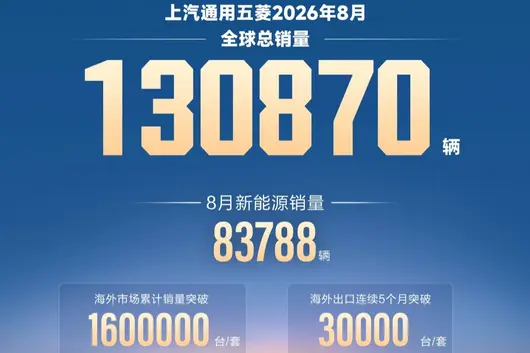

During this period, "fast-tracked cars" have become a hot topic in the industry. Fast-tracked cars refer to models that significantly compress the R&D cycle, cut necessary verification processes, and result in insufficient product maturity.
Car Riff did not participate in the discussion. We believe focusing on this negative example is far less effective than letting everyone see how industry positive examples handle it.
Excellent cases came soon. On the afternoon of August 19, CCTV's "Top Laboratory" program conducted a live broadcast lasting over 2 hours. For the first time in the industry, the same car was used to continuously complete six super-national standard chain tests, all passing. There were also rain/fog intelligent driving active safety tests. It also deeply visited the New Energy Vehicle National Quality Standard Laboratory and the Smart Island Manufacturing System, revealing the hardcore strength of SAIC-GM-Wuling's full-link self-research and self-construction behind the hot sales of Hua Jing S.
Industry conventional crash tests are mostly independent single-direction tests, and national standards only assess single conditions. This live test of Hua Jing S used the same car for continuous multi-round destructive tests, simulating real-world scenarios where the undercarriage is scraped followed by wading, front and rear collision followed by side collision, then crashing into a utility pole, pulling possible accident scenarios to the limit.

This live test also provided new verification ideas for the industry: Compliance is just the baseline, better products need to benchmark against real traffic scenarios for more complex limit validation.
The protagonist Hua Jing S is Wuling's latest flagship large SUV, launched on May 8. By August 17, cumulative deliveries broke 20,000 units. In July, single-month deliveries reached 7,203 units, jumping to first place in plug-in hybrid large SUV deliveries.
Many people's impression of Wuling remains focused on its expertise in making small cars and national cars. Hua Jing S shows the market that Wuling also has such strong competitiveness in large SUVs.
Xiao Xiao, General Manager of Planning and Operations Management Department of SAIC-GM-Wuling, said in the live broadcast: "Wuling used to make tool cars to help everyone create wealth. Later, it made family cars to accompany everyone through life. Now it makes intelligent technology new energy vehicles. Essentially, it still follows the needs of the people, satisfying the people's needs for a better life in the new era."
Creating wealth - Living life - Better life in the new era. Xiao Xiao summarized Wuling's three development stages and three generations of product logic, which is also the leap in lifestyle of Chinese consumers and Chinese people in the recent decades. No matter the era, Chinese people always have a suitable Wuling companion.

The CCTV broadcast also visited Wuling's industry-only National Quality Standard Laboratory and industry-only Leading-level Smart Factory.
The National Quality Standard Laboratory changed the industry model where most car manufacturers rely on third-party testing agencies for compliance testing. It allowed Wuling to achieve full-link autonomous verification from materials, components, simulation, whole-vehicle crash, three-electrics, to intelligent driving. It can also reverse-define corporate internal test specifications higher than national standards based on big data from 32 million users, upgrading from "meeting national standards" to "higher than national standards, benchmarking real accidents". It also exported China's new energy vehicle safety standards to ASEAN, achieving a zero breakthrough in ASEAN technical standard formulation by Chinese car manufacturers.
The industry-only Leading-level Smart Factory, the Leading-level Smart Island I²MS Manufacturing System, converts the laboratory's safety standards into mass production capabilities through digital manufacturing. It improved assembly process precision, enhanced production efficiency and logistics efficiency, shortened manufacturing cycles, and improved flexibility.
More importantly, it used the parallel island production method of "cars finding workstations, materials finding cars", subverting the series assembly line production method practiced by the automotive industry for over 100 years. It is the third manufacturing mode innovation in the industry after Ford's assembly line and Toyota's lean production.
Wuling's manufacturing mode innovation this time will be an important symbol of China leading and dominating the transformation of the automotive industry.
Out-of-Syllabus One-Car Six Tests
Crash, wading, undercarriage collision tests are not rare in the industry, generally one car is used for one test. This time, Hua Jing S used one car to continuously complete six tests: undercarriage collision, wading, rear-end truck collision, rear collision, side collision, side pole collision. And the standard for each test exceeded national standards, finally all passed.

One car passing all six super-national standard tests consecutively is because Hua Jing S has high standards and strict requirements in design, materials, testing, and manufacturing links.
For example, the intrusion depth of the undercarriage collision increased by 33% compared to the national standard. After completing the six tests, the battery pack was removed, and the entire battery pack structure remained very complete, with no bulging, no leakage, no smoking, and no fire. Because of the chassis protection frame with five vertical and eleven horizontal members, the chassis has large-area steel protective plates, and a buffering layer. The protection ability is far higher than national standard requirements.

Solid materials and high-standard, multi-redundant body design are the solid foundation for Hua Jing S to continuously withstand six major severe tests on a single vehicle.
The biggest difference between this live test and industry conventional tests is the superposition of scenarios, accidents, and damage to the car. Industry conventional tests require each test car to face only one scenario, single-item damage, and challenge. Hua Jing S experienced 6 types of destructive tests sequentially with one car, pulling the challenge of the vehicle responding to accidents to the limit.
Will such a six-consecutive accident happen in reality? Probably not. But precisely this continuous destruction, difficulty upon difficulty, proves the safety and reliability of Hua Jing S. This reliability beyond standards also greatly reduces the probability of new cars meeting national standards and appearing various problems after mass market road tests.
Two Uniques Give Birth to Two "As Ones"
To do a good job, one must first sharpen one's tools. Hua Jing S's rigid safety and whole-vehicle quality come from Wuling's industry-only National Quality Standard Laboratory and industry-only Leading-level Smart Factory.
In the live broadcast, Wuling staff mentioned multiple times that Hua Jing S quality is "Ten Thousand Cars As One, Ten Thousand Miles As One", referring to consistency and reliability reaching a new level. Behind the two "As Ones" are the two Uniques providing protection and support.

Wuling's New Energy Vehicle National Quality Standard Laboratory is the only National Quality Standard Laboratory approved in the automotive industry. It includes 14 international-level sub-laboratories, covering three-electrics, crash safety, NVH, EMC electromagnetic compatibility, thermal management, intelligent connectivity, lightweight materials. It is equipped with a large-scale whole-vehicle test field, possessing the first set in China and the third set in the world whole-vehicle virtual simulation test system. It can run tens of thousands of extreme accident scenarios in simulation in advance, without entirely relying on real vehicle crashes.
The verification for undercarriage, wading, chain collision, pole collision, and white body press shown in the live broadcast was completed here.

Wuling's New Energy Vehicle National Quality Standard Laboratory has three major significances.
First is covering all enterprise testing needs, Wuling no longer relies on external third-party laboratories.
Second is not only verifying based on national standards, but reverse-defining test standards based on 32 million user data to raise standards.
Third is that 81 tests obtained ECE European International Certification. Part of the safety standards were included in ASEAN official technical specifications. Charging standards obtained Indonesia SNI certification. This helps Chinese new energy products when going global, no longer simply passively complying with overseas standards, but having the ability to output China's technical standards.
The live broadcast concluded with the National Leading-level Smart Factory, Wuling's I²MS Smart Island Manufacturing System.
It is called Smart Island because this factory changed the waterline mode started by Ford's assembly line in the automotive industry. It splits the final assembly into 78 independent Smart Island workstations: Tire Island, Glass Island, Interior Island, Quality Inspection Island, etc. IGV carts carry the body, automatically cars finding workstations, materials finding cars, parallel assembly.
The workshop has over 280 robots, over 250 IGV unmanned logistics vehicles. They autonomously plan the body flow path. Jointly with Huawei Industrial 5G Network, communication zero error is guaranteed, achieving parallel assembly.

The assembly line used by the automotive industry for over a hundred years has become Smart Islands. The advantages are decoupled processes, adaptive capacity, evolvable systems, and expandable models. One production line can support mixed production of 24 car models. New car iterations do not require rebuilding production lines. Development periods are shortened, and changeover costs are significantly reduced.
Wuling's Smart Island production efficiency increased by 30%, logistics efficiency increased by 80%, manufacturing cycle shortened by 33%, and final assembly automation rate is 50%. It can be said that this is another major manufacturing mode innovation in the automotive industry since Ford's assembly line and Toyota's lean production.
The automobile was invented in Germany. Ford's assembly line significantly reduced car costs, allowing it to enter every household. The first automotive industrial revolution made American cars and American industry lead the world.

Toyota's lean production once again changed the production mode and supply chain model of automobiles. The second automotive industrial revolution put Japan at the pinnacle of the global automotive industry.
In the new energy era, China has already led the world in technology and products. Wuling's manufacturing mode innovation will be another important symbol of China leading and dominating the transformation of the automotive industry.
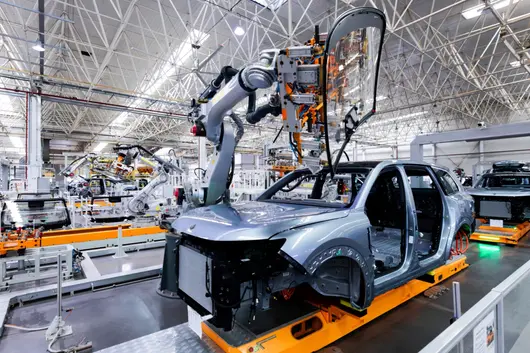
SAIC-GM-Wuling's commuter cars are about to cross the 3 million unit milestone in cumulative sales. To commemorate this highlight, on August 7, Wuling official will launch a grand celebration at the Chengdu Outdoor Music Park — the Hongguang MINIEV 6th Anniversary and Wuling Commuter Car 3 Million User Celebration. At that time, Meng Ziyi, the global image spokesperson for the Bingo family, will make a surprise appearance and join countless car owners for this carnival feast.

While waiting for this feast, let's first take a look at how many solutions for ordinary people's daily travel are hidden within this upcoming trust of 3 million users.
Parking Hard, Costs High, Driving Scared? These Three Cars Are the Cure for Every 'Complaint'
For ordinary people like us, purchasing a vehicle involves 90% usage scenarios being daily commuting, picking up and dropping off children, grocery shopping, or short trips around the weekend. However, reality often falls short: the body is wide and hard to park in narrow alleys; refueling a fuel car hurts the wallet; new drivers shake their legs just sitting in the driver's seat. At this moment, the Wuling commuter car series fully reveals its unique advantages.
If you are a corporate worker rushing between city skyscrapers, a new driver holding the steering wheel for the first time, or a frugal calculator upholding the concept of high cost-performance ratio, the 5th Gen Hongguang MINIEV is undoubtedly the key to unlocking a pleasant travel experience. It accurately interprets the core advantages of "Easy Control, Easy Parking, Ultra Energy Saving". An extremely small turning radius helps you turn around easily in narrow streets and park calmly in tight spaces; ultra-low energy consumption makes the travel cost per kilometer negligible, and daily commute expenses are even more affordable than taking the subway. To me, it is by no means a simple commuter tool, but a flexible mobile space for urban youth to escape congestion and rush towards freedom.

If you need to find a balance between family and vehicle usage needs, yearning for exquisite style without compromising on smart experience, Bingo Pro undoubtedly shows full sincerity. Retro-style high-value design endows every trip with a strong atmosphere; 12.8-inch smart screen equipped with Lingyu AI, voice wake-up is very fast, even if dialects are used, it can recognize quickly and accurately. For mom groups or those troubled by parking difficulties, 540° panoramic image paired with automatic parking assistance system, lets you not be flustered when parking at a narrow school gate. Added 30L front trunk and six-way electric adjustment seats, make this small car on practicality and comfort level, not inferior to higher-class family sedans.

If your vehicle usage needs are stricter, such as frequent suburban travel, holding an almost extreme persistence for safety guarantee and range capability, then Bingo S is undoubtedly the undisputed "All-Round Performer". It is equipped with A0-level top safety body, high strength steel ratio up to 72%, paired with multiple airbags, building a security fortress that follows you; maximum range of 525km, lets you not calculate for range when going to neighboring city for vacation on weekends, remote car control and scheduled charging thoughtful configuration, further interprets practical essence thoroughly.

Small Cars Don't "Settle", Wuling Makes Commuter Cars Also Sophisticated
In the past, many people always thought that choosing a commuter car was just settling for the best among limited choices, merely for transition use. However, Wuling, relying on the upcoming 3 million sales achievement, powerfully interprets that the true national commuter choice is by no means a helpless compromise, but just the right amount of peace of mind and comfort.

When you don't need to spend tens of thousands of extra yuan for flashy configurations, when you don't need to worry about parking difficulties anymore, when you realize the monthly vehicle usage expense is negligible, you can deeply understand the true meaning of "User Thinking". Wuling decisively jumps out of the inner consumption loop of invalid configurations and focuses on cultivating users' core rigid needs. From MINIEV's super high quality-price ratio, to Bingo Pro's smart family attributes, to Bingo S's long-range safety guarantee, Wuling relies on dual family product layout to convey to you: no matter what stage of life you are in, there is always a Wuling commuter vehicle that can precisely fit your life rhythm.

From Chinese Streets to Overseas Avenues, "People's Commuter Car" Has Truly Gone Global This Time
Worth noting is that on July 29, the 5th Gen Hongguang MINIEV (Wuling Air ev) officially debuted and went on sale at the Indonesia International Auto Show, with a starting price set at 155 million Indonesian Rupiah. The car not only integrates the practical layout of "Four Doors Four Seats", but also launches a cross-border cooperation with Disney-Pixar's "Toy Story 5", composing a new chapter of linkage.

This compact vehicle praised domestically as the "People's Exclusive Commuter Car" is rushing towards the global market with a more fashionable, more youthful style. It is by no means simply exporting products overseas, but deeply implanting the travel philosophy of "Simple, Free, Burden-Free" advocated by people into the hearts of global consumers.
Closing Remarks:
Sales have surged from 2 million to approaching the 3 million milestone, Wuling commuter cars rely on hardcore strength, securely sitting in the king position of the subdivision market. August 7, Chengdu Outdoor Music Park, a grand event integrating fun and trust is about to begin. If you are still hesitating over the choice of a commuter car, it is advisable to direct your gaze here — the common choice of 3 million users is the most convincing answer, far surpassing advertisements of a thousand words.
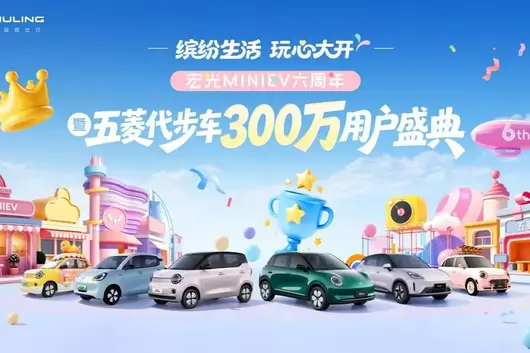

Wuling is one of the household brands in the domestic market, adhering to the philosophy of "Wuling builds whatever the people need," and the models under its brand are deeply trusted by thousands of families. Recently, SAIC-GM-Wuling official Wuling commuter car users are about to break 3 million, and at the same time a "Colorful Life, Open Play Heart" Hongguang MINI EV 6th Anniversary and Wuling Commuter Car 3 Million User Ceremony will be held on August 7th. From the 6th anniversary of the launch of the commuter car Hongguang MINI EV to the total sales about to break 3 million, it is clear that the level of user recognition for SAIC-GM-Wuling is very high. Another noteworthy point is that at this event site, Meng Ziyi, the global ambassador of the Bingo family, will also be present, and enjoy the happy festival party together with 3 million Wuling commuter car users. This is quite worth looking forward to.

Frankly speaking, the success of SAIC-GM-Wuling is not due to luck, but because of real substance. After all, starting from 2017, early on, it opened the market through products such as Baojun E100, E200, Hongguang MINI EV, and Bingo Family, and continued to optimize and upgrade through deep cultivation, gaining the trust and preference of more and more friends. Sales are about to exceed 3 million units, I think this is enough to demonstrate its strength.
Specific to the sub-models, Hongguang MINI EV needs no further introduction, benefiting from its four key strengths: great design, easy to drive, easy to park, and efficient. It has gained recognition from over 1.95 million owners, holding the top spot in domestic A00-level pure electric sales for 72 consecutive months, and it also plays the role of the global top cumulative sales of micro new energy vehicles. Every evolution precisely hits the needs of users, continuously selling well.

In addition, the Bingo family also has remarkable sales achievements. High-value appearance design, fine workmanship, and solid range have become the advantages. Over 750,000 users chose the Bingo family, also interpreting the definition of high cost-performance ratio and strong product power. For BMW-class commuting, choose Bingo Pro. If you need space, Bingo S also meets the requirements. So the matrix composed of Hongguang MINI EV and Bingo family has now become the first choice vehicle for most friends. It has to be said, holding the 3 million user ceremony this time is just the beginning. Perhaps in no time, it will charge towards the next new sales target. As the saying goes, to make iron one must first be hard. I think under the premise of ensuring quality, breaking sales records again is just a matter of time.

The most critical point is that Wuling's new energy strategy is not only focused on the domestic market. Just on July 29th, the 5th Generation Hongguang MINI EV was officially launched in Indonesia, official starting price 155 million Indonesian Rupiah. This time being able to be launched in Indonesia and trusted by overseas users, putting the brand aside, also has an inevitable relationship with its own excellent product power. Four-door four-seat layout, attributes of easy to drive, easy to park, and fuel-efficient, is completely sufficient for daily commuting. This is also the main reason why everyone pays close attention to the 5th Generation Hongguang MINI EV when buying commuter cars.

In summary, from nothing to something, from small to large, SAIC-GM-Wuling proved itself in just 6 years. As one of the representatives deeply cultivated in the automotive field, deeply understanding the needs and pain points of mainstream consumers. Only because of this, there is the current sales achievement of nearly 3 million. Finally, the same words again. August 7th, let's meet at Chengdu Open-Air Music Park, together enjoy the happy moment exclusive to the 3 million users!
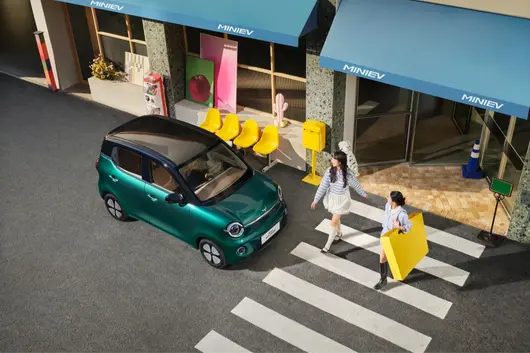

[July 31, 2026] SAIC-GM-Wuling announced that Wuling Commuter Car users will break 3 million, and will hold the "Colorful Life, Unleash Playfulness" Hongguang MINI EV 6th Anniversary and Wuling Commuter Car 3 Million User Celebration on August 7! At that time, Bingo Family Global Spokesperson Meng Ziyi will also be present on site, jointly creating a celebration party belonging to the users with the 3 million Wuling Commuter Car users. In addition, the 5th Generation Hongguang MINI EV officially launched in Indonesia recently, marking that the "People's Commuter Car" is accelerating towards the global market, bringing the simple commuting travel enjoyment to global users!

3 Million Trust, Champion Strength Casts Ceremony Significance
Since 2017, SAIC-GM-Wuling through launching Baojun E100, E200, Hongguang MINI EV, Bingo Family, etc. models, has continued to deepen its work in the commuter car market, Wuling Commuter Car sales will break 3 million units! Among them, as the "People's Commuter Car", Hongguang MINI EV family, leveraging "Good-looking, Easy to Drive, Easy to Park, Cost-Effective" product strength, gained the preference of over 1.95 million users, and has won the domestic A00 class pure electric sales champion for 71 consecutive months, firmly holding the first place in global micro new energy vehicle cumulative sales. Bingo family also in the posture of high-value colorful cars, gained trust from over 750,000 owners, bringing a colorful travel experience to users. Commuter car family dual stars shining, jointly building an unshakable commuter car product matrix — this is also the strength verification of Wuling Commuter Car holding a 3 million user celebration.


Accelerating Overseas, "People's Commuter Car" Moves Towards Global
As a key move in Wuling's global new energy strategy, on July 29, the 5th Generation Hongguang MINI EV (Wuling Aira EV) was officially announced to launch in Indonesia at the Indonesia International Motor Show (GIIAS), official price starting at 155 million Indonesian Rupiah (approximately 59,615 RMB). As a four-door four-seat pure electric commuter car, the 5th Generation Hongguang MINI EV can be the first car for college students, young professionals, young families, and also the first choice for mature families to add a commuter car. 5th Generation Hongguang MINI EV easily covers daily high-frequency short-distance scenarios, perfectly fits user demands for easy to drive, easy to park, cost-effective commuter cars. To get closer to young families and new generation users, this new car also collaborated with Disney·Pixar "Toy Story 5" in Indonesia to start a crossover linkage, with a trendier and more fun image, let global people enjoy easy travel daily (Fun Everyday, For Everyone). Hongguang MINI EV going overseas not only adds new wings to Wuling Commuter Car global sales, but also conveys the concept of simple commuting to a broader international market with solid product strength.

From sales champion to global trend symbol, Wuling Commuter Car confirms, small cars can also carry thousands of loves. On August 7, at Chengdu Open Air Music Park, nearly 100 user trendy creative cars will gather on site, Wuling owners representatives will join this "Colorful Life" feast belonging to them, let's meet in Chengdu, jointly welcome the moment of 3 million users' playful spirit blooming!
From commuting silhouettes on every street corner to daily companionship in thousands of households, Wuling commuter cars are about to reach their own important milestone—user scale is about to break through 3 million. This weighty number is not only market recognition of Wuling products but also the best reputation countless ordinary families have written for the "National Commuter Car" with their real travel lives. Upholding the original intention of "What people need, Wuling builds", Wuling has always rooted in the public's short-distance travel needs, using affordable, reliable, and warm-hearted products to guard the daily life of ordinary people.
 Now, Wuling has built a complete product matrix with the two major families of MINIEV and Bingo, covering different price ranges and diverse scenarios, becoming a reliable choice for short-distance travel for Chinese people. Targeting the car usage needs of different groups, Wuling has made precise layouts so that every type of user can find a commuter partner suitable for themselves. Busy workers and urban commuters can always enjoy tacit cooperation with the fifth-generation Hongguang MINIEV. The agile body makes it easy to drive and park, extremely low usage costs make daily travel stress-free, simple and easy-to-operate controls mean even beginners can easily handle it, perfectly adapting to high-frequency short-distance urban travel.
 For families focusing on life quality and household practicality, Bingo Pro is a thoughtful choice. Retro fashion appearance combined with a warm atmosphere, smart large screen and sensitive voice interaction make operation more convenient, 540° panoramic image and parking assistance solve parking difficulties, upgraded 30L front trunk storage space and comfortable seat configurations, balancing traveling with kids and daily household use, integrating elegance and practicality into every journey. For users pursuing long range and high safety, Bingo S relies on a solid body structure and up to 525km ultra-long range performance. It can not only meet daily commuting needs but also easily cope with suburban travel, completely eliminating charging concerns, achieving all-scenario versatile travel.
 Even more worthy of pride is that this commuter travel solution from China is gradually stepping towards the world. Recently, the fifth-generation Hongguang MINIEV officially launched in Indonesia, allowing global consumers to feel the strength and charm of China's national commuter cars, and taking the "People's Commuter Car" from domestic streets to the international market, highlighting the global competitiveness of China's new energy small cars. The user scale of nearly 3 million about to be reached is the real companionship of nearly a million families day after day, and the reputation accumulation passed from mouth to mouth by countless car owners. Wuling does not pursue flashy gimmicks, but always focuses on the real car usage needs of ordinary people, with low-threshold, stress-free usage experience, becoming the silent guardian on the road of public travel.
 To commemorate this precious trust, Wuling will hold the Hongguang MINIEV 6th Anniversary and Wuling Commuter Cars 3 Million Users Celebration in Chengdu on August 7, jointly witnessing this glorious moment with thousands of car owners. From the debut of the first model to today's global layout, from the first-generation products to today's rich family matrix, Wuling has always upheld the warmth and responsibility of a national brand. Wuling is life, not loud, not conspicuous, silently guarding the daily travel of ordinary people. And the nearly 3 million users about to break through is a new starting point. In the future, Wuling will continue to deeply cultivate the commuter track, using products that fit needs better to accompany more people to rush towards a relaxed and free travel life.

In fact, Wuling commuter cars, including the Hongguang Mini EV and the Bingo family, are about to break through a total sales volume of 3 million. Moreover, on August 7, Wuling will also host the Hongguang Mini EV 6th Anniversary and Wuling Commuter Car 3 Million User Celebration in Chengdu. Meng Ziyi, the global spokesperson for the Bingo family, will personally attend the ceremony site, joining Wuling owners in this carnival for commuter car enthusiasts.
With a massive sales base before us, the brand that everyone cannot bypass when buying a commuter car is Wuling. Of course, Wuling commuter cars also cater to almost everyone's travel needs.
The 5th Generation Hongguang Mini EV uses an ultra-nimble body and extremely small turning radius to turn parking in gaps of old residential areas and meeting on narrow roads into effortless operations, and combined with the per-kilometer cost which is almost negligible, allows college students to easily "own a car".
The Bingo Pro, while retaining its exquisite and compact build, also features 540° panoramic image and automatic parking assist functions. For female users, the Bingo Pro is not only a trendy item but also a "magic tool" for easy commuting.
Actually, within the Wuling commuter car family, family users can also find excellent choices. The Bingo S, while bringing a five-seat large space, along with the up to 525 km range and 72% high-strength steel ratio safety body, also allows the whole family to travel more calmly, without feeling anxiety about range and safety.
So it is not hard to see that Wuling commuter cars are always seriously responding to the real needs of different users and families. This people-centric car manufacturing concept is also carried through in every product. And the 5th Generation Hongguang Mini EV, now carrying this product foundation, starts to go to all over the world. It was launched in the Indonesian market on July 29, once again bringing the worry-free and freedom product characteristics of Chinese commuter cars to a broader overseas market.


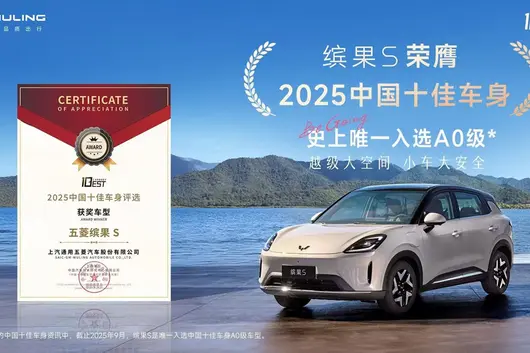
With Wuling commuter vehicle users surpassing 3 million, SAIC-GM-Wuling will hold the "Colorful Life, Unleash Fun" Hongguang MINIEV 6th Anniversary and Wuling Commuter Vehicle 3 Million User Grand Ceremony on August 7! At that time, Bingo Family Global Spokesperson Meng Ziyi will also attend in person, co-creating a grand party for the 3 million Wuling Commuter Vehicle users.


From 2017 to present, SAIC-GM-Wuling has continuously deepened its work in the commuter vehicle market, improving the product matrix step by step by launching models such as Baojun E100, E200, Hongguang MINIEV, and Bingo Family. Of course, to date, Wuling commuter vehicle sales will also break 3 million. It is most worth mentioning that the Hongguang MINIEV family, known as the "Car for the People," has attracted over 1.95 million users with its product strength of "Good-looking, Easy to Drive, Easy to Park, and Economical," winning the domestic A00-class pure electric sales champion for 71 consecutive months and firmly ranking first in global cumulative micro new energy vehicle sales. The Bingo Family also, in the guise of high-aesthetic colorful vehicles, has gained the trust of over 750,000 owners, bringing colorful travel experiences to users.

Accelerate Going Global, "Car for the People" Moves Towards the World
As a key part of Wuling's global new energy strategy, on July 29, the 5th Generation Hongguang MINIEV (Wuling Aira ev) was officially announced to launch in Indonesia at the Indonesia International Motor Show (GIIAS), with an official price starting from 155 million Indonesian Rupiah (approximately 59,615 Yuan).

As a four-door four-seat pure electric commuter vehicle, the 5th Generation Hongguang MINIEV can be the first car for college students, new professionals, and young families, and is also the top choice for mature families adding a commuter vehicle. The 5th Generation Hongguang MINIEV easily covers daily high-frequency short-distance scenarios, perfectly meeting users' demands for easy to drive, easy to park, and economical commuter vehicles. To cater to young families and new generation users, this new car also initiated a cross-boundary collaboration with Disney-Pixar's "Toy Story 5" in Indonesia, using a more trendy and fun image to let global people enjoy easy travel daily. The globalization of Hongguang MINIEV not only adds a new wing to Wuling commuter vehicle global sales, but also conveys the concept of simple commuting to a broader international market with solid product strength.
It can be said that from a sales champion to a trendy toy symbol recognized globally, Wuling commuter vehicles prove that small cars can carry myriad passions. On August 7, at Chengdu Open-Air Music Park, nearly 100 user creative cars will gather at the scene, and Wuling car owner representatives will attend this "Colorful Life" feast exclusively for them.