


首頁WeRide

搜尋歷史
熱門搜尋
經銷商登入 / 註冊

[CNMO Tech News] On September 9, at the 2026 Private Economy Innovation Development Conference held in Wenzhou, Zhejiang, the All-China Federation of Industry and Commerce officially released the "2026 Cases of Private Enterprises Developing New Quality Productive Forces". Global autonomous driving technology company WeRide was successfully selected based on systematic practice in core technology innovation of autonomous driving and scaled commercial operations.

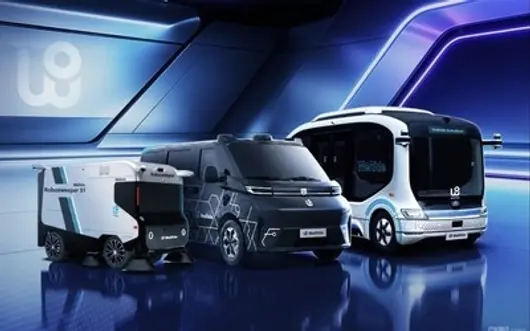
WeRide Product
The conference was co-hosted by the All-China Federation of Industry and Commerce and the People's Government of Zhejiang Province, with the theme "Innovation Gathering Power · Empowering the Future". Also released concurrently were "2026 Report on Innovation Status of the Top 1000 Private Enterprises in R&D Investment", "2026 Private Enterprise R&D Investment and Invention Patent Top 500 List", and other important results.
Since its establishment in Guangzhou in 2017, WeRide has always adhered to promoting industrial innovation through technological innovation. As a local high-quality private technology enterprise in Guangzhou, WeRide is a typical private benchmark for Guangdong to layout new tracks in autonomous driving and cultivate new quality productive forces.
Relying on the self-developed WeRide One autonomous driving general technology platform, WeRide landed open road Robotaxi commercial operation, autonomous driving shuttle paid operation, unmanned sanitation and unmanned freight and other full-scenario applications in Guangzhou first, effectively reducing the cost of scaled deployment. This platform modularizes software algorithms, hardware modules, and cloud architectures, allowing taxis, shuttles, sanitation vehicles, freight vehicles, etc., to share about 90% of the underlying algorithms. The HPC 3.0 computing platform equipped on the vehicle has computing power up to 2000 TOPS, completing 2 trillion operations per second.

WeRide Product
In the 2023 "59 Companies Changing the World" selection by the American "Fortune" magazine, WeRide ranked eighth, being the only Chinese enterprise selected.
As of now, WeRide's autonomous driving business has covered 13 countries and over 60 cities globally. The company is the only technology enterprise globally to simultaneously hold autonomous driving licenses from eight countries: China, UAE, Singapore, France, USA, Saudi Arabia, Belgium, and Switzerland.
Regarding fleet scale, as of July 31, 2026, WeRide's global L4 autonomous driving fleet scale is about 3400 vehicles, among which pure unmanned Robotaxis exceed 1800 units, having become one of the largest scale commercial Robotaxi fleets globally. Some overseas regional businesses have achieved phased operational profitability.
In the first half of 2026, WeRide achieved revenue of 346 million yuan, a year-on-year increase of 73.3%; overseas revenue increased year-on-year by 154.4%; gross profit margin increased from 30.6% in the same period of the previous year to 36.6%. In the second quarter, overseas revenue increased year-on-year by 164% and quarter-on-quarter by 169%.

Author | Janson
Editor | Zhihao
Overseas revenue grew by 164% year-on-year; ADAS business begins scaling up.
CheXidong reported on August 13, last night, WeRide released its Q2 2026 results; overseas business grows at high speed, Robotaxi commercialization process accelerates further.

▲ WeRide's main financial data for Q2 2026
In Q2 this year, WeRide achieved revenue of 232 million yuan, a 82.2% increase year-on-year, and a 103.1% increase quarter-on-quarter; gross profit reached 86.87 million yuan, a 143.3% increase year-on-year; gross margin increased from 28.1% in the same period last year to 37.5%, increasing by 9.4 percentage points year-on-year.
Looking at the revenue structure, WeRide's growth is mainly driven by L4 business expansion, and L2++/L3 solutions beginning to scale up.
Among them, L4 business revenue in Q2 reached 125 million yuan, a 47.3% increase year-on-year, and a 130.6% increase quarter-on-quarter; L2++/L3 business revenue surged 2593.8% year-on-year, and quarter-on-quarter growth was 219.3%.
At the same time, the overseas market became the fastest growing business segment. In Q2, WeRide's overseas revenue grew by 164.4% year-on-year, and quarter-on-quarter growth was 169.3%; overseas revenue in the first half of the year grew by 154.4% year-on-year.
WeRide also stated at the earnings call that the asset-light model for overseas Robotaxi has been proven viable; a single Robotaxi can bring WeRide more than 40,000 to 50,000 US dollars (equivalent to 270,000-338,500 yuan) in recurring revenue annually.
However, WeRide has not yet achieved profitability.
In Q2, WeRide's net loss was 401 million yuan, narrowing by about 1.4% compared to the 406 million yuan in the same period last year; adjusted net loss was 338 million yuan, expanding by about 12.6% year-on-year.
Overall, WeRide's Q2 Robotaxi operational efficiency and commercial revenue are improving, but there is still some distance from overall profitability.
01.
Q2 Revenue of 232 Million Yuan
Gross Margin Rises to 37.5%
In Q2 this year, WeRide achieved revenue of 232 million yuan, an 82.2% increase compared to the 127 million yuan in the same period last year, and a 103.1% increase compared to Q1 this year.
Among them, product revenue was 92.32 million yuan, a 54.4% increase year-on-year; service revenue reached 139 million yuan, a 106.8% increase year-on-year; service business contributed about 60% of revenue.

▲ WeRide's Detailed Financial Information for Q2
During the same period, WeRide's revenue cost was 145 million yuan, a 58.4% increase year-on-year, growth rate lower than revenue growth.
Affected by this, Q2 gross profit grew from 35.7 million yuan in the same period last year to 86.87 million yuan, a year-on-year increase of over one times; comprehensive gross margin reached 37.5%, an increase of 9.4 percentage points compared to 28.1% in the same period last year.
WeRide stated that the increase in gross margin mainly came from two aspects: first, the growth of L2++/L3 business revenue with relatively higher gross margin, and second, the improvement in overseas L4 business revenue contribution.
Regarding R&D expenses, WeRide's Q2 R&D expenditure was 434 million yuan, a 36.2% increase year-on-year.

▲ WeRide R&D Expenses
WeRide stated that the increase in R&D expenditure was mainly due to increases in personnel and outsourcing labor costs, depreciation and amortization, and cloud service fees.
Finally, WeRide's Q2 operating loss was 422 million yuan, narrowing by about 7% compared to the 454 million yuan in the same period last year; net loss was 401 million yuan, narrowing by about 1.4% compared to the same period last year.

▲ WeRide Loss Situation
Basic and diluted loss per American Depositary Share was 1.23 yuan, compared to 1.35 yuan in the same period last year.
Overall from the first half of the year, WeRide's cumulative revenue was 346 million yuan, a 73.3% increase year-on-year; gross profit was 126 million yuan, a 107.1% increase year-on-year; gross margin increased from 30.6% in the same period last year to 36.6%.

▲ WeRide EBITDA Loss
In the first half of the year, WeRide's net loss was 790 million yuan, basically flat with the 792 million yuan in the same period last year; adjusted net loss was 665 million yuan, higher than the 595 million yuan in the same period last year; EBITDA was -667 million yuan, narrowing by 6.5% compared to the -713 million yuan in the same period last year.
02.
L2++/L3 Revenue Surges 26 Times
Overseas Market Becomes Main Growth Driver
From specific business view, L4 remains WeRide's largest business segment.
In Q2, WeRide's L4 business revenue reached 125 million yuan, a 47.3% increase year-on-year, and a 130.6% increase quarter-on-quarter.
According to WeRide's definition, L4 business mainly includes selling autonomous driving vehicles, and providing autonomous driving operation and technical support services, with main product lines covering Robotaxi and Robobus, etc.
Meanwhile, in Q2, WeRide's one-piece end-to-end L2++/L3 solution WRD 3.0 shipment volume was about 30,000 sets, related business revenue grew by 2593.8% year-on-year, equivalent to about 27 times the same period last year; quarter-on-quarter growth was 219.3%.

▲ WeRide WRD 3.0
So far, WeRide has received L2++ mass production design wins for over 30 car models.
WRD 3.0 has also conducted road tests and localization adaptation verification in overseas markets such as France, Germany, and Japan.
At the same time, the overseas market is becoming the main source of incremental growth. In Q2, WeRide's overseas revenue grew by 164.4% year-on-year, and quarter-on-quarter growth was 169.3%; overseas revenue in the first half of the year grew by 154.4% year-on-year.
So far, WeRide's autonomous driving testing or operation business has covered more than 60 cities in 13 countries worldwide.
In terms of Europe, WeRide and Uber plan to launch Spain's first commercialized Robotaxi pilot in Madrid this year, which is the fourth joint deployment project globally and the first time entering the European market together.
In addition, WeRide has also made layouts in Zurich, Switzerland, and the Danish market.

▲ WeRide's Robotaxi in Madrid
In terms of the Middle East, WeRide has achieved pure unmanned operation of Robotaxi in Abu Dhabi and Dubai, with approved service scope covering more than 70% of the core urban area. As of July 31, 2026, the Robotaxi fleet size of the company in the Middle East region is about 400 vehicles.
03.
Robotaxi Average Daily Orders per Vehicle Exceed 21
Domestic Ride-hailing Revenue Increases 140% Quarter-on-Quarter
Besides overseas revenue growth, WeRide's domestic Robotaxi operational efficiency is also improving.
In Q2, WeRide's domestic Robotaxi average daily orders per vehicle exceeded 21, a quarter-on-quarter increase of about 24%; the peak daily completed orders per vehicle reached 28; platform registered users grew quarter-on-quarter by 35%, driving domestic ride-hailing revenue growth of about 140% quarter-on-quarter in a single quarter.

▲ WeRide Robotaxi
From the perspective of Robotaxi commercialization, orders per vehicle is one of the core indicators affecting the vehicle economics model.
From this point, average daily orders per vehicle exceeding 21, and ride-hailing revenue increasing about 140% quarter-on-quarter, indicate that WeRide's domestic Robotaxi fleet utilization is improving.
Regarding service areas, WeRide continues to expand the pure unmanned Robotaxi operation scope in Beijing and Guangzhou.
Among them, Guangzhou's service area has covered Huangpu, Tianhe, and Haizhu districts, expanded to 3 times compared to the end of 2025, and achieved 7x24 hour commercial operation.
As of the end of July 2026, WeRide's global L4 fleet size is about 3,400 vehicles, of which Robotaxi exceeds 1,800. This means Robotaxi has accounted for more than half of the company's L4 fleet and has become its largest L4 product line.

▲ WeRide Robobus
Besides Robotaxi, WeRide is also advancing the autonomous driving minibus business.
Currently, the autonomous driving minibus operated by WeRide in Zurich has cancelled front-row safety officers; minibuses deployed in Leuven, Belgium are planned to cancel front-row safety officers this year in Q3 and start commercial operation. In addition, the company also provides autonomous driving minibus services in markets such as Japan, Saudi Arabia, Singapore, and UAE.
04.
WeRide Han Xu:
Overseas Asset-light Model Replicable, Relying on Technical Service Fees
At the earnings call, WeRide founder, Chairman & CEO Han Xu, and CFO, International Head Li Xuan, answered questions from investors and institutions. CheXidong summarized the Q&A:
1. How does the company allocate resources for L4, L2++/L3, and AI infrastructure businesses? What are the goals for the second half of the year?
Currently, WeRide's L4, L2++/L3, and AI infrastructure businesses are not independent of each other, but share a technology foundation composed of GENESIS world model and WITT physical AI cognitive foundation large model, etc.
Among them, the high-value data generated by L4 fleets in real operations can continuously improve system safety, robustness, and generalization capabilities; the constantly expanding L2++/L3 mass production fleets can collect broader road data, reverse accelerate L4 model iteration, and expand coverage of long-tail scenarios.
Regarding business goals, WeRide will continue to expand Robotaxi business scale, promote more car manufacturers to adopt its L2++/L3 solutions, and strive to output AI infrastructure capabilities to more robotics companies.
Among them, expanding the installation scale of L2++/L3 solutions will be the core goal of the company's next stage.
2. How does overseas business expand, and can the asset-light model be replicated in different markets?
The overseas market has become an important growth engine for WeRide. WeRide mainly adopts an asset-light model overseas, i.e., the company does not hold vehicle assets put into operation, but is responsible for local adaptation of autonomous driving technology, regulatory compliance, and "virtual driver" technology licensing, and collects continuous technical service fees and mileage-based fees. Vehicle investment and daily operations are mainly the responsibility of local partners.
According to this model, a single Robotaxi can bring WeRide more than 40,000 to 50,000 US dollars (equivalent to 270,000-338,500 yuan) in recurring revenue annually. As the fleet size in a single city expands and operational density improves, per-vehicle revenue and profitability still have further growth space.
3. What are the latest developments in L2++/L3 business? How to view OEMs entering the Robotaxi field?
WeRide's one-piece end-to-end L2++/L3 solution WRD 3.0 has entered the mass production stage from the design win stage.
As of the end of June 2026, the cumulative delivery of vehicles equipped with WeRide L2++/L3 solutions has exceeded 30,000 units. The company plans to increase the installation volume to 100,000 units by the end of 2026, and achieve cumulative delivery of over 500,000 units in 2027.
WeRide's competitive advantage in this business comes from the GENESIS and WITT two models and the AI infrastructure behind them. Relying on model training and distillation capabilities, the company can develop end-to-end intelligent driving systems with a relatively small scale team, while deploying models on cost-relative lower vehicle-end hardware.
Regarding the trend of some OEMs entering the Robotaxi market using ADAS technology and mass-produced vehicle data, Han Xu expressed welcome to more participants joining the competition, but at the same time believes that there is still a large difference between ADAS and L4 Robotaxi.
4. What specific problems can the WITT model solve?
WITT's core capability is to extract and verify "physical facts" from large-scale vehicle operation videos, and further analyze the connections and causal relationships between different facts.
After the collaboration of the two models, a closed loop can be formed from real data understanding, physical fact extraction, to simulation scenario generation and algorithm training, thereby supplementing the long-tail data required for autonomous driving training, improving training efficiency and reducing training costs.
Regarding vehicle-end deployment, Han Xu stated that relying on model distillation capabilities, WeRide can run relevant intelligent driving systems on a platform with about 200 TOPS computing power, while some competing solutions may use computing power reaching about 2,000 TOPS.
5. Without controlling vehicles and user traffic, how does the asset-light model maintain discourse power?
An investor pointed out that in WeRide's asset-light model, if platforms like Uber allocate orders to other autonomous driving suppliers, how does WeRide maintain cooperation stability? Do relevant agreements include exclusivity clauses or minimum business volume commitments?
WeRide hopes to build an ecosystem composed of ride-hailing platforms, local operators, and service suppliers in each market, rather than relying on a single partner.
WeRide's core chips in the cooperation relationship are mainly safety records, regulatory licenses, technical localization, and actual deployment capabilities.
WeRide has obtained autonomous driving licenses in 8 markets and is carrying out L4 business in multiple countries. As regulatory frameworks in different markets gradually converge, the safety verification, technical adaptation, and regulatory communication experience accumulated by the company in one region can also help reduce compliance costs of entering other markets.
In other words, WeRide's discourse power in the asset-light model does not come from vehicle ownership or user traffic, but from regulatory-recognized autonomous driving technology, safety records, and cross-market landing capabilities.
05.
Conclusion: Autonomous Driving Competition is About Efficiency
WeRide's Q2 performance indicates that the autonomous driving industry is shifting from technology verification to scaled commercial implementation
Robotaxi fleet continuous expansion, per-vehicle order volume increase, superimposed L2++/L3 solution accelerating vehicle installation, industry revenue sources gradually moving from project-based to parallel operation and mass production.
In the future, whoever can achieve stable orders, controllable costs, and sustainable cash flow first, is more likely to truly cross the autonomous driving commercialization inflection point.
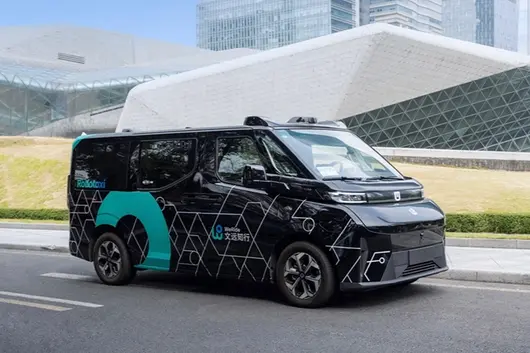

Folks, today let's talk about big news on going global—not selling cars, but selling "drivers". On June 2, WeRide and Uber jointly announced a plan: to launch the country's first commercial Robotaxi pilot service in Madrid, Spain. In other words: Spanish residents will soon be able to hail a driverless taxi via Uber. This is the first time WeRide and Uber are partnering to enter the European market. Madrid also becomes the 12th city globally where WeRide's Robotaxi arrives.
According to official news, with the support of the Madrid regional government, this service will officially launch within this year. At that time, friends in Madrid can open the Uber App and call WeRide's Robotaxi with one click. It's just like calling an ordinary ride-hailing service, the difference is the arriving car has no driver—at least initially, there is still a difference. In the initial operation phase, a professionally trained safety monitor will be on board, as it's just launched, safety comes first.
This company, WeRide, you might have heard of it, or you might not. A brief introduction: Established in 2017, it has been dedicated to Robotaxi technology R&D and commercialization. Currently, its Robotaxis cover Guangzhou, Beijing, Singapore, Abu Dhabi, Dubai, Riyadh, Zurich... plus Madrid now, totaling 12 cities. Spain is also the 5th European market WeRide has entered—previously entered Switzerland, France, Belgium, Slovakia. According to the plan agreed by WeRide and Uber in May 2025, they plan to deploy Robotaxi services in 15 new international cities within five years, deploying tens of thousands of Robotaxis globally. With the Madrid launch, the deployment in 4 cities has been completed, and 11 more will be covered successively before 2030.
To be honest, it's not the first time Chinese autonomous driving companies are going global, but the combination of Chinese technology + global mobility platform + European market is quite interesting. Madrid is one of the European Robotaxi markets with the most commercial potential, with a large population, high travel demand, and friendly local policies. Being able to take root in this market is a significant milestone for WeRide. For Uber, introducing Robotaxis is also a way to reduce costs—after all, drivers don't need salaries. For Madrid residents, hailing a taxi might be cheaper in the future.


Folks, today let's talk about big news on going global—not selling cars, but selling "drivers". On June 2, WeRide and Uber jointly announced a plan: to launch the country's first commercial Robotaxi pilot service in Madrid, Spain. In other words: Spanish residents will soon be able to hail a driverless taxi via Uber. This is the first time WeRide and Uber are partnering to enter the European market. Madrid also becomes the 12th city globally where WeRide's Robotaxi arrives.
According to official news, with the support of the Madrid regional government, this service will officially launch within this year. At that time, friends in Madrid can open the Uber App and call WeRide's Robotaxi with one click. It's just like calling an ordinary ride-hailing service, the difference is the arriving car has no driver—at least initially, there is still a difference. In the initial operation phase, a professionally trained safety monitor will be on board, as it's just launched, safety comes first.
This company, WeRide, you might have heard of it, or you might not. A brief introduction: Established in 2017, it has been dedicated to Robotaxi technology R&D and commercialization. Currently, its Robotaxis cover Guangzhou, Beijing, Singapore, Abu Dhabi, Dubai, Riyadh, Zurich... plus Madrid now, totaling 12 cities. Spain is also the 5th European market WeRide has entered—previously entered Switzerland, France, Belgium, Slovakia. According to the plan agreed by WeRide and Uber in May 2025, they plan to deploy Robotaxi services in 15 new international cities within five years, deploying tens of thousands of Robotaxis globally. With the Madrid launch, the deployment in 4 cities has been completed, and 11 more will be covered successively before 2030.
To be honest, it's not the first time Chinese autonomous driving companies are going global, but the combination of Chinese technology + global mobility platform + European market is quite interesting. Madrid is one of the European Robotaxi markets with the most commercial potential, with a large population, high travel demand, and friendly local policies. Being able to take root in this market is a significant milestone for WeRide. For Uber, introducing Robotaxis is also a way to reduce costs—after all, drivers don't need salaries. For Madrid residents, hailing a taxi might be cheaper in the future.

Folks, today let's talk about big news on going global—not selling cars, but selling "drivers". On June 2, WeRide and Uber jointly announced a plan: to launch the country's first commercial Robotaxi pilot service in Madrid, Spain. In other words: Spanish residents will soon be able to hail a driverless taxi via Uber. This is the first time WeRide and Uber are partnering to enter the European market. Madrid also becomes the 12th city globally where WeRide's Robotaxi arrives.
According to official news, with the support of the Madrid regional government, this service will officially launch within this year. At that time, friends in Madrid can open the Uber App and call WeRide's Robotaxi with one click. It's just like calling an ordinary ride-hailing service, the difference is the arriving car has no driver—at least initially, there is still a difference. In the initial operation phase, a professionally trained safety monitor will be on board, as it's just launched, safety comes first.
This company, WeRide, you might have heard of it, or you might not. A brief introduction: Established in 2017, it has been dedicated to Robotaxi technology R&D and commercialization. Currently, its Robotaxis cover Guangzhou, Beijing, Singapore, Abu Dhabi, Dubai, Riyadh, Zurich... plus Madrid now, totaling 12 cities. Spain is also the 5th European market WeRide has entered—previously entered Switzerland, France, Belgium, Slovakia. According to the plan agreed by WeRide and Uber in May 2025, they plan to deploy Robotaxi services in 15 new international cities within five years, deploying tens of thousands of Robotaxis globally. With the Madrid launch, the deployment in 4 cities has been completed, and 11 more will be covered successively before 2030.
To be honest, it's not the first time Chinese autonomous driving companies are going global, but the combination of Chinese technology + global mobility platform + European market is quite interesting. Madrid is one of the European Robotaxi markets with the most commercial potential, with a large population, high travel demand, and friendly local policies. Being able to take root in this market is a significant milestone for WeRide. For Uber, introducing Robotaxis is also a way to reduce costs—after all, drivers don't need salaries. For Madrid residents, hailing a taxi might be cheaper in the future.

Folks, today let's talk about big news on going global—not selling cars, but selling "drivers". On June 2, WeRide and Uber jointly announced a plan: to launch the country's first commercial Robotaxi pilot service in Madrid, Spain. In other words: Spanish residents will soon be able to hail a driverless taxi via Uber. This is the first time WeRide and Uber are partnering to enter the European market. Madrid also becomes the 12th city globally where WeRide's Robotaxi arrives.
According to official news, with the support of the Madrid regional government, this service will officially launch within this year. At that time, friends in Madrid can open the Uber App and call WeRide's Robotaxi with one click. It's just like calling an ordinary ride-hailing service, the difference is the arriving car has no driver—at least initially, there is still a difference. In the initial operation phase, a professionally trained safety monitor will be on board, as it's just launched, safety comes first.
This company, WeRide, you might have heard of it, or you might not. A brief introduction: Established in 2017, it has been dedicated to Robotaxi technology R&D and commercialization. Currently, its Robotaxis cover Guangzhou, Beijing, Singapore, Abu Dhabi, Dubai, Riyadh, Zurich... plus Madrid now, totaling 12 cities. Spain is also the 5th European market WeRide has entered—previously entered Switzerland, France, Belgium, Slovakia. According to the plan agreed by WeRide and Uber in May 2025, they plan to deploy Robotaxi services in 15 new international cities within five years, deploying tens of thousands of Robotaxis globally. With the Madrid launch, the deployment in 4 cities has been completed, and 11 more will be covered successively before 2030.
To be honest, it's not the first time Chinese autonomous driving companies are going global, but the combination of Chinese technology + global mobility platform + European market is quite interesting. Madrid is one of the European Robotaxi markets with the most commercial potential, with a large population, high travel demand, and friendly local policies. Being able to take root in this market is a significant milestone for WeRide. For Uber, introducing Robotaxis is also a way to reduce costs—after all, drivers don't need salaries. For Madrid residents, hailing a taxi might be cheaper in the future.
Folks, today let's talk about big news on going global—not selling cars, but selling "drivers". On June 2, WeRide and Uber jointly announced a plan: to launch the country's first commercial Robotaxi pilot service in Madrid, Spain. In other words: Spanish residents will soon be able to hail a driverless taxi via Uber. This is the first time WeRide and Uber are partnering to enter the European market. Madrid also becomes the 12th city globally where WeRide's Robotaxi arrives.
According to official news, with the support of the Madrid regional government, this service will officially launch within this year. At that time, friends in Madrid can open the Uber App and call WeRide's Robotaxi with one click. It's just like calling an ordinary ride-hailing service, the difference is the arriving car has no driver—at least initially, there is still a difference. In the initial operation phase, a professionally trained safety monitor will be on board, as it's just launched, safety comes first.
This company, WeRide, you might have heard of it, or you might not. A brief introduction: Established in 2017, it has been dedicated to Robotaxi technology R&D and commercialization. Currently, its Robotaxis cover Guangzhou, Beijing, Singapore, Abu Dhabi, Dubai, Riyadh, Zurich... plus Madrid now, totaling 12 cities. Spain is also the 5th European market WeRide has entered—previously entered Switzerland, France, Belgium, Slovakia. According to the plan agreed by WeRide and Uber in May 2025, they plan to deploy Robotaxi services in 15 new international cities within five years, deploying tens of thousands of Robotaxis globally. With the Madrid launch, the deployment in 4 cities has been completed, and 11 more will be covered successively before 2030.
To be honest, it's not the first time Chinese autonomous driving companies are going global, but the combination of Chinese technology + global mobility platform + European market is quite interesting. Madrid is one of the European Robotaxi markets with the most commercial potential, with a large population, high travel demand, and friendly local policies. Being able to take root in this market is a significant milestone for WeRide. For Uber, introducing Robotaxis is also a way to reduce costs—after all, drivers don't need salaries. For Madrid residents, hailing a taxi might be cheaper in the future.

Folks, today let's talk about big news on going global—not selling cars, but selling "drivers". On June 2, WeRide and Uber jointly announced a plan: to launch the country's first commercial Robotaxi pilot service in Madrid, Spain. In other words: Spanish residents will soon be able to hail a driverless taxi via Uber. This is the first time WeRide and Uber are partnering to enter the European market. Madrid also becomes the 12th city globally where WeRide's Robotaxi arrives.
According to official news, with the support of the Madrid regional government, this service will officially launch within this year. At that time, friends in Madrid can open the Uber App and call WeRide's Robotaxi with one click. It's just like calling an ordinary ride-hailing service, the difference is the arriving car has no driver—at least initially, there is still a difference. In the initial operation phase, a professionally trained safety monitor will be on board, as it's just launched, safety comes first.
This company, WeRide, you might have heard of it, or you might not. A brief introduction: Established in 2017, it has been dedicated to Robotaxi technology R&D and commercialization. Currently, its Robotaxis cover Guangzhou, Beijing, Singapore, Abu Dhabi, Dubai, Riyadh, Zurich... plus Madrid now, totaling 12 cities. Spain is also the 5th European market WeRide has entered—previously entered Switzerland, France, Belgium, Slovakia. According to the plan agreed by WeRide and Uber in May 2025, they plan to deploy Robotaxi services in 15 new international cities within five years, deploying tens of thousands of Robotaxis globally. With the Madrid launch, the deployment in 4 cities has been completed, and 11 more will be covered successively before 2030.
To be honest, it's not the first time Chinese autonomous driving companies are going global, but the combination of Chinese technology + global mobility platform + European market is quite interesting. Madrid is one of the European Robotaxi markets with the most commercial potential, with a large population, high travel demand, and friendly local policies. Being able to take root in this market is a significant milestone for WeRide. For Uber, introducing Robotaxis is also a way to reduce costs—after all, drivers don't need salaries. For Madrid residents, hailing a taxi might be cheaper in the future.

Folks, today let's talk about big news on going global—not selling cars, but selling "drivers". On June 2, WeRide and Uber jointly announced a plan: to launch the country's first commercial Robotaxi pilot service in Madrid, Spain. In other words: Spanish residents will soon be able to hail a driverless taxi via Uber. This is the first time WeRide and Uber are partnering to enter the European market. Madrid also becomes the 12th city globally where WeRide's Robotaxi arrives.
According to official news, with the support of the Madrid regional government, this service will officially launch within this year. At that time, friends in Madrid can open the Uber App and call WeRide's Robotaxi with one click. It's just like calling an ordinary ride-hailing service, the difference is the arriving car has no driver—at least initially, there is still a difference. In the initial operation phase, a professionally trained safety monitor will be on board, as it's just launched, safety comes first.
This company, WeRide, you might have heard of it, or you might not. A brief introduction: Established in 2017, it has been dedicated to Robotaxi technology R&D and commercialization. Currently, its Robotaxis cover Guangzhou, Beijing, Singapore, Abu Dhabi, Dubai, Riyadh, Zurich... plus Madrid now, totaling 12 cities. Spain is also the 5th European market WeRide has entered—previously entered Switzerland, France, Belgium, Slovakia. According to the plan agreed by WeRide and Uber in May 2025, they plan to deploy Robotaxi services in 15 new international cities within five years, deploying tens of thousands of Robotaxis globally. With the Madrid launch, the deployment in 4 cities has been completed, and 11 more will be covered successively before 2030.
To be honest, it's not the first time Chinese autonomous driving companies are going global, but the combination of Chinese technology + global mobility platform + European market is quite interesting. Madrid is one of the European Robotaxi markets with the most commercial potential, with a large population, high travel demand, and friendly local policies. Being able to take root in this market is a significant milestone for WeRide. For Uber, introducing Robotaxis is also a way to reduce costs—after all, drivers don't need salaries. For Madrid residents, hailing a taxi might be cheaper in the future.

Folks, today let's talk about big news on going global—not selling cars, but selling "drivers". On June 2, WeRide and Uber jointly announced a plan: to launch the country's first commercial Robotaxi pilot service in Madrid, Spain. In other words: Spanish residents will soon be able to hail a driverless taxi via Uber. This is the first time WeRide and Uber are partnering to enter the European market. Madrid also becomes the 12th city globally where WeRide's Robotaxi arrives.
According to official news, with the support of the Madrid regional government, this service will officially launch within this year. At that time, friends in Madrid can open the Uber App and call WeRide's Robotaxi with one click. It's just like calling an ordinary ride-hailing service, the difference is the arriving car has no driver—at least initially, there is still a difference. In the initial operation phase, a professionally trained safety monitor will be on board, as it's just launched, safety comes first.
This company, WeRide, you might have heard of it, or you might not. A brief introduction: Established in 2017, it has been dedicated to Robotaxi technology R&D and commercialization. Currently, its Robotaxis cover Guangzhou, Beijing, Singapore, Abu Dhabi, Dubai, Riyadh, Zurich... plus Madrid now, totaling 12 cities. Spain is also the 5th European market WeRide has entered—previously entered Switzerland, France, Belgium, Slovakia. According to the plan agreed by WeRide and Uber in May 2025, they plan to deploy Robotaxi services in 15 new international cities within five years, deploying tens of thousands of Robotaxis globally. With the Madrid launch, the deployment in 4 cities has been completed, and 11 more will be covered successively before 2030.
To be honest, it's not the first time Chinese autonomous driving companies are going global, but the combination of Chinese technology + global mobility platform + European market is quite interesting. Madrid is one of the European Robotaxi markets with the most commercial potential, with a large population, high travel demand, and friendly local policies. Being able to take root in this market is a significant milestone for WeRide. For Uber, introducing Robotaxis is also a way to reduce costs—after all, drivers don't need salaries. For Madrid residents, hailing a taxi might be cheaper in the future.

Folks, today let's talk about big news on going global—not selling cars, but selling "drivers". On June 2, WeRide and Uber jointly announced a plan: to launch the country's first commercial Robotaxi pilot service in Madrid, Spain. In other words: Spanish residents will soon be able to hail a driverless taxi via Uber. This is the first time WeRide and Uber are partnering to enter the European market. Madrid also becomes the 12th city globally where WeRide's Robotaxi arrives.
According to official news, with the support of the Madrid regional government, this service will officially launch within this year. At that time, friends in Madrid can open the Uber App and call WeRide's Robotaxi with one click. It's just like calling an ordinary ride-hailing service, the difference is the arriving car has no driver—at least initially, there is still a difference. In the initial operation phase, a professionally trained safety monitor will be on board, as it's just launched, safety comes first.
This company, WeRide, you might have heard of it, or you might not. A brief introduction: Established in 2017, it has been dedicated to Robotaxi technology R&D and commercialization. Currently, its Robotaxis cover Guangzhou, Beijing, Singapore, Abu Dhabi, Dubai, Riyadh, Zurich... plus Madrid now, totaling 12 cities. Spain is also the 5th European market WeRide has entered—previously entered Switzerland, France, Belgium, Slovakia. According to the plan agreed by WeRide and Uber in May 2025, they plan to deploy Robotaxi services in 15 new international cities within five years, deploying tens of thousands of Robotaxis globally. With the Madrid launch, the deployment in 4 cities has been completed, and 11 more will be covered successively before 2030.
To be honest, it's not the first time Chinese autonomous driving companies are going global, but the combination of Chinese technology + global mobility platform + European market is quite interesting. Madrid is one of the European Robotaxi markets with the most commercial potential, with a large population, high travel demand, and friendly local policies. Being able to take root in this market is a significant milestone for WeRide. For Uber, introducing Robotaxis is also a way to reduce costs—after all, drivers don't need salaries. For Madrid residents, hailing a taxi might be cheaper in the future.

Folks, today let's talk about big news on going global—not selling cars, but selling "drivers". On June 2, WeRide and Uber jointly announced a plan: to launch the country's first commercial Robotaxi pilot service in Madrid, Spain. In other words: Spanish residents will soon be able to hail a driverless taxi via Uber. This is the first time WeRide and Uber are partnering to enter the European market. Madrid also becomes the 12th city globally where WeRide's Robotaxi arrives.
According to official news, with the support of the Madrid regional government, this service will officially launch within this year. At that time, friends in Madrid can open the Uber App and call WeRide's Robotaxi with one click. It's just like calling an ordinary ride-hailing service, the difference is the arriving car has no driver—at least initially, there is still a difference. In the initial operation phase, a professionally trained safety monitor will be on board, as it's just launched, safety comes first.
This company, WeRide, you might have heard of it, or you might not. A brief introduction: Established in 2017, it has been dedicated to Robotaxi technology R&D and commercialization. Currently, its Robotaxis cover Guangzhou, Beijing, Singapore, Abu Dhabi, Dubai, Riyadh, Zurich... plus Madrid now, totaling 12 cities. Spain is also the 5th European market WeRide has entered—previously entered Switzerland, France, Belgium, Slovakia. According to the plan agreed by WeRide and Uber in May 2025, they plan to deploy Robotaxi services in 15 new international cities within five years, deploying tens of thousands of Robotaxis globally. With the Madrid launch, the deployment in 4 cities has been completed, and 11 more will be covered successively before 2030.
To be honest, it's not the first time Chinese autonomous driving companies are going global, but the combination of Chinese technology + global mobility platform + European market is quite interesting. Madrid is one of the European Robotaxi markets with the most commercial potential, with a large population, high travel demand, and friendly local policies. Being able to take root in this market is a significant milestone for WeRide. For Uber, introducing Robotaxis is also a way to reduce costs—after all, drivers don't need salaries. For Madrid residents, hailing a taxi might be cheaper in the future.

Folks, today let's talk about big news on going global—not selling cars, but selling "drivers". On June 2, WeRide and Uber jointly announced a plan: to launch the country's first commercial Robotaxi pilot service in Madrid, Spain. In other words: Spanish residents will soon be able to hail a driverless taxi via Uber. This is the first time WeRide and Uber are partnering to enter the European market. Madrid also becomes the 12th city globally where WeRide's Robotaxi arrives.
According to official news, with the support of the Madrid regional government, this service will officially launch within this year. At that time, friends in Madrid can open the Uber App and call WeRide's Robotaxi with one click. It's just like calling an ordinary ride-hailing service, the difference is the arriving car has no driver—at least initially, there is still a difference. In the initial operation phase, a professionally trained safety monitor will be on board, as it's just launched, safety comes first.
This company, WeRide, you might have heard of it, or you might not. A brief introduction: Established in 2017, it has been dedicated to Robotaxi technology R&D and commercialization. Currently, its Robotaxis cover Guangzhou, Beijing, Singapore, Abu Dhabi, Dubai, Riyadh, Zurich... plus Madrid now, totaling 12 cities. Spain is also the 5th European market WeRide has entered—previously entered Switzerland, France, Belgium, Slovakia. According to the plan agreed by WeRide and Uber in May 2025, they plan to deploy Robotaxi services in 15 new international cities within five years, deploying tens of thousands of Robotaxis globally. With the Madrid launch, the deployment in 4 cities has been completed, and 11 more will be covered successively before 2030.
To be honest, it's not the first time Chinese autonomous driving companies are going global, but the combination of Chinese technology + global mobility platform + European market is quite interesting. Madrid is one of the European Robotaxi markets with the most commercial potential, with a large population, high travel demand, and friendly local policies. Being able to take root in this market is a significant milestone for WeRide. For Uber, introducing Robotaxis is also a way to reduce costs—after all, drivers don't need salaries. For Madrid residents, hailing a taxi might be cheaper in the future.

Folks, today let's talk about big news on going global—not selling cars, but selling "drivers". On June 2, WeRide and Uber jointly announced a plan: to launch the country's first commercial Robotaxi pilot service in Madrid, Spain. In other words: Spanish residents will soon be able to hail a driverless taxi via Uber. This is the first time WeRide and Uber are partnering to enter the European market. Madrid also becomes the 12th city globally where WeRide's Robotaxi arrives.
According to official news, with the support of the Madrid regional government, this service will officially launch within this year. At that time, friends in Madrid can open the Uber App and call WeRide's Robotaxi with one click. It's just like calling an ordinary ride-hailing service, the difference is the arriving car has no driver—at least initially, there is still a difference. In the initial operation phase, a professionally trained safety monitor will be on board, as it's just launched, safety comes first.
This company, WeRide, you might have heard of it, or you might not. A brief introduction: Established in 2017, it has been dedicated to Robotaxi technology R&D and commercialization. Currently, its Robotaxis cover Guangzhou, Beijing, Singapore, Abu Dhabi, Dubai, Riyadh, Zurich... plus Madrid now, totaling 12 cities. Spain is also the 5th European market WeRide has entered—previously entered Switzerland, France, Belgium, Slovakia. According to the plan agreed by WeRide and Uber in May 2025, they plan to deploy Robotaxi services in 15 new international cities within five years, deploying tens of thousands of Robotaxis globally. With the Madrid launch, the deployment in 4 cities has been completed, and 11 more will be covered successively before 2030.
To be honest, it's not the first time Chinese autonomous driving companies are going global, but the combination of Chinese technology + global mobility platform + European market is quite interesting. Madrid is one of the European Robotaxi markets with the most commercial potential, with a large population, high travel demand, and friendly local policies. Being able to take root in this market is a significant milestone for WeRide. For Uber, introducing Robotaxis is also a way to reduce costs—after all, drivers don't need salaries. For Madrid residents, hailing a taxi might be cheaper in the future.

Folks, today let's talk about big news on going global—not selling cars, but selling "drivers". On June 2, WeRide and Uber jointly announced a plan: to launch the country's first commercial Robotaxi pilot service in Madrid, Spain. In other words: Spanish residents will soon be able to hail a driverless taxi via Uber. This is the first time WeRide and Uber are partnering to enter the European market. Madrid also becomes the 12th city globally where WeRide's Robotaxi arrives.
According to official news, with the support of the Madrid regional government, this service will officially launch within this year. At that time, friends in Madrid can open the Uber App and call WeRide's Robotaxi with one click. It's just like calling an ordinary ride-hailing service, the difference is the arriving car has no driver—at least initially, there is still a difference. In the initial operation phase, a professionally trained safety monitor will be on board, as it's just launched, safety comes first.
This company, WeRide, you might have heard of it, or you might not. A brief introduction: Established in 2017, it has been dedicated to Robotaxi technology R&D and commercialization. Currently, its Robotaxis cover Guangzhou, Beijing, Singapore, Abu Dhabi, Dubai, Riyadh, Zurich... plus Madrid now, totaling 12 cities. Spain is also the 5th European market WeRide has entered—previously entered Switzerland, France, Belgium, Slovakia. According to the plan agreed by WeRide and Uber in May 2025, they plan to deploy Robotaxi services in 15 new international cities within five years, deploying tens of thousands of Robotaxis globally. With the Madrid launch, the deployment in 4 cities has been completed, and 11 more will be covered successively before 2030.
To be honest, it's not the first time Chinese autonomous driving companies are going global, but the combination of Chinese technology + global mobility platform + European market is quite interesting. Madrid is one of the European Robotaxi markets with the most commercial potential, with a large population, high travel demand, and friendly local policies. Being able to take root in this market is a significant milestone for WeRide. For Uber, introducing Robotaxis is also a way to reduce costs—after all, drivers don't need salaries. For Madrid residents, hailing a taxi might be cheaper in the future.

Folks, today let's talk about big news on going global—not selling cars, but selling "drivers". On June 2, WeRide and Uber jointly announced a plan: to launch the country's first commercial Robotaxi pilot service in Madrid, Spain. In other words: Spanish residents will soon be able to hail a driverless taxi via Uber. This is the first time WeRide and Uber are partnering to enter the European market. Madrid also becomes the 12th city globally where WeRide's Robotaxi arrives.
According to official news, with the support of the Madrid regional government, this service will officially launch within this year. At that time, friends in Madrid can open the Uber App and call WeRide's Robotaxi with one click. It's just like calling an ordinary ride-hailing service, the difference is the arriving car has no driver—at least initially, there is still a difference. In the initial operation phase, a professionally trained safety monitor will be on board, as it's just launched, safety comes first.
This company, WeRide, you might have heard of it, or you might not. A brief introduction: Established in 2017, it has been dedicated to Robotaxi technology R&D and commercialization. Currently, its Robotaxis cover Guangzhou, Beijing, Singapore, Abu Dhabi, Dubai, Riyadh, Zurich... plus Madrid now, totaling 12 cities. Spain is also the 5th European market WeRide has entered—previously entered Switzerland, France, Belgium, Slovakia. According to the plan agreed by WeRide and Uber in May 2025, they plan to deploy Robotaxi services in 15 new international cities within five years, deploying tens of thousands of Robotaxis globally. With the Madrid launch, the deployment in 4 cities has been completed, and 11 more will be covered successively before 2030.
To be honest, it's not the first time Chinese autonomous driving companies are going global, but the combination of Chinese technology + global mobility platform + European market is quite interesting. Madrid is one of the European Robotaxi markets with the most commercial potential, with a large population, high travel demand, and friendly local policies. Being able to take root in this market is a significant milestone for WeRide. For Uber, introducing Robotaxis is also a way to reduce costs—after all, drivers don't need salaries. For Madrid residents, hailing a taxi might be cheaper in the future.

Folks, today let's talk about big news on going global—not selling cars, but selling "drivers". On June 2, WeRide and Uber jointly announced a plan: to launch the country's first commercial Robotaxi pilot service in Madrid, Spain. In other words: Spanish residents will soon be able to hail a driverless taxi via Uber. This is the first time WeRide and Uber are partnering to enter the European market. Madrid also becomes the 12th city globally where WeRide's Robotaxi arrives.
According to official news, with the support of the Madrid regional government, this service will officially launch within this year. At that time, friends in Madrid can open the Uber App and call WeRide's Robotaxi with one click. It's just like calling an ordinary ride-hailing service, the difference is the arriving car has no driver—at least initially, there is still a difference. In the initial operation phase, a professionally trained safety monitor will be on board, as it's just launched, safety comes first.
This company, WeRide, you might have heard of it, or you might not. A brief introduction: Established in 2017, it has been dedicated to Robotaxi technology R&D and commercialization. Currently, its Robotaxis cover Guangzhou, Beijing, Singapore, Abu Dhabi, Dubai, Riyadh, Zurich... plus Madrid now, totaling 12 cities. Spain is also the 5th European market WeRide has entered—previously entered Switzerland, France, Belgium, Slovakia. According to the plan agreed by WeRide and Uber in May 2025, they plan to deploy Robotaxi services in 15 new international cities within five years, deploying tens of thousands of Robotaxis globally. With the Madrid launch, the deployment in 4 cities has been completed, and 11 more will be covered successively before 2030.
To be honest, it's not the first time Chinese autonomous driving companies are going global, but the combination of Chinese technology + global mobility platform + European market is quite interesting. Madrid is one of the European Robotaxi markets with the most commercial potential, with a large population, high travel demand, and friendly local policies. Being able to take root in this market is a significant milestone for WeRide. For Uber, introducing Robotaxis is also a way to reduce costs—after all, drivers don't need salaries. For Madrid residents, hailing a taxi might be cheaper in the future.

Folks, today let's talk about big news on going global—not selling cars, but selling "drivers". On June 2, WeRide and Uber jointly announced a plan: to launch the country's first commercial Robotaxi pilot service in Madrid, Spain. In other words: Spanish residents will soon be able to hail a driverless taxi via Uber. This is the first time WeRide and Uber are partnering to enter the European market. Madrid also becomes the 12th city globally where WeRide's Robotaxi arrives.
According to official news, with the support of the Madrid regional government, this service will officially launch within this year. At that time, friends in Madrid can open the Uber App and call WeRide's Robotaxi with one click. It's just like calling an ordinary ride-hailing service, the difference is the arriving car has no driver—at least initially, there is still a difference. In the initial operation phase, a professionally trained safety monitor will be on board, as it's just launched, safety comes first.
This company, WeRide, you might have heard of it, or you might not. A brief introduction: Established in 2017, it has been dedicated to Robotaxi technology R&D and commercialization. Currently, its Robotaxis cover Guangzhou, Beijing, Singapore, Abu Dhabi, Dubai, Riyadh, Zurich... plus Madrid now, totaling 12 cities. Spain is also the 5th European market WeRide has entered—previously entered Switzerland, France, Belgium, Slovakia. According to the plan agreed by WeRide and Uber in May 2025, they plan to deploy Robotaxi services in 15 new international cities within five years, deploying tens of thousands of Robotaxis globally. With the Madrid launch, the deployment in 4 cities has been completed, and 11 more will be covered successively before 2030.
To be honest, it's not the first time Chinese autonomous driving companies are going global, but the combination of Chinese technology + global mobility platform + European market is quite interesting. Madrid is one of the European Robotaxi markets with the most commercial potential, with a large population, high travel demand, and friendly local policies. Being able to take root in this market is a significant milestone for WeRide. For Uber, introducing Robotaxis is also a way to reduce costs—after all, drivers don't need salaries. For Madrid residents, hailing a taxi might be cheaper in the future.

Folks, today let's talk about big news on going global—not selling cars, but selling "drivers". On June 2, WeRide and Uber jointly announced a plan: to launch the country's first commercial Robotaxi pilot service in Madrid, Spain. In other words: Spanish residents will soon be able to hail a driverless taxi via Uber. This is the first time WeRide and Uber are partnering to enter the European market. Madrid also becomes the 12th city globally where WeRide's Robotaxi arrives.
According to official news, with the support of the Madrid regional government, this service will officially launch within this year. At that time, friends in Madrid can open the Uber App and call WeRide's Robotaxi with one click. It's just like calling an ordinary ride-hailing service, the difference is the arriving car has no driver—at least initially, there is still a difference. In the initial operation phase, a professionally trained safety monitor will be on board, as it's just launched, safety comes first.
This company, WeRide, you might have heard of it, or you might not. A brief introduction: Established in 2017, it has been dedicated to Robotaxi technology R&D and commercialization. Currently, its Robotaxis cover Guangzhou, Beijing, Singapore, Abu Dhabi, Dubai, Riyadh, Zurich... plus Madrid now, totaling 12 cities. Spain is also the 5th European market WeRide has entered—previously entered Switzerland, France, Belgium, Slovakia. According to the plan agreed by WeRide and Uber in May 2025, they plan to deploy Robotaxi services in 15 new international cities within five years, deploying tens of thousands of Robotaxis globally. With the Madrid launch, the deployment in 4 cities has been completed, and 11 more will be covered successively before 2030.
To be honest, it's not the first time Chinese autonomous driving companies are going global, but the combination of Chinese technology + global mobility platform + European market is quite interesting. Madrid is one of the European Robotaxi markets with the most commercial potential, with a large population, high travel demand, and friendly local policies. Being able to take root in this market is a significant milestone for WeRide. For Uber, introducing Robotaxis is also a way to reduce costs—after all, drivers don't need salaries. For Madrid residents, hailing a taxi might be cheaper in the future.

Folks, today let's talk about big news on going global—not selling cars, but selling "drivers". On June 2, WeRide and Uber jointly announced a plan: to launch the country's first commercial Robotaxi pilot service in Madrid, Spain. In other words: Spanish residents will soon be able to hail a driverless taxi via Uber. This is the first time WeRide and Uber are partnering to enter the European market. Madrid also becomes the 12th city globally where WeRide's Robotaxi arrives.
According to official news, with the support of the Madrid regional government, this service will officially launch within this year. At that time, friends in Madrid can open the Uber App and call WeRide's Robotaxi with one click. It's just like calling an ordinary ride-hailing service, the difference is the arriving car has no driver—at least initially, there is still a difference. In the initial operation phase, a professionally trained safety monitor will be on board, as it's just launched, safety comes first.
This company, WeRide, you might have heard of it, or you might not. A brief introduction: Established in 2017, it has been dedicated to Robotaxi technology R&D and commercialization. Currently, its Robotaxis cover Guangzhou, Beijing, Singapore, Abu Dhabi, Dubai, Riyadh, Zurich... plus Madrid now, totaling 12 cities. Spain is also the 5th European market WeRide has entered—previously entered Switzerland, France, Belgium, Slovakia. According to the plan agreed by WeRide and Uber in May 2025, they plan to deploy Robotaxi services in 15 new international cities within five years, deploying tens of thousands of Robotaxis globally. With the Madrid launch, the deployment in 4 cities has been completed, and 11 more will be covered successively before 2030.
To be honest, it's not the first time Chinese autonomous driving companies are going global, but the combination of Chinese technology + global mobility platform + European market is quite interesting. Madrid is one of the European Robotaxi markets with the most commercial potential, with a large population, high travel demand, and friendly local policies. Being able to take root in this market is a significant milestone for WeRide. For Uber, introducing Robotaxis is also a way to reduce costs—after all, drivers don't need salaries. For Madrid residents, hailing a taxi might be cheaper in the future.


