


首頁VISION GT

搜尋歷史
熱門搜尋
經銷商登入 / 註冊

Xiaomi has brought a concept car into "Gran Turismo 7" this time.

On October 3, at the live event of the third leg of the Gran Turismo World Series held in Singapore, series producer Kazunori Yamauchi and Xiaomi Automobile European R&D Center Design Head Jean-Arthur Madelaine announced together: Xiaomi Vision GT will go online with Part 1 of "GT7" Spec IV update on October 15, becoming the first concept car from China in the history of this project.
First thing to clarify: this car will not be mass-produced. Xiaomi officially clarified, it is a concept car built specifically for the GT platform. So when viewing this car, do not take the parameters as expectations, the focus is on what it intends to express.
Where does it stand in the GT projectThe Vision Gran Turismo project was initiated in 2013, it is an invitation-based system — only global automakers with performance technology endorsement can be invited. As of early 2026, the project has already had 36 brands, 51 concept cars participating.
Xiaomi is the 36th brand to join, also the first Chinese brand to be invited, and at the same time the first enterprise globally to participate in a technology company identity. Previously, Xiaomi SU7 Ultra had already gone online in January 2026 as the first Chinese brand mass-production vehicle of the GT series.
In less than a year, Xiaomi completed the triple implementation of mass-production cars, concept cars, and electric vehicle teaching modules on the GT platform. This pace of progress is more worth watching than the car itself.
Aerodynamics is the main selling pointXiaomi summarized the design concept of this car as "shaped by wind". Chief Designer Li Tianyuan's statement is: The team does not rely on additional aerodynamic kits, but makes almost every shape bear aerodynamic functions.
How specifically to do it:
The data published by the official is: Aerodynamic drag coefficient Cd 0.29, Aerodynamic efficiency value 4.1, Can generate approximately 1.2 tons of downforce in high-speed conditions.
Xiaomi's set of aerodynamic design has a mass-production basis — The aerodynamic ideas verified on SU7 and YU7 have been reinforced on this concept car.


What level is a drag coefficient of 0.29? As a reference, achieving within 0.25 in the mass-production car field is considered excellent, while such supercars are usually around 0.30. More noteworthy is that 1.2 tons of downforce — This is not forced out by a large rear wing, but a result of aerodynamic efficiency value 4.1.
Note: Xiaomi official has not disclosed VGT's power system specific configuration. NVIDIA GTPlanet and multiple media mentioned "Power configuration has not been disclosed", but Xiaomi China area gave the official stance in the communication on October 3: Based on 900V Silicon Carbide high-voltage platform, four-motor four-wheel drive, comprehensive power approximately 1360 horsepower, 0-100 km/h enters 1-second level, top speed exceeds 350 km/h, equipped with track-level battery and full-domain thermal management system, 10-minute fast charge can replenish 500 km range. These parameters are not constrained by mass-production regulations and engineering costs, and are not the same measurement standard as road mass-production cars.
Cockpit called "Sofa Racer"Xiaomi set the cabin concept of this car as "Sofa Racer", with a ring-shaped cabin as the framework.
Specific configurations include: 4-point seatbelts, carbon fiber racing seats, steering wheel with screen, retaining physical buttons, panoramic sky screen. Interior outline uses the shape of the Xiaomi LOGO for styling.

AI aspect integrated Super Xiao Ai and Xiaomi MiMo large models, the goal is to make the vehicle actively perceive, actively identify driver intent, and integrate into Xiaomi's "Human Car Home Full Ecosystem". Officially mentioned panoramic sky screen can link with Xiaomi Watch and other devices, synchronizing health information.
Here is a point easily overlooked. A concept car that is not mass-produced, moving consumer electronics and smart home ecosystem capabilities into the cabin, the true landing point of this idea is not on VGT, but on Xiaomi's subsequent mass-production cars.
An easily overlooked accompanying updateThe GT series this time also went online simultaneously with the first driving teaching module specifically for electric cars since its launch.
Players can use SU7 Ultra and Vision GT to complete training tasks, familiarizing themselves with the driving characteristics of electric cars in acceleration, braking, and regenerative braking.
For a teaching system long based on internal combustion engine driving logic, this is an adjustment at the content level. And both "practice cars" come from the same Chinese brand.
Kazunori Yamauchi's evaluation of this car is: "The overall design, while maintaining simplicity, shows an indescribable, extremely sexy curve beauty, and will become a paradigm of this era." He also stated after test driving at the Singapore site: "Vision GT in the game experience can simultaneously maintain very fast speed and super high stability, the overall performance is very smooth".
When can this car be playedOctober 15, "GT7" Spec IV update Part 1 goes online, simultaneously adding Sportsland SUGO track and 6 cars. Players can drive Xiaomi Vision GT in tracks such as Nürburgring, Le Mans, Suzuka, etc.

The Vision GT project has always been the stage for European, American, and Japanese automakers. Xiaomi this time as a Chinese brand joining for the first time, rather than showing off muscles, is better said as dropping a piece of its own in the global automotive cultural context.
But this matter of not mass-producing, on the contrary, is the most interesting part of this car.
After leaving the constraints of regulations, costs, and safety verification, design freedom is exponentially increased. You can make compromises on mass-production cars — compromise styling for crash regulations, compromise materials for cost, compromise aerodynamic boundaries for certification. These boxes do not exist on concept cars, so the ideal scheme of "every shape bears aerodynamic functions" which cannot be realized on mass-production cars can be directly implemented.
1360 horsepower this number actually does not need to be too troubled. Because it is not mass-produced, this number has no real reference system. What will really be transmitted to mass-production cars is that set of aerodynamic ideas and cabin design — SU7 and YU7 are already using it, VGT has achieved a stronger version.
As for the game carrier, it was chosen accurately. A car that is not mass-produced cannot be driven on the road, cannot enter dealerships, cannot do test drives. Games are one of the few ways that can let millions of global players sit in the driver's seat simultaneously. The player group of the GT series happens to be the batch of people who are most enthusiastic about automotive design — they will vote for this Chinese concept car in the hairpin corners of Nürburgring.
Without exaggeration, Xiaomi this time seems to first establish the impression of "what Chinese brands can build" on the virtual track, and then feed back to mass-production cars. The order is reversed, the effect might be even better.
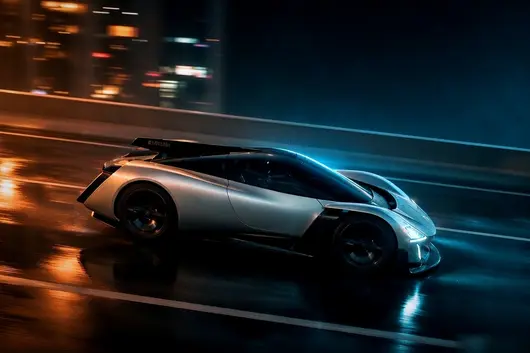

小米今次喺《跑車浪漫旅 7》入面入咗一部概念車。
10 月 3 日,喺新加坡舉辦嘅跑車浪漫旅世界系列賽第三站現場,系列製作人山內一典同小米汽車歐洲研發中心設計負責人 Jean-Arthur Madelaine 同台宣佈:小米 Vision GT 將於 10 月 15 日 隨《GT7》Spec IV 更新第一部分上線,成為呢個項目歷史上第一台來自中國嘅概念車。
講清楚一件事:呢部車唔會量產。 小米官方明確表態,佢係專為 GT 平台打造嘅概念車。所以睇呢部車,參數唔好當預期睇,重點係佢想表達咩。
佢喺 GT 項目入面係咩位置Vision Gran Turismo 呢個項目 2013 年推出,係 invitation 制——只有具備性能技術背書嘅全球車廠才能受邀。截至 2026 年初,項目已有 36 個品牌、51 款概念車參與。
小米係第 36 個加入嘅品牌,亦係受邀嘅首個中國品牌,同時係全球首家以科技公司身份參與嘅企業。此前小米 SU7 Ultra 已喺 2026 年 1 月作為 GT 系列首台中國品牌量產車型上線。
唔到一年時間裏,小米喺 GT 平台上完成咗量產車、概念車、電車教學模塊嘅三重落地。呢個推進速度,比呢部車本身更值得睇。
空氣動力學係主要賣點小米把呢部車嘅設計理念概括為「由風塑形」。首席設計師李田原嘅說法係:團隊唔依靠額外加裝嘅空氣動力學套件,而係讓幾乎每一處造型都承擔氣動功能。
具體點樣做:
官方公布嘅數據係:風阻係數 Cd 0.29,空氣動力學效率值 4.1,高速狀態下可產生約 1.2 噸下壓力。
小米嘅呢套氣動設計有量產基礎——SU7、YU7 上已經驗證過嘅氣動思路,喺呢台概念車上做到咗強化。
風阻係數 0.29 係咩水平?作為參照,量產車領域做到 0.25 以內已經算優秀,而呢類超跑通常喺 0.30 左右。更加值得注意的是嗰個 1.2 噸下壓力——這唔係靠大尺寸尾翼硬撐出來嘅,係氣動效率值 4.1 嘅結果。
註:小米官方未公開 VGT 嘅動力系統具體配置。英偉達 GTPlanet 與多家媒體提到"動力配置尚未披露",但小米中國區喺 10 月 3 日嘅溝通中畀咗官方口徑:基於 900V 碳化硅高壓平台,四電機四驅,綜合功率約 1360 匹馬力,0-100km/h 進入 1 秒級,最高車速超過 350km/h,配備賽道級電池同全域熱管理系統,10 分鐘快充可補充 500 公里續航。呢啲參數唔受量產法規同工程成本約束,同公路量產車唔係同一套衡量標準。
座艙叫做「Sofa Racer」小米畀呢部車嘅座艙設定係「Sofa Racer 沙發賽車手」,以環形座艙為框架。
具體配置包括:四點式安全帶、碳纖維賽車座椅、帶螢幕嘅方向盤、保留實體按鍵、全景天際屏。內飾輪廓用小米 LOGO 嘅形狀做造型。
AI 方面接咗超級小愛同小米 MiMo 大模型,目標係讓車輛主動感知、主動識別駕駛者意圖,並融入小米「人車家全生態」。官方提到全景天際屏可同小米手錶等設備聯動,同步健康資料。
呢度有少少容易被跳過嘅點。 一台唔量產嘅概念車,把消費電子同智能家居嘅生態能力往座艙入面搬,呢套思路嘅真實落點唔喺 VGT 上,而喺小米後續嘅量產車上。
一個容易被忽略嘅附帶更新GT 系列今次仲同步上咗問世以來第一個專門面向電車嘅駕駛教學模塊。
玩家可以使用 SU7 Ultra 同 Vision GT 完成訓練任務,熟悉電車喺加速、制動、動能回收方面嘅駕駛特性。
對一套長期以燃油車駕駛邏輯為基礎嘅教學體系嚟講,這係內容層面嘅一次調整。而兩台"陪練車"都來自同一個中國品牌。
山內一典對呢部車嘅評價係:「整體設計喺保持簡潔嘅同時,展現出一種難以言喻嘅、極度性感嘅曲線美,將成為呢個時代嘅典範。」佢喺新加坡現場試駕後也表示,Vision GT 喺遊戲體驗中「可以同時保持好快嘅速度同超高嘅穩定性,整體表現非常順滑」。
呢部車咩時候可以玩到10 月 15 日,《GT7》Spec IV 更新第一部分上線,同期新增 Sportsland SUGO 賽道同 6 部車。玩家可以喺紐博格林、勒芒、鈴鹿等賽道中駕駛 Xiaomi Vision GT。
Vision GT 項目向嚟係歐美日車廠嘅舞台。小米今次作為中國品牌首次入局,與其話係秀肌肉,不如話係喺全球汽車文化語境入面落咗一枚自己嘅棋子。
但係唔量產呢件事,反倒係呢部車最有意思嘅地方。
離開法規、成本同安全驗證嘅約束之後,設計自由度係指數級提升嘅。你可以喺量產車上做好 compromise——為了碰撞法規妥協造型,為了成本妥協材料,為了通過認證妥協氣動邊界。概念車上呢啲框框唔存在,於是"每一處造型都承擔氣動功能"呢種喺量產車上唔可能實現嘅理想方案,可以直接落地。
1360 匹馬力呢個數字反倒唔使太糾結。 因為佢唔量產,呢個數字毫無現實參照系。真正會傳導到量產車上嘅,係套氣動思路同座艙設計——SU7 同 YU7 上已經在用,VGT 上做到咗更強嘅版本。
至於遊戲呢個載體,揀得準。 一台唔量產嘅車,冇法開上路、冇法入 4S 店、冇法做試駕。遊戲係能讓幾百萬全球玩家同時坐到駕駛位上嘅少數途徑之一。GT 系列嘅玩家群體恰好係對汽車設計最有熱情嗰批人——佢哋會喺紐博格林嘅彎心裏畀呢台中國概念車投票。
唔誇張講,小米今次更似係先喺虛擬賽道上把"中國品牌能造咩"呢個印象立住,再反哺量產車。順序反咗嚟,效果可能反倒仲好。


