


首頁Tank

搜尋歷史
熱門搜尋
經銷商登入 / 註冊

Recently, Wei Jianjun posted a message wishing Great Wall Motors a happy 36th birthday.

Why is it 36 years?
In the impression of some veteran drivers, Great Wall Motors' "age" should seem larger, it should have been born in the 1980s; let's talk about this topic first. The establishment time of Great Wall Motor Manufacturing Factory was 1984, which is indeed not bad, some veteran drivers did not remember wrong. However, 1990 was the first year Wei Jianjun served as General Manager of Great Wall Auto Industry Co., Ltd., and before Wei Jianjun took office, the company's core business was engaged in vehicle modification. By 1989, the company fell into loss due to poor management, later the Nandayuan Township Government offered preferential conditions to attract contracting. On July 1 of the next year, Wei Jianjun took over as General Manager of Great Wall Motors, and started producing Great Wall brand light trucks from 1991, and achieved continuous growth in product sales.
So 1990 counts as the real starting point of Great Wall Motors, today it is exactly 36 years.

Great Wall Motors truly entered the vision of mainstream car market users starting from 1995; Wei Jianjun visited Thailand in 1996, found pickup trucks everywhere, after analyzing the domestic pickup truck market demand, Wei Jianjun decided to build this model; By March 5, 1996, the first Great Wall Deer pickup came off the line; and Great Wall Motors achieved pickup product exports to the Middle East the following year, officially launching the curtain of Chinese car exports
In 1998, Great Wall pickup ranked number one in domestic pickup sales.
In 1999, Wei Jianjun obtained 21% shares held by the local government, Great Wall Motor Group thus realized privatization from collective ownership.

Another turning point was within 2000, during which regulations banning pickup trucks from entering the city appeared; Great Wall Motors went through a period of testing, but by 2002 built the Safe SUV, pioneering the domestic economy SUV. Although this car was imitating Toyota Hilux Surf, that is the US version Toyota 4Runner, it was still very popular at that time.

Later, Great Wall Motors successively built a series of passenger car products, such as Great Wall H3, H5, M1, M2, C30, C50, Jiayu MPV, Cool Bear, etc.; After establishing the Haval brand, the classic Haval H6 was born; further on, the Wey brand, Ora, and Tank sub-brands were successively built, from Deer Pickup to Tank Car, Great Wall Motors used 36 years to complete the transformation, from reverse development products to independent R&D.

Among Great Wall Motors' series of sub-brands and products, which car is the most attractive?
This question has no standard answer, it can only be said opinions vary; I prefer off-road vehicles, started following Great Wall Motors from the Safe era, subsequently followed Fengjun series pickups, Great Wall H3, etc. Currently most concerned with the new Haval H5 off-road vehicle, the vehicle's body size meets usage needs, appearance design also has significant upgrade potential; but only for its power plan there are some dissatisfactions, currently it provides 2.0T gasoline version and 2.0T diesel version options, both use 8AT transmissions.


Gasoline version has sufficient power, but a gasoline-powered large off-road vehicle inevitably has higher fuel consumption.
Diesel version power is slightly weak, the 122kW maximum torque corresponding straight-line acceleration capability is a bit regrettable.
So still expect this car to launch a hybrid version, just considering realistic problems, that is if Haval H5 uses Hi4-T or Hi4-Z plug-in hybrid system, it will inevitably affect the sales of Tank brand's Tank 300/400/500 Hi4-T or Hi4-Z off-road vehicles. Then suggesting to use this hybrid system makes no sense, but is it possible to consider adopting a diesel hybrid system?

Compared with gasoline engines, diesel engines perform poorer in terms of noise, vibration, and harshness, mid-to-high-end cars are more suitable for gasoline engines, this is undisputed. Tank brand are all using gasoline engine plug-in hybrid systems. Then giving product positioning slightly lower Haval H5 diesel plug-in hybrid system can avoid competitive relationship with Tank brand off-road vehicles, if there is still potential competitive relationship, perhaps consider using Hi2 architecture hybrid system for Haval H5.
That is using diesel engine and motor, using small capacity power battery pack, not designed as plug-in hybrid.

The vehicle can retain a 5~10kWh power battery pack, charging relies entirely on generating power during driving and kinetic energy recovery; the battery pack is used for auxiliary drive, power enhancement, and parking power usage. Vehicle equipped with drive motor with maximum power around 100~150kW, still use 2.0T diesel engine, system combined maximum power achieved above 200kW, combined maximum torque above 500N·m, believe such Haval H5 will be very popular, will become ideal choice for off-road enthusiasts, major rescue organizations, outdoor sports clubs and field work units, will be an excellent tool vehicle, will also be a modern off-road vehicle with a strong presence.
Above is just personal opinion, as an automotive manufacturer with long-term attention, no matter what still wish Great Wall Motors a happy birthday.


On June 1, Great Wall Motor released sales data for May 2026. New car sales for the month were 100,399 units, a slight decrease of 1.79% compared to the same period last year. However, looking at the cumulative performance from January to May, total sales reached 475,815 units, a 3.64% year-over-year increase. The cumulative growth rate has turned positive, and the core business remains solid.
 The domestic passenger car market overall faced pressure in May, with only a few top domestic brands achieving month-over-month growth. In this environment, Great Wall maintaining the monthly sales threshold of 100,000 units was not easy in itself. More noteworthy is that behind this report card lie two entirely different growth curves—the rapid progress of the overseas market and the uneven performance among its sub-brands.
 The most milestone change in May sales comes from the overseas business. Data shows Great Wall Motor's export volume reached 50,688 units that month, a sharp 46.75% year-over-year increase. The proportion in total sales broke through 50% at 50.49%. In other words, for every two cars sold by Great Wall, one is driven away by overseas consumers. This marks the first time Great Wall Motor's export share exceeds domestic sales, signifying its globalization strategy has officially upgraded from an "added bonus" to "half the market".
Looking at the entire domestic brand camp, exports are becoming the common growth pole for all top automakers. In May, Chery's export share was as high as 73.39%, while BYD reached 41.89%. Great Wall entered the first tier of exports with a share exceeding 50%. According to the 2026 overseas sales target of 600,000 units set at the beginning of the year, 231,300 units were completed in the first five months, the progress bar pulled to about 38.6%. Considering the second half of the year is usually the peak season for overseas delivery, the pressure to complete the annual target is not great, and there might even be a possibility to increase it.
From the perspective of regional layout, Great Wall's overseas strongholds are concentrated in Eastern Europe, Central Asia, the Middle East, and Southeast Asia. The Thailand factory has achieved localized production and radiates to surrounding areas. The recognition of models such as Tank and Pickup in the Middle East market continues to rise. From "Product Going Global" to "Ecosystem Going Global", Great Wall's globalization story is moving from quantitative change to qualitative change.
02 Brand Differentiation: WEY and ORA Surge, Haval and Tank Under Pressure
 Beneath the total volume of 100,000 units in May, the performance divergence among the five major brands is significant.
WEY sold 8,119 units that month, a 31.78% year-over-year increase. As the high-end representative of Great Wall, WEY gradually opened the high-end market with configuration upgrades on models such as Gaoshan and Lanshan (such as Coffee AI Sound audio, new smart cockpit). ORA even welcomed a highlight moment. May sales were 6,018 units, skyrocketing 206.88% year-over-year. Although the base last year was low, such double-digit growth still indicates that ORA's brand recognition in the pure electric compact car market is accelerating its return.
GWM Pickup continues to play the role of a "stabilizer", selling 13,628 units in May. The Great Wall Cannon series continues to lead the sub-market.
At the other end of the growth spectrum, the two pillar brands Haval and Tank are both under pressure. Haval sold 55,478 units in May, a 3.84% decline year-over-year. Although the volume is still the largest, this downward signal is worth being alert - the compact and mid-size SUV market is experiencing a fierce impact from new energy competitors. Tank brand sold 17,067 units in May, a significant 18.34% drop year-over-year. The demand for the hard-core off-road market has obvious cyclical characteristics. After the explosive growth in the early stage, it has entered a rational correction interval, which belongs to normal fluctuations, but it also reminds Tank to accelerate product iteration and new energy steps.
In addition, Great Wall Motor has previously clearly stated that in 2026 it will focus on terminal channel upgrades, product matrix enrichment, and brand awareness enhancement. From the brand performance in May, the implementation of this strategy has become imperative.
03 New Energy and New Car Rhythm: Accumulating Power for Launch On the new energy track, Great Wall Motor sold 30,447 new energy vehicles in May. Horizontal comparison with peers—BYD's single-month new energy has exceeded 350,000 units, Geely broke through 130,000 units, and Chery also passed the 100,000 unit threshold—Great Wall still has considerable catching-up space in the new energy segment. ORA's high growth is gratifying, but the absolute volume is relatively small, and its structural contribution to the entire group is limited.
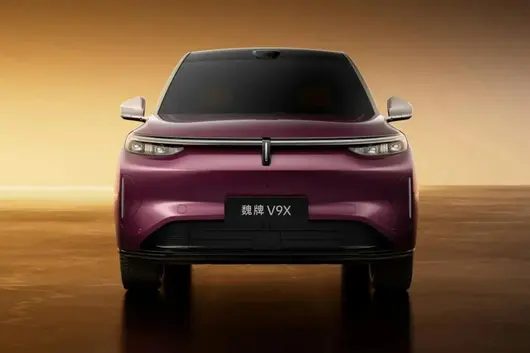
On the product front, May was exactly the intensive landing period for multiple heavy new cars from Great Wall. WEY flagship six-seat SUV "V9X" went on sale on May 18. Relying on the positioning of the first mass-produced model of the Guiyuan S platform, dual VLA large model AI agents, and hard-core configurations such as standard rear-wheel steering + dual-chamber air suspension for the entire series, it bears the task of breaking through the brand upward. Haval Mongoose PLUS went on sale on May 15. With "5-seater + 7-seater" dual layout, Hi4 electric four-wheel drive, and up to 255km CLTC pure electric range, it focuses on the 160,000-200,000 yuan boxy SUV market. These new cars take time from listing to batch delivery. May data has not fully reflected their contribution. True volume increase may have to wait until the second half of the year.
04 Financials and Strategy: Short-term Pain, Long-term Layout
 Beyond sales, Great Wall Motor's Q1 2026 financial data also reflects the pain of the transformation period. Q1 revenue grew year-over-year, but net profit attributable to the parent company was only 945 million yuan, a significant 46.01% drop year-over-year. The company explained that the decline in net profit was mainly affected by exchange rate fluctuations brought by last year's same period exchange gains, which is a non-recurring factor.
More importantly, the long-term layout at the strategic level. In January this year, Great Wall officially released the Guiyuan Vehicle Platform. This platform is compatible with five power forms: fuel, hybrid, plug-in hybrid, pure electric, and hydrogen fuel cell. The parts universality rate is as high as 80%. The unification of this underlying capability will provide systematic advantages for subsequent model cost control and product iteration, which is the core chip for Great Wall to cope with competition in the next five years.
From an industry perspective, the Chinese auto market in May 2026 has clearly presented a structural characteristic of "weak domestic demand, strong exports". Great Wall Motor proved itself occupying a favorable position in this wave of going global with an export share exceeding 50%. In the second half of the year, with the continuous volume increase of overseas markets, the delivery ramp-up of domestic new cars, and the further effort of new energy products, whether Great Wall can achieve a double breakthrough in total volume and structure is worth continued attention.
May's 100,000 unit sales volume is a passing paper, but also a differentiated test paper. Overseas market surpassed domestic for the first time, writing new coordinates in Great Wall's globalization process; WEY and ORA's high growth provided imaginative space for brand upward; Haval and Tank's decline sent a clear signal that competition upgrades must be accelerated.
"If you don't go global, you're out" is becoming a true portrayal of the 2026 Chinese auto market. Great Wall gave its own answer with an export share exceeding half. The highlights to watch next are clear: Whether overseas volume can maintain high growth, whether new energy products can break the "low base" label, and whether the new cars launched intensively in May can rapidly ramp up volume at the terminal. The 2026 elimination round continues, and Great Wall has already prepared an extra moat for itself.

On June 1, Great Wall Motor released sales data for May 2026. New car sales for the month were 100,399 units, a slight decrease of 1.79% compared to the same period last year. However, looking at the cumulative performance from January to May, total sales reached 475,815 units, a 3.64% year-over-year increase. The cumulative growth rate has turned positive, and the core business remains solid.
The domestic passenger car market overall faced pressure in May, with only a few top domestic brands achieving month-over-month growth. In this environment, Great Wall maintaining the monthly sales threshold of 100,000 units was not easy in itself. More noteworthy is that behind this report card lie two entirely different growth curves—the rapid progress of the overseas market and the uneven performance among its sub-brands.
The most milestone change in May sales comes from the overseas business. Data shows Great Wall Motor's export volume reached 50,688 units that month, a sharp 46.75% year-over-year increase. The proportion in total sales broke through 50% at 50.49%. In other words, for every two cars sold by Great Wall, one is driven away by overseas consumers. This marks the first time Great Wall Motor's export share exceeds domestic sales, signifying its globalization strategy has officially upgraded from an "added bonus" to "half the market".
Looking at the entire domestic brand camp, exports are becoming the common growth pole for all top automakers. In May, Chery's export share was as high as 73.39%, while BYD reached 41.89%. Great Wall entered the first tier of exports with a share exceeding 50%. According to the 2026 overseas sales target of 600,000 units set at the beginning of the year, 231,300 units were completed in the first five months, the progress bar pulled to about 38.6%. Considering the second half of the year is usually the peak season for overseas delivery, the pressure to complete the annual target is not great, and there might even be a possibility to increase it.
From the perspective of regional layout, Great Wall's overseas strongholds are concentrated in Eastern Europe, Central Asia, the Middle East, and Southeast Asia. The Thailand factory has achieved localized production and radiates to surrounding areas. The recognition of models such as Tank and Pickup in the Middle East market continues to rise. From "Product Going Global" to "Ecosystem Going Global", Great Wall's globalization story is moving from quantitative change to qualitative change.
02 Brand Differentiation: WEY and ORA Surge, Haval and Tank Under PressureBeneath the total volume of 100,000 units in May, the performance divergence among the five major brands is significant.
WEY sold 8,119 units that month, a 31.78% year-over-year increase. As the high-end representative of Great Wall, WEY gradually opened the high-end market with configuration upgrades on models such as Gaoshan and Lanshan (such as Coffee AI Sound audio, new smart cockpit). ORA even welcomed a highlight moment. May sales were 6,018 units, skyrocketing 206.88% year-over-year. Although the base last year was low, such double-digit growth still indicates that ORA's brand recognition in the pure electric compact car market is accelerating its return.
GWM Pickup continues to play the role of a "stabilizer", selling 13,628 units in May. The Great Wall Cannon series continues to lead the sub-market.
At the other end of the growth spectrum, the two pillar brands Haval and Tank are both under pressure. Haval sold 55,478 units in May, a 3.84% decline year-over-year. Although the volume is still the largest, this downward signal is worth being alert - the compact and mid-size SUV market is experiencing a fierce impact from new energy competitors. Tank brand sold 17,067 units in May, a significant 18.34% drop year-over-year. The demand for the hard-core off-road market has obvious cyclical characteristics. After the explosive growth in the early stage, it has entered a rational correction interval, which belongs to normal fluctuations, but it also reminds Tank to accelerate product iteration and new energy steps.
In addition, Great Wall Motor has previously clearly stated that in 2026 it will focus on terminal channel upgrades, product matrix enrichment, and brand awareness enhancement. From the brand performance in May, the implementation of this strategy has become imperative.
03 New Energy and New Car Rhythm: Accumulating Power for LaunchOn the new energy track, Great Wall Motor sold 30,447 new energy vehicles in May. Horizontal comparison with peers—BYD's single-month new energy has exceeded 350,000 units, Geely broke through 130,000 units, and Chery also passed the 100,000 unit threshold—Great Wall still has considerable catching-up space in the new energy segment. ORA's high growth is gratifying, but the absolute volume is relatively small, and its structural contribution to the entire group is limited.
On the product front, May was exactly the intensive landing period for multiple heavy new cars from Great Wall. WEY flagship six-seat SUV "V9X" went on sale on May 18. Relying on the positioning of the first mass-produced model of the Guiyuan S platform, dual VLA large model AI agents, and hard-core configurations such as standard rear-wheel steering + dual-chamber air suspension for the entire series, it bears the task of breaking through the brand upward. Haval Mongoose PLUS went on sale on May 15. With "5-seater + 7-seater" dual layout, Hi4 electric four-wheel drive, and up to 255km CLTC pure electric range, it focuses on the 160,000-200,000 yuan boxy SUV market. These new cars take time from listing to batch delivery. May data has not fully reflected their contribution. True volume increase may have to wait until the second half of the year.
04 Financials and Strategy: Short-term Pain, Long-term LayoutBeyond sales, Great Wall Motor's Q1 2026 financial data also reflects the pain of the transformation period. Q1 revenue grew year-over-year, but net profit attributable to the parent company was only 945 million yuan, a significant 46.01% drop year-over-year. The company explained that the decline in net profit was mainly affected by exchange rate fluctuations brought by last year's same period exchange gains, which is a non-recurring factor.
More importantly, the long-term layout at the strategic level. In January this year, Great Wall officially released the Guiyuan Vehicle Platform. This platform is compatible with five power forms: fuel, hybrid, plug-in hybrid, pure electric, and hydrogen fuel cell. The parts universality rate is as high as 80%. The unification of this underlying capability will provide systematic advantages for subsequent model cost control and product iteration, which is the core chip for Great Wall to cope with competition in the next five years.
From an industry perspective, the Chinese auto market in May 2026 has clearly presented a structural characteristic of "weak domestic demand, strong exports". Great Wall Motor proved itself occupying a favorable position in this wave of going global with an export share exceeding 50%. In the second half of the year, with the continuous volume increase of overseas markets, the delivery ramp-up of domestic new cars, and the further effort of new energy products, whether Great Wall can achieve a double breakthrough in total volume and structure is worth continued attention.
May's 100,000 unit sales volume is a passing paper, but also a differentiated test paper. Overseas market surpassed domestic for the first time, writing new coordinates in Great Wall's globalization process; WEY and ORA's high growth provided imaginative space for brand upward; Haval and Tank's decline sent a clear signal that competition upgrades must be accelerated.
"If you don't go global, you're out" is becoming a true portrayal of the 2026 Chinese auto market. Great Wall gave its own answer with an export share exceeding half. The highlights to watch next are clear: Whether overseas volume can maintain high growth, whether new energy products can break the "low base" label, and whether the new cars launched intensively in May can rapidly ramp up volume at the terminal. The 2026 elimination round continues, and Great Wall has already prepared an extra moat for itself.


