首頁Structure

搜尋歷史
熱門搜尋
經銷商登入 / 註冊

“Treating experience as knowledge, yet refusing to apply that knowledge to new uses.” This from the Arabian Fables Collection explains the thinking of “walking the old path” and “lying flat” with precision. In the automotive industry, there are still many people holding this mindset so far. In contrast, Changan Automobile is different.

On October 30, Changan Automobile released its third-quarter report. If one only uses an old yardstick to measure, it is easy to miss the real signal of this financial report: Third Quarter revenue was 36.249 billion yuan, a sequential increase of 10.1%; revenue per vehicle was 101,000 yuan, a sequential increase of 5,000 yuan, and a year-over-year increase of 13,000 yuan; overseas sales volume reached 270,000 units, a year-over-year growth of 64.3%, setting a quarterly historical high; in the new energy product structure, the proportion of high-value products is approaching 70%.
The numbers are not loud, but the direction is clear: the quality of growth is shifting gears.
Short-term profit fluctuations are held back by three factors: exchange rate losses, raw material price hikes, and overseas upfront investment, and these three things exactly correspond to three tables being laid out—globalization, supply chain depth, and the transition of technical assets from the investment phase to the commercialization phase. To understand Changan, one needs to move their gaze from the profit line to the structure line.

Changan Tianshu Nav's "50%", which deserves more thought than any sales figure
In the current domestic existing market environment, there are still many people obsessed with sales figures. Perhaps sales figures are a reference to reflect one's own status, but they are certainly not the only parameter for long-term development.
At the 2026 World Intelligent Connected Vehicle Conference in October, Changan set up a Tianshu Nav mass production car experience zone at the venue. Instead of just displaying display cars, they handed the Qiyuan Q06 directly to attendees to drive on real roads. After several international guests and industry experts tried it, one detail was repeatedly mentioned: this one-piece end-to-end intelligent driving system fully self-developed by a central enterprise is already running in the hands of users, it is not a future promise.

Even more indicative of the problem is the terminal data: the selection rate of the Changan Qiyuan Q06 Ultra version is close to 50%. On a mainstream-priced new energy SUV, nearly half of users are willing to pay extra for intelligent driving assistance, and the meaning of this event far exceeds "features are popular". It means technical assets are beginning to be recognized by a real pricing system.
Zhu Huarong, in a keynote speech in Chongqing in October, placed this matter in a larger coordinate: the automobile is shifting from a transportation tool to an "embodied intelligent terminal", since 2026 the penetration rate of domestic leading intelligent driving assistance has reached 34.2%, "when safety shifts from high-end options to basic configurations, the competitive coordinates shift accordingly". The mass production landing and OTA push of Tianshu Nav are the specific scale of this shift on Changan. Once technology crosses from "usable" to "needed", the compound interest of scaled reuse will begin to operate.

Paris and Rayong: Going Global is Being Written Differently
If intelligent technology is saving money for the future, globalization is already generating cash flow for the present. With a growth rate of 64.3% in overseas sales volume in the third quarter, placed against the background of domestic existing market adjustment, it is not an ordinary growth curve, but a structural hedge line.
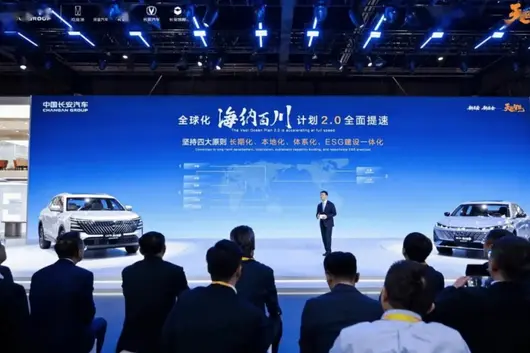
At the Paris International Auto Show in October, Changan displayed the full spectrum of three digital intelligence new energy brands—Changan Qiyuan, Deepal, and Avatr—bringing the Qiyuan brand into Europe. Deepal S05 and S07 have already received European NCAP five-star safety ratings, European users enjoy a 7-year or 160,000-kilometer whole vehicle warranty, and spare parts in major cities are delivered within 1 day. Putting these moves together outlines not "selling cars to overseas", but "moving the system to overseas".

Even earlier foreshadowing was buried in Rayong, Thailand: Changan's first overseas new energy vehicle base Phase 1 has an annual capacity of 100,000 units. After the Deepal S05 and Qiyuan Q05 rolled off the line, they were shipped to 18 Right-Hand Drive countries, 10 core suppliers landed, and over 40 Thai local parts enterprises entered the supply chain circle, with the proportion of local employees already reaching 70%. When Zhu Huarong gave an exclusive interview to China Securities Journal in October, he spoke very directly: "The era of wanting to make a short-term profit and then withdraw has passed, we must truly take root in the local market." The focus he drew for globalization was equally unambiguous—"It is difficult to find a track with greater opportunities than the overseas market at present, Changan's incremental opportunities are overseas".

This explains exactly why overseas business is worth being viewed in a "structure" rather than an "increment" framework. The gross margin of overseas business is close to 20%, about 5 percentage points higher than domestic. When the domestic price war continues to squeeze the profit margin, an overseas business with a higher average price per vehicle and thicker system barriers is the ballast stone to cross the cycle. According to the "1445" strategy plan, the overseas sales volume target for 2030 is 1.5 million units, and the path is written very clearly: from product going global to industry going global, from domestic production to global layout, from independent brands to global brand building.

The path Changan chose is to cover the 100,000 to 700,000 yuan price band with Avatr, Deepal, and Changan Qiyuan brands, to turn intelligent technology from a noun on the configuration list into a verb users are willing to pay for with Tianshu Nav, and to use coordinates like Rayong, Paris, and Brazil to upgrade "going global" from a trade action to an industrial presence. The revenue sequential increase, overseas growth rate, revenue per vehicle, high-value proportion, and intelligent technology selection rate in the third-quarter report are just a few milestones that have just lit up on this road.
From "China Changan" to "World Changan", the gap in between is not a sales figure, but an entire set of structures. Matters of structure going up are always harder and more worth watching than selling a certain number of cars in a month!
#ChanganAutomobile
#CentralStateOwnedEnterpriseSmartMfgSafeReliable
#ChanganAutomobileThreeMajorPlans
Author: Liu Jiangang
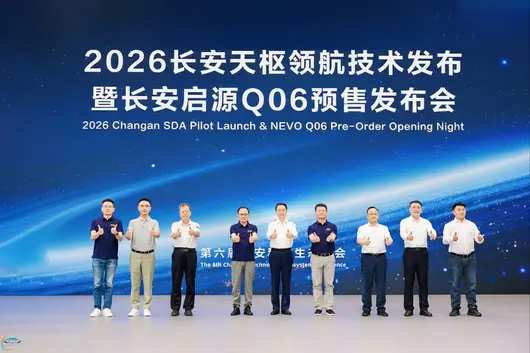

On October 29, Geely released its financial report for the third quarter of 2026.
The report shows that Q3 revenue was 99 billion yuan, up 10% year-over-year (YoY) and up 11% quarter-over-quarter (QoQ); core net profit attributable to the parent company was 5.21 billion yuan, up 32% YoY and up 2% QoQ, hitting a historical high. Within the 5.21 billion yuan core net profit, the core net profit attributable to the parent company per vehicle for the first three quarters was approximately 6,664 yuan, up 37% YoY.

In an era where the profit margin of the entire industry's vehicle manufacturing has fallen to single digits and the profit per vehicle for the vast majority of automakers continues to decline, placing the two figures "10% revenue growth rate" and "37% core profit per vehicle growth rate" side by side is the true message Geely's Q3 report aims to convey — rewriting the cost structure.
To understand this main thread, one must first look at a more basic comparison. In the first three quarters, Geely's total sales volume was 2.235 million vehicles, up 3% YoY; revenue was 272.6 billion yuan, up 13% YoY; core net profit attributable to the parent company was 14.9 billion yuan, up 41% YoY.
The growth rates of sales volume, revenue, and profit increase sequentially, forming a ladder of "Core Profit Growth Rate > Revenue Growth Rate > Sales Volume Growth Rate". This is not only extremely rare in the 2026 automotive market but also forms a sharp contrast with the common situation of peers where "sales volume is maintained by price cuts, revenue is barely held up by sales volume, and profits are squeezed from both ends".
It can be seen that, significantly distinguishing from the traditional habitual understanding of the past, the relationship between Geely's profit margin and sales volume is no longer a simple linear relationship.

The core mechanism behind this is closely related to what Geely mentioned in its Q3 brief as a "Leader in Global AI Intelligent Vehicles". Geely is already using a complete AI vehicle building logic to rewrite the cost structure of traditional automakers, which was "each car model developed independently", into a "one platform, multi-brand reuse" structure.
The basis for this judgment is reflected in the "divergence" of R&D investment in the Q3 report. Total R&D investment for the first three quarters was basically flat YoY, but the R&D investment ratio dropped by 0.7 percentage points to 5.5%.
Investment was not cut, but the expense ratio dropped. This phenomenon is most reasonably explained by the improvement in the reuse rate of R&D results. In practice, Geely's global AI technology system, formed with "1+2+N" as the core, based on the WAM (World Activity Model), has achieved full integration of the intelligent driving domain, cockpit domain, and chassis domain.
After the four major AI architectures modularized the underlying capabilities of the whole vehicle, the cost of flow of technical results between different brands and different models will decrease significantly. When R&D for different brands and different models is no longer "starting from scratch", but rather doing differentiated configurations on a unified "vehicle brain", multi-brands have transformed from a cost burden into a lever for R&D efficiency.
As the absolute value of R&D investment is controlled within a certain range, with the rapid expansion of the number of supported brands, models, and markets, the speed at which the R&D denominator is diluted is faster than the speed of growth of the R&D numerator.
Two other lines on the expense side provide corroborating evidence. Administrative expense ratio decreased 0.1 percentage points YoY to 1.6%, and sales expense ratio decreased 0.1 percentage points YoY to 5.6%. Against the backdrop of high-speed expansion in overseas markets and four brands focusing efforts simultaneously, all three expense lines decreased across the board.
Here, two types of completely different cost improvements must be distinguished. One is optimization "saved" through price suppression in procurement, cutting expenses, and streamlining organizations. Although direct, it decreases with each use, has a clear ceiling, and often comes at the cost of sacrificing long-term capabilities.
The other type is "cost derived from structure", where efficiency improvements brought about by changes will continue to amplify as scale expands — Geely's expense ratio decrease in Q3 obviously belongs to this category.

Zeekr is the most direct footnote to this mechanism. In Q3, Zeekr delivered 110,000 vehicles, with a cumulative 288,000 vehicles for the first three quarters, experiencing double-digit growth YoY and QoQ for 8 consecutive months. The annual target of 300,000 vehicles has been completed by 96%. Single-month delivery in September broke 37,000, doubling YoY growth.
In the severe environment of this year where brands trade volume for price, Zeekr has charted a path of "simultaneous increase in volume, price, and profit". Its significance does not lie in "selling at a high price", but in that it bears the verification cost of the most cutting-edge technology, while the marginal cost of reusing the verification results approaches zero.

One year after the launch of Zeekr 9X, it still achieved over 7,000 monthly sales in the 500,000-level market, ranking first in sales among vehicles over 500,000 yuan domestically from January to September; Zeekr 7X broke 10,000 for three consecutive months, and Zeekr 007GT maintained monthly sales between 7,000 and 10,000. Zeekr has simultaneously succeeded in the routes of high-end pure electric and hybrid, SUV and sedan. This means the verified results are not exclusive to a single model and can be reused between different powertrain forms and different body shapes.
Specifically in the Q3 report, Zeekr's sales volume accounted for 12.9% of total sales volume for the first three quarters, an increase of 6.3 percentage points compared to the same period last year; revenue share reached 31.3%, an increase of 13.6 percentage points compared to last year, with revenue share far higher than sales volume share.
This is in itself the financial confirmation of the R&D reuse mechanism at the brand level. A platform development and architecture extended from a base generates revenue returns on the Zeekr brand far higher than other brands, while R&D costs have not increased proportionally.

The entire mechanism is not established only on Zeekr; overseas business is another clear aspect revealed in the Q3 report.
Q3 overseas export sales volume was 323,000 vehicles, up 189% YoY and up 19% QoQ; first three quarters surged 169% YoY to 798,000 vehicles, of which new energy vehicle exports reached 484,000 vehicles, up 531% YoY. Q3 overseas sales share was about 40%, overseas monthly sales exceeded 100,000 vehicles for four consecutive months, and Geely's overseas export growth rate was first among mainstream automakers in Q3.
"Acceleration" needs to be understood within the 2026 overseas export environment. Geely faces geopolitical game theory at this time, including the EU's extra countervailing tariffs on China's plug-in hybrid vehicles entering the implementation phase, multiple Southeast Asian countries tightening foreign investment factory policies, and a general increase in global trade barriers, etc.

Yet at this time, Geely's "Industry Symbiotic" asset-light model showed its ability to resist pressure. And the impact of this model on the Q3 cost structure has three real transmission chains.
The first is saving fixed costs.
Building factories with heavy assets means high depreciation, long payback periods, and risks of idle capacity. These sink into the cost structure to become long-term burdens. Although this path is widely adopted, Geely did not take it.
The "123456 Strategy" released in mid-August clarified that the core idea is not to build factories independently, but to build a Geely overseas system, creating five major regions: Greater Europe 600,000, ASEAN 500,000, Latin America/Africa 400,000, Eastern Europe 300,000, and Middle East/Central Asia 200,000, using cooperative capacity to replace own capital expenditure.
On the path, Geely cooperated with Ford, Volvo, etc. in Europe, completing a systematic capacity layout around GEA and SEA vehicle architectures; in ASEAN, relied on the Malaysia Proton factory to build an industrial hub; in Latin America, deeply bound Renault resources; in Eastern Europe/Central Asia, entered quickly via OEM KD methods.
First three quarters, Geely put 13 overseas factories into production. While overseas capacity exceeded 840,000 vehicles, this part of rigid expenditure was also converted into variable costs, making the cost structure naturally lighter.
The second is to avoid tariff costs.
EU countervailing tariffs are essentially a fee added to export costs. The common point of a series of actions such as acquiring partial equity in Ford's Spanish factory, Volvo becoming Lynk & Co's exclusive European distributor, and the first local production result of Renault Geely Brazil Company, the Geely EX5 EM-i, going offline, is that Geely is promoting localization from "sales localization" to "manufacturing and channel localization", upgrading tariff avoidance from "borrowing" to "co-construction", further improving the stability of the cost structure.

The third is to amplify the R&D amortization denominator.
The same set of R&D investment, selling 100,000 vehicles domestically and 300,000 vehicles globally, results in completely different amortization costs per vehicle.
Geely has currently created "4 sets of 3" global best-seller cars. China Star uses Coolray, Emgrand, Boyue to stabilize the fuel base; Galaxy uses Xingyuan, Galaxy E5, Starship 7 to form global volume synergy; Lynk & Co uses 08, 02, and 900 to drive; Zeekr focuses on 7X, 8X, 9X. The R&D investment for every global model is continuously diluted on top of the Q3 export volume of 323,000 vehicles.
Connecting the three chains together, one will also find the tightness of Geely's asset-light model in internal collaboration.
The reason why this model can have such a big impact on the cost structure is that the prerequisite is still that the R&D side has achieved cross-brand, cross-market reuse. If a new adaptation plan needs to be developed every time entering an overseas market, the fixed costs saved by the asset-light model will soon be eaten up by adaptation costs.
Regarding high pricing ability in overseas markets, Zeekr 9X has already begun sales in developed European countries such as Germany, France, and Sweden, with a starting price nearing 1 million; Zeekr brand export sales volume in August and September both broke 15,000 vehicles, with exports contributing over 40% to the monthly sales for those months, firmly ranking first among Chinese high-end brand exports.
What these reflect is not the optimization of the cost structure, but the confirmation of revenue quality. The cost side makes the denominator smaller, the revenue side makes the numerator larger, and the two jointly support the increase in profit per vehicle.

Of course, Geely's AI vehicle building rewriting of the cost curve is currently still mainly concentrated on the decrease in R&D expense ratio and reduction in vehicle amortization, and has not yet significantly become an independent variable on the Q3 income statement. However, the scaled supply of AI to consumer experience is currently happening and generating positive impact.
The progress of i-HEV Intelligent Engine Hybrid can be concretized as another facet of this logic. This technology, through an architecture of "Electric Drive Dominated, Oil-Electric Synergy", achieves over 80% electric drive, with actual fuel consumption of 2.22L/100km, more than 12% lower than the Japanese hybrid benchmark.
Currently, the China Star fuel series is comprehensively popularizing i-HEV. As of September, cumulative sales reached nearly 60,000 vehicles, occupying over 40% of Chinese brand HEV vehicle sales. Its cost significance lies in that, even if the fuel vehicle overall market declined severely, China Star still sold 293,000 vehicles in Q3, and with the sales performance of 874,000 vehicles in the first three quarters, it firmly ranked first in fuel vehicle sales. Obviously, this base is not sustained by price cuts, but by technological upgrades.

At the end of September, Geely released Megawatt-level Intelligent Charging technology, with a single gun power reaching 2.2 MW; 800V high-voltage platform has covered the 120,000 to 300,000 yuan mainstream price range, with main models such as Galaxy TT and the new Lynk & Co 20 already equipped; in terms of charging infrastructure, an "Person, Vehicle, Pile, Cloud, Network, Storage" AI charging network was built, achieving strategic cooperation with NIO, and carrying out open sharing and industrial synergy in the charging and battery swapping fields.
As of early October, Qianli Haohan accumulated 1.073 million users, cumulative mileage reached 3.14 billion kilometers, activation rate reached as high as 93.9%, accumulated avoidance over 12.18 million times; Flyme Auto accumulated installations in the first three quarters exceeded 1.326 million vehicles, global users exceeded 3.59 million. In Q4, Qianli Haohan G-ASD will undergo a comprehensive upgrade, supporting city roaming NOA, end-to-end AEB, and natural voice vehicle control.
Qianli Haohan's 1.073 million users, Flyme Auto's 3.59 million global users, 800V covering mainstream price ranges, Megawatt intelligent charging and NIO's charging synergy, these are all counted as infrastructure and user entry points for scaled implementation of AI capabilities, and also determine that AI is transforming from "indirect contribution on the cost side" to "attributable contribution on the revenue side".
Rewriting the cost structure also requires a business prerequisite: multi-brands must not step on each other. If the four brands consume each other within the same price range, the efficiency of R&D reuse will be offset by internal competition, and the scale advantage of asset-light overseas expansion will also be eaten up by channel duplicate construction.

Data from the Q3 report shows that this prerequisite is already in place. Galaxy has seen consecutive QoQ growth since August, with double-digit YoY and QoQ growth in September, exceeding 130,000 in a single month. Galaxy E5 broke 10,000 monthly sales for four consecutive months; Galaxy Starship 7 increased continuously to break 22,000 in September; Xingyuan reached 1 million vehicles produced within two years of launch, breaking the global speed record for single model million-vehicle production.

Lynk & Co has stabilized QoQ growth since August, with September sales volume exceeding 18,000 vehicles, new energy ratio exceeding 90%, and new energy ratio in the first three quarters exceeding 70%. China Star September sales volume broke 100,000 vehicles, with double-digit YoY and QoQ growth. Zeekr September deliveries broke 37,000 vehicles, doubling YoY.
The fact that the four brands achieved simultaneous YoY/QoQ improvement in Q3 is no coincidence.
Corresponding to the move to set up a sales headquarters in early August to integrate marketing resources of its brands, and facts such as Galaxy TT achieving delivery of over 10,000 vehicles within 30 days of launch, Galaxy Warship 700 achieving over 10,000 orders within 12 minutes of launch, with high-spec version accounting for 90%; Lynk & Co 07 GT achieving delivery of over 10,000 vehicles within two months of launch, and the new Lynk & Co 20 achieving over 14,600 orders within 1 hour of launch.
It can be found that Geely's integration at the organizational level allowed the four brands to avoid internal consumption during the most intense period of the price war, concentrating resources on their respective favored price ranges and market segments.

A deeper organizational change than setting up a sales headquarters occurred in mid-August. An Conghui succeeded Li Shufu as Chairman of the Board of Geely Automobile. This company has formally moved from the "founder-driven" startup and development phase to the "system and team-driven" mature phase.
How to transition from founder governance to system governance is a question all successful enterprises must answer. The founder's strong judgment is an irreplaceable asset in the early stage of the enterprise, but the larger the enterprise scale, the more complex the business, and the more globalized the market, the lower the marginal return of personal judgment, and the higher the marginal value of system and team decisions. Geely chose to complete this transition at this point, essentially a confirmation of its own development stage: it is already too big to operate relying on just one person's judgment.
Li Shufu's "resignation" is not an exit, but a role transition. He withdrew from the position of "enterprise operator" and instead became a "system designer" and "value guardian". The significance of this transition for Geely is indirectly but clearly projected in the financial data of the Q3 report.
A company operated personally by the founder often relies on personal judgment and ad-hoc decisions for cost optimization; efficiency is high but not reproducible; a company driven by systems and teams has cost optimization as an endogenous result of processes and mechanisms; it is slower but sustainable. Geely's Q3 expense ratio declining across the board, R&D reuse rate increasing, and four-brand collaboration improvement are not results that one person's decision can bring at once, but products of a mechanism operating continuously.

The relationship between this matter and the cost structure is not direct, but it is fundamental enough. Rewriting the cost structure requires long-term investment, and long-term investment fears uncertainty at the governance level most. When a company's strategic direction no longer sways with personnel changes, mechanisms like R&D reuse, platform modularization, and asset-light overseas expansion that take three to five years to take effect are only then possible to be executed stably.
Looking at Geely's Q3 report value from this angle again, it does not lie in proving that Geely can still grow, but in proving that Geely's cost structure no longer relies on revenue growth rate.
Functions can be chased, but the mechanism of cost structure cannot. This is the earliest and hardest-to-copy layer of evidence that "Global Leader in AI Intelligent Vehicles" has in finance.
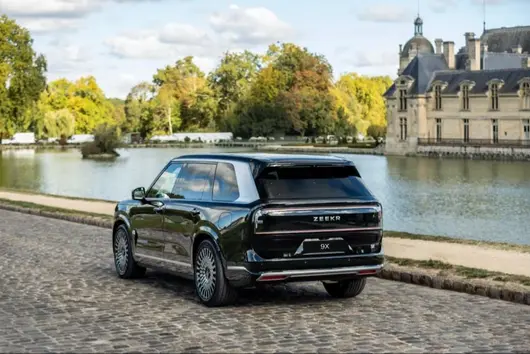

Recently, market research institution "Gewu Zhisheng" released "2026 China Semi-Steel Tire Market Research". The report shows that sales of semi-steel tires in China reached a historical peak of 686 million in 2025, but will decline slightly afterwards — the industry has officially shifted from "Incremental Expansion" to "Stock Adjustment" phase.
Market Enters Stock Competition
2025 became the year of total volume peak for China's semi-steel tire market. According to Gewu Zhisheng calculations, total sales of semi-steel tires nationwide were about 686 million that year, with 344 million domestic and 342 million exported, with domestic and export sales almost equal. However, the market will decline slightly afterwards, and the industry has officially entered the stage of stock-based structural competition.
There are two clear clues behind this judgment.
First is Export Peak Reached. Export volume of 342 million in 2025 has hit the capacity ceiling, the agency predicts continuous decline in 2026 and 2027, due to continued increase in trade barriers (anti-dumping, tariffs, regional compliance regulations) from developed economies, combined with accelerated construction of overseas local production capacity, the model relying solely on low prices and volume is unsustainable.

Second is Domestic Sales Relay. Domestic semi-steel tire sales grew from 257 million in 2020 to 344 million in 2025, expected to further rise to 360 million and 370 million in 2026-2027. Domestic sales growth rate is better than the industry average, core driver comes from new energy vehicle manufacturers' original equipment volume expansion.
Growth logic has shifted from "Total Capacity Expansion" to "Product Structure Upgrade". Whoever can increase large size, low rolling resistance, new energy specific tires, is the one who can capture the incremental growth of the next stage.
Cost Side Continues to Face Pressure, Price Hike Transmission Severely Lagging
In the first half of 2026, semi-steel tire core raw material prices generally rose, enterprise production costs rose significantly, and the industry collectively released price hike letters.

Upstream raw material comprehensive costs rose 12%-16% year-on-year. Mainstream 18-inch household passenger car semi-steel tire single piece production cost increased by 30-45 RMB, 20-inch and above high-end tires increased by more than 50 RMB.
But the key to the problem is poor transmission. The lag period for factory price hike transmission to terminals reaches 2-3 months, terminal retail prices only absorb 40%-60% of the factory price increase. Dealer and store profits are severely compressed, combined with weak consumption, replacement market demand continues to face pressure.

Polarization intensifies accordingly: Head enterprises rely on long-term agreements to lock prices, overseas bases for nearby procurement, can hedge 40%-60% of raw material volatility risk; small and medium manufacturers have no scale price-locking advantage, gross margin fell below 12%, losses, active production reduction phenomenon occurs frequently.
China's tire industry average capacity utilization rate fell 5-8 percentage points year-on-year, expected 2026 passenger car tire industry concentration increased, tail end inefficient capacity accelerated clearance.
New Energy Reshapes Supply Market
Explosive growth of new energy passenger cars is reshaping the semi-steel tire supply pattern.
2020 new energy passenger car production was only 1.25 million, penetration rate 6%; 2025 has climbed to 16.63 million, penetration rate 48%, six-year cumulative increase over 12 times. Fuel passenger car production share dropped from nearly 94% to 52%.

Semi-steel tire supply market grew from 100.89 million in 2020 to 158 million in 2025, 2023 year-on-year large increase of 17.6% was the stage peak.
But as domestic passenger car stock peaks, new car incremental growth gradually narrows, 2025-2026 supply growth rate expected to be only 1.3%, 2026-2027 small rebound to 3.1%, overall entering low-speed steady growth stage.
Domestic Capital Leads Completely, Foreign Capital Share Continues to Face Pressure
In 2025, semi-steel tire domestic sales market presented a clear "Domestic Capital Dominated" pattern.
Zhongce and Linglong rank as dual leaders, share each reaching 11.1%. Top 5 Domestic Brand Combined Share Accounts for 56%, relying on supply + replacement dual channel advantages to solidify core market.

Top 11-14 Mid-Range Echelon Completely Monopolized by Foreign Capital, deeply cultivating mid-to-high end supply resources; Top 15 and Later Tail Market Domestic Share Reaches 94.1%, relying on cost-performance to cover low-end replacement demand.
Growth rate comparison better explains the problem: Sailun +20.4%, Giti +14.8%, Zhongce +14.5%, Maxxis +15.6%, domestic head brand growth rates generally bright; foreign capital aspect, Hankook -2.4%, Goodyear -3.6%, Dunlop -13.0%, most appear to decline.

Foreign Brands Pricing Too High, Downward Channels Weak, anti-cycle ability significantly weaker than domestic. This trend is particularly significant in replacement market — foreign brands' market share in mid-price segment is being rapidly eroded by domestic brands.
Capacity Overseas Expansion Becomes Must-Have Option
Domestic capacity shows strong regional cluster characteristics, Shandong province accounts for 45% of semi-steel tire capacity, Zhejiang 16%, Jiangsu 7%, Liaoning 5%, Guizhou 5%. Coastal areas port supply is perfect, adapted for large quantity export logistics demand.

But with Shandong environmental protection becoming stricter, outdated capacity clearance, capacity is slowly shifting to Anhui, Zhejiang, Jiangsu and other places.
The more core change is going overseas. Head enterprises overseas capacity planning is clear:
Sailun Overseas Planned Total Capacity 49 Million Tires is Highest in Industry, overseas bases spread across Vietnam, Cambodia, Mexico, Indonesia, Egypt, core direction is avoiding trade barriers. Zhongce 2025 Overseas Sales 41.65 Million Tires Has Surpassed Domestic for First Time (share 52%), global strategy results are significant.

Policy Threshold Systematically Raised, Industry Accelerated Clearance
Short term (2025-2026), mandatory national standards concentrated landing. GB 9743-2024 "Passenger Car Tires" For the first time included smart tire technical specifications, rolling resistance and wet grip clauses enforced mandatory from May 2026; GB 29449-2024 divides semi-steel tire energy consumption into three levels (benchmark ≤255, access ≤290, baseline ≤430 kgce/t). Non-compliant capacity will be directly withdrawn.

Long term (2027 and onwards), energy consumption, carbon emissions, waste tire recycling full-chain standard system complete upgrade, High energy consumption, low technology small and medium enterprise survival space continuously compressed, industry concentration steadily rising.
At the same time, Shandong tire projects no longer managed as "High Energy and High Emission" projects, high-quality compliant capacity approval accelerates; "State Council Regulations on Foreign Investment" (Order No. 837, implemented July 2026) provides institutional guarantee for capacity overseas expansion.
The effect of the policy combination fist is: Backward capacity accelerated clearance, head enterprises obtained larger market share space.
Conclusion: China's semi-steel tire industry is in a subtle turning point. Total volume peak means the end of the extensive expansion era, but structural opportunities are still abundant: new energy supply, large size high-endization, overseas market expansion, stock replacement demand, four main lines concurrent.
The direction of industry concentration increase is certain. Uncertain is only the position and speed of each enterprise in this structural adjustment.

In 2026, domestic passenger cars may say goodbye to the high-growth era, officially entering an adjustment phase characterized by deep competition in the stock market and dual pressure from supply and demand. Slowing growth and profit contraction are stage challenges faced by the entire industry. Latest data from CPCA shows that in June, domestic passenger car retail sales reached 1.602 million units, down 23.2% year-on-year; cumulative retail sales from January to June were 8.701 million units, down 20.2% year-on-year. The entire product category market weakened synchronously, fuel vehicle retail sales plummeted 39% year-on-year. Domestic sales of joint ventures, luxury, and independent brands generally faced pressure. Most automakers saw varying degrees of decline in domestic terminal sales. Increasing revenue without increasing profit has become the industry norm.
Looking at the market performance from the first half of 2026, the automotive industry shows typical cycle adjustment characteristics. Whether traditional independent, leading new forces, or mainstream joint venture brands, all face varying degrees of operational pressure.

Seres Zhang Xinghai revealed at the Chongqing Auto Forum that the price of storage chips rose by more than 400%, and lithium carbonate prices doubled year-on-year. The unit cost for all AITO models under the brand increased by 15,000-20,000 yuan. Cost pressure directly led to the company's H1 performance forecasted loss of 1.05 billion to 1.3 billion yuan. Chips and battery materials are the core sources of cost increases. Voyah Lu Fang publicly stated that chip cost increases for high-end smart models broke through 300% at most. Basic consumables such as copper, aluminum, and plastics rose in price synchronously. The added cost per smart vehicle exceeded 12,000 yuan. The industry generally faces a dilemma of 'rising costs, dare not raise prices'.

Terminal market demand is weak, price wars are fierce. Automakers dare not easily increase selling prices. Upstream raw materials and chip costs rose rigidly. Profit margins are squeezed from both sides. This round of industry downturn is industrial periodical pain formed by the superposition of multiple pressures: weak consumption, skyrocketing upstream costs, overcapacity, and normalization of price wars.
This round of adjustment is a necessary stage of industry development. Short-term pressure will force the industry to eliminate inefficient capacity and homogeneous products, accelerating high-quality enterprises to complete value upgrades. Facing a unified cycle dilemma, domestic leading automakers have escaped the mindset of passively responding to price wars. They have formed systematic, long-term breakthrough strategies, focusing on four core main lines: Opening a second growth curve through global overseas expansion to offset domestic stock bottlenecks; Escaping homogeneous price involution through differentiated new product matrices; Building long-term barriers with full-stack technology self-research to stabilize cost advantages; Achieving cost reduction and efficiency gains through channel model iteration, digging deep into user value.

In sharp contrast to the domestic market downturn, automotive exports have become the core engine for industry growth against the trend. CAAM data shows that in June, domestic automotive vehicle exports reached 1.037 million units, up 11.6% month-on-month and surged 75.1% year-on-year. Monthly export volume exceeded one million units for the first time. Cumulative exports in the first half reached 5.096 million units, up 65.3% year-on-year. Among them, new energy exports grew by more than 120%. Overseas markets effectively offset domestic demand gaps, forming a new industry pattern of 'domestic pressure, overseas volume'.
Opening a second growth curve through global overseas expansion to offset domestic stock bottlenecks:
Chery maintains its position in the first tier of independent overseas exports. Cumulative exports in the first half reached 943,800 units, up 71.5% year-on-year. Exports accounted for nearly 70% of total sales. Relying on local factories in Southeast Asia and South Africa, it digs deep into emerging mass markets, effectively offsetting the pressure of domestic market involution. BYD exported 789,000 units in the first half, up 70.5% year-on-year. Overseas sales accounted for 43.6% of the group's total sales. Relying on localized capacity in Hungary and Thailand to layout European and Southeast Asian markets, it aims to achieve balanced domestic and overseas sales development, effectively offsetting domestic price war profit pressure, and relying on scaled industrial output to establish global cost and channel advantages. Changan Automobile delivered 402,000 units overseas in the first half, up 35.1% year-on-year. Relying on the 'Hai Na Bai Chuan 2.0' strategy to dig deep into emerging markets, Thai and Brazilian local factories continue to go into production. Building overseas localized operation teams and after-sales systems, focusing on exporting hybrid and smart models, using highly adaptable products to seize incremental markets in Southeast Asia and South America. Overseas sales continue to grow steadily, becoming a stable second growth curve;

Escaping homogeneous price involution through differentiated new product matrices:
In a cycle environment of severe overcapacity and product homogenization, automakers generally abandoned 'full-line low-price involution', turning to multi-brand layering, precise positioning in niche tracks, and product strategies where new and old technologies run in parallel, improving overall profit quality through structural optimization.
BYD insists on full price range coverage. Relying on the Dynasty, Ocean, Denza, Yangwang matrix, it covers household mainstream, mid-to-high-end, ultra-luxury markets. Fuel, hybrid, and pure electric are fully iterated. Solidifying the basic board with an extreme product matrix, it increases the proportion of high-margin products through vehicle structure upgrades. Changan Automobile builds a five-brand collaborative system. Qiyuan focuses on affordable hybrid home markets. Deep Blue focuses on mainstream pure electric. Avatr positions itself in high-end smart pure electric. Changan Passenger Cars stabilizes the fuel basic board. Kaiceng digs deep into commercial markets. Full price range differentiated layout, avoiding internal involution, precisely matching different segmented user demands. Geely relies on Thor Hybrid and Galaxy Pure Electric dual product lines, focusing on high cost-performance home new energy markets. Continuously iterating energy-saving hybrid models, seizing fuel vehicle replacement space. At the same time breaking through upwards with Lynk & Co luxury, optimizing overall product structure.

Building long-term barriers with full-stack technology self-research to stabilize cost advantages:
Second half of industry cycle, short-term competing on cost, mid-term competing on products, long-term competing on technology. Leading automakers continue to increase investment in core technology self-research, achieving autonomy and controllability in three-electric systems, smart driving, chips, and hybrid platforms. Offsetting cost volatility from the root and building differentiated competitiveness.
BYD insists on full industrial chain self-research and self-production. Second-generation Blade Battery, high-voltage flash charging technology fully iterated, achieving fuel and electric same-speed refueling experience. Relying on vertical integrated supply chain advantages, it stabilizes cost advantage during raw material fluctuation cycles, forming unreplicable industrial barriers. Xpeng focuses on full-stack smart driving self-research. Continuously optimizing urban NGP, full-domain intelligent assist driving system. Using smart technology as core label, building differentiated product competitiveness, escaping specification involution. Li Auto focuses on vehicle-mounted large models, self-researched computing power chips. Focusing on smart cockpit and whole vehicle smart interaction upgrades. Relying on high computing power hardware and localized smart ecosystem, building high-end smart experience barriers, supporting brand premium. Changan Automobile continues high R&D investment. Digging deep into three core technologies: Blue Whale Super Engine Hybrid, self-researched Tianshu Smart, Golden Bell Shield Solid-state Battery, achieving autonomy and controllability in hybrid, smart, and battery technologies. Both supporting domestic product differentiated upgrades, also providing core technology endorsement for overseas models.

Comprehensive mainstream automaker cycle response actions show that the current domestic automotive industry is experiencing a round of deep adjustment. This is a natural periodic correction after years of scaled expansion. Narrowed profit space and slowed market sales growth are stage problems faced by the entire industry. This does not mean the development momentum of leading automakers has stalled. Need to view the industry status objectively with a long-term industrial perspective.
Through short-term market pain, the automotive industry's three long-term upward development trends remain stable and unchanging. First, electrification and intelligence transformation are already irreversible core main lines of the industry. New energy and smart cars will continue to replace traditional fuel vehicles, reshaping market patterns. Secondly, the trend of Chinese car exports is strong. Overseas market share steadily climbing. Globalization development dividends are still being released continuously. Finally, industry reshuffling accelerates. Market resources are concentrating on leading enterprises with complete overseas layouts, core self-research technologies, and multi-brand differentiated product matrices. Advantaged automakers will continue to seize the market at the bottom of the cycle.
Leading automakers represented by BYD, Geely, Changan did not passively respond to short-term market pressure. Instead, treated this round of cycle as a key window for strategic power accumulation. Synchronously increasing global layout, new product launch, and underlying core technology R&D. Solidifying long-term competition foundations. Price competition and profit pressure are just inevitable pains of industry survival of the fittest. High-quality automakers with global strategies, full-stack self-research technologies, and layered differentiated product systems possess strong risk resistance capabilities. They are able to safely traverse the industry downturn cycle, welcome greater development opportunities in the next round of industry upswing.