首頁Starlight 730

搜尋歷史
熱門搜尋
經銷商登入 / 註冊

Wuling is experiencing a strange misalignment in Southeast Asia.
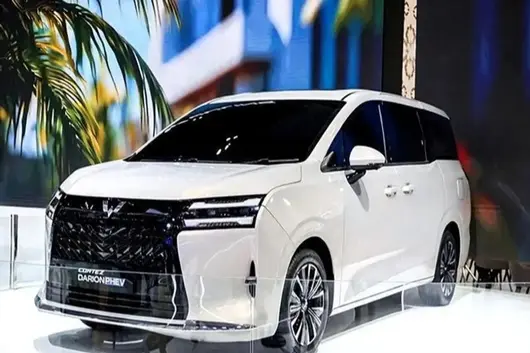
The micro EV nicknamed 'Diced Pepper Fish Head' domestically has a rather limited presence in the Chinese market. However, in Indonesia, it is the 'national miracle car' that has entered thousands of homes. Meanwhile, in Thailand, the Wuling Starlight 730 MPV quietly took the sales crown, even local officials started riding it for outings.
However, just as Wuling started to taste the sweetness, a bucket of cold water from Southeast Asia was already ready.
'Diced Pepper Fish Head' Finds Second Spring in Southeast Asia
Wuling Air EV, called Clear Sky domestically, sold only about 50 units in China throughout 2025, basically equivalent to 'non-existent'.
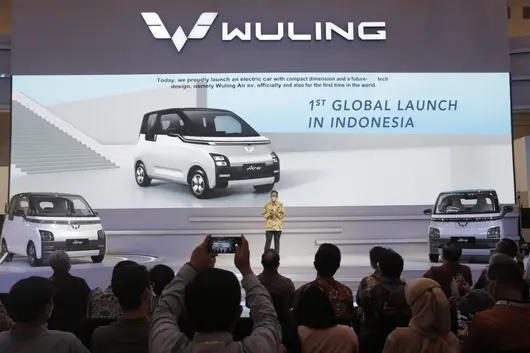
But in Indonesia, this is the true 'national miracle car'.
In 2022, Air EV entered the Indonesian market, selling over 8,000 units that year, capturing 68.7% of Indonesia's annual EV market share.

By 2025, Air EV was still the number one in Indonesia's urban micro EV sub-market, with annual sales nearing 3,900 units, far leaving VinFast VF3 and Seres E1 behind. From entering Indonesia in 2022 to 2025, Air EV cumulatively wholesale about 22,000 units.
A micro EV that almost no one wanted in China has become the 'national EV' in Indonesia. The reason is simple: cheap. Except for Indonesia, in Southeast Asian countries like Vietnam and Thailand, the price of micro EVs is becoming increasingly 'very low price'. Buying a four-wheeled electric car that can shelter from wind and rain costs about the same as buying a high-end scooter.
For cities like Jakarta, Bangkok, and Hanoi with high population density and traffic congestion, micro EVs are naturally a better option.
MPV Tops Sales, Even Thai Officials Love to Ride It?
If Air EV is 'so cheap it's irresistible', then the rise of Starlight 730 in Thailand follows a different logic.
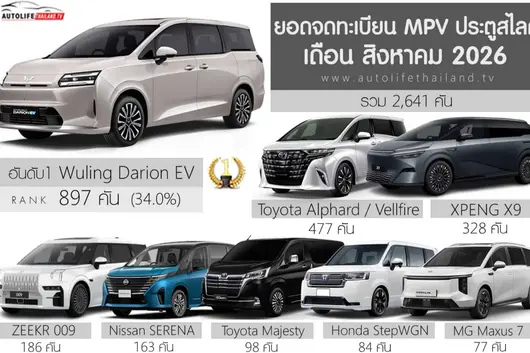
In August 2026, Wuling Starlight 730 sold 897 units in a single month, taking the Thailand MPV sales crown.

In Thailand, Starlight 730 is renamed Darion EV, focusing on pure electric models, competing with Toyota Alphard and other gasoline vehicles in a different segment.
Darion EV mainly targets business reception scenarios, especially enterprises and institutions that need dignified reception but don't want to spend too much money. In Thailand, MPVs are the main model for business and official travel. With the combination of pure electric + large space + side sliding doors, Starlight 730 entered the MPV market long dominated by Japanese cars.
Southeast Asia Suppresses Chinese Cars, Wuling's Cheap Cars May Bear the Brunt First
However, tall trees catch the wind; Southeast Asia has already started hitting Chinese cars hard.
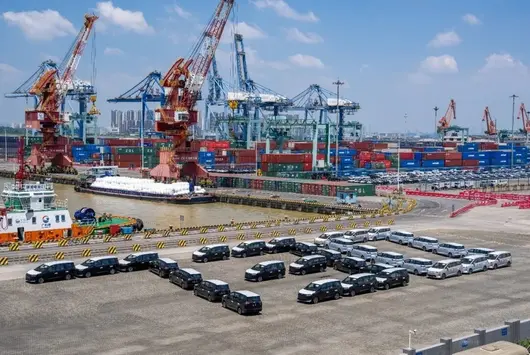
Thailand is tightening tax policies on Chinese EVs. On September 10, the Thailand National Electric Vehicle Policy Committee agreed in principle to introduce a three-tier consumption tax rate structure, where the consumption tax for purely imported models increased from 10% to 31%-39%.
To put it plainly, whoever builds in Thailand enjoys low tax rates; whoever only imports complete vehicles from China has to pay heavy taxes.
For Chinese brands like BYD, Great Wall, and Changan that have already built factories in Thailand, this hurdle might be passed. But for Wuling, the situation is completely different.

Wuling's main products in Thailand are exactly those high-volume models launched in import form. The Starlight 730 took the sales crown in Thailand, relying on pure electric + large space + relatively affordable prices. If the consumption tax on imported complete vehicles is significantly raised, this price advantage will be directly eaten up.
More importantly, Wuling's core competitiveness is 'extreme cost-performance'. People who buy Wuling are very sensitive to prices. Fluctuations of a few thousand baht could change decisions, let alone increases of tens of thousands of baht.
Thailand is not the only tightening market. Although Wuling has already set up a factory in Indonesia, localization requirements are also continuously increasing. Malaysia and Vietnam are also raising the threshold for imported EVs. Southeast Asian countries are shifting from 'welcome Chinese cars to sell' to 'require Chinese car companies to build'.

The explosion in sales of Wuling's 'Diced Pepper Fish Head' and the MPV sales crown in Southeast Asia are real tangible achievements. But Thailand's new tax policy reminds us of one thing: In Southeast Asia, the window period of selling cars without building factories is closing.
For Wuling, whose core competitiveness is 'cheap', this problem is particularly difficult to solve. Building a factory in Thailand means higher fixed costs and a longer return cycle; not building a factory, price advantages will be quickly eaten up by taxes.
It can be said that what Wuling does next in Thailand will be a key sample for Chinese car companies in Southeast Asia shifting from 'selling cars' to 'taking root'.

The road for Chinese new energy vehicles going global is not as smooth as imagined. Competition in overseas markets is also not as easy as imagined.
For overseas consumers, local products and Japanese products still have irreplaceable appeal.
Except Starlight 730.

While achieving 10 consecutive months of sales champion in the 150,000 RMB MPV category domestically, Starlight 730 also beat Japanese MPVs in the Thailand market, securing the sales champion title for all MPV categories in Thailand in August.
Why can an MPV originating from China break the monopoly of local Japanese MPVs and win the favor of high-net-worth users in Thailand?
In the Japanese MPV Home Ground, Overturning, What Is the Reason?
The Southeast Asian market has always been a major destination for Chinese automobiles going global, with Thailand being the most critical. However, in this vast market with high acceptance of new energy vehicles, Japanese brands have always dominated the MPV category.
Complete production supply chains, long-established car purchasing concepts, and various combined factors make local families and enterprises tend to prioritize Japanese MPVs when purchasing.
However, precisely under this market background, Starlight 730 from SAIC-GM-Wuling "surpasses from behind", taking the first sales place for all categories of MPVs in Thailand in August.

Starlight 730 reaching the top was not only about making the product well, but also a comprehensive breakthrough from production supply to consumption habits. The gold content of this achievement goes without saying.
More noteworthy is that Starlight 730 did not just rely on outstanding product strength to achieve hot sales among family user groups. Government and enterprise procurement, high-end hotel cooperation orders, also occupy a very key proportion in Starlight 730's sales composition.
Unlike family users who value product configuration and price more, government and enterprise as well as high-end hotels often rank product reputation and recognition as the first priority when purchasing. Because in commercial occasions, the product's tag attribute is the primary attribute.
And Starlight 730 receiving dual recognition from private and commercial markets, being accepted by different circles of users in Thailand, means Starlight 730 is not only relying on high quality-price ratio, but also achieving a surpass of Japanese MPVs represented by Toyota Alphard in brand power and social attributes.

This is not one voice or a corner, direct data can corroborate.
According to the survey of owners targeting the Thailand local market, Starlight 730's purchasing group is mainly the backbone of society. Specifically manifested, users aged 30-50 account for 76%, this age group has passed the stage of valuing vehicle freshness, paying more attention to a car's social value and long-term experience.
Additionally, in Starlight 730 users' career distribution, business personnel, company employees, and civil servants合计 account for 87%, among them business personnel account for 38%. 63% of owners convert monthly income above 10,000 Yuan, 25% of owners monthly income exceeds 20,000 Yuan, belonging to the high-net-worth circle of Thailand locals.

More noteworthy is that among Starlight 730's Thailand users, 47% of owners directly chose full payment. The reason behind this is not that Thailand users have sufficient budget and no money problem, but rather they have given full confidence to Starlight 730 and SAIC-GM-Wuling brand.
Why did Starlight 730 gain recognition from the Thailand high-net-worth group? Why can Starlight 730 receive consistent appreciation from commercial and home consumer groups at the same time?
We still answer with direct and objective numbers.
Taking home use as an example, in Starlight 730's family user group, 91% of owners' family population is 3 people or more, the proportion of large family user groups with more than 5 people is nearly 40%.

Multi-person families focus most on riding comfort and overall vehicle safety. Starlight 730 with electric sliding doors, 7-seat layout, and long range and large space, has perfectly aligned with family users' travel needs.
To gain recognition from Thailand local consumers, to achieve surpass in a market with 80% market share of Japanese MPVs, the most essential reason is Starlight 730 precisely met consumer needs, and achieved higher satisfaction than Japanese MPVs on this basis.
When merchants, doctors, civil servants and other high-net-worth groups choose Starlight 730, they have already jumped out of the fixed concept of "Only Japanese Brand Theory" because of Starlight 730's solid product strength and stable product reputation brought strength.
What they pay for is not a brand's logo and nationality, nor brand premium, but the value of the product itself behind the brand.
Starlight 730, has such high value.

The Right Product, The Right Model, Can Only Have Successful Going Global
In the process of going global, a point easily misunderstood is that product demand in different markets is vastly different. Another point easily overlooked is that the underlying demand of global families for vehicles is actually highly consistent.
For example MPV, whether China or Thailand consumers, the most underlying demand is spacious space, comfortable experience, and anxiety-free car use. Even commercial groups, increase high demand for social attributes on this basis.
Therefore when building an MPV, Starlight 730 did not isolate user groups by nationality, but to observe, understand and present the universal demand of global consumers for an excellent MPV.

For example dual side sliding doors standard on the whole series, on the basis of providing 9 control methods, also equipped with intelligent anti-pinch function, handle set at B-pillar. For family users, a series of details humanized design can facilitate elderly and children getting on and off. For commercial users, this series can make passengers get on and off more calmly and decently, letting users feel respected in details.
Taking power form as an example, Starlight 730 is based on the same-level leading "Tian-Ling-Shen" Wuling Native New Energy Technology Base, native adaptive plug-in hybrid PHEV, pure electric EV, fuel three power forms, bringing same-level unique "One Car Three Powers", giving choice power to users.

Including 2+2+3 true seven-seat layout, pure electric version 500km range (under CLTC conditions), these configuration performances show spacious, worry-free experience that MPV users of different professions, different purposes, different nationalities need and want.
In the past, before Starlight 730 appeared, for Thailand MPV users it was not not getting satisfied. It was only Japanese MPVs could give a passable satisfaction, and was under the premise of high prices, needing price add-ons, and money add-ons for options. Consumers did not turn to Japanese MPVs completely voluntarily, but helplessly had to choose Japanese MPVs with higher cost.
Until Starlight 730's appearance, their underlying demand was seen by brand's preliminary market research.
Worthy of other brands wanting successful going global to learn from is, Starlight 730 since development start, relied on SAIC-GM-Wuling smart island manufacturing system, completed vehicle manufacturing with international standards. The result brought by this way is, whether domestic or overseas markets, users get good products that are not compromised and treated differently.
Also this is why, Starlight 730 can grab the title "Double Champion".

When a brand is building a global product, with the world's highest standards self-requirement, then such product regardless placed in any regional market, will not be obscured.
Not making distinction, but achieving highest standard, "Uniform standard for all cars". In this way, Starlight 730's reputation will be accurate everywhere.
This also reminds other brands, in the new stage of Chinese automobile going global, solely relying on low prices has become hard to enter mature markets. Universal and hardcore product power, deep localized operation, stable and reliable quality, is the correct key to open global markets.
Final Words
Domestic market consecutive 10 months take 150,000 within MPV sales first, Thailand August all categories MPV sales first. Bright "Double Champion" title, behind is new energy largest market, most frontier position strength recognition, and overseas mature market's test and appreciation of this global car product power.
When global consumers are becoming more rational, not blindly worshipping brand premium halo, when global consumers are requiring higher and higher, not stopping at "Have to" and "Good Enough", when global new energy vehicle industry goes to maturity, after waves washing sand, what remains is products with both face and substance.
Starlight 730 is such product, but not the last such product of SAIC-GM-Wuling.

A domestic MPV has been in Thailand for less than half a year, in August it directly claimed the top sales spot, selling 897 units, finally pushing the perennial market leader Toyota Alphard/Vellfire to second place with 477 units. This car is the Wuling Starlight 730, called Starlight Darion EV in Thailand. Let's look at the data, the 2025 Thailand MPV full-year sales champion was the Toyota Alphard 5,438 units, the Starlight 730 was only officially launched in Thailand in March 2026, began delivery at the end of April, until July only sold 157 units, the result of August directly reached 897 units, monthly sales nearly 6 times growth directly surged to first place, this explosive power is too strong. Why can it explode? Actually there are 2 reasons, product fits the market, price is right.

Thailand is a typical multi-member family society, having 3-4 generations go out together is normal, large 7-seater MPV is a must-have. Starlight 730 car length 4.91 meters, wheelbase 2.91 meters, 2+2+3 true 7 seats, electric sliding doors, elderly and children getting on and off car convenient, fully stepped on Thai family demand. In terms of power 150 kW front-drive motor, 69.2 kWh LiFePO4 battery, NEDC range 500 km, charge from 30% to 80% less than 20 minutes, Thailand so hot weather, turn on AC not too worried. Most critical is price, 839,000-899,000 Baht, converted to RMB about 168,000-180,000.

The same level Toyota Alphard in Thailand start price already exceeds 3 million Baht, almost is Starlight 730 three times more, also long-term markup, oil price now fluctuates so much, you say Thai family who not willing to spend little money to do big things, same is large 7-seater MPV, Starlight 730 configuration still higher, price only one third, so August championship not accidental, is natural, Japanese MPV one third price, give to larger space, more complete configuration and lower usage cost, just hit Thai ordinary family pain point, this is Chinese new energy vehicle going global occupy Southeast Asian market logic.


In the landscape of the global automotive market, family MPVs are a highly differentiated niche category — consumption habits, energy structure, family structure, and even road conditions will all profoundly affect the success or failure of a product. Therefore, products capable of topping both the local and overseas markets are few. Recently, the "All-round Comfortable 7-Seater" Starlight 730 has delivered a highly convincing report: it has been the sales champion for MPVs within the 150,000 range domestically for 10 consecutive months, ranked first in all-category MPV sales in Thailand in August, and won the "China-International Double Crown"; as of now, its cumulative domestic sales have exceeded 65,000 units, continuously refreshing the national family MPV market record.

On one hand, the Chinese market with the fiercest global competition and fastest product iteration; on the other, the Thai market where foreign brands have cultivated for decades and consumption preferences are highly mature. Starlight 730 has topped both markets sequentially, and its significance far exceeds the sales figures of a single market. It reflects a more universal judgment: no matter how different the regions and cultures are, global families have highly convergent core demands for family MPVs — Large Space, High Configuration, Low Energy Consumption. And these three points happen to form the underlying logic of the Starlight 730's product value.
Large space is the physical foundation of the family travel experience. Chinese multi-child families and Thai multi-generational families, although life scenarios vary, share the same demand for "comfortable seating for every family member". Starlight 730 responds to this need with a 2+2+3 real 7-seat layout: a 230mm spacious aisle in the second row allows calm entry and exit, 88% space utilization in the third row bids farewell to the embarrassment of an "emergency seat", combined with a roof height over 1.2 meters, creating an open and airy cabin experience. Elders do not need to bend awkwardly to get in or out, children can move freely inside the cabin, and even when fully occupied, no compromise on space is needed — this "not settling" is the simplest and most difficult-to-fulfill value promise of family MPVs.

If space solves "fitting inside", then configuration determines "sitting well". Starlight 730 brings electric sliding doors, a configuration originally seen mostly in high-end MPVs, to global vehicle usage scenarios, providing a more calm and dignified entry and exit experience for Chinese and Thai users. Especially in daily scenarios of narrow parking spaces and picking up children, its convenience is significantly amplified. In terms of intelligence, Lingmou Intelligent Assistive Driving wins widespread recognition with a more relaxed driving experience; in the Chinese market, the vehicle is also equipped with Lingyu AI Hub Intelligent Agent, evolving vehicle interaction from "function response" to "intent understanding", adding premium smart quality to family travel.
In terms of energy pathways, Starlight 730 shows rare "adapt to local conditions" wisdom. Different markets have huge differences in energy infrastructure and usage habits; a one-size-fits-all power solution is often ineffective. In China, Starlight 730 offers pure electric, plug-in hybrid, and fuel-powered, three powertrains in one vehicle, comprehensively covering diverse scenarios such as commuting, long-distance, and business reception — daily commuting is economical and worry-free, long-distance travel range is reassuring; while in the Thai market where charging networks and policy orientation are more clear, Starlight 730 (Darion EV) focuses on the pure electric route, calmly handling daily commuting and business reception with ultra-long range and ultra-low power consumption, fitting better with the trend of local green travel. This differentiated layout based on market insights is essentially a victory of system capability rather than single-point technology.

Market feedback is ultimately constituted by users. Starlight 730's core users in China are mostly multi-person families who value price-performance ratio and family travel; in Thailand, its user profile extends to high-net-worth individuals such as merchants and doctors, as well as government-enterprise and high-end hotel clients. Demographic attributes differ, yet choices are highly consistent — this exactly shows that Starlight 730's three core product strengths have withstood real-world tests of different market environments, cultural backgrounds, and consumption tiers, worthy of being called a true "Global Car".
Stable in the Chinese market, topping the Thai market, Starlight 730, with outstanding results domestically and internationally, verifies SAIC-GM-Wuling's determination and strength in its globalization strategy. As of now, Starlight 730 has launched in 25 overseas markets including Indonesia, Kazakhstan, Thailand, etc. Looking to the future, relying on China's intelligent manufacturing leadership and continuous technology iteration, SAIC-GM-Wuling is expected to provide global family users with travel solutions of more universal value. Good products never have borders, and behind the "Double Crown King" lies a powerful answer regarding the global adaptability of "China Intelligent Manufacturing".
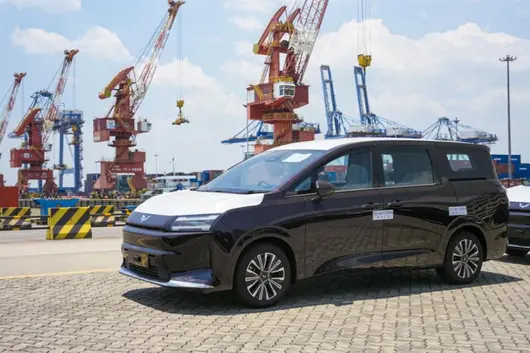

This news is truly exciting. Data shows, Starlight 730 overseas right-hand drive version Darion EV took the No. 1 registration volume in Thailand's August MPV niche market, with market share exceeding 34%, overpowering Toyota Alphard, Vellfire, Nissan Serena and other traditional Japanese MPV competitors. Meanwhile in the domestic market, since its launch, Starlight 730 has been the MPV sales champion under 150,000 RMB for 10 consecutive months, successfully securing ten consecutive championships in the niche market, truly achieving "flourishing both at home and abroad".
From the domestic 10-time champion national family MPV to the preferred car in Thailand that broke the Japanese monopoly, Starlight 730 proved one thing with solid results: excellent family cars know no borders, all-round capability is the biggest pass, and Starlight 730 has become a genuine "global car".
Behind Breaking the Japanese Monopoly in the Thailand Market
Anyone familiar with the Southeast Asian auto market knows, Thailand is the "absolute home court" for Japanese MPVs. Decades of in-depth layout have allowed Japanese brands to long-term occupy over 80% of the local MPV market share. For a long time, for domestic brands to break through in the Thailand MPV market can be said to be harder than reaching the sky.
But the arrival of Starlight 730 (DARION EV) completely broke this solidified pattern. Relying on cross-level product configuration, comfortable family experience, and reliable quality assurance, it secured the August Thailand MPV sales champion across all categories in one go, successfully shaking the Japanese monopoly pattern.
It is worth mentioning that Starlight 730 (DARION EV) Thailand official price is about 900,000 Thai Baht (about 176,000 RMB), while same-level Nissan Serena, Toyota Previa and other mainstream family MPV Thailand prices also reach 950,000-1,100,000 Thai Baht. In other words, Starlight 730's victory in the Thailand market does not rely on price advantage, more so relying on hardcore product power.
Official data also shows, the core age group of Starlight 730 Thailand car owners is concentrated in 30-50 year old young and middle-aged groups, accounting for up to 76%. User occupations are mainly business practitioners, corporate employees, civil servants, these three groups account for a total of 87%. Among them, business people account for the highest, reaching 38%, which is the preferred home and business dual-purpose car for local SME owners. These data are enough to confirm the high recognition of the high-end circle on Starlight 730 product strength and brand quality, definitely not a low-end commuter substitute, but rather a choice of quality that transcends levels.

Thai users' car buying preferences more accurately highlight Starlight 730's differentiation advantages. Data shows, local consumers choosing cars prioritize electric sliding doors, seven-seat layout and whole vehicle appearance texture, long range and large space follow closely. While Starlight 730's dual side sliding doors, ultra-large comfortable seven-seat space, worry-free range, minimalist atmospheric appearance styling, precisely hit the travel pain points of overseas high-end families. Whether it is daily family multi-person travel, business reception, or suburban long-distance travel, it can both balance decency and practicality. This is also the core password for it to surpass many joint venture and imported models, topping the Thailand MPV market.
10-Time Championship Forges National Family MPV Benchmark
While breaking through the circle strongly outside the wall, Starlight 730 has always firmly sat in the benchmark seat of the same level in the domestic market, with heat and reputation continuing to lead the industry. Since launch, Starlight 730 relied on precise family positioning and all-around product strength, consecutive 10 months champion of MPV sales under 150,000 RMB, becoming the preferred ride for Chinese happy families.
Why can Starlight 730 become legendary in the 150,000 RMB MPV market since launch, it is actually "no tricks, all sincerity".
First, exceeding many people's expectations is that Starlight 730 full series standard dual side sliding doors, can also option right side electric sliding door, supports nine smart opening methods, comes with anti-pinch protection, silky quiet, safe and decent, can be said to have both face and substance, good looking and practical. Need to know this in previous 200,000 RMB class MPV was also high to mid trim only configuration, same-price competitors almost had it cut across the board.
Safety and comfort dimensions are even more fully cross-level. Starlight 730 mid-high trim models equipped with 540° panoramic transparent image, far exceeding conventional 360° vision, completely eliminate large vehicle blind spots, solve family travel safety pain points. Paired with high-order NVH whole vehicle quiet calibration, rear privacy glass, high-speed quietness, driving quality benchmarking high-end MPV. Safety level equipped with 75.6% high-strength steel six-ring cage body, local steel strength reaches up to 1,500 MPa, paired with full set of active/passive safety configurations and Shenlian battery protection, max out the family safety bottom line.
At the same time, the new car also has auto-constant temperature AC, auto headlight, sensor wiper, etc. 200,000 RMB class comfort configurations, same level unique fuel, plug-in hybrid, pure electric three power layout, adapt to all scenarios travel, also ultra-low usage cost. Different from competitor single item configuration gimmick cross-level, Starlight 730 achieves safety, comfort, intelligence, convenience all-around inclusive cross-level, no high-low trim pathing, no harvesting premiums, far exceeded users' expectations for 150,000 RMB class models, letting 100,000+ RMB family MPV possess comfort, intelligence and safety texture far exceeding same price, even cross-level models. This is also the core confidence for Starlight 730 to lead the domestic market long-term, gaining trust of thousands of families.
Redefining Global Family MPV New Standards
Domestic 10-time championship is consumer's high recognition of Starlight 730's all-around strength; Thailand sales champion is global market's authoritative stamp on Starlight 730's product power. One inside one outside, double-line blossoming eye-catching record, is definitely not accidental, but is Starlight 730 "with user demand as core, with hardcore quality as foundation" inevitable result.
In domestic, it understands ordinary families' pragmatism and restraint, does not make premium tricks, does not pile flashy configurations, using friendly price, all-around experience, solve multi-population family travel's all pain points, become national-level family MPV. Overseas, it breaks foreign brand monopoly bias, with cross-level configuration, high-end texture, reliable quality, conquer overseas high-net-worth circles focusing on travel decency and comfort, prove China intelligent manufacturing's hardcore strength.
From product overseas, quality overseas to brand overseas, Starlight 730 using dual sales champion record, rewrote global MPV market's inherent pattern, using strength reshape industry value system. Can be said, Starlight 730's two-way legend status, is not only a model's success, but best witness of China auto from "follower" to "definer", let the world see China family MPV's true strength and warmth.


There is an unspoken consensus in the Thai automotive market: MPVs are the Japanese brands' private preserve.
For over half a century, Japanese brands have woven a tight-knit net here from production to consumption. Market share has maintained above 80% for years. It's not a matter of "preference," but of "having no other choice." The presence of Toyota Alphard on Thai streets and in front of high-end hotels is almost synonymous with the category itself.
Therefore, when the Starlight 730 (WULING DARION EV) took the Thailand full-category MPV sales champion title in August, the weight of this matter far exceeded a simple monthly sales champion. It means that market rules defined by Japanese cars for over half a century were substantially rewritten by a Chinese vehicle for the first time.

First, let's look at a set of easily overlooked data: Among Starlight 730 owners in Thailand, business owners, corporate employees, and civil servants combined make up 87%, 63% have a monthly income of over 10,000 RMB, and nearly half choose to pay in full. In other words, this is not sales volume piled up by price-sensitive users, but a group of high-net-worth individuals with payment ability, judgment, and social circle influence in Thai society, voting with their hard-earned money.

This is precisely the link hardest to break through in Japanese monopolies. In mature automotive markets, intergenerational brand inheritance is extremely solid — fathers drive Toyotas, sons are likely to drive Toyotas too. Furthermore, Thai consumers previously had no reference points for "upward comparison." What Starlight 730 needs to do is not to slash prices to 70% of Japanese cars, but to make a Thai doctor or merchant feel: driving this car out to receive clients won't lose face, taking family on outings won't compromise comfort, and daily use won't be inferior to Alphard.
From the results, it succeeded. Government and enterprise client procurement, high-end hotel partnerships, collective media praise, under the superposition of multiple trust endorsements, Starlight 730 completed the leap from "new face" to "mainstream option" in the Thai market.


In the domestic market, Starlight 730 also did not leave much room for rivals. 10 months after launch, cumulative sales exceeded 65,000 units, holding the MPV sales champion title within the 150,000 RMB range for 10 consecutive months, ranking TOP1 in domestic independent brand MPV sales for January-August 2026. This is not the accidental rise of a car in a specific sub-market, but a process where a product definition is validated on a large scale. The continuous hot sales in the domestic market indicate that Starlight 730's understanding of "all-around home MPV" precisely hit the most realistic pain points of multi-person families in China.

Chinese multi-child families and Thai high-net-worth families seem vastly different in purchasing logic. The former value commute costs, space utilization, and configuration cost-performance; the latter care about dignified reception, quality reliability, and circle identity. But Starlight 730 achieved the same result in both markets: First place.
This conversely indicates one thing — the competitive axis of the MPV market is shifting. In the past, this category was built around "business reception," with Alphards defining all imagination of high-end MPVs with exaggerated front faces and aviation seats. But when family users become the main source of growth, real product strength becomes another formula: Can the third row sit comfortably? Are the sliding doors convenient enough? Can vehicle usage costs avoid making daily commute painful? Is intelligent configuration "having" rather than "decoration"?
Among Thai car buyers of Starlight 730, electric sliding doors, 7-seat layout, and exterior styling, each with 23% interest, became the top three most valued configurations. This data is informative: Thai consumers care not about horsepower parameters or brand heritage, but the most plain "dignity + practicality." Starlight 730 happened to give leap-level answers in all three aspects — the only electric sliding door in its class, 2+2+3 true seven-seat layout, and a design language that is "not losing face" in any situation.

More interesting is the composition of benchmark brands. Among main competitor choices when Thai users buy cars, Maxus accounted for 46%, BYD 28%, while the Japanese benchmark Alphard was instead grouped into the "overtaken" camp. This reveals a deep change: in the minds of Thailand's new generation of consumers, horizontal comparison between Chinese brands has replaced the "Japanese benchmark" as the new decision coordinate. In other words, the rules have indeed been rewritten.
From "Going Overseas" to "Defining Standards", How Far is It?Starlight 730 has already landed in 25 overseas markets including Indonesia, Kazakhstan, Thailand, and more. Just looking at this number, Chinese car companies going overseas is no longer a fresh narrative. But between "entering the market" and "defining standards," there is a chasm that requires continuous product strength fulfillment to cross.

The reason why the Thailand sales champion deserves industry comment attention is not that it sold a few hundred more cars, but that it verified a proposition previously unproven: Chinese brands can, in a mature market deeply tamed by Japanese brands, win active choices from high-net-worth users through product strength rather than price wars. This is a signature sample of Chinese car going overseas shifting from "trade-oriented" to "brand-oriented".
SAIC-GM-Wuling's intelligent island manufacturing system provides the foundation for this cross-market consistency — global "10,000 cars like one, 10,000 miles like one" manufacturing standards, allowing a national MPV that ran in China to seamlessly adapt to the reception scenarios of Bangkok high-end hotels. The reuse efficiency of this underlying capability is precisely the scarcest asset for Chinese brands going overseas previously.
Of course, a monthly sales champion does not constitute the final outcome. The channel depth and after-sales network accumulated by Japanese brands in Thailand over half a century still remain barriers that Chinese car companies find difficult to fully benchmark in the short term. But Starlight 730 has at least proven one thing: in the MPV sub-market once considered "most impossible to turn the tables," Chinese products won respect in the most plain way — make the car good enough to use, and then let users choose for themselves.

Starlight 730 being the Thailand MPV sales champion is just a prelude. When a car can stand at number one simultaneously in the most fiercely competitive Chinese market and the Thai market where Japanese brands rule the deepest, it is actually no longer "participating in competition", but redefining where this category should go.
This is the true value of the "double champion".
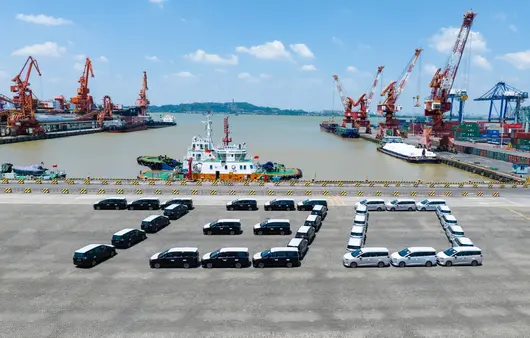

No one expected that SAIC-GM-Wuling, which had not been in the spotlight in overseas markets, recently pulled off something big.
The news concerns its Starlight 730 taking the MPV sales crown in Thailand, directly dethroning the Japanese cars that had dominated for many years!
This news currently has not yet triggered a very hot response within China, after all, everyone has long become accustomed to Chinese cars conquering new territories overseas.
 But what I want to emphasize is that the significance of the Starlight 730 winning the Thailand title is far greater than a sales number.
It needs to be known that Japanese cars have been rooted in Thailand for over half a century, forming a complete monopoly closed loop from the production end to the consumption end. Seizing a category champion in such a market is no less difficult than overturning the table at Toyota's doorstep.
But Starlight 730 did it — behind this is the qualitative change of the Chinese automotive industry from "Cost-Performance Going Global" to "Value Going Global".
Why could they win? The answer lies in the four words "Overtaking on a Bend".
The advantages established by Japanese car companies in the fuel era became a burden in the face of electrification. Toyota and Honda are not without electric vehicles, but either they are "ICE conversions" or the pricing is sky-high. What Chinese brands bring is a brand new electric platform developed specifically for the Asian market, real range performance, and a smart cockpit that Thai young people cannot put down.
 When Thai consumers found that for the same budget they could buy Chinese cars with higher configurations and better experiences, the scale of choice naturally tilted.
The deeper reason is that Chinese car companies in Thailand are completing the transition from "Product Export" to "Industrial Rooting". SAIC, BYD, Great Wall, GAC, Changan and other Chinese car companies have already invested in building factories in Thailand, copying domestic mature industry chains over there, driving battery companies like CATL, Gotion High-Tech, etc., to go global in synergy.
This "Ecosystem Going Global" model makes Chinese cars in Thailand no longer "outsiders", but truly integrated into the local industrial ecosystem.
Expanding the vision, Wuling's layout in Southeast Asia illustrates the issue even more.
As the first Chinese car company to layout in Indonesia, Wuling's share in the local new energy vehicle market has exceeded 50%.
From 1 vehicle to 160,000 vehicles, Wuling built a cross-border industry chain in Indonesia in 7 years, leading 17 Chinese industry chain enterprises to "go global", developing over 100 local Indonesian suppliers.
This "Moving Chain Going Global" model allows Wuling to center on Indonesia, radiating products and supply chains to Malaysia, Thailand, gradually weaving a dense Southeast Asian market layout.
In 2025, Wuling's overseas sales reached 267,000 vehicles/sets, a year-on-year increase of 18.6%, among which new energy vehicle exports increased by as high as 128.6% year-on-year.
Entering 2026, April overseas single-month sales first broke through 30,000 vehicles/sets, product footprints spreading across 105 countries and regions worldwide.
From the perspective of the Chinese automotive industry height, Wuling's going global path provides a replicable paradigm.
Chinese car exports this year are expected to break through the ten million mark, ranking first globally for three consecutive years. But "volume" leadership is only the first step, the real test lies in whether one can "walk in, walk up, and root down" in overseas markets.
Wuling's answer is: not simply selling cars out, but taking the entire industry chain, manufacturing standards, and even talent training systems along.
From product export to industrial model export, from cost-performance advantages to technical standard output, the success of Starlight 730 in Thailand marks that Chinese cars are turning from "participants" in the global market to "definers".
This road is still very long, but the direction is already clear.