首頁Smart Driving

搜尋歷史
熱門搜尋
經銷商登入 / 註冊


Competition in the smart driving industry has often tended to focus on computing power parameters and hardware specifications for a long time. Many views regard high-level smart driving as a configuration exclusive to high-end models, and capabilities like urban NOA seem naturally bound to high-priced models, making it difficult for family cars in the price range of over a hundred thousand yuan to fully possess a mature smart driving experience. However, as the domestic smart driving chip industry gradually completes scaled implementation, the industrial reality is undergoing subtle changes. The value of technology is not just about bright indicators on a lab PPT, but more about whether it can truly penetrate to more widespread consumer models, allowing ordinary consumers to enjoy reliable smart driving capabilities just the same.
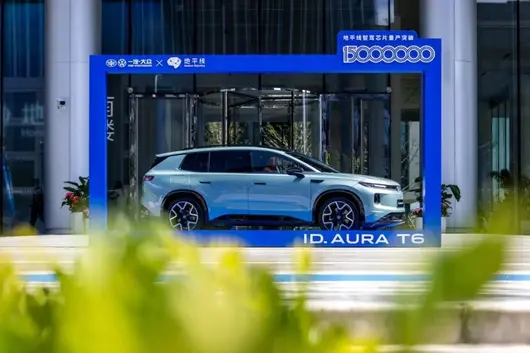
On September 15, Horizon Robotics held a witnessing ceremony for the Journey® chip mass production breakthrough of 15 million units in Shanghai Lingang Science Park. The 15 millionth Journey® chip will be equipped on the FAW-Volkswagen ID.AURA T6 model. There was also a rather meaningful detail at the event: Horizon Robotics founder and CEO Dr. Yu Kai became the 001 owner of the ID.AURA T6, witnessing the landing of the joint R&D results of both parties in the identity of a user.

This ceremony is not just an announcement of shipment numbers, but also raises a proposition worth thinking about for the whole industry: when domestic smart driving chips cross the tens of millions mass production threshold, how the industry can transform high-level smart driving from luxury configuration to capabilities accessible to more ordinary users, truly realizing the smart driving rights equality that the industry has been discussing. Through the product plans released on site, the practices of partners, and the sharing of management, it can be seen that the landing of smart driving rights equality requires the joint support of multiple conditions such as scale mass production, open industrial ecology, and software-hardware collaborative iteration, and is not a goal that can be achieved relying on a single technical breakthrough.
Tens of Millions Mass Production, Scale is the Most Solid Endorsement for Smart Driving Safety
For automotive-grade smart driving chips, tens of millions of shipment volume is not just a number of market scale, but also a process of continuous verification under massive real road conditions. The paper computing power parameters of a chip can be completed in the lab, but vehicles have to face real road scenarios of different regions, different weather, and diverse situations in China. Snow, rain, heavy fog, unlit roads at night, city streets where people and vehicles are highly mixed, these scenarios are difficult to fully simulate and reproduce in the laboratory. Only by installing them on a large number of vehicles and hitting the road, continuously precipitating data and exposing potential problems in massive real working conditions, can the chips and supporting smart driving algorithms continue to complete iteration and optimization. This is also the biggest difference between automotive products and consumer electronics chips. Consumer electronics pursue extreme performance, while vehicle-mounted systems must put safety and reliability first.
Data shows that as of September 2026, the Journey® series chips have accumulated mass production shipments exceeding 15 million units. There are more than 8 million vehicles equipped with this chip driving across the country, accumulating billions of kilometers of real driving mileage. When Dr. Yu Kai, founder and CEO of Horizon Robotics, shared on site, he mentioned that scale is the best endorsement for safety and reliability. Every Journey® chip running on the road is a verification of a real scenario. Massive real road experience is transformed into the safety confidence for product mass production landing. At the same time, the growth rate of shipments is also accelerating continuously. From 10 million units to 15 million units, it took only 12 months, and the pace of industrial landing is continuously speeding up.

Market share data also shows the changes brought by scale. According to the High-Tech Intelligent Automotive Research Institute, in the first half of 2026, Horizon Robotics' market share in smart driving chips for all stages of independent brand passenger cars reached 31.94%, maintaining first place in the industry; the market share in ADAS chips for independent brands exceeded 50%, about twice the second place, retaining the market first place; in the urban NOA high-level track, the market share reached 22.82%, an increase of nearly five percentage points compared to the previous year, jumping to the second place in the industry, forming a competitive pattern of two strong competitors in high-level smart driving with NVIDIA. From the early low-computing power auxiliary driving chip Journey 2 to the Journey 6 full series facing urban high-level smart driving, in 11 years, Horizon Robotics has completed the growth path from follower to main market participant.
But the milestone of tens of millions of sets does not mean the industry can rest easy. At the same time as the scale expands, it puts higher tests on the enterprise's engineering services, version control, and problem closure capabilities. With the continuous broadening of the model brands equipped with chips and price ranges, from hundred-thousand-yuan family cars to mid-to-high-end new energy vehicles, the vehicle architecture, sensor configurations, and chassis tuning conditions of different car manufacturers are different. For the same chip, adapting to different vehicle platforms requires solving a large amount of customized debugging work. If the engineering support capabilities cannot keep up with the speed of shipment expansion, large-scale vehicle installation could instead bring risks of uneven experiences. This is also why the competition for automotive-grade chips has never been simply comparing the chips themselves, the entire engineering support system behind it is equally crucial.
It is precisely based on this reality that Horizon Robotics did not choose a single business model, but rather parallel two completely different cooperation paths. One is similar to the Wintel model of the PC era, directly delivering chips and complete software solutions to car companies, adapting to the majority of OEMs that hope to obtain a complete and mature smart driving solution; the other targets the Arm+Android model of the mobile era, exporting chip and software IP licensing externally, serving those car companies that hope to master underlying R&D capabilities. The two models target customers with different demands, can provide complete solutions that are ready to use for most car companies, and can also open up the underlying technology base for OEMs with self-research demands. When Yu Kai talked about it in the group interview with the media, he predicted that the ultimate industry pattern would present a 80/20 distribution. Approximately 80% of OEMs would choose to cooperate deeply with third-party suppliers, and 20% of the top-tier enterprises would persist in the vertical self-research route. Horizon Robotics' positioning is to serve the market of 80% that accounts for a larger proportion.
The parallel of the two business models also corresponds to the two choices of OEMs facing intelligence. Some car companies hope to focus resources on focusing on vehicle product definition, choosing mature supplier solutions to accelerate product landing; another part of car companies insist on deep self-research, hoping to firmly grasp the underlying capabilities of smart driving in their own hands. For chip suppliers, a fixed approach cannot be used to respond to all customers. Both doing a good job of standardized products and having the capability of open licensing technology base puts high requirements on the enterprise's underlying architecture design. If the underlying architecture is closed and solidified, the IP licensing model will be difficult to truly land. This is also a topic that many domestic smart driving chip manufacturers need to continue to tackle.
Tens of millions of shipments also mean that the logic of industry competition is changing. In the early smart driving chip track, new players emerged one after another, and various startups continued to emerge. But after years of market screening, the industry has entered a convergence stage. Just like the mobile phone baseband chip market, in the end only a few top players will remain. The smart driving chip track will also move towards high convergence. The number of enterprises that can truly withstand automotive tests and achieve large-scale stable mass production will not be too many. The noisy concept promotion will eventually fade away. In the end, the market will use tens of millions of vehicle installations to test the true hard power of a chip enterprise.
Smart Driving Rights Equality is Not Just Lowering Functions to Low-Cost Cars
Nowadays, the industry often mentions the concept of smart driving rights equality, but many people simply understand it as realizing equality by installing urban NOA functions on hundred-thousand-yuan level models. In fact, true smart driving rights equality is far more than the downgrading of hardware configurations. If it is simply a matter of installing high-level smart driving hardware on low-priced cars, but the algorithm experience is poor, the takeover rate is high, version iteration is stagnant, and the user's actual usage experience does not reach a qualified level, then the downgrading of configurations is only formal equality. True equality represents that vehicle models of different price levels, or even different power forms, can all obtain usable smart driving capabilities with continuous iteration. Fuel vehicle users should not be abandoned by intelligence either.

At this event, Li Jiang, CEO of Journey Intelligent Driving, shared a very iconic progress in the industry. Relying on the Journey 6M solution, by the end of the month, a hundred-thousand-yuan level fuel SUV will realize the mass production of urban NOA. This is a very representative signal. For a long time, high-level smart driving has been almost an exclusive label for new energy vehicles, and a large number of existing fuel vehicle users are difficult to access mature pilot assistance functions. The number of fuel vehicles in the domestic car market remains huge, and the proportion of fuel vehicles is even higher globally. If the dividends of intelligence are given only to new energy users, then a large number of consumers will still be kept out of the door. Oil and electricity equal rights are also a link that is easily overlooked in smart driving rights equality.
To downgrade high-level smart driving to hundred-thousand-yuan level models, it is not simply completed by chip price reductions. This requires continuous optimization behind BPU Nash architecture hardware efficiency and end-to-end algorithms. It is not blindly stacking higher computing power indicators, but through software and hardware collaboration, allowing medium-computing power chips to also run excellent urban smart driving performance. Yu Kai explained in the interview that Horizon Robotics will not take the simple low-price low-quality involution route, but rely on technology to expand performance boundaries. Through software and hardware joint optimization, make medium-computing power chips achieve the effects that only high-computing power products could achieve in the past. Journey 6M has 128 TOPS computing power. Relying on BPU Nash architecture's efficient support for Transformers and end-to-end large models, without stacking ultra-high computing power, it can support the landing of complete urban NOA functions.
Software iteration capability is the other half indispensable for smart driving rights equality. Hardware installation is just the starting point. A large part of the smart driving experience comes from subsequent software version continuous updates. This activity disclosed that the HSD V2.1 version will be launched. The new version will debut full-scenario reversing capability, adopting end-to-end models to directly output driving trajectories, rather than relying on a large number of manually written rules, further optimizing the experience in narrow roads, complex breakthrough scenes. At the same time, HSD will achieve mass production landing on the models of a certain top new energy manufacturer within the year. Continuous version iteration means that older models that have already been installed can also obtain new functions through OTA. There will not be a situation where only new cars have new capabilities, and old car functions stagnate here. If only hardware is downgraded, but subsequent software maintenance cannot keep up, the so-called equality is just a brief selling point at the time of listing.

Of course, the realization of smart driving rights equality cannot be separated from the realistic stage of industry development. Yu Kai used the mobile communication industry for analogy. The current smart driving industry is similar to the mobile communication era before 2012. At that stage, only high-end mobile phones could fluently use mobile Internet, and low-end models could only realize basic calls. Until the arrival of the 4G era, communication capabilities were mature enough to achieve full standard configuration from high-end machines to entry-level models. He judged that when technology evolves to a stage where user attention no longer needs to closely monitor driving operations, high-level smart driving will truly become a standard configuration for all-price models. This also shows that smart driving rights equality is not a reality that is achieved in one step today, but a goal that the industry approaches step by step.
On the road to equality, the intelligent transformation of joint venture car companies is also an link that cannot be ignored. For a long time in the past, many joint venture brand smart driving solutions relied on output from overseas headquarters and were difficult to adapt to complex urban road conditions in China. The FAW-Volkswagen ID.AURA T6 equipped with this 15 millionth Journey® chip is the product of deep integration of German automotive manufacturing system and China's local smart driving technology. Wang Shengli, Vice General Manager of FAW-Volkswagen Automobile Co., Ltd. (Business), mentioned on site that this ID.AURA T6 is the first strategic vehicle of the Smart Electric 2.0 era. The smart driving part is led by the joint venture company Core Journey for development, from product definition, experience tuning to whole vehicle verification to complete full-link joint breakthrough. The whole vehicle completes over 450,000 kilometers of smart driving road actual tests in more than 61 cities, fully going through three rounds of whole vehicle verification and the traditional two winters and two summers extreme environment test of FAW-Volkswagen. The cooperation between the two parties will not stop at a single model. Horizon Robotics and FAW-Volkswagen's cooperation in the new energy field will be fully rolled out, and more cooperation products will be pushed to the market subsequently.
The significance of this cooperation case has already exceeded the scope of a single vehicle model. The rigorous whole vehicle verification system represented by global top joint venture car companies has already accepted China's local high-computing power smart driving chips. The pattern of overseas Tier 1 and overseas chips leading joint venture brand intelligence is changing. But we must also objectively see that the cost of磨合 for such deep joint development projects is not low. German whole vehicle factories have safety, testing, version release standards accumulated over decades. Local smart driving technology needs to adapt to the other party's whole verification process, and whole vehicle enterprises also need to understand the pace of rapid iteration of domestic smart driving algorithms. Only through mutual learning can the Chinese smart driving base be integrated into the global whole vehicle product system.
From Domestic Mass Production Landing, Looking at the Long Journey of Globalization
Completing domestic tens of millions of sets mass production is just a starting point for China's smart driving chips to go global. The scale of Chinese whole vehicle overseas departure continues to rise. In the first half of 2026, domestic automotive whole vehicle exports increased by 65.3% year-on-year, and more domestic car models are heading to overseas markets. Accompanied by this, China's smart driving software and hardware technology also welcomes the window of export. But going overseas is not equivalent to simply copying and pasting domestic mature solutions directly to different countries overseas. Traffic regulations, road habits, and user demands for smart driving functions in different regions exist huge differences.
From the current realistic situation, the demand for high-level urban NOA in the overseas market and the domestic market has a significant generation gap. Domestic consumers have a high acceptance of urban pilot assistance. Many new cars, if they do not have urban NOA, will be regarded by users as obvious shortcomings. However, in the vast majority of overseas markets, the current core demand still focuses on basic ADAS active safety and highway assistance driving functions. The large-scale popularization of urban high-level smart driving generally still requires several years. This determines that Horizon Robotics' overseas business must adopt a strategy of phased promotion. At this stage, ADAS solutions are used as the main landing products, and at the same time facing overseas car companies, through IP licensing models, participate in their early R&D projects, and prepare technical reserves for future high-level smart driving overseas mass production.
As of now, the number of Horizon Robotics export models designated has exceeded 60 models, covering all car companies in the domestic export ranking top six. The overseas market has orders in hand exceeding 20 million sets. The globalization business is accelerating; at the same time, deep cooperation has been established with global top Tier 1 enterprises such as Bosch, Denso, and Ansteem.
Li Jiang from Journey Intelligent Driving also introduced on site. Journey Intelligent Driving has already obtained designations from more than 16 OEMs globally, accumulated more than 70 car models, nearly half of the models facing overseas mass production. It is deployed in German R&D centers and Singapore global headquarters. The business covers Japan, South Korea, Southeast Asia, the Middle East, South America and other regions. Relying on the synergy with global Tier 1, Chinese smart driving solutions are no longer just dependent on Chinese car companies going overseas, but beginning to enter the supply chain system of overseas local car companies. This is an important change. In the past, the global automotive supply chain was more about European and American Tier 1 exporting technology outward. Now there is a new path of Chinese smart driving technology, supplied to OEMs all over the world through global Tier 1 suppliers.

But going to the global supply chain, the tests to face are far more than the domestic market. Automotive certification standards, data compliance regulations, and localization test requirements of various countries are different. A chip and smart driving solution, completing domestic mass production, does not equal directly getting the entry ticket for all countries overseas. Each time entering a brand new market, it is necessary to re-complete local regulation adaptation, road tests, and whole vehicle matching. Overseas customers have a set of mature standards that have been running for decades for delivery rhythm, quality system, and document norms. Local technology enterprises need to completely align with this system, so as to truly deeply embed into the global supply chain, and not just obtain a few demonstration projects.
Except for facing the passenger car market, Horizon Robotics is also horizontally expanding the capability of the BPU computing base to the field of pan-mobile travel. Relying on the AI computing technology accumulated by the Journey® series, the business has begun to extend to two-wheeler auxiliary driving, L4 level unmanned logistics mobile robots and other directions. Yu Kai mentioned in the group interview that from the beginning of Horizon Robotics, the name Horizon Robotics has pointed to the robot era, and smart cars are just the first stop towards the robot era. Chips, BPU architecture, AI large model engineering capabilities accumulated on a large scale in the automotive field can overflow to more robot-like scenes. However, it is also necessary to see that although automobiles and robots have the same source of underlying AI technology, their product definition, safety standards, and commercialization logic are completely different. Cross-domain expansion will also bring new challenges.
Written at the End
Standing at the node of tens of millions of shipments, Horizon Robotics does not intend to stay at the positioning of only being a vehicle-mounted chip supplier. On the one hand, it continues to iterate the Journey® series smart driving chips, and at the same time launch the Cockpit and Driving Integration Star Series chips, pushing the whole vehicle from scattered domain control to centralized computing architecture. Cockpit and driving integration is not simply piling hardware together, it needs to solve a series of engineering problems such as safety isolation, memory sharing, power consumption control. The Star chip relies on unified memory architecture design, which can reduce DDR memory resource occupation and help car companies control whole vehicle hardware costs. Cockpit and driving integration is also a major trend for the evolution of future whole vehicle electronics and electrical architecture. This also represents Horizon Robotics' layout, which is no longer limited to the smart driving single track, but extends to the level of whole vehicle intelligent computing base.
Of course, the track is still full of uncertainty. The heat of capital markets for automotive hard technology fluctuates from time to time. The hot spots of AI large models are constantly switching, and the attention of many capitals is attracted by consumer-level robots and data center large models. Automotive intelligence belongs to long-cycle tracks. There will be no explosive short-term bubbles. Enterprises need to endure loneliness and continue to carry out saturated R&D investment. Yu Kai also admitted that the joy brought by tens of millions of shipments lasts only two seconds, and harder challenges are still behind. 15 million sets is a report card submitted by the efforts of the past 11 years, but it is not the end.
Whether it is continuing to promote smart driving rights equality in the domestic market, or the product really stands firm in the global automotive supply chain, there is still a long way to go. Tens of millions of sets is a milestone, and even more a new starting point for the next round of industry competition.


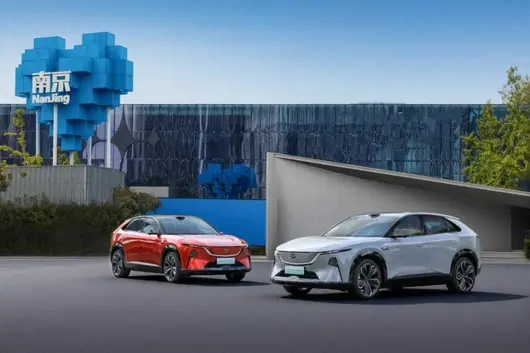
From the Hilton Hotel at Niushou Mountain in Nanjing to Wuxiang Mountain, a journey of over 70 kilometers, although I was sitting in the driver's seat, the one driving was not me; the intelligent driving system completed the whole journey, I only took over temporarily twice when passing through toll stations — if ETC was installed, the whole journey might have zero takeovers.
Changan Mazda EZ-60 Laser Edition is equipped with an intelligent driving system that "uses LiDAR as the perception base, combined with multi-sensor fusion solutions, achieving full scenario coverage for highways, urban areas, and parking". The actual performance was quite good; encountering roadwork occupying the lane on urban roads, it wouldn't stop and wait foolishly, but would borrow lanes to detour in advance; on highways, it drives steadier than an experienced driver; at the Wuxiang Mountain farm restaurant parking lot, when the vehicle on the right was pressing the line, not only did it park in successfully, but it would also lean slightly to the left to maintain enough space from the vehicle on the right...

The EZ-60 Laser Edition's exterior and interior have not changed much compared to the standard version.
A day ago I just experienced another vehicle equipped with Huawei Qiankun Intelligent Driving ADS 5 in Guangzhou; the pilot functions on highways and expressways for both vehicles were very good, and both could pass through complex urban roads; in my opinion, their intelligent driving capabilities are basically no different, only the strategies differ.
On the mountain roads of Wuxiang Mountain, the intelligent driving system could also drive, but I decisively took over; for such mountain roads, one must drive it oneself, because it is a Mazda!
Although the most important upgrade of the Changan Mazda EZ-60 Laser Edition is intelligent driving, for me, the biggest selling point of this car is still its inherent advantages — good-looking, easy to drive, safe, and the quality assurance as a Mazda brand global strategic model.
As for intelligent driving, it is merely icing on the cake; of course, it could also be described as adding wings to a tiger.

As an advanced model in the intelligent driving field for Mazda, the EZ-60 Laser Edition is equipped with 1 LiDAR, 3 millimeter-wave radars, 11 HD cameras, and 12 ultrasonic radars to build a global perception network. The intelligent cockpit is equipped with a 3nm automotive-grade chip, achieving three core capabilities: "Highway + Urban" dual-domain pilot full coverage, full-scenario parking adaptation, and global active safety protection.
The undulating and winding mountain roads of Wuxiang Mountain are very suitable for experiencing Mazda's "Man and Horse as One" easy-to-drive feel.
The focus of easy-to-drive is not speed. The EZ-60's maximum output is 190 kilowatts, which is not outstanding among new energy vehicles in the same class. There are many cars faster than it in "0-100 acceleration", but large horsepower is only advantageous in straight-line sprints. On such mountain roads, many cars with more horsepower are harder to drive — uncontrolled power, or power that does not match the vehicle's handling limits, the larger it is, the more of a flaw it is.

During the driving process, the vehicle's speed, angle, and body posture will continuously change in response to different operation instructions. For an ordinary family car, "easy to drive" means that these vehicle responses must meet human expectations, so-called "obey". Mazda calls it "Man and Horse as One".
In the electrification era, making a car break 100 in three or four seconds becomes very easy, but making a car "obey" becomes harder, because new energy vehicles are generally too heavy — large mass means large inertia, and inertia is the great enemy of handling. Speaking of this, Qingzhu has to sigh; now cars are getting larger and heavier, I don't know if it is the sadness of the market or the industry.
Mass distribution has a greater impact on handling than mass itself, this is easy to understand. For example, people, with the same weight, top-heavy and bottom-light movement will naturally be more uncoordinated. The EZ-60 body weight balance is even, achieving a 50:50 front and rear axle weight ratio. Moreover, the axle-to-length ratio, height-to-width ratio, and wheel-to-body-width ratio are significantly leading in the same class. In other words, the mass of this car is relatively more concentrated towards the center of gravity, which is the premise of a car being easy to drive.

Looking good lies largely in proportions, but behind the proportions is far more than just looking good. Reasonable mass distribution and excellent aerodynamic performance are the premises of easy-to-drive.
Of course, more critically lies in tuning. Changan Mazda EZ-60 has undergone global testing in 9 countries, accumulating 9 million kilometers of full-road conditions, verified by 200+ tuning schemes. Roll stiffness increased by 20%, pitch suppression by 10%, bringing a "Stable-Accurate-Fast" dynamic driving experience.
Power output is linear and smooth, not abrupt, not jerky; suspension damping can be adjusted in real-time according to road conditions; steering damping adjusts adaptively with the operation speed of the steering wheel; during cornering, affected by centrifugal force, the tire pressure on the inner side of the vehicle will decrease, causing it to not grip the ground. EZ-60, by controlling body posture, increases the downforce on the inner tires, bringing more stable cornering...

The proportion of high-strength steel in the Changan Mazda EZ-60 body is as high as 86.5%.
EZ-60 was already easy to drive, the stronger intelligent driving system makes this car even easier to drive. Using the words of Noboru Fujihashi, the General Manager of Changan Mazda Sales Branch, it brought "evolutionary pleasure".
The intelligent driving system of course did not further improve the vehicle's handling limits, and will never possess the flexibility and proactivity of an experienced driver, but it never gets distracted, never gets tired. It can make driving more relaxed, calm, and comfortable. Naturally, to a large extent, it improves safety redundancy.
Many people might think the automotive industry has developed for over 100 years, brands are roughly the same in safety, quality, and handling, so when buying cars they focus more on refrigerators, TVs, sofas, more on whose car infotainment system is more smooth, whose intelligent driving looks more awesome. But the fact is exactly the opposite. In the industry, the level of intelligent driving among various brands is rapidly converging. In the future, "Intelligent Driving" will essentially no longer have differences in level, but only differences in grade as a configuration.
The real difference between different brands lies in design and handling, safety and quality. In these dimensions, the differences between different brands are still vastly different.
Regrettably, these do not or are difficult to reflect in the configuration parameter sheet. If you choose cars only based on the configuration parameter sheet, Changan Mazda EZ-60 is likely to be PASSed by you.

Industry involution has become increasingly without bottom lines. More and more consumers have finally learned to stop choosing cars based on the configuration parameter sheet.
To my relief, Changan Mazda EZ-60 has been on the market for almost a year. Sales cannot compare with internet-famous models, but performance is quite good. It once won the sales championship of joint venture new energy medium SUVs for 7 consecutive months. Moreover, in the extremely involutionary market environment this year, sales maintain a steady and upward momentum. This indicates the market is returning to rationality. More and more consumers begin to realize software is not enough to define cars. Cars are never consumer electronics, nor are they fast-moving consumer goods.

The sales curve of Changan Mazda EZ-60 (blue) has taken a trend completely different from competitors.
This year, domestic passenger car market sales slumped significantly, new energy vehicles were no exception. From January to July, total domestic new energy vehicle sales dropped 12.5% year-on-year, but "Mainstream Joint Venture New Energy" became the only growth segment — and it grew significantly by 28.8%!
This is not surprising. When more and more users find that even the most basic safety and quality cannot be guaranteed, they will definitely recalibrate their value coordinates when buying cars.

January to July this year, mainstream joint venture new energy vehicles became the only growth segment in the new energy vehicle market.
Thus, the topic of "Rushed-built cars" suddenly swept the entire automotive public opinion field. "AI testing fraud" was suddenly criticized by everyone. Hidden handles, unconventional steering wheels, and other brainless designs were cancelled by official bodies one after another...
Bad money will not always drive out good. Mazda and others who stick to their brand concepts and value propositions have finally weathered the most difficult times.
Changan Mazda EZ-60 Laser Edition will officially launch on September 26. More worthy of attention than the selling price is that EZ-60 will also be exported to over 20 countries and regions globally, covering European, Australia/New Zealand, Southeast Asian markets, etc. Moreover, the manufacturer promises that domestic sales models and export models are homogeneous and same quality, following Mazda's global unified manufacturing standards and quality inspection processes, executing completely consistent production standards and acceptance requirements.
Previously, Changan Mazda EZ-6's performance in overseas markets was quite eye-catching. In Europe, within two months of launch, it captured 7,000+ orders. "EZ-60 will be more popular overseas", said Wu Xuxi, Executive Deputy General Manager of Changan Mazda Auto Sales Branch, "This year alone at a Thailand Auto Show, EZ-60 orders have already broken 10,000."


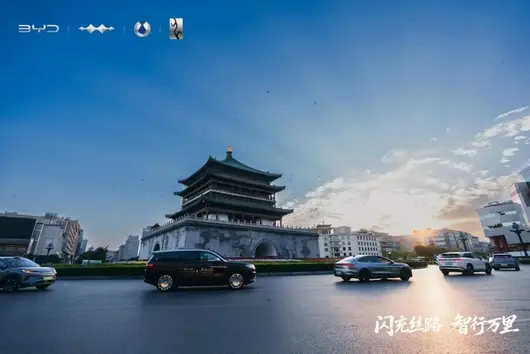
Recently, the 2026 Silk Road 10,000-Li Journey · Enlightenment Road Cross-National All-Media Activity officially set sail in Xi'an. The convoy traverses north and south, connecting land and sea, tracing the four core products of the ancient Silk Road (medicine, porcelain, silk, and tea), linking multiple historical and cultural cities.
Covering complex road conditions including urban congestion, high-speed cruising, and mountain tunnels throughout the journey, fast charging and smart driving work in dual-core synergy to escort the 10,000-li journey throughout.

July 24, the departure ceremony was held at Jinshi Plaza, Grand Tang West Market, Xi'an.
A thousand years ago, this was precisely the Tang and Sui Western Market, bustling with merchants, where countless trade caravans started their westward journey.
In 2026, it coincides with the 5th anniversary of China-ASEAN establishment of comprehensive strategic partnership. After completing the domestic segment of cultural collection, the convoy will also cross the sea into Thailand, Malaysia, and Singapore, carrying out a panoramic tour around three dimensions: mutual learning of civilizations, technological innovation, and industrial interconnection.
The convoy travels along the main route of the ancient trade road, arrives in Bozhou to participate in the incense medicine collection ceremony, using herbal medicine as a medium to officially incorporate Bozhou into the Silk Road civilization collection map. Passing through Hefei along the way, going to Jingdezhen to fetch porcelain, traveling to Hangzhou to collect silk, entering Fujian to ascend Wuyi Mountain to gather tea, converging in Shenzhen, allowing Oriental elegance to be reborn here and set sail for the seas.

Intelligent driving along the Silk Road conveys Chinese manufacturing intelligence. As the core escort partner, BYD brings the entire new energy vehicle fleet along throughout the journey, relying on two technical pillars: the fast-charging ecosystem and the "God's Eye" assisted driving system, to provide full support for the expedition.

This expedition tests the vehicles to the extreme: 33 days of continuous high-intensity driving, crossing plains, hills, mountains, and coasts, enduring the high heat and humidity of mid-summer and long-distance raids across seas and countries—any delay in energy replenishment or any driving negligence at any spot will be infinitely amplified by the 10,000-li journey. BYD's entire new energy vehicle fleet uses technology as a blade to face this comprehensive test.
Unlimited energy replenishment allows freedom for long journeys. BYD's fast-charging technology can achieve "5 minutes to fully charge, 9 minutes to full charge", paired with the grid layout of 7018 fast-charging stations across 325 cities nationwide. Wherever the convoy goes, whether in cities, highways, or mountain towns, it can replenish energy quickly nearby. "Use fast charging for travel, relaxed throughout" is not a slogan, but a true experience throughout the 10,000 li.

"5 minutes to fully charge, 9 minutes to full" is the fastest level among mass-produced models globally.
And 7018 fast-charging stations are just the starting point: According to the "Fast Charging China" strategy, by the end of 2026, the number of fast-charging stations nationwide will expand to 20,000, of which 18,000 are located in cities and 2,000 on highways. Wherever the Silk Road goes, the energy network follows.
Smart driving is never absent; 10,000 li are all calm. Facing changing road conditions, the "God's Eye" assisted driving system relies on a closed loop of over 210 million kilometers of real driving data daily to continuously evolve, becoming better to drive the more it is used.
In scenarios such as urban areas, mountainous areas, and highways, accurately identifying risks and making intelligent decisions to avoid them significantly alleviates long-distance driving fatigue. As the world's first automaker to achieve a "dual safety net" for city navigation and smart parking, BYD establishes a dual defense line of technical protection and responsibility guarantee, allowing every companion to immerse themselves in the journey without worrying about other matters.

For long-distance expeditions, what is feared most is not the distance, but fatigue. In urban congestion, the system accurately follows the car and starts/stops smoothly, keeping the annoyance of frequent stepping out of the car.
During high-speed cruising, lane centering and intelligent lane changing are done in one go, and boring mileage is quietly "folded".
Entering mountain tunnels, light changes suddenly and curves are continuous, the system still stably identifies and predicts in advance; arriving at the base, smart parking finishes with one click.
Leave energy for scenery and culture, hand over repetition and fatigue to the system. Besides technical backup, there is also responsibility backup. This "dual backup" commitment makes "dare to use, love to use" the consensus of the whole fleet for 33 days.
From camel bells trading, incense medicine circulation, to new energy fleet traveling 10,000 li with intelligence, cultural heritage going global, the connectivity spirit of the Silk Road across a thousand years is inherited. This expedition is both a journey of tracing civilization origins, and a 10,000-li answer sheet presented by China's new energy technology.

Wheels measure the mountains and rivers spanning 10,000 li, technology connects the future of the Silk Road. From the connectivity of thousand-year-old camel bells to the intelligent travel of today's new energy vehicles, the Silk Road spirit spanning a thousand years is inherited.
In the future, BYD will continue to take green innovative technology as the core, deeply cultivate new energy travel, build bridges for Chinese-foreign exchange with technology, letting the BYD fleet driving on the Silk Road become the most vivid and brightest flowing Chinese business card of the new era, continuously showcasing China's innovative strength and great craftsmanship to the world.