


首頁Silvia S15

搜尋歷史
熱門搜尋
經銷商登入 / 註冊

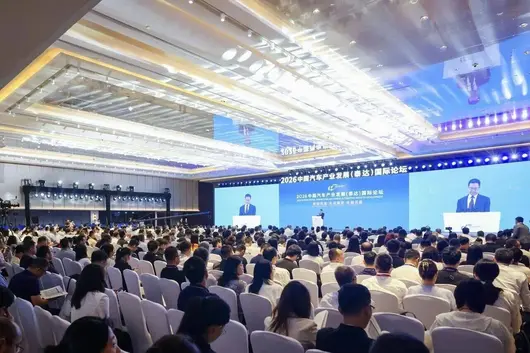
From September 17 to 20, 2026, the 2026 22nd China Automotive Industry Development (TEDA) International Forum was held in Binhai New Area, Tianjin.
Since 2005 to present, the TEDA Auto Forum has successfully held 22 consecutive sessions. Known for its perfect organization, high authority, strong professionalism, precise topics, rich content, and strong guidance, it has become the most authoritative, highest specification, largest scale, and most widely influential high-end automotive forum in China's automotive industry. It is known as the "China Auto Davos".
This TEDA Auto Forum is co-organized by China Automotive Technology and Research Center, China Society of Automotive Engineers, China Association of Automobile Manufacturers, and China Automotive News. Centering on the concept of "Content Empowers Intelligence, Brand Empowers Effectiveness", it launched "17+N" events, including 3 core high-end dialogues, 6 ecological special sessions, 8 thematic forums, and featured activities.

This forum, themed "Smart Green Foundation · Ecological Momentum · Co-creation and Win-Win", gathered representatives from national ministries, industry associations, car companies, research institutions, and overseas industry leaders. Focusing on topics such as the opening transformation of the automotive industry's "15th Five-Year Plan", technical breakthroughs, market upgrades, ecological co-construction, and global competition and cooperation, it released several major signals, clarifying the core pathways and implementation measures for the high-quality development of China's automotive industry in the coming years.
Final Verdict on Important Auto Policy TrendsThis year marks the beginning of China's national "15th Five-Year" development plan. Prior to the forum opening, the "15th Five-Year Plan for the Development of Intelligent Connected New Energy Vehicle Industry", compiled by the Ministry of Industry and Information Technology and other nine departments, was officially released, becoming a guiding document for the development of the automotive industry in the next five years. Focusing on high-quality and standardized development, abandoning extensive scale expansion, and focusing on strengthening basic research, common technology research and development, and industrial order optimization, it provides systematic guidance for industrial technology routes, layout planning, and market regulation.
 Chief Engineer of the Ministry of Industry and Information Technology Wang Weiming
Chief Engineer of the Ministry of Industry and Information Technology Wang Weiming stated at the opening ceremony that in the next five years, efforts will be focused on four aspects: technological innovation, market consumption, industry governance, and open cooperation. Focusing on industrialization in four major fields: automotive chips, all-solid-state batteries, operating systems, and autonomous driving large models.
The Ministry of Industry and Information Technology will officially implement a special action to improve automotive standards, synchronously optimize the industry management system, and fill gaps in industrial supervision. At the same time, lead industrial upgrade with standards, promote the construction of a self-controllable and adaptable automotive intelligent manufacturing standard system, and help the industry move from scale leadership to quality leadership.
Lock Core Shortcomings Focus on Frontier Technology ImplementationThis forum revealed that existing technical achievements in China's automotive industry have firmly secured a spot in the global first echelon. Lithium-ion battery energy density reaches 300 Wh/kg, megawatt flash charging technology has achieved mass production application, and intelligent technologies such as human-machine interaction, end-to-end control, and in-vehicle large models are at the forefront globally. China's automotive production and sales have ranked first globally for 17 consecutive years, with new energy vehicle production and sales ranking first for 11 consecutive years. It has led the formulation of 18 global regulatory coordination documents and 30 international standards.
 Deputy Secretary of the Party Committee of China Automotive Technology and Research Center, General Manager Gong Jinfeng
Addressing existing shortcomings in the automotive industry, the state has clarified key research directions: concentrate on breakthroughs in "chokepoint" technologies such as high-end automotive chips, in-vehicle operating systems, all-solid-state batteries, and autonomous driving large models, accelerating the industrial implementation of frontier technologies. At the same time, focus on the pain points of autonomous driving scenario implementation, overcoming industry challenges such as vehicle-road collaboration, all-weather perception, and data silos.
 Standing Member of the Party Committee of China National Machine Building Industry Federation, Vice President Luo Junjie
Attendees proposed that the development of smart vehicles needs to solidify the safety bottom line, focus on preventing multiple risks in vehicle operation, data transmission, and network security, and put an end to "bloating innovation" and "fast-track products", adhering to the quality and safety bottom line.
Multiple Measures Activate Domestic Demand Broaden Diverse Application ScenariosAiming at the current industry dilemma of insufficient domestic automotive consumer demand and low manufacturing profit margins, relevant ministries and commissions announced multiple measures to expand domestic demand and broaden the market at the forum. Continuously implement policies for automobile trade-ins and new energy vehicles going to the countryside, carry out pilot programs for short-board filling of county-level charging and swapping facilities and comprehensive hydrogen energy application, and improve the supporting system for new energy vehicle use at the grassroots level.
These measures also include key promotion of scaled commercial operation of new energy heavy trucks, issuance of automobile modification management measures, and enrichment of automotive consumption and application scenarios. At the same time, improve the automotive export guarantee system, open up channels for connection between domestic and export markets, and counter the pressure of domestic market growth rate.
 Director of the Industrial Economy Research Department of the Development Research Center of the State Council Tian Jietang
Multiple guests at the forum predicted that China's domestic automotive industry has entered a stage of stock competition and elimination. The market focus has shifted from scale expansion to profitability improvement and order standardization. Channel models have shifted from single car sales to full lifecycle service operation for users.
Curb Irrational Competition Promote Orderly Industry DevelopmentAiming at prominent issues such as involution in the current automotive industry, malicious low-price competition, data falsification, blind hardware stacking, and pseudo-innovation. Attendees proposed regularly carrying out rectification of chaos, guiding the industry to bid farewell to extensive incremental competition, and shifting to value competition, quality competition, safety competition, and user value competition.
Industry experts explicitly proposed the development idea of "counter-involution, stabilize order" at the forum, suggested establishing an industry value evaluation system, abandoning the extensive development model of parameter comparison, building a regular joint research mechanism for whole vehicles, technology companies, and upstream and downstream supporting industries, reducing low-level repetitive exploration. At the same time, strengthen the recall supervision mechanism, force product quality upgrade with proactive recalls, clarify "safety is the core color of automotive industry development", and put an end to valueless false innovation.

This forum innovatively reconstructed the topic architecture, broke the traditional automotive industry chain segmentation model, set four theme days: scenario, technology, policy, and industry, promoted deep cross-boundary collaboration between automobiles and fields such as artificial intelligence, energy, transportation, aviation, and consumption, and reconstructed the boundaries of automotive industry development. Focusing on the integration of "Vehicle-Energy-Road-Cloud", building a three-dimensional intelligent transportation industry ecosystem.
The forum clearly pointed out the core direction for future ecosystem development: promote car companies and equipment companies to shift from simple supply and demand cooperation to joint innovation and symbiotic win-win. Promote standardization of in-vehicle domain interfaces and hardware platforms, reduce industry invalid involution and customization losses, and build a scaled shared technology platform. Establish a national-level collaborative innovation platform and data sharing rules, regulate the safe circulation of smart vehicle data security, and achieve closed-loop upgrades of the industrial chain, technology chain, and data chain.
 2026 TEDA Auto Forum Think Tank Matrix
Since the beginning of this year, Chinese automobile exports have become an important driving force for Chinese automotive development. Facing the external environment where protectionism is intensifying, the forum sent a firm signal of opening up to the outside world. Firmly oppose trade protectionism, continuously promote mutual recognition of international automotive standards and regulations, welcome overseas enterprises to increase investment in China and participate in joint technological research. At the same time, support Chinese car companies and industry chain enterprises to deepen global cultivation, shifting from single product overseas to brand, technology, standard, supply chain, and service system all-round overseas expansion.
Emerging markets centered on Southeast Asia have become a key area for Chinese automotive industry overseas expansion. Attending Thai representatives clearly welcomed Chinese car companies' localization layout and co-building of regional new energy vehicle industry ecosystems, promoting localization production and industry chain supporting upgrades. (Article / Final Verdict Zhang Yi)

喺馬來西亞嘅 SUV 市場,好多買家喺揀車嘅時候都會拎本田 HR-V 同 現代 Tucson 來做比較。這兩款車喺價位同定位上都幾接近,今日我哋就從多個方面做一個詳細比較,幫你節省做功課嘅時間。
本田 HR-V 喺馬來西亞嘅 OTR 售價係 RM 115,900 - 143,900,一共 4 個版本,包括 2026 e:HEV 1.5L RS(RM 143,900)、2026 1.5T V(RM 137,900)、2026 1.5T E(RM 130,900) 等。
現代 Tucson 喺馬來西亞嘅 OTR 售價係 RM 143,888 - 197,888,一共 5 個版本,包括 2025 HEV 1.6T AT 2WD Prestige(RM 197,888)、2025 1.6T DCT 4WD Prestige(RM 186,888)、2025 1.6T DCT 2WD Prime(RM 164,888) 等。
由價錢睇,本田 HR-V 嘅起步價確實比 現代 Tucson 平咗 RM 27,988。如果你預算有限,本田嘅入門版已經可以滿足日常需要。但都要注意,便宜嗰幾千塊,可能喺配備上會有取舍,具體要看你嘅需要。

本田 HR-V 搭載 1.5L Turbo,馬力 140 hp。官方油耗 7.0 L/100km。
現代 Tucson 搭載 1.5L Turbo,馬力 140 hp。官方油耗 7.0 L/100km。
兩款車用緊同一套動力系統,日常開起身嘅感覺基本冇分別。油耗方面都差唔多,唔使太糾結這一點。

本田 HR-V 保修 5 年/無限里程,保養間隔 每 10,000km 或 6 個月。
現代 Tucson 保修 5 年/300,000km,保養間隔 每 10,000km 或 6 個月。

本田 HR-V 同 現代 Tucson 都係馬來西亞市場嘅主流選擇,適合家庭使用、日常通勤。如果你更看重品牌口碑同二手價,可以優先考慮口碑更好嗰一款;如果你更在意性價比同配備,嗰就揀配置更豐富嗰款。最終都係建議兩款都去試駕,親身體驗先最重要。

總括嚟講,本田 HR-V 同 現代 Tucson 都係馬來西亞市場幾唔錯嘅車型。揀邊一輛,關鍵仲係要看你嘅個人需要同預算。建議大家做好功課,多比較幾間車行嘅報價,再去試駕做最終決定。買車係件大事,花少少時間做功課絕對唔會錯。


In Malaysia's SUV market, many buyers compare Honda WR-V and Chery Tiggo Cross when choosing a car. These two cars are quite close in price and positioning. Today, we will make a detailed comparison from multiple aspects to help you save time on research.
Honda WR-V's OTR price in Malaysia is RM 89,900 - 107,900, with a total of 4 versions, including 2023 1.5L V (RM 99,900), 2023 1.5L E (RM 95,900), 2023 1.5L S (RM 89,900), etc.
Chery Tiggo Cross's OTR price in Malaysia is RM 88,750 - 99,750, with a total of 2 versions, including 2025 HEV 1.5L CSH (RM 99,750), 2025 1.5T Standard (RM 88,750), etc.
From a price perspective, Chery Tiggo Cross's starting price is RM 1,150 cheaper than Honda WR-V. Honestly, at this price range, a difference of a few thousand is not really significant; the key is to look at overall cost-effectiveness and long-term usage costs.

Honda WR-V body length is 4400 mm, trunk 400 L.
Chery Tiggo Cross body length is 4400 mm, trunk 400 L.
The dimensions of both cars are almost the same, and the interior space doesn't differ much. For this class of cars, daily use is more than enough.

Honda WR-V adopts FWD drive method.
Chery Tiggo Cross adopts FWD drive method.
Both cars have the same drive method, both are FWD, daily driving experience won't have much difference.

Both Honda WR-V and Chery Tiggo Cross are mainstream choices in the Malaysian market, suitable for family use and daily commuting. If you value brand reputation and resale value more, prioritize the one with better reputation; if you care more about value for money and features, choose the one with richer configuration. Finally, it is recommended to test drive both models, experiencing it personally is the most important.

In general, Honda WR-V and Chery Tiggo Cross are both very good models in the Malaysian market. Which one to choose depends on your personal needs and budget. It is recommended to do your research, compare quotes from several car dealerships, and then test drive to make the final decision. Buying a car is a big matter, spending time on research will definitely not be wrong.


In the Malaysian SUV market, many buyers compare Proton X90 and Kia Sportage when choosing a car. These two cars are quite close in pricing and positioning. Today we will make a detailed comparison from multiple aspects to help you save time on research.
The OTR price of Proton X90 in Malaysia is RM 106,800 - 122,800, with a total of 4 versions, including 2026 1.5T Prime X (RM 122,800), 2026 1.5T Prime (RM 116,800), 2026 1.5T Lite (RM 106,800), etc.
The OTR price of Kia Sportage in Malaysia is RM 129,639 - 179,320, with a total of 4 versions, including 2025 1.6T DCT 4WD High (RM 179,320), 2025 1.6T DCT 2WD High (RM 159,320), 2025 2.0L AT 2WD High (RM 139,639), etc.
From a price perspective, the starting price of Proton X90 is indeed RM 22,839 cheaper than Kia Sportage. If your budget is limited, the Proton entry-level version can already meet daily needs. However, note that the few thousand Ringgit difference might involve trade-offs in features, which depends on your specific needs.

Proton X90 safety rating is 5★ (ASEAN NCAP), active safety systems include ADAS (ACC, AEB, LKA, LDA, BSM, RCTA).
Kia Sportage safety rating is 5★ (ASEAN NCAP), active safety systems include Drive Wise.
Both cars have the same safety rating, safety features are quite comprehensive in this class. New cars nowadays have good safety standards, no need to worry too much about this.
Proton X90 uses FWD drive type.
Kia Sportage uses FWD drive type.
Both cars have the same drive type, both are FWD, daily driving experience won't be significantly different.
Proton X90 warranty 5 years/150,000km, maintenance interval every 10,000km or 6 months.
Kia Sportage warranty 5 years/300,000km, maintenance interval every 10,000km or 6 months.

Overall, Proton X90 and Kia Sportage are both very good models in the Malaysian market. Which one to choose mainly depends on your personal needs and budget. We suggest doing your homework, comparing quotes from several car dealerships, and then test driving to make a final decision. Buying a car is a big matter, spending time on research will definitely not be wrong.


On the evening of August 12, Chery Fengyun T7 opened for pre-sale. The three trims are priced at 109,900, 119,900, and 129,900 RMB. The entire series is standardly equipped with a 65.05kWh Rhino battery, with CLTC range uniformly locked at 600km. Once these figures were released, this already blood-soaked market segment for entry-level pure electric SUVs around the 100,000 RMB mark saw another bomb dropped.
But today I don't want to discuss "cutthroat competition" with you.
As an industry observer who has seen too many new cars go dead silent upon launch, I would rather argue about one thing with you: What game is Chery actually playing?

Turning "600 Kilometers" from an Option into an Entry-Level Standard
Traditional entry-level pure electric SUVs around the 100,000 RMB price point have an unwritten rule: Want longer range? Pay more to upgrade to the high trim. The entry version offers over 400 kilometers just for show, while the high trim gets you 600, with a price gap of 20,000 to 30,000 RMB in between.
Fengyun T7 starts directly with the Joyful Edition at 109,900 RMB, offering 600km; Comfort Edition 119,900, Smart Edition 129,900, batteries are exactly identical. The extra money you previously had to pay for 600km, Chery has saved for you.

Even more impressive is that the officially tested range reached over 667km. While the term "reverse false labeling" has been overused, doing so at the 100,000 RMB price point is still an accomplishment only a reputable manufacturer can achieve.
With a foundation of 178kW front single motor, 275N·m torque, 180km/h top speed, and 12.9kWh/100km energy consumption, the "cost per 1,000 kilometers" for this vehicle in urban commuting scenarios can basically be reduced to 1/5 of a fuel car. This is what users in the 100,000 RMB segment truly care about.
The return of a "Global Car" to the local market requires immense power behind the scenes
Fengyun T7 has an identity often ignored by many — its platform-sibling Lepas L6 has already appeared at the Milan Design Week in overseas markets. In other words, this is a "Global Car" that went "reverse overseas" first before returning to the domestic market.

The implication of this is profound: Chery's 23 years of global technology accumulation, combined with extreme real-vehicle trials targeting the Southeast Asian rainy season, Middle Eastern high temperatures, and Indonesian high humidity, is equivalent to amortizing the overseas market's "validation costs" into R&D expenses, then using the cost advantages of domestic mass production to subsidize pricing.
Benefiting from the premium of overseas standards (2026 E-NCAP 5 stars, Functional Safety ASIL-D) while using the cost pricing of the domestic industry chain is not new in the auto industry, but Chery has compressed it down to the 100,000 level.
“Battery "If It Burns, We Replace with a New Car": How Did They Dare to Get So Big?
The most audacious move among the 7 purchase rights is "Power Battery Safety Coverage" — if thermal runaway damage is caused by quality issues within the battery itself, Chery compensates with the same model or same configuration new car; The autonomous driving coverage max compensation is 5 million RMB.

Pure electric vehicles have low second-hand residual value, the core anxiety is "Will the battery spontaneously catch fire one day?". Traditional manufacturers pass this risk to consumers, residual value determined by the market. Chery directly steps up to take the blame — You dare to buy, I dare to compensate. This move is equivalent to implicitly boosting battery credibility, increasing the vehicle's "credit premium".
Integrated Cabin & Drive 8775: Another Step Down for Intelligent Equality
15.6-inch 2.5K screen, 4nm process 8775 integrated cabin & drive chip, 72 TOPS computing power, 80ms response. The Falcon 500 intelligent driving system combines 3 millimeter-wave radars, 7 cameras, and 12 ultrasonic radars totaling 22 sensors, supporting 300+ scenarios of automatic parking and cross-floor memory parking.
Two years ago, this set of specifications would have been treatment reserved for the 200,000 RMB level. Now stuffed into the top trim of a 120,000+ RMB vehicle, it feels like witnessing the cost per unit of the 8775 chip plummeting cliff-like once it reaches mass production scale.

This is good news for consumers and bad news for peers. Especially for those competitors still relying on "Smart Driving Package" add-ons to squeeze profits, Fengyun T7's move is equivalent to smashing their bowl.
The "Squeezing Out Water" Moment for 100,000 RMB Level Pure Electric SUVs Has Arrived
Chery Fengyun T7's arrival let the "taken-for-granted compromises" of the past in 100,000 RMB level pure electric SUVs be redefined by this vehicle.
Of course, it does not lack shortcomings — the entire series is front-engine/front-wheel drive, fast charging 30%-80% takes about 20-22 minutes. In 2026 where 800V fast charging is everywhere, this is not top-tier. The differences between the three versions are mainly concentrated in the degree of intelligent driving function unlocking.
Yuan Plus, Galaxy E5, BYD Dolphin, etc., won't have an easy time in the coming days. And consumers — especially those who saved for half a year and are buying a pure EV for the first time as a family — this time are the winners. Slow craftsmanship makes good cars; they have waited long enough.
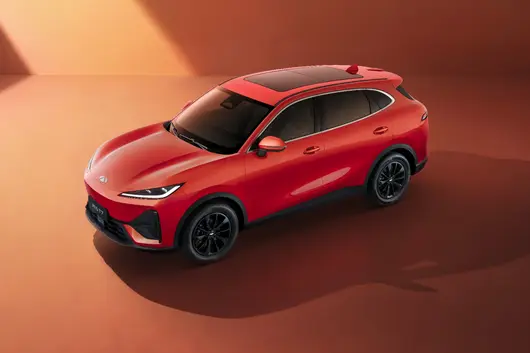

喺馬來西亞嘅 SUV 市場,好多買家喺揀車嗰陣都會拿寶騰 X90 同奇瑞 Tiggo 7 Pro 嚟比較。兩部車喺價錢同定位上都幾近,今日我哋就從多個方面做一個詳細嘅對比,幫你省咗做功課嘅時間。
寶騰 X90 喺馬來西亞嘅 OTR 售價係 RM 106,800 - 122,800,合共 4 個版本,包括 2026 1.5T Prime X(RM 122,800)、2026 1.5T Prime(RM 116,800)、2026 1.5T Lite(RM 106,800) 等。
奇瑞 Tiggo 7 Pro 喺馬來西亞嘅 OTR 售價係 RM 123,750 - 123,750,合共 2 個版本,包括 1.6L Turbo Standard(RM 125,000)、1.6L Turbo Premium(RM 140,000) 等。
由價錢睇,寶騰 X90 嘅起步價的確比奇瑞 Tiggo 7 Pro 平咗 RM 16,950。如果你預算有限,寶騰嘅入門版已經可以滿足日常需要。但亦要小心,平嗰幾千蚊,可能喺配備會有取舍,具體要睇你嘅需要。
寶騰 X90 搭載 1.5L Turbo,馬力 140 hp。官方油耗 7.0 L/100km。
奇瑞 Tiggo 7 Pro 搭載 1.5L Turbo,馬力 140 hp。官方油耗 7.0 L/100km。
兩部車用咗同一套動力系統,日常行車嘅感覺根本無分別。油耗方面都差唔多,唔使太糾結呢一點。
寶騰 X90 車身長 4400 mm,行李廂 400 L。
奇瑞 Tiggo 7 Pro 車身長 4400 mm,行李廂 400 L。
兩部車嘅尺寸差唔多,車內空間分別唔大。呢個級別嘅車,日常使用完全夠用。
寶騰 X90 採用 FWD 驅動方式。
奇瑞 Tiggo 7 Pro 採用 FWD 驅動方式。
兩部車嘅驅動方式一樣,都係 FWD,日常駕駛感覺唔會有太大分別。
寶騰 X90 同奇瑞 Tiggo 7 Pro 都係馬來西亞市場嘅主流選擇,適合家庭使用、日常通勤。如果你更睇重品牌口碑同二手價,可以優先考慮口碑更好嗰款;如果你更在意性價比同配備,嗰就揀配置更豐富嗰款。最終都建議兩款都去試駕,親身體驗先至最重要。
總括嚟講,寶騰 X90 同奇瑞 Tiggo 7 Pro 都係馬來西亞市場好好嘅車型。揀邊一輛,關鍵都要睇你個人需要同預算。建議大家做好功課,多比較幾間車行嘅報價,先至去試駕做最後決定。買車係件大事,花少少時間做功課絕對唔會錯。

In the Malaysian SUV market, many buyers compare the Proton X90 and Mazda CX-60 when choosing a car. These two cars are quite close in price and positioning. Today, we will make a detailed comparison from multiple aspects to help you save time on research.
The OTR price for Proton X90 in Malaysia is RM 106,800 - 122,800, with a total of 4 versions, including 2026 1.5T Prime X (RM 122,800), 2026 1.5T Prime (RM 116,800), 2026 1.5T Lite (RM 106,800), etc.
The OTR price for Mazda CX-60 in Malaysia is RM 200,510 - 252,873, with a total of 2 versions, including 2026 3.3T 4WD High Plus (RM 252,873), 2025 2.5L 2WD High (RM 200,510), etc.
From a price perspective, the starting price of the Proton X90 is indeed RM 93,710 cheaper than the Mazda CX-60. If your budget is limited, Proton's entry-level version can already meet daily needs. But also note, the difference of a few thousand might mean trade-offs in features, depending on your specific needs.
The safety rating for Proton X90 is 5★ (ASEAN NCAP), with active safety systems including ADAS (ACC, AEB, LKA, LDA, BSM, RCTA).
The safety rating for Mazda CX-60 is 5★ (Euro NCAP), with active safety systems including i-Activsense Pro.
In terms of safety features, both cars received good ratings. However, there are some differences in function between the Proton X90's ADAS (ACC, AEB, LKA, LDA, BSM, RCTA) and Mazda CX-60's i-Activsense Pro. If you value active safety more, you can compare the feature lists of both in detail.
The Proton X90 uses FWD drive system.
The Mazda CX-60 uses FWD drive system.
Both cars use the same drive system, both are FWD, so daily driving experience won't differ much.
Proton X90 warranty is 5 years/150,000km, maintenance interval every 10,000km or 6 months.
Mazda CX-60 warranty is 5 years/150,000km, maintenance interval every 10,000km or 6 months.
The warranty conditions for both cars are the same, no need to worry about this. Actual maintenance costs depend on the brand's service network and parts prices. It is recommended to ask real owners in car owner groups for their experiences.

Both Proton X90 and Mazda CX-60 are mainstream choices in the Malaysian market, suitable for family use and daily commuting. If you value brand reputation and resale value more, you can prioritize the one with a better reputation; if you care more about cost-performance ratio and features, choose the one with richer configurations. Ultimately, it is recommended to test drive both, as personal experience is the most important.

Overall, both Proton X90 and Mazda CX-60 are quite good car models in the Malaysian market. Which one to choose depends mainly on your personal needs and budget. It is recommended to do your research, compare quotes from several dealerships, and then go for a test drive to make a final decision. Buying a car is a big thing, spending time doing research will definitely not go wrong.

In the Malaysian SUV market, many buyers compare Proton X90 and Mazda CX-5 when choosing a car. The price and positioning of these two cars are quite close. Today we will make a detailed comparison from multiple aspects to help you save time on research.
Proton X90's OTR selling price in Malaysia is RM 106,800 - 122,800, with 4 versions in total, including 2026 1.5T Prime X (RM 122,800), 2026 1.5T Prime (RM 116,800), 2026 1.5T Lite (RM 106,800) etc.
Mazda CX-5's OTR selling price in Malaysia is RM 135,469 - 166,760, with 3 versions in total, including 2025 2.0L AT 35th Anniversary (RM 316,154), 2025 2.0L AT (RM 296,154), 2025 2.0L MT (RM 294,154) etc.
Looking at the price, the starting price of Proton X90 is indeed RM 28,669 cheaper than Mazda CX-5. If your budget is limited, Proton's entry-level version can already meet daily needs. But also note, that difference of a few thousand may involve trade-offs in equipment, depending on your specific needs.
Proton X90 is equipped with 1.5L Turbo, 140 hp power. Official fuel consumption is 7.0 L/100km.
Mazda CX-5 is equipped with 1.5L Turbo, 140 hp power. Official fuel consumption is 7.0 L/100km.
Both cars use the same powertrain, so the driving feel in daily use is basically the same. Fuel consumption is also similar, no need to worry too much about this.
Proton X90 body length is 4400 mm, trunk is 400 L.
Mazda CX-5 body length is 4500 mm, trunk is 450 L.
Regarding space, the Mazda CX-5 body is 100 mm longer than the Proton X90, with an advantage in passenger space. However, the Proton X90 is more flexible for parking in the city, each has trade-offs.
Both Proton X90 and Mazda CX-5 are mainstream choices in the Malaysian market, suitable for family use and daily commuting. If you value brand reputation and resale value more, you can prioritize the one with a better reputation; if you care more about cost-performance and equipment, choose the one with richer configuration. Ultimately, we suggest test-driving both models, as personal experience is the most important.

Overall, Proton X90 and Mazda CX-5 are both very good models in the Malaysian market. Which one to choose depends on your personal needs and budget. We suggest doing research, comparing quotes from several car dealers, and then test-driving to make a final decision. Buying a car is a big matter, spending time doing research will definitely not be wrong.


