首頁Shift

搜尋歷史
熱門搜尋
經銷商登入 / 註冊

According to media reports, Wang Hui, Vice President of Changan Automobile and Chairman of Avatr Technology, will shift his focus to Changan Automobile's globalization and has already started to be responsible for Southeast Asian and Central & South American business.
Chen Zhuo, promoted to Vice President of Changan Automobile this June, will take on more responsibility for Avatr.

Public records show that Wang Hui graduated from Wuhan University of Technology majoring in Material Forming and Control Engineering, joined Changan Automobile in July 2003. He has held various positions including the Process Planning Institute of the Process Technology Department of the Research General Institute, Chief of the Strategic Planning Division of the Strategic Planning Department, Director of the New Business Coordination Project Group, Office Director of the Company, and so on. In the 2010s, he was transferred to Changan Mazda Engine Co., Ltd., successively serving as Executive Vice President and Party Secretary. In September 2022, he was promoted to Vice President of Changan Automobile upon the President's nomination, becoming a core member of the young transformation of the enterprise management layer.
From 2023 to 2025, Wang Hui served as General Manager of the Overseas Business Development Department of Changan Automobile and General Manager of the Southeast Asia Division, promoting the construction of the Thailand factory and the implementation of the globalization strategy, proposing a localization rate target of over 80% for the Thailand factory.
After assuming the chairmanship of Avatr Technology, Wang Hui led the promotion of strategic cooperation with Huawei and CATL, establishing a new integrated development model of "one team, one goal, one strategy, one successful move", and led the investment affairs in Huawei Yinwang Company. In November 2025, Wang Hui promoted the announcement of the upgrade of the cooperation model with Huawei, launching the HI PLUS joint co-creation model, extending the scope of cooperation from pure technology supply to user insights, product definition, product development, integrated marketing, team co-building and other full value chain links. At the same time, the globalization layout principle of "no overseas without domestic, no overseas without first-class, no long-term without value" was proposed, promoting Avatr to enter 34 national markets and planning to expand to 46-50 countries in 2026.
In the first half of this year, although Changan Automobile's revenue decreased by 9.71% and net profit attributable to the parent company also declined by 64.32%, overseas business grew rapidly. Among them, overseas sales reached 455,000 units, a year-on-year increase of 51.9%; overseas revenue was 21.942 billion yuan, a year-on-year increase of 78.77%, accounting proportion of total revenue rose from 16.89% to 33.43%. Overseas gross margin was 20.13%, far higher than the 11.67% of domestic business.
It is worth noting that although Avatr had the backing of three giants, Changan, Huawei, and CATL, its development was not smooth in recent years.
From 2022 to 2025, Avatr accumulated losses exceeding 13.2 billion yuan.
In the first half of 2026, Avatr delivered approximately 27,619 units year-to-date, a year-on-year decline of 51.3%, completing only 12.6% of the full-year target of 220,000 units set at the beginning of the year.
The listing on the Hong Kong Stock Exchange was also fraught with twists and turns. In November 2025, Avatr submitted a listing application to the HKEX for the first time, but due to failing to complete the listing hearing within the specified time, it automatically expired on May 27, 2026. On June 30 this year, Avatr resubmitted the listing application to the HKEX, currently in the review process stage, with no clear listing schedule.
Source: Car Observation

The continuous "price war" intensifies market involution, while also prompting Chinese automakers to expand into overseas markets. However, as the scale of China's automotive exports continues to grow, the competitive order and compliance in overseas markets are becoming the industry's focus.
Recently, the Ministry of Commerce, the Ministry of Industry and Information Technology, and the State Administration for Market Regulation jointly released a document—"Guidelines for Overseas Competitive Behavior and Compliance Construction in the Automotive Industry". This document directly points to a series of controversies triggered by frequent price cuts by Chinese automakers in overseas markets in recent years, and for the first time at the official level, systematically set clear compliance requirements for automakers' overseas pricing, promotions, and localized operations, among other behaviors.

Among them, Chery Automotive's response was swift and steady, clearly stating it will establish a scientific pricing system in overseas markets and regulate terminal prices and promotional behaviors. GAC Group was not left behind, with its statement stating, "Integrating compliance concepts throughout the entire R&D, production, supply, sales, and service chain". Moreover, BYD, Great Wall Motor, and Geely Holding Group also issued statements in response in succession.

From the industry's top-level call to standardize benign competition and eliminate spillover involution, to automakers generally recognizing the ineffective competition of low-price killing, the whole industry has formed a unified consensus on breaking the deadlock. However, reaching a consensus does not mean risks automatically dissipate; the warning bell against "involution" spillover must still ring long.
1
Export Acceleration, Compliance Faces Challenges
The background for the release of the "Guidelines" is the explosive growth in the scale of Chinese automotive "going global". Data shows that in the first 7 months of this year, China exported 6.14 million automobiles, a year-on-year increase of 66.8%. The monthly export volume first broke through the 1 million mark in June of this year, and July continued this trend, achieving consecutive two months of over 1 million automobiles exported. Industry predictions suggest the full year may hit 10 million.

Against the background of intensified competition in the domestic market, overseas exports have become the core growth engine for numerous Chinese automakers. Taking August sales as an example, BYD's single-month overseas sales exceeded 180,000, setting a new historical high; Chery exported 197,000, a year-on-year increase of 52.1%, with cumulative exports exceeding 7.18 million; Geely's overseas exports in August reached 110,100, a significant increase of 205% year-on-year. Great Wall Motor's overseas sales of 289,000 in the first half of this year have surpassed its domestic sales of 286,700; this is the first time in Great Wall's history that overseas sales have exceeded domestic sales.
Behind rapid expansion, the hazards of extensive overseas expansion are gradually emerging. Some enterprises expanding overseas continue to use the domestic "trade price for volume" strategy, with frequent price cuts, channel channeling, and failure to fulfill promises to dealers occurring from time to time. This not only harms consumer interests but also impacts the overall brand image of Chinese automobiles.
2
Overseas Markets Can No Longer "Price Arbitrarily"
Pricing is the core focus of this guideline. It is reported that the document urges vehicle and component manufacturers to avoid fierce price wars and significant price-cut promotions in overseas markets. It requires enterprises to base pricing on costs and local market supply and demand, avoiding frequent and large price cuts. Different configurations must have clear price gradients and cannot rely on low prices to disrupt local market order. At the same time, dealer channels must be regulated, and a complete compliance system for overseas after-sales, quality, and data security must be improved.

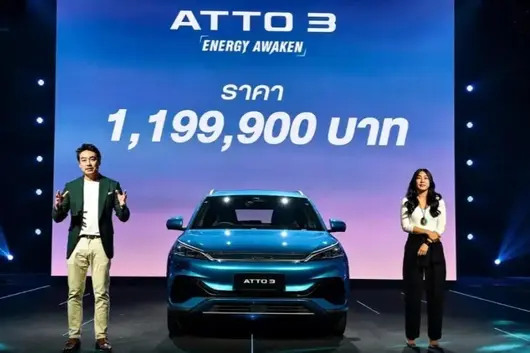
The intent of "admonishing" in this section is obvious, referring precisely to the "involution" spillover that everyone has been very familiar with in recent years. Many automakers, after expanding overseas, adopted aggressive methods such as price cuts to quickly grab market share. Although this was due to market behavior, it did exert certain impacts on the stability of the local market. There are already some negative cases, for example, in the Thai market, some automakers made successive price cuts in Thailand, raising the dissatisfaction of users who had already purchased cars. Thai public institutions also launched investigations into this matter.
This scene inevitably recalls the past lessons of Chinese motorcycle exports to Southeast Asia. If Chinese auto enterprises continue to blindly "involute" and replicate the domestic price war tactics, it will only undermine the value of Chinese brands, and even trigger anti-dumping and trade protection investigations by local regulators. This is a very dangerous signal for Chinese automakers who are just beginning to emerge in overseas markets.

The purpose of the state issuing relevant guidelines this time is clear: no longer solely encouraging the expansion of export scale, but beginning to standardize and manage the increasingly complex global business layout. In other words, previously Chinese automobiles competed on "whether they could go out", but now they are competing on "whether they can stay".
Overseas markets are full of gold mines, automakers must not mess this up. Chinese automakers going overseas cannot just think about selling cars; they must also learn to do business long-term and in a compliant manner. After all, the outcome of long-term competition no longer depends on who has the lower price or faster shipment, but on the comprehensive ability of localized operations, global compliance governance, supply chain collaboration, and brand building.

Currently, China's automotive export faces dual pressures of intensifying trade barriers and the spillover of internal price wars. The joint release of compliance guidelines by the Ministry of Commerce and two other ministries is precisely to curb malicious competition. Of course, the guidelines are essentially guiding, non-mandatory regulations. To be implemented, it ultimately depends on whether enterprises can reach a true industry consensus and take concrete actions.