首頁Shanghai

搜尋歷史
熱門搜尋
經銷商登入 / 註冊


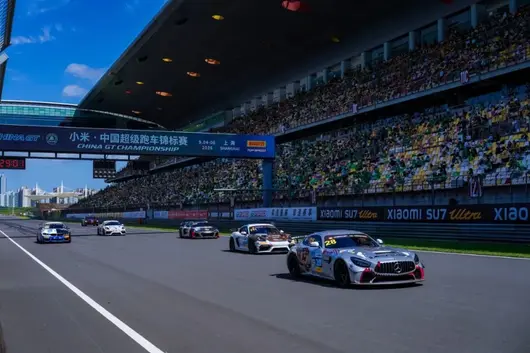
September 4 to 6, 2026, the 2026 Xiaomi China Super Sports Car Championship (CHINA GT) held the fourth round of the season competition at the Shanghai International Circuit. STARCARS RACING once again fielded the lineup of Ouyang Zhenwei partnered with Singaporean rising star driver Dennis Chan, competing in the GTS AM class with the No. 28 Mercedes-AMG GT4 car.


As a new force participating in CHINA GT for the first time this year, STARCARS RACING competed at the Shanghai International Circuit for the second time this season. Facing a large field of cars and complex track conditions, the No. 28 crew steadily improved in the three race finals, adding valuable experience to their season journey with solid performance.
Qualifying: Steadily Moving Forward Under Complex Track Conditions

GTS class qualifying took place Saturday morning. At the beginning of the session, it encountered rain, and parts of the track were in a semi-dry and semi-wet state, with road grip continuously changing, putting higher adaptation requirements on all crews' single-lap sprints. The No. 28 crew played it steady under complex track conditions, achieving 4th and 5th places in the GTS AM class in the two qualifying sessions respectively, laying a solid foundation for the race start.
Finals: Steady Improvement Each Race, Constant Breakthroughs

The GTS class faced high-intensity competition in the three-round finals at the Shanghai station, and the No. 28 crew achieved steady improvement across the three races.

In the first race final on Saturday, Dennis Chan took the lead to complete the first leg, then passed to Ouyang Zhenwei. The two drivers started together from 21st place overall and played it steady under fierce competition, finally finishing 20th overall and 6th in the GTS AM class.

In the second race final on Sunday morning, Ouyang Zhenwei was responsible for the first leg driving, and Dennis Chan took over to complete the second leg. The No. 28 crew started from 22nd place overall, with a significant improvement in pace, finally finishing 17th overall and 5th in the GTS AM class, improving their ranking further than the first round.

In the third race final on Sunday afternoon, the No. 28 crew started from 23rd place overall, maintaining steady performance under high-intensity competition, finally finishing 21st overall and 4th in the GTS AM class.

From 6th in the class in the first round to 4th in the class in the third round, the No. 28 crew improved race by race across the three rounds. As a new force participating in CHINA GT for the first time this year, STARCARS RACING achieved race-by-race improvement in class ranking in the three finals at the Shanghai station. Ouyang Zhenwei and Dennis Chan's adaptability under complex track conditions continued to strengthen. The CHINA GT season is still ongoing, and STARCARS RACING will bring the gains and experience from the Shanghai station to launch a new challenge at the next stop.



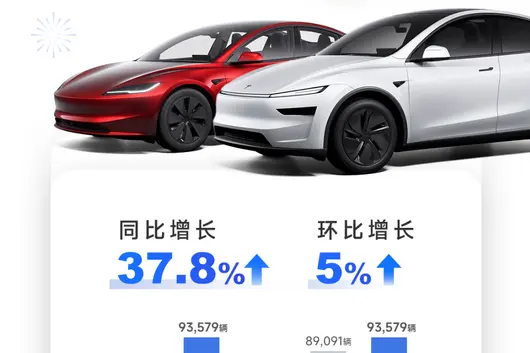
According to the latest statistics from the China Passenger Car Association, Tesla's Shanghai Gigafactory delivered over 93,000 vehicles in July 2026, setting a new high for monthly deliveries this year, up 37.8% year-on-year, up 5% month-on-month, equivalent to a new owner being born every 15 seconds.

Tesla's Shanghai Gigafactory is Tesla's largest global export center and a core capacity pillar supporting global order deliveries, with production and delivery performance remaining consistently strong.
Since the delivery of the first batch of China-made Model 3s in December 2019, the Shanghai Gigafactory has cumulatively produced over 4.5 million electric vehicles in six and a half years, accounting for more than 45% of Tesla's global total output, with more than half of globally popular orders delivered from here.
In the first half of 2026, the Shanghai Gigafactory's delivery volume reached nearly 468,000 vehicles, up 28.4% year-on-year, with production hitting a new high for the same period in the past three years.
Behind efficient deliveries lies extreme production and logistics efficiency: production can complete a whole vehicle every 30+ seconds, and transport can load 7,738 vehicles onto a single ship, providing solid assurance for orders in global markets.
Relying on powerful production capacity and export capabilities, Tesla models have become true "hit products going global," achieving sales success in multiple overseas markets.
In June 2026, Model Y sales in Australia exceeded 8,000 units, up 133.5% year-on-year, setting a new high for monthly sales, becoming the best-selling model across all categories in the local car market. This was also Model Y's second consecutive month as the passenger car sales champion in Australia.
The New Zealand market also saw strong sales, with Model Y becoming the best-selling model across all categories in the local car market in June.
In the Malaysian market, both models advanced side by side: Model Y became the best-selling imported brand electric vehicle in Malaysia in June, and Model 3 became the best-selling pure electric sedan in Malaysia in June.
During the same period, Tesla set a record single-month delivery volume in Singapore, with Model Y becoming the best-selling SUV locally; Tesla became the sales champion for electric vehicle brands in the Philippines in June.
Not limited to the output of China-made products, the large six-seater luxury SUV Model Y L, designed, developed, and manufactured under Chinese leadership, is being rolled out sequentially in multiple global markets including the US, UAE, South Korea, Japan, Singapore, and Australia, attracting many consumers to visit stores for test drives and stirring up a wave of ordering enthusiasm.


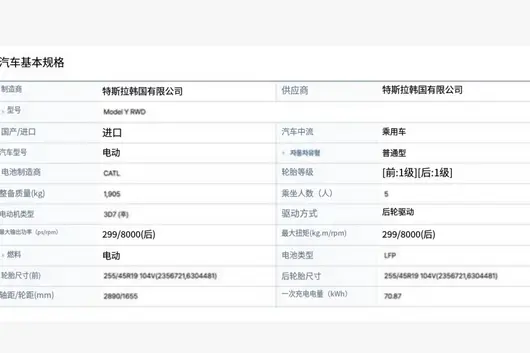
Tesla's ultimate trump card, hidden for half a year, finally lands! The widely rumored Budget Model Y has been officially confirmed, the Shanghai Super Factory has specifically built an exclusive production line, the new car has already passed listing certification in South Korea first, the battery still uses CATL lithium iron phosphate cells, expected to launch in the domestic market as early as this third quarter. Once the news broke, the entire 150,000-250,000 RMB pure electric SUV market exploded, all people preparing to buy cars are waiting for one answer: How much will this cheapest Tesla sell for?

Let's first calculate the most exciting price breakdown for everyone, which is also Tesla's core move to overturn the entire market this time. Currently sold in China, the starting price of the current Model Y is 249,900 RMB, while the upcoming budget version, through cost optimization, smashed through everyone's expectations directly. Referencing the budget Model 3 sold to Thailand earlier this year, which was nearly 30,000 RMB cheaper than the domestic same model, combined with CATL's latest low-cost lithium iron phosphate battery solution, and targeted simplification of interior and configurations, industry analysts generally predict, the starting price of the domestic budget Model Y will be set directly at 189,900 RMB, the top trim version will not exceed 220,000 RMB.
How outrageous is this price? You can buy a Tesla mid-size pure electric SUV for 189,900, 60,000 RMB cheaper than the current Model Y entry version directly, 10,000 RMB cheaper than BYD Song PLUS EV top trim, 20,000 RMB cheaper than Xiaomi SU7 entry version, even lower than the price of many domestic compact SUVs. Previously many people said Tesla is untouchable, now with just the cost of an ordinary family car, you can drive a Tesla, this was completely unimaginable a few years ago.
Many people worry cheap means bad quality, actually it's unnecessary. Tesla's budget version never cuts core major components, but removes unnecessary luxury configurations. From currently exposed information, the budget Model Y will continue to adopt Tesla's pure electric platform, equipped with a rear single motor, maximum power remains consistent with the current model, CLTC comprehensive driving range expected around 550km, completely meeting daily commute and short trip needs. The battery is still the lithium iron phosphate battery provided by CATL, safety and durability have all been verified by the market.
The real configuration reduction focuses mainly on non-core comfort configurations: interior will be replaced with more cost-effective eco-friendly materials, some ambient lights and decorative parts canceled; sound system reduced from 14 speakers to 8, subwoofer canceled; may use Tesla's latest pure vision solution, cancel ultrasonic radars, further reducing hardware costs. But it is worth noting, hardware for FSD full self-driving will be pre-installed on the whole series, later can be activated via payment, this is also Tesla's consistent sales strategy.
The reason Tesla is in a rush to launch the budget Model Y is fundamentally because the domestic market competition has reached an intense stage. Since the beginning of this year, BYD, Xiaomi, XPeng and other domestic brands have gone crazy in the 200,000 RMB level market, launching a large number of models with extremely strong product power, directly snatching away a large number of users who originally belonged to the Model Y. Sales of the current Model Y have declined for three consecutive months, Tesla must produce more lethal prices, to protect its market share.
And the capacity advantage of the Shanghai factory also gave Tesla the confidence to fight a price war. Currently, the annual capacity of the Shanghai Super Factory has exceeded 750,000 vehicles, the problem of insufficient capacity utilization is becoming increasingly prominent. Producing the budget Model Y not only absorbs excess capacity, but also further dilutes R&D and production costs through higher sales, forming a virtuous cycle of sales higher - cost lower - price cheaper.
It is foreseeable, once the 189,900 RMB Model Y launches, it will trigger chain reactions throughout the industry. First, the current Model Y will immediately start inventory clearance mode, terminal discounts are expected to reach 30,000-40,000 RMB, the opportunity to buy the current model at rock bottom is coming soon; Secondly, all domestic competitors will be forced to follow with price cuts, BYD Song PLUS, Geely Galaxy E8, XPeng G6 and other models, without price cuts they cannot compete with Tesla at all; Finally, the entire 150,000-200,000 RMB pure electric market price system will be completely reconstructed, consumers will become the biggest beneficiaries.
For ordinary consumers, the wisest choice right now is to wait and see. If you are not in a rush to use a car, strongly suggest waiting until the third quarter when the budget Model Y launches, the opportunity to buy a Tesla for 189,900 is not every year; if you need to buy a car now, endure it for a bit, at most two months, the entire 200,000 RMB level pure electric SUV market will welcome a wave of big price cuts, buying now is definitely being a sucker.
Of course, if you value rich configurations and localized intelligent experiences more, domestic models remain a better choice. Domestic SUVs at the same price point, not only have larger space, better interiors, but also high-level smart driving, seat ventilation massage and other luxury configurations, these are things the budget Model Y cannot compare with.
Tesla has never lost a price war, the arrival of this budget Model Y will completely rewrite the market landscape of China's new energy vehicles. So the question arises, with the same 190,000 RMB budget, would you choose the budget Model Y with stronger brand power, or a domestic top-trim SUV with full configurations? How low do you think Tesla can eventually drive the price?
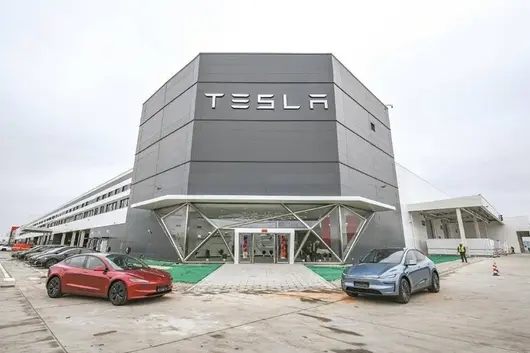
At the beginning of each month, major automakers reveal their report cards, and the "good student" Tesla is no exception.
According to the latest data from the China Passenger Car Association, Tesla Shanghai Factory deliveries in May exceeded 85,000 units, the highest single-month delivery this year.

This Tesla Shanghai Gigafactory was established in Lingang in 2019, completing the entire process of groundbreaking, production launch, and delivery in that year. It is now already Tesla's global production powerhouse, contributing more than half of the brand's deliveries. Whether sold domestically or exported overseas, most originate from here. The local parts rate exceeds 95%, with a car rolling off the line every 30-plus seconds on average. The so-called "Tesla Speed" is no mere talk.

So, what contributed to this record-breaking delivery this time?
First, the overseas market contributed significantly. The main models Model 3 and Model Y have consistently ranked high in premium pure electric rankings in Thailand, South Korea, Hong Kong and Macao, etc., so demand is naturally substantial.
Returning to the domestic market, regarding auto financing plans, Tesla recently launched an "Easy Loan" service, lowering the purchase threshold and stimulating many hesitant users to place orders.
Additionally, the charging network. Tesla has opened its Superchargers to vehicles of other brands, with over 1,000 stations, starting from 1.5 yuan/kWh, usable nationwide. No matter what brand of car you drive, having an extra charging option on the road allows many consumers hesitant about recharging to put their worries aside.

To be honest, in the current highly competitive environment for new energy vehicles, Tesla being able to achieve this result indeed shows some real skill.
However, after capacity and speed increase, the test on quality will be greater. Whether subsequent quality control remains stable is also a concern for many.
Plus, there are many uncertain factors overseas such as policies and tariffs, so export business may not always go smoothly.

So, do you think it can maintain this good performance in the second half of the year? Let's chat in the comments.

At the beginning of each month, major automakers reveal their report cards, and the "good student" Tesla is no exception.
According to the latest data from the China Passenger Car Association, Tesla Shanghai Factory deliveries in May exceeded 85,000 units, the highest single-month delivery this year.
This Tesla Shanghai Gigafactory was established in Lingang in 2019, completing the entire process of groundbreaking, production launch, and delivery in that year. It is now already Tesla's global production powerhouse, contributing more than half of the brand's deliveries. Whether sold domestically or exported overseas, most originate from here. The local parts rate exceeds 95%, with a car rolling off the line every 30-plus seconds on average. The so-called "Tesla Speed" is no mere talk.
So, what contributed to this record-breaking delivery this time?
First, the overseas market contributed significantly. The main models Model 3 and Model Y have consistently ranked high in premium pure electric rankings in Thailand, South Korea, Hong Kong and Macao, etc., so demand is naturally substantial.
Returning to the domestic market, regarding auto financing plans, Tesla recently launched an "Easy Loan" service, lowering the purchase threshold and stimulating many hesitant users to place orders.
Additionally, the charging network. Tesla has opened its Superchargers to vehicles of other brands, with over 1,000 stations, starting from 1.5 yuan/kWh, usable nationwide. No matter what brand of car you drive, having an extra charging option on the road allows many consumers hesitant about recharging to put their worries aside.
To be honest, in the current highly competitive environment for new energy vehicles, Tesla being able to achieve this result indeed shows some real skill.
However, after capacity and speed increase, the test on quality will be greater. Whether subsequent quality control remains stable is also a concern for many.
Plus, there are many uncertain factors overseas such as policies and tariffs, so export business may not always go smoothly.
So, do you think it can maintain this good performance in the second half of the year? Let's chat in the comments.

[CNMO Tech News] On June 4, Tesla officially announced that the Tesla Model Y produced by the Shanghai Superfactory became the best-selling vehicle across all categories in Australia in May 2026, and also became the first electric vehicle to top the sales charts in local history.

Tesla Model Y

According to VFACTS data released jointly by the Federal Chamber of Automotive Industries (FCAI) and the Electric Vehicle Council (EVC), the Tesla Model Y topped the sales chart for new cars in Australia in May 2026 with sales of 5,605 units. This is the first electric vehicle to rank number one in sales in the history of the Australian car market. Ford Ranger and Toyota HiLux, two pickup trucks that often top the list, ranked second and third with sales of 4,474 and 4,005 units respectively. More notably, the Tesla Model Y's monthly sales of 5,605 units showed significant year-on-year growth of56.6%, setting a monthly sales record for this model in the Australian market.

Tesla
The Tesla Model Y that topped the charts this time was entirely produced and supplied by Tesla's Shanghai Superfactory. As Tesla's largest global export hub, deliveries from the Shanghai Superfactory account for more than half of the global total deliveries. According to the latest statistics from the China Passenger Car Association (CPCA), the Shanghai Superfactory delivered over 85,000 electric vehicles in May, setting a new single-month delivery record for 2026, with year-on-year growth of 39.4%.

Tesla Factory
Meanwhile, the large 6-seater luxury SUV Model Y L produced by the Shanghai factory is accelerating deliveries to multiple Asia-Pacific markets including Australia, Singapore, South Korea, Thailand, Philippines, and others. Thom Drew, Regional Director of Tesla Australia and New Zealand, stated regarding May delivery results that this achievement was thanks to "the continued loyalty of existing customers and an increasing number of Australian buyers choosing Tesla for the first time."