首頁Release

搜尋歷史
熱門搜尋
經銷商登入 / 註冊

August 26, Dongfeng Automobile Co., Ltd. (hereinafter referred to as "Dongfeng Shares", Stock Code: 600006) officially released the 2026 Semi-Annual Report. During the reporting period, Dongfeng Shares firmly grasped the opportunities for green and intelligent transformation in the commercial vehicle industry, anchored on the development directions of new energy and internationalization, steadily improved operating quality, and delivered a mid-year report with steady improvement and positive trends.

The report shows that in the first half of 2026, Dongfeng Shares achieved operating revenue of 5.516 billion yuan, a year-on-year increase of 9.64%; achieved total profit of 169 million yuan, a significant year-on-year increase of 83.56%; net profit attributable to shareholders was 124 million yuan, a year-on-year increase of 27.83%, with significantly improved profitability levels. Under the complex situation of intensifying industry competition and changing demand structure, the company deepened value marketing, promoted cost reduction and efficiency improvement across the entire chain, continuously optimized product structure, and further highlighted the operating resilience of the company.
Regarding whole vehicle sales data, the company achieved sales of 69,000 vehicles, a year-on-year increase of 0.44%, outperforming the market. The growth momentum of domestic new energy business was bright, with new energy vehicle sales reaching 18,000 vehicles, a significant year-on-year increase of 99.2%, significantly outperforming industry growth speed, becoming the core engine driving company growth.

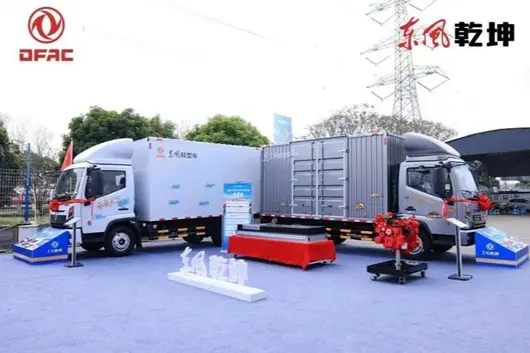
Among them, the VAN vehicle market performance was bright. In April this year, the VAN vehicle brand was integrated, and the Dongfeng Furuitong brand was launched. Products such as Dongfeng Furuitong V6, V8, and V10 quickly gained market recognition, order volume increased rapidly, and delivery volume in the first half of the year increased by 153.9% year-on-year; in the light truck sector, the pace of new energy transformation was accelerated. Dongfeng Qiankun K6E, Dongfeng Dolicard D6E Battery Swap Version and other new products were launched to the market in succession, precisely matching diverse niche scenarios such as urban distribution and cold chain. New energy light truck sales increased by 573.4% year-on-year; Dongfeng Tuya T9E, T5E, T7Pro and other products were launched in rapid succession, providing more valuable product choices for urban and rural distribution.

While the product layout is rapidly transforming from traditional fuel vehicles to new energy, Dongfeng Shares focused on key technologies such as pure electric vehicles, hydrogen fuel trucks, skateboard chassis, and intelligent driving, continuously invested R&D expenses of 213 million yuan, a year-on-year increase of 74.48%. In June this year, the Dongfeng OpenVAN unmanned logistics capacity brand was officially launched, and four L4-level unmanned logistics vehicles were released, receiving over 4,000 strategic orders on-site; autonomous driving logistics vehicles and intelligent sanitation vehicles have begun demonstration operations, accelerating the exploration of smart logistics commercialization implementation paths, and solidifying the foundation for long-term development with technical innovation.

The overseas export business achieved growth acceleration, with 13,000 whole vehicles exported in the first half of the year, a year-on-year increase of 81.4%. Relying on a mature product matrix, Dongfeng Light Vehicles continued to breakthrough in key markets such as Latin America and Southeast Asia. A single delivery in Malaysia reached 830 units; jointly donated Dongfeng Furuitong V10E to Cuba Latin American News Agency with Xinhua News Agency. The Latin American market simultaneously secured 108 vehicles, and the Dongfeng Furuitong brand's international reputation was quickly established. Dongfeng Light Vehicles continued to expand the overseas market landscape, and overseas brand reputation continued to improve. 
Meanwhile, Dongfeng Shares' engine business achieved significant growth in the first half of the year. Engine sales increased by 26% year-on-year, and engine business for generator sets increased significantly. As a core component business of Dongfeng Shares, the continuous strength of the engine sector not only verified Dongfeng Shares' technical accumulation in the powertrain field but also provided support for the market competitiveness of whole vehicle products.

The improvement in Dongfeng Shares' operating performance in the first half of the year is inseparable from the business achieving accelerated transformation and rapid promotion of new business layout. At the same time, it also relies on Dongfeng Shares' "Green Environmental Protection, Digital Integration, Flexible Manufacturing, Platform Sharing" intelligent manufacturing hard-core strength, laying a solid foundation for creating high-quality products and solidifying product reputation.
Facing the future, Dongfeng Shares will continue to focus on the five development directions of "New Quality Products, Marketing Capability, High-quality Operations, Ecosystem Integration, Value Creation and Sharing", accelerate the pace of new energy transformation, continuously optimize product structure, strengthen ecosystem construction, seize market transformation opportunities, and achieve high-quality development of company operations.

Lotus Group (a wholly-owned subsidiary of Geely Holding Group) H1 2026 financial report is now out, this financial report has some highlights; as the enterprise clarified the narrowing of loss area, and simultaneously clarified the sales performance of the brand in different markets, let's take a look at the detailed data below.

Key data includes:
On August 21, 2026, Geely Holding completed 100% equity acquisition of Lotus UK; at this point its UK Hethel factory and Lotus Engineering consulting business are all completed internal integration; before this, Geely Holding only held 51%, Etika held 49%, such a joint venture state would affect Lotus development decisions, because Etika has veto rights on important decisions. Conversely, after full acquisition can completely break free from Etika's interference.
Believe the future will no longer have Lotus Engineering team handle tuning of certain group brand direct competitors situation, knowing that Xiaomi SU7 Ultra Nürburgring version was tuned by Lotus Engineering team.

The previous 'Lutess' is the current Lotus Automobile.
Clearly Lotus Car's name sounds better, why call it 'Lutess' before?
Lotus translates to Lotus (flower), Lutess is the phonetic translation of the word; and the reason for using Lutess this phonetic translation name was 'Lotus' trademark was already grabbed registered, then Lutess Car negotiated trademark transfer with the company unsuccessfully, so could only use phonetic translation name. But what belongs to who is belongs to who, Lotus Car is very important to the brand; subsequently Lotus launched rights protection via litigation, finally obtained 'Lotus' trademark, later changed brand name.

Believe old drivers still remember another car brand related to Lotus, this brand is 'Youth Lotus.'
However the one who grabbed this trademark was not Youth Lotus Car, but an auto parts company, now unnecessary to mention this company again; just need to explain, otherwise might wrongly accuse Youth Lotus Car. However Youth Lotus Car might not care, because Youth Lotus Car was a sub-brand launched by Zhejiang Youth Auto Group in 2006 in cooperation with Malaysia's Proton Group, Proton Car acquired the Lotus parent company in 1996, but purchased only 'Lotus Engineering' chassis tuning service.
Subsequently the Youth Auto Group wanted to register and use the Lotus Car brand, but also because of trademark registration issues could not use it; later could only use the 'Youth Lotus' brand name which was borderline.

The car products built by Youth Lotus Car were actually Proton GEN-2, not Lotus whole vehicles, technology aspect also had no deep Lotus participation; so product competitiveness was actually relatively limited, Youth Lotus brand name also seemed slightly strange in Chinese context, brand appeal was obviously not strong enough.
So in 2012 the cooperation between the two parties broke down, Youth Auto went bankrupt and liquidated in 2017.
Thus Youth Lotus Car became a thing of the past, however recently happened to encounter one by chance, it already looks quite aged. As for the future, naturally there is only one Lotus Car, no need to use the Lutess name anymore.


[CNMO Tech News] July 23, @Tesla released its Q2 2026 earnings report. Key points are as follows:

The Tesla Cyber Robotaxi Cybercab has started production at the Texas Gigafactory;
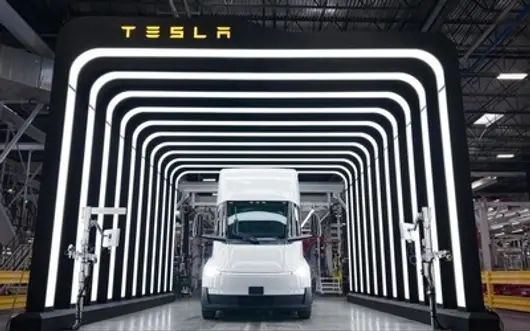
Tesla Electric Truck Semi will start mass production this year at the new factory in Nevada as planned;
Battery pack capacity expansion continues to make progress; battery pack capacity is the main limiting factor for recent EV production increases;
The Texas Energy Storage Gigafactory is nearing completion, and plans to start production this year;
More customers choose to subscribe to Tesla driver assistance software when purchasing a vehicle;
Tesla Robotaxi service coverage continues to expand, currently launched in 7 major cities in the US;
After the retirement of Model S and Model X production lines, the Fremont factory begins construction of the Tesla Optimus robot production line, planned to start production later this year.
Regarding the EV business, Tesla delivery volume set new records in multiple markets: South Korea, Australia, Colombia, Japan, Thailand, Portugal, Philippines, Chile, Slovenia, Lithuania, etc.

Regarding energy production and storage, Shanghai Energy Storage Gigafactory output hit a new record, driving EMEA (Europe, Middle East, and Africa) market energy storage installations to a new high; Shanghai Energy Storage Gigafactory continues to ramp up capacity. The new Energy Storage Gigafactory in Texas will start production of the third-generation Megapack and Megablock energy storage systems this year as planned.

Regarding the humanoid robot business, Tesla is installing the first generation Tesla Optimus robot production line at the Fremont factory, expected to start production soon. The first batch of Tesla Optimus robots will be used for our Optimus Academy, to collect training data and further develop new features. Additionally, Tesla continues to advance the site development of the Texas Gigafactory, currently construction work is fully underway.

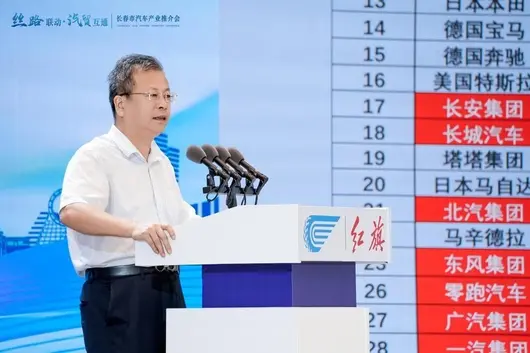
At the current juncture where the century-old auto industry is entering a critical crossroads of deep transformation, data has become the key to decoding trends and insight into the future. On July 11, during the 23rd Changchun International Auto Expo, Cui Dongshu, Secretary-General of the China Passenger Car Association, released authoritative industry data on the national passenger car market with the theme "Global Auto Trade Layout and Overseas Mobility Scene Ecosystem Construction". This release not only outlines the grand picture of the global restructuring of the auto industry, but also, with detailed coordinate parameters, marked a clear course of "gathering momentum for innovation, building dreams and moving forward" for Changchun and even the Chinese auto industry.

I. Observing the Change in Scale: Global Landscape Deeply Reshaped, Chinese Engine Momentum Strong
Cui Dongshu pointed out in the release that the global auto market is undergoing a historic reshuffle from stock game to incremental restructuring. Growth in traditional markets such as Europe, America, Japan, and South Korea is tending to saturate, competition is fully shifting from "incremental expansion" to "stock substitution"; while emerging forces represented by China are rewriting the industry map with an irresistible momentum.
Looking to the long term, this change has far from reached the end. Cui Dongshu deeply analyzed in the data release: The current world car sales volume is maintained at a scale of 96 million vehicles, and with the full rollout of electrification transformation, the long-term space of the global car market is expected to break through 150 million vehicles — this is not only the inevitable direction of industrial change, but also the grand blue ocean for Chinese cars to go global. The world auto pattern is being completely reshaped due to electrification, Chinese car exports will usher in continuous surge, breaking through the 10 million mark in 2026 is just the prologue, and the growth space for the next 30 years remains boundless.
In 2026, against the background of diverging trends in the world auto market, Chinese car exports are expected to step into the 12 million vehicle scale quality era, continuously holding the top position globally, becoming the undisputed core engine driving world auto trade growth. What is particularly crucial is that China's new energy vehicles account for over 60% of the world share, and the plug-in hybrid field even occupies nearly 75% of the global share — this is not only a lead in scale, but also marks that China has firmly grasped the initiative in the global new energy vehicle industry definition and discourse rights.

II. Observing the Advantage in Structure: Three Major Scenes Penetrated Globally, Ecosystem Outbound Paradigm Upgraded
Data is the appearance, structure is the essence. Cui Dongshu emphasized that Chinese car exports have completely gotten rid of the old label of "low-end low-price", achieving a qualitative leap from "scale expansion" to "value output". This leap is concentrated in the precise penetration and ecosystem coverage of three major core overseas mobility scenes: In the private vehicle sector, relying on the combination of "affordable and easy to drive, service-backed", Chinese brands' market share in emerging markets such as Thailand and Indonesia has strongly broken through 60%; In the ride-hailing operation field, through the "customized vehicle models, exclusive finance, dedicated charging" full-link ecosystem, Chinese solutions are reshaping the ride-hailing business model in Southeast Asia; In the long and short-term rental scenes, "vehicle + full-dimension service" dispels overseas operators' deep concerns about asset value preservation. This set of data profoundly reveals a trend shift: The globalization of Chinese cars is no longer the trade output of single products, but the global replication of a complete green mobility solution of "vehicle + charging + maintenance + finance + digitalization" — a mature, profitable, and high-stickiness ecosystem closed loop is accelerating on the world map.

III. Observing the Window of Opportunity: Filling the Inclusive Gap, Changchun is Just the Right Time
Standing in the present and looking forward, Cui Dongshu's data analysis has marked a clear opportunity direction for the global auto industry. He pointed out that the current global market has a structural gap of "high-end excess, insufficient inclusiveness" — this is exactly the core breakthrough for Chinese brands to break the deadlock. Whoever understands scenes and users better, and fills the vacuum of mass consumption and operation markets with high cost-performance and high practicality products, will grasp the initiative in global competition. Changchun, as the core hub of the Northeast Asian auto industry, possesses natural geographical advantages and mature logistics channels against Russia, South Korea, and Southeast Asia, and is exactly at the golden coordinate of the Chinese auto ecosystem outbound strategic fulcrum. The trend of "localized rooting, scenario-based deep cultivation, ecosystem coordination" revealed by this data release provides highly weighted decision reference and path guidance for Changchun and Northeast automotive companies to set sail overseas.

Data defines the present, trends indicate the future. As Cui Dongshu profoundly summarized in the release conclusion: "The globalization of China's auto industry has completed the leap from 'vehicle exports' to 'exporting global green mobility complete solutions'. Relying on diverse scenarios and whole industry chain advantages, we use products to make up for shortcomings, use models to build ecosystems, use industry to empower the world — this is not only the confidence of Chinese new energy vehicles leading the future, but also anchors the clear course for Changchun auto industry to explore the global market." This resounding judgment elevated a data release to a collective ignition of industry confidence.
A grand blueprint from "Chinese-made cars" to "Chinese-made global green mobility ecosystem" has been unfolded. We firmly believe, relying on the surging momentum of China's new energy vehicle whole industry chain, standing on the golden location of Changchun Northeast Asian opening hub, the Chinese auto industry will surely ride the wind and waves in the tide of global industrial change, with an irresistible momentum, sail towards a broader, greener, smarter new journey. (Source: Changchun Auto Expo Organizing Committee)

[CNMO Tech News] On June 10, CNMO Tech learned from NIO official that the Singapore electric vehicle charging and battery swapping standards "Singapore Standard SS 722", in which NIO deeply participated in research and formulation, was officially released recently. It is reported that NIO is one of the core leading units for this Singapore battery swapping technical standard update and participated in the standard improvement work. After the release of this standard, it means that the battery swapping model has made new progress at the international standardization level, and also shows that Chinese enterprises' experience in battery swapping technology and operational practices is further entering the overseas standard system.

NIO

Compared with the previous version, "Singapore Standard SS 722" adds content from "Electric vehicles charging system – Part 4: Battery swapping and mobile charging system", establishing battery swapping and mobile charging technical specifications for electric passenger cars and heavy-duty trucks for the first time. This means that Singapore has further included battery swapping and mobile charging scenarios in the electric vehicle energy replenishment standard, providing a standard basis for relevant facility construction, technology application, and industry collaboration.
NIO stated that the company has long attached importance to the standard system construction. In the battery swapping field, it has already led and participated in the formulation and revision of more than 50 national standards, industry standards, and group standards, and participated in the formulation of 4 IEC standards, continuously promoting the construction of the battery swapping industry standard system.

Data shows, as of June 10, NIO has applied for more than 1650 global battery swapping patents, built 8960 charging and swapping stations nationwide, including 3904 swapping stations, 5056 charging stations and 29089 charging piles, cumulatively completing more than 110 million battery swapping services.