首頁Recall

搜尋歷史
熱門搜尋
經銷商登入 / 註冊

On October 13, it was reported that the State Administration for Market Regulation recently released 6 recall notices involving multiple enterprises including BYD, BMW, Stellantis, and Jaguar Land Rover, totaling over 190,000 vehicles. Meanwhile, the Ministry of Ecology and Environment also announced an emission recall plan for GAC Honda, while Chery Automobile apologized and launched a recall regarding model issues in the Malaysian market. From braking systems to propeller shafts, the defect types covered in this batch of recalls are quite diverse.

BYD: Brake pedal limiting pad batch anomaly
The largest recall in this batch is by BYD. BYD Auto Co., Ltd. is recalling 58,026 Tang series vehicles produced between March 28, 2015, and December 21, 2018, 77,846 new generation Tang DM series vehicles produced between May 19, 2018, and January 14, 2022, and 7,023 new generation Tang EV series vehicles produced between December 27, 2018, and October 25, 2021; BYD Automobile Co., Ltd. is recalling 40,316 Qin series vehicles produced between June 27, 2014, and June 9, 2019.
The reason for the recall is: due to manufacturing issues in some vehicles, the material batch of the brake pedal limiting pad is abnormal. After long-term use, the limiting pad may crack or break. In extreme cases, the limiting pad may detach, causing the brake light to stay on when the brake pedal is not pressed, sending a wrong signal to vehicles behind. The handling method is free replacement with improved limiting pads; vehicles that have already had improved limiting pads replaced do not need to be replaced again.
BMW: Propeller shaft splines may wear excessively
BMW (China) Automobile Trading Co., Ltd. will recall 4,651 certain imported 5 Series vehicles produced between March 15, 2021, and January 27, 2023, starting from November 1, 2026, 27 certain imported 7 Series vehicles produced between June 21, 2023, and January 9, 2025, and 2,403 certain imported 8 Series vehicles produced between March 15, 2021, and November 25, 2025, totaling 7,081 vehicles.
The defect description is: the longitudinal spline connection between the propeller shaft and the rear axle differential may experience excessive wear on the spline teeth surface after long-term use. In extreme cases, this may lead to spline connection failure, power cannot be effectively transmitted to the rear axle differential, causing rear axle power interruption. The handling method is free inspection of the wear situation, replacing the propeller shaft and/or rear axle differential if necessary, and sealing with special adhesive when reinstalling.
Other batches and overseas recalls
Stellantis (Shanghai) Automobile Co., Ltd. is recalling 979 certain imported Wrangler hybrid vehicles produced between September 5, 2023, and March 26, 2024, and 1,178 certain imported new Grand Cherokee 4xe hybrid vehicles produced between July 19, 2023, and October 9, 2023; additionally, 5,593 certain imported S1000RR motorcycles are being recalled. Jaguar Land Rover (Ningbo) Trading Co., Ltd. is recalling 3 certain imported 2022 model Land Rover Defender plug-in hybrid vehicles produced between May 25, 2021, and July 1, 2021, because the high-voltage battery may experience thermal overload, with a risk of fire in extreme cases.
Regarding emission recalls, GAC Honda Automobile Co., Ltd. will recall 985 certain imported Acura TLX vehicles and 3,410 certain domestic Acura TLX-L vehicles, totaling 4,395 vehicles, starting from November 30, 2026. The reason is that the internal sealing ring of the fuel filler tube may be damaged, leading to loose sealing at the fuel filler tube opening and excessive fuel vapor emissions.
Regarding overseas markets, on the evening of October 11, Chery Automobile Co., Ltd. released an explanation regarding OMODA 5 vehicle issues in Malaysia, stating that the model may have issues with insufficient welding strength at local welding positions of the rear axle longitudinal arm. A recall has been launched for 8,878 affected OMODA 5 vehicles, and apologies were made for the inconvenience caused to users.

Conclusion
The defect types involved in this batch of recalls are quite diverse — brake pedal limiting pads, propeller shaft splines, high-voltage batteries, and fuel filler tube sealing rings — indicating that so-called "defects" are rarely single-link problems. For vehicle owners, there are two practical suggestions: first, pay attention to receiving registered mail or manufacturer Connected Drive messages; the delivery method of recall notifications is usually stated in the announcements; second, you can verify whether your vehicle is within the scope through the State Administration for Market Regulation Recall Center website and the customer service hotlines of each enterprise. Additionally, the dilemma of Chery's Malaysia recall this time is worth pondering — under the same set of manufacturing standards, problems in overseas markets will also backfire on the brand's long-term operations locally. The follow-up handling of such events often tests the enterprise's response capability more than domestic recalls.
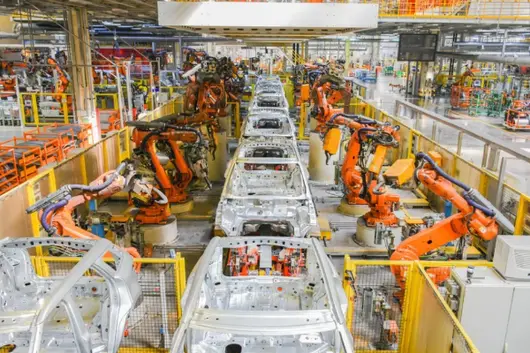

Recently, Chery Automobile announced export data for the first three quarters of 2026: Cumulative exports reached 1.5512 million vehicles, a year-on-year increase of 65.6%, exceeding the total export volume of the entire year of 2025; September's single-month exports hit 207,800 vehicles, setting a new record for single-month exports by Chinese automakers, accounting for nearly 70% of total sales. As the enterprise ranked first in China passenger car exports for 23 consecutive years, this achievement reflects the favorable development trend of Chinese automakers going global.

However, at the same time this data was released, a vehicle malfunction involving the OMODA 5 in the Malaysian market also drew attention. It highlighted that while sales are growing, product quality and production control also require continued focus.
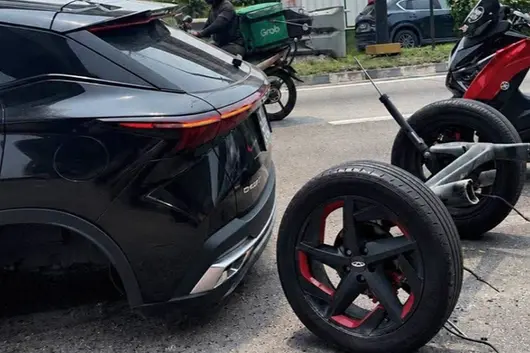
On October 6, a 2023 model OMODA 5 driving normally in Johor Bahru, Malaysia, experienced tearing of the rear axle trailing arm. The rear axle detached from the body along with two rear wheels, leaving the vehicle stopped in the middle of the road. Fortunately, no personnel injuries were sustained. On the evening of October 11, Chery released an official statement. Investigations revealed that local welding positions on the rear axle trailing arms of this batch of vehicles had insufficient welding strength, posing a risk of weld seam tearing under extreme conditions. The enterprise has now cooperated with the Malaysian Land Transport Authority to initiate a recall of 8,878 affected OMODA 5 vehicles, inspecting parts and providing free replacements based on actual conditions.

This is not the first time such issues have arisen with the OMODA 5 in Malaysia. In April 2024, local owners reported rear axle breakages while driving. Chery subsequently recalled 600 vehicles locally. The investigation concluded that after the supplier replaced the welding torch, calibration was not done properly, leading to welding defects on the rear axle. Ultimately, 60 defective vehicles were identified and the rear axles were replaced. At that time, local regulators did not issue a sales suspension, and the matter gradually subsided.
More than two years later, a failure occurred in the same location again, with the severity and scope being wider than last time. The breakage evolved from a single side to overall rear axle detachment, and the recall scale expanded from 600 vehicles to 8,878, an increase of nearly 15 times. Rumors suggest local regulators also adopted stricter handling methods: directly suspending the OMODA 5 model certification. Until the technical investigation is completed, this model cannot be registered, nor can it continue to be sold. Meanwhile, a comprehensive review of the supply chain was launched, verifying risk vehicles one by one according to part numbers, production batches, and VINs, examining the quality control and welding inspection processes of the whole vehicle production assembly and component suppliers.

There is still one question that remains unanswered: Are the vehicles experiencing failures this time within the recall scope of the 600 vehicles from 2024? If within scope, it suggests vehicles repaired back then still carry risks, and the previous rectification plan may not have fully resolved the issue; if outside scope, it indicates the risk batch scope determined at the time was not accurate enough, meaning more hidden risk vehicles existed than previously estimated.
Regardless of the answer, this reminds us that the significance of a recall is not just fixing already sold problematic vehicles, but more importantly feeding the problem back into the production process and quality verification procedures, plugging management loopholes, and avoiding the repetition of the same issues. If this link is not executed properly, the higher the vehicle sales volume, the greater the potential risk scope.
The Malaysian market holds significant importance for Chery. The dual-brand entry of OMODA and JAECOO into the local market has been less than two years, yet cumulative sales have already broken through 30,000 vehicles, ranking in the top three among non-local brands. With the model certification suspended, the impact is not just the cost of parts replacement for over 8,000 vehicles, but also affects brand reputation in the local market and the advancement of subsequent business.
It needs to be explained that the involved 2023 model OMODA 5 had already ceased production in September 2025, replaced by the CHERY O5 which features a multi-link independent suspension. Therefore, this certification suspension will not affect currently on-sale models, but the impact of the event on brand reputation will not be limited to this discontinued model.

Looking deeper, when exports transform from an "incremental supplement" for automakers to a "core component" accounting for nearly 70%, a product failure that attracts attention produces impacts not limited to a single brand or single market. Many overseas consumers' impressions of products are often linked with the overall image of the place of origin. The quality issues of individual enterprises might also affect overseas consumers' overall impression of Chinese automobiles.
Currently, Chery has initiated risk inspections for the same batch of OMODA 5 models in domestic and relevant markets, though it has not yet specified which markets and how many vehicles are involved.
Subsequent progress is worth continued attention: When will the domestic inspection results be announced, and will formal recall procedures be initiated; are the root causes of the two recalls over two years consistent, and whether the rectification back then effectively plugged the process loopholes from the source.

Chinese automakers going global have today reached the milestone of million-level export volume, which is a very difficult achievement to realize. As the scale of going global continues to expand, the tests are not just on market expansion capabilities, but also on the stability of quality systems, supply chain control levels, compliance capabilities facing overseas regulators, and the openness and transparency of handling problems. Selling high volume is capability, but ensuring product stability, moving steadily and far, is a long-term topic that needs more attention. This is not only a problem Chery needs to face, but also a common thought for all Chinese automakers going global.

"Image content | Source: Internet, copyright belongs to the original owner. If there is any infringement, please contact us for removal!"

Recap:
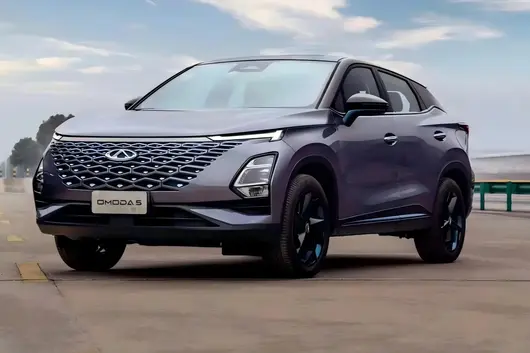
Malaysia, an OMODA 5 SUV with the Chery brand suffered an axle breakage accident; specifically the 2023 OMODA 5 model, after official investigation, it was determined that this batch of vehicles may have insufficient welding strength at partial locations of the rear axle longitudinal arm, under extreme conditions there is a risk of weld seam tearing, which could lead to detachment.

This model variant has already been discontinued, Chery Malaysia subsidiary has cooperated with the relevant arrangements of the Malaysian Road Transport Department to recall 8,878 OMODA 5 vehicles with issues; the solution is to inspect relevant components, decide whether replacement is needed based on specific circumstances, replacement is free. Meanwhile Chery Automobile stated, adhering to the principle of prudence, the company has initiated a special risk investigation for the same batch of OMODA 5 vehicles in the domestic and relevant markets, maintaining active communication with regulatory authorities; subsequently Chery will announce results to the society in a timely manner in a responsible attitude based on the investigation results.
At the same time, we express apologies for the inconvenience caused to users.

And in 2024, there were already complaints from owners regarding OMODA 5 rear axle breakage during driving, namely adopting torsion beam non-independent suspension; Chery recalled 600 vehicles in Malaysia at that time, after confirming the issue originated from improper calibration of rear axle welding equipment, rear axles were replaced for 60 affected vehicles.


The domestic model corresponding to the OMODA 5 SUV is the Chery OMODA, this vehicle is currently discontinued, the last batch is the 2025 model. Its body dimensions are 4,400*1,830*1,588 mm, wheelbase is 2,630 mm, it is a compact SUV with smaller dimensions; adopts front MacPherson independent suspension, rear torsion beam non-independent suspension, it is a front-engine front-wheel drive vehicle. The vehicle is equipped with a 1.5T turbocharged engine, power parameters are 115 kW/230 N·m, 2025 model matched with Continuously Variable Transmission (CVT).
Chery Automobile's attitude towards facing product issues is still commendable, under necessary premises, discontinued models will also be recalled.


Author | Janson
Editor | Zhihao
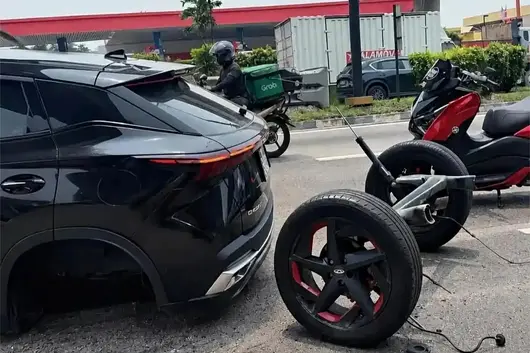
A Chery SUV was driving on the road when its two rear wheels fell off on their own.
Car Thing news on October 12, recently, a 2023 model Chery OMODA 5 in Malaysia experienced a rear axle detachment event, the vehicle's two rear wheels fell off together with the rear axle assembly directly, the car also lay across the road, fortunately no casualties were caused.

▲ Online circulating video from the rear-facing dashcam of the involved vehicle
In the evening of October 11, Chery Automobile publicly apologized for the vehicle rear axle detachment event. The explanation showed that the involved batch of vehicles might have insufficient welding strength at partial welding positions of the rear axle beam, and in extreme cases there is a risk of weld seam tearing.

▲ Chery releases issue statement
Currently, Chery Malaysia subsidiary has initiated a recall, involving 8,878 OMODA 5 vehicles, relevant parts will be inspected, and replaced free of charge depending on the situation, domestic same-batch models have also initiated risk inspection.
Chery also confirmed that models using this structure were previously discontinued. The company has initiated a special risk inspection for domestic and relevant market same-batch models, will publish follow-up progress in a timely manner based on the inspection results, and publicly apologize for this matter.
After the incident, Malaysia Land Transport Authority (JPJ) has temporarily suspended the certification and new car registration of the affected OMODA 5 models, and required Chery to investigate the relevant vehicles and production processes.

▲ Online circulating bystander perspective of the accident
Public information shows, Malaysia 2023 model Chery OMODA 5, launched in July 2023, adopts 1.5T engine, matched with CVT transmission, rear suspension is torsion beam non-independent suspension.
From public information, this model may correspond to Chery OMODA (OMODA 5) domestically, launched in China in July 2022.
According to public terminal sales data statistics, from 2022 to 2024, OMODA accumulated sales of about 17,200 units domestically, respectively versions adopting 1.6T engine + multi-link architecture and 1.5T engine + torsion beam suspension.
Among them, domestic 2023 model OMODA 1.5T model also adopts torsion beam rear suspension, similar to the chassis structure of the Malaysia involved model.
This is not the first time Chery OMODA 5 has had a similar incident in Malaysia.
In April 2024, an OMODA 5 rear axle breakage incident occurred locally. Chery subsequently investigated and found that after parts supplier changed the welding head of the automatic welding equipment, equipment calibration deviated.

▲ 2024 axle breakage incident announcement
At that time, Chery recalled 600 OMODA 5 vehicles in Malaysia for inspection, among which 60 units were equipped with affected parts.
Two years later, the same model appeared rear axle detachment event again. However, currently it cannot be confirmed whether the two incidents were caused by the same manufacturing defect.