首頁Qin L

搜尋歷史
熱門搜尋
經銷商登入 / 註冊

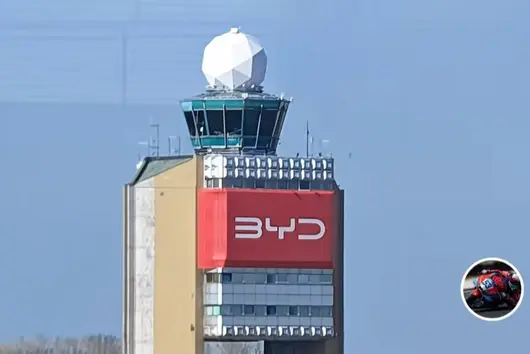
I recently came across a particularly moving video. Zhang Xu, the founder of the almost household-name motorcycle brand, was waiting at the airport in Budapest, Hungary. Glancing out the window by chance, he spotted a huge BYD advertisement on the airport control tower. At that moment, he couldn't help but take out his phone to take a photo and actively gave a like to BYD for fighting abroad to build its business. To be honest, as an ordinary consumer, seeing this scene really touched me. I used to feel that Chinese brands going global was far away from us, but seeing these Chinese brand signs everywhere in a foreign land truly makes people feel that Chinese brands are becoming more and more worthy of pride.

In the video, he was very straightforward, standing at the airport and smiling with emotion: "Let me show everyone, the Awesome Brother Di! Awesome!" He also added: "Salute to the Awesome Chinese Enterprises!" This immediately struck a chord with many netizens. Many people should know that Zhang Xu drives a BYD Qin L daily. Netizens have joked that he "builds motorcycles wilder than anyone else, yet uses cars more economically than anyone else." Actually, we ordinary car owners understand that true recognition never comes from ads, but from long-term, genuine driving experiences. For a tech-savvy entrepreneur to willingly become an organic word-of-mouth advocate is enough to prove that BYD's practicality and quality are truly impressive.

Next, I also looked at the comments. They all praised both the BYD and Zhang Xu Motorcycle brands simultaneously. Zhang Xu has been deeply engaged in the motorcycle industry for years, consistently doing R&D technologies down-to-earth, and striving to break through foreign technological blockades, a true down-to-earth entrepreneur. BYD is the same; for so many years, it has never relied on marketing stunts, but has always done its own research down-to-earth, polishing and iterating upgrades bit by bit in battery, hybrid, and whole-vehicle technologies. One does motorcycles, the other does new energy vehicles. The tracks are completely different, but both individuals and brands are silently persisting in independent innovation and long-term deep engagement in the industry. This two-way recognition between people who understand technology is more convincing than any commercial promotion.

Furthermore, it is worth noting that this like was entirely spontaneous from Zhang Xu. He has no commercial cooperation with BYD. Purely as a car owner and as a domestic goods entrepreneur, seeing his own brand shining abroad made him feel an inner pride. This point really hits the spot; there is no marketing script, no deliberate hype, just the most authentic national pride. For us ordinary people, it is the same. Now when we choose cars or domestic goods, it is no longer compromising, but genuinely believing that domestic goods are good, reliable, and worth supporting. Of course, many people might not know that this advertisement at Budapest Airport is not just a simple brand appearance, but a true reflection of BYD's deep cultivation of the European market. Previously, when talking about overseas markets, it was the domain of Western European, American, Japanese, and Korean brands. Now, BYD has steadily built step by step, with business covering over 120 countries and regions worldwide, forcing its way into a place in the global new energy market belonging to Chinese brands. In my opinion, this is truly not easy. The overseas market competition is fierce; standing firm relies absolutely not on luck, but on genuine product power.

Looking at the latest data makes BYD's strength more intuitively felt. From January to September 2026, BYD's overseas sales of passenger cars and pickups have exceeded 1.3378 million units. The overseas market has long become its core growth driver. Relying on core technologies developed by itself such as Blade Battery, DM-i Super Hybrid, whether it is household passenger cars, commercial models, or energy storage businesses, it has done well. It has gained super user recognition in countries like Thailand, Brazil, Singapore, Hungary. As consumers, we know best: only when core technologies are in our own hands can products be reliable and cost-performance be maximized. This is also the key reason why we are increasingly willing to choose domestic goods.

Actually, this accidental airport encounter, though seemingly a small matter, truly reflects current changes. Now, everyone supporting domestic goods is no longer purely about emotional sentiment, but genuine recognition from the heart. Over these years, we have watched BYD and Zhang Xu grow step by step, not impetuous, not following trends, doing products down-to-earth, using innovation to solidify technical barriers, and bringing the reputation of Chinese Smart Manufacturing bit by bit to the whole world. In the future, we also look forward to more and more Chinese brands going out of the country and into the world. I hope that everywhere in the world, you can see the silhouette of Chinese Smart Manufacturing, making our domestic goods into a true world business card. What do you think?

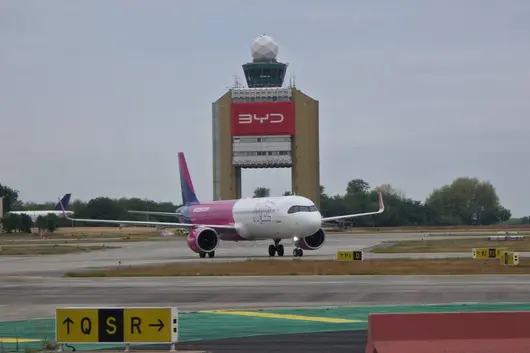
Budapest Airport, Zhang Xue saw the BYD advertisement on the control tower through the glass next to the smoking room and took out his phone to film a clip. He did not read from a script, nor did he mention any collaboration; he only gave a thumbs-up to the camera: "I am now in the smoking room at Hungary Airport, let me show everyone Brother BYD! Amazing!"
This statement is very direct, yet more penetrating than many brand films. The person filming the video is not an ordinary traveler, but a Chinese entrepreneur working on motorcycles and mastering powertrains. Someone who competes with foreign technology in the motorcycle track, seeing another Chinese company occupy an advertising spot at a European airport hub, his reaction was not mere politeness, but a fellow professional recognizing a peer.

Netizens noticed that he uses a BYD Qin L for daily commuting, teasing him that "motorcycles are built wilder than anyone, cars are used more frugally than anyone". Behind the joke is an interesting contrast: Zhang Xue's motorcycles and BYD take different paths, one is independent R&D of motorcycle powertrains, the other is full-stack independent R&D of new energy vehicles, but the underlying logic is similar — holding key technologies in hand, exchanging long-term investment for influence. Both sides have no business cooperation, this like is more like a real sample. When a Chinese brand is seen overseas, who sees it first? It is seen by people who understand technology, have done manufacturing, and know where the difficulties lie.

An airport control tower is not an ordinary billboard. It stands at one of the nodes with the densest cross-border traffic, serving as a hard entry for brands to enter the local public view. The fact that BYD put ads here indicates that going global is no longer as simple as loading cars onto car carriers, but establishing presence, channels, and awareness in the European market. From January to September 2026, BYD's overseas cumulative sales of passenger cars and pickups reached 1.3378 million units, covering over 120 countries and regions. Numbers indicate scale, the control tower ad indicates another matter: it begins to compete for "brand landmarks".
Relying on technologies such as Blade Batteries, DM-i Super Hybrid, and Flash Charging, BYD has already achieved results in markets such as Brazil, Singapore, and Thailand. A chance encounter reveals that Chinese intelligent manufacturing is moving from product globalization to brand visibility. Zhang Xue's thumbs up is recognition of peers and resonance with China's long-term investment in the real economy.
The control tower ad is still lit, and Zhang Xue has already boarded the plane. There is no script in the video, just one sentence "Brother BYD, Amazing". In the comments section, some recognized the Qin L, others added "Motorcycles built wild, cars used frugally". A Chinese brand is seen in Budapest, first seen by another Chinese entrepreneur. If there are more moments like this, the word "going global" is not just numbers in the financial report.
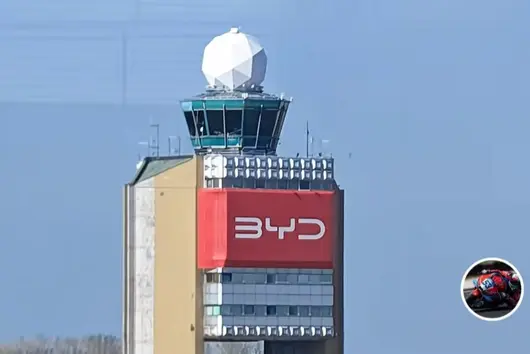
Recently, well-known domestic motorcycle brand founder Zhang Xue was waiting for a flight at Budapest Airport in Hungary. He happened to look out the window and captured a moment where a BYD brand advertisement appeared on the airport control tower. He spontaneously filmed a short video to praise BYD's global expansion, saluting Chinese intelligent manufacturing from afar.

In the video, Zhang Xue gave a thumbs-up to the control tower advertisement and said directly: "I am now in the smoking room of the Hungarian airport. Let me show everyone Brother Di! Amazing!" After this content was published, it quickly triggered resonance among netizens. Many netizens also noticed in his video that Zhang Xue's daily commuter vehicle is indeed the BYD Qin L, and folk jokes tease him: "He builds motorcycles wilder than anyone, and drives cars more economically than anyone."

As an industrialist deeply cultivated in the power self-research track, Zhang Xue's motorcycles have long tackled powertrain technology, persisting in breaking overseas technology monopolies; while BYD also takes full-stack self-research as its foundation. Two Chinese industrialists from different tracks, due to their persistence on long-termism and independent innovation, created a wonderful distant resonance. It is worth noting that Zhang Xue is a BYD natural advocate. The two parties currently have no form of commercial cooperation. This salute stems from a domestic industry entrepreneur who understands technology, feeling pride from the heart when seeing the strength of Chinese enterprises abroad.
This control tower advertisement recorded by the lens is not just a brand exposure, but a vivid microcosm of BYD rooting itself in the European market.
Looking at the globe, BYD's global expansion steps are moving steadily forward, with business covering over 120 countries and regions, and overseas market growth momentum continuing to release. Latest data shows that from January to September 2026, BYD passenger cars and pickups overseas cumulative sales reached 1.3378 million vehicles, with overseas becoming an important growth engine. Relying on self-developed core technologies such as Blade Battery, DM-i Super Hybrid, Flash Charging, BYD passenger cars, commercial vehicles, and energy storage businesses are blossoming in multiple points, achieving bright results in multiple markets such as Brazil, Singapore, and Thailand.
Once an accidental transnational encounter becomes a vivid footnote of Chinese industrial innovation. Behind the traffic is the public's growing sense of recognition for domestic independent innovation. BYD's overseas road is not only products and technology going global, but also taking the spirit of Chinese manufacturing down-to-earth and continuously tackling hard problems to the global stage.
In the future, BYD will continue to use self-research strength to explore the international market, and also looks forward to working with more Chinese innovation companies to convey Chinese intelligent manufacturing value to the world.
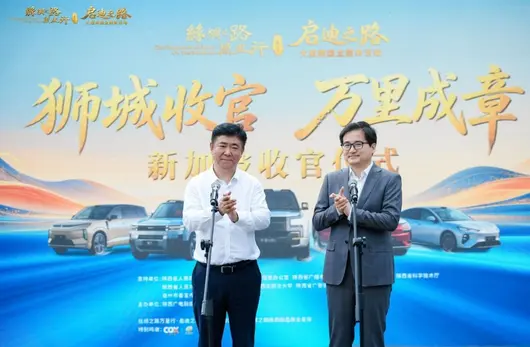
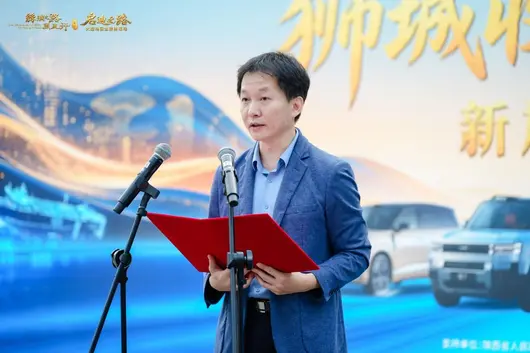
August 25, the "2026 Silk Road 10,000 Mile Expedition · Enlightenment Road" officially concluded in Singapore. As the travel partner for the entire event, BYD's Dynasty, Ocean, Denza, Fang Cheng Bao, and Yangwang formed a new energy vehicle fleet, lasting 33 days, traveling over 10,000 kilometers. Departing from Xi'an, it crossed six provinces in China and passed through Thailand and Malaysia, finally arriving in Singapore.

Compared to ordinary road tests, the biggest highlight of this journey lies in vehicles truly experiencing continuous use over long distances, across regions, and with varied road conditions. Highways, mountain roads, urban congestion, and other scenarios appeared in turns, giving technologies such as Flash Charge and Divine Eye Assisted Driving a testing environment closer to daily long-distance travel.

Among them, Flash Charge technology focuses on "5 minutes to charge well, 9 minutes to fully charge", further reducing sensitivity to charging time for long-distance pure electric travel; the Divine Eye Assisted Driving system relies on a large amount of real road data for continuous iteration, helping to reduce driving burden during long-distance driving. For new energy vehicles, parameters are one aspect, but the ability to use stably in complex real scenarios is obviously more important.

Choosing Singapore for the wrap-up of this event also has practical significance. As of July 2026, BYD has ranked first in total brand sales of passenger cars in Singapore for 19 consecutive months. From January to July this year, BYD's market share in local passenger cars reached 24.7%, and its pure electric market share reached 40.3%. Currently, BYD has laid out 16 retail touchpoints in Singapore, with some stores entering core shopping centers.

This also reflects changes in Chinese automotive exports. In the past, more emphasis was placed on product exports and sales growth, while now there is increasing focus on channel construction, local services, and long-term brand management.

In the first 7 months of 2026, BYD's overseas cumulative sales exceeded 970,000 units, a year-on-year increase of about 76%, with new energy vehicle business entering over 120 countries and regions worldwide. From Southeast Asia to Europe, South America, and the Middle East, Chinese new energy vehicles are building their product and brand awareness in an increasing number of markets.

From Xi'an to Singapore, this ten-thousand-mile journey is both a cross-border new energy travel practice and reflects that Chinese automotive globalization is entering a deeper stage. Truly entering overseas markets ultimately relies on long-term management, technical adaptation, and local services. Deeply cultivating the local market to jointly create a green future might also be the keyword for the next stage of Chinese automotive exports.

33 days, from Xi'an to Singapore, over 10,000 kilometers, BYD conducted an ultra-long-distance "live road test" on the ancient Silk Road.

It feels like a time-travel cross-space experience. In the past, camel caravans carried silk, porcelain, and tea, emphasizing "careful craftsmanship yields fine results"; now fleets carry flash charging and Divine Eye smart driving, focusing on the efficiency of "fully charged in 5 minutes". From "cargo exchange" to "technology export", this is not merely a change in transportation tools, but a complete upgrade in the way China participates in the world.

Especially seeing the wrap-up in Singapore, it really touched me. Being able to sell cars into this market, which is notoriously picky about quality down to the bone, and winning the sales champion for 19 consecutive months, this is more effective than any advertisement. Former Silk Road tokens were the gentle penetration of culture; today's BYD brings the hardcore strength of Chinese smart manufacturing to set new rules in the high-end arena. Green energy accompanies the long Silk Road journey, and this might be the most charming place of the "New Silk Road".