


首頁Power

搜尋歷史
熱門搜尋
經銷商登入 / 註冊
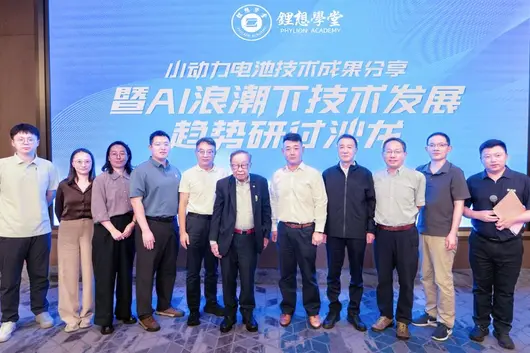
September 17, Chongqing. On the eve of the opening of the 24th China International Motorcycle Expo, Xingheng Power organized a gathering—a Seminar on Small Power Lithium Battery Technology Achievement Sharing and Technology Development Trends under the AI Wave. Academicians, experts from the Chinese Academy of Engineering, Fudan University, Sichuan University, Chongqing University, NUS Suzhou Research Institute, along with industry representatives, gathered together.
At first glance, it is a technical seminar; upon closer inspection, this is a collective disclosure of Chinese small power lithium batteries transitioning from “manufacturing-driven” to “intelligence-driven.”

Small Power, How Big of a Deed is It?
Two-wheelers are the most efficient short-distance travel mode. This is not sentiment, it is a necessity. The growth rates of domestic sales and exports of Chinese electric motorcycles continue to rise. Southeast Asia, Africa, Latin America, the demand certainty of these markets is extremely strong. Compared to fuel motorcycles, the Chinese electric two-wheeler industry has greater advantages in global expansion services—standardized service systems, mature supply chains, extreme cost-effectiveness, these are all core strengths.
And lithium batteries are the core supporting all this competitiveness.
Xingheng Power Chairman Feng Xiao said a sentence: “Small Power, Big Deeds.” This statement holds true. Xingheng’s lithium batteries have already entered Southeast Asia, Africa, and Latin America first, bringing high cost-performance Chinese lithium battery products to the “Belt and Road”沿线. This is not simple product export, it is a deep integration of “Chinese technology, local flavor” and “Chinese genes, local carriers”—To local, in local, for local.

Battery + AI, Not a Gimmick, But a Dimensional Upgrade
At the seminar, the density of technology sharing was very high, but the main thread was clear: battery technology itself is evolving, and AI is accelerating this process.
Xingheng CTO Wang Zhengwei presented the idea of “Source Improvement + System Enhancement”, the Manganese-based battery technology iteration path is clear—greater capacity, stronger power, lower cost, faster charging, higher intelligence and standardization. This is collaborative innovation from material genes to system levels.
Sichuan University Associate Professor Wang Caihong brought an interesting direction: embedding temperature-responsive materials into the battery system, letting the battery identify early overheating and respond actively. Battery safety changes from “external passive monitoring” to “intrinsic active response”, this is a paradigm-level leap.
How does AI land? Dr. He Peng from NUS Suzhou Research Institute showed how AI promotes material R&D from “experience-based trial and error” to “data-driven”. Fudan University Dr. Xu Zhengchuan proposed that AI is moving from content generation tools to agents for scientific discovery and engineering decision-making, future material screening and process optimization will greatly shorten the industrialization cycle.

Academicians’ Direction: Technology Ultimately Points to Humans
Chinese Academy of Engineering Academician Chen Qingquan’s sharing set the tone for this seminar. He said we are at the intersection node of the 3rd and 4th Industrial Revolutions, the Energy Revolution moves towards new energy, the Transportation Revolution moves towards electrification and intelligence, AI is the core engine. But he emphasized a key phrase: technology ultimately points to humans. Regardless of how materials and AI evolve, finally it must make batteries safer, more reliable, and economic.
He also mentioned “Three Aspects”: Look Forward, Look Backward, Look Downward. Forward-looking vision insights trends, historical experience avoids detours, practical implementation tests value. Dialectical innovative thinking coordinates development and security, present and long-term.

An Industry New Ecosystem is Taking Shape
The value of this seminar lies not in a single-point technology breakthrough, but in that it presents a trend: a new industry ecosystem of collaboration co-creation among universities, research institutions, and enterprises is accelerating formation.
Xingheng stated clearly: persist in the small power main channel, client needs-oriented, transform technical innovation into better products, this cannot be separated from the collaboration of industry, academia, and research. Industry collaboration, model innovation, co-promote new standards—let Chinese lithium batteries serve global users.

When battery technology innovation and AI paradigm changes collide in the same arena, the small power lithium battery industry is standing on a new starting point. Chinese lithium battery enterprises have already formed global leading advantages in technology accumulation and application scale. The next step is to transform this advantage into global market standards and service capabilities.
Small Power, Big Deeds. This is not a slogan, but a fact that is happening.



In the first half of 2026, Sunwoda's power battery delivery volume and revenue both grew significantly. Power and storage batteries have already become the company's main source of revenue, surpassing consumer batteries. However, the subsidiary Sunwoda Power, which serves as the core carrier of the power battery business, is still losing money. Coupled with exchange losses in overseas markets, Sunwoda's non-recurring net profit for the first half of the year was less than 100 million yuan. The new growth engine has just arrived but is yet to exert force.
Written by | “Caijing” Special Contributors Yang Zheng, Zhao Cheng
As a globally leading consumer battery supplier, Sunwoda (300207.SZ)'s main growth engine is shifting towards power batteries.
Recently, Sunwoda Electronic Co., Ltd. disclosed its 2026 semi-annual report. The company achieved operating revenue of 38.179 billion yuan in the first half of the year, a year-on-year increase of 41.48%, setting a new record for the same period. Net profit was 468 million yuan, a year-on-year increase of 91.1%. Net profit attributable to shareholders of the listed company was 603 million yuan, a year-on-year decrease of 29.59%. The difference between the two comes from minority interest, specifically the loss of the non-wholly-owned subsidiary Sunwoda Power.
The change in performance mainly stems from two aspects: First, power battery deliveries surged 76.37% year-on-year to 28.36GWh, driving rapid expansion of revenue scale; Second, financial expenses surged 345.33% to 882 million yuan, mainly due to increased exchange losses.
From a business structure perspective, Sunwoda, which used to be mainly focused on the consumer battery business, has shifted its core growth engine to the power and energy storage sectors. Electric vehicle (power battery) business revenue reached 14.134 billion yuan, a year-on-year increase of 85.87%, with gross margin improving by 8.59 percentage points to 18.36%. Energy storage system business revenue reached 1.77 billion yuan, a year-on-year increase of 76.21%. In comparison, traditional advantageous consumer battery business revenue was 14.452 billion yuan, a year-on-year increase of 4.04%, with gross margin declining by 4.95 percentage points to 14.68%. It is evident that Sunwoda's profit growth in the first half of this year mainly came from power batteries and energy storage systems, and the main growth engine has shifted to the power battery sector.
However, the contradiction lies here. Sunwoda Power Technology, the core of the power battery business, achieved operating revenue of 15.529 billion yuan in the first half of the year, a year-on-year increase of 90.1%, but still incurred a loss of 129 million yuan calculated on a net profit attributable to the parent company basis.
This means that although Sunwoda has found new growth momentum in the face of weak growth in the traditional consumer market, its profit quality still needs improvement. The real test may not lie in how many orders are won, but in how much money can be earned from those orders.

(Chart: Yang Zheng | Data Source: Corporate Financial Report)

Power Battery Becomes the Main Engine of Revenue Growth
Power battery business is Sunwoda's main growth pole in the first half of the year. Financial reports show that electric vehicle battery revenue in the first half of the year reached 14.134 billion yuan, a year-on-year increase of 85.87%, with gross margin at 18.36%, nearly doubling the 9.77% of the same period last year. In the first half of 2026, the company's electric vehicle battery delivery volume reached 28.36GWh, a year-on-year increase of 76.37%.
The rapid growth in the power battery field comes from both internal and external dynamics. First, Sunwoda's leading position in the HEV (Hybrid Electric Vehicle) battery field. In 2018, Sunwoda passed the review of the Renault-Nissan Alliance and obtained HEV battery specifications. Products were equipped on models like Sylphy and X-Trail e-POWER, and entered the hybrid supply system of many main models of SAIC Volkswagen and FAW-Volkswagen. SNE Research data shows that in the second quarter of this year, Sunwoda's HEV lithium battery installed capacity ranked first globally.
European market demand for HEV batteries continues to drive related business growth. According to official data released by the European Automobile Manufacturers Association (ACEA), the market share of HEV in new car registrations in the EU was 37.3% in the first half of this year. This proportion ranked first among all power types and increased from 34.8% in the same period of 2025. Accordingly, Sunwoda planned a 15GWh power battery base in Hungary to meet the needs of large customers like Renault and Volkswagen. This factory will become the first wholly-owned battery factory built by a Chinese second-tier manufacturer in Europe.
The domestic market also shows a development trend favorable to Sunwoda. Many vehicle enterprises are striving to promote the diversification of power battery suppliers, providing entry space for second-tier manufacturers. Zhongshang Industry Research Institute data shows that CATL's market share in the power battery market showed a downward trend overall in the first half of the year, dropping from 49% in February to 42.7% in June. CITIC Securities analysis stated that against the backdrop of continuous intensification of competition in the automotive industry chain, the power battery supply system is gradually evolving from single supply to dual supply and multi-supply, and diversified procurement will become a long-term industry trend.
In the second half of 2025, Sunwoda and Li Auto established a power battery joint venture, Shandong Li Auto Battery Co., Ltd., in Shandong with equity ratios of 50% each. Sunwoda stated in its financial report that Shandong Li Auto is managed by the Sunwoda dispatched management team. In addition, according to local media reports, in Xiaomi Auto's independent sub-brand "Xuntian" series, Sunwada became the primary supplier with a supply proportion of 60%. Hongmeng Intelligent Mobility's Luxeed brand also officially introduced Sunwada, with two models Luxeed V9 and Luxeed R7 to be equipped with its ternary battery packs. At the same time, mainstream automakers such as SAIC Motor, Geely, and Wuling maintain close cooperation with Sunwada. The Phase I products of Sunwada's Yiwu base are directly supplying Volvo and Geely.

(Chart: Yang Zheng | Data Source: Corporate Financial Report)
Cooperation with many vehicle manufacturers effectively pulled Sunwada's power battery market performance. According to Gasgoo Automotive Research Institute data, Sunwada's power battery installed capacity reached 7.24GWh in the first half of the year, with a market share of 3.1%. Installed capacity increased by 32% year-on-year, and market share increased by 0.6 percentage points compared to the full year of 2025.
Accordingly, the release of scale effects and improvement of profitability in the power battery field were expected. Western Securities research report pointed out that Sunwada's power battery is equipped with vehicle companies such as Li Auto, Dongfeng, Geely, Renault, and Nissan, and is expected to achieve the release of shipment scale effects and drive the company's annual performance to break even. Huachuang Securities also believes that the company's power battery and energy storage business volume drive high revenue growth, and profitability has been significantly repaired.

New Energy Storage Products Land, Second Curve Appears
The incremental business of energy storage is mentioned frequently by brokerage firms along with the power battery sector. Financial reports show that Sunwada's energy storage business revenue in the first half of the year was 1.77 billion yuan, a year-on-year increase of 76.21%, with delivery volume of 14.7GWh, a year-on-year increase of 64.98%.
The highlight of new products this year is large-capacity cells and AI backup power. In May, Sunwada put into production 588Ah energy storage cells, and officially released them in August. The cell energy density reached 417Wh/L. At 25 degrees Celsius and when the battery health drops to 70%, the cycle life can reach 10,000 times, theoretically matching the 20-year operation cycle of the power station. The full life cycle of a single 200MWh power station is expected to save 10 million kWh of power loss. Before this, its 684Ah stacked cells achieved mass production of millions of units. The two products are based on winding and stacking routes, forming a capacity ladder covering different system designs.
Financial reports show that Sunwada's energy storage system revenue mainly comes from overseas markets, with over 70% of overseas customers. In the field of home energy storage and industry and commerce, it has covered core markets in Europe, the Middle East, and South Asia. Europe is the main battlefield, becoming a major industrial and commercial energy storage brand in the German-speaking region, with core channel coverage exceeding 95%. In the field of network energy, with the high-speed expansion of the global AI (Artificial Intelligence) computing power industry, Sunwada's AIDC (Artificial Intelligence Data Center) energy storage business orders increased nearly 30 times year-on-year in the first half of the year. Relying on full-stack self-developed capabilities, its AIDC lithium battery solutions have been implemented in multiple key projects at home and abroad.
CICC research report stated that data center energy storage backup power demand is expanding, and Sunwada can provide a full-stack solution, so it is optimistic that energy storage business will become the company's second growth curve along with power battery business.

(Image Source: Yang Zheng)

Quality of New Engine Needs Improvement
In the first half of the year, consumer battery revenue, as Sunwada's traditional main business, reached 14.452 billion yuan, a year-on-year increase of only 4.04%, with gross margin declining by 4.95 percentage points to 14.68%. This is not a problem unique to Sunwada. Brokerage firm research reports show that global smartphone shipments declined year-on-year in the first half of the year. Although high-end phone sales grew, it could not change the overall pressure on the sector, and the profit space for consumer cells was squeezed.
However, for Sunwada, consumer batteries are the company's main products sold overseas. With limited growth in the consumer battery business compared to the previous year, the urgency of the power and storage sector continuing to expand its overseas layout became more obvious.
Currently, Sunwada's overseas bases are still in the investment phase. Financial reports show that Sunwada's Thailand battery production base Phase I project officially started production in the first half of the year. Currently, the company still has Thailand Phase II project, Hungary power battery production base, and Vietnam consumer cell production base under construction in overseas. The cost of the investment phase is directly reflected in the financial end. In the first half of the year, exchange loss was 538 million yuan, among which the US dollar was hedged through hedging. Tether, Indian rupee and other currency hedging tools are limited. The financial expenses surged more than 300%, largely due to this.
Therefore, Sunwada's growth prospects in the second half of the year still need to return to the domestic power and storage market. Brokerage structure analysis believes that Sunwada's power and storage product deliveries for the second half of the year are fully booked. As raw material price adjustments gradually land and production line yield rates continue to improve, future profitability is expected to improve. According to Dongwu Securities' calculation, Sunwada's annual power and storage delivery volume will reach 90GWh, of which power batteries are 55GWh and energy storage systems are 35GWh. This means that the company has about 62GWh to be delivered in the second half of the year. If the profit per Wh improves by one cent, there will be an additional 620 million yuan of profit space, and vice versa. The company's profitability curve for the second half of the year and even the full year will largely be determined by the power and storage business, especially the profit quality of the power battery sector.
Looking at power battery performance horizontally within the industry, among the few power battery listed companies that recently disclosed financial reports, Sunwada has the advantages of fast growth rate and large gross margin improvement, as well as the disadvantage of not yet achieving profitability in the power sector. Besides CATL which leads in scale and profitability, Gotion High-Tech achieved 1.386 billion yuan of net profit attributable to the parent company in the first half of the year while achieving power battery installed capacity ranking in the top three. EVE Energy's net profit attributable to the parent company in the first half of the year was 3.3 billion yuan with 45.7 billion yuan in revenue, with a net profit increase of 105.66%, and power and storage entered a stable profitability zone. In comparison, although Sunwada's power battery business achieved high revenue growth and significant gross margin improvement, it still recorded a small overall loss in the first half of the year, and the overall net profit attributable to the parent company was not commensurate with its revenue scale of over 38 billion yuan.
Growth rate not losing to peers, profit quality still catching up, is Sunwada's true position in the power battery industry. In other words, the growth engine has completed the switch, but there is still distance from the new engine being in place to exert force on growth.


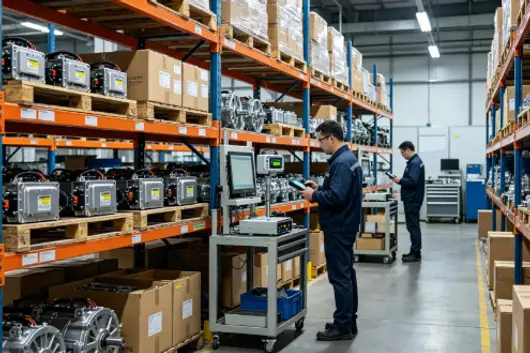
As a leading enterprise in the electric drive sector that previously had an annual net profit exceeding 1.1 billion yuan, Inovance UDrive posted operating losses less than a year after listing, accompanied by stock price fluctuations.
On the evening of August 24, Inovance UDrive, which has been listed for less than a year, released its 2026 semi-annual report. During the reporting period, the company achieved revenue of 9.512 billion yuan, a year-on-year growth of 3.98%, while net profit attributable to parents turned from profit to loss year-on-year, with a net loss of 88.0942 million yuan.
The next day, the company's stock price opened low and fell throughout the day, hitting an intraday low of 14.66 yuan per share, the lowest since listing. It closed down 6.76%, at 15.32 yuan per share, with a total market value of approximately 36.84 billion yuan.
Compared to the closing price of 30.9 yuan on the first day of listing in September 2025, the company's current stock price is close to halved. The intraday high of 37 yuan in the early days of listing has not yet been broken as of now.
Behind this performance is the combined impact of inverted revenue and cost growth rates, significant impairment provisioning, and upfront investment in transformation.
 Double Squeeze on the Profit Side
Behind the slight revenue increase is the faster expansion on the cost side.

According to the financial data disclosed in the semi-annual report, in the first half of the year, the company's revenue increased by only 364 million yuan, while operating costs increased by 678 million yuan. The cost growth rate of 8.90% was significantly higher than the revenue growth rate. The combined gross margin dropped from 16.73% in the same period last year to 12.79%, corresponding to a year-on-year decrease in gross profit of approximately 314 million yuan.
Electric drive and chassis systems are the company's top revenue pillar. Revenue in the first half of the year grew 7.99% year-on-year, while the corresponding cost growth rate reached 12.65%, with the business gross margin decreasing by 3.58 percentage points year-on-year.
The power supply segment's business performance was relatively weak, with revenue declining 23.62% year-on-year. Gross margin dropped from 16.23% in the same period last year to 8.08%.
Semi-annual report data shows that 326 million yuan in impairment losses became another important factor affecting profits, with a year-on-year increase of up to 274.88%.
Among them, provisions for inventory decline accounted for over 70%. The main reasons included sales of some cooperative models failing to meet expectations, goods shipped turnover slowing, combined with upstream raw material price fluctuations pushing up inventory costs. The net realizable value of related inventory continued to be lower than book cost, belonging to the common range of operating risks in the automotive parts industry.
Accounts receivable aging passively lengthened, and the bad debt provision ratio increased synchronously. With rapid iteration of technical routes, reusability of some specialized equipment and molds decreased, and fixed asset impairment pressure became apparent.
According to information disclosed in the semi-annual report, in the first half of the year, the company's wholly-owned subsidiary Shenzhen New Energy made supplementary tax payments of 110.5 million yuan. This expenditure was fully included in current period profit and loss. Even excluding the impact of this non-recurring expenditure, Inovance UDrive's profitability level in the current period was still lower than the same period last year.
R&D investment continued to increase. In the first half of the year, R&D expenses were 666 million yuan, accounting for 7% of revenue, and were fully expensed.
R&D personnel increased by 300 compared to the same period last year, and personnel in the Intelligent Chassis Division increased by over 120%. High-intensity upfront investment directly dragged down the current period's profit performance. Under the combined effect of multiple factors, Inovance UDrive's profit side appeared to face obvious pressure in the first half of the year.

The Reality of the Transformation Ledger
Under profit pressure, Inovance UDrive bet on intelligent chassis and overseas markets, attempting to build a second growth curve. Inovance UDrive's financial report shows that in the first half of the year, the company obtained 17 domestic passenger car customer project approvals and 9 overseas customer project approvals.

The production bases in Hungary and Thailand achieved mass delivery. Overseas business revenue was 747 million yuan, a year-on-year growth of 10.83%, with a gross margin of 27.41%, significantly higher than the 11.55% of domestic business. However, overseas revenue accounted for only 7.85% of total revenue, the scale is still small, and it is difficult to offset the profit decline of domestic business in the short term.
The commercialization progress of the intelligent chassis business was lower than market expectations. Currently, only the 800V fully active hydraulic suspension pump achieved mass delivery. Core products such as steer-by-wire, brake-by-wire, and motion domain controller are still in the customer sample submission and project approval testing stage.
According to the general rule of the automotive parts industry, from obtaining customer project approval to achieving mass production and vehicle installation, it requires experiencing a 1 to 2-year engineering verification cycle. During this period, continuous investment of development resources is required, and it cannot form revenue contribution in the current period, which belongs to the normal business progress rhythm of the industry.
The number of project approvals does not directly equal revenue scale. If the 17 domestic project approvals are scattered across different vehicle platforms of different customers, it is difficult to form a scaled platform reuse effect, instead it may push up custom development costs and equipment investment.
Overseas project approvals also face multiple challenges of local production, certification, supply chain support, and payment cycle. Behind high gross margin corresponds to higher operating costs and a longer cash turnover cycle.
These objective characteristics in the transformation process also directly reflected in the company's current financial performance. Before listing, the company achieved high net profit growth for three consecutive years. In 2025, the year of listing, net profit broke through 1.1 billion yuan.
Now, the first semi-annual report after listing showed losses, and the stock price continued to fall. Inovance UDrive publicly stated that it will continue to focus on the main business to promote technology iteration and product innovation, and promote relevant technology layout for the integration of Power domain and Chassis domain.
Market parties are also continuously watching the implementation results of the company's transformation investment, as well as when relevant businesses can be converted into actual profitability and cash flow contribution.

8% is like a door; most people cannot push it open, but among every 100 people, there are always 8 who can push it open.
How big is the 8% probability?
If the probability of rain tomorrow is 8%, I believe most people would not bring an umbrella. But if the probability of winning a prize is 8%, I believe many would participate. After all, compared to the probability of less than 1% for Pop Mart blind box hidden figures, 8% is still worth participating in.
The current domestic automotive market is also like this. Countless car manufacturers seek to break through in the market, only to compete for this 8% success probability.

According to incomplete statistics, there are currently about 700 models of new energy vehicles on sale in the domestic market, but only 56 products have a monthly sales volume of over 5,000 units, and the overall product success rate of the industry is only 8%.
Creating a hot-selling product is already the top priority for car manufacturers. After creating a hit, how to continuously maintain high sales has become the focus. Bloom for a night is the fate of most new cars. Once the three-month flowering period is over, they become nothing special.
Faced with the pressure of market competition, the transformation difficulty for traditional car manufacturers is harder than for the well-funded new forces. In the sales month approaching "Golden September and Silver October", the mid-year financial reports of car manufacturers have also been released. The answer to transformation is written in the reports.
Exports and Going Upmarket
First is BYD's semi-annual report. Cumulative sales of new energy vehicles in the first half of the year were about 1.8085 million units, down 15.72% year-on-year. Revenue from the automotive business was about 275.341 billion yuan, down 8.98% year-on-year.
At first glance, many people only see the decline in revenue and net profit attributable to the parent company, and then directly label this top dog of the new energy industry as "declining".
But if you carefully analyze BYD's financial report, you can understand the changes of this industry leader.
In the semi-annual report, BYD showed unprecedented supply chain strength, with a gross margin of 18.85%, and the gross margin in the second quarter even rose to 18.88%, up 2.61% year-on-year.
It is worth knowing that in the first half of 2026, the domestic automotive industry faced triple pressure of raw material price hikes, exchange rate fluctuations, and price wars. The average profit margin in the vehicle manufacturing link dropped to 1.5%, setting a new low in nearly ten years. However, BYD presented an upward mid-term answer.

Behind this lies BYD's transformation. According to sales data, Fang Cheng Bao, Denza, and Yangwang brands combined sales of 228,000 units, up 61% year-on-year. Their share of total sales rose to 12.6%. Moreover, the domestic full brand ASP (Average Selling Price per vehicle) rose from 133,100 yuan in March to 148,700 yuan in June.
In the domestic market, wanting to raise the price per vehicle basically means providing users with more configurations. BYD relies on technology to make consumers pay for this value add.
Only in the first half of the year, BYD showcased multiple new technologies. From the 2nd gen Blade Battery and Megawatt Supercharge at the beginning of the year to the self-developed 4nm smart driving chip Xuanji A3 and the Sky-Eye 5.0 ADAS system support, BYD demonstrated the R&D confidence and technical support capability a big factory should have.
Especially the 2nd gen Blade Battery and Megawatt Supercharge allowed BYD to achieve an upward price adjustment per vehicle. At the previous financial report meeting, Chairman Wang Chuanfu stated that currently the 2nd gen Blade Battery is in short supply, and this year's sales are fully limited by battery capacity.

On the other hand, the construction of BYD's Supercharge stations is extremely rapid. On August 28, they completed the construction of the 10,000th Supercharge station. Although compared to the 20,000 stations target set at the beginning of the year, it looks slightly slow in time, BYD guarantees to definitely complete the target this year.
From batteries to energy storage, BYD relied on lithium battery technology to achieve breakthroughs in new energy vehicles. Relying on self-developed and self-produced batteries, BYD achieved a gross margin rise despite the negative impact of upstream raw material price hikes. Furthermore, BYD's self-production covers not only batteries but a series of components like chips that are also rising in price. The core component self-supply rate exceeds 80%, which is difficult for general car manufacturers to learn quickly.
Behind these technologies, there are no other shortcuts. They are all investments BYD made with real money. Financial reports show that BYD invested 28.9 billion yuan in R&D in the first half of the year, and cumulative R&D investment exceeded 270 billion yuan. They earn 1 yuan and spend more than 2 yuan on R&D.

Of course, this is not a muddled account. Behind this is BYD's long-term investment, and now these investments have achieved returns.
Besides being firmly the champion of domestic new energy retail sales with 21.1% market share, BYD also took the first position in new energy exports with an export scale of 792,000 units.
Export growth is the main contributor to BYD's sales this year. Export sales share exceeds 40%, with a growth rate exceeding 60%. Meanwhile, revenue share exceeded half, reaching 52.7%. It can be said that more than half of the money BYD earns comes from overseas markets.
According to data, BYD's overseas vehicle profit is three times that of domestic, meaning 2 yuan of R&D earns back 3 yuan overseas.

As for BYD's overseas scale, the growth speed is as fast as the Supercharge stations. The business covers over 120 countries and regions. It topped the new energy brand sales champion in markets like the UK, Brazil, and Thailand. Inside BYD, there is even a plan to build stores in the Atlantic island nation Cape Verde this year which became popular due to the World Cup.
However, the overseas market also carries risks. In the semi-annual report, BYD attributed the main reason for profit decline to exchange losses generated by exchange rate fluctuations, losing about 4.7 billion yuan in profits. Such risks are an adjustment for global car manufacturers. Some lose on exchange rates, some profit. Japanese brands in recent years have achieved profit rises relying on exchange rates.
As a representative of domestic new energy vehicles, BYD proved with time and actions that domestic new energy can still profit in the market without price wars, whether domestic or overseas.
Pressure and Growing Pains
Changan Automobile's semi-annual report is more about changes. In the first half of 2026, the company achieved operating revenue of 65.634 billion yuan, down 9.71% year-on-year; net profit attributable to the parent company was 0.817 billion yuan, down 64.32% year-on-year, with a gross margin of 14.50%.
Different from BYD, Changan Automobile's financial report better represents the status quo of domestic car manufacturers' transformation. In the process of shifting from fuel cars to new energy, Changan Automobile faces far more difficulties than BYD. BYD can build its own new energy supply chain from scratch, but Changan Automobile needs to consider the transformation of the supply chain from the fuel car era with hundreds of upstream suppliers.
If excluding the fuel car sector, Changan Automobile's performance in new energy is still quite good. In the first half of 2026, new energy vehicle sales reached 414,000 units, down 8.3% year-on-year. However, after excluding entry-level models like Lumin, the total new energy sales in the first half of 2026 grew 11% year-on-year. Among which, new energy vehicle sales in the second quarter were 245,600 units, up 45.64% quarter-on-quarter.

Changan Qiyuan Q05 ranked number 1 in compact pure electric SUV sales for consecutive 3 months. Deepal S05 ranked champion in the niche field (120,000-180,000 pure electric compact SUV) for consecutive 4 months. Behind this is Changan's breakthrough in niche models. Rather than grandly covering all models, it is better to focus efforts at a point and find your own track.
Changan Qiyuan is exactly like this. Not exchanging price for volume, Qiyuan average price per vehicle rose 12,000 yuan year-on-year. Cumulative sales in the first 7 months of this year exceeded 210,000 units, and July single month sales also exceeded 30,000 units. And it achieved single quarter profit in Q2, taking the first step of new energy startup.
Besides the domestic market, overseas business is also Changan's main profit source. Deliveries in overseas markets in the first half were 402,000 units, up 35.1% year-on-year. Overseas business revenue was 21.942 billion yuan, up 78.77% year-on-year. Overseas gross margin remained above 20%.
Behind this is Changan Automobile adopting the "Local production + Systematic operation" strategy in overseas markets. Its Thailand Rayong factory has started production and operation, achieving localization production of hot-selling models like Deepal S05 and Changan Qiyuan Q05.

While playing well the new energy card, Changan also used "Blue Whale Super Hybrid" to provide a new solution for the fuel car market, especially to cope with lithium battery raw material price hikes and charging facility construction weak areas' vehicle usage demand.
But these advantages still cannot cover the difficulties Changan Automobile faces in transformation. Significant profit decline and negative operating cash flow all indicate that transformation costs are high and have not yet been converted into profit.
Now Changan Automobile's hopes are all bet on overseas business. 51.9% export growth and 78.8% overseas revenue growth became the only highlight in business difficulties.
Rely on Yourself
Different from BYD and Changan, GAC Group represents the transformation of more automotive SOEs. In 2025 sales, GAC was the SOE with the highest proportion of joint venture sales. 64.4% of sales were contributed by GAC Toyota and GAC Honda, with a reliance on joint ventures far higher than other SOEs.
But after fuel car sales continued to decline and the independent brand sales share broke 70%, GAC Group's situation became very subtle.
Financial reports show that GAC Group revenue grew 9.38% year-on-year to 46.121 billion yuan, but the gross margin was -2.51%, negative for two consecutive years. Among them, investment income from joint venture enterprises decreased by about 6 billion yuan year-on-year, becoming the biggest drag on performance.
From the sales data perspective, GAC's performance is not as poor as the financial report suggests. New energy vehicle sales were 260,200 units, up 68.80% year-on-year, with a growth rate significantly higher than the industry. Among which, the independent brand new energy sales share reached 62.82%, up about 14 percentage points year-on-year.

GAC Toyota sales grew 3.29%. The Zhizhi series monthly sales continuously broke 10,000. Zhizhi 3X ranked joint venture new energy sales champion for consecutive 10 months.
However, GAC Honda sales plummeted 55.82% to 68,300 units. New energy vehicle sales were only 3,276 units, becoming the biggest drag on GAC Group performance.
When joint venture brands lost combat power, GAC needs to fill the gap with independent brands. The cost of catching up is not small. Money is needed in all aspects. Expenses like R&D and marketing need to increase. R&D expense up 39%, financial expense up 243%, sales expense up 17%. Overall, this led to a situation of revenue growth but profit loss increase.
Especially the R&D investment. The 4.8 billion investment in the second quarter kept the gross margin still maintained at negative 1.28%. As for channel construction, GAC chose to sink and focus on the county economy, planning to complete 1,000 county authorized stores this year.

At the same time to achieve efficient transformation, GAC Group introduced IPD process reform. Officially stated independent brand R&D, production, supply, sales, finance integrated control, making product planning efficiency up 30%, project approval efficiency up 67%, demand decision efficiency up 85%. New car development cycle shortened to 18-21 months, and R&D cost reduced by over 10%.
But these are hard to show in financial reports in the short term. Currently the only thing visible is still export growth.
Semi-annual report shows, GAC independent brand exported 121,500 units in the first half of the year, a surge of 132% year-on-year, close to the 2025 full year export volume. Overseas business revenue was 14.013 billion yuan, up 109.27% year-on-year.

In the global layout, 7 KD factories were built, adding two factories in Cambodia and Kazakhstan. At the same time, the first overseas independent battery PACK factory is being built in Thailand, perfecting overseas power battery localization supply, achieving supply chain synchronous overseas go.
Like BYD, GAC's layout in new energy also first focuses on the power battery which has the largest cost share. Ensuring supply chain autonomy and control, no longer working for battery manufacturers, makes it possible to achieve a positive gross margin.
As a representative of transitioning from relying on joint ventures to relying on independents, GAC Group is still in the transformation difficulty period. Transformation investment surged, leading to expanded losses, and it will still be difficult to achieve change in the short term.

Overall, under the background of the domestic market first half year-on-year decline over 20%, it can better see the urgency of traditional car manufacturers' transformation. On one hand, the battlefield has already spread from domestic to overseas. Overseas markets have become the core of car manufacturers' profit, but at the same time exchange rate fluctuations have also brought uncertainty.
On the other hand, R&D investment is becoming the core to measure car manufacturers' long-term profit. BYD relies on years accumulated R&D investment, now has already formed technical advantages and converted them into profitability. Like Changan and GAC need to catch up in R&D, investing greater costs to achieve self-research.
Overall, under the first half domestic car market "cool inside hot outside" pattern, whoever can more quickly shift growth focus to overseas and premiumization can walk out of the profit valley earlier. BYD has already verified the effectiveness of this path first. Changan and GAC are still in the transformation climbing phase.


Sunwoda is one of the few companies among those that have disclosed semi-annual reports to see an increase in gross margin in the power battery sector against the trend — increasing by 8.59 percentage points against the trend to 18.36%.
On August 27, Sunwoda released its interim financial report. The company achieved total operating revenue of 38.179 billion yuan in the first half of 2026, a year-on-year increase of 41.48%. Among them, the electric vehicle battery business contributed revenue of 14.134 billion yuan, surging 85.87% year-on-year.

At the same time, the energy storage system business is becoming Sunwoda's "second growth curve": first half shipment reached 14.70GWh, a year-on-year increase of 64.98%. Among them, overseas customer revenue accounted for more than 70%, and has become a major industrial and commercial energy storage brand in the German-speaking region of Europe. In terms of energy storage demand in data centers brought about by the explosion of AI computing power, Sunwoda's AIDC energy storage business orders surged nearly 30 times year-on-year, accurately hitting this high-growth track.
01
Power Battery Gross Margin Rises Against the Trend
Against the backdrop of overcapacity and continuous price wars in the power battery industry, Sunwoda submitted a report card of "increasing revenue and increasing profit".
In the first half of 2026, the electric vehicle battery business achieved operating revenue of 14.134 billion yuan, increasing 85.87% year-on-year; shipment volume reached 28.36GWh, increasing 76.37% year-on-year. More importantly, profitability improved — the gross margin of this business jumped from 9.77% year-on-year last year to 18.36%, increasing significantly by 8.59 percentage points. This means that the benefits of economies of scale and optimization of customer structure have emerged, allowing the company to hold the profit bottom line in the industry price war.

Of course, the most iconic performance is the HEV lithium battery. According to SNE Research data, in the second quarter of 2026, Sunwoda's HEV lithium battery installed capacity ranked first globally. This marks that its product performance and cost control have gained full recognition from customers.
The recovery of the gross margin of this power lithium battery against the trend, although not explained in the financial report, is likely closely related to the shipment of hybrid batteries. Because hybrid batteries have the characteristics of high threshold, high customization, and high added value, they can help avoid low-end price wars, and long-term binding with high-quality orders from top car companies helps greatly in stabilizing product premium and customer structure.
In terms of product layout, Sunwoda adopts a "Focus + Differentiation" strategy, focusing on prismatic aluminum-shell cells as the core, while synchronously laying out large cylindrical cells, soft pack cells, etc., comprehensively covering full scenarios such as passenger cars, commercial vehicles, ships, low-altitude aircraft, and embodied intelligent robots.
Regarding next-generation technology reserves, the company is advancing the R&D of new silicon-anode high specific energy batteries, lithium manganese iron phosphate batteries, sodium-ion batteries, solid-liquid hybrid batteries, solid-state batteries, lithium metal batteries, etc., and was the first to propose the "AI + Battery" strategy, using artificial intelligence to accelerate material selection, electrochemical system design, and process optimization.
02
Overseas Revenue Share of Energy Storage Exceeds 70%
If power batteries are the main force for growth at present, then energy storage systems are the new growth point that Sunwoda is exploding.
In the first half of 2026, Sunwoda's energy storage system shipment reached 14.70GWh, increasing 64.98% year-on-year; realized revenue of 1.77 billion yuan, increasing 76.21% year-on-year. But what is most worth noting is its market structure — energy storage system revenue comes mainly from overseas markets, overseas customers account for more than 70%, one can say that the bulk delivery of its core overseas customer projects directly drove business growth.
Financial reports show that in the European market, Sunwoda adheres to a brand strategy, having covered core markets such as Europe, Middle East, South Asia, with own-brand sales accounting for 80%. In the German-speaking region, the company has become a major industrial and commercial energy storage brand, with core channel coverage exceeding 95%, and was rated as EUPD Swiss Market TOP BRAND. This marks that Sunwoda has transformed from an "OEM" to a "Brand Owner" in the overseas energy storage market, with significantly enhanced premium ability and customer stickiness.

In terms of application scenario expansion, Sunwoda accurately stepped on the timing node of the explosion of AI computing power. With the construction of global AI data centers (AIDC) entering a climax, the company's AIDC energy storage business orders increased nearly 30 times year-on-year in the first half of the year. Relying on full-stack self-developed capabilities, Sunwoda has built a product matrix covering different voltage levels, comprehensively adapting to high-end application needs such as data center SST, HVDC, and UPS. Several key domestic and foreign projects have been landed, and have been recognized by multiple global AI top customers.
At the product level, Sunwoda continues to iterate around energy storage cells and system products such as 314Ah, 280Ah, 588Ah, 684Ah, completed the large-scale fire burn test of 5MWh liquid-cooled energy storage containers, Sunwoda stated that its safety, reliability and system-level solution capabilities continue to strengthen.
03
From "Product Going Global" to "Industry Going Global"
Supporting the high-speed growth of power battery and energy storage businesses is Sunwoda's increasingly mature global production capacity and service system.
During the reporting period, Sunwoda's overseas layout showed blooming at multiple points: Thailand battery production base phase one project has officially started production, phase two started synchronously; Hungary power battery production base, Vietnam consumer cell base construction are steadily advancing. At the same time, Sunwoda has established nine overseas marketing and service centers globally, building a localized service network covering key markets such as Europe and America, Southeast Asia, Middle East, etc.

It can be seen that Sunwoda's "going global" is not simply a relocation of production capacity, but a strategic positioning to support global top car companies and energy storage customers nearby, which can not only effectively hedge geopolitical risks and trade barriers, but also significantly improve the response speed and service stickiness of overseas customers. From India, Vietnam to Thailand, Hungary, Morocco, Sunwoda's global production capacity map has taken shape, providing a solid foundation for the company's medium and long-term overseas business continuous volume increase.
In China, Sunwoda also takes customer needs as the orientation, adheres to the principle of nearby support to efficiently allocate resources, and multiple production bases have achieved scaled mass production.
In 2026, with consumer electronics demand continuing to decline and industry competition intensifying, the report card submitted by Sunwoda in the first half of the year is still remarkable — on the basis of shipment volume increase, Sunwoda pushed up revenue growth rate with the help of HEV differentiated high added-value products, while the landing of domestic and overseas production capacity ensures order delivery, and the multi-scenario product matrix helps it open up incremental space.
It can be foreseen that Li Auto's reliance on it will also deepen day by day, and Sunwoda's future is very worth looking forward to.
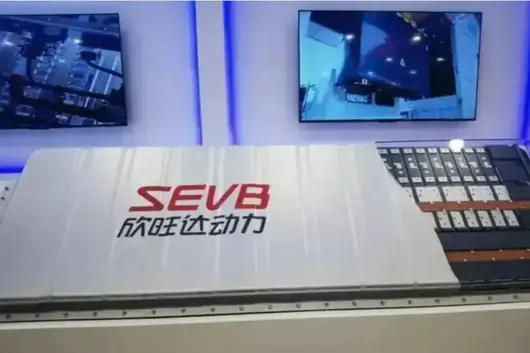

Profited massively, these three words can only describe CATL's performance in the first half of 2026.
On July 24, CATL released its semi-annual financial report. For the first half of 2026, CATL reported operating revenue of 276.917 billion yuan, a year-on-year increase of 54.80%; net profit attributable to shareholders was 43.284 billion yuan, a year-on-year increase of 41.98%; net profit after deducting non-recurring gains and losses was 39.013 billion yuan, a year-on-year increase of 43.44%. This means that regarding the core net profit attributable to shareholders, CATL earned 12.8 billion yuan more than the previous first half! In CATL's hands, cash and equivalents total approximately 340.58 billion yuan.

Looking at business segments, CATL achieved rapid growth in all three business segments. Among them, power battery systems generated revenue of 192.125 billion yuan, a year-on-year increase of 46.02%, accounting for 69.38% of total revenue; energy storage battery system revenue was 53.261 billion yuan, a significant year-on-year growth of 87.54%, accounting for 19.23% of total revenue; battery materials and recycling, mineral resources business revenue was 18.811 billion yuan, a year-on-year increase of 67.23%, accounting for 6.79% of total revenue. It can be seen that energy storage is the engine of CATL's growth this year.

From the perspective of gross margin, the gross margin of the power battery system segment was 20.63%, a decrease of 1.78% compared to the same period last year. The gross margin of the energy storage battery system was 23.96%, also down 1.56% from last year. The gross margin of battery materials and recycling, mineral resources business was 27.04%, an increase of 5.81% compared to last year. From the perspective of domestic and international markets, CATL's gross margin in the domestic market is declining, with a gross margin of 21.16%, down 1.78%. From the international market perspective, the gross margin is far higher than the domestic market, reaching 29.97%, an increase of 0.95% compared to last year.
From a market perspective, CATL's global leading position in power batteries is further strengthened. From January to May 2026, the global power battery market share was 40.2%, an increase of 2.2 percentage points year-on-year; domestic passenger vehicle installation share was 46.7%, an increase of 5.6 percentage points year-on-year, with domestic ternary battery market share reaching as high as 75.2%. Overseas markets broke through simultaneously, with overseas revenue accounting for 31.46% of total revenue, and overseas share steadily rising. Production capacity at overseas bases in Hungary, Spain, Indonesia, etc., continues to be established.

In the energy storage field, according to data from Xinlun Information, the company's energy storage battery shipments ranked first globally from January to June 2026. This is mainly due to AI computing power and new energy grid connection driving the concentrated landing of overseas and domestic energy storage projects. The energy storage side launched the 9MWh ultra-large capacity TENER, 6.25MWh Tianheng liquid-cooled energy storage cabin, and sodium-ion complete station system. Signed a three-year 60GWh sodium-ion energy storage long-term order with Hopeson, and landed large-scale independent energy storage benchmark projects.
Meanwhile, emerging businesses such as battery swapping, low-altitude eVTOL, and ships are being promoted in an orderly manner. Approximately 2,000 "Chocolate" passenger vehicle battery swapping stations have been built nationwide. The company's 5-ton class eVTOL has entered the airworthiness certification phase. Overseas heavy-duty truck battery swapping joint ventures have been established. Overall, currently CATL has sufficient capacity reserves. Existing battery system capacity is 525GWh, under-construction capacity is 764GWh, and capacity utilization rate is 94.86%.

Of course, for CATL, its growing profitability will inevitably attract criticism. This is because, looking at the current industry, the profitability of car companies is relatively too weak. In the first half of 2026, the average profit margin of the whole vehicle manufacturing industry was about 1.5%, creating a new low in nearly ten years. From the disclosed 2026 semi-annual performance forecast, the days of whole vehicle enterprises are clearly not good.
Except for BAIC BluePark forecasting a net profit increase of 14.65%-23.32% year-on-year, several other mainstream car companies showed significant declines: Haima Automobile (000572.SZ) forecast net profit decreased 0.64% to 47.61%, Changan Automobile, Great Wall Motor forecast decline both exceeded 57%, GAC Group forecast decline approached or even exceeded 60%, Seres forecast net profit year-on-year decline was between 151%-161.2%, turning from profit to loss. According to calculations, currently a terminal-priced model costing about 200,000 yuan, net profit per vehicle is only about 3,000 yuan.
Against this background, CATL will undoubtedly once again face the questioning of "car companies working for CATL". In 2025, CATL's operating revenue was 423.702 billion yuan, net profit attributable to parent company was 72.201 billion yuan. In the same year, the combined net profit of the five top car companies BYD, Geely, SAIC, Great Wall, Changan was 73.5 billion yuan, only 1.3 billion yuan more than CATL alone. And in the first quarter of 2026, CATL's net profit attributable to parent company was 20.738 billion yuan, while the combined total of the seven car companies Chery, Geely, BYD, SAIC, Great Wall, Seres, Changan was 17.5 billion yuan, the sum of the seven being less than CATL alone.

In June 2026, CATL Chairman and General Manager Zeng Yuqun, in a media interview, used the photovoltaic industry as a comparison to respond to car companies' complaints about its prices. He stated, "Now the lithium battery industry hasn't met the disastrous result that the photovoltaic industry has now, because CATL is propping up this price. As long as CATL brings the price down, it will be even worse than photovoltaic. Of course, this has not fully quelled outside doubts."
However, CATL also has grievances about the industry status quo. Zeng Yuqun previously stated that many people want to enter the battery industry. The first thing they do is come to CATL to poach talent or steal a bit of technology; then go to equipment manufacturers and material manufacturers, see what formulas they have, then combine them and say they have money to invest, and they get in. Zeng Yuqun pointed out that the imitation level of others (other manufacturers) might only be 60-70 percent, but they use low-price competition.
For example, in the procurement process of some enterprises, some decision-makers are only oriented towards completing current KPI (Key Performance Indicators), while the verification cycle for battery quality is long, and potential defects often appear only after the vehicle has been used for three to five years.
Zeng Yuqun believes that the reason why this low-price competition works is rooted in the impatient mindset and short-sighted behavior of some market participants. He believes that without CATL holding the front, the battery industry would be very chaotic. And looking at it from this perspective, it is actually not unreasonable for CATL, as the leader, to make money. What is scary is that if the leader doesn't make money, then this industry will be in danger.


[Car Insight Industry] Let's review the major events that occurred in the automotive sector on July 23, 2026.
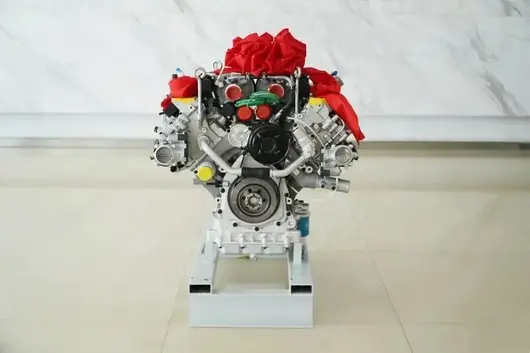
Automotive Event One: Horse Power V6 Engine Prototype Successfully Ignited

Recently, the first prototype of Horse Power HORSE W30 successfully ignited. This model is expected to be paired with the Lotus sports car product line, further perfecting its full-spectrum product matrix from home efficient power to high-end performance power.
As a core product designed for the high-performance hybrid market, HORSE W30 balances ultimate performance, multi-scenario adaptation, and platform expansion capabilities. It can meet the demand for continuous power output in track scenarios and adapt to diverse scenarios such as complex terrain and daily commuting thanks to its flexible hybrid architecture, providing a new technical choice for high-performance hybrid vehicles.
Automotive Event Two: Tesla Releases Q2 Financial Report

On July 23, Tesla released its Q2 2026 financial report. Tesla produced over 451,000 pure electric vehicles globally this quarter, a year-over-year increase of about 10%; deliveries exceeded 480,000, a year-over-year increase of about 25%. The Shanghai Super Factory delivered over 89,000 electric vehicles in June, up 24.4% year-over-year, setting a new high for the year; deliveries in the first half of the year totaled nearly 468,000, up 28.4% year-over-year. Tesla's total revenue for the second quarter increased by 26% year-over-year, reaching $28.2 billion.
As of the second quarter, Tesla's global paid assisted driving users have reached 1.48 million, with the assisted driving option rate in the North American market reaching a historic high, and over half of new vehicles subscribed to assisted driving upon delivery.
Automotive Event Three: The First iCAR V23 Officially Rolls Off the Line in Malaysia

On July 22, ICAR Automotive officially announced that the first iCAR V23 in Malaysia officially rolled off the line, and the new car will arrive at dealerships by the end of July. According to previous reports, in November 2025, the sub-brand iCaur under Chery Automobile Group officially launched the iCaur V23 in Malaysia (domestically iCAR V23), launching a total of 2 models, priced at 119,800-132,800 Malaysian Ringgit (approximately 205,300-227,600 RMB).
'Daily Car News', here you have the latest daily car news, please continue to follow 'Car Insight'

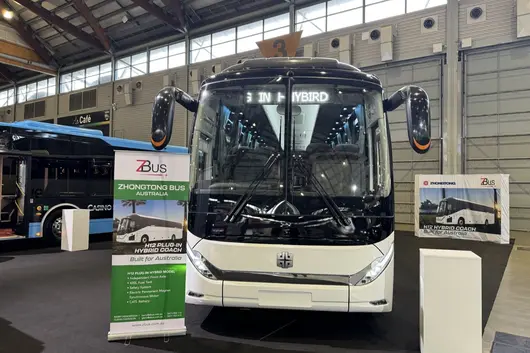
On July 15, the 2026 Australia Sydney International Bus Show (2026 Australasia Bus & Coach Expo) opened at the Sydney Olympic Park venue. The exhibition is organized by the New South Wales Bus Industry Association Bus NSW, and is the largest and most professional bus whole-industry trade event in Oceania.

Based on the high-quality development strategy, Zhongtong Bus made a strong appearance at this exhibition, gathering five classic models on three major technology routes – diesel, extended-range, and pure electric – Diesel version H12, Diesel version L7, Extended-range version H12, Extended-range version L8, Pure electric version N12, fully showcasing the global layout and high-end breakthrough of Chinese buses.
Zhongtong Bus's global exploration bears the era mark of Chinese buses, and even Chinese manufacturing, stepping onto the world stage. Since exports began in 2003, Zhongtong Bus's overseas territory has continued to expand, and its market share has steadily climbed.
According to the latest data from China Bus Statistics Information Network, in the first half of 2026, Zhongtong Bus exported 4,318 buses over 7 meters, a year-on-year increase of 23.65%, with a market share of 14.35%, demonstrating strong market resilience.
What truly allows Zhongtong Bus to stand firm in fierce competition is its "all-rounder" strength. From traditional power to extended-range hybrid, and then to pure electric, Zhongtong Bus has built a product matrix covering all technology routes, capable of providing precisely matched customized solutions based on the policy environment, climate conditions, road conditions characteristics, and operational needs of different markets.
From Singapore's narrow-body pure electric buses to Denmark's low-temperature anti-corrosion upgrades, from Dubai's first entry into high-end public transport systems to showcasing five models in Australia this time, Zhongtong Bus reads local needs first before presenting corresponding solutions. It is not standardized copying, but custom-tailored.

Behind the market breakthrough is Zhongtong Bus's long-term adherence to deep technology cultivation and forward-looking layout. As one of the first domestic enterprises to layout new energy R&D, Zhongtong Bus has continuously improved in core technology and quality control for many years, earning the pass to enter global high-end markets with solid strength.
Standing at the top bus exhibition in Oceania, facing global industry giants and Australian local operators, Zhongtong Bus not only needs to showcase products, but also needs to make clear China's smart manufacturing technical confidence and brand landscape to the world. The five boutique models exhibited this time are not only a precise response to the diversified needs of the Australian market, but also a pragmatic answer from Zhongtong serving global sustainable transportation with full-scenario solutions.

The Diesel version H12 and Diesel version L7 are two main models designed by Zhongtong Bus for high-intensity operational scenarios. The Diesel version H12 is equipped with the new generation "Golden Power Train", reducing fuel consumption by 5%~10% per 100 km compared to the industry average, balancing power and economy; The Diesel version L7 is adapted for business, tourism, group, rental and other scenarios, with a maximum climbing grade greater than 30%, powerful power, fuel-saving and efficient.

Extended-range version H12, L8, precisely anchor the dual needs of low-carbon transformation and cost reduction and efficiency increase. Targeting industry pain points such as uneven distribution of pure electric refueling facilities, limited range for long-distance operations, and high energy consumption for fuel vehicles, Zhongtong Bus relies on autonomous and controllable extended-range hybrid technology to achieve intelligent linkage of oil and electricity, energy allocation according to needs, possessing the triple advantages of ultra-long range, ultra-low energy consumption, and high adaptability, providing high cost-performance and high practicality product solutions for low-carbon transformation of passenger transportation in Australia and even globally.
Pure electric version N12 is a high-end product built by Zhongtong Bus for global traffic green intelligent transformation needs. Taking "Deep Customization" as the core, it can precisely adapt to operational scenarios of different countries. The whole vehicle is equipped with a new generation high-efficiency battery, motor, and controller system, combined with lightweight body design, lower energy consumption, more stable range, enough to support the frequent and long-term operational rhythm of urban buses. Domestically, it is the core transport capacity of urban public transport; Overseas, with the positioning of "Chinese Solutions", it deeply participates in the global traffic low-carbon revolution.

This appearance at the Sydney International Bus Show is a key step for Zhongtong Bus to perfect its global layout strategy, and also a vivid practice from "global layout" to "global deep cultivation".
In the future, Zhongtong Bus will continue to stand on a global vision, adhere to technological innovation, and deepen local adaptation, with the hard core strength of China's smart manufacturing, contributing more "Chinese Solutions" to the green upgrade and smart transformation of global public transportation.

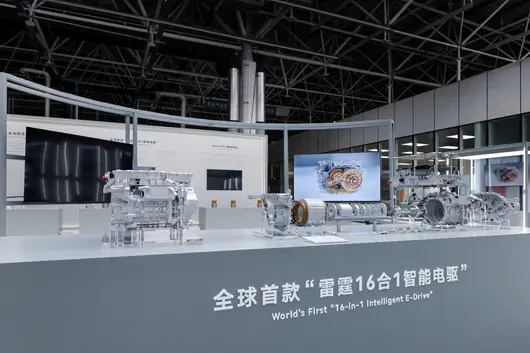
July 16, the launch of the Thunder 16-in-1 Smart Electric Drive brought Geely back to the global spotlight on electric drive technology again. But behind the excitement, a deeper thread is emerging: Chinese electric drives are transforming from "followers" into "rule makers." Star Drive Technology's products not only serve domestic brands but have also penetrated international giants such as Jaguar Land Rover, Renault, and Lotus, signing long-term orders with top European automakers. When foreign automakers begin proactively purchasing Chinese electric drive systems, this "Power Output" revolution led by Geely has quietly rewritten the competitive map of the global automotive parts industry.

I. Technology Export, System First
For Chinese electric drives to go global, it relies not on a single product, but on a production and research system capable of adapting to global standards. Star Drive Technology has taken the lead in this regard. It has established R&D and after-sales service centers in Gothenburg, Sweden, forming a 24-hour R&D network connecting Asia and Europe. From software to hardware, all development follows global standards to ensure products meet the regulations and performance requirements of various markets. This "Localized R&D + Global Collaboration" model ensures that Chinese electric drives are no longer just "sent overseas for sale," but are deeply embedded within the global innovation chain.
In terms of manufacturing, Star Drive Technology plans to build an overseas manufacturing base in Malaysia, forming a production capacity network radiating across Asia and Europe alongside its five domestic bases in Wuxi, Hangzhou, Ningbo, Quzhou, and Jiaxing. An annual electric drive production capacity of 3 million units means it can handle orders from multiple domestic and international brands simultaneously and flexibly respond to market demand fluctuations. Production lines with over 95% automation rates, combined with micron-level machining accuracy, guarantee consistency in mass production and high quality. When "Chinese Smart Manufacturing" becomes replicable and exportable, overseas customers are naturally willing to open their doors to cooperation.
The verification system is also an important cornerstone of trust for technology export. The Star Drive Technology testing center has obtained CNAS certification and possesses the world's first 30,000 rpm single-motor direct-drive test rig, capable of covering over 95% of electric drive test projects. The "High-Quality Electric Drive" certification from the China Automotive Technology and Research Center and endorsement from Guinness World Records provide quantifiable verification bases for overseas clients. In cooperation with brands such as Jaguar Land Rover and Renault, this "hardcore verification" becomes a key element in eliminating trust gaps. System strength is the most hardcore passport.

II. Brand Endorsement, Value Symbiosis
Geely's global journey is aided by the "ecosystem effect" of multi-dimensional mutual empowerment within the brand. Core technology matrices such as Leishen AI Electric Hybrid 2.0, Shendun Gold Brick Battery, and Ocean Super Electric Hybrid jointly form a powerful technology endorsement network. When international automakers see the outstanding performance in performance and energy consumption of brands under Geely, such as Zeekr and Lynk & Co, and then look at the electric drive products provided by Star Drive Technology, trust naturally increases. This is a symbiotic model of "sister brands prototyping, technology base supplying power," which is a competitive advantage difficult for single electric drive enterprises to replicate.
More importantly, Star Drive Technology has accumulated "luxury DNA" by serving high-end brands such as Volvo, Lotus, and Jaguar Land Rover. These brands have extremely strict requirements for the supply chain, and the ability to supply stably for a long time itself means that Star Drive Technology has reached the global top level in terms of quality, delivery, and service capabilities. This "circle of friends" effect will further attract other automakers to join. When a Chinese electric drive enterprise appears on the procurement list of global top automakers, it is no longer a simple supplier, but a key part of the technology ecosystem.
From the perspective of order volume, long-term orders signed by Star Drive Technology with top European automakers such as the UK, France, and Germany have already proven that the acceptance of Chinese electric drives in the global market is rising rapidly. The motor installation volume stayed steadily in the top 3 of the industry in the first half of 2026. Behind this achievement is the steady execution of the G2G (Gear to Global) strategy. From East Asia to Southeast Asia, from Europe to Africa, the service network is being fully rolled out. Chinese electric drives are no longer hiding behind the scenes for OEM, but standing in the spotlight, participating in global competition in the identity of independent brands.

III. Discourse Reconstruction, Pattern Subversion
The global influence of the Thunder 16-in-1 Smart Electric Drive is reshaping industry discourse power. In the past, core technologies and patents of electric drive systems were mostly held by foreign giants such as Bosch, ZF, and Denso, and Chinese brands could only circle around the mid-to-low-end market. However, now Star Drive Technology, with over 1,000 patents, has formed complete technical coverage on the 400V to 900V full voltage platform. From the world's first 900V magnesium alloy electric drive to Thunder 16-in-1, every product is a result of independent R&D. Chinese brands have finally achieved a milestone leap from "following" to "leading" in this core track of electric drives.
The subversion of the competitive landscape is also reflected in the level of standard setting. When Geely Galaxy TT refreshed the Guinness World Records with 8.20kWh/100km energy consumption and a 45.6 km dual car drift, it actually established a new industry reference system. In the future, electric drive products that want to be recognized as "benchmarks" may need to meet the dual standards of extremely low energy consumption and extreme performance at the same time. This "exam" initiated by Geely forces all participants to increase investment and shorten the R&D cycle. Geely, which completed this exam first and handed in high scores, naturally occupied the initiative to define the track.
From the perspective of national strategy, China proposed the call to cultivate "Hidden Champion" enterprises, and Geely Star Drive Technology is exactly the typical achievement of this policy. It has made up for China's weaknesses in motor technology, high-end materials, and electronic control solutions that have long relied on overseas. When this core technology achieves complete autonomous control, the "chokehold" risk of the entire Chinese automotive industry is significantly reduced. More importantly, it proves to the world that China can not only make the best batteries but also the best electric drive systems. Today, when the trend of new energy is irreversible, the comprehensive output of this "Chinese wisdom" will accelerate the process of the global automotive industry shifting eastward.

Conclusion:
From the long-term contracts of European automakers to the global certification of Guinness World Records, Star Drive Technology has broken the international monopoly with system strength and won world recognition for Chinese electric drives. "The time will come to ride the wind and cleave the waves, I will hoist my cloud-white sail to cross the sea of blue." Geely is sending Chinese power technology to every corner of the global ocean with a thunderous momentum. When Chinese electric drives are no longer just a label of "Made in China" but become part of global standards, this battle of going global can truly be said to have won the future.

[June 15, 2026, Shangrao, Jiangxi News] Today, CFMOTO achieved a historic top speed breakthrough in China's motorcycles at the CCCC Automotive Comprehensive Test Site in Shangrao, Jiangxi. Its 1000cc superbike, CFMOTO V4 SR-RR, equipped with a fully self-developed V4 core power platform, challenged by two generations of top Chinese riders, Dupont and Huang Shizhao, achieved a measured top speed of 315.82 km/h*, successfully breaking the top speed record for domestic motorcycles. With this extreme performance, CFMOTO has helped China become the fourth country globally to break the 300 km/h+ threshold, declaring that Chinese brands have officially entered the ranks of global motorcycle top performance.
300 km/h+ is a major technical efficiency watershed in the global high-performance motorcycle field. Liter-class superbikes have historically been the track with the highest technical barriers and strictest R&D thresholds in the global motorcycle industry. CFMOTO's V4 SR-RR broke this monopoly this time, marking that China's motorcycle self-developed power technology has crossed the world-class threshold, refreshed the performance boundaries of the Chinese motorcycle industry, and established new industry benchmarks for Chinese brands to participate in global high-end competition. This challenge was monitored and recorded by the National Motorcycle Quality Inspection and Testing Center (Chongqing) and the National Notary Office of Hangzhou City, Zhejiang Province throughout, ensuring the authenticity and validity of the measured data.
CFMOTO Vice President Chen Zhiyong stated on site: "This top speed breakthrough of the V4 SR-RR stems from CFMOTO's long-term persistence in self-development and refining technology through global top-level events. Today's success means that Chinese motorcycles have officially realized a role shift from technical catch-up to leadership. Now, our self-developed liter-class models have successfully joined the ranks of world-class top performance technology, representing that Chinese strength is beginning to deeply participate in and reshape the global high-performance motorcycle industry landscape. For this, CFMOTO feels deeply honored and proud."


CFMOTO V4 SR-RR Measured Top Speed 315.82 km/h*, Successfully Breaks Top Speed Record for Domestic Motorcycles

This challenge was monitored and recorded by the National Motorcycle Quality Inspection and Testing Center (Chongqing),
Hangzhou City, Zhejiang Province
National Notary Office throughout, ensuring the authenticity and validity of the measured data
From "Manufacturing" to "Innovation", Hardcore Self-Development Breaks Core Technical Barriers
This top speed breakthrough broke the long-term technical monopoly of Japan and Europe's high-end brands, reflecting a systematic leap in the Chinese motorcycle industry in core technology areas. For a long time, liter-class motorcycles have been considered the "peak of the pyramid" technology area of the global power industry, involving complex system engineering capabilities such as engine thermal management, high-rpm stability, aerodynamics, and electronic control coordination, long dominated by a few overseas brands. The CFMOTO V4 SR-RR that created this record, as an engineering prototype before formal mass production, is neither a special edition nor a race-spec version; it represents the pinnacle of Chinese fuel power technology. And its realized 300 km/h+ top speed breakthrough means that Chinese motorcycle brands have truly mastered the core password of world-class top performance power platforms.
As the core of the vehicle, the V4 SR-RR is equipped with CFMOTO's self-developed 997cc 90-degree V4 water-cooled four-cylinder engine, MotoGP racing-sourced technology, with a maximum RPM of 15,000. Maximum power is 157 kW (over 210 hp), vehicle dry weight controlled at around 180 kg, dry weight to horsepower ratio of only 0.86, matching global top superbikes in key indicators such as power output, weight reduction control, and high-speed stability. Related patents for this engine have exceeded 40, with core components to system integration all being forward self-developed.
More importantly, the breakthrough represented by the V4 SR-RR this time is by no means a single-point display of skills, but is based on a complete independent technology system: The V4 SR-RR is equipped with MotoGP World Motorcycle Championship sourced counter-rotating crankshaft technology, the first application of this technology on a domestic model, effectively suppressing wheelies at start, greatly improving agility in corners. At the same time, the V4 SR-RR is also equipped with an active electronic control adaptive wing system. As one of the first global mass-produced active aerodynamic kits, this system can automatically adjust angle according to vehicle speed, reducing 12% aerodynamic drag during acceleration, and increasing 45% downforce on the front wheel at high speeds.
In addition, the vehicle is equipped with a full-dimensional electronic safety system e-CBS (combined front and rear braking), bi-directional quickshifter, hill start (VHC), 6-axis IMU sensor, cornering ABS (cornering anti-lock braking system), full-function TCS (full-function traction control system), cruise control, and other multiple intelligent protection functions, achieving comprehensive safety backup while unlocking extreme performance, providing multiple safeguards for Chinese riders to create this top speed achievement.


Chinese riders Dupont and Huang Shizhao drove CFMOTO V4 SR-RR to break China's Top Speed Record
Promote Research Through Racing, Tempering Chinese Technology from World-Class Tracks
Top speed breakthrough was not accomplished overnight, but is a concentrated result of CFMOTO's long-term persistence in the strategy of "promoting research through racing and combining research and use". Continuous high-intensity R&D investment is the fundamental guarantee to break technical barriers. In 2025, CFMOTO's R&D investment was 1.22 billion yuan, accounting for 6.18% of operating revenue. As of the end of 2025, the enterprise has cumulatively obtained 2,119 authorized valid patents, including 242 invention patents, and participated in formulating 71 national, industry, and group standards.
At the same time, for many years, CFMOTO has continued to work hard, through deep participation in global top-level events such as MotoGP, W2RC, tempering core technologies such as power platforms, chassis control, and aerodynamics in extreme conditions, verifying product reliability, gradually building an "racing verification—technology iteration—mass production landing" R&D closed loop. In the 2024 season, the CFMOTO Aspar team won the MotoGP Rider/Team/Manufacturer Triple Crown, becoming the first Chinese manufacturer champion in MotoGP history. At the same time, CFMOTO, by acquiring equity in the Moto2 chassis king Kalex engineering company, directly gained globally leading chassis engineering technology, massive racing R&D data, and top-tier manufacturing processes, achieving a leapfrog improvement in technical capabilities. Distinguishing from international brands "track technology slowly transferred down", CFMOTO realized synchronous iteration of racing R&D and civil mass production: MotoGP-verified power curves, chassis rigidity, and electronic control algorithms were quickly applied to CFMOTO's V4 SR-RR and 500SR models.

2026 Brazil Round CFMOTO Aspar Team Swept Moto3 1st and 2nd Place
Also relying on rich technical engineering and service experience accumulated from global top-level events, CFMOTO continues to rapidly integrate globally top-level track technology and experience into mass-produced civil high-performance product capabilities, and through years of continuous unremitting efforts, continuously refine its own technical R&D strength, while also constantly promoting supporting parts enterprises to synchronously share track-level manufacturing processes, upgrading precision machining capabilities, thereby helping the industry chain change the past reverse engineering Japanese style old path, vehicle manufacturers and parts manufacturers synchronously start forward development, pushing the entire industry's technical ceiling to lift. Finally, through the systematic support of China's intelligent manufacturing system and supply chain capabilities, it successfully stably landed "track-level performance" into the achievement of "mass-producible liter-class superbike".

CFMOTO V4 SR-RR Core Team Representatives
From Technical Pursuit to Global Competition, Chinese High-end Motorcycle Industry Chain Collaborative Upgrade
The V4 SR-RR's historic breakthrough is not only a technical milestone event for CFMOTO, but also a concentrated embodiment of Chinese motorcycle industry chain collaborative upgrade. From core engine precision components, lightweight forged kits, to high-end electronic control systems, aerodynamic supporting components, and intelligent hardware and software, many domestic "Specialized and Innovative Enterprises" collaborated to tackle difficulties, relying on China's complete industrial manufacturing system and rapid iteration capabilities, jointly promoting domestic motorcycles to reach international leading levels.
Behind this breakthrough is reflected the development trend of Chinese manufacturing continuously leaping towards high-end, intelligent, and globalized. In the past, liter-class motorcycles were long seen as the "crown jewel" of global industrial manufacturing capability and power technology levels. Now, Chinese enterprises are achieving breakthroughs in this high-technology, high-threshold field, and gradually building increasingly solid global competitiveness. CFMOTO's technical upgrade and capacity expansion are now becoming a key force to drive regional industry chain aggregation, achieving "One move of the leader activates the whole board". Such as relying on the Zhejiang Wen-Tai Auto-Motorcycle Parts Industry Belt (Ruian, Yuhuan, Jinhua) and the local industry foundation of Chongqing Motorcycle Capital, the enterprise has built a 100-kilometer supply chain circle, achieving high precision, low-cost manufacturing: Hangzhou headquarters connects closely with many local supporting enterprises; while Chongqing production base pulls Sichuan-Chongqing local parts manufacturers to expand production and upgrade, helping them turn to medium-to-large displacement precision parts supporting to realize industrial upgrade. In terms of intelligent experience improvement, deepening application with official partners Insta360 and Amap Open Platform, joined forces in scenarios such as smart image recording, smart navigation, achieving deep empowerment of smart riding.
At the same time, as an internationally leading power sports brand, from "product output" to "brand output + technology output + local manufacturing" systematic success, CFMOTO's global development strategy pace is clear. As the global leader in ATVs, the enterprise possesses both two-wheel high-end breakthrough and JINCHI Electric rapid growth. And overseas R&D production channel full coverage, racing-driven brand premium, etc., prove that CFMOTO has become a global benchmark for Chinese power equipment.
Upholding global development concepts, CFMOTO continues to layout global R&D, manufacturing, and marketing systems. Currently, the enterprise has built three major manufacturing bases in Hangzhou, Chongqing, and Zhuzhou domestically, and laid out production bases in Thailand and Mexico, business covering over 100 countries and regions, owning more than 9,000 distributor networks, and constantly bringing more and more "China Smart Manufacturing" boutique products to users around the world, creating a brighter, high-end Chinese brand business card.

CFMOTO Successfully Opened Global Market (Picture shows 2025 CFMOTO MT Challenge Global Finals)
From technical pursuit to independent innovation, from product going global to brand going global, CFMOTO is pushing the Chinese motorcycle to complete the leap from "capable of manufacturing" to "capable of optimizing", from "participating in competition" to "defining standards" with the V4 SR-RR's historic top speed breakthrough. The V4 SR-RR is not only a Chinese liter-class superbike, but also the epitome of CFMOTO's "Racing Driven, Technology Self-Developed, Global Layout" strategy, marking that the Chinese motorcycle has officially joined the world high-performance first tier. In the future, CFMOTO will continue to deeply cultivate high-performance power core technologies, help the Chinese motorcycle industry move towards high-end, intelligent, and internationalized directions, injecting more Chinese power into cultivating new quality productive forces and building a manufacturing powerhouse.
*This record is a GPS top speed achievement realized by professional riders driving Chinese fuel motorcycles in a closed test site, officially certified by the National Motorcycle Quality Inspection and Testing Center (Chongqing) and the National Notary Office of Hangzhou City, Zhejiang Province
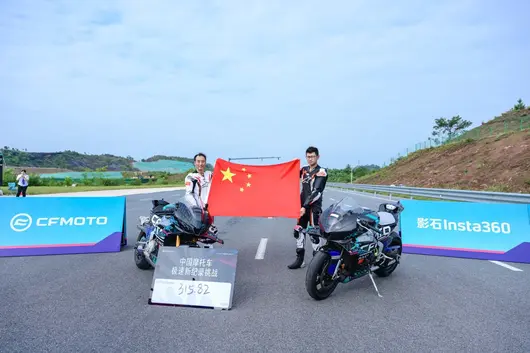

From May 21st to 23rd, the 6th International Forum on Vehicle Powertrain was held in Ningbo, Zhejiang. This forum was organized by Geely Automobile Group and hosted by HORSE, with the theme of "Diversified Drive - Innovation Leading", focusing on technological innovation and industrial collaboration, helping Chinese companies accelerate their global expansion and deeply cultivate the global market, it is an annual industry event with great influence in the global vehicle powertrain field.

This forum gathered top forces in the global automotive industry: executives from over 30 domestic and international leading automakers including Geely, Hyundai, NIO, XPeng, Schaeffler, Infineon, etc., attended and delivered speeches. Domestic and foreign authoritative industry associations such as the China Automotive Engineering Society and the China Automotive Industry Association, top Chinese universities and research institutions such as Tsinghua University, Shanghai Jiao Tong University, and Tongji University, as well as media like China Automotive News and Gasgoo, saw participation from over a thousand experts, industry leaders, and media representatives to jointly explore paths for industrial transformation.
The forum set up 12 core meetings, including 1 main venue, 1 high-end roundtable forum, and 6 professional technical sub-venues. Concurrently held supporting activities included a Malaysia investment promotion closed-door meeting, parts exhibitions, test rides, etc. 10 keynote reports and over 50 thematic reports were released, covering frontier directions of the entire industry chain such as hybrid electric drive, battery innovation, high-efficiency internal combustion engines, and low-altitude aircraft power.
During the forum, HORSE Global CTO and Aurora Bay Technology CEO Zhao Fucheng delivered the keynote report "HORSE: Technology Leading the Global x-HEV New Era", systematically analyzing the latest evolutionary trends of global hybrid technology. Zhao Fucheng believes that going global has become an inevitable choice for Chinese automakers. From a global perspective, the future vehicle powertrain system will shift from pure electric to a diversified development pattern of x-HEV; additionally, solid-state battery technology is still in a stage where science and engineering intersect, and the hybrid route remains one of the core development directions for the future passenger car market.

Zhao Fucheng emphasized: "Against the backdrop of profit pressure in the domestic market and overseas becoming a profit highland, global automakers' strategies are shifting from pure electric to hybrid, and going global and hybrid have become the dual necessities for Chinese automakers to break the situation. With hybrid power as the core, from high thermal efficiency engines, 900V+ electric hybrid systems to ultra-compact hybrid, modular extended-range solutions, HORSE uses a diversified, efficient, and adaptable full-stack layout to empower automakers to achieve the near-zero goal of a single platform globally adaptable, injecting 'Chinese wisdom' and 'Chinese solutions' into the innovation of the global vehicle powertrain industry."
In addition, this forum specially set up a booth for global leading automotive parts suppliers, gathering 26 global supply chain leading enterprises including HORSE, Star Drive Technology, BorgWarner, Schaeffler, Mahle, etc. As the organizer of this forum, HORSE showcased its three core power products at this forum. The HORSE B20 Ultra-Effective Waterproof Hybrid Engine established a benchmark for efficient hybrid with its ultra-high certified mass production thermal efficiency of 48.41%; The DHTS Super Hybrid Platform provided the industry with high cost-performance hybrid mass production solutions by virtue of its ability to achieve million-level scale in the first year; The HORSE W30 All-Domain V6 High-Performance Engine broke through the performance and efficiency boundaries of traditional flagship power, covering needs from home use to high-end off-road all scenarios.

The 6th International Forum on Vehicle Powertrain gathered consensus on global automotive power industry going global, steadily promoting the carbon neutrality transformation of the automotive industry. HORSE will also provide a practical path for the low-carbon transformation of the global vehicle powertrain system by focusing on the hybrid route and empowering through diversified power technology in all dimensions.

From May 21st to 23rd, the 6th International Forum on Vehicle Powertrain was held in Ningbo, Zhejiang. This forum was organized by Geely Automobile Group and hosted by HORSE, with the theme of "Diversified Drive - Innovation Leading", focusing on technological innovation and industrial collaboration, helping Chinese companies accelerate their global expansion and deeply cultivate the global market, it is an annual industry event with great influence in the global vehicle powertrain field.
This forum gathered top forces in the global automotive industry: executives from over 30 domestic and international leading automakers including Geely, Hyundai, NIO, XPeng, Schaeffler, Infineon, etc., attended and delivered speeches. Domestic and foreign authoritative industry associations such as the China Automotive Engineering Society and the China Automotive Industry Association, top Chinese universities and research institutions such as Tsinghua University, Shanghai Jiao Tong University, and Tongji University, as well as media like China Automotive News and Gasgoo, saw participation from over a thousand experts, industry leaders, and media representatives to jointly explore paths for industrial transformation.
The forum set up 12 core meetings, including 1 main venue, 1 high-end roundtable forum, and 6 professional technical sub-venues. Concurrently held supporting activities included a Malaysia investment promotion closed-door meeting, parts exhibitions, test rides, etc. 10 keynote reports and over 50 thematic reports were released, covering frontier directions of the entire industry chain such as hybrid electric drive, battery innovation, high-efficiency internal combustion engines, and low-altitude aircraft power.
During the forum, HORSE Global CTO and Aurora Bay Technology CEO Zhao Fucheng delivered the keynote report "HORSE: Technology Leading the Global x-HEV New Era", systematically analyzing the latest evolutionary trends of global hybrid technology. Zhao Fucheng believes that going global has become an inevitable choice for Chinese automakers. From a global perspective, the future vehicle powertrain system will shift from pure electric to a diversified development pattern of x-HEV; additionally, solid-state battery technology is still in a stage where science and engineering intersect, and the hybrid route remains one of the core development directions for the future passenger car market.
Zhao Fucheng emphasized: "Against the backdrop of profit pressure in the domestic market and overseas becoming a profit highland, global automakers' strategies are shifting from pure electric to hybrid, and going global and hybrid have become the dual necessities for Chinese automakers to break the situation. With hybrid power as the core, from high thermal efficiency engines, 900V+ electric hybrid systems to ultra-compact hybrid, modular extended-range solutions, HORSE uses a diversified, efficient, and adaptable full-stack layout to empower automakers to achieve the near-zero goal of a single platform globally adaptable, injecting 'Chinese wisdom' and 'Chinese solutions' into the innovation of the global vehicle powertrain industry."
In addition, this forum specially set up a booth for global leading automotive parts suppliers, gathering 26 global supply chain leading enterprises including HORSE, Star Drive Technology, BorgWarner, Schaeffler, Mahle, etc. As the organizer of this forum, HORSE showcased its three core power products at this forum. The HORSE B20 Ultra-Effective Waterproof Hybrid Engine established a benchmark for efficient hybrid with its ultra-high certified mass production thermal efficiency of 48.41%; The DHTS Super Hybrid Platform provided the industry with high cost-performance hybrid mass production solutions by virtue of its ability to achieve million-level scale in the first year; The HORSE W30 All-Domain V6 High-Performance Engine broke through the performance and efficiency boundaries of traditional flagship power, covering needs from home use to high-end off-road all scenarios.
The 6th International Forum on Vehicle Powertrain gathered consensus on global automotive power industry going global, steadily promoting the carbon neutrality transformation of the automotive industry. HORSE will also provide a practical path for the low-carbon transformation of the global vehicle powertrain system by focusing on the hybrid route and empowering through diversified power technology in all dimensions.


