首頁Overseas Expansion

搜尋歷史
熱門搜尋
經銷商登入 / 註冊

Zhiliao Auto/Fed

September 2026, US Transportation Secretary Sean Duffy sent a letter to Ford Motor CEO Jim Farley, requesting Ford abandon its strategic partnership with Chinese companies. The letter directly targets Ford's use of CATL-licensed lithium iron phosphate battery technology at its Marshall plant in Michigan.

In past years, restrictions by Europe and US on China's auto industry focused mainly on complete vehicles. In October 2024, the EU added countervailing duties on EVs produced in China on top of 10% import tariffs, with comprehensive rates reaching up to 45.3%.
However, the US approach follows FEOC rules under the Inflation Reduction Act. Starting from 2026, over 60% of cell material costs must come from eligible companies to qualify for tax credits, rising to 75% by 2030.

These barriers previously only focused on "where the car comes from", now they also manage "where the technology comes from".
Ford employs about 1700 American workers at its Michigan plant, the plant is fully owned and operated by Ford, but solely because battery technology comes from CATL via licensing agreement, it was deemed "deeply concerning" by the US Department of Transportation.

EU countervailing duties also brought high costs for Chinese car makers. BYD was levied 17.0% countervailing duties, Geely 18.8%, SAIC Motor reached 35.3%. A Chinese EV priced at 38,000 euros, just tariff cost exceeds 10,000 euros.
But the price commitment mechanism agreed between China and EU in January 2026 provided a buffer channel. Chinese car makers can replace high countervailing duties by committing to minimum import prices and annual export quotas.

This practice of sacrificing some pricing freedom to exchange for qualification to stay in the European market is essentially a strategy of exchanging space for time, but indicators do not treat the root cause.
Take the cooperation between Ford and CATL for example. Ford stated this is not a joint venture, nor foreign manufacturing business, CATL only provides technology licensing and training services, Ford owns the plant and controls operations. But even so, the US government does not allow it.

Of course, from the US government perspective, this concern has its logic. After all, CATL was listed on the so-called "Chinese Military Enterprise List" by the US Department of Defense as early as 2025. Such policy environment, even just technology licensing, faces various uncertainties.
Despite such harsh environment, Chinese auto export data remains strong. First 8 months of 2026, passenger car cumulative exports 6.098 million units, YoY growth 75.7%, annual export volume expected to reach 11.5 to 12 million units.

But export volume is one thing, global capability is another.
Report by global consultancy AlixPartners shows Chinese car makers plan to layout production bases in at least 16 overseas countries. By 2030, overseas production expected to rise from about 1.2 million units in 2025 to 3.4 million. BYD has layouted factories in Thailand, Brazil, Hungary, etc., where Hungary factory expected to produce in 2026, annual capacity 150,000 units. SAIC Thailand factory local content rate has broken 80%.

Actually not only Chinese enterprises, this practice of localizing core supply chain links as much as possible is a general strategy for many multinational car makers to cope with policy risks.
To put it plainly, Chinese car makers doing this is forced by EU/US restrictions on Chinese auto supply chains. Tariffs are one aspect, various technology source reviews, localization rate requirements, and supply chain security rules are deeper constraints.
Chinese car makers' advantages in battery technology, manufacturing costs, and product iteration speed still exist, but now looking, to convert these advantages into global market share, it's not just about selling cars, must build manufacturing, supply chain, and service systems into target markets.

So, this new round of competition triggered by Chinese NEV industry going overseas, is shifting from the product itself to who can build a complete operational system in more markets.
Zhiliao Auto original article, please contact us if reprinting.
*Pictures from internet, please contact author to delete if infringing*
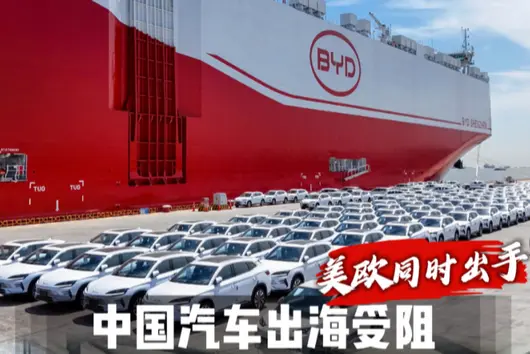

September 1, the Ministry of Commerce, the Ministry of Industry and Information Technology, and the State Administration for Market Regulation jointly released the "Guidelines on Foreign Competition Behavior and Compliance Construction for the Automotive Industry" (hereinafter referred to as the "Guidelines"), putting forward systematic requirements for the overseas market competition behavior and compliant operations of Chinese automotive enterprises. This is the first domestic normative guideline specifically targeting the overseas operations of the automotive industry, released at the node where Chinese automotive exports have led the world for three consecutive years.
In the past few years, Chinese automobiles have quickly opened up the global market relying on product strength and supply chain advantages. While scale growth occurred, problems such as spillover of low-price competition, chaotic channel order, and insufficient compliance preparation also emerged. The release of this guideline marks that the internationalization path of the Chinese automobile industry is accelerating towards the deepening stage of quality and system competition.
▍Background and Market Reality of the Implementation of Foreign Competition Standards
The guideline released by the three departments has the core objective of regulating overseas market competition order and guiding enterprises to operate in compliance. Chapter 2 of the "Guidelines" makes provisions specifically for market competition behaviors, clarifying that enterprises should establish pricing strategies based on costs and guided by international market supply and demand, and must not disrupt market order to gain unfair competitive advantages. Regarding terminal pricing, the guideline requires enterprises to set clear price gradients according to different configurations, avoid frequent and large-scale price adjustments, while respecting the pricing autonomy of overseas dealers and reasonably agreeing on sales incentive policies. In addition, the guideline also requires compliance in promotional activities and publicity and promotion, prohibiting false advertising and requiring enterprises to comply with local business practices and cultural customs.
According to statistics from the General Administration of Customs, the volume of complete vehicle exports from China reached 8.32 million in 2025, a year-on-year increase of 29.9%, ranking first in the world for three consecutive years, with products sold to over 200 countries and regions worldwide. The enthusiasm of domestic car companies for going global remains high. In the first seven months of 2026, the export volume of passenger cars continued to maintain double-digit growth, among which the export growth rate of new energy passenger cars exceeded 120%. However, while scale expanded rapidly, signs of domestic price wars transferring outward appeared in some markets. Taking the Southeast Asian market such as Thailand as an example, selling prices of some Chinese brand models were reduced multiple times shortly after launch, with the reduction magnitude reaching around 30%. Although this pricing strategy boosted sales in the short term, it also disrupted the price system of the local market, and even cases of cross-regional cross-selling and mutual price undercutting between dealers of the same brand appeared.

In addition, the issue of "0-kilometer used cars" reported by media will also trigger consumer complaints due to problems such as language mismatch in infotainment systems, non-compliance with local information security regulations, and lack of official warranty services. Meanwhile, the inflow of such low-price vehicles will impact the price system of local regular new cars, putting car manufacturers who invested heavily in certification and channel building into a passive position.
Except for problems at the market level, disordered competition may also trigger more trade risks. If Chinese car companies continue to expand overseas with low-price strategies, it is easy to trigger local anti-dumping and anti-subsidy investigations. In recent years, the EU, the US and other markets have already implemented tariff policies for Chinese electric vehicles, and the risk of trade barriers always exists. From this perspective, the "Guidelines" are not only a regulation of the industry competition order but also a risk reminder to enterprises, reminding enterprises to avoid dissipating long-term market space with short-term pricing strategies.
▍From Product Export to System Overseas Expansion: Localized Compliance Practices of Automotive Companies
Facing changes in regulatory orientation and deep requirements of overseas markets, the logic of Chinese car companies' going global is undergoing transformation. In the past, the core goal of enterprises was to sell products out, now they increasingly value the output of systematic capabilities. From the in-depth dialogue between Karis and the Car Quality Network with quality and service management teams of multiple car companies, it can also be seen that top brands have layout in advance in multiple dimensions such as product certification, quality systems, channel layout, and regulatory adaptation, promoting the overseas expansion model to upgrade from "product export" to "system operations".
Voyah is one of the earliest Chinese brands to layout in the European market. Li Jiayao, a senior manager in the quality field mentioned in the exclusive interview that quality management in overseas markets has significant differences compared to domestic ones. This difference is reflected not only in technical standards but also in cultural habits, laws and regulations, consumer demands and other levels. In order to cope with these differences, Voyah established a dual-layer response mechanism: holding special promotion meetings for market issues every day at noon, and holding quality feedback and countermeasure meetings every day in the evening, jointly with market, R&D, manufacturing and other departments to quickly handle problems in overseas markets. At the product access level, in 2022, the Voyah FREE model obtained European Whole Vehicle Type Approval (EWVTA) before being shipped from Wuhan to Norway and could be formally registered in EU countries. Subsequently, Voyah cars entered Finland, Denmark, Netherlands, Bulgaria, Czechia, Italy, Spain and other countries successively.
SAIC Maxus is a representative enterprise for the overseas expansion of Chinese commercial vehicles, and its products have been sold to more than 100 countries and regions worldwide. Pu Dengxiang, Vice General Manager of SAIC Maxus Automotive Co., Ltd. clearly stated in the interview that globalization is not simple product export, but comprehensive overseas expansion of brands, standards, and services. He believes Chinese car companies face three quality challenges in going global: consistency of quality definition, localization of service capabilities, and cross-border data closed loop. User usage habits, road conditions, and regulatory standards differ in different markets, overseas service network capabilities are uneven, plus cross-time zone and cross-language communication obstacles, it is easy to make quality problems in overseas markets become information silos. In specific practice, SAIC Maxus was the first to pilot the supplier on-site support model in the Australia and New Zealand market, promoting key suppliers to deploy technical personnel locally, while conducting comprehensive capability training for technical personnel of local service outlets, effectively solving the pain points of slow on-site response, difficult diagnosis, and long repair cycle overseas, and this set of experience is being promoted to the UK and other core European markets.

Geely Auto chose another path of systematic overseas expansion, integrating into the local industrial ecosystem through capacity cooperation. A person in charge of Geely Holding Group stated in a public interview that enterprise going global does not necessarily require new capacity construction, but can share capacity and share markets with local partners. Geely reached cooperation with Ford to jointly operate Ford's production base in Spain, utilizing local idle capacity to produce Geely brand models. This model can not only avoid trade barriers but also drive local employment and is easier to obtain host country policy support.
The core of systematic overseas expansion is to place compliance awareness forward to the product R&D stage. Multiple executives also stated that in the past many enterprises tried to export after products were made, now they consider regulatory standards of different markets synchronously in the R&D stage. For example, for EU Carbon Border Adjustment Mechanism, data privacy regulations, and Southeast Asia automotive safety standards, enterprises need to include them in the product definition stage. In addition, systematic capabilities also include overseas supply chain layout, HR localization, intellectual property protection and other dimensions. The "Guidelines" also specifically mention that enterprises should improve overseas quality management system and after-sales service system, comply with local labor regulations, and strengthen IP layout, these are all core components of system overseas expansion.
Overall, the "Guidelines" defined competition boundaries for overseas operations of the Chinese automotive industry, and also conveyed a clear policy orientation: the internationalization of Chinese automobiles cannot walk the old path of low-price race to the bottom, it must turn to high-quality, systematic competition. After several years of rapid expansion, Chinese automobiles have already established preliminary product awareness in the global market. Next, what needs to be made up are shortcomings in compliance operations, brand building, and ecosystem layout.
Different car companies chose different paths of systematic overseas expansion based on their scale and strategy. Some enterprises built factories and R&D centers themselves, deeply penetrating mature markets; some enterprises shared capacity through cooperation models to enter regional markets with light assets; some enterprises started with service and quality systems first, gradually perfecting localization capabilities. But no matter which path is chosen, compliance operations and long-termism have already become industry consensus.


Recently, the domestic leg of the 2026 Silk Road 10,000 Miles Journey Enlightenment Road concluded successfully in Shenzhen. The new energy vehicle fleet escorted by BYD throughout the journey traversed thousands of kilometers, successfully completed the overland Silk Road exploration journey, and from here sets sail to connect with the Maritime Silk Road, embarking on an all-new overseas journey.
The camel bells of the ancient Silk Road echoed, witnessing the fusion and mutual learning of Eastern and Western civilizations. Today, new energy vehicles continue the historical mission, opening a new chapter belonging to Chinese intelligent manufacturing.

This Silk Road 10,000-Mile Journey focuses on culture, technology, and trade. The BYD fleet departed from the Silk Road starting point Xi'an, passing through multiple historical famous cities, visiting the four Eastern cultural symbols of fragrant herbs, porcelain, silk, and tea, integrating the millennium-old intangible cultural heritage with modern automotive technology Autohome.
During the long journey, complex road conditions and diverse climates tested the vehicle strength in turns. BYD's full matrix of models, relying on stable vehicle performance, flash charging and energy replenishment technology, and intelligent driving capabilities, calmly handled various travel scenarios, successfully completed all domestic leg schedules, and verified the solid product strength of Chinese new energy vehicles with actual performance.

Shenzhen is not only the end of the domestic leg but also the starting point for heading overseas. After completing the domestic itinerary, the fleet will continue on the Maritime Silk Road, rush to multiple overseas locations to carry out brand display and product experience series of activities, bringing the strength of Chinese new energy to the world. Galloping through mountains and seas for a green voyage, BYD is measuring reliability with mileage, allowing more international consumers to understand and recognize Chinese new energy vehicle products.
Today, Chinese new energy vehicles are accelerating towards the global stage, becoming another business card of Chinese high-end manufacturing. What it exports is not only complete vehicle products, but also a complete energy replenishment system and low-carbon development concept.
Currently, the competition in global new energy vehicles is becoming increasingly fierce. Going overseas is no longer simple product export, but also tests the comprehensive strength of the brand and cultural communication capabilities.
From data perspective, BYD's globalization map is accelerating expansion. As of now, its new energy vehicles have covered 121 countries and regions globally. Overseas sales broke through 1 million units for the first time in 2025. Overseas cumulative sales from January to July 2026 reached 970,000 units, with a strong growth momentum.

More importantly, BYD's overseas expansion has long surpassed simple complete vehicle export, extending towards localized production, technology output, and industrial synergy multi-dimensionally. Placing the first flash charging station in Europe, building an exclusive energy replenishment network in Uzbekistan, laying out localized production bases in Thailand and Brazil, and even bringing the PV, Storage, and Charging integrated solution to Central Asia.
BYD fully escorted the Silk Road 10,000-Mile Journey, which is not only a brand expedition, but also a vivid vignette of the leap from Chinese auto product overseas to ecosystem overseas era. The civilization exchange of the ancient Silk Road has never stopped, and BYD is using green technology as a brush to write a new chapter belonging to the new era on this exchange road that has lasted for thousands of years.
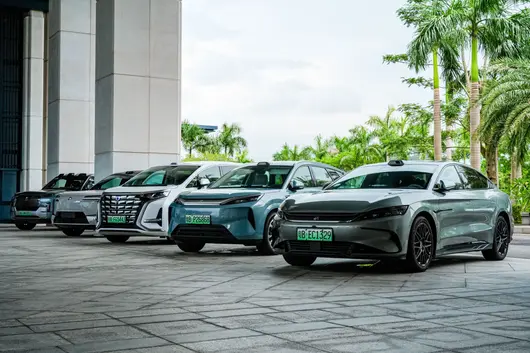

The journey of Chinese tyre expansion has evolved from single-point breakthroughs to full-scale booms.
Since Sailing Group invested in Vietnam in 2012, building the first overseas factory for Chinese tyres, officially opening the overseas curtain, it has now formed a scaled, globalized industrial landscape.
A recent set of major revenue data disclosed by the China Rubber Industry Association directly confirms this decade-spanning overseas wave: 14 key tyre enterprises achieved a total overseas base revenue of 79.913 billion yuan in 2026, compared to 54.082 billion yuan the previous year, a year-on-year surge of 47.76%; the average proportion of overseas base revenue accounting for the total enterprise revenue reached 40.24%.

2025-2026 Annual Overseas Tyre Base Revenue Situation
Nearly 40% of revenue comes from overseas local factories. Core industry growth of nearly 80 billion has firmly secured the overseas capacity as the main engine of performance for the Chinese tyre industry, becoming the core pillar for companies to hedge against domestic involution and resist global trade risks.
Top players widen the gap, distinct tier differentiation
From the industry revenue rankings, the leading enterprises that went overseas first, leveraging their first-mover advantage to complete global layouts, have significantly widened the gap with SME brands, making industry tier differentiation increasingly clear.
Sailing Group leads far with 28.226 billion yuan overseas revenue, a year-on-year increase of up to 104.54%, overseas base revenue accounts for 77.54% of total enterprise revenue, fully releasing the dividends of globalized capacity layout, becoming a benchmark for industry overseas expansion.

Linglong Tires and Zhongce Rubber ranked second and third respectively with 11.93 billion yuan and 10.380 billion yuan. Jiangsu General and Sentinel follow closely, with both overseas revenues breaking 6.3 billion yuan, revenue proportions both exceeding 73%, deeply binding to overseas bases, and globalized layouts continuing to deepen.
Besides the old brand top enterprises steadying themselves, the industry's second tier has full explosive power. Changfeng Tires' overseas revenue skyrocketed 126.87% year-on-year; Haohua Tires and Fumas Tires achieved a breakthrough in overseas revenue from 0 to 1. A new batch of enterprises followed the industry's overseas wave, completed overseas capacity landing, formally joined the global battlefield, making the Chinese tyre overseas matrix increasingly strong.
Behind the Revenue Surge: Blooming Globally
Nowadays, the overseas revenue scale of nearly 80 billion is certainly not the work of one day.
Currently, 26 tyre enterprises in China are setting up overseas factories, and once completed, the number of overseas bases will exceed 40, production bases are distributed across Southeast Asia, North Africa, Central and Eastern Europe, Latin America, and other global core markets, completely bidding farewell to the past single export trade model.
Southeast Asia remains the core hotbed for factory construction: Thailand gathers giants like Zhongce, Linglong, Sentinel, General, etc.; Vietnam relies on early industrial foundations to become the core profit town for enterprises like Sailun, Guizhou Tyre, etc.; Cambodia has become a new investment lowland for the industry, with 10 enterprises clustered landing.
At the same time, countries such as Mexico, Egypt, Morocco, Serbia, Russia, etc., have all landed Chinese tyre factories, and the globalized capacity map is fully unfolded.
The overseas logic has completely iterated: Upgrading from the past 'production in China, sales globally' product output to a 'capacity + market' dual-output globalized layout, building factories on-site, producing on-site, supplying nearby, becoming the industry's main business model, and also the core confidence for continuous overseas revenue explosion.
Overseas Bases: Bolstering the Profit Bottom Line
Nowadays, overseas factories have completely reversed their role, transforming from initial cost investment items into the ballast stone that bolsters enterprise profits.
Flipping through the 2025 listed company financial reports, among 11 sample tyre companies, only 2 achieved positive net profit year-on-year growth, domestic market involution intensifies, profits continue to bear pressure, most enterprises' local business increases revenue but not profit.

The core breakthrough for growth against the trend all comes from overseas capacity: 7 enterprises' overseas factories contributed over 25% to the parent company's net profit, and the value of profitability is increasingly highlighted.
Among them, Sailun's two major Vietnam bases contributed 67% of the group's profit with 43% revenue proportion; Guizhou Tyre Vietnam base leveraged 56% profit with only 21% revenue proportion, overseas capacity's profit-making efficiency far exceeds domestic production lines.
Asset proportion data also confirms this deep transformation: General Shares and Sailun Tires overseas asset proportions reached 68.44% and 63.46% respectively, Sentinel and Linglong follow closely, industry average overseas asset proportion exceeds 20%.
After more than a decade of development, overseas bases have completely completed the transformation from 'cost centers' to 'value creation centers', becoming the confidence to cross industry cycles.
After 80 Billion: Overseas Dividend Peaks
But behind the eye-catching performance, the era of the industry's barbaric growth has already ended, and hidden risks and challenges continue to be highlighted.
A large number of enterprises cluster and expand production in core areas like Southeast Asia, homogeneous capacity is released centrally, overseas base early tariffs, cost excess returns are gradually falling back, Blue ocean markets are gradually turning red, industry involution spreads from domestic to overseas.

At the same time, production base transfer cannot permanently avoid trade barriers, the former tax haven, now also faces increasingly strict trade investigations, overseas risks continue to climb.
In addition, the overseas heavy-asset factory construction model poses extremely high requirements for enterprise capital strength, geo-risk control, supply chain management, and localization operation capabilities, the drawbacks of blind expansion and extensive layout gradually emerge, and industry reshuffling accelerates.
Second Half: From Grabbing Land to High-Quality Overseas Expansion
80 billion overseas revenue marks that Chinese tyre overseas expansion has entered the second half. With overseas thresholds constantly increasing, Matthew effect intensifies, top advantages continue to expand, SME brands face increasing pressure, the industry will bid farewell to the land-grabbing model of barbaric expansion, shifting to refined high-quality operations.
Breaking out of low-price capacity involution, industry competition will upgrade to a comprehensive strength contest of channels and brands.
The only way out for the future industry breakthrough is to break free from scale involution, from extensive capacity overseas expansion to high-value brand overseas expansion leapfrog breakout, completely bidding farewell to volume stacking, achieving true high-quality value growth.
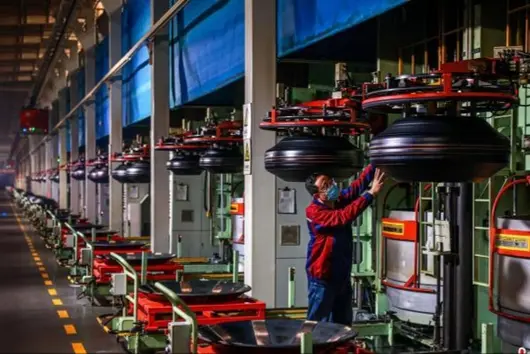


From Xi'an Datang West City to Quanzhou Ancient Port, from the thousand-year-old camel bell trail to the ten-thousand-ton roll-on/roll-off giant ship — in the midsummer of 2026, a fleet consisting of BYD's full range of new energy vehicles traveled east and south along the veins of the ancient Silk Road, finally sailing out to sea from Shenzhen Port. This journey has a grand name: "2026 Silk Road 10,000-Li Journey · Enlightened Path".

Silk Road Intersection: From Product Cards to Smart Manufacturing Cards
The ancient Silk Road consists of two channels: overland and maritime. The overland Silk Road starts from Xi'an, goes west over mountains and ridges, and reaches Rome directly. The maritime Silk Road starts from Quanzhou, sets sail for the Nanyang region, and reaches Rome. Today, the BYD fleet retraces this thousand-year-old path, while collecting civilization marks at the four intangible cultural heritage nodes, more importantly, unfolding the hard-core strength of flash charging technology and intelligent driving on the 10,000-li test journey.
Currently, BYD's overseas sales have exceeded one million vehicles, with year-on-year growth exceeding 140%, and products cover over 120 countries and regions worldwide.

Road to Overseas Expansion: From Product Export to System Export
Currently, BYD already owns 8 custom RORO ships, with an annual capacity reaching 250,000 to 300,000 vehicles, effectively supporting its overseas market expansion strategy. More importantly, BYD has upgraded "overseas expansion" from single product output to systematic output of "technology + infrastructure + industry". Landing the first flash charging station in Europe, building an exclusive energy replenishment network in Uzbekistan, and laying out localized production bases in Thailand and Brazil. This "systematic overseas expansion" model makes China's new energy technology no longer isolated "commodities", but rather "solutions" integrated into local energy structures and industrial upgrades.

Flash Charging Field Test: 5-minute Energy Replenishment Rewrites Mobility Rules
In this journey spanning thousands of kilometers, flash charging technology became the most focused topic. The BYD flash charging system equipped with the 2nd generation Blade Battery, charging from 10% to 70% battery level takes only 5 minutes at normal temperature, and charging to 97% takes less than 9 minutes; even in extreme cold environments at minus 30 degrees Celsius, charging duration is only 3 minutes longer than normal temperature.
As of the end of June 2026, BYD has cumulatively built 7,018 flash charging stations nationwide, covering 325 cities. From North to Shuangyashan, Heilongjiang, West to Kashgar, Xinjiang, South to Sanya, Hainan, truly realizing the mobility vision of "Travel China with Flash Charging".

10,000-Li Intelligent Driving: Verifying Domestic Hard Power
Aside from flash charging technology, BYD's "Heavenly Eye" high-level intelligent driving assistance system is also a core verification item of this Silk Road 10,000-Li Journey. The fleet fully activated all-scenario NOA intelligent driving functions throughout the journey under complex road conditions such as cross-city highway sections from Quanzhou to Chaozhou to Shenzhen, urban commuting sections in Chaozhou Ancient City and Quanzhou urban area, and coastal highways with strong winds. This Silk Road 10,000-Li Journey fleet gathered the five product matrices of BYD Dynasty, Ocean, Denza, Fang Cheng Bao, and Yangwang, covering full price range and full scenario vehicle usage needs from 100,000-level home use to million-level flagship.

Conclusion
When the aromatic medicines, porcelain, silk, and tea of the ancient Silk Road meet with the "New Three Items" of export represented by batteries, new energy vehicles, and photovoltaic energy storage, what we witness is not only China's era leap from commodity output to integrated export of technology, complete vehicles, and energy replenishment systems, but also a brand new Chinese name card where China's smart manufacturing reshapes the global sustainable development new order with green technology as the link.


Recently, two rumors about BYD overseas spread widely online: Australia imposed a 50 million Euro fine, Turkey sales almost collapsed. Many netizens sighed after reading, saying BYD's overseas journey is becoming harder. But breaking down the whole matter, online content contains much exaggeration. However, through these two incidents, we can clearly see that domestic automakers' overseas expansion is far less easy than we imagined.

First, regarding the Australia incident, the rumor of a 50 million Euro fine itself is false; the actual upper limit is 50 million AUD. The cause of the whole matter is helpless, purely a low-level mistake by BYD's local Australia team. When staff entered data, they mistakenly treated the vehicle manufacturing time as the whole vehicle production time. 1265 cars produced in 2025 were registered as 2026 models.
To be fair, this batch of cars had no issues with hardware configuration or safety standards; the vehicles themselves had no quality defects. However, the car buying environment in Australia is different from domestic. Production year directly determines used car residual value and insurance pricing. If the model year is marked incorrectly, owners will definitely suffer selling cars after a few years. When the incident just broke out, BYD only offered 1100 AUD compensation per car, owners all disagreed, local media reported in turns, public opinion pressure came. Forced by the situation, BYD adjusted the plan: owners can return cars for full refund, change to new model, or take compensation and keep using.

Only if all owners choose to return cars will BYD incur costs amounting to 240-280 million RMB. The reality is many owners chose to take money and keep cars, so the final actual cost is far from the exaggerated online reports. This money is active compensation from BYD to owners; local regulatory authorities have not yet issued a fine. Even with this storm, BYD remains the second in Australia new energy sales, only behind Toyota, the basic market share has not shaken.
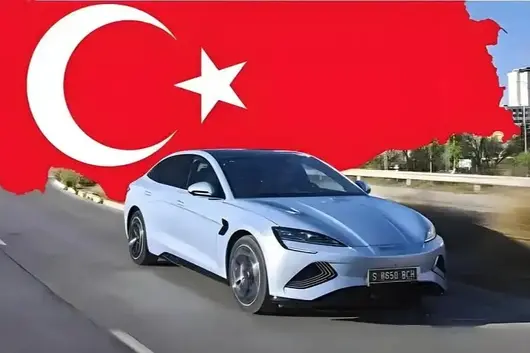
Then let's talk about the Turkey market. In the past two years, BYD was very prominent locally. In 2024, BYD promised to spend 1 billion USD to build a factory in Turkey. The Turkish government provided generous benefits, waiving 40% additional tariffs and $7,000 per vehicle tax. Relying on huge price advantages, in January 2026, BYD sold 3,866 cars in a single month. Later, BYD prioritized the Hungary factory landing, pausing the Turkey factory plan. According to the signed agreement initially, Turkey directly cancelled tariff privileges, and could even collect previously waived taxes. After benefits disappeared, sales plummeted, June only sold 83 units, down 98.8% year-on-year.

Everyone should not mistakenly think Turkey specifically targeted BYD. In the first half of 2026, Turkey's overall auto market declined 11.44%, all Chinese brand overall sales declined 39.6%. Chery completed localization layout early, so the impact received was small. Simply put, BYD's huge sales drop was caused by the loss of tariff benefits, leading to car price increases.

But everyone, do not discredit BYD's overseas layout based on just two incidents.
Previously, we naively thought if cars were built sturdy and configurations were sufficient, selling abroad would not worry about sales channels. After these two incidents, I realized overseas markets are full of hidden tricks. Foreign welfare policies are never given for free; Turkey is a living example. Benefits are bound to factory building tasks. As long as your landing progress does not meet agreed conditions, the received policies are taken back instantly, showing no mercy.
The Australia incident further sounded an alarm for us; foreign local regulations are too strict. A simple date entry error, not because car quality is bad, could force the automaker to pay hundreds of millions. In the future, European carbon tariffs and anti-dumping measures will land successively, the cost of our domestic cars going overseas will only get higher.
Objectively speaking, BYD's overall overseas performance is not bad. Southeast Asia, Brazil, Hungary, Thailand market sales continue to rise, European major countries' market development momentum is also quite good. This Australia flip, the root cause is still overseas local team carelessness, domestic HQ oversight of overseas branches insufficient, management friction appeared loopholes, it is not that the cars themselves are not good.

And in my opinion, domestic cars going overseas have now bid farewell to the era of low prices and high volume. We have full confidence in car building now, but operating overseas markets, we are still novices. In the future, it is not just core mechanical components and Intelligence these hardware strengths that compete. Understanding local policies and regulations, managing overseas employees, thoroughly understanding local people's consumption habits, all are compulsory courses.
BYD's current losses have also warned domestic automakers like Great Wall, Geely, NIO preparing to dig deep into overseas markets. Going abroad cannot just focus on making cars, must not ignore detail management. Only by calming down to familiarize with local rules and doing overseas operations solidly, can our domestic cars stand firm overseas. This road cannot be rushed.

In June, automakers mass-announced impressive production and sales data. BYD, Leapmotor, NIO, and XPeng all submitted growth reports, with single-brand sales figures rising steadily, creating a boom-like scene. However, data shows domestic passenger car retail sales dropped 21% year-on-year. Since the end of last year, the domestic auto market has been stuck in a double-digit decline range, with the drop in February touching 25.3% at one point.

On one side, brands are constantly releasing good news to the outside world; on the other, the overall market continues to shrink. Behind this seemingly contradictory collective carnival lies a picture of industry segmentation woven together by the struggle for existing market share and breakthroughs in overseas markets.
Domestic Auto Market Slows Down
Looking solely at the delivery speed reports released by various automakers to the public, the domestic auto industry in June still seemed to be on an upward trajectory, with head-brand sales figures showing red across the board. However, after terminal retail data was finalized, the 21% year-on-year decline indicates that the contraction of overall industry demand is already a set fact.

Many people interpret the positive growth of head brands as breaking the situation against the trend brought by the company's product power breakthrough. In the current market environment, this judgment is incomplete. With overall domestic terminal demand continuously shrinking and the total market volume continuously falling, the reason head automakers can achieve growth against the trend is partly due to incremental offset from overseas exports, and partly due to grabbing shares in the domestic existing stock market. The extra sales volume of head brands mostly comes from stock orders diverted from weak brands, which also leads to SME automakers lacking capital, technology, and channel support having actual decline rates far higher than the industry average of 21%.
Factors such as capital chains, R&D reserves, offline channels, and many others determine whether an automaker can survive this downturn cycle. This year, many marginal automakers have stopped planning annual facelifts and new models, and dealer stores in various places have successively closed down and withdrawn networks. Consumers naturally avoid these risky brands when purchasing new cars, so customer sources naturally tilt towards enterprises with scale advantages such as BYD and Geely. All global mature auto markets have gone through a brand clearance stage; the domestic auto market has simply compressed the time of this process. The more depressed the market is, the more solid the barriers of scale advantages for head enterprises become.

The 150,000 to 250,000 RMB price range, which is the main interval, is becoming the most brutal battleground in this entire stock war, and the collapse of the intermediate market is hard to reverse. This range was once the foundation for joint-venture fuel vehicles and the core battlefield for independent brands to achieve scale. Currently, user willingness to upgrade has weakened significantly, and hesitation has surged. To save sales, joint ventures rely heavily on deep price cuts to clear stock; discounts for classic family cars like Accord and Passat keep widening, completely loosening traditional pricing systems. Independent automakers, on the other hand, are densely launching hybrid and BEV models in this segment. LiDAR and advanced intelligent driving features are trickling down. Highly homogenized products combined with endless price wars compress the profit margins across the entire market.
Consumer hesitation is strongest in this price segment. Most potential car buyers worry about receiving a new model replacement or a new round of price cuts shortly after getting their cars, so they hesitate to finalize orders. The recent pressure on orders for the BYD Qin and Song pillars exactly proves the congestion level of this red sea track.
Head Automakers Profit Overseas
Domestic competition is cutthroat, while overseas markets have become a panacea for head automakers.
For a long time, the model for domestic automakers going overseas was simple and direct: assemble complete vehicles domestically, ship them in containers, and rely on low prices to open up sales channels in markets like Southeast Asia and Latin America. Essentially, it was just digesting excess capacity. This unidirectional commodity export method has a very low error tolerance. Once the target market implements tariff restrictions or import quota policies, the entire export sales chain will be directly blocked. Not long ago, the new policy introduced by Malaysia was an example.

Now, head automakers are starting to land complete manufacturing, supply chain, and service ecosystems overseas, thereby breaking away from the fragile model that relies solely on exporting complete vehicles, and establishing a long-term stable operational foundation in overseas markets.
From a technological development perspective, over the past few years, basic electrification hardware such as battery packs, drive motors, and hybrid architectures have become highly mature, with solutions converging. Head automakers have basically leveled out the generation gap at the hardware level, making it hard to gain a long-term advantage based on single hardware parameters alone. True differentiation is gradually shifting to intelligent driving algorithms, vehicle architecture tuning, global thermal management, and other soft capabilities. Under the premise of hardware homogenization, scale-based cost control has become the core decisive factor for automakers. BYD reduces manufacturing expenses through its vertical industrial chain, CATL has become a top player in power batteries. New entrant brands find it difficult to bridge the software system gap and replicate scale cost advantages. Achieving a curve overtaking on the hardware side is extremely difficult.
Speaking of this, everyone should be able to see clearly: the overseas expansion of an automaker's supply chain is essentially the outward extension of its own industrial chain capabilities. Against the backdrop of domestic technological homogenization and intensified market involution, what truly widens the final gap between automakers is the control over the core supply chain.
If an automaker only retains body manufacturing and complete vehicle assembly business, it is essentially just an assembly OEM for the upstream supply chain. If upstream raw materials or core parts prices fluctuate slightly, the pricing and profit margin of the terminal model will be directly squeezed. It cannot create unique configurations distinct from competitors, nor does it have the confidence for autonomous pricing.

The industry has gradually differentiated into two response modes. Some automakers go deep internally in self-research, keeping key parts in their own hands; others actively bind with top supply chain enterprises, locking in priority supply qualifications to avoid supply disruption and price hike risks. Those SME automakers that cannot land on either side have neither the capital to invest in upstream R&D nor stable parts orders. Not to mention participating in overseas market layouts, they can hardly withstand the price involution in the domestic market either.
Global layout and deepening of the upstream supply chain are essentially two sides of the same coin. Opening up incremental markets outwardly and safeguarding the profit foundation inwardly; missing either one makes it difficult for an automaker to stabilize its position in the upcoming industry reshuffling.
Public Car Review
In the future, electrification hardware will tend towards homogenization, and the competitive barriers of automakers will shift from parameter stacking to cost control, software capability, and supply chain control. Head enterprises will guard the domestic foundation relying on the full-chain system while overseas expanding with localized ecosystems to hedge risks. In the future, industry victory and defeat will no longer depend on the explosive power of a single product, but on the system showdown of supply chain barriers superimposed with global capabilities. The polarized pattern will continue to solidify.