首頁Nezha X

搜尋歷史
熱門搜尋
經銷商登入 / 註冊

Is Neta Auto coming back to life? For Neta Auto's old owners, this might be good news.
On September 11, the fourth creditors' meeting for the bankruptcy reorganization case of Hozon New Energy, the parent company of Neta Auto, was held. The "Reorganization Plan (Draft)" revealed for the first time that the reorganization investor is Zhejiang Taiyi Shenglian, intending to contribute 3 billion yuan to acquire approximately 70.62% equity.

3 billion yuan, is it really enough for a car company with liabilities exceeding 26 billion yuan and net losses of 18.3 billion yuan? So why did Taiyi Shenglian spend 3 billion yuan to save a car company that is "already done for"? Even if it is a high-stakes gamble, what exactly are these 3 billion yuan betting on?
First Bet: Betting on an "Exclusive Qualification License"
Neta's parent company, Hozon New Energy, holds the complete new energy vehicle "dual qualifications" issued by the National Development and Reform Commission (NDRC) and the Ministry of Industry and Information Technology (MIIT). After 2023, approvals for new vehicle manufacturing qualifications tightened comprehensively. After the NDRC issued the last batch of new pure electric passenger car qualifications, the door was basically closed. For new players wanting to enter, there is almost no way. In the past, Li Auto spent 650 million yuan to acquire Lifan, valuing this very "qualification".
Qualifications are scarce assets themselves, and what Neta holds is ready-made, complete, dual qualifications that have already run through the mass production process. However, according to current regulations, Neta needs to complete production of at least 2,000 vehicles in 2026 to keep this license. So, if they don't act now, there really will be no more chances.
Second Bet: Betting on Existing Production Capacity and Overseas Channels
Neta has three bases built according to intelligent production line standards in Tongxiang, Zhejiang, Yichun, Jiangxi, and Nanning, Guangxi, with a total annual capacity of about 300,000 vehicles. There are also overseas factories in Thailand and Indonesia. Although the production lines have halted, the foundation remains. Restarting existing production lines is much cheaper and much faster than building a factory from scratch.
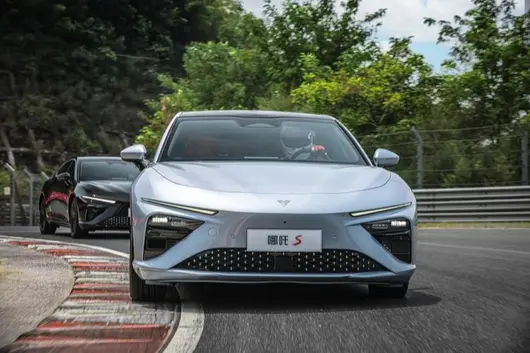
Even more crucial are overseas channels. In 2023, Neta delivered 127,500 vehicles for the whole year, of which overseas sales were nearly 20,000 units, a year-on-year increase of 567%, ranking first among new EV players in overseas sales. The Thailand factory has an annual capacity of 30,000 vehicles and is the first new automaker to establish factories in Thailand, Indonesia, and Malaysia. The Nezha X once secured over 7,000 orders in 7 overseas countries.
So the first phase of the reorganization plan is to resume production of Nezha X and focus on the overseas market, with an annual sales target of 10,000 units, after all the domestic car market is extremely competitive right now, while the overseas market still has great potential.
Third Bet: Wanting to Enter the Automotive Industry at Low Cost
Behind the investor Taiyi Shenglian is Shanzi Gaoke Chairman Ye Ji, but this investment uses a platform outside the listed company, avoiding the complex approval process for 3 billion yuan investments by listed companies, and isolating the billion-yuan debt risk of Neta from outside the listed company system.
Shanzi Gaoke has been conducting crazy experiments on the edge of making cars and is inherently laying out whole vehicle business. In 2023, it acquired Hebei Hongxing Automotive to obtain passenger car qualifications, joined hands with Geely to revitalize the former Hafei Motor factory for producing models exclusively for the Russian market. An affiliated company also established Qianhe Auto in Tongxiang, with former Tesla executive Zhu Renjie serving as CEO.
Ye Ji's judgment on whole vehicle business is very clear: avoid direct competition in the domestic new energy market and focus on overseas markets such as Central Asia, Middle East, and Africa. Neta happens to have factories in Southeast Asia, overseas channels, and an existing export foundation. Shanzi Gaoke has a parts supply chain and whole vehicle manufacturing layout, while Neta has qualifications, capacity, and overseas channels. The resources of both parties can indeed be combined. Although 3 billion yuan looks like a lot, compared to entering the automotive industry from scratch, the risk is much higher. Without 20 billion yuan, you shouldn't even think about building a new automotive force from scratch.
But even so, the prospect of this high-stakes gamble is still unclear. The 3 billion yuan is currently in a subscribed status, and the reorganization draft also requires creditor voting and court ruling. Neta's current ordinary claims are about 11.7 billion yuan. Whether it can truly resume production still depends on paid-in capital and capacity integration. The overseas market also faces multiple thresholds such as local regulations, channels, and competitors. Supply chain reconstruction and factory resumption both require time.
3 billion yuan doesn't buy Neta's present, but the combination of assets that Neta holds that cannot be bought elsewhere. A ready-made automotive qualification, three production bases that can be restarted, an overseas channel that has already been run through, plus 440,000 existing car owners and the brand name "Nezha" that everyone across the country recognizes.
The logic of capital has never been "is it worth it", but "is it cost-effective". Using 3 billion yuan to leverage a ready-made car making platform, for capital that wants to enter the whole vehicle track but is trapped by qualifications and capacity, this is a gamble worth betting on. Wish Neta Auto good luck!

Neta Auto might really be "resurrected".
The funniest part is, the company coming to save it is named Taiyi Shenglian.

Seeing this, I guess many people's first reaction is similar to mine: Did they come up with this name on the spot?
Turns out, it really is the case.
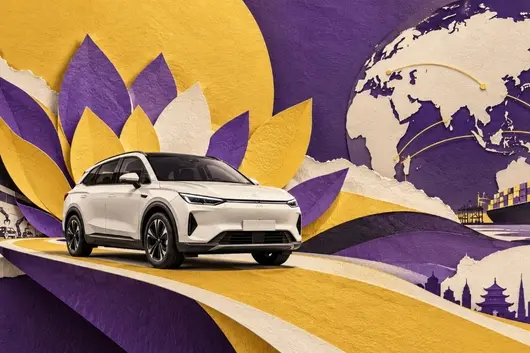
Taiyi Shenglian was established in April this year, specifically as the entity for this restructuring. Now it is prepared to pay 3 billion yuan to acquire approximately 70.62% of the equity of Neta Auto's parent company, Hozon New Energy. In mythology, Taiyi Zhenren used a lotus to reshape Nezha's body, and by 2026, the capital market actually reenacted this story.

I can only say, after so many years of marketing in the auto industry, the most effective wave of communication this time was completed by the Industry and Commerce Bureau.
But after playing this gimmick, I am still quite curious, why is there still someone willing to spend 3 billion to save Nezha at this time?
A few years ago, if someone invested 3 billion into a new energy vehicle company, it seemed nothing strange. But by today, the market is completely different.
Is China still lacking in automobile brands?
Everyone just open the sales list and scroll down; BYD, Geely Galaxy, Leapmotor, Changan Qiyuan, Chery, Aion, plus a bunch of brands still struggling to squeeze onto the table. 100,000, 150,000, 200,000, every price bracket is almost full.

And at this time, someone returns holding 3 billion yuan to pull a Neta that has been halted for a long time back up.
I can only say, friend, your head is really stubborn.
After all, one of the topics discussed most in the industry has long changed from "Who can still enter" to "How many more need to be eliminated".
So let's first see how this 3 billion yuan plans to be spent.
According to the currently disclosed restructuring draft, Taiyi Shenglian will contribute 3 billion yuan. Approximately 1.167 billion yuan will be used to clear related creditors and pay bankruptcy expenses. The amount that can truly be injected into the company to support production resumption and operations is about 1.833 billion yuan. Taiyi Shenglian will eventually acquire approximately 70.62% of Hozon New Energy's equity.

So everyone, don't be stunned by the number "3 billion to resurrect Nezha". The money truly available to start working again is just over 1.8 billion.
Is 1.8 billion a lot? If I put it in my bank card, it's enough for me to research how to spend it for a lifetime. But in an auto company, you have to restrain yourself a bit.
It is precisely because of this, when I saw the first phase of this restructuring plan, I actually felt they were still taking it easy this time.
First, resume production of Nezha X, mainly for overseas markets, with an annual sales target of 10,000 units, and simultaneously restore official spare parts, maintenance, repair, and existing service networks.

Especially when seeing "10,000 units", I even felt a bit relieved, finally no one is shouting for tens or hundreds of thousands of sales at the very start.
The thing Neta is currently most anxious about might not even be reaching "returning to mainstream new energy brands" on such a grand scale. First, get the factory turning again, call back suppliers, and ensure owners of old cars with broken cars have someone to repair them. If these few things can be done smoothly, that counts as taking a big step forward.
Actually, the old owner part is also easily overlooked by everyone.
After a car brand collapses, the awkward ones are never the onlookers. Onlookers at most contribute one sentence: "I told you so."

The ones with real headaches are those who have already handed over over 100,000 yuan. Who will repair my car? Are there still spare parts? If problems arise, can I still find the manufacturer?
So this time, the restructuring plan puts resuming after-sales service and official spare parts supply in the first phase. I think this order is at least correct.
After all, if you want to sell cars again, you first have to ensure those who have already bought your car aren't that panicked.
But speaking of this, problems arise. What does Neta have left that is worth someone spending 3 billion to take over?
If we talk only about the four words "Neta Auto", I think everyone should not think it is too valuable first.
Neta has indeed been spectacular before. In 2022, sales exceeded 150,000 units and it took the number one annual sales spot among new forces. But automobiles are quite cruel; after brand voice drops, consumer memory refreshes particularly fast.
If you were sales champion two or three years ago, today if a Neta X is set up again in a shopping mall, consumers might still first ask a question: "Has their business returned to normal?"
This sentence hurts quite a bit. Because many auto companies can recover production capacity with money. But brand credibility drops, and picking it back up is not that simple, especially for big-ticket items like cars that people prepare to use for many years.

So the valuable things Neta still has, I think, need to be looked at behind the brand. Including factory, production lines, molds, R&D systems, supply chain relationships, complete vehicle manufacturing capabilities, and overseas systems built up in the past. These things might be more interesting to investors than the name "Neta" itself.
Especially do not forget who is behind Taiyi Shenglian.
Although Taiyi Shenglian is the investment entity established specifically this time, several layers of equity and personnel relationships point to the Shanzi High-Tech system. Shanzi High-Tech's current main business already includes automotive parts and complete vehicles two major sectors. Under it there is also the Belgian Punch (making powertrains), and the American ARC (making airbag gas generators).

Moreover, in these years, Shanzi High-Tech has never given up on moving towards complete vehicles.
It previously acquired Red Star Auto, did complete vehicle factory revitalization, and now there is also the Shanzi Youqian complete vehicle business under it. Zhu Renjie, who is in charge of Shanzi Youqian, previously worked at Tesla as Director of Manufacturing Engineering and participated in the formation of the Shanghai Gigafactory body manufacturing team.
Putting this string of things together, the matter roughly makes sense.
Neta lacks money, Shanzi High-Tech lacks a "ready-made complete vehicle company".
Shanzi High-Tech has parts, manufacturing experience, and some overseas resources, but from "I can make things for others" to "I can make a complete vehicle and sell it", there is still a fairly wide gap in between.
R&D systems need to be built, supply chains need to be built, production, certification, sales, after-sales all need to be built. If truly starting from zero, money aside, time alone would be enough to drink a pot of tea (quite a long time).
Neta just happens to have basically walked through these things already. Even if now many links are already broken, it at least once reached annual sales of 150,000, has products truly mass-produced, has a supply chain, has a factory, and has sold cars overseas.

So standing from Shanzi High-Tech's angle, spending 3 billion to save a laggard new force sounds quite adventurous.
But if it is spending 3 billion to acquire an automobile company that already possesses complete vehicle R&D, production, supply chain, overseas business, and "dual qualification" foundation, then stuffing their parts, manufacturing, and overseas resources into it, suddenly does it not seem so ridiculous?
Especially previously, when Hozon New Energy was seeking a management trustee, they specifically mentioned maintaining "automotive manufacturing dual qualifications", and later the Shanzi system also established a complete vehicle sales related company in Tongxiang.
This basically already has their thoughts written on their face. What they truly value is never just the Neta brand, more still the complete vehicle manufacturing, sales, and overseas business foundation that Neta has already set up.
One lacks money, one lacks a complete vehicle platform. Looking at it this way, Taiyi Shenglian "saving Nezha" slowly returns from mythological stories back to business.
And I think, this matter is quite representative of a certain way of playing in the automobile industry in the future.
In the past when capital had money, everyone was from zero starting to build a new brand with dozens or hundreds of billions.
Now the first elimination round has come to this, many brands might not be able to survive, but factories remain, equipment remains, supply chains remain, R&D systems have a little left.

So a failed automobile brand, at its cheapest time, might actually be when the set of vehicle manufacturing capabilities it left behind is most attractive.
Neta this time is roughly in this situation.
This also explains why the first step of the restructuring plan did not urgently focus on redriving the domestic market, but placed hope overseas.
Neta has already fallen behind domestically, but overseas has left a little foundation. In the first half of 2024, overseas deliveries exceeded 17,000 units. Thailand, Indonesia also had plans for local production, and Nezha X itself already has an overseas sales foundation.
Now taking over 1.8 billion plus to return and charge into this fiercely competitive domestic market, I am nervous for this money.
First, pick up the overseas business that has run through once, let factories, supply chains, and cash flow turn again. At least it is much more reliable than coming back to hard fight domestically.
So, back to the very beginning question. There are already so many Chinese automobile brands, is it necessary to spend money to resurrect Neta?
If it is just pulling Neta back to the domestic market, continuing to compete with Leapmotor, BYD, Changan, Geely in the 100,000 to several hundred thousand yuan new energy vehicle market, I think the meaning is indeed not great.
But first, restart Neta's overseas product lines as a敲门砖 (敲门砖 translates to "door-knob" i.e., entry tool) to open the overseas market, this business still has some chew.
As for whether this brand will have a chance in the future to ride the wind and fire wheels and kill back to the domestic market...
First see if Taiyi Shenglian can revitalize itself first.


Auto-First|Samar
September 10, Apple released the foldable screen phone iPhone Duo.
In an instant, "Duo" topped the hot search, and Nissan, Toyota Prado in the automotive circle followed, all creative and full of fun. However, the most interesting part is that Zotye Auto and Nezha Auto, which had disappeared from the public eye for a long time, also announced their rebirth almost simultaneously. One announced a new car entering the trial production stage, and the other secured 3 billion yuan in restructuring funds.

On September 9, Zotye Auto announced that the new A0-class pure electric model Wink Y01 International Edition entered the mass production trial stage. Once the news broke, the company's stock price deviated by a cumulative total of more than 20% for two consecutive trading days, triggering an announcement of abnormal trading fluctuation.
The bankruptcy reorganization of Nezha Auto also saw new developments recently. On September 11, the fourth creditors' meeting for the bankruptcy reorganization case of Nezha Auto's parent company Hozon New Energy was held online. The draft restructuring plan shows that Zhejiang Taiyi Shenglian Enterprise Management Partnership (Limited Partnership) (hereinafter referred to as Taiyi Shenglian) intends to contribute 3 billion yuan to take control, exchanging for about 70.62% of Hozon New Energy's equity.
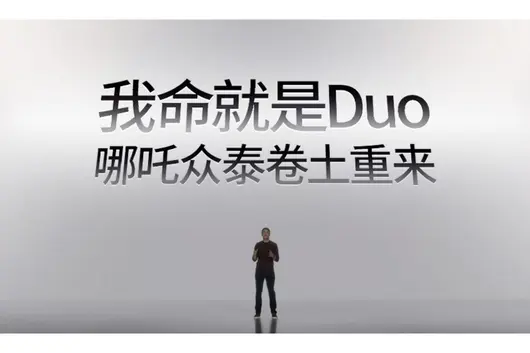
Coming back together, staging a real-life version of "My Fate is DuoDuoDuo"......
Reading this, the emotions are somewhat complex for a moment. Building cars is no longer a good business. Compared to battery supplier CATL, compared to the trends of this era such as AI, robots, and a bunch of companies standing in the "light", car building seems so outdated, remaining only simple. Apart from a few individual companies, profits are left only as a longing.
Even so, Nezha Auto and Zotye Auto are going to be reborn gloriously, walk the Jianghu again, and ask, "Do you know how I lived these few years?" According to recent slang, these two companies are really bold.
Whether Nezha Auto or Zotye Auto, at least, considering the issues of three levels.
Revival at this time, things are no longer the same as before
Should we be on alert? Who should be on alert
A more realistic answer lies overseas
Regarding the first question, Zotye and Nezha chose to return in the autumn of 2026, but the table is accelerating narrowing.
In the first seven months of 2026, the new force camps have completed structural stratification. 100,000 units became the threshold for the top, and 30,000 units is the increasingly clear survival line. Leapmotor's monthly deliveries broke through 100,000 units. HarmonyOS Intelligent, "Nio, Xpeng, Li Auto, Xiaomi" faced each other in the 30,000 to 45,000 unit range.
The big autonomous fish like BYD and Geely are even more attacking and conquering in the new energy market. Nio's Li Bin stated directly that the main market players for the next 3 to 5 years will be basically determined. The recent two years are a critical period for automakers to see if they can stay on the table.
How are the bottom cards of these two companies exactly? Zotye's situation is particularly worth reviewing. Net profit attributable to the parent company in the first half was 80.38 million yuan, seemingly turning a profit, but net profit after deducting non-recurring items was -152 million yuan, with the loss expanding 40.31% year-on-year. The profit source is a 200 million yuan compensation from cancelling subsidiaries and 30 million yuan revenue from lawsuit settlements. In simple terms, it was "earned" by selling assets and lawsuits, having nothing to do with car building. The whole vehicle business has not yet contributed revenue. The company is essentially still a "Parts + Doors" company.

Nezha's situation isn't much better. Hozon New Energy's cumulative net loss is 18.3 billion yuan. In January 2025, single-month sales plummeted to 110 vehicles, and three major domestic production bases stopped all production. Of the 3 billion yuan restructuring funds, 1.167 billion yuan was used to settle claims, and the actual working capital available for resuming production was only 1.833 billion yuan. And its first stage production resumption target is only annual sales of 10,000 vehicles.
Who should be alert?
On the surface, the revival of Zotye and Nezha is the "return of old friends", but in fact, standing behind this round of restructuring are new players.
Nezha's acquirer Taiyi Shenglian, registered and established in April 2026, was formed as a partnership by two companies controlled by Shanzi Technologies Chairman Ye Ji and the Chairman's Office Head Yu Shuxin. Shanzi Tech's predecessor was the old real estate firm Yinyi Shares. It entered the automotive track by acquiring overseas automotive parts companies in 2016. In 2023, it acquired Xingtai Longgang to obtain car manufacturing qualifications. The first mass-produced model rolled off the line in 2024, and it also revitalized Yunfeng Auto produced by the former Hafei Auto factory for export to Russia.

In other words, what is truly worth paying attention to is not whether Nezha as a brand can survive, but what game Shanzi Tech is playing. From parts to whole vehicle manufacturing, from domestic qualifications to the Russian export channel, Ye Ji's layout has covered multiple links in the automotive industry chain. The value of Nezha Auto may not lie in the two words "Nezha", but in the two car-making qualifications in Hozon New Energy's hands and the Tongxiang production base.
The revival paths of both car companies point in the same direction: overseas.

Zotye positions 2026 as the "Overseas First" development year, focusing on layout in Africa, Southeast Asia, Central and South America, and South Asian markets. India is the most concrete direction currently being promoted. Kaly Emotors has signed the main agreement for the KD cooperation project, planning an SKD loose parts assembly project with an annual output of 30,000 sets. This model has light asset investment, flexible exit, and can avoid India's high automotive import tariffs.
Nezha's three-stage plan is also centered on overseas: The first stage is the production resumption of Nezha X for the overseas market. The second stage focuses on launching models suitable for Asia, Africa, Latin America, etc., with an annual output target of 300,000 units.
Going overseas is indeed a path for these brands to bypass domestic fierce competition. But this path is not easy to walk. Nezha was once successful in the Thai market. In 2023, its pure electric market share in Thailand exceeded 10%. But as the domestic capital chain broke, sales in Thailand plummeted. Cumulative sales in the first half of 2026 were only 365 vehicles. Local consumers' high sensitivity to brand stability means the overseas market is not a haven, but the ultimate test of corporate comprehensive strength.
Zotye's KD model seems light, but since the agreement signing, the partner's project implementation in India is still on pause. Production capacity is planned but no mass production signal is awaited. Many Southeast Asian countries are also tightening import conditions for Chinese electric vehicles, raising the threshold and tax burden for whole vehicle imports, requiring automakers to increase local production and parts procurement.
The overseas market gives these brands not an easy way out, but a window to prove themselves again. The window is small, and there is not much time left. Whether to squeeze in depends on whether funds are available, whether the supply chain can be rebuilt, and whether products can pass the regulatory certification of the target market.
Auto-First Observation: Revival is not difficult, the difficulty is living differently this timeWhether Zotye and Nezha can turn "Duo"'s extra fate into their true second life, the market will vote with its feet.