首頁New Cars

搜尋歷史
熱門搜尋
經銷商登入 / 註冊

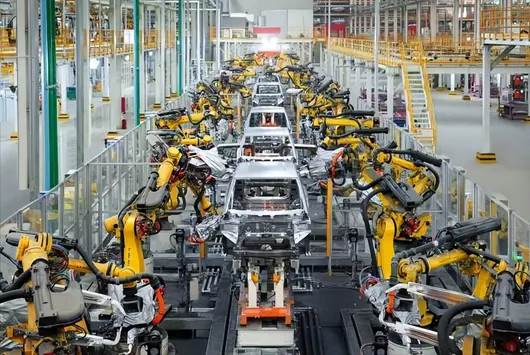
At the recently concluded Shenyang November International Auto Show, BMW Brilliance was absent. Previously, BMW occupied nearly half of an exhibition hall at the Shenyang local auto show and was a must-visit booth for many attendees. However, the absence of BMW in the exhibition hall does not mean it is slowing down in the Chinese market. On the contrary, BMW is setting up a bigger chessboard.

Recently, at the 2026 Capital Markets Day event, BMW revealed its future product planning and strategic layout in China. From new vehicle density to the depth of localization, strong signals of "increasing investment in China" were released. Facing the increasingly competitive domestic market, BMW chose to respond with denser product launches and more thorough localization.
More Than 10 New Models in Two Years, Product Offensive Accelerates
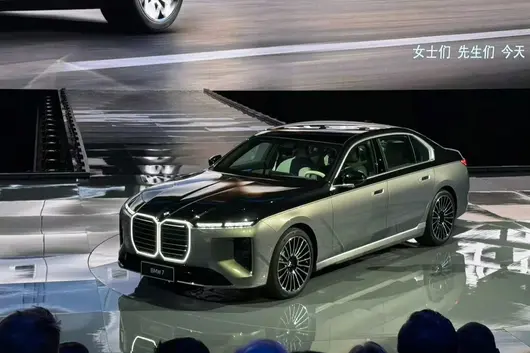
According to the officially released product roadmap, BMW will launch 7 key new models in the Chinese market next year. Among them, the iX3 Long Wheelbase Version will be launched in the fourth quarter of this year; the i3 Long Wheelbase Version, new 7 Series, all-electric i7, all-new X5, and all-electric iX5 will be launched intensively in the first quarter of next year. Another 4 models are planned to be launched from the second quarter to the fourth quarter of next year, and specific models have not yet been announced.

Officials also revealed that 5 brand new mysterious new cars will wait for release in 2028. Calculated, within the next two and a half years, BMW will see the dense landing of more than 10 new models in China, covering fuel, all-electric, and replaced models. Such a release rhythm is not common in BMW's history in China.
iX3 Leads the Charge: 900 km Range, Starting at 269,900 RMB
As the "vanguard" of this offensive, the new BMW iX3 Long Wheelbase Version was launched at the end of August, offering 3 models with prices ranging from 269,900 to 339,900 RMB, with delivery starting in the fourth quarter.

This car is the first model of BMW's New Generation, with the exterior largely continuing the overseas design. The front features a 3D Illuminated Grille and an integrated headlight group outlined by Digital Angel Eye Illumination, with high recognizability. The body is equipped with domestically exclusive semi-hidden external door handles, integrating electric and physical dual-mode opening, different from the pop-out design of the overseas version.
Powertrain is the biggest highlight. It is equipped with the 6th generation BMW eDrive electric drive technology, built on an 800V high-voltage architecture, with a CLTC pure electric range exceeding 900 km. The 50L version is equipped with a front asynchronous + rear excitation synchronous dual motor, with a combined power of 477 hp (351 kW). Such data ranks first tier in the current new energy market. With a starting price of 269,900, plus a 900 km range and BMW's brand appeal, the market performance of the iX3 Long Wheelbase Version will largely determine the quality of this product offensive.
95% Localization + Export to Southeast Asia, Shenyang Role Upgraded
More worthy of attention than the new car planning are two key moves by BMW at the strategic level: 95% localization production and export to Southeast Asia.
Officials plan that by the end of 2029, vehicles sold in China will achieve 95% localization production, and launch export business to the Southeast Asian market, pushing China-special Long Wheelbase models overseas. This means that future BMW models specifically "stretched" for Chinese consumers will no longer be exclusive to the Chinese market, but will start from China and be sold to Southeast Asian countries such as Thailand, Malaysia, and Indonesia.

As the headquarters of BMW Brilliance, Shenyang's role has also upgraded—from a production base serving the Chinese market to an export hub radiating to Southeast Asia. This is a solid benefit for Shenyang's automotive industry chain. BMW deeply rooting in China is not only to sell cars, but to integrate China's supply chain and R&D capabilities into the global system.
Proactive Adjustment Under Sales Pressure, BMW Fights a Systemic Battle
Why is BMW so determined? Data provides the answer. In the first half of this year, BMW Group's operating revenue was 62.266 billion EUR, a year-on-year decline of 8.01%; pre-tax profit was 4.045 billion EUR, a year-on-year decline of 29.4%. In terms of sales, a total of 1.1567 million new cars were delivered globally, a year-on-year decline of 4.2%. Among them, the sales volume in the Chinese market was 261,773 units, a year-on-year decline of 20.4%.

The intensity of competition in the domestic market is undeniable. Rising new car forces, local high-end brands launching price wars, and consumer demand is no longer limited to traditional luxury brands. Under the influence of multiple factors, the market share of luxury brands is being squeezed. BMW officials have stated that affected by the decline of the Chinese market and the increasingly severe global operating environment, they are accelerating and intensifying the implementation of various measures. BMW CEO Milan Nedelicovic also stated straightly: "These plans will help BMW cope with the increasingly fierce competition that will determine the direction of the automotive industry in the coming years."

From product to production, from R&D to export, BMW is fighting a "systemic battle". It is no longer just about bringing global models to China to sell, but allowing Chinese R&D, Chinese manufacturing, and China-special models to be exported back. If this deep localization strategy can be implemented smoothly, it will help BMW gain new advantages in cost, efficiency, and market responsiveness.
Juelo Observations
BMW's product planning for this round is clear: stabilize the fuel vehicle base with denser new car launches, compete in the new energy market with New Generation electric models, and then reduce costs and expand space with deep localization and export strategies. The three moves are interlinked, showing that BMW's importance to the Chinese market has not changed, only the tactics have changed.
However, it should also be seen that the competition in the Chinese market has long since passed the stage where "launching a few more cars" could easily win. New forces are moving faster in intelligence, user operations, and experience innovation. For traditional luxury brands to catch up, they need not only solid product power but also need to lower their posture and solidify the experience. No matter how good the new car is, if consumers cannot touch, try, or feel it, the communication effect will be discounted.
BMW has brand heritage, manufacturing advantages of the Shenyang base, and strong systemic capabilities. What needs to be done next is to convert these advantages into experiences that consumers can truly perceive. Over 10 new models in two years is just the beginning. The real test lies in whether, after each car lands, it can enter the hearts of more ordinary consumers.

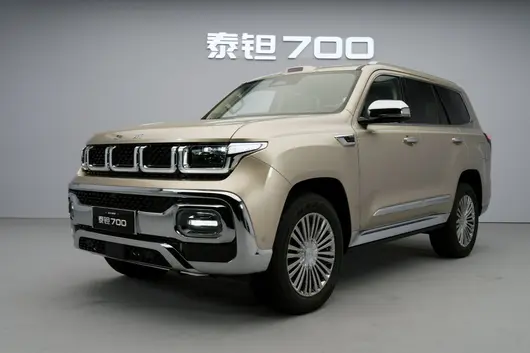
After a large number of new cars were launched at last week's Chengdu Auto Show, the number of heavyweight new cars this week is also considerable. From August 24-30, new cars such as Beijing Off-road Taian 700, Arcfox Alpha T7, Chery Fengyun T7, FAW Toyota 2027 Model bZ5, Kia All-new Seltos, and FAW-Volkswagen ID. AURA T6 will be launched or presold.
August 25: Beijing Off-road Taian 700 Launches
The pre-sale price of Beijing Off-road Taian 700 is 299,800 to 389,800 yuan. This mid-to-large size off-road SUV has a length of over 5 meters, a wheelbase of 2820mm, and uses a body-on-frame construction standard for hardcore off-roaders.

Powertrain is equipped with a 1.5T range-extender system, with a combined power of 391kW and torque of 625N·m. The 49.4kWh battery provides 220km pure electric range and 1340km combined range. The chassis is equipped with 8-stage adjustable nitrogen shock absorbers and "three locks", and the hardware configuration is quite sufficient.

However, the Taian 700 is not a purely hardcore off-roader. In terms of intelligent assisted driving, Huawei Qiankun ADS 5 is used, equipped with an 896-line LiDAR, capable of achieving all-scenario NOA including off-road, highway, and urban areas. Additionally, it is fully equipped with a refrigerator, TV, and large sofa. Overall, the Taian 700 indeed packs a lot of features in the 300,000 yuan class market.
August 26: Arcfox Alpha T7 Presales, Chery Fengyun T7, FAW Toyota 2027 Model bZ5, Kia All-new Seltos Launches
Arcfox Alpha T7 has already debuted at the Chengdu Auto Show. The new car is positioned as a mid-to-large size coupe SUV in the 200,000 yuan class. The length is 5020mm, wheelbase 3040mm, and the size is indeed large.

The powertrain offers two versions: pure electric and range-extended. The pure electric version has a peak motor power of 227kW, and the range-extended version is equipped with a 1.5L range extender with a peak motor power of 200kW.

In terms of assisted driving, Huawei Qiankun system is adopted. The interior has cancelled the traditional instrument cluster and switched to a 1.1-meter wide all-scenario PHUD and a 17.3-inch 3K central control screen. Huawei assisted driving, CATL batteries, and Magna manufacturing, these three things combined, the data sheets are indeed impressive.

Chery Fengyun T7 pre-sale price is 109,900 to 129,900 yuan. Positioned as a pure electric compact SUV, length/width/height 4570/1852/1694mm, wheelbase 2700mm. All series are equipped with 65.05kWh LFP Rhino battery, CLTC range unified at 600km, 30%-80% fast charging takes 20 minutes. Motor peak power 178kW, peak torque 275N·m.

The cockpit is equipped with a 15.6-inch 2.5K screen, built-in Qualcomm 8775 chip; high-spec versions come with Falcon 500 intelligent driving system, supporting highway NOA. The whole vehicle is designed according to the 2026 version E-NCAP five-star standard, 80% high-strength steel, 9 airbags. This car follows a "Go abroad first, return home later" route, and homologous models have been launched in South Africa, Thailand, and other places.

FAW Toyota 2027 Model bZ5 has already debuted at the Chengdu Auto Show. The new car mainly focuses on optimization and upgrades in details. Facing an increasing number of joint venture competitors, bZ5's space dimensions and LiDAR paired with Momenta 5.0 assisted driving system are still considered mainstream. However, the new model's pricing may be adjusted slightly.

Kia All-new Seltos limited-time pre-sale price is 80,900-120,900 yuan. The new car is positioned as a compact SUV, length 4460mm, wheelbase 2690mm, bigger than the current model by a margin.

The interior is equipped with a 27-inch widescreen and Qualcomm 8295P chip, supporting HiCar, CarPlay, and Carlink interconnection. Power options provide 1.5L+CVT and 1.5T+8AT two sets to choose from. As a joint venture fuel SUV starting at over 80,000 yuan, the intelligent hardware specifications are provided quite sufficiently.
August 28: FAW-Volkswagen ID. AURA T6 Presales
FAW-Volkswagen ID. AURA T6 is positioned as a pure electric mid-size 5-seater SUV. The new car length/width/height are 4811/1879/1648mm, wheelbase 2836mm, space efficiency rate 85.3%, equipped with a 90L front trunk.

The cockpit is "Yunqi Smart Cockpit", equipped with 10.25-inch instrument panel + 15.6-inch 2.5K central screen + 25.8-inch AR-HUD, supporting AI voice interaction. High-spec version comes with roof LiDAR, cooperating with "Xingyun Zhihang" assisted driving system, supporting highway NOA and urban pilot assistance.

The powertrain is equipped with a 170kW single motor, providing 59.9kWh and 77.5kWh two battery packs, CLTC range 540km and 660km.

According to statistics, in the first half of 2026, approximately 630 new car models were launched domestically, averaging 3.5 models per day—the scale of new car launches is more than three times that of smartphones in the same period. On July 16 alone, 8 car companies clustered to hold press conferences, with 6 heavy-hitting new models launched at once, which netizens jokingly called the car circle's "Crazy Thursday".

However, among the 630 new models, only 30 models had monthly sales exceeding 10,000 (accounting for 5.5%), and only 107 models were truly new architectures or vertical upgrades (less than 20%)—more than 80% were annual facelifts, configuration tweaks, new color schemes, or collaboration editions.The fervor on the supply side and the coldness at the terminal form the most glaring cracks in China's car market.

With the fierce competition in the car market, why are car companies keen on launching new models? There are mainly three layers of driving forces stacked:

3. Capital Logic Requires "Growth Curves". Capital markets look at growth, not profits. New car launches create short-term traffic and sales spikes to support valuation—even if there is a loss per vehicle, as long as the sales curve continues to rise, the stock price has support.
Frequent New Car Launches for Buyers: Short-term Benefits, Long-term RisksIn the short term, consumers have more choices—The number of models available in the same price range increased from 5 to 15, increasing consumers' bargaining space; Secondly, configuration trickle-down accelerated—120k level standard 800V, 220k level equipped with intelligent driving, 240k level standard air suspension; previously, configurations only available at 300k are now available at 150k; Finally, prices continue to drop—New cars grabbing share must lower prices, consumers buy cheaper cars in the short term.

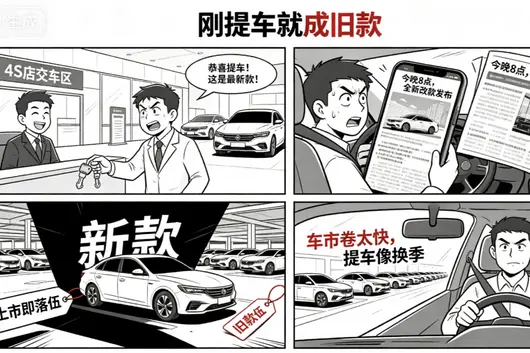
In the long term, consumers "Just got the car, it becomes an old model"—McKinsey research shows that over 30% of car buyers feel troubled by "Too many new cars, don't know how to choose", decision cycles are extended; Secondly, model life cycles shorten—A hot-selling model's period shrinks from 12-18 months to 6-8 months, then is submerged by updated new products, resale value drops faster; Finally, quality durability risks—After R&D cycles are compressed, verification time is insufficient, the risk of "Factory rushed out" is exposed only after 3-5 years of use.
Homogenization Vicious Cycle: Automaker Self-Consumption630 new models do not cover all price bands and categories, but cluster in the same few tracks—Large 5-seater/Large 6-seater SUVs became the layout focus in 2026, configurations went up, identifiability went down. Users are insensitive to range from 700km to 1000km, computing power from 30 TOPS to 1000 TOPS experience differences are far smaller than parameter differences—"The end of parameter competition is imperceptibility, ultimately have to compete on price" (Xu Jun, Vice President of Leapmotor).

The Cost Price of Homogenization: R&D + Marketing + Channel deployment costs for a new car amount to hundreds of millions of yuan, but models with monthly sales less than 10,000 cannot cover these costs—"Pulse-style dissemination" (Launch hot sales -> Production capacity up -> Demand down) causes great waste, manufacturers didn't earn, supply chain didn't earn, users didn't earn either. Market value evaporated over 1.1 trillion yuan for 17 listed car companies in half a year, Seres fell 51%, Changan fell 40%+, BYD evaporated 190 billion yuan—The more new cars launched, the stronger the market value evaporation, this is the "frenzy's" self-retribution.
To Parts Suppliers: The Rift Between Scale and FragmentationNew cars launched too frequently cause three layers of pressure on suppliers:


3. Has Quality and Durability Declined? The Answer is There Are Risks But Not Worsened Comprehensively—Currently, core components (Battery/Motor/Control) of mainstream car companies are still provided by top suppliers, quality bottom line is guaranteed. But non-core components (Interior parts, Small motors, Seals) indeed exist a cost cutting and quality reduction trend—Some car companies compress costs, switch from Tier1 to Tier2/Tier3 suppliers, price reduces 15-20% but durability standards are adjusted down simultaneously. MIIT and SAMR talked to car companies in June, clearly requiring "Cannot cut configurations to reduce quality"—This shows regulators have realized quality risks.
Impact of Frequent New Car Launches on China's Auto IndustryIn a positive aspect, Chinese car companies frequently launching new models indeed rolled out global competitiveness—China's new energy vehicle technology iteration speed is the fastest in the world, 800V/3C fast charging/Urban NOA/6-seat layout popularity speed far exceeds Europe, America, Japan; Secondly, rolled out export momentum—Car exports reached 5.096 million units in the first half, year-on-year increase of 65.3%, June monthly exports broke 1 million for the first time, new energy exports year-on-year +124.3%; Finally rolled out supply chain upgrade—CATL/RoboSense/Hesai and other top suppliers' global share continues to expand.

In a negative aspect, Chinese car companies frequently launching new models led to industry profit margins falling to 4.1% reaching a new low of ten years, three years price war cumulative loss 471.2 billion yuan—"Increasing revenue but not profits" has become the norm for the entire industry; Secondly, dealer inventory warning index 57.9% rose for three consecutive months, 17 mainstream brands inventory exceeded two months, rebate fulfillment cycle exceeded 70 days—Offline channel foundation is loosening; Finally, AlixPartners predicts that in the future 30 new energy car companies by 2030 may only have 7 break even—The vast majority of companies launching new cars will be eliminated in the reshuffle.
Overseas: Competing via Capability Exports, But Price Competition Meets BarriersChinese car companies' "Competitive Ability" (Technology iteration + Product density + Cost control) after going overseas indeed possesses competitiveness—XPeng MONA L03 launched in 64 countries simultaneously, BYD May Germany sales 6168 units exceeded Tesla. But "Rolling Price" overseas is encountering increasingly strong trade barrier counterattacks!

EU MIP minimum import price mechanism (Replacing 7.8%-35.3% countervailing duties)—Restricted Chinese brands low-price competition strategy; US 25% car tariffs—Toyota due to tariffs reduced 8.5 billion yuan operating profit, Chinese brands harder to bear; Southeast Asia localization requirements—Thailand, Indonesia require parts local ratio over 40%, otherwise tariff levied; Chinese car companies overseas "Internal competition spilling over"—Some brands irrational price reduction in the same overseas market, overdrawn "China New Energy" collective brand assets, triggering more tariffs and inspection barriers.
Xu Jun, Vice President of Leapmotor, admitted: "Agreeing that going overseas is the core exit to escape internal competition, but overseas internal competition is quietly spreading."
Final Thoughts: Impact on Supply Chain, Car Buyers, and Global Auto Industry
Launching 630 new models in the first half of the year, and "Crazy Thursday" is the epitome of the car market's extreme internal competition—Short term gives consumers more choices and lower prices, but long term is retaliating against the entire supply chain: Car company profits evaporated, suppliers fragmented, dealers inventory crisis, quality durability risks, overseas trade barrier upgrade. MIIT and SAMR's talks released a clear signal: "Stacking numbers, pressing prices old road cannot work." China's car market's next step is not to continue rolling out more new cars, but From "Quantity" to "Quality"—Less cars, push good cars, push long-life cars. A classic car's R&D needs 5-6 years, Tesla Model 3 launched 7 years still is benchmark—"Slow" value, is the confidence for a long race. After the noise of 630 new models, what China's car market needs is not more "Crazy Thursday", but less restlessness and deeper accumulation.


Recently, during a media event in Melbourne, Australia, BYD Vice President Liu Xueliang was asked by the media whether the company would assemble new cars locally. He stated that the company remains open to producing automotive parts and even complete vehicle assembly locally in the future, playfully throwing out the phrase "Anything is possible!", sparking speculation.
According to media reports, Australian Prime Minister Anthony Albanese recently stated that the technological changes brought by the wave of electric vehicles could become an opportunity for Australia to revitalize its automotive manufacturing industry. However, when asked whether BYD has discussed relevant plans with the Australian government, Liu Xueliang responded that the relevant projects have not yet been included in formal planning.
"At this stage, this is not in our plans. Our primary task remains to expand sales and meet consumer demands. However, BYD always remains open to opportunities, so anything is possible to happen."
When Liu Xueliang attended the relevant event, BYD's exclusive car transport fleet, the "Zhengzhou", had just arrived at Melbourne Port and began unloading 4,309 new cars shipped from Shanghai. He also revealed that future development focus for BYD in the Australian market would not be limited to the passenger car sector but would further expand into the commercial vehicle market.

"Everyone has seen BYD's energy storage system products, but in the future what we bring includes not only passenger cars but also more commercial vehicle products. I believe many commercial vehicle practitioners currently face significant pressure because diesel prices have risen significantly."
Relying on a highly vertically integrated supply chain system, BYD has obvious advantages in cost control. The company controls most supply chain resources from batteries to key components, helping to improve production efficiency and reduce manufacturing costs.
In the Australian market, BYD has now risen to become the second largest selling car brand locally, second only to Toyota. Besides production bases in China, BYD also has automotive production facilities in Thailand, Brazil, and Uzbekistan, while operating a battery factory in California, USA, and plans to build multiple production bases in Europe in the future.

In fact, Australia and China signed a Free Trade Agreement (FTA) as early as 2015. At that time, Australia's automotive manufacturing industry was gradually exiting the historical stage. Ford closed its local production business in 2016, while Holden and Toyota ended their Australian manufacturing businesses in 2017 respectively.
Benefiting from the Free Trade Agreement, imported Chinese cars currently enter the Australian market without paying tariffs or import taxes, enjoying the same treatment as imported vehicles from countries such as Japan and Thailand that have also signed free trade agreements with Australia.
Although BYD does not currently have a specific timeline for setting up a factory in Australia, judging from the management's statement that "anything is possible to happen", the possibility of producing parts or even CKD assembly locally in the future is obviously not excluded.