


首頁New Car

搜尋歷史
熱門搜尋
經銷商登入 / 註冊

[Lead: Zotye Auto, dormant for many years, is attempting to return to the auto market. However, today's China auto market is no longer the market when Zotye rose years ago. Facing industry overcapacity, price wars, and restructuring, can Zotye make a comeback? Now, can this industry still accommodate Zotye?]
Zhang Dachuan
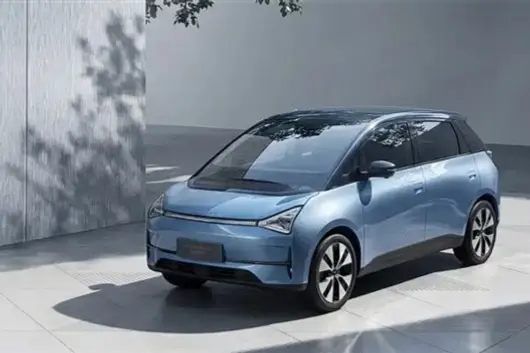
Recently, Zotye Auto announced that its all-new A0-segment Wink Y01 has completed styling freezing and officially entered the batch trial manufacturing phase. According to the plan, Zotye hopes to promote the model for mass production in 2026.

△Zotye Auto announced the all-new A0-segment Wink Y01 has completed styling freezing
It is worth noting that to get rid of the market image of the past "Measuring Tape Department", Zotye repeatedly emphasized in its publicity that the Wink Y01 is an "All-New Independently Developed" model, trying to rebuild the market's cognition of its independent R&D ability. Zotye Auto, which was once a prominent figure in the China auto market, is now sending out signals of returning to the market. However, for the China auto market which has undergone profound changes, re-launching a new model is just the beginning. Whether Zotye can truly achieve a resurgence still faces significant challenges.

△To get rid of the market image of the past "Measuring Tape Department", Zotye repeatedly emphasized the Wink Y01 as an "All-New Independently Developed" model
Can Zotye Flip with One New Car?
The Wink Y01 body dimensions are 3912×1745×1545mm, wheelbase 2520mm, overall dimensions between BYD Seagull and Dolphin. As a pure EV positioned in the A0 segment, although the threshold for manufacturing NEVs has been greatly reduced compared to the traditional fuel vehicle era, for Zotye, it is not easy to achieve "mass sales" with such a model.
A0-segment pure EVs are becoming one of the fast-growing yet most fiercely competitive sub-segments in the China NEV market. With consumers' requirements for space, range, safety, and intelligent configurations continuously improving, A0-segment models are gradually replacing some traditional A00-segment products, becoming an important choice for urban commuting and family second cars. Currently, models like Seagull, Xingyuan, and Wuling Bingo, backed by major car companies like BYD, Geely, and SAIC, have already occupied the main positions of this market. The price range of mainstream products has generally entered the 60,000–100,000 yuan range, with some models further dropping to around 60,000 yuan. More importantly, competition in this market has no longer just been simple "low price + range", but gradually shifted to comprehensive competition in space, intelligent cockpit, assisted driving, configurations, design, and overall product power.

△The A0-segment pure EV market is one of the most competitive sub-segments
Contrast the Zotye Wink Y01; to break out in such a market environment, it first needs to have enough obvious advantages in pricing, and at the same time must find its differentiated selling points in product configurations and user experience.
Compared to top car companies like BYD and Geely, Zotye has almost no scale advantage. Especially BYD has already formed a highly vertically integrated industry chain, possessing strong cost control capabilities from batteries, motors, and electronic control to a large number of core components. In this situation, if Zotye wants to keep the selling price of the Wink Y01 at a level that is sufficiently attractive while guaranteeing product quality, it is actually not easy.

△Currently, the gap in technology reserves between Zotye and mainstream car companies like BYD is obvious
And in terms of technology reserves, the gap between Zotye and current market mainstream car companies may be even more obvious. Especially in the fields of intelligent cockpits and intelligent driving, large car companies like Geely and BYD can already rapidly downscale mature technical solutions from mid-to-high-end models to entry-level models. For these enterprises, a set of software, algorithms, and electronic/electrical architectures that have completed R&D and verification can quickly amortize costs through massive sales. This is exactly the weakness Zotye finds hardest to make up.
Therefore, the real issue for the Wink Y01 is not whether "it can be built", but after it is built, whether it can provide a product power that is sufficiently competitive with a sufficiently low price, and whether consumers are willing to choose it. For Zotye today, this is likely much more difficult than simply restarting the production line itself.
Overseas Markets Are Not a Safe Haven
In the information disclosed by Zotye, the overseas market layout has attracted considerable attention.
In June this year, Zotye and Indonesia's BPKN preliminarily reached a consensus on a strategic cooperation of the whole new energy vehicle industry chain, planning to promote SKD assembly, annual production of 150,000 intelligent complete vehicles and battery-pack integrated factories in stages, and layout for Southeast Asia export; in July, it signed a main KD cooperation agreement with India's Kaly Emotors, planning to build an SKD project with an annual production of 30,000 sets, introducing A0-segment models and gradually expanding to A-segment and B-segment models.

△Zotye layout of overseas markets
However, at present, Zotye's overseas business is still at a very early stage. From cooperation agreements to truly achieving mass production and scaled sales, there is still a long way to go. In addition to meeting local regulatory certification requirements, it is also necessary to establish sales, after-sales, and supply chain systems, and to rebuild brand cognition in the fiercely competitive Southeast Asia market. It is especially worth noting that Southeast Asia is not a "blank market"; Chinese brands like BYD, MG, Great Wall, and Geely have entered and established a certain market foundation first.
At the same time, ASEAN main markets are also gradually shifting from purely encouraging NEV imports to paying more attention to local production and industrial investment. If Chinese car companies hope to develop long-term in the future, relying solely on complete vehicle export is not easy. KD/SKD, local production, channels, and after-sales systems all need continuous investment.

△Chinese car companies entering overseas markets is not smooth sailing
More importantly, the overseas market is also not a "back road" that can be easily walked. Neta Auto is a typical case. Neta's delivery volume in 2022 once reached about 150,000 units, after which it quickly fell into business difficulties. Although it invested heavily in overseas markets like Thailand, it did not change the overall operating situation, and its market share in Thailand dropped from about 12% in 2023 to about 4% in early 2025. This shows that having an overseas market and having factories does not mean getting sales volume, and certainly does not mean being able to sustain profitability. For Zotye, the overseas market can become a breakthrough point for restarting, but at least for now, it cannot be said to be the company's "safe haven".
What is the Significance of Zotye's Resurrection?
For Zotye's shareholders and local governments hoping to save jobs, taxes, and local auto industry chains, Zotye resuming production is certainly significant. But if looking at the entire China auto industry, Zotye's comeback is hard to say there is any positive significance.

△Zotye production resumption is significant for shareholders and local governments
Because the China auto industry today, most does not lack capacity, the most lack is products and enterprises that can truly create value. In 2025, China auto production and sales volume reached 34.531 million units and 34.4 million units respectively, breaking through 30 million units for the third consecutive year, NEVs also entered a high-speed popularization stage. But at the same time, price wars, overcapacity, and enterprise elimination are still the most prominent keywords of the industry.
Zotye's own situation also illustrates this point. In 2025, the company's operating income was only 521 million yuan, and the net loss attributable to the parent company was 367 million yuan; the complete vehicle business was basically in a stagnant state. More importantly, the current auto competition environment is completely different from the era when Zotye was rapidly developing. BYD, Geely, Chery, Changan, and many new force brands have already established obvious advantages in new energy, intelligence, and supply chains. For Zotye returning to the market, the real question is not "whether there are factories", but what to produce, what products to sell, and why consumers should choose Zotye.

△Domestic mainstream car companies already have obvious advantages in the smart electrification track
Therefore, for Zotye, resuming production is just the first step. The real challenge is to rebuild R&D, product, supply chain, channel, and brand capabilities. If it is just reactivating factories and then participating in domestic and international market price competition again, what it brings is likely just more capacity, not the incremental value that the industry truly needs. So, from the perspective of the entire China auto industry, what is truly worth paying attention to is not "another car company resuming production", but whether Zotye can truly create new products, technology, and business value. After all, the auto industry needs more competitive enterprises, not more factories that can produce cars.
Comment
Zotye Auto is attempting to return to the China auto market again, but in today's auto industry, resuming production is just the beginning and does not represent how many opportunities. In the past few years, too many car companies and brands have fallen. With the domestic market tending to be saturated and overcapacity, enterprises like Zotye re-entering the field, if lacking true product and technology competitiveness, may only further intensify the price war and overcapacity of the low-end market. Currently, the auto market competition is especially cruel. Zotye urgently needs to think clearly; only by finding new paths and new models is there a chance for rebirth.
(This article is original from "Heyan Reads Cars", unauthorized, no reprinting)

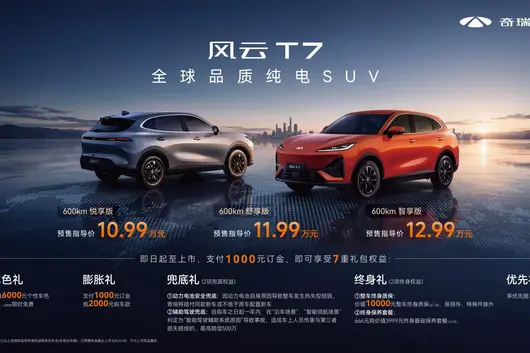
Currently, the entire automotive industry is competing on launch speed. Many models can iterate several times within a short year. Fast-track car manufacturing has gradually become the norm. However, the Fengyun T7 that started pre-sale on August 12 wants to go against the flow, directly shouting that a global car cannot be rushed, putting the matter of slow work polishing quality on the table. With a pre-sale price starting at 109,900 and substantial global manufacturing expertise, placed in the 100,000-class home pure electric market, it truly catches the eye.

This car is slow with reason, with 2 years of overall planning and 3 years of complete R&D. No links were compressed to seize the market. It is not just doing domestic exclusive supplies. The overseas homologous model Lepas L6 has already been launched in Thailand and South Africa. Next, it will sequentially land in Indonesia, EU, Australia and New Zealand, and other regions. It is a model that is tested in global markets first, and then returned to domestic delivery to consumers.

To adapt to different global regions, the brand linked up with the top 10 design centers globally, hundreds of designers collaborated to polish, and also collected the real needs of over 5,000 global users for co-creation. Just in the early research and scheme polishing, a lot of time was consumed.

To fit strict overseas regulations, the whole vehicle was built directly benchmarking against the 2026 Version E-NCAP safety standards, with the safety foundation maxed out. In the R&D stage, 900+ test cars were invested, cumulatively completing 1.45 million km in durability tests. From minus 40 degrees Nordic extreme cold to 55 degrees tropical high heat, high humidity, high salt-alkali, gravel and bad roads were all tested one by one.
 500 mm wading depth, rarely seen at this level, and dual-source heat pump heating system are all special optimizations made for global diverse climates. Protection structures for bumpy roads in Brazil and muddy road conditions in South Africa are all fully equipped, with various extreme scenarios verified in advance.

On the product level, it completely hits all needs of home users. All systems uniformly equipped with 65.05kWh Rhinoceros Battery, CLTC range 600 km, actual test range can even reach over 600 km, without the tricks of low-spec shrinking range.
 In-car wheelbase is 2700 mm, space utilization is very high, rear legroom is sufficient. After the seats are folded down, it can form a large pure flat space, sufficient for daily commuting and self-drive camping. Interior materials use EU level eco-materials, paired with 4nm process 8775 smart chip. Paired with the Doubao Large Model smart cockpit, voice interaction is smooth, cross-floor memory parking and other smart driving functions are all fully equipped.

Safety configuration is particularly sincere, with 80% high-strength steel body combined with 9 airbags. The battery is equipped with 31-layer 6D lock-armor protection, and waterproof grade reaches IP68. Purchase guarantee is also enough to give peace of mind. The first owner who is non-operating enjoys a whole vehicle including three-electric lifetime warranty. For 666 yuan, one can get a lifetime basic maintenance package. Battery thermal runaway and smart driving accidents are set up with dual high compensation, thoroughly eliminating car usage concerns.

Nowadays, too many new cars only seek fast landing, but ignore long-term use reliability. Fengyun T7 is willing to sink its heart and use 5 years to polish a global pure electric SUV. Starting at 109,900, one can get a full set of global standard quality. This long-termism is particularly practical for ordinary family users.


Old Wei and Great Wall Motor's "one-click like, share, and favorite" is back again.
On July 16, WEY V9X Family Edition launched, with the 1.5T Super Hybrid pulling the threshold down to the 330,000 yuan range; on July 18, Great Wall H10 started pre-sales, with the name and location chosen by netizens; on July 19, the brand new Tank 300 emerged again with Hi4-Z.
Three cars, three brands, within four days, Wei Jianjun fired off all the bullets he had saved for half a year.
The excitement is real. But behind the excitement, there is another set of numbers. On the first two days of the new car blitz, Great Wall's half-year profit forecast was released—net profit between 2.35 billion to 2.6 billion yuan, nearly 4 billion yuan less than the previous year, almost halved. The capital market didn't dump the stock, instead it was strangely calm. Old Wei took action in time, breaking down the reasons for the profit decline on social platforms: overseas tax subsidy delays, exchange rate fluctuations. The market didn't run, this round was narrowly passed.

But with three new cars launching simultaneously, Great Wall's hand was also clearly shown—at this timing node, a battle without retreat must be fought.
Tank: Defending a fortress is always harder than attacking
Tank's current position is rather awkward.
Sold 92,600 new cars in the first half of the year, a 10 percent drop year-on-year. In June alone, 15,700 units were sold, with the decline expanding to 27%. Think back to five years ago when Tank 300 first came out, adding 50,000 yuan still meant no cars available, now monthly sales dropped from the peak of 10,000 to around 3,000.
To be honest, the cars aren't bad, the track has changed. In 2026, boxy SUVs are all the rage, more than 40 players squeezed in, no one cares if it's a pure hardcore off-road anymore. Opponents' hard-core castles that couldn't be attacked for years were topped directly by a "boxy SUV that looks like off-roading". Tank's moat was bypassed.

But Tank is not motionless. The brand new Tank 300 pushed the wheelbase to 3010mm, Hi4-Z combined power 560kW, 0-100 in 4.3 seconds, pure electric range up to 200 km. Tank Brand CEO Gu Yukun said at the pre-sale launch event, this is the "look that Tank 300 should have, defined by users." Put this in 2022, it was a declaration of strength that no one dared to question; put in 2026, it sounds more like a self-alert.
Greater pressure comes from within. WEY itself is positioned as premium, Haval brand also wants to go up, for a long time, Tank's off-road advantage will inevitably be diluted by both brother brands and external opponents. Defending a fortress is always harder than attacking.
This forces Tank to continuously innovate categories. The brand new Tank 300L is positioned as a trendy off-road SUV for younger groups, against the background of obvious product homogenization in the hardcore off-road track, new cars rely on hybrid power, factory modification expansion capabilities, luxury cabin to form differentiation—you copy my boxy SUV, I play my ecosystem.

Gu Yukun revealed, after pre-sales started, market order performance exceeded earlier predictions, "daily order volume is equivalent to previous month's sales." On the basis of defense, Tank departs again.
WEY: Caught the world champion's ball, can it catch the market?
WEY is the brand Wei Jianjun bet his surname on.
In 2025, it finally returned to the 100,000 units mark. This first half of the year, also held the 29 percent year-on-year growth. Numbers look good, but cannot say it is stable yet. The main force of increment is still Gaoshan, the real test of WEY's premium quality is flagship V9X.
For this, WEY launched Family Edition again, to lower threshold, expand fire. Wei Jianjun personally delivered new cars to Table Tennis Olympic Champion Chen Meng. This is not the first time WEY captured a champion owner—Wu Minxia and Pan Xiaoting are both on the list. After car delivery ceremony ended, the two played ball skills. After two rounds, Chen Meng didn't let much, Old Wei earned a point, shouted "Everyone has their own area of expertise, in this lifetime let's just do cars well."

Chen Meng had a sentence, very suitable for WEY: "Sports and car making are the same, basic foundation is very important. Only experts can see it, laypeople cannot see it." Everyone knows WEY's technical foundation is thick, but suffered in telling marketing stories well. No blame for Wei Jianjun once scolded "Good cars selling poorly is a crime".
Objectively speaking, V9X launched two months, results not best, but stable. In large orders, choosing 2.0T version more than 1.5T, extended version ratio exceeded expectations—people buying this car are not looking for cheap, looking for "stuff inside".
Now Family Edition pulls 1.5T Super Hi4 to 331,800 yuan, after rights 316,800 yuan starting, dual power four models cover 300,000 to 400,000 yuan range, grabbing the Li Auto L8 and AITO M8 crowd. Product power absolutely not bad: Full series standard dual-chamber air suspension, rear wheel steering, pure electric over 400 km, combined nearly 1,700 km, VLA large model assisted driving can understand instructions like "overtake front slow vehicle".

World champion's ball, Old Wei caught it. Whether V9X can catch the market's ball, see result in second half of year.
H10: Give the word "Great Wall" back to Great Wall
H10 might be the most intriguing car Great Wall has this year.
No "HAVAL" tail badge, directly on "GWM" and "Great Wall Auto" four big characters. Said internally argued over this—Haval team felt "flagship taken by others", Wei Jianjun firmly decided: Respect netizen voting.

No one thought, behind this is Great Wall's biggest strategic turn in ten years. In 2026, Wei Jianjun spoke clearly: Great Wall has only one main brand, Haval, Tank, WEY, ORA, Po are categories, not independent brands.
H10 is the first step of collection. Cars sold in Haval channel,车尾 hangs GWM, front temporarily leaves HAVAL—transition period stabilizes channel interests, and lets "Great Wall" stand firm on flagship first.
Technically also, era of five brands doing platforms separately ended, all collected back to unified base platform, compatible with five power types, R&D cost said to drop seven tenths.
Past few years, overseas market this logic already ran through—after changing to GWM badge, brand awareness rose forty percent. Now reverse guide back to domestic, using one car to carve "Great Wall" two words into consumer minds again.

Before Great Wall H10 pre-sales started, Wei Jianjun posted a long Weibo, personally set tone for this car—"New Species". He said this is the market's only "large six-seater boxy SUV", one car doing three things: MPV space, City SUV intelligence, Off-road passability. Old Wei revealed many details: 70 plus car reviews, engineers suffered by him enough. Car paint adjusted over a hundred rounds, door closing sound adjusted over 30 versions, just for the "thud" of that dull sound, "cannot scatter, cannot break".
In 2026, Great Wall's "collection" in domestic market, H10 opened a door. Whether to walk through, must see how sales go in second half of year, also see if next generation models dare to completely take away HAVAL. Collect back, harder than tearing out.
Half-Year Report: Profits Halved, But No One Left
In first half of 2026, Great Wall Motor net profit attributable to shareholders expected 2.35 billion to 2.6 billion yuan, down nearly 60 percent year-on-year. Unexpectedly, market didn't dump stock, instead voted support with feet.

Wei Jianjun's frankness is biggest bonus point. He mentioned two core objective factors for profit decline:
Firstly, 2025 first half confirmed 2.274 billion yuan overseas tax subsidies, this year subsidies delayed, base significantly shrank;
Secondly, last year exchange gain 1.493 billion yuan, this year exchange rate fluctuations generated exchange losses, one increase one decrease nearly 4 billion yuan difference, directly wiped out profit.
Excluding two non-recurring factors, main business operation remains stable, second quarter performance环比 significantly rebounded.
Of course, what truly holds Great Wall's base color is overseas. First half of year export 290,000 units, year-on-year growth 47 percent, June alone over 60,000 units, overseas sales proportion approaching 50 percent. Great Wall relied on Thailand, Brazil local factories and multi-power routes, hard to avoid a wave of frontal battle.

Of course, this strategy now looks effective, tax and exchange rate also explain one thing: Overseas is moat, but also seesaw—when you step on it, don't know which head will suddenly lift up.
Domestic market brands differentiation obvious. Haval micro-growth 1.82 percent, base didn't lose; WEY grew three tenths, but V9X still climbing slope, premium not fully established; Tank a bit dangerous, hardcore track torn open a hole. ORA relied on low base turned over a body, but volume too small, cannot support scene.
But Great Wall still has one card others cannot copy: Health. Its end of June domestic inventory coefficient only 1.3, industry average is 2.0. Dealers not pressing goods, cash flow not broken, this in whole industry "trading price for volume" time, is almost unique confidence.

From current view, Great Wall Motor market not running relies on two points: Overseas held growth, low inventory held health.
But danger not resolved. Second half of year three new cars whether to hold volume up, still question mark. Capital market given patience, never infinite refill. Great Wall cannot relax.
The Indestructible Old Wei
Finally talk about Wei Jianjun this person.
First half of year his most viral moment, was singing "No More Hesitation" with fresh college graduate, whole process off-key, also self-mock guitar playing was staged.
A 62-year-old billionaire boss, willing to lay "imperfection" before camera. This thing placed 3 years ago at Great Wall, didn't want to think about.

Even more fierce, he went to Chengdu to be delivery staff, wore work uniform to user do PDI inspection; went to Hangzhou to be sales consultant, accompanied customer test drive. He just one sentence: "My endorsement is not walking form, from R&D, quality, service to user needs, all managed."
Someone asked him afraid to crash, he returned: "Crash very likely, but my psychological quality better."
Where is confidence? "Great Wall products maybe not best, but company most transparent, most honest."
He said enterprise competition to end is "value aesthetics competition"—Integrity, transparency, quality, long term. This words in today's auto circle, sounds like "alternative speech".
But exactly this "alternative", lets Great Wall profit halved time, market not run. Capital market believes not numbers, Old Wei sentence "I manage this car for lifetime".

First half of year just prelude. July 16 to 19 these four days new car blitz, is Great Wall second half of year opening move.
Tank wants to defend fortress, WEY wants to break situation, H10 wants to find new anchor for Haval. Three lines, three battlefields, Wei Jianjun and team all bet on.
2026 second half of year, Great Wall whether "can see result in the end", must see how these three battles fought.


Recently, BYD launched a panel van based on the Dolphin in the UK, named DolphinCargoe-Van. The local price is 29,300 pounds, roughly 264,000 RMB, and pre-orders have now opened at authorized BYD stores in the UK.
This vehicle is modified from the familiar home-use Dolphin. BYD removes the rear seats and adds a metal partition behind the front row. The modified vehicle offers a loading capacity of 1,093 liters and also provides 47 liters of hidden storage space, transforming the original passenger car into a light commercial vehicle. That is to say, it is the "Cargo Version Dolphin", specifically targeting light logistics markets such as urban distribution, express delivery, repair services, etc.

Max length 1.25 meters, max width 1.16 meters, width between wheel arches about 1.02 meters, height 0.71 meters. A 47-liter small compartment is also hidden under the floor. The floor has been treated for wear resistance. The rear of the vehicle offers two choices: enclosed baffle or retaining the window, making it convenient for different merchants to select as needed.

Regarding power, the new car continues to adopt the Dolphin's power system, equipped with a 60.4kWh Blade Battery and a 204 horsepower motor. The combined range can reach 426 kilometers, and the urban driving range can reach up to about 558 kilometers.
In terms of configuration, the vehicle comes standard with seat heating, steering wheel heating, 360-degree panoramic vision, and 220V external discharge functionality, allowing direct connection of electrical equipment for repairs or street vending.
The new car is marketed in the UK, an important step for BYD to complete its European product layout, filling the passenger and light commercial vehicle product lines. Overall, the launch performance needs market validation, and it is expected to be promoted to other European countries in the future.
BYD's strategy this year is to go global and target international markets. In May, BYD sold a total of 160,600 vehicles overseas, an increase of 80.7% year-on-year. Overseas sales accounted for more than 42% of total sales, and BYD's Ro-Ro ships are nearly insufficient. Recently, BYD sold the Denza Z9GT to Europe, making a grand impression.
BYD has already built or plans to build factories in countries such as Brazil, Thailand, Uzbekistan, Turkey, and Hungary. Ultimately, going global, having a solid product is the first step, but it is just the first step. If every subsequent step is taken firmly, then more and more foreigners who are "hooked" on domestic cars, or even "obsessed", will become more numerous.
Recently, BYD launched a panel van based on the Dolphin in the UK, named DolphinCargoe-Van. The local price is 29,300 pounds, roughly 264,000 RMB, and pre-orders have now opened at authorized BYD stores in the UK.
This vehicle is modified from the familiar home-use Dolphin. BYD removes the rear seats and adds a metal partition behind the front row. The modified vehicle offers a loading capacity of 1,093 liters and also provides 47 liters of hidden storage space, transforming the original passenger car into a light commercial vehicle. That is to say, it is the "Cargo Version Dolphin", specifically targeting light logistics markets such as urban distribution, express delivery, repair services, etc.
Max length 1.25 meters, max width 1.16 meters, width between wheel arches about 1.02 meters, height 0.71 meters. A 47-liter small compartment is also hidden under the floor. The floor has been treated for wear resistance. The rear of the vehicle offers two choices: enclosed baffle or retaining the window, making it convenient for different merchants to select as needed.
Regarding power, the new car continues to adopt the Dolphin's power system, equipped with a 60.4kWh Blade Battery and a 204 horsepower motor. The combined range can reach 426 kilometers, and the urban driving range can reach up to about 558 kilometers.
In terms of configuration, the vehicle comes standard with seat heating, steering wheel heating, 360-degree panoramic vision, and 220V external discharge functionality, allowing direct connection of electrical equipment for repairs or street vending.
The new car is marketed in the UK, an important step for BYD to complete its European product layout, filling the passenger and light commercial vehicle product lines. Overall, the launch performance needs market validation, and it is expected to be promoted to other European countries in the future.
BYD's strategy this year is to go global and target international markets. In May, BYD sold a total of 160,600 vehicles overseas, an increase of 80.7% year-on-year. Overseas sales accounted for more than 42% of total sales, and BYD's Ro-Ro ships are nearly insufficient. Recently, BYD sold the Denza Z9GT to Europe, making a grand impression.
BYD has already built or plans to build factories in countries such as Brazil, Thailand, Uzbekistan, Turkey, and Hungary. Ultimately, going global, having a solid product is the first step, but it is just the first step. If every subsequent step is taken firmly, then more and more foreigners who are "hooked" on domestic cars, or even "obsessed", will become more numerous.


