首頁Motor

搜尋歷史
熱門搜尋
經銷商登入 / 註冊


Some days ago, Zotye Auto announced that the Wink Y01 International Edition entered mass trial production. In the two trading days before the news broke, Zotye Auto's stock price hit the limit up consecutively, and the cumulative price deviation exceeded 20%, triggering an abnormal fluctuation announcement for stock trading.
After five years of production halt, total vehicle sales in 2024 were only 14 units, with zero production. Such a company has thus returned to the public eye.
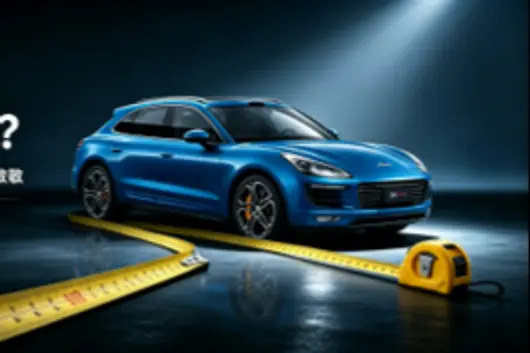
Thus, that old question was brought up again. Back then, Zotye relied on the reputation of the "Ruler Department" to copy the face of the Porsche Macan almost perfectly, but the underlying chassis, power, and tuning could not keep up, and even the engine was purchased from others. If Zotye was born in the new energy era, where motors, batteries, intelligent driving, and intelligent chassis have ready-made solutions for purchase, and now even the "Ruler" is called "Tribute", can Zotye win?
What Zotye lost back then was far more than just that face
Back then, Zotye SR9 copied the Macan, dubbed "Porsche Tai", with annual sales once surging to over 300,000 units. In that era, a car that looked like a luxury vehicle could indeed exchange appearance for orders.

But Zotye only copied the exterior. How to tune the chassis, how to calibrate the power, these things Zotye failed to make its own highlights. As for how to manage million-unit level quality control and supply chain, it was even less imaginable.
Regarding powertrains back then, Zotye indeed couldn't make them. The 2.0T engine of the SR9 came from Shenyang Aerospace Mitsubishi's 4G63S4T, 190 horsepower, 250 N·m, the gearbox was provided by SAIC, and Zotye itself provided only the body shell and interior. The same engine was installed on Landwind X7, Leopard CS10, and Southeast DX7 at the time. The cars from these few brands looked different, but the heart was the same.
This was not a choice made only by Zotye. From the 1990s to around 2010, over half of domestic automotive powertrains came from Mitsubishi. The two joint ventures in Shenyang and Harbin cumulatively supplied over 7 million units. Mitsubishi sold products but not technology; the most advanced combustion control and structural design remained in Japan. Models released in China were often already in service for 5 to 8 years. Electronic control parameters were not open to the public; to make minor tweaks to the power curve, approval had to be sought from the Japanese headquarters. Some models saw price hikes of 43% over 3 years. Whether a car could be released, how many, and when, half the decision-making power lay on others' production schedules.
The difference in these matters is clear from the numbers below. Sales in 2018 were halved to 154,800 units. In 2020, the parent company Tieniu Group went bankrupt due to insolvency, entering bankruptcy proceedings. In June 2021, the Jinhua Intermediate Court accepted the reorganization. In October, Jiangsu Shen Shang Holdings entered with 2 billion yuan. In December, the reorganization plan was approved.
This doesn't mean Zotye never touched electrification. In earlier years, Zotye launched small pure electric vehicles like Cloud 100 and E200. In 2017, it also signed a new energy joint venture agreement with Ford, planning to establish a joint venture company, but the project eventually came to nothing.

Copying a face takes a few months. Tuning a chassis is a feel built up from decades of data and engineering experience. The former can be reverse-engineered, but the latter cannot.
So what Zotye lost back then was far more than just that face. It lost the whole set of things beyond the face, and it had none of them.
Today, building a car, almost all missing parts can be purchased
But what Zotye lacked back then counts for nothing in the new energy era.
If we only talk about whether a car can be built, the new energy era has indeed broken down the hurdle a beginner needs to cross into a pile of standard parts available for purchase.

For example, Era Smart under CATL created a CIIC integrated intelligent chassis, also called PanStone Chassis, which can save OEMs 60% to 70% of development costs, reduce BOM costs by another 5%, and compress the vehicle mass production cycle from 36 months to 12 to 18 months. At the same time, this chassis can absorb 85% of the impact energy of the whole vehicle, while ordinary chassis only absorb about 60%.
In the past, the chassis has always been one of the core technologies of car companies. Now, outsourcing to third parties weakens R&D autonomy to some extent. Interface standards are hard to unify, and defining liability after accidents is also difficult. More awkwardly, if everyone uses the same chassis, cars look identical. Being able to buy is one thing; how much of your own stuff is left after buying is another.
Powertrains can also be purchased. Inovance Power's electric drive assemblies, Huawei's DriveONE, FinDreams Power, Jingjing Electric, there are several on the shelf. In the first half of 2026, among third-party electric drive installations, Huawei Digital Energy ranked 262,000 units, Inovance Power 311,000 units. Huawei DriveONE shipments exceeded 1 million units in 2025, collaborating with over 10 car companies, covering more than 50 models.
Acceleration is even more notable. 200,000 yuan level 4WD pure electric, 0-100 km/h acceleration is generally pressed to 2 to 3 seconds. Avatr 06T 4WD 2.78 seconds, BYD Seal 08 Pure Electric 4WD 3.3 seconds, Zeekr 007 4WD entered the 2-second level. This achievement, put in the year Zotye copied the Macan, is a number only performance cars dared to write.
The links that held Zotye back back then mostly have ready-made suppliers today.

The change in design is even greater. What Zotye did alone back then, now mainstream players are doing.
Porsche's frog-eye headlights and fastback, Land Rover's boxy body, Rolls-Royce's Parthenon grille, Aston Martin's front face. These elements can be seen on many popular models today. The names "Certain Range Rover", "Certain Cullinan" are even directly used by the official as propaganda language.
Tang Fengliang, Vice President of Media and PR for Porsche China, publicly stated that Porsche's design sparked highly unified aesthetics in the Chinese automotive industry, which makes it both honored and helpless. It is easy for design languages to be paid tribute and imitated, but the soul behind the design will not be easily substituted.
So if Zotye were put into today, it truly lacks nothing, and even the "Ruler Department" is no longer something shameful, because that is called "Tribute".
There is a time difference here. Zotye was remembered for a face for 10 years back then. Today's tributes stand on a more complete supply chain, copying more effortlessly and more decently. Using names like "Certain Range Rover", "Certain Cullinan" as propaganda language, something unthinkable in 2016.
Cars need more than just being built
But "Tribute" is just a ticket to entry. Survival depends on those things beyond tribute.
Car buyers also won't look at whose chassis you used or whose cells you bought. They look at whether the car is worth the price, dare to buy, looks good driving it out, and can it sell for a price after 3 years. These few things, suppliers cannot substitute.

Look at Zotye's real financial report today.
Net profit attributable to parent company for the first half was 80.39 million yuan, which looks like a turn to profit. But deducting non-recurring items, net loss was 152 million yuan, and losses widened year-on-year by 40.31%.
Where did that 80.39 million yuan come from? The answer lies in non-operating income. Canceling subsidiaries obtained 200 million yuan in compensation, plus a 30 million yuan litigation settlement, totaling 235 million yuan.
These money have nothing to do with car manufacturing. Zotye's current revenue mainly comes from auto parts and door industries, and the vehicle business has not yet recovered its cash generation.
Another consequence of the 5-year production halt is that channels and after-sales are basically zeroed out. Most of the dealers who sold Zotye cars back then are no longer there. Old car owners find it hard to find parts. For a new brand to build a sales service network covering the whole country usually takes several years; Zotye has to start all over from zero.

In India, on July 15, it signed a master agreement for KD semi-knocked-down assembly with Kaly Emotors, planning an SKD project with an annual production of 30,000 sets. In Indonesia, at the end of June, it reached a full industry chain cooperation with BPKN. The first to roll off the line in Yongkang was the overseas version of the old T300.
The reason for going overseas first is because the domestic window is basically closed. Li Bin had a saying that the major players for the next 3 to 5 years are basically determined, and the recent 2 years are the critical period for staying at the table. The top threshold for new car makers is 100,000 units, the survival line is 30,000 units.
Zotye's current scale is far from both these lines.
Overseas is not a haven; this reminder needs to be said upfront.
Neta once accounted for over 10% of the pure electric share in Thailand. After the capital chain broke, only 365 units were sold in Thailand in the first half of 2026. Local consumers are exceptionally sensitive to the stability of the brand, which is more fatal than price.

Back to that question, was Zotye really born at the wrong time?
To put it plainly, Zotye did touch upon being born at the wrong time.
These four characters "born at the wrong time" mean everything is ready except the favorable circumstances. What Zotye lacked back then was exactly that wind. Powertrains had to be bought from Mitsubishi, and it had to be queued behind others' capacity. Calibration had to be approved by the Japanese headquarters; this hurdle could not be passed by effort alone. Today the wind has changed; motors, batteries, electronic controls, and intelligent driving are on the shelves; what is missing is supplemented. What truly held Zotye back has become, after building it, why would anyone be willing to pay.
The first threshold can be bought; the second cannot.
So it does not lack a ruler.
What it lacks is the part that a ruler cannot measure.
The feel of the chassis, the experience of tuning, user trust, and the reason why a car company can be remembered.
Suppliers do not sell these things.
The new energy era did not waive this lesson either, it just changed the exam room.
The exam paper back then tested whether you could build a car. Zotye could not answer some questions because the answers were in others' hands. Today a different question is asked; it is no longer hard to build a car, it is to make car buyers remember you.
So give Zotye a suggestion: if it really comes back, everything else can be saved, but a marketing master must be hired with heavy money. Make the tribute sound more moving than anyone; this skill works better than technology in today's market.
Products can be purchased externally, stories can be outsourced. Calculated this way, there is indeed still a chance to win.