首頁Li Auto

搜尋歷史
熱門搜尋
經銷商登入 / 註冊

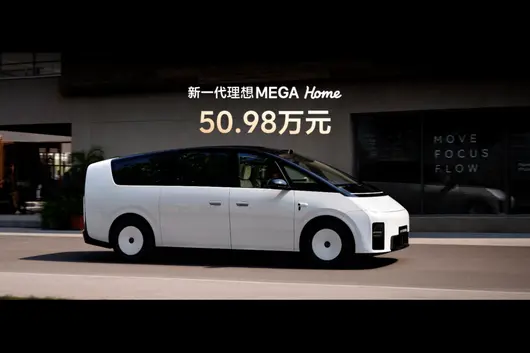
September 2, Li Auto officially launched the tech flagship MPV new generation Li Auto MEGA, the new car offers only the MEGA Home single configuration version, unified national retail price 509,800 RMB, orders are now open, users can via Li Auto App book a test drive or visit offline retail centers to experience the vehicle.


As a popular model in the MPV market above 500,000, the new generation Li Auto MEGA, based on retaining the 0.215Cd ultra-low drag fluid body, completed optimization and upgrade of appearance details, equipped with ADB matrix headlights, UFO-style wheel hubs, vehicle refinement further improved.


The cabin continues the "Mobile Home" product concept, adds Home Light living room main lamp, Sweet Home welcome light carpet, equipped with three independent sunroofs and five groups of electric sunshades. Second-row rotating zero-gravity seats upgrade floating seat cushion and air diamond pattern Nappa leather, all rows one to three standard equipped with ventilation, heating functions, total vehicle 31 surface heating points, paired with adaptive leveling electric tables, building multi-scenario rear cabin living room.


Chassis level is the focus of this upgrade, new car standard equipped with steer-by-wire + rear-wheel steering system, turning radius reduced to 5.5 meters; equipped with 800V active anti-roll Magic Carpet chassis, 30 milliseconds can suppress body roll, also equipped with Elephant Welcome convenient entry/exit function. Intelligent configuration maxed out, Qualcomm 8797 cockpit chip support, front and rear rows both equipped with OLED large screens; all series equipped with Dual Mach Embodied Intelligence set, two Mach M100 chips paired with four LiDARs.


Three-electric system part equipped with 108kWh 5C supercharge ternary lithium battery, CLTC range 710 km, supports 10 minutes charge 500 km. New car offers multiple body color schemes, 270° electric variable glass is an option. Users during first sales period can enjoy exclusive purchase rights, future this car will also land in Hong Kong, Macau, Singapore, Thailand and other right-hand drive markets.




On September 2, Li Auto launched the new generation Li Auto MEGA, offering only the MEGA Home version with a nationwide unified retail price of 509,800 yuan, a direct price reduction of 50,000 compared to the previous generation.

The new car adds "Home Light" living room main light, 3500K warm light, with 2nd and 3rd rows independently touch-controlled dimming; all three independent sunroofs and five electric sunshades, with optional 270° electrically tintable glass. 2nd row rotating zero-gravity seats upgraded with floating seat cushion, featuring 18-point hot stone massage; front row also standard with dual zero-gravity seats, 2nd row additionally equipped with adaptive leveling electric table boards and a combined large dining table.

In terms of driving, the new car comes standard with steer-by-wire and rear-wheel steering, turning radius reduced from 6.2 meters to 5.5 meters; the brand new 800V active anti-roll Magic Carpet chassis has a roll suppression response of only 30 milliseconds. The "Elephant Welcome" feature allows the body to tilt within 1.5 seconds after door opening, with the sill lowering 3 cm, facilitating entry and exit for elderly and children.

In terms of intelligence, the cabin is equipped with a Qualcomm Snapdragon 8797 chip and the world's first automotive-grade 29-inch 6K OLED ultra-wide screen; intelligent driving comes standard with the Dual Mach Embodied Intelligence Set (two M100 chips, four LiDARs).

In terms of power, the 108 kWh 5C battery paired with dual-motor 4WD offers a range of 710 km, with 10 minutes of charging replenishing 500 km. Ordering during the initial sales period gifts a combined large dining table worth 3,500 yuan; the new car will also launch in Hong Kong, Macau, Singapore, Thailand and other right-hand drive markets by the end of the year.

Mid-August, Leapmotor released H1 2026 financial performance. Revenue 38.11 billion, YoY up 57.2%, Net Profit 210 million, YoY up 530%. For the first time achieved semi-annual profitability, on the surface looks like a beautiful report card. But capital market reaction was flat, stock price didn't move much. Why? Because industry insiders are all looking at another number — Gross Margin 11.7%, down 2.4 percentage points YoY. Made money, but not much, and the way of making money is a bit forced. Today let's open up Leapmotor's accounts to see, alongside Li Auto, Nio, Xpeng do a horizontal comparison, see exactly how is this 210 million's profit quality.

38.1 Billion Revenue Breakdown, Q1 Crash Q2 Recovery
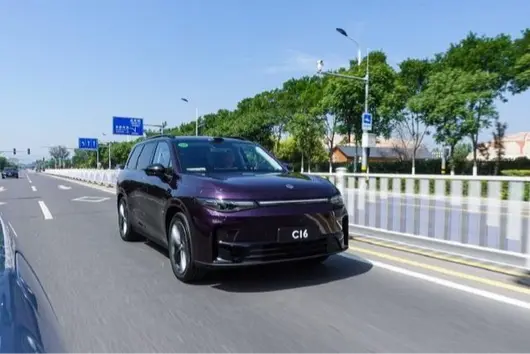
First half 38.1 billion revenue, growth rate indeed bright, but breaking down shows huge gap between two quarters. Q1 revenue only 10.8 billion, net loss 390 million, gross margin only 9.4%, at that time outsiders once questioned if Leapmotor fell into a vicious cycle of "selling more losing more". Q2 suddenly turned around, revenue 27.29 billion, QoQ growth over 150%, single quarter net profit 600 million, gross margin rebounded to 12.6%. The problem is Q2 explosion mainly relied on volume pull of C16 and C10 two models, especially C16 this 150,000 class six-seat SUV directly sold explosively. But Leapmotor average selling price only around 110,000, bottoming among new EV makers. Same profit volume, Nio sells one equals Leapmotor sells nearly two, this is Leapmotor's core contradiction: sales went up, but single car profitability is weak. And first half overall gross margin 11.7% still 2.4 percentage points lower than last year, shows price promotion cost is showing.

210 Million Net Profit Quality, Horizontal Comparison of Four Companies
Put Leapmotor, Nio, Xpeng, Li Auto four new EV makers first half profit levels together look, very clear. Leapmotor first half net profit 210 million, only one profitable, but don't rush to clap — 210 million divided by 356,500 delivery volume, single car profit only around 590 yuan. Look at other three: Nio although still loss, but single car average price over 200,000, auto gross margin 19% (Q1), selling one loss amount also narrowing; Xpeng first half net loss 3.12 billion, but comprehensive gross margin 20.7%, auto gross margin 12.1%, key is service business contributed nearly half gross profit, profit margin as high as 75.1%, shows Xpeng found money making way outside selling cars; Li Auto most tragic, vehicle gross margin directly dropped to 6.1%, H1 net loss 2.29 billion, pure EV transformation pain much more violent than expected, i6 accounts for sales 62% but L Series completely crashed. Leapmotor is the only one making money among four for sure, but this profit quality, to be honest not high. Annual profit expectation already down from 5 billion to 3 billion, gross margin goal also from 13—14% lowered, management in earnings call said price reduction is active choice, to grab 100,000-150,000 class market share, but this price interval profit space originally thin as blade.

Going Overseas 96,000 Units, Is the Biggest Variable
Leapmotor first half another number worth attention is export 96,300 units, YoY up 372.6%, accounts for all delivery 27%. This proportion in new EV makers leads far. Leapmotor going overseas biggest backer is Stellantis Group cooperation, directly borrow its global channels, 45 overseas markets, over 1000 sales outlets, not paving from scratch. In Southeast Asia, South America, Europe etc markets, Leapmotor price advantage more obvious than domestic. And Leapmotor promoting Malaysia, Spain, Brazil three places localization production, avoiding tariff risk. Overseas car pricing usually higher than domestic by 30—50%, this means overseas profit contribution far exceeds sales proportion. If saying going abroad is Leapmotor biggest variable, then Stellantis is that leverage.

60.8 Billion Market Cap, Is It Expensive?
Leapmotor current market cap 60.8 billion HKD, TTM PE ratio over 70 times. Zhu Jiangming said Leapmotor worth at least 200 billion, but from financial view, according to 3 billion annual profit expectation, 70 times PE close to Tesla level — they have FSD and Robotaxi stories supporting, Leapmotor currently still relies on selling cars. From PS view, 60.8 billion HKD approximates 55 billion RMB, corresponding annual revenue about 76 billion, PS about 0.7 times, in new EV makers not expensive. Nio PS about 1.2 times, Xpeng about 1.5 times. So Leapmotor valuation logic is divergent: by profit looks expensive, by revenue scale has space. Key is see H2 C16 volume momentum can continue, and going overseas can keep each quarter 50,000 units growth rate. If can stabilize, profit elasticity still has large release space.
Summary: Leapmotor used half a year time proved low price strategy can swap for scale, but 210 million net profit also shows scale does not equal profit. Among four new EV makers, Leapmotor is only making money, but earning most hard. H2 real test is can scale advantage turn into profit advantage — going overseas growth rate and gross margin can rise synchronously, this will decide Leapmotor position in next elimination round.
One was scolded for being locked, one was scolded for not being locked. Whose interests are the automakers' "digital fences" actually protecting?
Recently, two strange things happened in the automotive circle, and they must be viewed together.
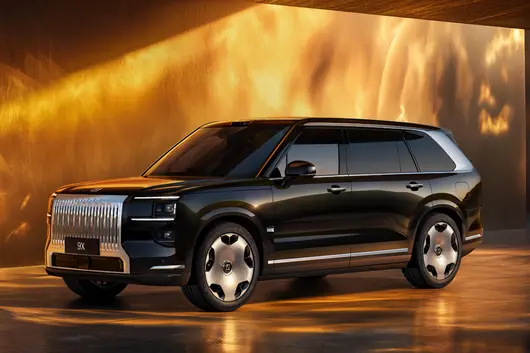
A Zeekr, the owner drove abroad themselves, got locked for over 30 hours right after entering Kazakhstan. A Li Auto L9, the owner said the car was stolen domestically, but the location also appeared in Kazakhstan.
One actively locked, one not locked. Regarding vehicle cross-border, should automakers lock them?
Zeekr: Self-driving abroad, locked for 30 hours
On July 16, Henan owner Mr. Liu drove a Zeekr 9X to start a Eurasian self-driving tour. As soon as the car entered Kazakhstan, the next day the car system popped up a bunch of prompts——
Navigation unusable, music unplayable, storage box stuck, documents cannot be retrieved. 
Even more extreme, the fuel cap won't open, cannot refuel. This car only has one basic driving function remaining.
Lasting over 30 hours, the in-car screen repeatedly popped up prompts "Vehicle status abnormal, please contact official customer service", to unlock must return to domestic authorized store.
Mr. Liu told the store he was going abroad before departure, but no one reminded him about locking the car. 
Zeekr responded: Vehicles sold domestically only have authorization for use within the country, triggering security protection mechanisms after leaving the border to prevent theft, robbery, and illegal export. Car owner wants to unlock? Yes, submit passport, customs documents, purchase contract, invoice, driver's license, visa... full set of materials.
Netizens exploded: I spent 500,000 to buy this car, and going abroad I still have to report to you?
Li Auto: L9 disappears into thin air, theft or debt?
Look at Li Auto again.
Hangzhou owner Mr. Luo, received system notification in March this year: Li Auto L9 APP control permissions expired.
Where is the car? Car is gone. Location shows, this car appeared in Kazakhstan.
Owner questioned: Did Li Auto remotely unlock it and smuggle the car out of the country? Public opinion rapidly fermented, "Disappearing Li Auto" topped the hot searches.
Interestingly, this came out exactly on the day of the Li Auto L6 launch, the timing was quite delicate.
But the situation quickly reversed — police and media investigation found: This car was mortgaged three times.
First time mortgaged to WeBank, loaned 300,000; second time mortgaged to Zhenong Microcredit, loaned 200,000; third time directly pledged to private lending party, even the physical key was handed over. 
This isn't over. The owner also did something: Replaced the third physical key, causing the keys in the pledge party's hand to fail directly. Pledge party found car keys unusable, drove the car away overnight, transported all the way to Horgos, cleared customs overnight. Upon arriving in Kazakhstan, to allow local buyers to use it normally, the pledge party also applied to unbind the original owner's account permissions. This is not car theft, this is a debt dispute.
Li Auto legal department issued a statement on April 22: Never participated in illegal transfer, no hacker cracking involved, remote operations were all executed by the actual registered person's own account.
Locked or Not Locked, Both Scolded
Putting two things together for comparison, it's interesting.
Zeekr locked — scolded.
Owner went abroad for self-driving, inexplicably locked for 30 hours, even fuel cap won't open, experience extremely poor.
Li Auto didn't lock — also scolded. 
Some comments said: Geely too proactive, locked as soon as going abroad; Li Auto too passive, watched the car drag from Hangzhou to the seaside, transported to Horgos, exited country. Later, to let overseas buyers use it, even unbound the original owner account permissions.
Locked gets scolded, not locked also gets scolded. Whatever automakers do is wrong. But is the problem really that simple?
Why do automakers set up "digital fences"?
This thing really isn't automakers being idle. Behind it there are three layers of logic:
First, black and gray industries are rampant
The price difference between domestic and foreign new energy vehicles is huge.
Zeekr 009 domestic over 400,000, Singapore sells over 2 million; BYD Han domestic over 200,000, Europe sells to over 500,000. Smuggling cars abroad, profit space is how big, you calculate. One car smuggled out, profit can double or triple. The black industry chain behind this is far bigger than imagined.

Second, regulatory hard requirements
February this year, Ministry of Industry and Information Technology and other eight departments jointly issued "Safety Guidelines for Automotive Data Outbound (2026 Edition)", vehicle location, trajectory, mapping data, cannot be casually sent abroad. Automakers without geographic fences, they violate the law themselves first.
Third, industry common practice
Tesla, BMW, Mercedes-Benz have similar restrictions in border areas. Same logic as remote locking phones lost — not to harm you, but to protect you. Prevent vehicles from being illegally sold, or stolen and then sold abroad.
July 26, Zeekr announced emergency rectification:
First, APP launched "Cross-border Protection" function, one-click self-service unlock.
Second, develop "Cross-border Protection Function Switch", default off, owner decides to open or not before leaving country.
Third, 24-hour customer service priority channel.
Say simply — return the initiative of locking car back to owner.
As for Li Auto, legal department clarified in April, but public opinion storm continues. 
The core contradiction of these two things is actually just one:
Automakers' geographic fences, are they protecting owners, or restricting owners? The answer might be — both.
Without this mechanism, smuggling, theft, data violations would be rampant. But execution methods are too crude, indeed let compliant users suffer losses in silence. 
So Zeekr's rectification direction is right: default no lock, let owner choose before leaving country. Handing choice rights to users is more reliable than any "thinking for you". After all, car belongs to user, not automaker.