首頁Kia

搜尋歷史
熱門搜尋
經銷商登入 / 註冊


Written by | Zhang Linyu
Edited by | Huang Dalu
Designed by | Zhen Youmei
Many global automakers have different realities in China and the rest of the world.
For example, Renault, a brand that has lost its presence in China, is thriving in Europe, much like Geely is in China.
Similarly, Hyundai and Kia have struggled in China for years, but in the US, Europe, and other markets, they have long been one of the major choices for local consumers when buying cars.
Hyundai Motor Group is undervalued in China, but this is also related to its own strategy and the broader environment. Today, as Chinese automakers go global, Hyundai and Kia could be a sample worth studying.
Hyundai, Kia, and Genesis target different consumers, retaining their own product and brand expressions while sharing the group's platforms, R&D, procurement, and manufacturing resources.
According to the sales announcements released by the two companies on July 1, 2026, in the first half of the year, Hyundai Motor Company including Genesis had a global sales volume of approximately 1.966 million vehicles; Kia had approximately 1.631 million vehicles, with a combined total of approximately 3.597 million vehicles. Among them, Hyundai Motor Company's sales decreased by 4.9% year-on-year, while Kia increased by 2.7%, setting a record for its first-half sales.

During the same period, Hyundai Motor Company's sales in South Korea were approximately 317,000 vehicles, and Kia's were approximately 296,000 vehicles. The Korean local market provides a stable business foundation for the group, but the larger sales volume comes from overseas.
Hyundai and Kia operate products and channels separately in the US, supply through manufacturing bases in the Czech Republic, Turkey, and Slovakia in Europe, and have established local production systems in India. The two brands share the group's technology and procurement resources while competing against different users.
The Hyundai and Kia we see in China obviously do not represent the whole picture of this group. However, global scale has not allowed the two companies to escape profit pressure.
In the second quarter of 2026, Hyundai Motor Company's revenue was 49.22 trillion Korean won, up 1.9% year-on-year; operating profit was 2.85 trillion Korean won, down 20.8% year-on-year, with an operating profit margin of 5.8%. Kia's revenue for the same period was 33.03 trillion Korean won, up 12.6% year-on-year; operating profit was 2.62 trillion Korean won, down 4.9% year-on-year, resulting in an operating profit margin of approximately 7.9%.

Kia's revenue growth and operating profit margin were higher than Hyundai Motor Company, but both companies faced declining operating profit despite revenue growth. Different brands and product combinations presented different operating results within the same group.
Global layout gave Hyundai and Kia multiple market pivots but did not eliminate the pressure brought by costs, products, and competition.

Their lack of development in China does not hinder the study of how they established global business and how they succeeded globally. But at the same time, this system also faces challenges in the new automotive era.

Hyundai and Kia Going Global

The reason for Hyundai going global was first that the South Korean market is too small.
Chinese car companies that do well in their local market may reach millions of vehicles in scale and complete iterations of technology relying on China's supply chain. Hyundai does not have such conditions.
Established in 1967, it began producing the Ford Cortina in 1968, exported the Pony to Ecuador in 1976, and entered the US with Excel in 1986. While learning to build cars, it had to find overseas buyers.
For latecomers to the automotive industry, platforms, molds, R&D, and factories are investments that need to be spread across a scale. Local demand in South Korea determines that if Hyundai wants to become a large automobile enterprise, it cannot wait until all capabilities are mature before considering overseas expansion.
The global market has been a constraint it has had to face since early on in establishing its industrial capabilities.
This makes the growth conditions for Chinese and Korean car companies different.
Chinese enterprises can rely on the huge domestic market to perfect products and accumulate scale before expanding overseas business. Hyundai needed to learn how to enter other people's markets much earlier, understanding price tolerance, aesthetics, roads, and consumption habits. This difference does not determine who is more advanced but influences how enterprises later allocate resources and power.
Hyundai initially also relied on low prices. But the US market quickly made it understand that low prices can bring the first purchase, but quality and service bring the second.
In 1998, Hyundai Motor America introduced a coverage plan for 1999 model new cars, including a limited 10-year or 100,000-mile powertrain warranty. This was a concrete action to establish credit.
Within the scope covered by warranty terms, it transferred the reliability risks consumers worried about back to the manufacturer and required manufacturing, repair, and quality management to catch up. Whether a strange brand can stand, it needs to make consumers believe that someone is still responsible for problems that occur after buying the car.
The 1998 acquisition of Kia was another important node for Hyundai to establish today's global system. The two brands gradually expanded the sharing of platforms and procurement while retaining their own design and market expressions.
In 2005, the Hyundai Alabama plant went into production, and Kia subsequently established a production base in Georgia. Hyundai and Kia gradually changed from import brands to become local employers, purchasers, and investors, establishing long-term relationships with suppliers, dealers, and local governments.
Hyundai's Palisade and Kia's Telluride等大型 SUVs respond to family travel needs, hybrid models respond to usage costs, and Genesis bears the task of brand upward mobility. Two mass-market brands plus a luxury brand allow the group to compete between different prices and needs.
Hyundai and Kia in the US are not just Korean models with a few more configurations added. Local needs entered product definition, and car buying finance, leasing, and services entered the daily lives of consumers.
India took another path.
Hyundai established business in India in 1996, launched the Santro in 1998, and began local production, gradually expanding from small cars to compact SUVs. Price, space, fuel consumption, and maintenance convenience constitute the more realistic car buying judgment for local families.

Kia later entered India, establishing business through local production and products such as SUVs and MPVs. The two brands forming different product combinations in the same market also further increased India's weight in the group's global layout.
Hyundai India disclosed in its performance exchange in February 2026 that the localization level has reached 84%. As local procurement and manufacturing capabilities continue to deepen, India concurrently takes on the role of sales market, manufacturing base, and regional export center, supplying to the Middle East, Africa, Latin America, and other Asia-Pacific markets.
Europe had different requirements.
Hyundai established local R&D capabilities and supplied through Czech and Turkish factories, while Kia formed a manufacturing pivot in Slovakia. Body forms, driving feel, safety, and emission requirements need to be solved in the development stage. Channels, repair, and parts supply familiar to consumers determine whether products can be operated continuously after launch.
Localization in Brazil even went directly into the power system.
The Hyundai Brazil plant put into production in 2012 and the HB20 developed for the local market need to adapt to the ethanol fuel system, purchasing power, and usage environment. The Middle East and Africa rely more on distribution partners to establish coverage, then deepen assembly and procurement according to demand and policy. The Asia-Pacific market's demand for multi-person travel provided product space for MPVs and SUVs different from Europe.
These markets were not treated by Hyundai and Kia as different sales addresses for the same set of models.
South Korean local provides R&D, platform, and manufacturing foundations, with each region forming its own product combinations, supply chains, and business relationships. The group shares resources, brands face consumers separately, and regional business handles local needs.
The change Hyundai and Kia completed is that different markets gradually entered the enterprise, participating in deciding what this group produces, how it is produced, and how it serves users.

Undervalued Design

The role of design is often obscured by the impression of cost-performance ratio.
In the past, when people talked about Korean cars, the first thing that came to mind was value for money.
Today, Hyundai's IONIQ 5 pixel lights and Kia's EV9 geometric contours are all turning brands into recognizable product languages. Hyundai and Kia absorb global design talent and gradually form their own expressions. The experience of South Korean consumer electronics, home furnishings, retail, and cultural industries facing global consumers also provides a background for understanding such aesthetic expressions.
For automobiles, culture can be reflected in proportions, materials, colors, spaces, and interfaces, and does not need to become a prominent traditional symbol every time. The place Hyundai and Kia are worth studying is how to make people from different cultural backgrounds understand their designs while willing to pay for them.
After sharing platforms and technologies, the two brands still need to retain their respective appearances. Technical synergies can spread costs, but design and product positioning need to give consumers different reasons to choose.
When batteries, motors, chips, and screens are increasingly easy to obtain, product differences will not naturally disappear, but relying solely on configuration tables to build advantages will become more and more difficult. Design, usability, and overall experience will affect whether a brand can escape price competition.
Of course, Hyundai and Kia did not invent globalization. Toyota completed much of the work on this path earlier.
In 1984, Toyota and General Motors established NUMMI, i.e., New United Motor Manufacturing Inc., accumulated experience in organizing production and handling labor relations in the US, and then expanded its own manufacturing system. The IMV, i.e., Innovative International Multi-purpose Vehicle project, launched in 2004, incorporated bases such as Thailand, Indonesia, South Africa, and Argentina into common platforms and transnational division of labor, allowing a country's factory to serve multiple markets.
The advantage Toyota established was reliability, production management, repair networks, and long-term usage costs. As a later entrant, Hyundai and Kia needed to make up for quality while closing the brand gap through design, configuration, and price combinations.
They both value local operations, but Hyundai and Kia's experience is closer to the situation Chinese car companies are facing today: products already have competitiveness, why do consumers still unwilling to switch brands?
This is also where this sample is most valuable when comparing Chery, Geely, and BYD.
Chery entered emerging markets earlier, relying on high cost-performance products, local dealers, and co-assembly to expand coverage, then deepening manufacturing and brand investment. This path has similarities with Hyundai and Kia.
The next test is to convert the expansion speed brought by different partners into stable quality, spare parts, and service standards. The more countries, brands, and models, the higher the difficulty of channel management.
Geely relies more on capital shareholding or acquisition and technical cooperation.
Volvo and the cooperation with Renault in Brazil brought different forms of brand, R&D, factory, and regional relationships, and also brought Chinese technology into the existing global network. It needs to solve how brand autonomy and platform sharing get along, and whether complex equity and cooperation relationships can truly improve efficiency.
BYD relies on synergies between batteries, electric drive, entire vehicles, and plug-in hybrid technologies to push the scale and cost advantages formed in the Chinese market overseas.
The Thailand factory places local sales and regional exports together, reflecting the idea of a production network. The next test is, after increasing investment in overseas factory construction, local procurement, and channel services, how much cost advantage BYD can still maintain, and whether it can convert product competitiveness into dealer profits and users' long-term trust. Repair efficiency, spare parts supply, and used car residual value all need to be accumulated through continuous operation.
The experience Hyundai and Kia provide is that the assessment of going global must ultimately fall on local operations. Whether cars sold after entering channels are sold to users, whether dealers can make money, how long spare parts take to arrive, and whether financing costs are acceptable explain business quality more than announcing entering how many countries.
Localization also requires power to follow responsibility.
If a region is to be responsible for sales and profits, it must be able to influence product definition, configuration, launch rhythm, and partner selection. The headquarters retains platforms, quality, and safety standards, and local teams need the ability to respond to the market.

New Automotive Era

China is changing the value structure of automobiles. New energy platforms, batteries, smart cockpits, assisted driving, and rapid updates have formed a high-intensity innovation environment.
New functions and product concepts can quickly enter a large number of models, being verified, improved, or eliminated in real competition.
Chinese car companies have thus obtained a high upper limit for product experience. But a smart car that is highly mature in China may not be able to completely retain this experience in other markets.
Maps, accounts, music, payments, cloud services, and AI applications need to be reconnected; data permissions, privacy settings, and proactive recommendations need to be redesigned. A service that can be completed by voice in the country, overseas, may not have corresponding service providers, or may need to re-obtain user authorization. Whether local users need it also cannot be presumed in advance.
Past localization mainly revolved around regulations, chassis, power, and language. Today, it is increasingly deepening into the automobile's software structure and business relationships. The deeper China's digital ecosystem is integrated, the more parts may need to be re-developed and coordinated when migrating overseas.
China's intelligent advantage needs to be realized overseas through another set of organizational capabilities. How many functions are added should be determined by local needs; to what extent users hope the system is proactive also needs research. Cannot directly equate the high configuration density of the Chinese market with high satisfaction in all markets.
Hyundai and Kia have long faced multiple markets and accumulated experience in handling regional differences. This experience may help them adapt to different digital ecosystems.
But whether they already possess a good enough software architecture, development efficiency, and application experience is another problem still to be tested.
Assisted driving will further increase the difficulty.
Non-motor vehicles in Shanghai, roundabouts in Paris, and parking yield in US suburbs involve different road environments and driving habits formed over the long term. Completing a large number of verifications in China does not mean overseas local verification can be skipped.
Whether data can be collected, where it is stored, and how it is used for training are also affected by rules in different regions. Automobile platforms can be as unified as possible, but the data closed loop needs to possess regional capabilities. For Chinese car companies, this increases the cost of globalization; for Hyundai and Kia, sales scattered around the world will not automatically convert to usable assisted driving data.
Hyundai and Kia's failure in China serves as a reminder that global capabilities accumulated in the past also have boundaries.
Beijing Hyundai once broke through an annual sales volume of one million vehicles in 2013, and Kia also once had a much higher market presence in China than today. Local factories, joint venture partners, and channels were once complete, but when Chinese brands continued to advance in quality, design, SUVs, and new energy, the original reasons for purchasing for Korean brands gradually weakened. External shocks around 2017 exacerbated the decline, but were not enough to explain the long-term slump thereafter.
Manufacturing has been localized, but technology choices and product deployment still need to keep up with changes in the Chinese market. When consumers start evaluating cars with cockpits, assisted driving, and update speeds, past fuel vehicle credit cannot automatically become the attraction of new products.
Therefore, China's significance to Hyundai Motor Group cannot be just restoring sales volume. It also needs to re-enter the innovation system here.
Hyundai has begun introducing the technical capabilities of Chinese partners. In the China strategy announced in 2026, it includes collaborating with Momenta to develop assisted driving systems and introducing the Doubao Large Language Model in the smart cockpit. Whether these cooperations can improve product experience still needs to be verified by mass production performance and continuous updates. Source: Hyundai Motor China Strategy Explanation
Toyota adopting Momenta technology on China models, Nissan and Mazda also promoting new energy products through Chinese teams or partners, all show that China's significance to global automakers is extending from sales markets to the input end of technical and product capabilities.
Hyundai and Kia's Chinese joint venture companies also have new roles.
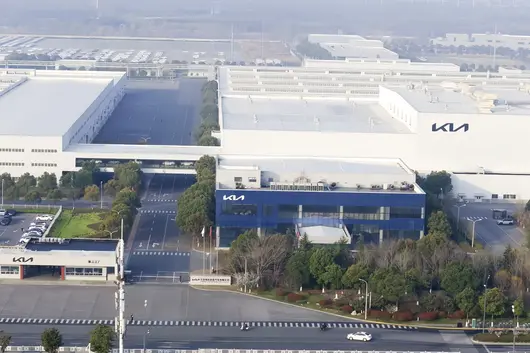
Yueda Kia's Yancheng factory has become part of the global export network, but manufacturing export is just one layer. China's supply chain and R&D speed can also support product development, then enter other markets through the group's regulations, quality, and brand systems.
Beijing Hyundai ELEXIO has begun moving overseas along this path. This electric SUV was produced by Beijing Hyundai, launched first in the Chinese market in October 2025, and then entered the Australian market, a product under Hyundai's "Made in China, For China, Going Global" strategy.
But after ELEXIO's launch in China, sales were low, and the situation has not yet opened up. China development and manufacturing, using group channels to enter overseas, show the product has connected to the global network; whether it has enough competitiveness still needs to be answered by the market.
ELEXIO's test therefore has two layers: In China, it needs to re-establish consumers' reasons to choose Hyundai electric vehicles; overseas, it needs to prove that after local adaptation, this set of products can obtain continuous sales and reasonable profits. The slump in the Chinese market cannot directly predict overseas results, but equally cannot be covered up by overseas deployment news.
This requires global companies to have the ability to judge which Chinese innovations can be migrated, which need adjustment, and which are only suitable for China. Discovering and verifying innovation in China, then making it adapt to users in different countries is the capability Hyundai Motor Group needs to further establish.
Whether it can complete this step will directly affect how Hyundai and Kia respond to the overseas challenges of Chinese car companies.

New Competition in Global Markets

Competition in Europe has fallen on pure electric, plug-in hybrid, price, and software experience simultaneously.
Hyundai and Kia's respective electric vehicle products expanded the group's market coverage and allowed the two brands to compete for users with different designs and models. But owning electric vehicle products does not mean the market is already held. Chinese brands are still making up for production and channels, while Hyundai and Kia need to face competition on costs and experience.
Competition in South America and Southeast Asia is more direct.
Chinese car companies bring battery and plug-in hybrid advantages to the local area, also building factories, channels, and service systems. Plug-in hybrids especially may change some markets where public charging facilities are insufficient: for consumers with daily charging conditions, they do not need to wait for public charging networks to be fully mature to obtain daily electric driving experiences. How much usage costs can be reduced depends on local gasoline and electricity prices and actual charging and driving situations.
Hyundai and Kia need to judge how long fuel vehicles and regular hybrids can support, and at what speed pure electric, plug-in hybrid, and extended range should enter. Investing too slowly will lose users, while too quickly may bear idle capacity. The Middle East and Africa cannot be processed generally; purchasing power, energy prices, and infrastructure differences vary greatly between the Gulf and other markets.
The US and India provide different degrees of buffer.
US access restrictions, India's investment environment and local industry relationships all increase the difficulty for Chinese car companies to enter directly. But Hyundai and Kia still have to face Toyota, US local enterprises, and India's Maruti Suzuki, Tata, and Mahindra. Policies can influence the time competition occurs but cannot solve cost, product, and demand problems for enterprises.
Both companies' product and investment choices have already reflected this judgment.
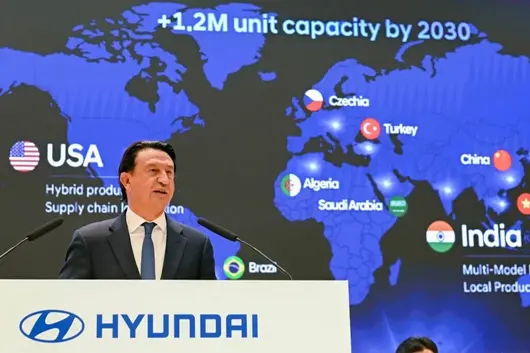
Hyundai Motor Company continues to expand capacity in North America and India, strengthen hybrids, and plans to launch its first batch of extended range models starting from the first half of 2027. Kia, in addition to expanding pure electric and hybrid products, takes PBV dedicated vehicle business as a new growth direction. The group's common technical foundation is being used for product arrangements of different brands and markets. Source: Hyundai Motor 2026 Investor Day Announcement, Kia 2026 Investor Day Announcement
What is truly difficult is that multiple technology routes require money and also require organizations to undertake.
Fuel, hybrid, pure electric, and extended range are all invested in simultaneously, old and new factories need coordination, and software, autonomous driving, and robots are vying for R&D resources. The group is promoting Pleos cockpits and software-defined cars. With related systems entering mass production, development, verification, and continuous update efficiency will accept the test of actual use.
Processes that helped it establish global scale in the past may also increase time and costs in new competitions. The more regional businesses there are, the more important unified architecture is; the greater market differences, the more important local autonomy is. How to divide work between the two is something global automotive companies must repeatedly adjust in the future.
Hyundai Motor Company set a sales target of 5.55 million vehicles and an operating profit margin target of over 9% for 2030; Kia set a sales target of 4.13 million vehicles and a 10% operating profit margin target. The combined sales volume targets of the two companies are approximately 9.68 million vehicles. Achieving these targets requires improving product structure, costs, and capacity utilization simultaneously. Source: Hyundai Motor Target, Kia Target
If Chinese competitors continuously improve cost-performance ratios, and Hyundai and Kia can only increase discounts, scale targets and profit targets will constrain each other. Sharing technology and procurement can spread investment but cannot replace each brand establishing a purchase reason in the local market.
Hyundai and Kia have previously proven they are good at absorbing external capabilities and putting these capabilities into their own global systems. The next step, they still need to prove whether they can create new product experiences faster. The task for Chinese car companies is to make the already formed innovative capabilities continue to hold in different regulations, cultures, and digital ecosystems.
Therefore, what Hyundai Motor Group is most worth Chinese car companies learning is how to let an enterprise growing from a local base continue to operate in many countries, letting local users be willing to buy, use for a long time, and choose it again. This capability needs to be implemented in products, factories, suppliers, channels, and every after-sales service.
And the new exam question China gives is, when the technical and experience standards of automobiles are increasingly formed in China, can it bring these changes into the global system in time.
Hyundai and Kia have already proven how to become a global car company, next they still need to prove how to continue to do well as this group after cars are redefined.

Yueda Kia recently announced its market performance for August 2026, with sales reaching 19,588 units in that month, while cumulative sales from January to August climbed to 162,734 units. At the same time, the brand produced 20,600 vehicles in August, with the total production for the first eight months stable at 167,600 units. Behind this achievement is Yueda Kia's long-held "user-centric" development philosophy, as well as continuous product iteration and optimization addressing the actual needs of Chinese consumers.


While deepening its presence in the local market, Yueda Kia is also accelerating its overseas export strategy, forming a positive pattern of coordinated domestic and export development. Since launching export business in November 2018, the brand's cumulative vehicle exports have exceeded 650,600 units, generating export sales of over $7.22 billion. Its export product matrix consists of six models: EV5, Sportage, Seltos, K5, Sonet, and Rio, with market coverage spanning 92 countries and regions worldwide including Australia, Mexico, Saudi Arabia, etc. Additionally, Yueda Kia has also made achievements in the parts export sector, with cumulative engine exports reaching 544,110 units, mainly sold to countries such as South Korea, Russia, Czech Republic, Slovakia, Vietnam, Malaysia, India, Kazakhstan, Turkey, and Uzbekistan.


Of note is that the all-new Kia Seltos has recently been officially launched to the market. The model offers six configuration options, with an official guiding price range of 109,900 yuan to 149,900 yuan, and a fixed-price promotion has been introduced, reducing the selling price to 79,900 yuan to 119,900 yuan. The new car is built on the advanced 3rd generation i-GMP platform, offering two front-wheel-drive options in the powertrain: the first is a 1.5L naturally aspirated engine paired with an IVT intelligent continuously variable transmission, capable of outputting a maximum power of 115 hp and a peak torque of 144 N·m; the other is a combination of a 1.5T turbocharged engine and an 8AT automatic transmission, with its maximum power increased to 200 hp and peak torque reaching 253 N·m, to meet the driving performance needs of different consumers.

On September 8, Yueda Kia announced August 2026 sales data: sales volume was 19,588 units; cumulative sales for January to August were 162,734 units; August production was 20,600 units, with cumulative production for January to August totaling 16,700 units. Sales levels are comparable to joint venture brands such as Honda and SAIC-GM Buick at this stage. Although Yueda Kia's "presence" as a joint venture brand is not very strong, its market performance has shown a contrasting change.

Regarding exports, Yueda Kia started its export business in November 2018, making it one of the earlier joint venture automakers to explore overseas markets. As of now, Yueda Kia has cumulatively exported 650,600 complete vehicles, with export value exceeding $7.22 billion; the product lineup consists of Seltos, Sportage, Sonet, Ray, K5, and other models, serving 92 countries and regions including Australia, Mexico, and Saudi Arabia.
Furthermore, Yueda Kia exports not only complete vehicles but also engines. Its engine export sales volume is 544,110 units, targeting countries such as South Korea, Vietnam, India, Malaysia, Kazakhstan, Uzbekistan, Turkey, and Russia.
Kia Automotive belongs to the Hyundai Motor Group. In the first half of 2026, the Hyundai Motor Group ranked third with sales of 3.579 million units.

Whether the concept of joint-venture car manufacturing is right or wrong, whether it is conservative or sluggish, perhaps it cannot be easily concluded; although the momentum of independent brand rise is very strong, the top five in the global auto sales ranking for the first half of 2026 are still established international automakers. Apart from Hyundai Motor Group, the other four are Toyota, Volkswagen, Stellantis Group, and General Motors; Suzuki and Nissan, which were not highly expected, are also among the top ten; of course, BYD, Geely, and Chery, three local automakers, are also on the list, but their total sales are slightly lower than Toyota's.
Cars, as one of the most complex industrial products, seem to still require sufficient accumulation.
Moreover, new energy vehicles are not yet the only option, whether in the global market or the local market. For a considerable part of car consumers, fuel-powered vehicles are still an irreplaceable option. Therefore, joint venture cars like Yueda Kia that persist in the fuel-powered vehicle camp while gradually advancing the electrification of automotive products are actually more worth attention.
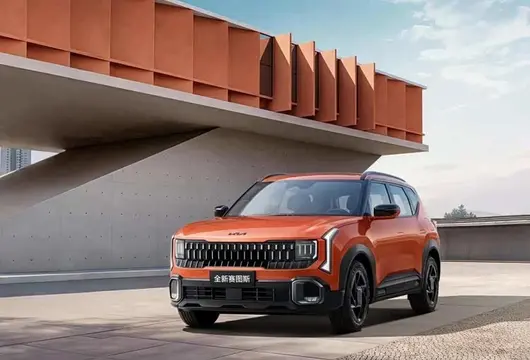
Among the new cars launched recently, the most eye-catching one is Yueda Kia's all-new Seltos.


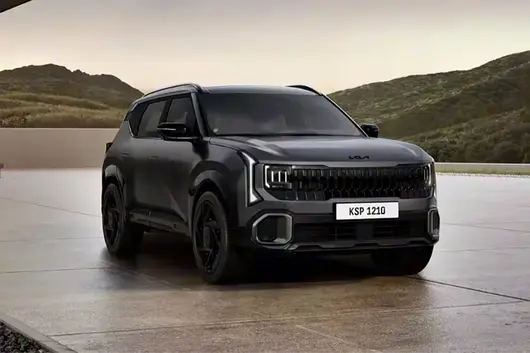
The facelifted Kia Seltos has good design aesthetics, appearing to have strong sportiness and fashion sense, embodying a "urban trendy SUV" vibe; additionally, the vehicle utilizes a high-computing chip, and its infotainment intelligence level does not lose to any new energy vehicle in the same class, even supporting some small games. At the same time, the vehicle is equipped with an L2-level assisted driving system. Only the low-spec version uses ordinary cruise control, and the cockpit design is also unique.


Regarding power, this car provides two series options: 1.5L and 1.5T.
The 1.5L version is matched with a CVT transmission. Its maximum power of 84.4kW can satisfy daily commuting; the limited-time price for this series is 79,900 to 99,900 CNY. The 1.5T version is matched with an 8AT transmission. Its maximum power reaches up to 147kW, possessing a high level among engines of the same displacement; the limited-time price for this series is 99,900 to 119,900 CNY.
Such a compact SUV is still a good family car option.


Recently, Yueda Kia announced that August sales reached 19,588 units, with cumulative sales from January to August reaching 162,734 units. August vehicle production was 20,600 units, with cumulative production from January to August at 167,600 units, demonstrating steady development resilience. This is mainly due to Yueda Kia always adhering to the business concept of "user-centric", iterating products continuously around Chinese users' mobility needs, creating more diversified and smarter new mobility experiences for consumers with high-quality, high cost-performance products.

The all-new Kia Seltos launched on August 26 is a representative masterpiece tailor-made by Yueda Kia for Chinese users. As a global heavyweight model for Kia, the all-new Seltos, based on inheriting Kia's unified global quality, aims to build the "Smartest Fuel SUV", deeply combining Chinese users' smart mobility needs. It features a standard 27-inch ultra-wide thin screen and Qualcomm Snapdragon 8295P flagship chip across the entire series. It includes popular local apps like iQIYI, QQ Music, Douyin, and Changba, paired with BOSE premium sound and Dolby Atmos, creating an immersive entertainment cabin integrating "Mobile Game Hall", "In-Car KTV" and "Private Cinema", allowing users to experience smart features comparable to new energy vehicles on fuel cars; Additionally, the all-new Seltos boasts a golden powertrain system of 1.5T+8AT rarely seen in its class, a 2,690mm wheelbase the longest in its class, flexible and practical transformable space, and grade-climbing comfort and convenience configurations. With full-spec strength, it brings high-quality mobility experiences beyond the class level, and with nationwide "fixed price" starting at 79,900 yuan, it redefines the value benchmark for joint-venture SUVs, bringing a more efficient and transparent super-value car buying experience!

At the same time, to further lower the threshold for users to purchase cars, Yueda Kia also provides a time-limited "Six Major Full-Configuration Purchase Gifts" with a value of up to 24,000 yuan, specifically including: 3 years interest-free upon 0 down payment purchase, 3,000 yuan trade-in subsidy, time-limited extra gift of specified exterior color or 12,000 brand APP points, 5 years unlimited data free, 2,888 yuan powertrain warranty extended to 10 years 200,000 km for 888 yuan (first non-commercial owner), test drive lottery to win up to 5,000 yuan purchase voucher, providing whole-cycle user care from purchasing to using, making car buying easier and car using worry-free!

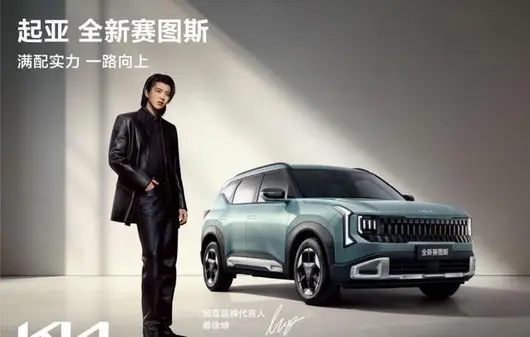
Worth noting is, in order to return to the vision of young Chinese consumers and establish a deeper emotional resonance with them, on August 20, Kia announced Cai Xukun as "Kia Brand Spokesperson", which is also the first time Cai Xukun endorses an automobile brand. As a pioneer musician in the Chinese and world music scenes, Cai Xukun's personal proposition of "Being the Protagonist of Your Own Life" highly aligns with Kia's brand concept of "Follow Your Heart", both encouraging users to stay true to their hearts and proceed with determination on the road of life, making Kia and Cai Xukun's mutual pursuit surpass traditional commercial endorsements, becoming a valuable spiritual dialogue, jointly interpreting the value resonance of staying true to self and becoming the protagonist.

As the first all-new model endorsed by Cai Xukun for Kia, the full-spec strength of the all-new Seltos and its undefined product core align with Cai Xukun's image of bold breakthrough and enterprising advancement. Both are continuously advancing in their respective fields, jointly interpreting the undefined multi-dimensional charm. This deep spiritual resonance also makes the all-new Seltos no longer limited to a mere mobility tool, but also become a carrier for young people to express themselves, realizing the two-way transmission of product strength and spiritual value.
Similarly worth mentioning is that the series of thematic videos presented by Kia and Cai Xukun — Romantic Dream Chapter was released on August 26, receiving enthusiastic market feedback; on September 7, the Handsome Charm Chapter officially launched, and the Dynamic Vitality Chapter will also be launched on September 18, fully presenting the attitude proposition of "Being the Protagonist" with the all-new Seltos and Cai Xukun. For more details, please follow Kia's official accounts on WeChat Channels, Weibo, etc.
At the same time, the immersive fan support launch event is booming. Everyone can not only taste the new car at zero distance on-site and experience the interesting smart cabin, but also participate in exclusive support activities together. Checking in can get surprise gifts, jointly experiencing the undefined multi-dimensional charm interpreted by the all-new Seltos and Cai Xukun. Currently, Urumqi, Changsha, Harbin, Guangzhou, and Tangshan are conducting mall displays, which will continue until September 13; from September 12 to September 27, fan support activities will also continue to land in Jinan, Chongqing, Qingdao, Suzhou, Wuhan, Wuxi, Shanghai, Nanjing, etc. core business districts in 20 cities. For more activity details, please follow Kia official accounts on WeChat Official Account, Weibo, etc. or consult Kia authorized dealers.
In addition, from September 11 to September 20, the all-new Seltos new car tour event will also continue in Yancheng, Jinan, Shenyang, Lhasa, Lanzhou, Ningbo, Xiangshan, Hefei, and Zhengzhou 9 cities, allowing consumers to personally experience the outstanding charm of this global star SUV at their doorstep.

Whether it is the product value of full-spec strength, or the 79,900 yuan starting non-traditional "nationwide fixed price", super-value "six major full-configuration purchase gifts", and jointly releasing the value proposition of "Being the Protagonist of Your Own Life" with Cai Xukun, all show Kia's full sincerity for Chinese users. Kia also hopes to re-link Chinese consumers through the all-new Seltos, become a companion on their life's road, and drive towards a new stage of life together!
On September 1, the 2027 model year Kia K3 also welcomed its launch, offering 5 models, official guide price 97,300 yuan - 115,300 yuan, direct price drop of 15,600 yuan across the series. Among them, the 1.5L Comfort Premium Edition "nationwide fixed price" is only 69,900 yuan. The new car inherits the K3's reliable and durable classic quality, comfortable and convenient driving experience, and high quality-value product value, equipped with multiple advanced comfort and convenience configurations, bringing higher quality mobility experience for Chinese users.
At the same time, to give back to the trust of vast Chinese users, Yueda Kia also launched multiple exclusive purchase rights, including time-limited 500 yuan down payment to enjoy 3,000 yuan expansion rights upon ordering, 1-5 years 0 down payment starting 0 interest or low interest (financial interest subsidy up to 7,500 yuan), 4,500 yuan trade-in subsidy, 2,000 yuan fuel card gift for targeted groups (fresh graduates/ new couples/ newborn families/ educators/ medical staff/ media practitioners), 5 years 5 times basic maintenance material free, further lowering the threshold for consumers to purchase cars.

Believing that with the arrival of the all-new Seltos and the 2027 model year Kia K3, relying on comprehensive advanced product power and transparent fixed price system, it will also further enhance market competition advantages, injecting new power for the brand sales' continuous growth.
Finally, similarly worth noting is, in the latest 2026 China Vehicle Dependability Study SM (VDS) released by global authoritative consumer insight and market research institution JD Power on August 20, Kia was awarded Top 10 for Vehicle Reliability in the mainstream vehicle market. This authoritative recognition further confirms Yueda Kia's adherence to quality and deep cultivation on product level, and also continuously fortifies the foundation for the brand market sales steady upward.
At the same time, Yueda Kia steadily promotes overseas export business, the development trend of domestic and export sales developing side by side is further consolidated. Since starting export business in November 2018, Yueda Kia cumulative export of vehicles exceeded 650,600 units, export sales revenue exceeded 7.22 billion US dollars, constructing an export matrix composed of EV5, Sorento, Seltos, K5, Sonet, and Solus 6 models, export coverage covering Australia, Mexico, Saudi Arabia, etc. global 92 countries and regions; cumulative export of engines 544,110 units, export sold to South Korea, Russia, Czech Republic, Slovakia, Vietnam, Malaysia, India, Kazakhstan, Turkey, Uzbekistan and other countries.

For Yueda Kia, not only want to be a leader of technology, but also want to be a long-term partner users trust. In the future, Yueda Kia will continue to adhere to the business concept of "user-centric", fulfill the solemn promise of "In China, For China" with solid actions, creating a more warm and higher value mobile life for Chinese users.
-End-

This is the most professional and authoritative Korean car and Korean car market series content on the entire web, [Korean Series Trends] Issue 1831
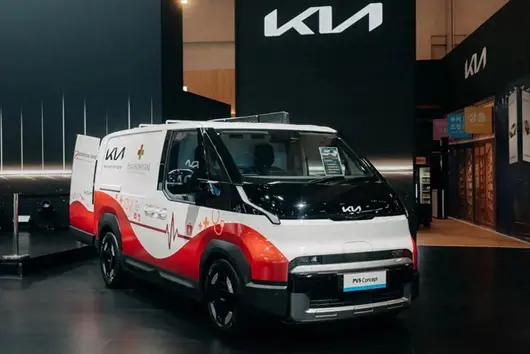
Hyundai Motor Group exhibited a specialized medical demonstration vehicle modified from the Kia PV5 long cargo version at the Indonesia International Motor Show GIIAS held from the 30th of last month to the 9th of this month.

This PV5 medical demonstration vehicle, equipped inside with patient folding beds, medical seats, ECG monitoring equipment, etc., can conduct consultations and health checkups; relying on the V2L external discharge function, it supplies power to medical equipment anytime, anywhere.
Hyundai Motor Group plans to, starting from the end of this year, in Jakarta BSD Smart City (Bumi Serpong Damai), in conjunction with Indonesian urban development company Sinar Mas Land (Sinar Mas Land), comprehensive medical institution Eka Hospital (Eka Hospital), utilize this vehicle to carry out mobile medical service demonstration projects.

Hyundai Group has noted that BSD city has structural livelihood challenges: medical resources are concentrated in a few locations, residents without private cars find it difficult to reach medical institutions, making medical treatment very inconvenient.
To solve this pain point, Hyundai Motor Group has created a door-to-door roaming medical model: PV5 vehicles enter residential communities, shopping centers, sports venues, and other places with concentrated population, providing consultation and checkup services on the spot.

Three-party division of labor: Hyundai Motor Group provides PV5 vehicles and is responsible for overall project operations; Sinar Mas Land (Sinar Mas Land) provides BSD community housing, public venues, and other infrastructure; Eka Hospital (Eka Hospital) is responsible for dispatching medical personnel, operating medical equipment, and providing diagnosis and treatment services.
Through this medical demonstration project in Indonesia, Hyundai Motor Group hopes to improve the accessibility of medical care for local residents and verify the feasibility of medical services based on mobility carriers landing. At the same time, it builds a smart city service model integrating living, transportation, and medical infrastructure, with future plans to expand this business to other ASEAN countries.

Hyundai Motor Group stated: "Indonesia holds a very high strategic position in the ASEAN market. As an intelligent mobility solution provider, we will work with local partners to actively promote smart city business in the ASEAN region."


Data from the China Passenger Car Association shows that in the first half of this year, domestic passenger car retail sales accumulated 8.75 million vehicles, a year-on-year decline of 20%; the fuel vehicle market encountered an "avalanche", with June retail sales plummeting 39%. The "price war" ran throughout the year, significantly compressing industry profit margins.
Amid widespread gloom, a car company submitted a "different" performance report: June sales reached 257,900 vehicles, a 15.8% month-on-month increase and 11% year-on-year increase, breaking through 20,000 vehicles monthly for 3 consecutive months; cumulative deliveries in the first half reached 118,100 vehicles, achieving both year-on-year and month-on-month growth for 2 consecutive months. It is not a new force, nor a local independent brand, but Yueda Kia.
If we elevate our focus to a global dimension, Kia's market performance is even more shocking. In the first half of 2026, Kia's global cumulative sales reached 1.631 million vehicles, a year-on-year increase of 2.7%, setting a new high for the first half of the year. Among them, Sportage and Seltos ranked first and second globally with 303,200 and 177,200 vehicles respectively.
Global Quality: Entering an Upward Channel

On one side is the high-singing march in the global market, on the other is the counter-attack in the Chinese market. Nowadays, Yueda Kia has already changed its thinking mode: through measures such as strengthening brand image, improving product competitiveness, expanding service channels, and optimizing user experience, showing a steady development momentum and strong corporate resilience.
In the first half of this year, Yueda Kia was the first to launch a nationwide "One-Price" car purchase policy, returning pricing power to the brand so that consumers can enjoy the bottom price upon entering the store. Taking the new Kia Sportage with global cumulative sales exceeding 8 million vehicles as an example, the "One-Price" launched in April is as low as 109,900 RMB, and the main selling model 1.5T Prestige Edition "One-Price" is only 124,900 RMB.
In addition, multiple benefits such as fuel card subsidies and purchase tax reductions have also been implemented. In return for Chinese consumers with super-value car purchase plans, Yueda Kia has effectively lowered the threshold for car purchase, making prices more transparent. Benefiting from this, the sales of multiple star models of Yueda Kia increased significantly compared to the same period last year, which also confirms the effectiveness of its nationwide "One-Price" strategy.
It is worth mentioning that the new Kia Sportage, inheriting the 33-year history and 5 generations of "Sportage", has realized 13 configuration upgrades compared to the old model in terms of styling design, space experience, smart technology, safety configuration, etc., further meeting Chinese users' needs for more comfortable and smarter travel.
Even more surprisingly, after launching for more than 100 days, the new Kia Sportage has "zero customer complaints" on new car quality. This is not relying on luck, but the power of quality control, fully confirming Yueda Kia's excellent product quality, while also highlighting Yueda Kia's third factory's globally leading manufacturing standards and quality control strength.
As a global core production base of Kia, Yueda Kia's third factory fully benchmarks against international first-class manufacturing standards, introducing advanced tools such as Kia Global Quality Management System (GQMS), MES manufacturing execution system, IQIS production completion system, etc., building a lifecycle quality management system covering R&D, manufacturing to after-sales.
"Global Quality" is the standard carved into every screw nut of Yueda Kia: using high quality, high intelligence, and high value to respond to Chinese users' diverse expectations for quality travel; relying on the globally unified R&D and manufacturing system and rigorous verification processes, letting domestic and overseas consumers share identical car-building strength.
Dual Drive: Running a Growth Curve

Domestic sales and export sales moving forward side by side is the main theme of Yueda Kia's development in the first half of this year. As of now, Yueda Kia has exported over 617,000 vehicles in cumulative, export sales exceeding 6.79 billion US dollars, building an export matrix composed of EV5, Sportage, Seltos, K5, Sonet, and Rio, covering 91 countries and regions including Australia, Mexico, Saudi Arabia, etc.
Engine exports were also accomplished with remarkable achievements. In June 2026, Yueda Kia exported 7,491 engines, accumulating exports of about 531,000 units, mainly sold to countries such as Russia, Czech Republic, Slovakia, South Korea, Vietnam, Malaysia, India, Kazakhstan, Turkey, etc.
Domestic sales stabilizing the basic block, exports opening the ceiling, this "Dual Drive" pattern can not only hedge against the price war competition pressure in the domestic existing market but also rely on scaled exports to reduce manufacturing costs, forming a steady growth loop of internal and external markets feeding each other and risk dispersion, becoming the core confidence of Yueda Kia's counter-trend racing.
In addition to holding the two growth curves of domestic stock deep cultivation and global incremental blue ocean, Yueda Kia also has remarkable achievements in channel ecosystem construction. On one hand, continuously deepening cooperation with large dealer groups represented by United Crown, Lan Chi, Jiangsu Zhixing, Guoao, Zhongchi, etc.; on the other hand, continuously strengthening the service network and promoting the downscaling of standard services.
In the first half of this year, amidst an environment of fierce price wars and continuous news of dealer network exits, Yueda Kia added 28 outlets, especially the first global SI 2.0 standard flagship store built in Guangxi with Changle Group in April, which filled the blank of high-quality travel services in the Guangxi region.
Healthy channels are the foundation of Yueda Kia's sustainable growth; while improvement in service is also one of the decisive battlefields. In the first half of this year, Yueda Kia continuously optimized the pre-sales, during-sales, and after-sales full-stage service ecosystem. In pre-sales and during-sales links, focusing on optimizing customer experience around key touchpoints such as store arrival experience, trial ride, and signing delivery; in the after-sales link, mainly focusing on service management system upgrade, service quality control optimization, service facility implementation, improving service experience.
Sports Marketing: Localization Emotional Connection

Looking at Kia's sports marketing, it exactly forms a subtle mirror echo with its domestic and foreign sales dual-wheel drive logic. In 2026, the 2026 USA-Canada-Mexico World Cup is in full swing. As an official partner cooperating with FIFA for nearly 20 years, Kia sponsored 660 operating vehicles for this event.
In addition, it also brought a series of "World Cup Joint Gifts" for Chinese consumers, and provided purchase tax subsidies and oil card/electric card gifts, etc., for the 3 "One-Price" models New Sportage, K3, and Kia Xing, showing full sincerity for Chinese consumers. This move directly converts sports heat into store traffic, making the whole chain natural.
It is worth mentioning that as a FIFA partner for 20 years, Kia has the exclusive right to select official ball boy ball girls globally. In the knockout stages of this 2026 USA-Canada-Mexico World Cup, 11-year-old girl Liu Shuying appeared as the only Chinese official ball boy/girl, becoming a vivid vignette of Kia opening up global sports resources and building a bridge for cultural exchange between Chinese and foreign teenagers.
Global IP is not label-style sponsorship, but perceivable rights implementation. The moment Kia precisely lands this scarce right of ball boy selection on Chinese people, it completes the identity translation from sponsor to dream maker, letting consumers feel the temperature of the brand.
In addition to integrating global top-tier event resources, Yueda Kia also actively cultivates China's local sports events. To date, Yueda Kia has sponsored Yancheng Marathon for 6 consecutive years and been the main sponsor of the "Jiangsu Super League" Yancheng team for 2 consecutive years, extending the brand temperature to every participant inside and outside the arena.
Local events are not participation in the form of making up numbers, but emotional anchors of regional deep cultivation. As the base of Yueda Kia, Yancheng, the essence of deep cultivation of local events is doing "Community Brand Assets", thereby realizing localization emotional connection.
Epilogue: Waiting for the Wind, Better to Be the Wind
In the first half of 2026, the Chinese auto market's cold air was chilling, but Yueda Kia told the industry with a performance report of "concurrent year-on-year and month-on-month double growth": true long-termism is not waiting for the wind, but becoming the wind.
From the record half-year sales of 1.631 million vehicles globally to the counter-attack in the Chinese market; from the nationwide "One-Price" reshaping consumer trust to export business opening the growth ceiling; from the manufacturing heritage of global quality to the worry-free service experience of the full cycle - Yueda Kia's combination of these sets of moves supports the enterprise to walk out of the trough and build a solid growth chassis.
Deeply cultivated the Chinese market for 24 years, Yueda Kia has accumulated trust from over 6.85 million users. In the future, Yueda Kia will continue to refine in dimensions such as brand value, product quality, channel network, service experience, etc., bringing travel experiences far beyond expectations to more Chinese consumers.

Recently, Kia China announced that sales in June 2026 reached 25,791 units, with a month-over-month growth of 15.8% and a year-over-year growth of 11%. Single-month sales exceeded 20,000 units for 3 consecutive months, and cumulative sales from January to June reached 118,114 units. In the first half of this year, facing the overall downward pressure in the auto industry, Kia China firmly implemented the "In China, For China" strategy. Through measures such as strengthening brand image, improving product competitiveness, expanding service channels, and optimizing user experience, it achieved double growth in sales year-over-year and month-over-month for 2 consecutive months, showcasing steady development momentum and strong corporate resilience.
Meanwhile, facing the environment of overall pressure in the global auto market, Kia's global sales in June reached 295,720 units, and cumulative sales in the first half reached 1,630,988 units, growing 2.7% year-over-year against the trend, setting a new high for first-half sales again! Among them, Sportage and Seltos ranked first and second in Kia's global single-model sales with 303,203 units and 177,148 units respectively.

Currently, the 2026 US-Mexico-Canada World Cup is in full swing. As an official partner cooperating with the International Football Federation (FIFA) for nearly 20 years, Kia not only sponsored 660 operational vehicles for this tournament but also brought a "World Cup Co-branded Gift" to Chinese consumers: Consumers who visit the store for a test drive before July 31 can participate in the lottery to win prizes such as a purchase voucher worth up to 5,000 yuan, a Kia x World Cup x Adidas merchandise set; sharing test drive experiences, one can also receive a limited edition Kia x World Cup x Adidas official football. At the same time, Kia also provided a 2,500 yuan purchase tax subsidy for 3 "Fixed Price" models: New Sportage, K3, and Sonet, and gifted a 2,000 yuan fuel card / electric card to customer groups including university graduates, newlyweds, newborn families, as well as faculty, medical staff, media practitioners, etc., fully demonstrating full sincerity towards Chinese consumers.
It is worth mentioning that as a partner of the International Football Federation (FIFA) for nearly 20 years, Kia possesses exclusive rights to select official ball boys and girls globally. For this World Cup, Kia selected 104 teenagers aged 10 to 14 to serve as ball bearers globally. On July 3, the 2026 US-Mexico-Canada World Cup Knockout stage Round of 16 match between Spain and Austria was held at Los Angeles Stadium. Under the cheers of tens of thousands of fans, 11-year-old girl Liu Shuying, the only Chinese official ball bearer of this World Cup, walked onto the green field with world's top players and personally handed the match ball to the referee's hands.

In the first half of this year, from the nationwide "Fixed Price" car purchasing policy launched at the beginning of the new year to fuel card subsidies, purchase tax reductions, and multiple privileges successively implemented, Kia China continued to reward Chinese consumers with super-value car purchasing plans, effectively lowering consumers' car buying threshold, making prices more transparent, and car buying more worry-free. Thanks to a series of super-value car purchasing policies, sales of Kia's star models grew significantly compared to the same period last year. This also validates Kia's reliable global quality, excellent driving and riding comfort, outstanding fuel economy, and other advantages, which are winning recognition and trust from more and more Chinese consumers.

In addition to actively integrating global top-tier event resources, Kia China also deeply cultivates domestic Chinese sporting events. In the first half of this year, Kia China has sponsored the Yancheng Marathon for 6 consecutive years and became the main sponsor of the "Jiangsu Super League" Yancheng Team for 2 consecutive years. Not only providing all-round support for Yancheng local events, it also organized official volunteer shuttle fleets, invited children from special groups to watch Jiangsu Super League matches, planned the "Little Ball Boy Dreams Come True" Program, and created exclusive experience activities for car owner families such as free viewing, factory visits, new car test drives, extending the brand warmth to every participant inside and outside the venue, continuously conveying a positive and warm brand image.
In terms of products, Kia China combined Kia's global quality and China's intelligent technology advantages, using high-quality, high-intelligence, and high-value products to respond to Chinese users' diverse expectations for quality mobility. In April this year, the "Global Urban SUV Pioneer" with global cumulative sales exceeding 8 million units, the New Sportage from Kia, was relaunched. The new car inherited "Sportage"'s 33-year history and 5 generations of models' reliable quality, comprehensively improving in styling design, space experience, intelligent technology, safety configuration and other dimensions. The "Renewed Fixed Price" starts from as low as 109,900 yuan, and the main-selling 1.5T Prestige Edition "Fixed Price" is only 124,900 yuan. Compared to the old model, 13 configuration upgrades were implemented, further meeting Chinese users' needs for more comfortable and intelligent mobility.

It is worth noting that the Kia New Sportage has been on the market for over 100 days and still maintains the excellent result of "zero customer complaints" for new car quality. This not only proves its solid product quality but also highlights the world-leading manufacturing standards and quality control strength of Kia China No. 3 Factory. As Kia's global core production base, Kia China No. 3 Factory fully benchmarks against international first-class manufacturing standards, introducing advanced tools such as Kia Global Quality Management System (GQMS), MES Manufacturing Execution System, and IQIS Production Finish System, building a full lifecycle quality management system covering R&D, manufacturing to after-sales. It is precisely by embedding rigorous quality control standards throughout the entire production process that at the "2026 China Automotive Product Quality Trend Symposium" jointly hosted by China Auto Quality Network and Kearney Consulting, Kia China No. 3 Factory was rated as "2025 Automotive Quality Excellence Factory", highlighting its benchmark status in manufacturing quality among joint-venture enterprises.

It is also worth mentioning that on June 5, at the Israel "2026 Annual Car" selection, the Kia New Sportage stood out among competitors and won the "Annual Compact SUV" award, validating its comprehensively advanced product value and leading product power in the same class again!

In terms of channel construction, Kia China persisted in promoting the expansion and improvement of terminal channels, continuously deepening cooperation with large dealer groups represented by United Crown, Blue Pool, Jiangsu Zhixing, Guoao, Zhongchi, etc., strengthening service networks and promoting the deployment of standard services. In the first half of this year, Kia China partnered with partners to add 28 new outlets. In particular, the first Global SI 2.0 Standard Flagship Store jointly built by Kia and Longjiu Group in Guangxi since April this year not only filled the gap in high-quality mobility services in the Guangxi region but also brought efficient and convenient comprehensive service experiences to local users.

For a long time, Kia China has always regarded customer service as the cornerstone of the brand's long-termism. In the first half of this year, relying on globally unified high-quality service standards, Kia China continuously optimized the service ecosystem covering pre-sales, in-sales, and after-sales stages, creating high-quality service experiences for the full lifecycle. In pre-sales and in-sales stages, Kia China optimized customer experiences around key touchpoints such as store visits, test drives, signing, and delivery, gaining wide trust from consumers and industry authoritative institutions. In the 2026 China Purchase Customer Experience Index Research SM (PXI) released by J.D. Power, Kia scored 806 in Purchase Customer Experience Score, ranking fourth in mainstream traditional energy brands and second in joint-venture brands, continuously entering the top five mainstream brands and top two joint-venture brands of this list, showcasing deep accumulation and leading strength in user service and car buying experience fields.

(Source: J.D. Power China Purchase Customer Experience Index Research SM (PXI))
In the after-sales service field, Kia China continuously brought more efficient and higher-quality service experiences to users around service management system upgrades, service quality control optimization, service facility implementation, and application. At the same time, by regularly holding Service Consultant Skills Competitions and Maintenance Technician Skills Competitions, Kia China continuously improved the service level of its service teams through the method of "promoting skills through competition, service upgrade". At the 12th Kia Global Skills Competition held this year, Maintenance Technician Guo Wenlei from Jinan Jinwantong Store won the overall silver medal of the competition, fully demonstrating Kia China's maintenance technicians' solid professional foundation and excellent service capabilities.

In the first half of this year, Kia China continued to consolidate the development pattern where domestic and foreign sales progressed together and continuously expanded global export business. To date, Kia China has cumulatively exported vehicles exceeding 617,000 units, with export sales exceeding 6.79 billion US dollars, building an export matrix consisting of 6 models including EV5, Sportage, Seltos, K5, Cerato, and Rio, covering 91 countries and regions worldwide including Australia, Mexico, Saudi Arabia, etc. Engine exports also achieved remarkable results. In June, 7,491 units of engines were exported, with cumulative exports of about 531,000 units, sold to countries such as Russia, Czech Republic, Slovakia, South Korea, Vietnam, Malaysia, India, Kazakhstan, Turkey.

In addition, in the environment of overall volatility and adjustment in the auto industry, Kia China firmly implemented the people-oriented long-term development philosophy, focusing on building a workplace culture of harmony between enterprise and employees, mutual empowerment. At the Jiangsu Provincial Corporate Culture Excellent Results Launch Event held in April this year, Kia China won the "2024-2025 Jiangsu Provincial Corporate Culture Excellent Results First Prize" with the project "Building a New Communication Engine to Achieve Cultural Aggregation and Leap" for systematic innovation and excellent results in the field of corporate culture, becoming a benchmark example for corporate culture construction in joint-venture enterprises.
Deeply cultivating the Chinese market for 24 years, Kia China has cumulatively gained the trust of over 6.85 million users. In the future, Kia China will firmly implement the "In China, For China" development strategy, continuously improve in dimensions such as brand value, product quality, channel network, and service experience, bringing travel experiences far exceeding expectations to more Chinese consumers.