首頁J.P. Morgan

搜尋歷史
熱門搜尋
經銷商登入 / 註冊

Recently, JPMorgan released a 58-page "China Auto Industry 2027" report, which was recently circulated wildly in the automotive community. It didn't offer positive vibes to the China car market, but instead poured cold water: domestic passenger car retail sales in 2027 might continue to decline, the price war isn't over, and European tariffs and non-tariff barriers are lining up at the door. More heart-wrenching is that the report downgraded ratings for BYD, Geely, Xpeng, and Leapmotor, yet still said BYD is the toughest fighter. Contradictory? No—the second half of the car market competition isn't about who sells more, but who can still make money and retain cash flow. This article only deconstructs the report logic and does not constitute investment advice.

1. A Drop in Sales Isn't the Worst Pain
First, look at demand. In the report model, passenger car retail sales will be about 24 million units in 2025, possibly dropping 21% to 18.96 million units in 2026, and dropping another 5% to 18.01 million units in 2027. The wholesale side, supported by exports, will drop 5% in 2026 and only 1% in 2027. These numbers act like a knife, slicing open "hot production" and "cold consumption": factories can support wholesale via exports, but if domestic consumers don't spend, terminals will continue to squeeze water. JPMorgan provided two scenarios: if the government continues stimulus, sales remain roughly flat; if subsidies phase out, sales drop about 5%. The base forecast assumes policy support, but analysts remain cautious. My judgment is that in 2027, what to watch most isn't "new models launched", but the speed of capacity clearance. If capacity doesn't decrease and demand doesn't rise, inventory will become stones pressing on dealers and automakers. Sales decline is just a symptom; overcapacity is the root cause.

2. Price Wars Thin Profits
The profit picture looks even worse. The report estimates that actual transaction prices still average a 15%-16% discount relative to guide prices, though slightly lower than the 17% high point in the first half of 2025, it is still "hard discounts trading price for volume". More troubling is that new models, smart driving, and cabin chips require continuous burning of cash. As selling prices go down, R&D and marketing go up, revenue growth and profit growth decouple. JPMorgan added another blow: DRAM and NAND prices might rise over 20% in 2027; the deeper the intelligence, the more sensitive automakers are to memory chips. As of the report release, market profit forecasts for China's auto industry have been adjusted down over 40% this year, but JPMorgan's profit forecasts for 2026-2027 are still 10%-11% lower than consensus. Translation: Everyone has already cut once, but it thinks another cut is needed. Dealers shouldn't hide either; inventory turnover relies on short-term loans. Slow sales, falling prices mean a double blow to cash flow and inventory value. Price wars today aren't about who is cowardly who loses, but who collapses the income statement first.

3. European Tariffs Are Just Appetizers
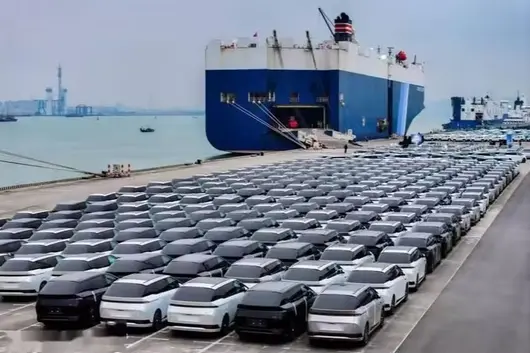
Overseas markets are the growth engine and also a new minefield. China brands' market share outside China surged from 1.5% in 2020 to 8.2% in the first seven months of 2026; overseas PHEV share is about 44%, pure electric 23%, and HEV about 5%. This achievement is fierce, but Europe has started to ramp up pressure: countervailing taxes on China-made pure electric vehicles started in October 2024, and JPMorgan expects trade defense might expand to PHEV by the end of 2027. After mid-2027, relevant entry requirements for the "Industrial Accelerator Act" will gradually take effect; localization production, procurement, minimum selling price, and quotas might all be put on the table. Export VAT refund adjustment adjustments were also listed as risks, but the report explicitly stated they were not officially announced at that time. The solution isn't continuing hard exports, but localization: BYD bets on Thailand, Brazil, Hungary; Geely leverages partners; Leapmotor uses the Stellantis network; Chery deploys Malaysia, Spain, Brazil. My view: Going overseas moves from "selling cars phase" to "building factories phase". Whoever can land supply chain, compliance, and costs together will have a second growth curve.
Conclusion: The harshest part of this report isn't forecasting another 5% drop in sales for 2027, but dragging the industry valuation anchor from the "sales list" to the "income statement". If anti-involution only targets low prices without solving overcapacity, price wars will return in disguise. 2027 is worth watching for four things: whether terminal prices can stabilize, whether capacity can truly clear, whether Europe localization can be delivered, and whether automakers' cash flow can withstand. Don't rush to pop champagne; first see who can still keep their pants on when the tide recedes.