首頁IM LS9

搜尋歷史
熱門搜尋
經銷商登入 / 註冊

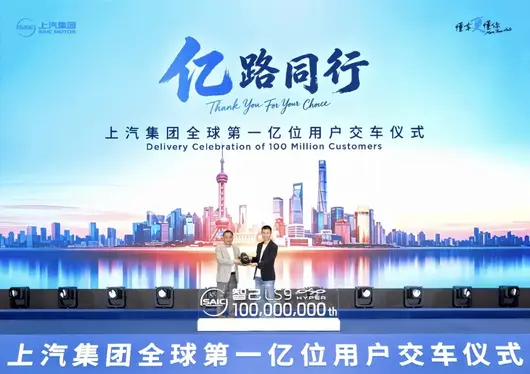
May 28, inside the Shanghai North Bund World Living Room, the atmosphere was fervent. Meanwhile, the footage on the large screen at the Chengdu Jixiang Buick branch venue, thousands of miles away, jumped in sync with the main venue. As the IM LS9 Hyper slowly drove into the center of the stage, and as Momenta CEO Cao Xudong received the car key from the Chairman of SAIC Motor, applause rang out on the scene — this was not only the moment of delivery to the 100 millionth user of SAIC Motor, but also the first time a vehicle enterprise in China's automotive industry welcomed a cumulative production and sales volume breaking 100 million vehicles.

As an automotive editor, witnessing this historical node at the Chengdu branch venue, the feeling was quite complex. Over the past few years, China's automotive market has experienced a transition from growth to stock, with price wars, elimination battles, and surging trends of going global alternating on stage. Against this broad backdrop, a local car enterprise able to cross the threshold of 100 million vehicles must necessarily possess a deep logic beyond a single product cycle or any single tech explosion.

SAIC's history almost overlaps with China's automotive industry history. In 1955, the Shanghai Internal Combustion Engine Parts Manufacturing Company was established; in 1958, workers hammered out the first "Phoenix brand" sedan with hammers. Over the subsequent seven decades, SAIC witnessed the entire process from nothing to something, from weak to strong. In 1983, the first Santana was hand-assembled off the line, opening the curtain of China's automotive joint venture cooperation, and also driving the establishment of a modern parts system.

In 1997, Shanghai GM was established, the "Shanghai Speed" of building a factory and launching cars in 23 months is still talked about by the industry to this day; the China's first joint venture professional automotive design and R&D center built at the same time marked SAIC's transformation from pure manufacturing to building technical capabilities. In 2006, the independent brand Roewe was born; in 2016, the world's first Internet car Roewe RX5 went on sale; in 2020, the high-end smart electric brand IM Motors was established. This timeline clearly outlines the evolution trajectory of a car enterprise from learning, chasing, parallel, to local leading.

But historical accumulation is just the foundation. The achievement of 100 million vehicles requires the continuous release of system capabilities. SAIC's system architecture covers six major sectors: whole vehicles, parts, mobility, services, finance, international business, and innovation technology, forming a tightly coordinated full value chain closed loop. In January-April 2026, SAIC's cumulative sales reached 1.302 million units, ranking first among China's car enterprises for four consecutive months, with independent brands accounting for nearly 70%, new energy vehicle sales reaching 412,000 units, and overseas market sales of 459,000 units, a year-on-year growth of 50.2%. These data indicate that SAIC's growth does not rely on the pulling power of a single sector, but is the result of multiple engines including independent and joint venture, passenger and commercial, domestic and overseas all working simultaneously.

Specific to the product level, the full brand matrix displayed at the delivery ceremony site was impressive. For independent brands, Shangjie Z7, Huajing S, Roewe M7, MG4 Semi-Solid State Battery Version, Wuling Starlight 560, Maxus eDeliver5, Hongyan Heavy Trucks, Yuejin Dana T1, Sunwin All-Electric Bus, Iveco Juxing EV, and other models cover full scenarios from personal travel to commercial operations, from urban logistics to public transport. Joint venture brands concentrated on displaying the results of "Joint Venture 2.0": Volkswagen ID. ERA 9X global premiere equipped with Momenta R7 Reinforcement Learning World Model, delivery exceeded 7,000 units in one month after launch; Audi E7X plans to become Audi's first global model achieving L3-level autonomous driving landing; Buick Zhijing E7 is built based on the "Xiaoyao" Super Fusion Architecture, delivery broke 10,000 units in one month after launch. From "Market for Technology" to "Technology Co-creation", SAIC's role in joint venture relationships has undergone a substantive shift.


Accumulation at the technical level is the core power supporting this system's operation. The first 100 million vehicle delivery model, IM LS9 Hyper, can be regarded as a concentrated presentation of SAIC's technical accumulation over seven decades. It is equipped with full-line drive-by-four-wheel steering first in its class, 520-line ultra-vision LiDAR, NVIDIA Thor Chip, Full-Domain 800V High-Voltage Platform, and Star Super Extended-Range System, comprehensively pre-installing redundancy capabilities for L3 and above high-level intelligent driving. SAIC Gold Badge Hurricane Tri-Motor first launch has propelled it into the Performance 3-Second Club, and the "Intrinsic Security" technology jointly premiered globally with Purple Mountain Laboratories expands the car safety boundary from traditional physical safety to the field of information and system security. It is worth noting that the 100 millionth user is exactly Momenta CEO Cao Xudong, SAIC's core strategic partner in the intelligent driving field. The intelligent driving technology deeply co-created by both parties has empowered multiple independent and joint venture brands. This coincidence of "Partner Becomes Car Owner" reflects SAIC's open and collaborative industrial philosophy in the era of smart electric vehicles.


Globalization layout is another important dimension of SAIC's system capability. As the earliest and largest representative of China's automotive enterprises "Going Global", SAIC has over 100 parts production bases and over 3,000 dealer networks overseas, building London's 3 major R&D innovation centers and Thailand, Indonesia, India, Pakistan 4 manufacturing production centers. Anji Logistics possesses 42 Ro-ro ships of various types, with 8 international routes covering Southeast Asia, Europe, and the Americas. Currently, SAIC's products and services are spread over more than 170 countries and regions, with cumulative overseas sales breaking 7 million units. MG has ranked as the European sales champion for Chinese brands consecutively for 11 years, with 2025 European annual sales breaking 300,000 units, becoming the first Chinese car brand with cumulative sales breaking one million in Europe and the UK. In March this year, MG held a Tech Day in Frankfurt, Germany, premiering the world's semi-solid state battery and Hybrid+ Hybrid Technology, the latter's overseas monthly sales has broken 20,000 units. After launching the overseas "Glocal Strategy" (Global + Local) in 2025, SAIC is accelerating from "Product Going Global" to "Value Chain Going Global".

If technology and systems are rational hard power, then user stickiness is emotional soft power. At the delivery ceremony, SAIC displayed multiple sets of user stories: Guode APP Founder Luo Zhenyu as the Huajing S No. 001 Experience Officer, from praising Huawei Qiankun Intelligent Driving in the New Year's Eve Speech to entering the factory to witness the offline; Former German National Team Player Yang Chen chose ID.ERA 9X, because its Golden Extended Range and Long-termism Philosophy coincided; London Intern Doctor Natalia inherited her grandfather's MG sentiment; The returning couple brought MG memories from their time in the UK back to the domestic market; Public Welfare Blogger Liu Jia provided haircutting and companionship to left-behind children in Guangxi Mountainous Areas for five consecutive years, Buick provided assistance immediately, he was moved by Zhijing E7's "Full Score Cabin". These stories have no deliberate emotional stirring, but clearly convey one message: SAIC's user stickiness does not come from marketing scripts, but comes from products and services responding to real needs in different scenarios.

Returning to the initial question: Why was SAIC able to become the first car enterprise in China to break 100 million cumulative production and sales? The answer may perhaps be summarized in a few elements without shortcuts — sufficient long time accumulation, sufficiently wide system coverage, sufficiently deep tech investment, and sufficiently fine user insights. These elements taken out individually, many car enterprises are doing, but those able to continue for over seven decades and maintain balanced development in various dimensions are not common.

100 million vehicles is a milestone, but also a new starting point. In 2014, SAIC was the first to fully transform to new energy; twelve years later, from the "Leading the Pack" of "Smart Power Transformation" to "Thousands of Horses Galloping" of independent and joint venture, passenger and commercial, domestic and overseas, SAIC has consistently carried the user concept of "Know Cars Better, Know You Better" throughout. From 1955 to 2026, from the first user to the 100 millionth user, SAIC's next journey is just beginning.

Auto Circle On Cars
From an industry perspective, SAIC's 100 million vehicles is not only a breakthrough in scale numbers, but also marks the capability leap of China's automotive industry from "Joint Venture Dependence" to "Independent Dominance". It is worth noting that SAIC did not rely on a single hit product or short-term trend, but through seven decades of systematic construction, formed hard-to-replicate comprehensive advantages in dimensions such as technology, manufacturing, supply chain, and globalization. The next-generation tech cluster represented by IM LS9 Hyper, as well as the cumulative sales of over 7 million in overseas markets, prove that SAIC already possesses the basic base to compete on the same stage with multinational giants. After 100 million vehicles, how to convert scale advantages into continuous innovation efficiency and brand premium will be the core proposition of SAIC's "Second Entrepreneurship".
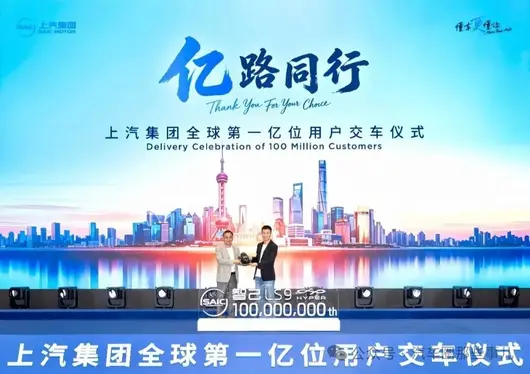

May 28, 2026, Shanghai North Bund. When the key to the IM LS9 Hyper was handed to Momenta CEO Cao Xudong, SAIC Group officially achieved the milestone of "China's first production and sales volume exceeding 100 million".

100 million vehicles, this is not just a cold industrial data, but a vivid footnote to the Chinese automotive industry's journey from nothing to something, from weak to strong. From the hammering and clanging in the alleyways in 1955, people back then probably didn't think that over 70 years later, this "small alley" would make a splash with "100 million", which is simply a "comeback feel-good story" for Chinese cars.
Today, let's dig into how this "veteran top star" managed to reach its current status.
Seizing the "Opportunity", Grabbing Center Stage is SAIC's Secret TechniqueLooking back at SAIC's more than half-century history, there is only one feeling: this guy's "KPI" is set too accurately! While others were pushed by the times, SAIC was checking the stopwatch to grab the center stage. For every technological revolution, it seemed to have the answer in advance.
In the 1950s, it was a hardcore start with an improvised troupe. There were no high-tech equipment or returned technology experts at that time, only full of enthusiasm and a hammer. In 1958, workers hammered out the "Phoenix Brand" car under simple conditions. It's like others were still playing with mud, while SAIC started doing "handmade customization". Although the cars of that time might have been "thin skin and heavy filling", that stubborn "I want to build cars" will absolutely be the most hardcore declaration of that era.

In the 1980s, SAIC got on the "big leg" and completed a "comeback" on the way. At the opportunity of Reform and Opening-up, SAIC directly brought in Volkswagen. Once the Santana was out, who could compete? The Santana of that time was a synonym for "financial power". But what made SAIC awesome? It wasn't only about selling cars, it created a "Santana Localization Consortium" and revitalized the parts industry. This move not only made SAIC earn a fortune, but also set an example for the Chinese automotive industry.

After entering the 2000s, SAIC started with one hand "financial power" and the other hand "black tech". When others were still seeking survival in the fuel car niche, SAIC had already launched Roewe in 2006. In 2016, it partnered with Alibaba to launch the world's first Internet car Roewe RX5. At that time, competitors were still studying how to play CDs, while SAIC's cars were already browsing Taobao and chatting on WeChat. This "dimensionality reduction strike" directly gave SAIC the lead in the intelligent track.
Arriving in 2026, SAIC started to "serve up" technology and "bring down" prices. In the second half of intelligence, SAIC directly unleashed the "Tech Super Set": IM's full X-by-Wire chassis, Momenta's Smart Driving, Huawei's Qiankun, and even solid-state batteries were equipped (MG4 Semi-Solid Version).
What's most amazing is that SAIC put these configurations originally available on cars worth hundreds of thousands onto cars worth over 100,000. This is not car building, it is the practitioner of "tech democratization", allowing ordinary people to enjoy the happiness of "future cockpit".

Production and sales exceeding 100 million sound like a cold number, but after watching this delivery ceremony, I want to say: this is not just a delivery, it is clearly a global fan grand celebration! This lineup is simply an "All-Brand Cosplay Convention". From Shanghai to London, from Indonesia to Singapore, SAIC delivered dozens of models from its dozen of brands at once. This prestige is more of an auto show than an auto show.

In the high-end arena, it was big shots mutual praising, and the situation was once out of control. The 100 millionth owner was Momenta CEO Cao Xudong, this is called "two-way pursuit". IM LS9 Hyper was given to the tech big shot, Audi E7X was given to the fashion editor, this is called "professionals drive professional cars". Especially the IM LS9 Hyper, equipped with full X-by-Wire four-wheel steering and Nvidia Thor chip, this configuration is simply welding "future" onto the chassis.
In the home arena, SAIC showed a grounded side, and because it is grounded, it has the most confidence. Buick Zhijing E7 was given to charity blogger Liu Jia, Wuling Rongguang EV version was given to village party secretary Pang Fuqiang. Especially that village secretary, before he used a tricycle to deliver food, not only was it slow but also bumping. Now driving Wuling, he said directly "delivery efficiency is maxed out, waist doesn't hurt". Isn't this the best proof of "If the people need it, Wuling builds it"? This is the real "grounded, growing into a towering tree".

In the global arena, Chinese cars are also world cars. The British guy picked up MG4, the Indonesian international player drove off Wuling Starlight. The MG in Europe is now the sales champion, what does this show? It shows our cars are not only loved by Chinese people, but foreigners also think they are "trendy". SAIC's move of "going global" has simply turned "China Smart Manufacturing" into "Global Blockbuster".
Honest Review: Where Does SAIC Win?From the perspective of automotive media, SAIC can sit firmly in this "100-Million Level" throne, not because of luck, but because of solid "hardcore strength".
First is strategic stability. Many car companies like to chase trends, PPT car building, and random name changes. SAIC started a comprehensive transformation to new energy in 2014, invested 150 billion in R&D, and this is how it has the "tech dividend" today. Long-termism is always the ace that beats speculation and shortcuts.

Secondly is an open mindset. SAIC never feels it can handle everything. Car building has Volkswagen and GM, smart driving pulls in Momenta, playing ecology holds hands with Huawei and Alibaba. This strategy of "you are responsible for being excellent, I am responsible for putting your excellence into the car" is highly efficient, simply the "best support".
Finally is the conscience bottom line. Whether it was the early Santana "absolutely no quality compromise", or the current Magic Cube Battery "zero spontaneous combustion", SAIC has always been "stubborn" in product control. In this era where you can buy abandoned buildings, reliability is the greatest luxury.
Of Course, Even the Perfect Idol Has "Small Flaws"Of course, no one is perfect, neither are cars. We have to be objective and fair, can't just talk good. Although SAIC's delivery ceremony this time was going great, in daily product details, sometimes it will still be criticized for "aesthetic failure". For example, the design of some low-end models sometimes makes people feel "did the designer drink too much?". Also, in the iteration speed of the pure electric platform, sometimes it is chased a bit tightly by new forces, occasionally giving people the illusion of "rose early but arrived late". Of course, this is just my personal opinion, do not rage comment.

However, flaws don't obscure merit. Overall, in summary, SAIC's 70 years can be summarized in three words:Won Completely.
Finally, I Want to Add a Few More Words
From 1955 to 2026, from Phoenix Brand to IM, SAIC's 70 years is a history of struggle, and also a "feel-good story". Everyone says the domestic automotive market is super competitive now, but for us consumers, the biggest winner is actually ourselves. Only because car companies compete fiercely, can we use less money to buy cooler cars! The next 100 million vehicles, let's wait and see!
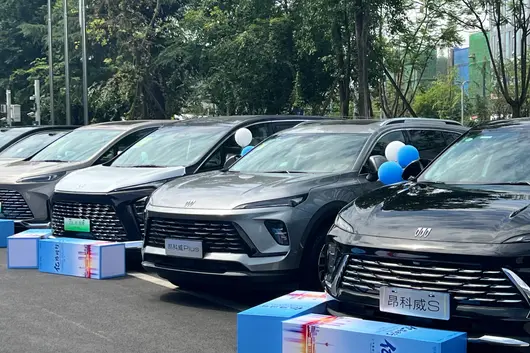

From the birth of the first Phoenix brand sedan in 1958 to the delivery of the IM LS9 on May 28, 2026, SAIC Group has taken nearly 70 years to achieve the delivery of 100 million cars, becoming the first Chinese automotive group to accumulate production and sales of over 100 million units.
For a single group to enter the '100 Million Club', such an achievement, only a few century-old giants like General Motors, Ford, Toyota, Volkswagen, etc. have achieved this internationally so far.

For an automotive group, the delivery of 100 million cars is not only an achievement of the group itself, but also concerns the development and changes of the entire automotive industry, witnessing the rise of China's automotive manufacturing from nothing to something, and then to strength. Through SAIC's 100 millionth new vehicle delivery, this process is fully presented.
On the day of the delivery ceremony, Dragon TV broadcast live the entire delivery process of SAIC Group from the 99,999,996th to the 100,000,010th new vehicle. From Shanghai to Liuzhou, Shaanxi, from China to the UK, Indonesia, Singapore, SAIC's product delivery spreads all over the globe. Behind this, there are products and services of SAIC Group that span over 170 countries and regions, and its cumulative overseas sales have exceeded 7 million units.

In addition, the new vehicles cover more than 10 vehicle brands and 19 models under its umbrella: Shangjie Z7, Huajing S, Roewe M7 Black Horse Edition, MG4 Semi-Solid State Battery Version, Wuling Starlight 560, Maxus eDeliver 5, Hongyan i Jieshi, Yuejin Danna T1, Sunwin Pure Electric City Bus, as well as Volkswagen ID. ERA 9X, Audi E7X, Cadillac Kaiweide, Buick Zhijing E7, Buick Zhijing Family...... From independent brands to joint ventures, from fuel cars to new energy, fusion, transformation, and innovation are deeply intertwined in SAIC's growth experience, achieving the systemic strength of China's automotive industry.
Achieving the First 10 Million
SAIC Used Half a Century
In 1955, the Shanghai Internal Combustion Engine Parts Manufacturing Company was established, and Shanghai's automotive industry started from here. In 1958, workers used hammers to hammer out the first 'Phoenix' sedan, achieving a zero breakthrough in Shanghai sedan manufacturing.

In the following few years, SAIC was solving the challenge of China's automotive industry from nothing to something. In an era lacking large presses, precision machine tools, and automation equipment, production methods were nearly primitive. Most complex parts and car body appearances were completely chewed out by workers based on experience and naked eye, purely by hand. Therefore, Shanghai Auto's initial annual production was only a few thousand units, far from a modern industrial system.
Until the successful assembly of the first Santana in 1983, it brought possibilities for SAIC to start joint venture cooperation. And it took SAIC about 6 years to truly drive China's automotive industry towards scaled assembly lines.

In 1978, the state approved Shanghai to introduce sedan projects in the form of 'Sino-Foreign Joint Ventures', but by 1982, when negotiations entered the deep water zone, the joint venture project was on the verge of failure.
First, the impact of ideology, 'Should sedan joint ventures be launched' faced huge controversy; second, the 'Productivity Theory' of the early 1980s prioritized the production of means of production such as heavy trucks over sedans. Volkswagen Germany also clearly stated that joint venture products must be sold in the Chinese local market, causing many to worry that foreigners' high-end goods would eat into the domestic market, 'Inviting wolves into the house'. In addition, facing Germany's overwhelming automotive industry strength, everyone understood that the entry of joint venture models would inevitably deal a fatal blow to the domestically produced cars made by hand at that time. People worried that this would kill China's own automotive brands.
Facing a series of opposing voices, one sentence stated 'Launching sedan joint ventures can allow our automotive industry to take 20 years less detours.' His critical statement eventually allowed Shanghai Auto at the time to withstand pressure, signing a pilot assembly (CKD) agreement with Volkswagen Germany at the end of 1982, leading to the successful launch of the first Santana.
Even so, before the official signing in 1984, SAIC Volkswagen (then Shanghai Volkswagen), Chinese and German sides still conducted long-term tug-of-war on details such as investment ratio, profit distribution, technology transfer, localization rate, and even food standards for foreign employees. At that time, China had only recently promulgated the 'Law on Chinese-Foreign Joint Ventures', and many supporting industrial and commercial, tax systems were blank.
By assembling foreign models and introducing modern automotive manufacturing standards wholesale, Shanghai Auto embarked on a difficult yet far-reaching road. The localization rate of early Santanas was only 2.7%. At that time, Germans' requirements for parts quality were strict to the point of being stereotypical, and samples sent by domestic supporting factories for inspection were almost wiped out. Facing huge international public opinion pressure, Shanghai established the Santana Car Localization Consortium in 1988, starting a localization assault campaign lasting more than 10 years.
It was precisely this set of standards that allowed Chinese workers to see strict process management, modern painting processes, and quality control systems for the first time, and more thoroughly changed the traditional concept of domestic automotive manufacturing: Cars are not 'hammered' out, but 'built' based on strict standard processes.
With the experience of SAIC Volkswagen, Shanghai GM, established in 1997, took only 23 months to build a factory and produce cars, simultaneously building China's first joint venture professional automotive design and R&D center, creating 'Shanghai Speed'.
Relying on the strong dual engines of SAIC Volkswagen and SAIC General Motors, SAIC's production and sales finally embarked on the fast lane. Around 2003, SAIC Group finally welcomed the first 10 million cumulative production and sales, taking 48 years.

Nearly half a century of time is the construction process of China's automotive industry from nothing to something. By the late 1990s, the localization rate of Santana exceeded 90%. In this process, Shanghai Auto used nearly cruel Volkswagen VW standards to hand-in-hand teach domestic electronic, mechanical, rubber, glass, and other supporting factories to establish quality management systems, almost reshaping China's local automotive parts supply chain, laying an important foundation for the development of subsequent automotive brands.
From 10 Million to 100 Million
SAIC Acceleration
After crossing the threshold of 10 million, the Chinese automotive market welcomed the Golden Decade, and SAIC's production and sales curve changed directly from linear growth to exponential takeoff.
In 2001, China officially joined the WTO, and SAIC Volkswagen and SAIC General Motors welcomed the golden period of localization transformation during this period. A large number of global models, advanced processes, and management experiences were seamlessly delivered to China, and SAIC Group arrived at the moment of harvesting dividends. Also starting in 2001, the state explicitly proposed in official documents for the first time 'Encouraging sedans to enter residents' homes', sedans began to enter ordinary households from official vehicle consumption.
Accompanying the acceleration of China's urbanization process and the development of the real estate market, China birthed the largest middle-class group in human history. From policy, capital to the comprehensive rise of the national economy, all drove the explosion of demand in China's automotive market. Santana and Passat of SAIC Volkswagen, Excelle of SAIC General Motors, and later Wuling Light which almost ruled China's micro car market were all phenomenon-level national god cars of this time.
Joint venture dividends brought technology spillover, and also stimulated the awakening of independent brands like Geely, Chery, Great Wall, etc. In this decade, private car companies tore open the household car market below 100,000 yuan with high cost-performance ratios. Facing the pressure from independent brands, SAIC launched the Roewe brand in 2006, starting the exploration of independence by traditional giants.
It was precisely these blockbusters and explorations that hit the rhythm of the times that SAIC completed the raw accumulation of production and sales scale. By December 2010, SAIC Group's cumulative production and sales exceeded the 20 million mark, and became the first automotive giant in China's automotive history with annual production and sales exceeding 3 million units that year.

The strong contrast between 48 years and 7 years is the hardest core footnote for the Chinese automotive market welcoming the 'Golden Explosion Period' in the first decade of the 21st century.
Entering the second decade of the 21st century, China became the world's largest automotive market. The three carriages under SAIC — SAIC Volkswagen, SAIC General Motors, SAIC-GM-Wuling — exploded comprehensively. From 2010 to 2014, in just four years, SAIC completed a three-stage jump from 20 million to 50 million.
That was the golden age of China's automotive market gushing, where SAIC relied on the dual heroes of joint ventures and Wuling god cars advancing together, running out of scale dividends, where the joint venture dividends and scale effects of the traditional fuel era reached the peak.
And from 50 million to today's peak of 100 million, SAIC experienced a difficult transformation of joint venture dividends receding and the domestic market being extremely involution. Although joint venture dividends receded, relying on the two-line efforts of independent brand share soaring to nearly 70% and overseas cumulative delivery exceeding 7 million, SAIC ran the second 50 million with higher quality in the storm of new energy involution.
Especially after SAIC launched the world's first internet car Roewe RX5 in 2015, new energy and going global became a brand new accelerator. By May 2026, achieving 100 million units, SAIC's average annual production and sales in the past nearly 10 years have been maintained at a high level of 4 million to 7 million.

Borrowing the explosion of independent brands, globalization strategy, and the comprehensive succession of new energy and intelligence, SAIC reached another sales peak again. This is SAIC's 3.0 era.
From Santana to IM LS9
The Transformation of the 100 Millionth Vehicle
In the brilliant starlight of global relay delivery, the focus of the 100 millionth delivery is fixed inside the main hall of Shanghai North Bund World Living Room, where IM LS9 Hyper shone onto the stage.
If Santana and Wuling Hongguang were early myths of SAIC Group, then in the intelligent era, IM LS9 has undoubtedly become the representative work of SAIC's independent high-endization.
The IM LS9 launched at the end of last year is the flagship model with the highest positioning in SAIC Group's independent product sequence, positioned in the 300,000 yuan market, but benchmarking against the million-level executive cabin. SAIC piled all the most cutting-edge chassis and power technologies that can represent 'New Quality Productive Forces' onto the IM LS9 — SAIC's ace technology Lizard Digital Chassis 3.0; next-generation intelligent driving hardware, 520-line super-vision LiDAR and NVIDIA Thor chip; next-generation three-electrics — full-domain 800V high-voltage platform and Star Super Range Extender. In addition, LS9 also comprehensively pre-embedded redundant capabilities for L3 and above high-level intelligent driving continuous evolution.

Even more interestingly, SAIC's 100 millionth user, Momenta CEO Cao Xudong, is exactly SAIC's core strategic partner in the intelligent driving field. The person who understands LS9 intelligent driving best spent money to become its car owner.
Just a few years ago, the discussion about smart car 'Soul and Body' was in a very tense state, and this new car delivery between SAIC and Cao Xudong gave a perfect answer sheet.
At the delivery ceremony, Cao Xudong stated that SAIC is not only Momenta's customer, but also its earliest core lead investor. IM Motors, as the most critical flagship brand for SAIC Group's transformation, directly became Momenta's 'top base camp' for cutting-edge algorithms. Deep business binding and capital fusion made the two enterprises become a community of emerging OEM and supplier cooperation.
IM LS9 is precisely the product of these two top teams performing their duties and highly integrating. IM LS9 is equipped with Momenta's end-to-end large model algorithm, while SAIC endowed it with a powerful Lizard Digital Chassis and industrial smart manufacturing body. When Cao Xudong held the steering wheel of IM LS9, from a partner to becoming a SAIC car owner, it also indirectly indicated that no one swallows the other. The landing of IM LS9 is the result of the deep integration and symbiosis of intelligent driving technology and manufacturing strength.
Cao Xudong has been promoting the overseas landing of intelligent driving's 'Can drive anywhere globally'. And SAIC itself is the leading head of Chinese car companies going global. Handing the 100 millionth car to him also indicated SAIC's future strategic ambition in intelligent overseas output, to further bundle with Momenta and go global together.
The 100 millionth car is not only an endpoint, but also a brand new starting point for two Chinese top forces combining to output global intelligence. SAIC's global relay delivery of the full brand matrix witnesses its deep industrial chain system built over more than 70 years and leading innovation chain layout. The next 100 million era will certainly arrive at a faster speed.
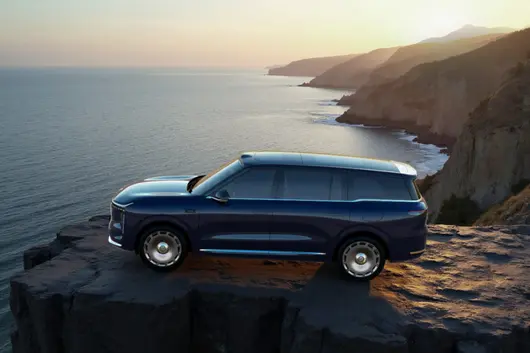

On May 28, at the Shanghai North Bund World Living Room, SAIC Motor handed the keys to its 100 millionth vehicle to Cao Xudong, CEO of Momenta. This number marks the first time the Chinese automobile industry has a "billion-unit" player — starting from the Shanghai Internal Combustion Engine Parts Manufacturing Company in 1955, to workers using hammers to hammer out the "Phoenix" brand sedan in 1958, to today's IM LS9 Hyper entering the spotlight. Seventy years of time are condensed into a heavy milestone. But what is worth questioning more than the number is: when the Chinese car market shifts from incremental rush to stock struggle, when the attack and defense war between new forces and traditional car makers enters the deep water zone, on what grounds does SAIC crash the finish line first? The answer lies in the seemingly simple concept of "Understand cars and understand you better", and in the strategic leap from technical joint venture to technical co-creation, from product exporting to value chain exporting. This is a centralized fulfillment of user trust, and more a dimensional upgrade of the automotive industry cognition.

1. From Phoenix to IM: The Qualitative Change of Seventy Years of Technical Accumulation
The first 100 millionth delivery model, IM LS9 Hyper, is definitely not a simple flagship car. It is equipped with the industry-first full drive-by-wire four-wheel steering, 520-line super-view LiDAR, NVIDIA Thor Chip, Global 800V High Voltage Platform, and Star Super Range Extender. Each of these is the crystallization of SAIC's technical research and development for over 70 years. These configurations are not just stacking materials, but are the extreme interpretation of "Understand cars" — when an enterprise possesses self-research capabilities in the four core fields of Three-Electric, Chassis, Intelligent Driving, and Safety simultaneously, it has the qualification to convert technical redundancy into the confidence of user experience. IM LS9 Hyper is also the first to mount the SAIC Gold Label Hurricane Triple Motor, calmly entering the 3-second Performance Club. It also globally launched the "Endogenous Security" technology in collaboration with Purple Mountain Laboratories, extending automobile safety from the physical world to information and system space, which is an essential foundation in the AI Era.
This technical qualitative change did not happen overnight. From the 1980s Santana localization consortium breaking parts barriers, to the 1990s SAIC-GM creating the "Shanghai Speed" of 23 months from factory to car, to the birth of the own-brand Roewe in 2006, and the launch of the world's first Internet Car in 2016, SAIC has been accumulating inner strength within the framework of "trading joint ventures for technology". But the true turning point appeared in 2020: the establishment of IM Motors marked the beginning of SAIC entering the high-end smart electric track with a completely independent posture. And this moment's 100 million delivery is precisely the signal that this long climbing road finally sees the peak. Data shows that from January to April 2026, SAIC cumulative sales reached 1.302 million, ranking as the Chinese Car Maker Sales Champion for four consecutive months. Among them, the own-brand proportion is nearly 70%, and New Energy Vehicle sales reached 412,000 — behind the numbers is the market initiative brought by technical autonomy.
What is even more worth pondering is user choice. Cao Xudong, the first 100 millionth owner, is precisely the Momenta CEO who is a core strategic partner for SAIC in the intelligent driving field. "Partner becomes owner", this detail is more convincing than any marketing script — when the depth of technical co-creation is enough to let partners willingly pay for the product they helped build, it means SAIC's intelligent driving system has formed a true ecosystem loop. From "apprentices" in the Santana era to "Technology Consortium" in the IM era, SAIC has completed the identity switch from following to dancing together over 70 years.


2. Global Relay Delivery: Synergistic Resonance of System Strength and Brand Matrix
On the day of the delivery ceremony, an optical cable crossing mountains and seas connected the Shanghai main venue with delivery sites in Nanjing, Liuzhou, Taiyuan, and even the UK, Indonesia, and Singapore. This "Global Relay" was not just a show, but a microcosm of SAIC's full value chain loop. From Shangjie Z7, Huajing S to Roewe M7, MG4 Semi-Solid State Battery Version, from Wuling Star 560, MAXUS eDeliver5 to Hongyan Heavy Truck, JinYue Dana T1, to Sunwin Pure Electric Bus and IVECO Juxing EV, over 10 brands and 19 models under SAIC covered almost all scenarios including personal travel, family life, commercial operation, and logistics transport. This ability of "full category coverage" is a hard-to-copy moat for single-brand new forces.
The Joint Venture Sector also demonstrated new vitality. Volkswagen ID. ERA 9X globally launched the Momenta R7 Reinforcement Learning World Model, and deliveries exceeded 7,000 units one month after launch; AUDI E7X plans to become Audi's first globally to implement Level 3 Autonomous Driving; Buick Zhijing E7 is built on the "Xiaoyao" Super Fusion Architecture, and deliveries broke 10,000 units one month after launch. Behind these achievements is the implementation of "Joint Venture 2.0" strategy: no longer simply introducing products, but Chinese and foreign parties technical co-creation and platform sharing. SAIC Volkswagen's "Oil and Electric Together" strategy allows fuel vehicle intelligence and new energy vehicle matrix to exert force simultaneously. Fuel vehicle market share increased to 8.8% in January-July, which is proof of this two-front warfare capability.
The performance of the overseas market is a direct mapping of system strength. SAIC MG has consecutively ranked as the Best-selling Chinese Brand in Europe for 11 years. In 2025, European annual sales exceeded 300,000 units, becoming the first Chinese Car Brand to accumulate sales over 1 million in Europe and UK. This March, MG held a Technology Day in Frankfurt, globally launching Semi-Solid State Battery and Hybrid+ Hybrid Technology. The Hybrid+ Family's overseas monthly sales exceeded 20,000 units. Behind these numbers, SAIC possesses over 100 parts production bases overseas, over 3,000 dealer networks, as well as three major R&D Innovation Centers such as London, and four production and manufacturing centers such as Thailand and Indonesia. The Glocal Strategy from "product exporting" to "value chain exporting" has made SAIC truly a multinational automotive group.

3. Smart & Electric Deep Water Zone: How SAIC Reshapes the Industry Competitive Landscape
When new forces are still cheering for monthly sales over 10,000, and when traditional car makers are still struggling with the switching rhythm of fuel vehicles and new energy vehicles, SAIC has already proven the possibility of a hybrid path with 100 million vehicles: cannot abandon the existing base, and must fully occupy the incremental highlands. The secret of this balancing act is that SAIC did not understand "transformation" as pushing down and rebuilding, but resolved growing pains through technology reuse, brand stratification, and market segmentation. The Geely system with Emgrand as the representative accumulated 4.2 million users in the A-Class car market, while SAIC formed a price band coverage from 200,000 to 800,000 through IM, RISING, Roewe, MG and other brands, allowing users with different spending power to find corresponding options in SAIC's product matrix.
The true industry disruption occurs at the intersection of technology routes. When most car makers are still tugging of war around "Three-Electric", SAIC has already extended the competitive dimension to the "New Three Major Components": Full Drive-by-wire Chassis allows handling response to break mechanical limits, AI Large Model on Board allows the cockpit to evolve from tool to partner, and Endogenous Security Technology positions ahead in the compliance foundation of the Information War Era. More notably, SAIC's joint research with Purple Mountain Laboratories implies a trend: the future automobile security competition will no longer be limited to crash tests, but will face new types of threats such as hacker attacks and data breaches. This forward-looking layout gives SAIC the qualification to define rules in the Smart & Electric Deep Water Zone.
At the level of competitive landscape, SAIC's "Partner Becomes Owner" model is rewriting the industry ecosystem. In the past, the cooperation between car makers and technology companies was mostly a Party A and B Relationship. But Momenta CEO buying IM LS9 Hyper means the two parties have formed a community of shared destiny with deeply bound interests. Once this model runs through, it will constitute huge pressure on the supply chain relationship of other car makers — competitors still relying on third-party supplier white-box delivery may face multiple lag in response speed, data loop, and iteration efficiency. The collaboration between SAIC and Purple Mountain Laboratories, Momenta, is essentially building an open yet controllable technology ecosystem, which is more risk-resistant than fighting alone.

Conclusion
When Luo Zhenyu entered the factory as the Huajing S No. 001 Experience Officer, when Former German League Footballer Yang Chen chose ID.ERA 9X, when Charity Blogger Liu Jia was moved by the "Full Score Cockpit" of Buick Zhijing E7, these stories together outline the concrete expression of SAIC's "Understanding You" — it is not cold data, but the life scenarios of every real user. From the first user to the 100 millionth user, SAIC's growth history is the microcosm of the Chinese automotive industry from "Following" to "Running Alongside" to "Leading". But 100 million vehicles are not the end, but the starting line for the second startup. As Liu Yuxi said, "Though the thousand filtrations are hard, only after blowing away the wild sand is gold found." When the tide of Smart & Electric transition washes away frivolity and bubbles, what truly settles will be those long-termists who understand both technology and users. SAIC's next 100 million vehicles may not wait 70 years.
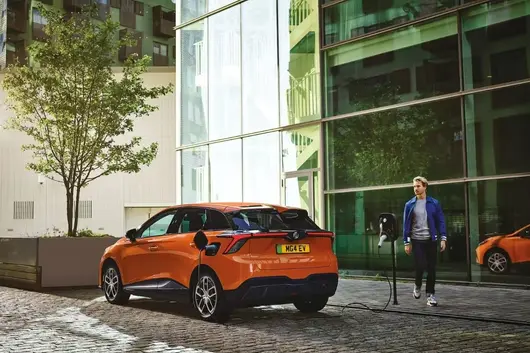

Seen plenty of car delivery ceremonies? But what about the 100-millionth user?
On May 28, 2026, SAIC Group held a "Global First 100-Millionth User Delivery Ceremony", becoming the first Chinese automotive group to exceed 100 million cumulative production and sales!
The first 100-millionth delivery vehicle is the IM LS9 Hyper, the culmination of SAIC's over 70 years of technical accumulation.

Full steer-by-wire four-wheel steering, 520-line ultra-line-of-sight LiDAR, NVIDIA Thor chip, global 800V high-voltage platform, Stellar Super Range Extender, SAIC Gold Badge Hurricane three-motor, as well as pre-embedded redundant capabilities for continuous evolution of L3 and higher-level intelligent driving, etc., are all highlights of the IM LS9 Hyper.
So are you curious who the 100-millionth user is? Momenta CEO Cao Xudong!
It is indeed SAIC's core strategic partner in the intelligent driving sector, and the results and vehicle deployments of Momenta in the intelligent driving field are undoubtedly familiar to everyone.

At the delivery site, besides the 100-millionth user, there were the 100,000,001st, 100,000,002nd...
Dominestic brands went all out: Shangjie Z7, Huajing S, Roewe M7, MG4 Semi-Solid State Battery Version, Wuling Starlight 560, Maxus eDeliver 5, Hongyan Heavy Truck, Yuejin Danaka T1, Sunwin Pure Electric Bus, Iveco Juxing EV, etc., were delivered successively, covering diverse scenarios such as personal mobility, family life, commercial operations, and logistics transport.
Joint Venture Brands centrally displayed "Joint Venture 2.0" achievements: Volkswagen ID. ERA 9X will be the global debut with Momenta R7 Reinforcement Learning World Model, achieving over 7,000 units deliveries in one month after listing; AUDI E7X plans to become Audi's first global vehicle to achieve L3-level autonomous driving landing; Buick Zhijing E7 is built on the "Xiaoyao" Super Fusion Architecture, achieving over 10,000 units deliveries in one month after listing.

100 million vehicles is a significant number, reflecting SAIC's systemic strength.
From complete vehicles, parts, mobility and services, finance, international operations to innovation technology, six major sectors, achieving a closed loop of the entire value chain.
From January to April 2026, SAIC's cumulative sales reached 1.302 million vehicles, ranking first among Chinese automakers for four consecutive months. Among them, domestic brand sales were 910,000 vehicles, accounting for nearly 70%; New energy vehicle sales were 412,000 vehicles; Overseas market sales were 459,000 vehicles, year-on-year growth of 50.2%.

Gaining the trust of 100 million users, this owes to the power of globalization. SAIC's global layout has deep foundations, owning over 100 parts production bases, over 3,000 dealer networks abroad, and having built London and other 3 major R&D innovation centers, as well as 4 manufacturing centers in Thailand, Indonesia, India, Pakistan; Anji Logistics owns 42 Ro-Ro ships of various types, 8 international routes covering Southeast Asia, Europe, Americas. Now, SAIC's products and services cover over 170 countries and regions, overseas cumulative sales exceeded 7 million vehicles.
Among them, SAIC MG has ranked first in China brand European sales for 11 consecutive years, 2025 European annual sales exceeded 300,000 vehicles, becoming the first Chinese automotive brand to exceed one million cumulative sales in Europe and the UK.

From 1955 to 2026, 100 million users, is a phased answer sheet for SAIC's over 70 years of development, and at the same time its new starting line towards the intelligent electric future "second start-up". Continuing to travel the billion-mile journey together with global users and global partners, creating a new future of beautiful mobility, this is what SAIC needs to do next!
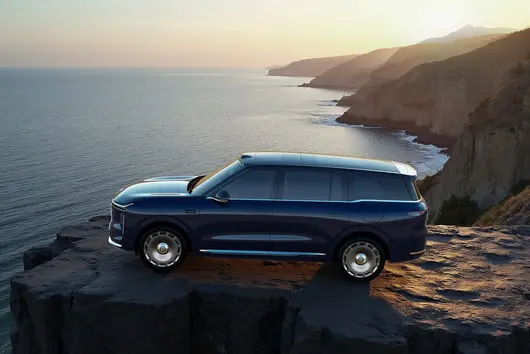

On May 28, 2026, the Shanghai North Bund World Reception Hall hosted a delivery ceremony to be recorded in the history of China's automotive industry. As an IM LS9 Hyper drove out, SAIC Motor officially welcomed its 100 millionth user globally. At this moment, SAIC Motor became the first automotive company in China's industry to surpass 100 million cumulative production and sales, setting a new milestone for the development of China's automotive industry. This delivery ceremony was not limited to a single venue; instead, through the form of "Global Relay Delivery," the delivery scene extended from the main venue in Shanghai to domestic cities such as Nanjing and Liuzhou, as well as overseas markets like the UK, Indonesia, and Singapore. This was not only a delivery spanning continents but also a concentrated display of the globalization operational capability of Chinese automotive brands.

SAIC's 100 million journey almost spanned the entire process of China's modern automotive industry from nothing to something, from weak to strong. The establishment of the Shanghai Internal Combustion Engine Parts Manufacturing Company in 1955 marked the beginning of Shanghai's automotive industry; in 1958, workers hammered out the first "Phoenix" brand sedan with hammers, achieving a zero breakthrough in domestic sedan manufacturing. Over the subsequent decades, SAIC has always walked at the forefront of industry transformation: the launch of the Santana in 1983 opened the precedent for Chinese automotive joint venture cooperation; the establishment of Shanghai General Motors in 1997 created the "Shanghai Speed" of "plant construction and vehicle production within 23 months"; the birth of the Roewe brand in 2006 marked the rise of independent innovation; in 2016, the Roewe RX5 took the lead in defining the "Internet Car". Today, the establishment of the high-end smart electric brand IM is the mark of SAIC's comprehensive entry into the smart electric era. What runs through this long journey is SAIC's consistent adherence to the concept of "Understanding Cars and Understanding You More," transforming breakthroughs in core technologies into travel experiences perceptible to users.

As the model for the 100 millionth unit off the line, the IM LS9 Hyper embodies over 70 years of SAIC's technical accumulation. This flagship model is equipped with a full-line-by-wire four-wheel steering chassis, a 520-line super-vision LiDAR, and the NVIDIA Thor chip, combined with a global 800V high-voltage platform and the Star Super Range-Extending Technology, achieving breakthroughs in handling, intelligent driving, and range. It is worth mentioning that the 100 millionth user is exactly Momenta, the core strategic partner of SAIC in the field of intelligent driving - Cao Xudong, CEO of Momenta Company. This delivery model of "ecosystem partners becoming users" also confirms the new paradigm of technical co-creation in China's automotive industry.

Behind the scale of 100 million units is the support of SAIC's powerful full-value-chain ecosystem. Data shows that in the first four months of 2026, SAIC Motor led the Chinese car market with 1.302 million units in sales, among which overseas market sales increased by more than 50% year-on-year. Currently, SAIC has established over 100 parts bases, more than 3,000 sales outlets overseas, as well as 8 international logistics routes covering Southeast Asia, Europe, and the Americas. From early product exports to the release of the "Glocal" Global Localization Integration strategy, SAIC is accelerating the transformation from "product going global" to "value chain going global". The MG brand has held the title of best-selling Chinese brand in the European market for eleven consecutive years, the IM AD intelligent driving system covers five continents globally, and cutting-edge technologies such as semi-solid-state batteries have also landed in the global market. Standing at the new starting point of 100 million scale, SAIC is using technological innovation as a pen to re-write the narrative method of China's automotive industry participating in global competition.

At the delivery site, in addition to the full-scale offensive of independent brands, the performance of joint venture brands was equally bright. Volkswagen ID. ERA 9X, Audi E7X, and Buick Zijing E7 models were displayed together, marking the entry of SAIC joint venture cooperation into the "2.0 era". In this stage, SAIC's technical role has changed from early "local adaptation" to "technical definition". For example, the Volkswagen ID. ERA 9X globally first deployed Momenta R7 Reinforced Learning World Model, and the Audi E7X plans to become the first Audi global model to achieve landing of L3-level autonomous driving. This ability of technical reverse output is a powerful proof of SAIC's over 70 years of technical accumulation.
"Understanding Cars and Understanding You More" is not an empty slogan, but is reflected in the story of every real user. From the tech blogger moved by Stelato Z7 Huawei Intelligent Driving, to the London intern doctor who inherited their grandfather's sentiment and chose MG; from former national football player Yang Chen who chose Volkswagen ID. ERA 9X, to public welfare blogger Liu Jia who was moved by Buick Zijing E7 cockpit. Whether it is white-collar workers commuting in the city, players who love off-roading, or strivers working on the logistics front line, every user is a witness to SAIC's development process.

100 million units is both a milestone and a new starting point. In 2014, SAIC was the first to respond to the national new energy vehicle development strategy, opening the "second entrepreneurship" of smart electric transformation. Today, SAIC has formed a development pattern of coordination between independent and joint ventures, parallel progress between passenger and commercial vehicles, and resonance between domestic and overseas. With the in-depth promotion of the "Glocal Strategy", SAIC is continuously perfecting the overseas product matrix covering SUV, sedan, MPV, pickup and other full categories, promoting Chinese smart manufacturing to go further to the world. From the 1955 initial exploration to the 2026 industry leadership, SAIC will continue to walk the 100 million journey with global users and co-create a new future for better travel.
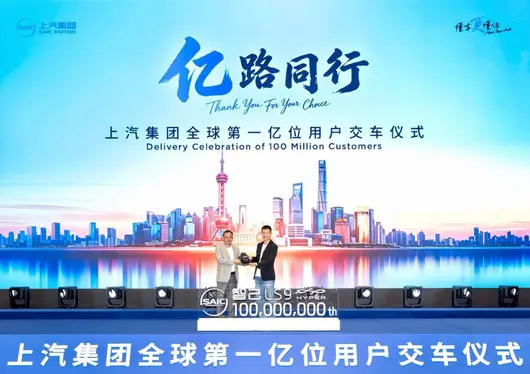

From the birth of the first Phoenix brand sedan in 1958 to the delivery of the IM LS9 on May 28, 2026, SAIC Group has taken nearly 70 years to achieve the delivery of 100 million cars, becoming the first Chinese automotive group to accumulate production and sales of over 100 million units.
For a single group to enter the '100 Million Club', such an achievement, only a few century-old giants like General Motors, Ford, Toyota, Volkswagen, etc. have achieved this internationally so far.
For an automotive group, the delivery of 100 million cars is not only an achievement of the group itself, but also concerns the development and changes of the entire automotive industry, witnessing the rise of China's automotive manufacturing from nothing to something, and then to strength. Through SAIC's 100 millionth new vehicle delivery, this process is fully presented.
On the day of the delivery ceremony, Dragon TV broadcast live the entire delivery process of SAIC Group from the 99,999,996th to the 100,000,010th new vehicle. From Shanghai to Liuzhou, Shaanxi, from China to the UK, Indonesia, Singapore, SAIC's product delivery spreads all over the globe. Behind this, there are products and services of SAIC Group that span over 170 countries and regions, and its cumulative overseas sales have exceeded 7 million units.
In addition, the new vehicles cover more than 10 vehicle brands and 19 models under its umbrella: Shangjie Z7, Huajing S, Roewe M7 Black Horse Edition, MG4 Semi-Solid State Battery Version, Wuling Starlight 560, Maxus eDeliver 5, Hongyan i Jieshi, Yuejin Danna T1, Sunwin Pure Electric City Bus, as well as Volkswagen ID. ERA 9X, Audi E7X, Cadillac Kaiweide, Buick Zhijing E7, Buick Zhijing Family...... From independent brands to joint ventures, from fuel cars to new energy, fusion, transformation, and innovation are deeply intertwined in SAIC's growth experience, achieving the systemic strength of China's automotive industry.
Achieving the First 10 Million
SAIC Used Half a Century
In 1955, the Shanghai Internal Combustion Engine Parts Manufacturing Company was established, and Shanghai's automotive industry started from here. In 1958, workers used hammers to hammer out the first 'Phoenix' sedan, achieving a zero breakthrough in Shanghai sedan manufacturing.
In the following few years, SAIC was solving the challenge of China's automotive industry from nothing to something. In an era lacking large presses, precision machine tools, and automation equipment, production methods were nearly primitive. Most complex parts and car body appearances were completely chewed out by workers based on experience and naked eye, purely by hand. Therefore, Shanghai Auto's initial annual production was only a few thousand units, far from a modern industrial system.
Until the successful assembly of the first Santana in 1983, it brought possibilities for SAIC to start joint venture cooperation. And it took SAIC about 6 years to truly drive China's automotive industry towards scaled assembly lines.
In 1978, the state approved Shanghai to introduce sedan projects in the form of 'Sino-Foreign Joint Ventures', but by 1982, when negotiations entered the deep water zone, the joint venture project was on the verge of failure.
First, the impact of ideology, 'Should sedan joint ventures be launched' faced huge controversy; second, the 'Productivity Theory' of the early 1980s prioritized the production of means of production such as heavy trucks over sedans. Volkswagen Germany also clearly stated that joint venture products must be sold in the Chinese local market, causing many to worry that foreigners' high-end goods would eat into the domestic market, 'Inviting wolves into the house'. In addition, facing Germany's overwhelming automotive industry strength, everyone understood that the entry of joint venture models would inevitably deal a fatal blow to the domestically produced cars made by hand at that time. People worried that this would kill China's own automotive brands.
Facing a series of opposing voices, one sentence stated 'Launching sedan joint ventures can allow our automotive industry to take 20 years less detours.' His critical statement eventually allowed Shanghai Auto at the time to withstand pressure, signing a pilot assembly (CKD) agreement with Volkswagen Germany at the end of 1982, leading to the successful launch of the first Santana.
Even so, before the official signing in 1984, SAIC Volkswagen (then Shanghai Volkswagen), Chinese and German sides still conducted long-term tug-of-war on details such as investment ratio, profit distribution, technology transfer, localization rate, and even food standards for foreign employees. At that time, China had only recently promulgated the 'Law on Chinese-Foreign Joint Ventures', and many supporting industrial and commercial, tax systems were blank.
By assembling foreign models and introducing modern automotive manufacturing standards wholesale, Shanghai Auto embarked on a difficult yet far-reaching road. The localization rate of early Santanas was only 2.7%. At that time, Germans' requirements for parts quality were strict to the point of being stereotypical, and samples sent by domestic supporting factories for inspection were almost wiped out. Facing huge international public opinion pressure, Shanghai established the Santana Car Localization Consortium in 1988, starting a localization assault campaign lasting more than 10 years.
It was precisely this set of standards that allowed Chinese workers to see strict process management, modern painting processes, and quality control systems for the first time, and more thoroughly changed the traditional concept of domestic automotive manufacturing: Cars are not 'hammered' out, but 'built' based on strict standard processes.
With the experience of SAIC Volkswagen, Shanghai GM, established in 1997, took only 23 months to build a factory and produce cars, simultaneously building China's first joint venture professional automotive design and R&D center, creating 'Shanghai Speed'.
Relying on the strong dual engines of SAIC Volkswagen and SAIC General Motors, SAIC's production and sales finally embarked on the fast lane. Around 2003, SAIC Group finally welcomed the first 10 million cumulative production and sales, taking 48 years.
Nearly half a century of time is the construction process of China's automotive industry from nothing to something. By the late 1990s, the localization rate of Santana exceeded 90%. In this process, Shanghai Auto used nearly cruel Volkswagen VW standards to hand-in-hand teach domestic electronic, mechanical, rubber, glass, and other supporting factories to establish quality management systems, almost reshaping China's local automotive parts supply chain, laying an important foundation for the development of subsequent automotive brands.
From 10 Million to 100 Million
SAIC Acceleration
After crossing the threshold of 10 million, the Chinese automotive market welcomed the Golden Decade, and SAIC's production and sales curve changed directly from linear growth to exponential takeoff.
In 2001, China officially joined the WTO, and SAIC Volkswagen and SAIC General Motors welcomed the golden period of localization transformation during this period. A large number of global models, advanced processes, and management experiences were seamlessly delivered to China, and SAIC Group arrived at the moment of harvesting dividends. Also starting in 2001, the state explicitly proposed in official documents for the first time 'Encouraging sedans to enter residents' homes', sedans began to enter ordinary households from official vehicle consumption.
Accompanying the acceleration of China's urbanization process and the development of the real estate market, China birthed the largest middle-class group in human history. From policy, capital to the comprehensive rise of the national economy, all drove the explosion of demand in China's automotive market. Santana and Passat of SAIC Volkswagen, Excelle of SAIC General Motors, and later Wuling Light which almost ruled China's micro car market were all phenomenon-level national god cars of this time.
Joint venture dividends brought technology spillover, and also stimulated the awakening of independent brands like Geely, Chery, Great Wall, etc. In this decade, private car companies tore open the household car market below 100,000 yuan with high cost-performance ratios. Facing the pressure from independent brands, SAIC launched the Roewe brand in 2006, starting the exploration of independence by traditional giants.
It was precisely these blockbusters and explorations that hit the rhythm of the times that SAIC completed the raw accumulation of production and sales scale. By December 2010, SAIC Group's cumulative production and sales exceeded the 20 million mark, and became the first automotive giant in China's automotive history with annual production and sales exceeding 3 million units that year.
The strong contrast between 48 years and 7 years is the hardest core footnote for the Chinese automotive market welcoming the 'Golden Explosion Period' in the first decade of the 21st century.
Entering the second decade of the 21st century, China became the world's largest automotive market. The three carriages under SAIC — SAIC Volkswagen, SAIC General Motors, SAIC-GM-Wuling — exploded comprehensively. From 2010 to 2014, in just four years, SAIC completed a three-stage jump from 20 million to 50 million.
That was the golden age of China's automotive market gushing, where SAIC relied on the dual heroes of joint ventures and Wuling god cars advancing together, running out of scale dividends, where the joint venture dividends and scale effects of the traditional fuel era reached the peak.
And from 50 million to today's peak of 100 million, SAIC experienced a difficult transformation of joint venture dividends receding and the domestic market being extremely involution. Although joint venture dividends receded, relying on the two-line efforts of independent brand share soaring to nearly 70% and overseas cumulative delivery exceeding 7 million, SAIC ran the second 50 million with higher quality in the storm of new energy involution.
Especially after SAIC launched the world's first internet car Roewe RX5 in 2015, new energy and going global became a brand new accelerator. By May 2026, achieving 100 million units, SAIC's average annual production and sales in the past nearly 10 years have been maintained at a high level of 4 million to 7 million.
Borrowing the explosion of independent brands, globalization strategy, and the comprehensive succession of new energy and intelligence, SAIC reached another sales peak again. This is SAIC's 3.0 era.
From Santana to IM LS9
The Transformation of the 100 Millionth Vehicle
In the brilliant starlight of global relay delivery, the focus of the 100 millionth delivery is fixed inside the main hall of Shanghai North Bund World Living Room, where IM LS9 Hyper shone onto the stage.
If Santana and Wuling Hongguang were early myths of SAIC Group, then in the intelligent era, IM LS9 has undoubtedly become the representative work of SAIC's independent high-endization.
The IM LS9 launched at the end of last year is the flagship model with the highest positioning in SAIC Group's independent product sequence, positioned in the 300,000 yuan market, but benchmarking against the million-level executive cabin. SAIC piled all the most cutting-edge chassis and power technologies that can represent 'New Quality Productive Forces' onto the IM LS9 — SAIC's ace technology Lizard Digital Chassis 3.0; next-generation intelligent driving hardware, 520-line super-vision LiDAR and NVIDIA Thor chip; next-generation three-electrics — full-domain 800V high-voltage platform and Star Super Range Extender. In addition, LS9 also comprehensively pre-embedded redundant capabilities for L3 and above high-level intelligent driving continuous evolution.
Even more interestingly, SAIC's 100 millionth user, Momenta CEO Cao Xudong, is exactly SAIC's core strategic partner in the intelligent driving field. The person who understands LS9 intelligent driving best spent money to become its car owner.
Just a few years ago, the discussion about smart car 'Soul and Body' was in a very tense state, and this new car delivery between SAIC and Cao Xudong gave a perfect answer sheet.
At the delivery ceremony, Cao Xudong stated that SAIC is not only Momenta's customer, but also its earliest core lead investor. IM Motors, as the most critical flagship brand for SAIC Group's transformation, directly became Momenta's 'top base camp' for cutting-edge algorithms. Deep business binding and capital fusion made the two enterprises become a community of emerging OEM and supplier cooperation.
IM LS9 is precisely the product of these two top teams performing their duties and highly integrating. IM LS9 is equipped with Momenta's end-to-end large model algorithm, while SAIC endowed it with a powerful Lizard Digital Chassis and industrial smart manufacturing body. When Cao Xudong held the steering wheel of IM LS9, from a partner to becoming a SAIC car owner, it also indirectly indicated that no one swallows the other. The landing of IM LS9 is the result of the deep integration and symbiosis of intelligent driving technology and manufacturing strength.
Cao Xudong has been promoting the overseas landing of intelligent driving's 'Can drive anywhere globally'. And SAIC itself is the leading head of Chinese car companies going global. Handing the 100 millionth car to him also indicated SAIC's future strategic ambition in intelligent overseas output, to further bundle with Momenta and go global together.
The 100 millionth car is not only an endpoint, but also a brand new starting point for two Chinese top forces combining to output global intelligence. SAIC's global relay delivery of the full brand matrix witnesses its deep industrial chain system built over more than 70 years and leading innovation chain layout. The next 100 million era will certainly arrive at a faster speed.
On May 28, 2026, SAIC Group became the first automobile group in China to achieve cumulative production and sales exceeding 100 million vehicles.
From the Phoenix brand forged by hammers in 1958 to the IM LS9 Hyper delivered to Momenta CEO Cao Xudong, over seventy years, 100 million vehicles.
This result holds extremely significant meaning in the history of the Chinese automotive industry.
However, today we not only look at the numbers but also study the three assets hidden behind these 100 million vehicles: Time, Space, and Future.
These three assets correspond exactly to the two core concepts in the "I Ching" — Time and Position.
Time is "Time", Space is "Position". Whether a person or a company can succeed depends on two points: is the timing right, is the position stable.
And Future is the dynamic combination of "Time" and "Position", doing the right things continuously within the correct spatio-temporal coordinates.
We use the 13th Hexagram of the "I Ching", "Heaven and Fire: Fellowship", to break it down. The Fellowship hexagram talks about gathering hearts and breaking through obstacles. The judgment says: "Fellowship in the open, success. Beneficial to cross the great water."
Holding the triple assets of Time, Position, and Future, how does SAIC aggregate them to play the real breaking card?

First Asset: Time — Proof of Crossing the Cycle
Time is not worn down by waiting, it is forged through testing
100 million vehicles are, first and foremost, an accumulation of time. But time itself does not represent value; true value is demonstrated within time.
SAIC's history is extremely glorious.
In 1958, workers hammered out the first Phoenix brand sedan, achieving a "zero breakthrough" in Shanghai car manufacturing. In 1983, the Santana went off the line, opening a new phase of Sino-foreign joint cooperation in the Chinese automotive industry. In 1997, Shanghai General Motors was established. In 23 months, a factory was built and cars produced, creating the "Shanghai Speed".
In 2006, the independent brand Roewe was born. In 2016, the world's first Internet car Roewe RX5 was launched. In 2020, the high-end smart electric brand IM Motors was established.
These time nodes indicate that SAIC did not survive by relying on a single trend. In the fuel vehicle era, it set a benchmark for localization; in the Internet car era, it was the first to define smart connectivity; in the smart electric era, it presented all-electronic chassis and endogenous safety technology.
With every technological change and every round of market reshuffling, SAIC kept up and even led. Crossing the cycle is not luck; it is capability.

"Time" in the "I Ching": When the timing is right, effort is doubled with half the result
The "I Ching" emphasizes "Time" the most. Every hexagram, every line asks: Is this timing right?
SAIC's history proves this enterprise understands "Time". It seized the timing of joint venture opening with the Santana. It seized the timing of Internet cars with the Roewe RX5. It seized the timing of smart electrification with the layout of IM.
But "Time" is not static. The 100 million vehicles represent that at the gateway of every era, SAIC made the right choices; this is the true gold content of time assets.
Shanghai's geographical location represents not just "Position" but also hides a time dividend.
SAIC's products and services cover over 170 countries and regions, with cumulative overseas sales exceeding 7 million vehicles.
Why is it SAIC? Because it is in Shanghai. Shanghai is the window for opening up to the outside world earliest in China, a gathering point for finance, talent, and ports. Since its inception, SAIC has stood on the front line of connecting the Chinese automotive industry with the international community.
This is not accidental; the geographical location gave SAIC a time-based first-mover advantage. When other car companies were still learning how to make cars, SAIC was already negotiating joint ventures with Volkswagen and GM. When other car companies began going overseas, SAIC's MG had already ranked first among Chinese brands in Europe for 11 consecutive years.
Time assets are SAIC's first moat.

Second Asset: Space — Deep Accumulation of Industry Chain and Users
Space is not just a venue, but the breadth and depth of layout
100 million vehicles are not just a number, but a huge net. This net has two dimensions: Industry Chain Space and User Space.
First, industry chain space. SAIC does not just make cars; it covers six major sectors: Vehicles, Parts, Mobility and Services, Finance, International Operations, and Innovation Technology, forming a full value chain closed loop.
Among them, Anji Logistics owns 42 Ro-Ro vessels of various types, with 8 international routes covering Southeast Asia, Europe, and the Americas. Overseas, there are over 100 parts production bases, over 3,000 dealer networks, 3 major R&D innovation centers including London, and 4 production and manufacturing centers in Thailand, Indonesia, India, and Pakistan.
This full industry chain layout is far ahead domestically. From R&D to production, logistics to sales, finance to services, SAIC can run the entire link itself.

"Position" in the "I Ching": When the position is right, potential energy comes naturally
The "I Ching" also emphasizes "Position". Where each line is located determines its function and risk.
Where is SAIC's "Position"? First, Shanghai as a global coordinate; second, the full industry chain as an industry coordinate. Shanghai gave it the advantage of openness, and the full industry chain gave it risk resistance capabilities.
From January to April 2026, SAIC cumulative sales reached 1.302 million vehicles, ranking first among Chinese car companies for four consecutive months. Independent brands accounted for nearly 70%. This shows that SAIC's growth has switched from joint venture-driven to the three-horse carriage of Independent + New Energy + Overseas.
This "Position" has changed. In the past, SAIC's position was "Joint Venture Leader"; now it is "Independent + Overseas Leader". The conversion of position determines the conversion of tactics.

User Space: Behind 100 Million Vehicles is 100 Million Trusts
Next, user space.
100 million vehicles mean 100 million car owners. Behind each owner is a family, friends, and social circle.
SAIC has many user stories: Dedao APP founder Luo Zhenyu became the 001st Experience Officer for Huajing S; former German player Yang Chen chose the ID.ERA 9X; Cao Kailiang's family booked a car and found out their idol Jay Chou happened to be a Buick spokesperson; public welfare blogger Liu Jia was moved by Buick Zhijing E7's "Full Score Cockpit".
These stories explain one thing: Users are not cold numbers. 100 million deliveries are 100 million trust establishments.
Trust is a fusion asset of space and time. It cannot be bought with money; it is saved bit by bit over more than seventy years. In a crowded market, prices can be copied, configurations can be stacked, but trust cannot be copied.

Third Asset: Future — Continuous Investment Led by Innovation
Future is not waited for; it is a grand plan laid out in advance.
100 million vehicles are the past; SAIC is not resting on its laurels. Future assets are reflected in the layout done today.
IM LS9 Hyper is equipped with next-generation chassis technology, first-in-class all-electronic four-wheel steering. 520-line super-vision LiDAR, Nvidia Thor chip. Full-domain 800V high-voltage platform, Star Super Range Extender.
There is also the "Endogenous Safety" technology jointly launched globally by Purple Mountain Laboratories, extending the safety boundary from "Physical Safety" to "Information and System Safety".
These designs are not concepts; they are configurations already in mass production, comprehensively pre-installed with redundant capabilities for continuous evolution towards L3 and above advanced intelligent driving.

The combination of "Time" and "Position" is the future "Time-Position"
The "I Ching" speaks of "Time" and "Position", but the highest realm is the unity of "Time-Position" — standing in the right position at the right time, then doing the right thing.
SAIC's future layout is exactly "Time-Position" thinking. In timing, smart electrification has entered the second half, and competition is shifting from electrification to intelligence. In position, SAIC has full industry chain support, overseas channels, user base, and co-creation capability with joint venture partners.
SAIC actively implemented the important instruction "Developing new energy vehicles is the only way for China to move from a large automotive country to a powerful automotive country" as early as 2014. Twelve years later, it evolved from "Leading the charge" in smart electrification transformation to "Thousands of horses galloping" in independent and joint ventures, passenger and commercial vehicles, domestic and overseas markets.
Starting the layout twelve years ago is the judgment of "Time". Collaborative promotion of the full industry chain is the control of "Position".

Overseas Strategy: Future Space is Globalization
In SAIC's future assets, overseas is the main focus.
Several key figures are: cumulative overseas sales exceeded 7 million vehicles, MG ranked first among Chinese brands in Europe for 11 consecutive years, 2025 European annual sales exceeded 300,000 vehicles, becoming the first Chinese automotive brand to break one million cumulative sales in Europe and the UK.
In March this year, MG held a technology day in Frankfurt, Germany, globally launching semi-solid-state batteries and Hybrid+ hybrid technology. The Hybrid+ family's overseas monthly sales have exceeded 20,000 vehicles.
In 2025, SAIC released the overseas "Glocal Strategy" (Global + Local), accelerating the shift from "Product Going Overseas" to "Value Chain Going Overseas".
Domestic market is crowded; overseas is incremental. SAIC has ships, factories, channels, and technology in hand; the future "Time-Position" is not only in China but globally.

"Heaven and Fire: Fellowship": How to Aggregate and Empower Three Assets
The core of the Fellowship hexagram is "Aggregation". SAIC holds the triple assets of Time, Space, and Future, but they cannot be used scatteredly; integration is the hard truth.
Step 1: Internal Aggregation. IM's high-end technology is downgraded to Roewe and MG. Joint venture quality control experience feeds back into independent brands. Overseas channels are connected and shared, letting over a dozen brands stop fighting alone.
Step 2: Ecosystem Openness. The first hundred-millionth user is Momenta CEO; this is no coincidence. SAIC needs to turn partners into users and users into partners. Let suppliers, developers, and dealers merge in, becoming a net.
Step 3: Global Deepening. After maintaining stability in the domestic market, treat overseas as a new growth point. Europe has tariffs, but SAIC has localization. Southeast Asia has Thailand and Indonesia bases. Space assets must be realized globally.


100 million vehicles are proof of Time-Position, not the end point.
Time proves SAIC can cross the cycle. Space is the deep industry chain and user base; Future relies on continuous innovation and global layout.
Time corresponds to "Time", Space corresponds to "Position", Future is the dynamic unity of "Time-Position". The true meaning of SAIC's 100 million vehicles is not the number itself, but that it proves — this enterprise knows at what time, in what position, to do what thing.
Involution asks not about origins, but direction. The last sentence of the Fellowship hexagram says: "Only the Gentleman can connect the will of the world." Can SAIC become that Gentleman who gathers hearts? Let's see if it can hit these three assets at the same point next.
Welcome to watch "Reading I Ching while Driving Cars".

On the afternoon of May 28, 2026, the 100,000,000th vehicle of SAIC Motor — an IM LS9 Hyper — was delivered at the Shanghai North Bund World Living Room to SAIC's 100 millionth user, Momenta CEO Cao Xudong.

The delivery list provided by SAIC Motor shows that the 99,999,999th user is Yang Chen, a former Chinese national football team player who played in Germany; the delivered model is SAIC Volkswagen ID. ERA 9X, and the delivery location is Shanghai Anting. In addition, for users from the 99,999,996th to the 100,001,100th, apart from the majority of users from China, there were also users from London, UK; Jakarta, Indonesia; and Singapore, and models included multiple models from multiple brands such as Shangjie Z7, Huajing S, MG4 EV Urban, AUDI E7X, Buick Zhijing Shijia, Sunwin Series 10 Pure Electric Bus, and Jiyue Danaka T1.

Sales data from January to May this year shows that SAIC Motor has cumulatively sold 1.651 million new vehicles, of which overseas cumulative sales reached 589,000 units, accounting for a proportion of up to 35% of the group's sales. Among them, in Australia and New Zealand, the MG3 and MG4 led, with market share shares of 21.1% and 12.8% respectively, ranking TOP 1 and TOP 3 in the CAR-B segment market; in Belgium, MG sales doubled directly; in the UK, the MG brand ranked in the top six; in Chile, MG ZS successfully took the top spot in the local SUV market. Especially in SAIC's largest overseas regional market — Europe, the global car brand MG cumulatively sold 150,000 units from January to May, a year-on-year increase of 20%, continuing to claim the title of "Chinese Brand Europe Sales Champion".
Data from 2025 shows that SAIC Motor's cumulative sales reached 4.507 million units, ranking 7th among global automotive groups, leading world-established automotive groups such as Ford and Honda. This means that today's SAIC Motor has transformed from the "handcraft workshops" of those years into a global automotive enterprise.
From Hand Hammering to 18 Consecutive Years of Sales Champion, Haipai Culture is Key
SAIC Motor's growth history is basically a microcosm of the Shanghai automotive industry, and even the national automotive industry, going from 0 to 1, from weak to strong.
In 1955, the predecessor of SAIC Motor — Shanghai Internal Combustion Engine Parts Manufacturing Company — was established. This company consolidated a total of 274 original factories and workshops in the entire industry, the vast majority of which were alleyway handcraft workshops and small private repair and matching workshops. This illustrates the hardships of the start of China's automotive industry.
In 1958, workers hammered out the first "Phoenix" brand sedan with hammers, achieving a "zero breakthrough" in Shanghai sedan manufacturing.

Then in 1978, the state established the policy that "joint venture operations can be carried out", and Shanghai Volkswagen and Shanghai General Motors were established successively. As the earliest generation of joint venture enterprises in China, Shanghai Volkswagen's greatest contribution was "persisting in German Volkswagen's high standards, enabling the Chinese automotive standard system to span 30 years". "Shanghai General Motors established in the late 1990s also brought the full set of models for contemporary automotive marketization operations: network, brand, public relations, service, used cars, evolving from pure manufacturing to forming systemic competitiveness in the value chain". Li Anding described the contribution of joint venture enterprises under SAIC Motor to the entire Chinese automotive industry in this book "Car Diary".
In fact, not only joint venture enterprises, relying on the unique "Haipai Culture", SAIC Motor was the sales champion of Chinese car companies every year during the 18 years from 2006 to 2023. In these eighteen years, various parts enterprises, forward-looking technology research and development centers led and founded by SAIC Motor, the vast majority have become the leaders or market segment drivers of the entire Chinese automotive industry. China as a whole also established a highly complete and developed automotive supply chain. It was thanks to this highly developed and complete automotive supply chain that there were the magnificent new energy vehicles in the Chinese market later.
"A century of historical sedimentation has created the 'Haipai' connotation of Shanghai automobiles: open, market-oriented, integrity; exquisite craftsmanship, superior quality; inclusiveness, good at building bridges between East and West." Li Anding wrote so in the book "Car Diary". In fact, this openness, marketization, integrity, exquisite craftsmanship, and superior quality are also a true portrait of SAIC Motor.
From Joint Venture to Independent, SAIC Motor's Final "Butterfly Transformation"
If the "Phoenix" born in 1958 represents the original intention of China developing independent brands, IM Motors established by SAIC Motor in 2020 represents Chinese automotive professionals who have always stood at the forefront of China's automotive industry, experiencing decades of wind and rain, still not forgetting this original intention.
Shanghai has always been Shanghai, and SAIC has always been that SAIC.
In 2003, SAIC Motor launched the acquisition of the British century-old factory Rover, the acquisition target was only the intellectual property rights of two Rover 25 and Rover 75 models. This is completely different from the situation where most Chinese automotive enterprises acquire the brand itself along with the industrial M&A overseas. This means that from the beginning, SAIC Motor has chosen the road of fully developing independent brands.
In 2006, SAIC Motor launched the brand-new independent brand Roewe, the first car chosen was the mid-size car Roewe 750, hoping to break away from the old road of Chinese brands "poor quality and cheap price". In comparison, in the past era, most independent brands often chose to start from compact cars or even micro cars. SAIC Motor in 2006 was undoubtedly one step ahead. In 2016, SAIC Roewe launched the world's first mass-produced Internet car Roewe RX5, which further set off the development wave of Internet cars in the entire Chinese market later.
In 2020, SAIC Motor established the IM brand, the pricing and positioning of the new brand was clearly aimed at the high-end market. From the current trend that the market share of independent brands in China's automotive market is getting higher and higher, and independent high-end brands are beginning to occupy the BBA market share on a large scale, SAIC Motor's approach, its foresight, and determination to pursue brand elevation are obvious.
Latest data shows that in recent years, the proportion of independent brand sales of SAIC Motor in the group has been increasing, first breaking 50% in 2021, reaching 65% in 2025, and this year January-May even broke 70% for the first time, reaching 71.1%. SAIC Motor's striving upward has much to do with SAIC Motor's innate Haipai Culture.
Nowadays, not only SAIC's independent brands Roewe and IM, including overseas brands cooperating with SAIC, German Volkswagen and American General Motors, are all making use of SAIC Motor as an important innovation base, starting the development path of comprehensive transformation towards electrification and intelligence.

On May 20, 2024, again at the World Living Room, SAIC Motor and Audi Cars officially signed a cooperation agreement to jointly develop multiple high-end intelligent electric new cars for SAIC Audi and jointly develop Advanced Digitized Platform intelligent digital platform. Audi Cars, for this cooperation, even went so far as to use the AUDI letter logo, a logo used when the Audi brand was established, as the brand logo for SAIC Audi. The last time this logo appeared independently as an Audi brand car logo can be traced back to 1994, 30 years ago.

"Audi Cars possesses powerful high-end model product definition, whole vehicle R&D and engineering technology capabilities; SAIC Motor's intelligent electric innovation technology is industry-leading, both sides will join hands through this cooperation to "technologically empower" SAIC Audi, fully support joint venture brands to sprint on new tracks and grasp new opportunities", both sides wrote so on the cooperation agreement. "SAIC Motor's intelligent electric innovation technology is industry-leading", for China's automotive industry, obtaining recognition from the German automotive industry which once led China's automotive industry significantly, and becoming a partner on equal footing with German cars, took China's automobiles a full 40 years. And for SAIC Motor established in 1955, it took a full 71 years.

Not only that, in April 2026, SAIC and Audi further cooperated to set up the Audi Innovation Technology Center in Shanghai Anting, forming the AUDI brand's technology home port in China, helping SAIC Audi continue R&D in China. This innovation technology center is even Audi's first "full value chain" R&D entity outside of Europe.
China R&D, China manufacturing luxury brand cars, re-exporting globally, this is SAIC Audi's new brand goal. Behind this brand goal, the underlying logic is precisely SAIC Motor's industry-leading intelligent electric innovation technology.
In fact, not only Volkswagen, but General Motors from the United States is also making use of SAIC Motor to build its intelligent electric vehicle whole vehicle R&D and manufacturing base in China. The brand-new high-end new energy sub-brand Zhijing of SAIC General Buick was established in such a context. Looking at the sales volume this year in May, Buick Zhijing terminal sales reached 12,253 vehicles, a month-on-month surge of 64.8%.
In fact, the first "Joint Venture" partner chosen by China's initial automotive industry was American General Motors, not German Volkswagen. And the concept of Joint Venture was also proposed by General Motors CEO Thomas Murphy at that time when he came to China to discuss cooperation in October 1978. Nowadays, SAIC Motor's cooperation with General Motors has also gone from the initial "Joint Venture", to later establishing the global R&D innovation base PanAsia Automotive Technical Center jointly by both sides, to now Zhijing brand focusing on new energy vehicles, SAIC Motor's technical weight in the entire Joint Venture system has been raised to a new height.
"The accumulation of a century of Haipai car culture has not only made Shanghai the backbone of China's car manufacturing industry, but also made Shanghai the earliest starting and most accomplished car R&D innovation base. This point, although the competent authorities and media have not paid sufficient attention, multinational corporations have already regarded it as a rare cooperative force." This is the observation given by Li Anding when writing the book "Car Diary" in 2010. More than ten years later, the constantly evolving cooperative relationship between SAIC Motor and Volkswagen, General Motors further confirmed Li Anding's observation.
Just on the afternoon of May 28, at the delivery ceremony of SAIC Motor's 100,000,000th new vehicle, a new car delivery ceremony originally worthy of being written extensively by enterprises and the entire industry "China's First 100-Million-Level Vehicle Enterprise", instead appeared restrained and low-key.
On the entire delivery ceremony, among the delivered car owners, there were former national team players and football stars like Yang Chen, current CEOs of top-tier enterprises like Momenta Cao Xudong, internet celebrities like Luo Zhenyu, Indonesian active national team players, DHL Senior Vice Presidents, and Village Party Secretaries, etc. Models also included multiple brands from passenger cars to commercial vehicles, from ordinary family sedans to luxury cars. But in this press conference, there were no leadership speeches popular in the industry, no parameter stacking that consumers found somewhat annoying, and no exaggerated and affected emotional performance. All temperature, height, breadth, and depth condensed into a string of numbers: 100,000,000.

From 0 to 1, from 1 to 100 million, it is less said that SAIC Motor is telling an "100-Million-Level Vehicle Enterprise" industry story, telling the era changes spanning a full 71 years, rather, it is telling the life legend of 100,000,000 users. Just as SAIC Motor's corporate Slogan says: Understand Cars, Understand You Better. This is what SAIC Motor wants to accomplish.