


首頁Honda

搜尋歷史
熱門搜尋
經銷商登入 / 註冊


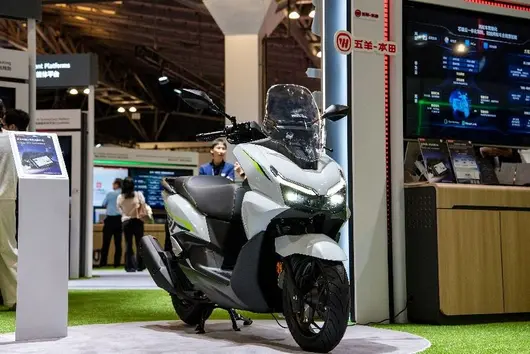
On September 17, the 11th Huawei Connect Conference opened at the Shanghai World Expo Exhibition Center. In a corner of the HarmonyOS ecosystem exhibition area, a T150 scooter was quietly displayed. Its special feature lies not in the appearance, but in the vehicle head unit system — the Wuyang-Honda T150 prototype equipped with the HarmonyOS ecosystem is one of the few products participating in this conference with a fuel-powered two-wheeler enterprise identity.
From jointly building the intelligent computing center in May this year, to appearing at the Huawei Developer Conference in June, to stepping onto the HC Conference stage this time, Wuyang-Honda's participation in the Huawei ecosystem is gradually deepening. While local motorcycle enterprises such as Zongshen, CFMOTO, and Qianjiang compete for market discourse with the "intelligence" label, this joint venture chose a different path: do not abandon the internal combustion engine, but allow fuel motorcycles to "connect" to the digital world.
A Noteworthy "Identity"
It is understood that the T150 equipped with the HarmonyOS ecosystem is a city commuting scooter model built on the Wuyang-Honda eW15 water-cooled four-valve engine platform. The engine is derived from the same source as Honda's eSP+ technology, with a maximum power of 11.4kW/8500rpm and a maximum torque of 14.4N·m/6500rpm, balancing power output and low fuel consumption performance. On the basis of retaining mechanical texture and handling fun, the T150 prototype is equipped with an intelligent vehicle system integrating the HarmonyOS ecosystem. Relying on Wuyang-Honda's existing WiLINK full-domain intelligent architecture, combined with the distributed capabilities of the HarmonyOS ecosystem, the T150 achieves seamless handover of navigation tasks between the vehicle's large screen and HarmonyOS terminals. Users can achieve cross-end collaboration of functions such as vehicle positioning, remote connectivity, vibration anti-theft alerts, and riding trajectory recording through HarmonyOS devices, enabling fuel motorcycles to have partial connected experiences of smart terminals.

In the two-wheeler travel landscape of the Huawei HarmonyOS ecosystem, the current participants are mostly electric brands. NIU signed the "Hongtu Plan" with Huawei Consumer Business Group and the GIIC Alliance in August, planning to scale the installation of open HarmonyOS system to cover 200,000 vehicles within the year; Aima Technology signed a deepened cooperation agreement with Huawei in May, focusing on two-wheeler travel intelligence and HarmonyOS ecosystem integration; Zongshen introduced HarmonyOS and AI algorithms even earlier.
Wuyang-Honda's entry logic is different. Fuel motorcycles do not have the inherent electronic and electrical architecture foundation of an electric platform, and the computing power supply, power supply stability, and heat dissipation conditions of the vehicle head unit system are more restricted. On the basis of retaining the eW15 water-cooled four-valve engine platform, Wuyang-Honda "grafted" the distributed capabilities of the HarmonyOS ecosystem onto the existing WiLINK full-domain intelligent architecture, achieving seamless handover of navigation tasks between the vehicle's large screen and HarmonyOS terminals, as well as cross-end collaboration functions such as vehicle positioning, remote connectivity, and vibration anti-theft alerts.
In other words, it is not "stacking" intelligent configurations on fuel motorcycles, but enabling "connection" to the intelligent ecosystem for the fuel platform. For a large number of traditional motorcycle enterprises that are still producing fuel models, this provides a referable technical path.
A Complete Chain
On May 8, the intelligent computing center jointly built by Wuyang-Honda and Huawei Digital Power was unveiled and put into use at the Guangzhou Zengcheng Factory. The center adopts Huawei's FusionModule20006.0 intelligent micro-module architecture, planning to form a hybrid layout of "20P local computing power + 50P cloud computing power" by 2030, serving R&D simulation, intelligent manufacturing, vehicle networking data analysis, and whole-vehicle OTA. The computing power planning of the intelligent computing center explicitly includes "whole-vehicle OTA" and "vehicle networking data analysis". This means Wuyang-Honda's intelligent layout was not a single-point breakthrough from the beginning, but a chain-like promotion of "computing infrastructure — data platform — product-end intelligence". Build computing power base in May, showcase HarmonyOS head unit capabilities at HDC in June, step onto HC Conference in September to showcase the T150 prototype equipped with HarmonyOS ecosystem — three steps, clear logic.
At the 2026 China Motorcycle Chongqing Forum, Liu Xin, Vice President of the China Motorcycle Chamber of Commerce, stated that the entire industry must "firmly follow the path of intelligent, green, and high-end development, replacing homogeneous low-price competition with technology iteration". This chain of Wuyang-Honda is precisely the embodiment of this path.
Honda's "Chinese-style Intelligence"
Examined within Honda's global strategy, this step by Wuyang-Honda has more typical significance.
Honda has already made clear plans in the electrification field: 2024 is positioned as the first year of global expansion of electric motorcycles, with plans to launch electric vehicle models globally every year, and products such as UC3 have been introduced to the Thailand and Vietnam markets first. In terms of intelligence, Honda launched the RoadSyncDuo connectivity feature, achieving linkage between smartphones and vehicle displays. But overall, Honda's pace in two-wheeler intelligence is relatively steady, and there is tension between the global unified platform strategy and the demand for rapid iteration in the Chinese market.
Wuyang-Honda is at the forefront of Honda's global system. According to Zhang Wenqing's introduction to the media in April this year, Wuyang-Honda is currently Honda's factory with the largest production of electric two-wheelers, and products are not only exported to Vietnam and Indonesia, but even re-exported to Japan. In terms of intelligence, Wuyang-Honda's independently developed intelligent platform has been installed on every car, and technologies such as voice control and intelligent driving assistance are under development.
"In China, for China, and even for the world" — Wuyang-Honda's role is shifting from a joint venture manufacturing base to the intelligence test field in Honda's global system. Its cooperation with the HarmonyOS ecosystem is essentially leveraging China's local intelligent ecosystem capabilities to feed back into the intelligent upgrade of Honda's global products. This "reverse empowerment" model is still rare in joint venture car companies.
"Route Differentiation" in Two-Wheeler Intelligence

Wuyang-Honda's choice reflects an important fork in the current two-wheeler intelligence track.
One route takes the electric platform as the natural carrier. Brands such as NIU, Luyuan, and Aima carry out intelligent upgrades around open HarmonyOS or self-developed systems, and vehicles possess complete digital capabilities from the underlying operating system to the application layer. The cooperation between Luyuan and ShenKaiHong explicitly proposes to take "L2-Ultra Smart Two-Wheeler" as the goal, promoting the whole vehicle to leap from "Connectivity Intelligence" to "System-Level Intelligence".
The other route "connects" intelligent capabilities on the fuel platform, represented by Wuyang-Honda. Its challenge lies in: the electronic and electrical architecture of fuel vehicles does not have native digital conditions like electric vehicles, and the realization of intelligent functions requires additional computing power support and system adaptation. Wuyang-Honda's solution is to provide cloud computing power through the intelligent computing center, provide terminal-side connectivity through WiLINK+ HarmonyOS ecosystem, and form a "Cloud — Terminal — Vehicle" collaborative architecture.
The coexistence of the two routes shows that the two-wheeler intelligence has not yet formed a unified technical paradigm. When CFMOTO launched the C-Link intelligent platform, Qianjiang released the ParaPal Surging Intelligent Architecture, and Loncin and Zongshen explored "Moto Cloud" platforms respectively, the industry is experiencing a technical competition with multiple paths running in parallel, rather than a simple "who replaces who".
Wuyang-Honda's exploration also reflects the three hurdles that two-wheeler intelligence must face head-on. First is cost. Two-wheeler prices are sensitive, and there is a natural tension between intelligent hardware and R&D investment and terminal selling prices. Grafting the HarmonyOS ecosystem on the fuel platform for T150 makes cost control more difficult. Second is standards. Each OEM's communication protocols and data interfaces form their own systems, and security standards such as information security and OTA upgrades are not yet sound; at the international level, the UN R155 regulations have included L-category motorcycles within the regulatory scope, requiring new certified models to establish a network security management system starting from December 11, 2027, and the compliance cost for going global should not be underestimated. Third is technical maturity. Millimeter-wave radar and cameras still have high false alarm rates in complex environments. Two-wheelers have stricter requirements for volume, power consumption, and anti-vibration. V2X also lacks dedicated two-wheeler standards. These challenges are not unique to Wuyang-Honda, but are thresholds that the entire industry must cross on the path to deep intelligence.
For traditional motorcycle enterprises that are still watching, Wuyang-Honda's path provides a referable idea — there is no need to overturn the fuel platform, but through computing infrastructure and ecosystem cooperation, allow fuel vehicles to obtain "partial connectivity experiences of smart terminals". Whether this road can be passed and how far it can go depends on whether costs can decrease with supply chain maturity, whether standards can be supplemented as soon as possible, and whether technology can find pragmatic solutions under the unique constraints of two-wheelers.
[Author: Qi Xiaoling]
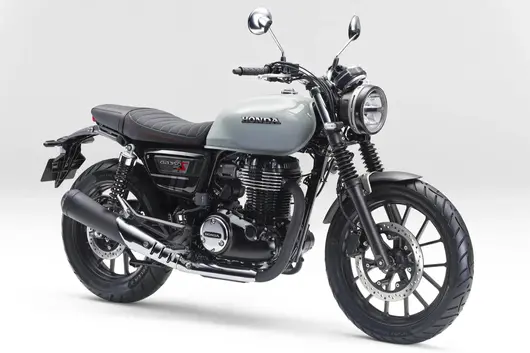
Have you noticed that Honda refuses to push good bikes available in some small Southeast Asian countries to China, instead launching them in the markets surrounding China. This practice lasted for decades until it suddenly remembered the China market around 2025. First, mid-to-large displacement motorcycles lowered prices one after another, then aggressively attacked the 150 scooter market, with good bikes starting to arrive one after another.

Why has Honda always placed the China market last, and why has it suddenly valued it now?
If we expand our vision to the global level, we find that Honda treats the Southeast Asian and South Asian markets as its base, while positioning the China market as a profit patch. Indeed, they are completely different regions. But if we go back 30 years, it wasn't like that.

As is well known, motorcycle bans and restrictions in many places, along with the 13-year scrappage rule, have caused China to be downgraded step by step from an important Honda two-wheeler market. Sales volume determines speaking power; Asia accounts for 85% of Honda's global sales, with India being the core of incremental growth, while other countries also have their own characteristics. Therefore, Honda positions these South Asian and Southeast Asian markets as the home ground of the base.
Among them, India is positioned as "Universal Essential Demand + Local Manufacturing + Upward High-endization": Activa, Shine, Dio focus on sales volume; GB350/H'Ness launches directly in India, countering Royal Enfield, then builds BigWing to sell GB500, uses Rebel for high-endization, with production capacity rushing to 7 million units by 2027, serving as the strategic foundation. This shows the importance Honda places on the Indian market.

Thailand, Indonesia, and Vietnam adopt the strategy of "Mature Upgrade + Local R&D": Thailand's HRS-T leads development, PCX160, ADV160, CBR250RRll are locally manufactured, locally sold, and even exported back globally; Vietnam pushes the SH150i high-end scooter; Indonesia nurtures the CBR250RR. Scooters + Commuting are daily life, mid-displacement FUN is an upgrade, prices are people-friendly, iterations are fast, and Honda is willing to change colors and wheelbases for local tastes.
In short, these markets are where Honda moves volume and roots its brand, daring to premiere new platforms, daring to localize, and daring to go deep. The China market, however, is a special positioning where it retreats from volume to profit.
Compared to Southeast Asia, China is "High Competition, High Unit Price, Slow Launch". Honda treats it as an exception of the Global South, neither viewing it as an essential demand market nor an innovation front line, but only as a harvesting ground for brand premiums. This is clearly a positioning miscalculation lasting decades.
So, why does Honda produce a positioning deviation against China?
First, historical reasons
Honda rooted in Southeast Asia in the 1960s, whereas China only started with Wuyang and Xinben after the 1990s, failing to build full-population motorcycle cognition. Honda only saw motorcycle bans and the distorted market replaced by electric two-wheelers in recent years.
Second, the stereotypical perception extended from this: "Motorcycles = Low-end Transport"
China's urbanization is fast and motorcycle bans are strict, Honda thought Chinese people don't play with gasoline motorcycles, until domestic Flash 300, CL-C made mid-displacement FUN work, then found they missed the "Fun Upgrade" track. The lateness of GB350 is the cost of this set of miscalculations.
Third, dragged by four-wheelers, joint venture internal friction
Cars in China were devastated by BYD and Xiaomi, resources tilted to four-wheelers to fight fires, two-wheelers only dared to cash out safely; in recent years, the two joint ventures, Wuyang and Xinben, balance each other, making new product decisions half a beat slow.
Fourth, Honda miscalculated China's motorcycle electrification process
New Energy Vehicles were pushed to market via subsidies and policy, but motorcycle subsidies and policies have nothing to do with it. Honda mistakenly thought Chinese motorcycles would copy the pure electric route of cars, dare not invest in fuel mid-displacement. As a result, China's motorcycle consumption structure formed a dual track of "Commute Electric, Fun Fuel", thus Honda missed about 5 years of the golden period.
Honda's calculation of taking the China market as a profit pool led to long-term miscalculation; it only woke up after the rise of domestic brands. Rather than saying it has high business quality, it's more like its profit sense is still there. This manifests as Honda's eagerness to push good bikes like GB350 to the China market, and subsequently, perhaps those good bikes surrounding the China market will be pushed more and more. However, whether Chinese consumers will still buy them has become a question.
This article's content is collated and analyzed based on automakers' public capacity planning, industry sales announcements, and public market information. It serves as an industry observation only and does not constitute recommendations for vehicle selection or investment operation. Vehicle selection should be based on offline test drives of actual vehicles and official parameter configurations.

By Wan Xulong
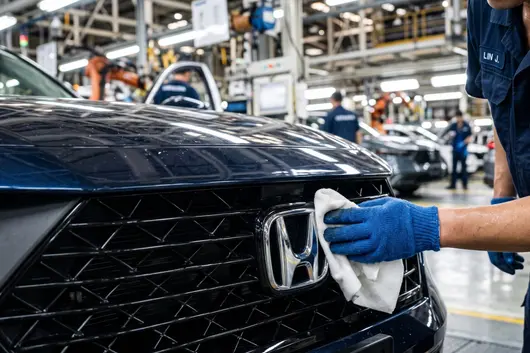
On July 20, Honda and GAC Group announced they will extend the joint venture agreement until 2038.
The original joint venture agreement was set to expire in 2028. Honda chose to complete the renewal two years early in 2026. Mainstream analysis in overseas financial circles believes this move aims to forcibly eliminate external uncertainty regarding the future of the joint venture.
Over the past year, rumors about GAC Honda closing backward production lines and reducing capacity have continued to ferment in the market. Overseas capital markets even once interpreted these moves as a precursor to the Japanese giant preparing for strategic withdrawal. This early-signed new agreement indeed allayed so-called concerns about "withdrawal".
This new agreement is full of realistic strategic considerations in terms of duration and equity ratio.
Honda abandoned the grand narrative of a 30-year timeline when the factory was built in 1998, setting the duration conservatively at 10 years. In today's world where smart EV technology iterates rapidly, predicting the industry end-game 30 years later is meaningless. 10 years just covers the reshuffling period for the complete transition from traditional fuel vehicles to new energy.

The Chinese market has long passed the simple profit center stage, evolving into the world's most efficient smart driving testing ground and the source of 3-electric technology. Honda is actually bearing the pain of eliminating backward capacity over 10 years, relying on China's massive supply chain to complete the reconstruction of underlying technology. This is the winning hand for its survival in the new energy era.
On the other hand, the new agreement maintains the 50-50 equal equity ratio. Against the background of the comprehensive opening of joint venture equity ratios, cross-border car companies generally seek absolute control to gain more profits. Honda chose to stand still on equity, obviously having completely different ideas.
The internal combustion engine technology barrier and old system of the fuel vehicle era have become like rotting wood. Facing the brand-new electrification underlying architecture, Honda urgently needs to rely on China's extremely competitive smart driving algorithms and 3-electric supply chain system. Maintaining an equal equity ratio represents a new balancing contract exchanged for technology empowerment after the Chinese local automotive industry explodes comprehensively in core technology fields. This renewal that seems to stabilize the army's morale actually also represents the end of the era of one-way technology input. In the future, the "Joint Venture 2.0" model, where the Chinese side leads the new energy architecture while the foreign side handles brand quality control, will truly determine the future of joint venture car companies.
The Flip of the Underlying Model
In the window period created by this new 10-year contract, GAC Honda needs to undergo a painful and thorough transformation. It is transforming from a pure manufacturing execution unit in Honda's global strategy into a co-creation R&D center highly dependent on Chinese local technology empowerment.
In 1999, GAC Honda introduced the sixth-generation Accord into the Chinese market simultaneously, breaking the price monopoly of imported luxury sedans all at once. For the following 20-plus years, GAC Honda surged ahead. Many heavy-hitting products like Fit, Odyssey, Crider, and Vezel were launched consecutively, finally creating a historical peak of 808,900 annual sales units in 2020.

Supporting this premium and sales volume was Honda's advantage in internal combustion engine and vehicle engineering dimensions, which had a very high match with the domestic market at that time. These technologies not only won sales volume but also established industry standards in the Chinese market for 20 years.
In the powertrain field, Honda was jokingly referred to by the folk as "buying engines and getting a car for free". From VTEC to later i-VTEC technology, then to the Earth Dreams Technology series engines of the turbocharging and hybrid era, relying on efficient combustion technology, it achieved extremely low fuel consumption while outputting surging power. The i-MMD dual-motor hybrid system even directly raised the technology threshold of the entire Chinese hybrid market with over 40% thermal efficiency. In that stage, Honda's engine parameters were the industry benchmark that Chinese local car companies had to catch up in power R&D.
In terms of mechanical space utilization, Honda's concept of maximizing space for human seating and minimizing space occupied by machinery also profoundly reshaped China's family car market. Chinese consumers have an extreme craving for interior space. Relying on extremely exquisite chassis suspension layout and space excavation, small cars like Fit have the most outstanding seating experience among products in the same class, while Odyssey directly created the golden space standard for Chinese family MPVs. This class-skipping space performance forced all car brands attempting to enter the Chinese market to make space optimization the first priority of car building.
But now, the mechanical moat proud of the fuel vehicle era has quickly lost its protective efficiency before the 3-electric system and high-level smart driving. Facing the extremely strict iteration rhythm of the Chinese market, the foreign party finally realized that a global platform made behind closed doors cannot survive at all.
The direction of technology empowerment has undergone a historical reversal. For example, in GAC Honda's current new energy technology spectrum, the underlying Architecture W architecture has completely opened up to Chinese local supply chains. Battery packs directly adopted CATL's ternary lithium batteries, intelligent cockpits integrated iFlytek and Huawei's technical ecosystems, and high-level smart driving systems started to extend olive branches to local algorithm companies like Momenta.
Perhaps you might wonder, this migration of technological focus is already old news for many joint venture brands a few years ago, why did GAC Honda, which had deep insights into the Chinese market for more than 20 years before and produced many best-selling models fitting domestic consumer needs, seem to turn slowly? The core reason is that a set of old supply chain systems, the constraints are far beyond our understanding.
Shattering the Keiretsu System
The flip of the underlying model is accompanied by a sense of violent tearing. GAC Honda's terminal sales volume in the first half of this year encountered a severe decline of over 50 percent. Reuters and Nikkei pointed out in recent reports that this is by no means a simple macroeconomic cycle fluctuation; an irreversible structural collapse is truly happening on Japanese joint venture brands. The appearance of this collapse is the excess of backward capacity, its core originates from the complete failure of the old supply chain system.
In the past few decades, Honda, or rather the Japanese automotive industry, has been invincible worldwide. At the supply chain level, the core winning hand is a closed system known as Keiretsu.

This system is centrally scheduled by the OEM, and component enterprises at various levels form a community of interest through cross-shareholding. Inside Honda, Keihin focuses on engine control, Showa focuses on chassis suspension, and Nissin Industrial focuses on braking systems. These three core suppliers constitute Honda's unique component "Three Families".
The most significant feature of the Keiretsu model is the Design-in joint development mechanism where guest engineers enter the OEM R&D center years in advance. This highly bonded software and hardware development mode compressed component manufacturing costs to the extreme and ensured one-million-level physical quality control consistency with strict internal collaboration. Honda's ability to conquer the global market with extremely high reliability relied entirely on this solid wall built by the "Three Families".
In the Chinese market, this model was perfectly replicated by GAC Honda. In the initial stage of factory building, Honda introduced all Japanese component giants within the system to Guangzhou Huangpu, forming a closed procurement ecology that water cannot penetrate. Chinese suppliers found it extremely difficult to penetrate this solidified component list. This highly closed collaborative development mechanism once helped GAC Honda quickly align with global manufacturing standards and established a ruling market position in the following 20 years.
Entering the era of smart electric vehicles, this method showed systemic rigidity and sluggishness.
The Keiretsu model is built on the incremental improvement of internal combustion engines and mechanical hardware, its core is the highly integrated mechanical calibration of software and hardware. Smart electric vehicles require software and hardware decoupling and centralized computing architecture. Facing the leap of battery chemical materials and the explosion of smart driving algorithms, Japanese component giants cannot incubate 3-electric technology with global competitiveness at all.
The more fatal contradiction lies in the mismatch of development rhythm. Japanese traditional supply chains are used to completing a durability closed-loop verification process lasting 36 to 48 months to ensure absolute component reliability. The technical half-life of the Chinese new energy market has shortened to less than one year. Chinese local car companies use open supply chains to compress vehicle development cycles to 18 to 24 months. Facing the Chinese market where code upgrades are promoted every month, the long verification process has become shackles binding Japanese car companies.
Even if Honda tried to save itself at the cross-border level, merging Keihin, Showa, Nissin Industrial and Hitachi Automotive Systems into Hitachi Astemo, and planning to increase its shareholding to 61% this year to unify command resources and aggressively attack AI and software development. This slow speed of internal integration still cannot keep up with the iteration rhythm of China's local.
To survive, GAC Honda must personally smash this closed high wall built by Japanese suppliers.
Facing the crazy drop in sales and the dissolution of the fuel vehicle base, GAC Honda is undergoing a cruel capacity clearing and supply chain breakthrough. While gradually shutting down some old fuel vehicle production lines in Guangzhou, the brand new new energy exclusive factory located in Guangzhou Huangpu with an initial annual capacity of 120,000 vehicles is in the key period of capacity ramp-up. Using high new heavy assets to replace old assets that could originally sustain blood creation, this alternation of breaking and establishing consumes enterprise cash flow extremely.
Conducted synchronously with capacity clearing is the complete liberation of procurement power.
On the next brand new EV models, GAC Honda decisively bypassed the traditional Japanese supply chain and deeply integrated Chinese local top technology enterprises into its own R&D system. The vehicle's core power battery pack directly switched to CATL's mature solution. The intelligent cockpit underlying level fully integrated iFlytek and Huawei's technology ecosystem. High-level smart driving algorithms directly adopted the end-to-end large model provided by Chinese startup company Chudu.
Completely smashing the interest fortress of the Keiretsu system and integrating China's top local 3-electric and smart driving enterprises into its own underlying architecture is the only path for GAC Honda to adapt to the cruel evolutionary rhythm of the Chinese market. Joint venture car companies are exactly in this pain of breaking old and establishing new, searching for the possibility of regaining vitality.

Staying in the Cruellest Gym
Honda chose to complete the renewal at this node in time, essentially forcing itself to stay in the world's cruelest business gym. In this market, the response speed of smart cockpits, the generalization ability of high-level smart driving, and the thermal efficiency of power batteries are repeatedly subjected to extreme pressure by hundreds of local car companies and tens of millions of consumers every day. This high-intensity competitive environment is an industrial ecosystem that any cross-border car company cannot replicate in its local market or European and American bases.
If choosing to strategically withdraw or contract the battle lines at this time, Honda can indeed protect the short-term financial report, but it will completely lose the antenna to perceive the world's most advanced smart electrification trends. Once leaving this super technology incubator China, Honda's R&D system will quickly degenerate in the following three to five years, becoming an island completely cut off from the global top 3-electric and software supply chains.
Staying at the table, it is not only about market share in China but also about Honda's defense capability at the global level.
The strong overseas expansion of China's local new energy vehicles has been fully opened. In Southeast Asia, Middle East, and South America, etc., which are advantage markets traditionally firmly controlled by Japanese car companies, Chinese car brands are launching fierce attacks carrying high-dimensional product power polished by extreme internal competition. Honda's profit highlands in Thailand, Indonesia and other places are facing unprecedented pressure.
In order to resist this dimensionality reduction strike on the global battlefield, Honda must cultivate product R&D capabilities on the Chinese local that can confront Chinese brands head-on. This is exactly the core strategic value of the reverse joint venture model.
GAC Honda and other joint venture enterprises are undertaking an extremely critical technology feedback role. Honda deeply integrates CATL batteries, Huawei ecosystems, and local startup smart driving algorithms within the Chinese joint venture system, not just to build a few cars suited to Chinese consumer tastes. Its true intention is to use the Chinese underlying technology architecture to quickly iterate a set of new energy solutions with global competitiveness.

Recent rare alliances between Honda and Nissan in electrification and intelligence dimensions also confirm the spread of this global defense anxiety. Facing the technology sprint of Chinese car companies, Japanese giants have given up the illusion of fighting alone. GAC Honda plays a key hub role in connecting China's top supply chains and Japanese global manufacturing systems within this huge defense network.
The Chinese market is reshaping Honda's technology base. GAC Honda's 10-year renewal agreement completely ends the one-way narrative of exchanging foreign technology for the Chinese market. Joint venture car companies are transforming into core pipelines for cross-border giants to draw nutrients from China's advanced industrial chains. This life-or-death self-revolution will ultimately decide whether Honda can hold a place in the future global smart car landscape.

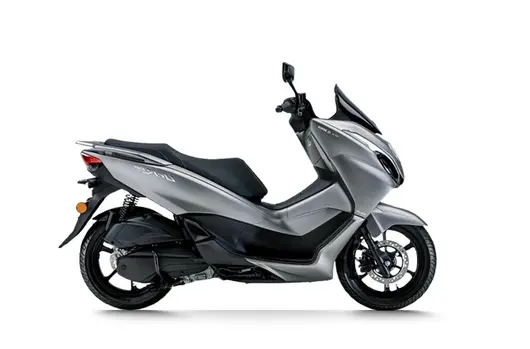
Haojue's move this time is impressive; no one knew Haojue had this trick up its sleeve, revealing to the industry this old enterprise's hidden layout and strategy.
Honda Openly Fortifies Positions.
In the past year-plus, Honda has been intensively active in the domestic market, successively launching 7 models of 150cc scooters in a short time, rapidly seizing the market like dumplings being dropped into a pot, and having already established a 150cc scooter stronghold.

Facing Honda's strong offensive, Haojue's response looks very passive, only conducting routine updates to its popular model UHR150, while launching a new model UFR150. The overall action pace is slow, forming a sharp contrast with Honda's swift offensive.
Not only that, the center-mounted headlight design of UFR150 sparked considerable controversy. Coupled with the product positioning overlap with UHR150, it left the industry and consumers unable to figure out Haojue's strategic intent. Most people believe Haojue reacted sluggishly in this round of market competition and has already fallen behind.

This scene is exactly like the Chu-Han Contention, when Xiang Yu saw Liu Bang burn the plank roads and march west, he mistakenly thought he had no intention of fighting for the world and completely let down his guard; the market also generally looked down on Haojue's competitive prospects.
Haojue Advances Covertly.
And just a few days ago, two pieces of news arrived from afar, quietly spreading to every corner of the market.

First, Haojue UFR150 was affixed with a Suzuki badge below the center-mounted headlight, officially launched as the Suzuki Burgman 150 in Southeast Asian and Latin American overseas markets such as Indonesia and Colombia. The entire vehicle was produced and exported by Haojue's original factory; only changing the badge made it a main scooter model under Suzuki. Immediately after, the DN150 that had been on the market for a year from Haojue also swapped the badge to Suzuki, pushed to overseas markets under the model GN160. The model's core design and power architecture followed the original Haojue version, only with fine tuning. Only then did people realize the reason for the 150cc scooter model overlap.
Haojue started reverse-exporting Suzuki, using Suzuki's brand halo to expand overseas markets. When the market was unprepared, they launched a silent ambush, joining hands with Suzuki to complete the counterattack against Honda.

It has to be said, after these two models were affixed with Suzuki badges, relying on Suzuki's years of accumulated brand sentiment and market reputation, the product image greatly improved, suddenly appearing high-end. Especially that flickering headlight of UFR150 right above the Suzuki badge, actually added a bit of domineering style.
Is this a sentiment illusion or a halo effect? It is certain that, no matter what, it will promote the sales of the two models to steadily increase, and will also make consumers re-examine the product strength of Haojue models. Friends who bought these two models might find a Suzuki badge and stick it on openly.
Facing Honda's continuous market offensive, Haojue did not blindly follow the trend, but stabilized the pace and took the route of differentiated competition. On one hand, in the 150cc displacement sector, it advanced covertly by exporting badge-swapped models, opening overseas incremental markets, avoiding domestic frontal competitive pressure; on the other hand, launched the TVL350 model, playing its mid-to-large displacement scooter trump card, dispersing Honda's firepower in the small displacement market, forming a high-low matching product matrix.
From the industry competition pattern perspective, Haojue's move this time was not a temporary action, but relied on its own mature manufacturing system and quality control capabilities, achieving a leap from OEM production to reverse export of autonomous models.
Although the outcome remains undecided, Haojue's restrained planning and steady advance have shown the market the possibility of changes in the 150cc model sector pattern, which is worth our continued focus.

In the joint venture mid-size sedan market, the Honda Accord has always been an indispensable model, consistently ranking in the top sales tier. However, in the past two years, the market landscape has changed dramatically. Domestic new energy sedans have emerged strongly, while competitors like Camry and Passat continue to iterate, squeezing the Accord's market share. To reverse the decline, Honda launched a mid-cycle major redesign of the Accord in the Thailand market at the end of May 2026, going directly "All In Hybrid", no longer offering pure gasoline versions, while comprehensively upgrading the interior smart cockpit and optimizing exterior details, attempting to break the current stalemate. Many domestic car enthusiasts are asking, will this upgraded new Accord succeed in reversing the market decline after being introduced domestically and returning to the peak of the top-selling title in its class? Let's take a look together below.

The 2026 Honda Accord is a mid-cycle redesign version of the 11th generation model, officially released on May 28, 2026 in the Thailand market. A total of three trim models were launched, all are 2.0L e:HEV hybrid versions, namely e:HEV E, e:HEV EL, and e:HEV RS Panoramic. Highly likely to officially launch in the 3rd quarter of 2026. GAC Honda's actions have always been fast, so domestic simultaneous introduction should not make us wait long.
Regarding price, the official guide price range in the Thailand market is 1.479 million - 1.764 million Thai Baht, equivalent to about 120,000 - 144,000 RMB, the price was slightly adjusted downwards compared to the previous generation model.
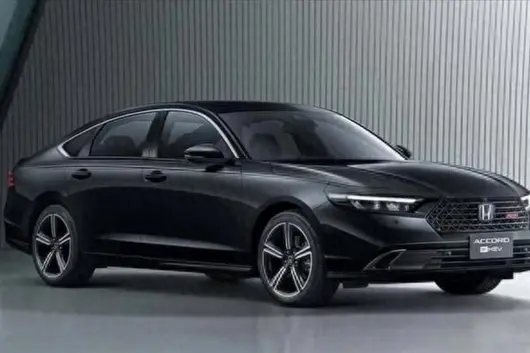
The new car front face abandoned large-area chrome plating, replaced with a hexagonal glossy black honeycomb grille. Matrix LED headlights on both sides became longer and sharper, the daytime running light strips were also made into a "hook" shape, the gaze is sharp with a bit of Type-R flavor. The side still retains fastback coupe lines, but equipped with new style low-drag wheels, visually estimated to be 19 inches. The biggest change at the rear is the full-width taillights, with Honda LOGO embedded in the middle, the overall visual effect is wider and lower/crouching.

At the same time, the new car added "Urban Gray Pearl paint", the top RS version was also equipped with exclusive sport kits, full body blacked-out trim, black exterior mirror housing added.
Regarding dimensions, the 2026 Accord Thailand version overall length, width, height are 4962mm x 1862mm x 1449mm, wheelbase is 2830mm. As a standard mid-size sedan, these size parameters are quite good. Even if there is a small bump in the rear middle floor, daily full-load travel will not overly affect comfort. The only thing to note is that the hybrid model due to battery pack mounted at the bottom, the trunk floor is slightly raised, storage space is slightly reduced compared to the old fuel version.
In terms of interior, large area inside the car uses soft leather wrapping, door panels, center console, armrest box and other high-frequency contact areas are all delicate soft materials. High-spec RS version provides pure white interior option for the first time, white seats, white door panels, white instrument panel, further matched with metal trim accents, looks very high quality.
Center console standard equipment 12.3-inch floating center console large screen and 10.2-inch full LCD instrument panel, top version also equipped with 11.5-inch HUD head-up display. Regarding the car machine, expected to be equipped with Honda CONNECT 4.0 Smart Navigation Interconnect System, supports 5G online, Ai voice visible is available to speak, wireless CarPlay, CarLife and OTA upgrade functions.

Regarding configurations, equipped with Honda SENSING 360+ Safety Sense System. Besides conventional active braking, traffic sign recognition, lane keeping assist, lane departure warning, forward collision warning, full-speed range ACC, also added forward intersection vehicle warning, driver status monitoring, congestion assist with low-speed follow-stop, and highway indicator lane change assist functions. Regarding comfort configurations: all series equipped with keyless entry, one-key start, automatic climate control, rear independent air vents, electric sunroof, multifunction genuine leather steering wheel, seat height adjustment and other basic configurations. High-spec models add seat heating, ventilation functions, rear central armrest extended design, ambient light, auto-dimming rearview mirror, rain-sensing wipers, and other configurations.
Regarding power, Thailand market directly cancelled pure gasoline versions, all series equipped with 2.0L e:HEV hybrid system.

This 4th generation i-MMD dual-motor hybrid system, composed of 2.0L direct injection Atkinson cycle engine + dual motors, engine body maximum power 147 hp, peak torque 182N·m; drive motor maximum power 184 hp, peak torque 335N·m; system comprehensive output power reaches 158kW (about 215 hp), peak torque 350 N·m, transmission system matches E-CVT electronic continuously variable transmission. Expected 0-100km/h acceleration time will shorten from current 7.9 seconds to about 7.5 seconds, WLTC comprehensive fuel consumption is around 4.0L/100km.
Suspension is still front MacPherson rear multi-link, but high-spec models will add ADS full-time adaptive shock absorption system, minimum turning radius reduced to 5.2 meters.
Final question: New Accord, can it really reverse the decline?
Ya Li thinks, from the 2026 Accord redesign Thailand market performance, the new Accord has reached the first tier level of joint venture mid-size cars, compared to Camry and other same-class competitors will not lag behind.
Ya Li thinks it wants to reverse the market situation in the domestic market, return to the peak, unlikely. Today's mid-size car market is no longer the era where joint venture cars dominate alone, domestic new energy models' intelligence, cost-performance advantage is too obvious, occupied a large amount of market share.
But then again if GAC Honda is decisive enough on pricing, not holding back, give consumers a "Wow" surprise price in one step, it is still possible. As for whether it can achieve sales reversal after being introduced domestically, believe market feedback will give the most true answer.

In the joint venture mid-size sedan market, the Honda Accord has always been an indispensable model, consistently ranking in the top sales tier. However, in the past two years, the market landscape has changed dramatically. Domestic new energy sedans have emerged strongly, while competitors like Camry and Passat continue to iterate, squeezing the Accord's market share. To reverse the decline, Honda launched a mid-cycle major redesign of the Accord in the Thailand market at the end of May 2026, going directly "All In Hybrid", no longer offering pure gasoline versions, while comprehensively upgrading the interior smart cockpit and optimizing exterior details, attempting to break the current stalemate. Many domestic car enthusiasts are asking, will this upgraded new Accord succeed in reversing the market decline after being introduced domestically and returning to the peak of the top-selling title in its class? Let's take a look together below.
The 2026 Honda Accord is a mid-cycle redesign version of the 11th generation model, officially released on May 28, 2026 in the Thailand market. A total of three trim models were launched, all are 2.0L e:HEV hybrid versions, namely e:HEV E, e:HEV EL, and e:HEV RS Panoramic. Highly likely to officially launch in the 3rd quarter of 2026. GAC Honda's actions have always been fast, so domestic simultaneous introduction should not make us wait long.
Regarding price, the official guide price range in the Thailand market is 1.479 million - 1.764 million Thai Baht, equivalent to about 120,000 - 144,000 RMB, the price was slightly adjusted downwards compared to the previous generation model.
The new car front face abandoned large-area chrome plating, replaced with a hexagonal glossy black honeycomb grille. Matrix LED headlights on both sides became longer and sharper, the daytime running light strips were also made into a "hook" shape, the gaze is sharp with a bit of Type-R flavor. The side still retains fastback coupe lines, but equipped with new style low-drag wheels, visually estimated to be 19 inches. The biggest change at the rear is the full-width taillights, with Honda LOGO embedded in the middle, the overall visual effect is wider and lower/crouching.
At the same time, the new car added "Urban Gray Pearl paint", the top RS version was also equipped with exclusive sport kits, full body blacked-out trim, black exterior mirror housing added.
Regarding dimensions, the 2026 Accord Thailand version overall length, width, height are 4962mm x 1862mm x 1449mm, wheelbase is 2830mm. As a standard mid-size sedan, these size parameters are quite good. Even if there is a small bump in the rear middle floor, daily full-load travel will not overly affect comfort. The only thing to note is that the hybrid model due to battery pack mounted at the bottom, the trunk floor is slightly raised, storage space is slightly reduced compared to the old fuel version.
In terms of interior, large area inside the car uses soft leather wrapping, door panels, center console, armrest box and other high-frequency contact areas are all delicate soft materials. High-spec RS version provides pure white interior option for the first time, white seats, white door panels, white instrument panel, further matched with metal trim accents, looks very high quality.
Center console standard equipment 12.3-inch floating center console large screen and 10.2-inch full LCD instrument panel, top version also equipped with 11.5-inch HUD head-up display. Regarding the car machine, expected to be equipped with Honda CONNECT 4.0 Smart Navigation Interconnect System, supports 5G online, Ai voice visible is available to speak, wireless CarPlay, CarLife and OTA upgrade functions.
Regarding configurations, equipped with Honda SENSING 360+ Safety Sense System. Besides conventional active braking, traffic sign recognition, lane keeping assist, lane departure warning, forward collision warning, full-speed range ACC, also added forward intersection vehicle warning, driver status monitoring, congestion assist with low-speed follow-stop, and highway indicator lane change assist functions. Regarding comfort configurations: all series equipped with keyless entry, one-key start, automatic climate control, rear independent air vents, electric sunroof, multifunction genuine leather steering wheel, seat height adjustment and other basic configurations. High-spec models add seat heating, ventilation functions, rear central armrest extended design, ambient light, auto-dimming rearview mirror, rain-sensing wipers, and other configurations.
Regarding power, Thailand market directly cancelled pure gasoline versions, all series equipped with 2.0L e:HEV hybrid system.
This 4th generation i-MMD dual-motor hybrid system, composed of 2.0L direct injection Atkinson cycle engine + dual motors, engine body maximum power 147 hp, peak torque 182N·m; drive motor maximum power 184 hp, peak torque 335N·m; system comprehensive output power reaches 158kW (about 215 hp), peak torque 350 N·m, transmission system matches E-CVT electronic continuously variable transmission. Expected 0-100km/h acceleration time will shorten from current 7.9 seconds to about 7.5 seconds, WLTC comprehensive fuel consumption is around 4.0L/100km.
Suspension is still front MacPherson rear multi-link, but high-spec models will add ADS full-time adaptive shock absorption system, minimum turning radius reduced to 5.2 meters.
Final question: New Accord, can it really reverse the decline?
Ya Li thinks, from the 2026 Accord redesign Thailand market performance, the new Accord has reached the first tier level of joint venture mid-size cars, compared to Camry and other same-class competitors will not lag behind.
Ya Li thinks it wants to reverse the market situation in the domestic market, return to the peak, unlikely. Today's mid-size car market is no longer the era where joint venture cars dominate alone, domestic new energy models' intelligence, cost-performance advantage is too obvious, occupied a large amount of market share.
But then again if GAC Honda is decisive enough on pricing, not holding back, give consumers a "Wow" surprise price in one step, it is still possible. As for whether it can achieve sales reversal after being introduced domestically, believe market feedback will give the most true answer.

Due to the cancellation of the electric vehicle plan resulting in a $10 billion loss, Honda reported its fiscal year 2025 annual loss last Thursday, recording a net loss of 423.9 billion yen (approximately 18.2 billion RMB). This is the company's first annual loss in nearly 70 years since its listing on the Tokyo Stock Exchange in 1957.

At the same time, Honda expects a V-shaped turnaround in the next fiscal year, with an annual operating profit guidance of 500 billion yen (approximately 23.2 billion RMB). Honda emphasized that excluding the remaining 500 billion yen in electric vehicle-related losses to be accrued, the operating profit target for its core business is 1 trillion yen.
Honda's goal is to restore operating profits to a historical high of over 1.4 trillion yen by the fiscal year ending March 2029. Its core confidence comes from the profitability of fuel vehicles and hybrid businesses, including a reduction in electric vehicle impairment losses. Additionally, Honda's motorcycle business remains a cash cow, and is expected to continue breaking profit records in markets such as India and Brazil.
Honda CEO Toshihiro Mibe clearly stated at the press conference: "The loss in fiscal year 2025 is the result of actively liquidating old strategies. By recognizing asset impairment in one lump sum, we leave uncertainty in the past, ensuring a light start for the next fiscal year."

Honda CEO Toshihiro Mibe
To offset the impact of performance losses on the stock price and demonstrate robust cash flow, Honda announced an aggressive shareholder return policy: declaring the repurchase of up to 1.1 trillion yen (approximately 51 billion RMB) of stock, and expecting the fiscal year 2026 annual dividend to remain at 70 yen per share, flat with the previous fiscal year.
This is the largest buyback plan in Honda's history. The company stated that despite the net loss on the books, operating cash flow after deducting R&D adjustments reached as high as 2.66 trillion yen, and the equity ratio remained at a high level of 55%, with the financial status remaining extremely robust.
Based on optimistic earnings expectations, Honda's stock price actually rebounded significantly the next day. However, whether Honda can truly reverse the trend and achieve high-level profits still faces considerable obstacles.
Huge Losses Began with an All-In Gamble
The core reason for Honda encountering its first huge loss since listing lies in its all-in investment in electrification.
As one of the top five car manufacturers in the US by sales, Honda formulated an ambitious electrification investment plan during the Biden era, because the Biden government planned to significantly increase EV market penetration within the next decade. However, policies and markets change rapidly. After Trump took office, he overturned the previous "EV Mandate", leaving Honda's billions of dollars in R&D with no visible timeline for returns. Toshihiro Mibe stated: "If we continue to advance this project, it will definitely cause losses in the future."
Now, with the contraction of the electrification strategy in the North American market, Honda decided to focus on hybrid models, aiming to launch 15 new hybrid models by 2030.

Currently, Honda is developing three sets of new hybrid powertrains for small, medium, and large vehicles: a small hybrid system targeting the Japanese domestic market, with a volume reduced by 10% compared to the current model; a medium hybrid system targeting the North American market, equipped with a new 2.0-liter direct injection engine, matched with a new transmission, compact high-power battery, and optimized cooling structure, with overall volume reduced by 25%. This system will be equipped on a newly upgraded medium complete vehicle platform, with comprehensive upgrades to platform rigidity, crash prevention performance, and quietness, the complete vehicle weight reduced by 90 kilograms, and manufacturing costs adjusted down by 10%; and a large V6 hybrid system equipped on mid-to-large flagship models, with 30% fuel consumption optimization, 15% acceleration performance improvement, adopting a dual-motor four-wheel drive architecture, suitable for Odyssey MPV, Pilot, UR-V, and other mid-to-large off-road and home vehicle models.
The plan also includes a next-generation hybrid system and brand new hybrid vehicle models to be launched around 2027, which will ultimately adopt Honda's next-generation autonomous driving technology. However, according to "Nikkei News", Honda has delayed the launch date of this AI-driven driving system to 2028.
Honda's luxury brand Acura will go all out for a full hybrid era. The Acura hybrid SUV concept car unveiled in Tokyo recently foreshadows the shape of the new RDX, and the new car will be officially launched within two years. Meanwhile, the Honda main brand will strategically retain pure fuel vehicle models. In the entry-level passenger car market, fuel engines remain the key to maintaining pricing advantages. Honda will launch new generations of fuel-powered models as needed to solidify market share.

Honda North America Product Planning Director Gary Robinson stated that hybrid models will be the core pillar of the product offensive in the North American market. It is expected that before 2030, hybrid sales will surpass pure fuel vehicle models.
In addition, to focus resources on developing new-generation hybrid powertrains, Honda decided to extend the product life cycle of multiple best-selling core models, with the service cycle of some models exceeding even ten years. At least in the North American market, models such as Odyssey, Accord, HR-V, and Acura MDX will all have extended production cycles, with the earliest full replacement not expected until before 2030.
Common Dilemma of Traditional Multinational Car Companies:
How to Face the Fracture of the Two Core Global Markets
A rapid switch in power strategy can curb losses, but the situation Honda faces in the global market remains severe.
First, a sudden brake caused the previous $10 billion electrification supply chain investment to go down the drain. Honda had to urgently adjust the battery capacity from its joint venture with LG New Energy from supplying pure electric vehicles to supplying hybrids or energy storage batteries.
Secondly, Honda has to face the increasingly misaligned competitive pressure in the hybrid market with Toyota.
The US is Honda's profit base for fuel and hybrid models. In 1999, Honda successfully claimed the historical title of the first mass-produced hybrid car in the US by launching the first-generation Insight hybrid sedan months earlier than Toyota's Prius. Today, however, relying on the Prius for over twenty years of iterations, Toyota has successfully equated hybrid cars with Toyota in the hearts of North American consumers.

Especially during these few years when Honda actively bet on electrification, Toyota has already built an extremely terrifying product width in the hybrid field. From compact sedans like Corolla, Prius, mid-size sedan Camry, to SUVs and MPVs represented by RAV4, Highlander, Grand Highlander, almost the entire product line has been hybridized. The latest North American main models like the 9th generation Camry and some hardcore SUVs have directly cancelled the pure fuel version, with hybrid becoming standard across the entire series.
In the last fiscal year, Toyota's hybrid model sales in the same period reached 4.8 million, accounting for 43% of its total global sales, and occupied over 50% share in the US hybrid car market. Honda's total sales of global conventional hybrids and plug-in hybrids were 928,000 units, of which 791,000 units were in the North American market, accounting for a high of 85%, with hybrid model sales accounting for 23% of Honda's global total sales, a huge gap.
Although Honda's i-MMD hybrid system has excellent technical levels and is even more sporty in driving feel, it cannot compare to Toyota's volume in supply chain scale, which limits Honda's flexibility in pricing and overall profit margins.

Worse still, with the uncertainty of the election and tariff policies, Honda's supply chain in North America faces a pincer attack of high tariffs and subsidy cancellations. Honda must maintain high-cost localized production in North America to avoid tariffs, while also dealing with slowing demand, which tests profit margins extremely.
As for the Chinese market, it has now evolved into a bloody battlefield of advanced intelligent connectivity and new energy, with Honda's sales nearly halved within five years.
Many views hold that with the rise of intelligence, the dominance of the automotive manufacturing industry, which used to be topped by vehicle manufacturers with component companies connected layer by layer, is gradually shifting to tech companies with more advantages in chips, AI models, and electronic control systems. Future competition is not only in powertrains, but more so in software and ecosystem competition.
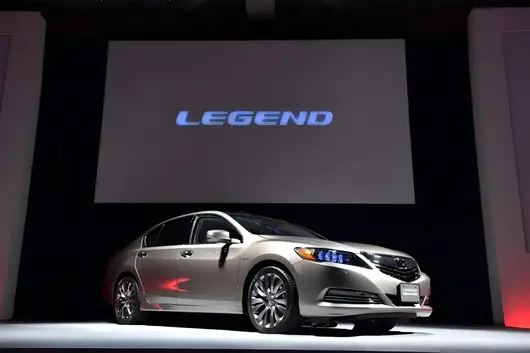
Honda also strongly promoted software-defined cars, being a "radical school" in the autonomous driving field, and is the first car manufacturer globally to equip L3-level autonomous driving technology on mass-produced cars (Japanese version Honda Legend). At this financial report meeting, Toshihiro Mibe clearly stated that Honda will increase software investment and apply electric vehicle and battery technologies to new hybrid models, which will enable Honda to produce pure electric vehicles at any time when consumer tastes change.

However, Honda has always lacked strength in software. Honda's early independently developed software system iterations were extremely slow, completely unable to form a counter-attack in front of Silicon Valley or Chinese tech giants. To make up for the software shortage, Honda established a new company with Sony as a joint venture, attempting to use Sony's software and entertainment ecosystem to build the Afeela smart sedan. However, as Honda comprehensively contracts the electrification front line, the development of the first Afeela model and its North American launch plan have also become victims of this strategic retreat, forced to be indefinitely suspended.
Lacking a strong smart software moat means that even if Honda retreats to the hybrid camp, its products still face "generation gap" threats when facing increasingly intelligent Chinese hybrid models or North American tech giants. In fact, in the Chinese market, Honda is also adopting strategic contraction and retreating to hybrids, basically meaning an active withdrawal from the core premium center of the Chinese market, and it will be very difficult to return to the peak in the future.
Facing the extremely competitive Chinese market and the policy-variable North American market, car companies must maintain flexibility. The question is, this is a common challenge faced by global multinational car companies. Overall, although Honda cleared historical burdens using one-off impairment at this year's financial report meeting and gave optimistic guidance of 500 billion yen profit for fiscal year 2027, its core business and global market structure show that the dilemma Honda faces is absolutely not something simple financial repair can cross; supply chain challenges and double-front battlefields are both difficulties.
Lost Two-Wheeler Market
Against this backdrop, Honda's motorcycle business, from which it made its fortune, is not smooth sailing either.
As the world's largest motorcycle manufacturer, Honda has long used the high profits from two-wheelers to subsidize the downturn of its automotive business. The impairment loss of the Honda automotive business in fiscal year 2025 reached as high as 423.9 billion yen, sustained by the profitable trillion-yen motorcycle business. However, according to recent reports from Nikkei Chinese, Chinese motorcycle brands such as Yadea, Aima, and Vietnamese pure EV company VinFast are launching a fierce pincer attack on Honda in the field of electric two-wheelers.
The Vietnamese government issued strict gasoline motorcycle regulation policies in 2025. The capital Hanoi plans to gradually restrict and ban gasoline motorcycle passage in the city center starting from July this year. This led to an instant explosion in Vietnam's electric two-wheeler market, with penetration rate skyrocketing from 10% in 2024 to 22% in 2025. In response, VinFast adopted a "radical strategy of disregarding profit and loss, low-price market seizure." In 2025, VinFast's electric motorcycle sales reached 400,000 units, surging 5.7 times year-on-year, grabbing 56% share of Vietnam's electric two-wheeler market, with sales soaring to second place in the Vietnamese market.
In response, a Honda executive frankly admitted: "We never expected the electrification process to be so rapid." Although Honda possesses absolute dominance in the traditional fuel motorcycle market in Vietnam, with 2.16 million units sold in 2025 and a comprehensive share of about 65%. However, on this key new track of electric motorcycles, Honda's share is a pitiful 1.4%, with a seriously slow response.

At the same time, Chinese electric two-wheeler giants represented by Yadea and Aima are reshaping the electric two-wheeler industry chain in Vietnam and Southeast Asia with mature industrial chains, further eating into Japanese shares.
Macquarie Transportation Research Director pointed out that Honda's two-wheeler electrification transformation actions in key markets such as Southeast Asia are "quite slow". The "god-like engines" and traditional after-sales networks Honda was once proud of are losing barriers in front of batteries and motors. The Nikkei report also mentioned that Honda was previously overly confident in its motorcycle engine advantages, leading to extreme fragility in defense when facing new environmental regulations.
To cope with the crisis, Honda has to start adopting not-so-fresh cost-reduction strategies — for example, starting to purchase a large amount of motorcycle parts from China, and planning to launch low-price electric motorcycles in Vietnam in June. This signals that the era of extremely high autonomous profits in Honda's two-wheeler business is coming to an end. Honda also plans to invest 500 billion yen to implement an electrification counterattack before 2030, with the goal of increasing annual electric motorcycle sales to 4 million units.
It should be known that the Vietnamese market alone accounts for about 10% of Honda's global motorcycle sales. If Vietnam, this "profit highland", is lost due to electrification, Honda will lose a steady financial backstop. More importantly, the Vietnamese market is not isolated. The Vietnamese government's success in pushing electrification through policy is becoming a model for neighboring countries. Indonesia and Thailand are also heavily subsidizing electric two-wheelers. If Honda cannot quickly plug the gap in Vietnam, the large-scale supply chain established by VinFast and Chinese brands like Yadea, Tailg in Vietnam will naturally radiate throughout ASEAN. At that time, Honda's market foundation throughout Southeast Asia will be shaken.

If the profit margin of this cash cow, the two-wheeler, declines, Honda's four-wheeled automotive transformation will also lose capital infusion.

In the joint venture mid-size sedan market, the Honda Accord has always been an indispensable model, consistently ranking in the top sales tier. However, in the past two years, the market landscape has changed dramatically. Domestic new energy sedans have emerged strongly, while competitors like Camry and Passat continue to iterate, squeezing the Accord's market share. To reverse the decline, Honda launched a mid-cycle major redesign of the Accord in the Thailand market at the end of May 2026, going directly "All In Hybrid", no longer offering pure gasoline versions, while comprehensively upgrading the interior smart cockpit and optimizing exterior details, attempting to break the current stalemate. Many domestic car enthusiasts are asking, will this upgraded new Accord succeed in reversing the market decline after being introduced domestically and returning to the peak of the top-selling title in its class? Let's take a look together below.
The 2026 Honda Accord is a mid-cycle redesign version of the 11th generation model, officially released on May 28, 2026 in the Thailand market. A total of three trim models were launched, all are 2.0L e:HEV hybrid versions, namely e:HEV E, e:HEV EL, and e:HEV RS Panoramic. Highly likely to officially launch in the 3rd quarter of 2026. GAC Honda's actions have always been fast, so domestic simultaneous introduction should not make us wait long.
Regarding price, the official guide price range in the Thailand market is 1.479 million - 1.764 million Thai Baht, equivalent to about 120,000 - 144,000 RMB, the price was slightly adjusted downwards compared to the previous generation model.
The new car front face abandoned large-area chrome plating, replaced with a hexagonal glossy black honeycomb grille. Matrix LED headlights on both sides became longer and sharper, the daytime running light strips were also made into a "hook" shape, the gaze is sharp with a bit of Type-R flavor. The side still retains fastback coupe lines, but equipped with new style low-drag wheels, visually estimated to be 19 inches. The biggest change at the rear is the full-width taillights, with Honda LOGO embedded in the middle, the overall visual effect is wider and lower/crouching.
At the same time, the new car added "Urban Gray Pearl paint", the top RS version was also equipped with exclusive sport kits, full body blacked-out trim, black exterior mirror housing added.
Regarding dimensions, the 2026 Accord Thailand version overall length, width, height are 4962mm x 1862mm x 1449mm, wheelbase is 2830mm. As a standard mid-size sedan, these size parameters are quite good. Even if there is a small bump in the rear middle floor, daily full-load travel will not overly affect comfort. The only thing to note is that the hybrid model due to battery pack mounted at the bottom, the trunk floor is slightly raised, storage space is slightly reduced compared to the old fuel version.
In terms of interior, large area inside the car uses soft leather wrapping, door panels, center console, armrest box and other high-frequency contact areas are all delicate soft materials. High-spec RS version provides pure white interior option for the first time, white seats, white door panels, white instrument panel, further matched with metal trim accents, looks very high quality.
Center console standard equipment 12.3-inch floating center console large screen and 10.2-inch full LCD instrument panel, top version also equipped with 11.5-inch HUD head-up display. Regarding the car machine, expected to be equipped with Honda CONNECT 4.0 Smart Navigation Interconnect System, supports 5G online, Ai voice visible is available to speak, wireless CarPlay, CarLife and OTA upgrade functions.
Regarding configurations, equipped with Honda SENSING 360+ Safety Sense System. Besides conventional active braking, traffic sign recognition, lane keeping assist, lane departure warning, forward collision warning, full-speed range ACC, also added forward intersection vehicle warning, driver status monitoring, congestion assist with low-speed follow-stop, and highway indicator lane change assist functions. Regarding comfort configurations: all series equipped with keyless entry, one-key start, automatic climate control, rear independent air vents, electric sunroof, multifunction genuine leather steering wheel, seat height adjustment and other basic configurations. High-spec models add seat heating, ventilation functions, rear central armrest extended design, ambient light, auto-dimming rearview mirror, rain-sensing wipers, and other configurations.
Regarding power, Thailand market directly cancelled pure gasoline versions, all series equipped with 2.0L e:HEV hybrid system.
This 4th generation i-MMD dual-motor hybrid system, composed of 2.0L direct injection Atkinson cycle engine + dual motors, engine body maximum power 147 hp, peak torque 182N·m; drive motor maximum power 184 hp, peak torque 335N·m; system comprehensive output power reaches 158kW (about 215 hp), peak torque 350 N·m, transmission system matches E-CVT electronic continuously variable transmission. Expected 0-100km/h acceleration time will shorten from current 7.9 seconds to about 7.5 seconds, WLTC comprehensive fuel consumption is around 4.0L/100km.
Suspension is still front MacPherson rear multi-link, but high-spec models will add ADS full-time adaptive shock absorption system, minimum turning radius reduced to 5.2 meters.
Final question: New Accord, can it really reverse the decline?
Ya Li thinks, from the 2026 Accord redesign Thailand market performance, the new Accord has reached the first tier level of joint venture mid-size cars, compared to Camry and other same-class competitors will not lag behind.
Ya Li thinks it wants to reverse the market situation in the domestic market, return to the peak, unlikely. Today's mid-size car market is no longer the era where joint venture cars dominate alone, domestic new energy models' intelligence, cost-performance advantage is too obvious, occupied a large amount of market share.
But then again if GAC Honda is decisive enough on pricing, not holding back, give consumers a "Wow" surprise price in one step, it is still possible. As for whether it can achieve sales reversal after being introduced domestically, believe market feedback will give the most true answer.


