首頁GM-Wuling

搜尋歷史
熱門搜尋
經銷商登入 / 註冊

September in Guangxi sees two important milestones for Chinese automobile exports one after another
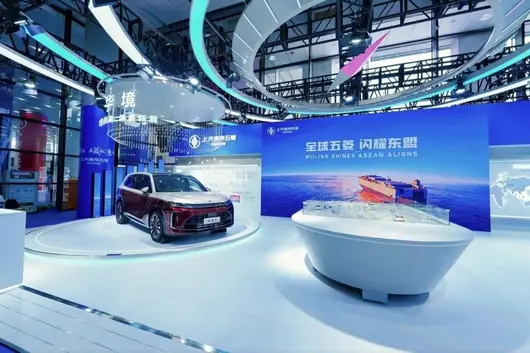
On September 8, a batch of auto parts departed from Guangxi to Vietnam via the Pinglu Canal. Compared to previous exports via Guangzhou and Shenzhen, this new route is expected to reduce logistics costs by 18%. Nine days later, at the 23rd China-ASEAN Expo, SAIC-GM-Wuling officially released its Global 5 global strategy and signed a strategic cooperation agreement with Malaysia Chan Chang Group on the localized battery CKD project.

One is a logistics channel connecting to the sea, and the other is a corporate strategy facing the global market. Seemingly belonging to different dimensions, they both point to the same proposition: How Chinese automobiles can shift from "going out" to "going deep" in the global market, thereby achieving long-term, stable, and sustainable operations.
In recent years, Chinese automobile exports have grown rapidly, with new energy vehicles becoming an important incremental factor. However, with intensifying international market competition, rising tariffs, regulations, supply chain security requirements, and localization demands, the model of opening markets solely through whole vehicle trade is facing challenges. The export of Chinese automobiles has entered a new phase of competing on system capabilities: it requires not only products but also the ability to implement manufacturing, supply chains, services, talent, finance, and standards collaboratively.
SAIC-GM-Wuling's release of the Global 5 global strategy at this juncture is a systematic response to changes in the industry environment. With the core "5S System" comprising five strength foundations, five cooperation models, five service guarantees, five market layouts, and five development goals, SAIC-GM-Wuling has built a new globalization concept. In the next 3 years, it will deepen its layout in 150 countries, expand 500 strategic partners, achieve an average annual sales growth of 50%, and strive to become a leading global brand in new energy vehicles.

This is both a grand plan and reflects new thinking by Chinese automakers on the logic of globalization development: overseas markets are not simply an extension of domestic competition, and going out cannot be limited to increasing export quantities. Instead, it must establish operating systems rooted locally around the industrial foundations, policy environments, and consumption demands of different countries.
Going Out Is Not Just About Selling Cars, But Building an Ecosystem
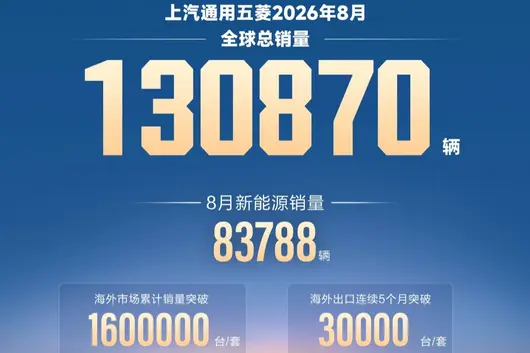
SAIC-GM-Wuling's globalization did not start from scratch. After 31 years of exploration, its products have entered over 120 countries and regions, with cumulative overseas sales exceeding 1.6 million units (sets), and overseas exports growing for 10 consecutive years. From January to August this year, SAIC-GM-Wuling's exports exceeded 240,000 units (sets), with monthly exports surpassing 30,000 units (sets) for 5 consecutive months. To date, SAIC-GM-Wuling's global cumulative production and sales have exceeded 32 million units, with cumulative new energy vehicle sales exceeding 4 million units.
Scale is the foundation for enterprises to further globalize, but scale itself does not equal global competitiveness. What truly deserves attention is that SAIC-GM-Wuling is converting the product, technology, and industrial chain advantages accumulated domestically into a system that can be replicated, adapted, and operated continuously overseas.
"Behind this is the systematic overseas expansion of SAIC-GM-Wuling with 'Five Chains Integration' as the core." Liu Yan, Deputy Secretary of the Party Committee of the Overseas Division of SAIC-GM-Wuling, told reporters from China Automotive News, "SAIC-GM-Wuling is promoting the synergy and overall implementation of the intelligent manufacturing chain, supply chain, sales chain, talent chain, and financial chain—the 'Five Chains'—to complete the leap from whole vehicle exports to ecosystem construction."
The intelligent manufacturing chain is a key support for the implementation of the overseas system. Backed by the world-first I²MS intelligent island manufacturing system, SAIC-GM-Wuling has built I²MS-NKD intelligent island semi-knock-down assembly workshops with an annual packaging and shipping capacity of 250,000 units (sets). Compared with traditional fixed assembly lines, the intelligent island model emphasizes flexible organization and modular production, which is conducive to adapting to the needs of the overseas market for multiple varieties, small batches, and rapid switching. Through the interconnection of domestic and overseas manufacturing nodes, multimodal transport costs via road, rail, and water can be reduced by 30%.

The value of this model lies not only in improving production efficiency but also in reallocating the functions of domestic bases and overseas factories. SAIC-GM-Wuling's Liuzhou headquarters undertakes R&D, technology and standard output, talent empowerment, and supply chain coordination, while overseas bases focus on local production, local supply chain cultivation, and market operations. Liu Yan summarized it as "Capability Output + Local Adaptation": the headquarters outputs product platforms and process standards, while overseas bases conduct adaptive development combining local needs, achieving bidirectional synergy in R&D, manufacturing, and supply chains.
The supply chain is the foundation of system overseas expansion. Acting as the "chain owner," SAIC-GM-Wuling led 17 domestic core suppliers to jointly layout overseas, covering core components such as batteries, motors, and electronic control. It also independently developed over 100 local suppliers in Indonesia, increasing the localization rate of local factories to over 60%. For parts enterprises following the OEMs overseas, this synergy can reduce the cost of independently opening up markets and improve order stability. For whole vehicle enterprises, it can shorten logistics cycles, reduce tariff expenses, and enhance supply chain resilience.
"Five Chain Synergy" has not stopped at the production stage. In the sales chain, SAIC-GM-Wuling entered the market in the mode of "Vehicle + Charging Facilities", currently having built over 200 dealer stores and more than 1,000 public charging piles, and providing free home charging pile installation for 15,000 users. In the talent chain, it trained local technical talents through education and training centers and industry-education integration projects, cumulatively training over 400 international students. In the finance chain, Indonesia's diversified finance company provides financing and insurance services for 150 local dealers and end consumers.

This means that as a vehicle enters the overseas market, supporting manufacturing capabilities, supply systems, sales channels, charging facilities, vocational education, and financial services also land synchronously. Compared to traditional whole vehicle exports, although this model involves heavier investment and a longer construction cycle, it enhances the connection between the enterprise and the local industry, employment, and consumption systems.
Liu Yan believes that localization is "not just about building factories, but building ecosystems." Only by cultivating local suppliers, co-building infrastructure, and training local talents, allowing the local area to share the value of industrial development, can enterprises change from "guests" of the market to "family" of the industry. This judgment grasps the core change in current Chinese automobile exports: competitiveness is shifting from the "cost-performance ratio of a single car" to the "synergy of an industrial chain" and the depth of rooting locally.
Promoting Deep Localization with ASEAN as a Fulcrum
In the global automobile market, different countries have significant differences in market size, industrial foundation, investment policies, tariff systems, and consumption habits. If globalization is promoted with a single model, it will not only be costly but also prone to mismatches between production capacity, channels, and market demand.
SAIC-GM-Wuling's Global 5 strategy proposes five cooperation models for this: trade, distribution, production and sales, full industrial chain, and technology licensing, flexibly adapting by depth according to the development stage of different markets. Liu Yan introduced that for markets that do not yet have local manufacturing conditions, trade or distribution models can be adopted first; for countries with certain industrial foundations and localization policy requirements, production and sales models such as KD and CKD assembly can be adopted; in markets with relatively complete industrial chain foundations, full industrial chain cooperation can be further promoted; in some markets, products, management experience, and talent capabilities can be exported through technology licensing.
From the existing layout, the Philippines focuses on distribution cooperation, with the enterprise providing market, brand, channel, and service support to partners. Markets such as Thailand, Vietnam, Cambodia, and Myanmar adopt production and sales models more frequently, reducing comprehensive costs through KD or CKD assembly and meeting local manufacturing requirements. Indonesia has become a representative of the full industrial chain model, promoting manufacturing, supply chain, sales, talent, finance, and standard construction synchronously. Markets such as India and Malaysia have also formed practices in technology licensing cooperation.
This differentiated path addresses the problem of how to balance "wide coverage" and "high-quality growth" in global operations. Trade and distribution models have relatively lighter investment, conducive to quickly entering markets and verifying demand. Production and sales and full industrial chain models can form long-term capabilities in key markets. Technology licensing helps integrate local partner resources and reduces the uncertainty of independent investment. Different models are not isolated but can be upgraded gradually as market size and industrial conditions change.
ASEAN is an important testing ground for this model and also the bridgehead for SAIC-GM-Wuling's global layout. On one hand, China and ASEAN are geographically close with complementary industries, and regional economic and trade ties continue to deepen. On the other hand, the market maturity, localization policies, and industrial capabilities of ASEAN countries differ significantly, providing application space for various cooperation models. Currently, SAIC-GM-Wuling has laid out CKD factories in Indonesia, India, Egypt, Malaysia, Vietnam, and other places, and is promoting "Indonesia-Malaysia-Thailand Integration" with Indonesia as an anchor, further radiating to markets such as Vietnam and the Philippines.

The cooperation this time with Malaysia's Chan Chang Group to build a battery localization CKD production line is the first landed project after the release of the Global 5 global strategy, also reflecting the enterprise's localization thinking extending from whole vehicle manufacturing to core components. Facing the rising thresholds for battery and whole vehicle localization in ASEAN countries, battery localization production can reduce import taxes, improve cost structures, and enhance the stability of core component supply.
Liu Yan stated that this project will export the core component supply chain, build a Malaysia-based autonomous supply chain system, and further improve SAIC-GM-Wuling's industrial map in ASEAN. Its significance is not only to reduce the production costs of a single vehicle model but also to form battery support capabilities that can serve the regional market and drive the Guangxi new energy vehicle industry chain to participate in cross-border synergy.
From a deeper level, the value of the ASEAN market for Chinese automakers is no longer just sales growth. Here is a market where new energy vehicle demand is growing rapidly, and also an important platform for testing Chinese automakers' global manufacturing, local operations, and cross-cultural adaptation capabilities. Only by establishing mature models in the complex and diverse environment of ASEAN can these capabilities be further replicated to other global regions.
Local Adaptation and Standard Output Advance Together
System overseas expansion ultimately needs to be implemented into user value. The demand of ASEAN consumers for new energy vehicles can be summarized as high cost-performance, high reliability, high convenience, and high adaptability. Purchase and usage costs remain important decision factors, but high temperature and high humidity climate, complex road conditions, multi-language environments, as well as charging and after-sales networks, also put more detailed requirements on products.
To this end, SAIC-GM-Wuling formed a "5+N" global product layout, with five global products: Starlight 560, Starlight 730, 5th Gen Wuling Hongguang MINIEV, Bingo Family, Yangguang EV, covering SUV, MPV, micro mobility, urban new energy, and commercial vehicle markets, and developing niche demands through other categories. Products are not simply exporting domestic models with changed badges, but emphasize "Global Platform, Local Adaptation".

Taking Indonesia as an example, the local population is dense and family sizes are relatively large, with stable demand for MPVs. Starlight 730 has undergone more than a dozen optimizations for Indonesian usage scenarios. The enterprise also adjusted interior materials, air conditioning systems, car systems, and AI voice interaction around Islamic culture worship needs, high temperature and high humidity climate, local network conditions, and dialect accents. From this, it can be seen that localization capabilities have penetrated into product definition and R&D front ends, not just the production stage.
Beyond product adaptation, the output of technical standards is becoming new content for Chinese automobile globalization. In the past, Chinese automobiles entering overseas markets mainly met local existing regulations. Now, with the expansion of leading advantages in new energy vehicle technology and industrial scale, Chinese enterprises are beginning to participate in regional rule and technical standard construction.
SAIC-GM-Wuling jointly established the China-ASEAN Automobile Standard and Regulation Research Platform with relevant institutions, promoting the passage of Chinese DC fast charging equipment through Indonesia's SNI certification, enabling national standard DC fast charging piles to be legally deployed locally; the safety design of Air ev has been included in relevant ASEAN technical specifications. In Thailand, the enterprise participated in standard policy discussions around battery sustainable management, power battery recycling, and battery passport tracing, and carried out cooperation on ASEAN electric vehicle standard systems, technical terminology, and talent training.
"For Chinese automobile brands, technical standard output is the symbol of going from 'following and running alongside' to 'leading'." Liu Yan stated that co-building standards can reduce repeated testing and certification, lowering the institutional costs for enterprises entering the ASEAN market; at the same time, it can also export new energy vehicle regulations, testing, and certification experiences locally, promoting the co-construction and sharing of regional testing and certification capabilities.
For the entire industry, China and ASEAN strengthening standard acceptance and mutual recognition of testing helps reduce repeated investment and provide convenience for more Chinese brands to enter regional markets; for the host country, it can accelerate the construction of new energy vehicle industry infrastructure and regulatory systems. Standard co-building promoted by enterprises should ultimately form public value for industrial cooperation, not just the company's own competitive barriers.

From this perspective, the novelty shown in the Global 5 strategy lies in including products, manufacturing, supply chains, and market layouts into the same globalization framework, and placing services, talent, finance, standards, and sustainable development in positions equally important to sales volume. What it pursues is to form a long-term mechanism that benefits enterprises, partners, suppliers, and local society together.
Chinese automobile exports are still in a growth period, but the industry's evaluation scale is changing. In the future, the standards for measuring an automaker's globalization level will not only include export volume and overseas revenue, but also include local manufacturing capabilities, supply chain resilience, brand recognition, compliance capabilities, standard participation, and contributions to local industry and society.
Starting from Liuzhou, connecting to ASEAN via Pinglu Canal, and radiating to five continents from ASEAN, SAIC-GM-Wuling is exploring an advanced path from product trade, capability output to ecosystem co-construction. Its value lies not only in the enterprise opening up new growth space for itself, but also in providing an observable, verifiable, and replicable practical sample for Chinese automobile exports.
Globalization has never been a sprint. The Global 5 strategy proposes goals for the next 3 years, but what truly needs to be established is operational capability facing a longer cycle. For Chinese automobiles to go steady and far in the global market, they must not only maintain product and technology advantages but also learn to grow together with local industries. From "selling out" to "staying", and then to "joint development", this might well be the most important direction for the next stage of Chinese automobile exports.

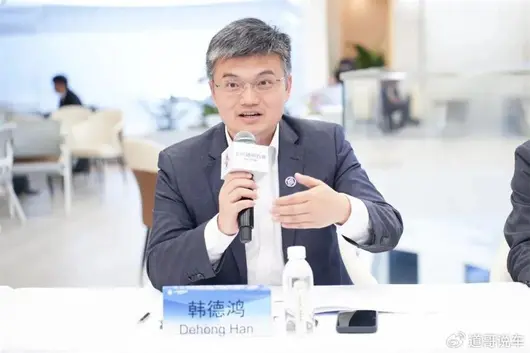
[Written by / Finance Circle & Dao Ge Auto Talk Ma Jianyu] Recently, SAIC-GM-Wuling completed a low-profile personnel adjustment. Han Dehong replaced Yao Zuoping as the Party Secretary of the company, and Yao Zuoping was transferred to serve as the General Manager Consultant of SAIC-GM-Wuling and the Director of the Technical Committee of the Smart Island Manufacturing System. According to public reports online, this adjustment took place at least half a month ago. However, the official side did not release relevant announcements, nor did it attract much media attention to the matter.
Public data shows that Yao Zuoping is now 62 years old, exceeding the statutory retirement age, and this job adjustment seems to be a transition towards retirement. Han Dehong, on the other hand, is a young-generation executive of SAIC-GM-Wuling, 44 years old this year, and is in the prime of his career. Before this adjustment, Han Dehong's public identity was the Deputy Party Secretary and General Manager of SAIC-GM-Wuling.
 In other words, Han Dehong's rank was further elevated after this adjustment. At the same time, considering that SAIC-GM-Wuling belongs to the SOE system, the step from "Deputy Secretary" to "Full Secretary" carries significant weight. Han Dehong, who is in the prime of his career, started serving as the Party Secretary of SAIC-GM-Wuling and concurrently as the Deputy General Manager, which also shows SAIC-GM-Wuling's emphasis on this young-generation executive.
It is worth mentioning that from Han Dehong's past experience, his appointment as the Party Secretary of SAIC-GM-Wuling also has greater practical significance in the background of the automotive sales "hot abroad but cold at home".
Over 20 Years of Service Young "Veteran" Upgraded
Public data shows that Han Dehong was born in 1982, is 44 years old this year, and there are no public records available regarding his educational background.
But his connection with SAIC-GM-Wuling is deep. In a media report from June 2025, Han Dehong recounted that he "just entered the company in 2005". In other words, the time Han Dehong entered SAIC-GM-Wuling has exceeded 20 years.
From his resume, Han Dehong has rich experience on the front lines of sales and brand communication. In June 2016, Han Dehong began to serve as the Deputy General Manager of SAIC-GM-Wuling Sales Company. After the launch of the New Baojun brand in 2019, he served as the Deputy General Manager of New Baojun Sales Company, and subsequently held positions such as Director of New Baojun Brand Communication, Deputy Party Secretary of SAIC-GM-Wuling, and General Manager Assistant, among others.
 Since September 2024, Han Dehong appeared publicly in the capacity of Deputy General Manager of SAIC-GM-Wuling. In terms of achievements, during Han Dehong's tenure as Deputy General Manager of SAIC-GM-Wuling Sales Company, SAIC-GM-Wuling consistently maintained the market position of the number one single automobile company in China. After the launch of the New Baojun brand, Han Dehong, as the core operator of New Baojun, helped New Baojun establish the brand positioning of "Pioneer of Smart Cars".
At the same time, Han Dehong repeatedly emphasized in public occasions that the mission of New Baojun is to "let intelligence no longer be the privilege of high-end cars", bringing higher-level automotive technology and products into a more affordable price range. It is worth noting that looking back from today's perspective, the brand positioning proposed by the New Baojun team represented by Han Dehong at that time was highly forward-looking. After 2020, the Chinese automobile market gradually began the trend of democratization of smart technology, and the weight of intelligence in influencing consumers' car purchase choices has become increasingly important.
After serving as the Deputy Party Secretary and Deputy General Manager of SAIC-GM-Wuling in 2024, Han Dehong became more like a "jack-of-all-trades". According to information released on the official WeChat account of SAIC-GM-Wuling, Han Dehong deeply participated in manufacturing, government-enterprise collaboration, Sino-foreign exchange, talent cultivation, ideological construction, marketing, etc., and made important contributions to the development of SAIC-GM-Wuling.
"Overseas Experience" Highly Aligned with Wuling's Business Focus
Placed in today's market background, what is most worth attention about Han Dehong is his experience in overseas markets. Public data shows that around 2010, Han Dehong was dispatched to India to serve as the Assistant General Manager of the Indian Joint Venture (General Motors India), following Yao Zuoping, then Deputy General Manager of SAIC-GM-Wuling, to jointly explore the Indian market.
In February 2021, Han Dehong was transferred to SAIC-GM-Wuling Indonesia Branch as Assistant General Manager, and was later promoted to Deputy General Manager of SAIC-GM-Wuling Indonesia Automotive Co., Ltd., responsible for the expansion and operation of the Indonesian market. In other words, whether it is the exploration of early markets or the expansion of overseas markets in the later new energy era, Han Dehong has relatively rich experience.
And this experience is particularly important in the current Chinese automobile industry. Data released by the China Association of Automobile Manufacturers on September 10 shows that the domestic market continues to face pressure, with the month-on-month decline in monthly sales exceeding 20% for 5 consecutive months; exports continue to maintain high growth, with monthly exports exceeding 1 million units for 3 consecutive months, becoming a key increment to stabilize the industry's overall performance.
 Specifically, from January to August, domestic automobile sales were 13.162 million units, a year-on-year decline of 21.8%; from January to August, automobile exports were 7.153 million units, a year-on-year increase of 66.7%. For most domestic automobile companies, seeking growth in overseas markets is no longer a choice question, but a mandatory question. According to official information from SAIC-GM-Wuling, in August, SAIC-GM-Wuling achieved sales of 130,870 units, among which the overseas market contributed 38,660 units/sets. At the same time, its cumulative overseas sales broke through 1.6 million units.
It is worth noting that the overseas market is one of SAIC-GM-Wuling's current business focuses. This year, SAIC-GM-Wuling formulated the "Overseas Doubling Project", anchoring an annual sales target of 400,000 units. Then, in this context, it has more practical significance for Han Dehong, who has "overseas experience", to serve as the Party Secretary of SAIC-GM-Wuling.
Furthermore, from the public activities Han Dehong appeared in throughout the year in recent years, those related to overseas business are also not few: attended the signing ceremony between SAIC-GM-Wuling and Saudi United Motors Group (UMG) on April 24; on April 3, received Glenn G.Peñaranda, Commercial Counselor of the Philippine Embassy in China, and a row of Wuling Automobile Philippines dealers to visit SAIC-GM-Wuling Liuzhou headquarters for field inspection and exchange... In September last year, SAIC-GM-Wuling management visited the Mexican market, Han Dehong was also among them.
Today, overseas markets have become a new track that Chinese automobile companies must participate in. With Han Dehong, who has "overseas experience", taking over as the Party Secretary of SAIC-GM-Wuling, what new ideas will it bring to SAIC-GM-Wuling's overseas business breakthrough?

Earlier, SAIC-GM-Wuling's August sales figures were released: 130,870 units. One number seems to lack weight. But if you look at the cumulative curve from January to August together, you can realize this is not that simple.

January was 37,929 units, and by August the cumulative total reached 484,300 units. There isn't a single month on this curve that is flat. Every month goes up. The proportion of new energy vehicles is rising synchronously. By January to August, it has broken through the volume of 920,000 units, among which new energy vehicles contributed 926,124 units, accounting for more than 70%. In the era of joint-venture fuel vehicles five years ago, such a structure was simply impossible.

So what Wuling has done in this round is more like measuring how far it can run with another rhythm.
What is truly worth mentioning is the figure of 1.6 million.
August overseas single-month sales were 38,600 units, exceeding 30,000 units overseas single-month for 5 consecutive months. Overseas cumulative sales have broken through 1.6 million units. Chinese car exports have been called for many years, but truly building a brand to a global scale of 1.6 million units and stably outputting 30,000 units overseas in a single month is rare.
More importantly, Wuling's overseas business is not simply whole-vehicle trade. India, Indonesia, Thailand, Brazil, Mexico, Wuling has done localized manufacturing and supply chain layout in multiple countries. Once this model runs smoothly, it means local users are buying more like Wuling's industrial capability itself locally. This moat is more meaningful than simple sales figures.
What is truly interesting this year is Wuling making moves on both ends.
Let's first talk about the upward-moving Huajing S. Launched in May, 3,603 units delivered in May, 5,689 in June, 7,203 in July, 7,306 in August. This curve has climbed steadily for four consecutive months. In July, it topped the plug-in hybrid large SUV sales list. Cumulative deliveries from May to August reached 23,801 units.

You should know, Huajing S starts at the 200,000-yuan tier, focusing on large six-seater SUVs, equipped with Huawei Qiankun Intelligent Driving System. A full-size large six-seater SUV with Huawei Qiankun Intelligent Driving System as standard equipment across the entire 200,000-yuan tier. This strategy has never appeared in Wuling's history.
In other words, Wuling has been locked within the 100,000-yuan price band for a long period in the past. National God Car, Wuling Hongguang, are all stories of this price point. Moving up a step to the 200,000-yuan market, and competing on the same stage with joint-venture brands and new forces, means Wuling's upward move has been successful.
The other car is Starlight L, which defends the basic market. 6,553 units in August single month, up 16% month-on-month from the launch month. The only large six-seater in the 100,000-yuan tier. This niche track rarely had decent products in the past. User demand has actually always been there.

Starlight L extends the car length to nearly 5 meters, wheelbase 2,950 mm, with a 2+2+2 true six-seater layout. Lingxi Power 3.0, Shenlian Battery, 1260 km comprehensive range, 4.9L fuel consumption with depleted battery. These technologies originally belonging to higher price points have been brought down directly by Wuling to the 100,000-yuan tier. More importantly, the supporting supply chain: Baosteel steel, BASF automotive paint, Fuyao glass, Michelin tires, Magna safety parts. All these supply chains with the same source and materials as luxury cars are now in place. The vehicle high-strength steel accounts for 75%, key parts use 1500 MPa aviation-grade hot-formed steel, and high-strength protective steel plates are even stuffed into the third-row seat backs.
Looking at these two cars together, the logic becomes clear. Huajing S opens up Wuling's ceiling in the 200,000-yuan tier. Starlight L raises the standard of the basic market in the 100,000-yuan tier. Both lines are doing the same thing: forcing higher-level product power into more mainstream price bands.
This breakthrough is more significant for the industry than doubling sales. It means the transformation of traditional automakers doesn't necessarily have to clear assets from the past to start over. They can retain the original basic market while recreating a brand upward. This path of incremental upgrade has actually been walked by Wuling.

For Huajing S to stand firm in the 200,000-yuan tier, confidence comes from two national-level hard supports. One is the National Quality Standards Laboratory, which is the first and currently the only approved construction in automaker enterprises, a full-link verification system from project initiation, testing to mass production. The second is the Intelligent Island Manufacturing System, selected into the national first batch of lead-level intelligent factory cultivation list. Vehicle assembly accuracy is at the 0.1 mm level, and production assembly error rate is zero.
In the context of the Chinese automotive industry, this level of investment was built up gradually over the past decade. Cooperating with top supply chain partners like Baosteel, CATL, Fuyao Glass, Autoliv, what Wuling does is actually quite simple: make every car close to zero defects.
What is truly unexpected is user feedback. Active users of assisted driving account for 95%. Net Promoter Score is 86 points, ranking first among new cars on NPS. 54.8% of users consider assisted driving as the primary decision factor for car purchase.

A large six-seater SUV at the 200,000-yuan tier. 95% of users use assisted driving every day. An NPS of 86 means the vast majority of owners are willing to recommend it to friends. 54.8% of people paid specifically for assisted driving.
This is real word-of-mouth. The front-stage outcry from KOLs is just one aspect. More importantly, it is feedback thrown out with real money from users in car usage scenarios. Huajing S's sales rising for four consecutive months is essentially this word-of-mouth being cashed into orders in the market.
If viewed only from an industry perspective, the lesson Wuling gives the entire industry in this round comes down to one sentence.
Transformation does not need to be at the cost of scale. Going overseas does not need to rely on low prices. Premiumization does not need to abandon the original basic market.
These three common sense points were repeatedly questioned in the Chinese automotive industry over the past few years. Many brands gave up their original markets to do new energy. To go premium, they completely changed the original user profiles. To go overseas, they pressed prices to the floor, and ended up being labeled as low quality and low price.

Unknown Car Domain: Wuling's moves in this round are simpler. Hongguang MINIEV's sixth anniversary of launch, global cumulative sales break through 3 million units. The basic market is not lost. Huajing S takes a step up. Starlight L makes the large six-seater a first-tier category in the 100,000-yuan tier, exerting force at both ends. New energy proportion exceeds 70%. Overseas exceeds 30,000 units in a single month for 5 consecutive months. Prices are not in price wars.
This balance comes from years of deep accumulation leading to a breakthrough in supply chain, manufacturing systems, and channel layout. So let's go back to the 130,870 units at the beginning. The number itself is not important. What is important is that behind this number, Wuling is walking a path that many Chinese automakers want to walk but haven't managed to. The keyword of this path is balance.