首頁Ford

搜尋歷史
熱門搜尋
經銷商登入 / 註冊

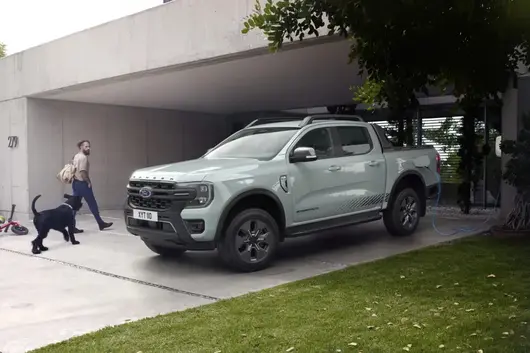
Recently, an exclusive report from US media sent shockwaves through the global pickup community: Ford is developing a Bronco pickup, while the production prospects of the currently sold Ranger in the US are clouded.

According to the report, Ford "currently has no plans" to produce the next-generation Ranger at the Michigan Assembly Plant in Wayne, Michigan. This factory, which also produces the Bronco SUV and Ranger, is set to transform into an exclusive Bronco production base by around 2030. Taking over the Ranger production line will be a midsize pickup based on Bronco, expected to launch between 2029 and 2030.

However, there is disagreement among media outlets regarding whether Ranger will stay or go in the US. Some believe Ranger will be completely discontinued and directly taken over by the Bronco pickup; others believe Ranger will be relocated to the Blue Oval City plant in Tennessee and continue to exist in a new generation by 2029 - Ford has confirmed it will produce a fuel pickup with a size close to Ranger in Tennessee, but has not specified if it will still be called Ranger. Industry forecasting firms judge: A Bronco-styled midsize pickup will replace Ranger at the Michigan plant in fall 2029.

In response to the reports, Ford's official response was vague, stating only that they do not comment on "future product speculation, much of which is inaccurate".
In April 2026, Ranger US sales volume was only 5,245 units, a year-on-year plunge of 25%, even being surpassed by Mustang; while the Bronco brand's sales volume in Q3 2025 grew 41.3% year-on-year, achieving its best quarterly performance in history. Using a high-premium Bronco pickup to replace the weak-selling Ranger makes complete financial sense.

For overseas consumers, the biggest concern is whether US market changes will affect the global market. The answer is: Ranger is basically unaffected. Ranger is a true global model, with independent production lines set up in Thailand, South Africa, Argentina, etc., supplying Southeast Asia, Australia, Europe, Africa, and South American markets. The US Michigan plant only supplies North America; its production line adjustments have no direct relation to overseas Ranger.
However, the situation for the Bronco pickup is different. The Bronco brand has accelerated its global expansion in recent years, and Bronco SUVs have already entered markets like Europe and Australia. If the Bronco pickup succeeds in the US, Ford is very likely to push it overseas, forming a "two-car strategy" with Ranger - Ranger focuses on utility attributes and value for money, while the Bronco pickup focuses on off-road lifestyle and brand premium. The two cover different groups, rather than simple substitution.

Final Thoughts: The changes surrounding the Ranger and Bronco pickups are currently still in the rumor and prediction phase. What is certain is: the Bronco pickup is on the way, and the Michigan plant will turn into an exclusive Bronco base; what is not yet determined is whether Ranger will be completely discontinued in the US or continue at another plant. For overseas markets, Ranger's production line independence means it will not be impacted in the short term; but in the long term, the globalization of the Bronco pickup may change the global midsize pickup competitive landscape, complementing rather than substituting Ranger. In 2029, everything will be revealed.


On March 28, 2010, Geely Holding Group and Ford Motor Company signed an agreement in Gothenburg, Sweden, to acquire 100% of Volvo Cars.
At that time, the question almost everyone was concerned about was the same: Could a Chinese private automaker founded only a decade earlier handle a European luxury car brand with deep historical accumulation? For Ford, handing over Volvo was not just completing a transaction, but also entrusting the future of a brand to a Chinese company that had not yet been fully understood by the global automotive industry.
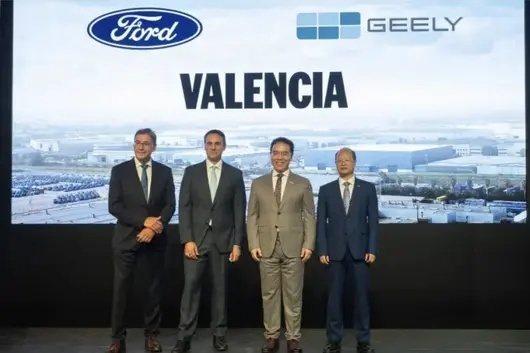
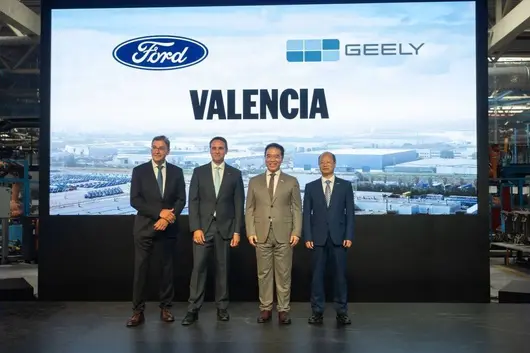
Sixteen years later, on July 23, 2026, in Valencia, Spain, Geely and Ford signed another agreement.
This time, the two sides were no longer buyer and seller, but joint venture partners. According to the plan, both parties will establish a joint venture company at Ford's Valencia plant, share capacity, and produce new energy vehicles for their respective brands for the European market. Geely plans to launch two new energy vehicle models, while Ford plans to produce three new energy vehicle models, with the first product expected to come off the line in 2028.
From Gothenburg to Valencia, from equity acquisition to capacity sharing, sixteen years separate the two handshakes between Geely and Ford. On the surface, these appear to be two independent business collaborations; but what truly connects them is a business credit verified by time and mutual recognition between the two parties.
Looking back at the 2010 acquisition, the biggest test for Geely was not whether it could complete the capital transaction, but whether it could manage the relationship after the acquisition: how to continue respecting Volvo's brand traditions, operational systems, and development laws after obtaining ownership.
Geely ultimately chose to "release the tiger back to the mountains". It did not simply transform Volvo into a brand within the Geely system, nor did it rush to prove its control through integration; instead, it kept its promises, provided space for long-term development based on maintaining Volvo's brand independence.
This approach not only helped Volvo's subsequent brand revival, but also allowed Ford to clearly see how Geely treats an international enterprise, how it understands and practices contracts, and how it fulfills commitments made during transactions.
Commercial trust is rarely truly established at the negotiation table. What contracts can define are nothing more than the boundaries of responsibility between the two parties, but they cannot predict a company's true actions over ten years or even longer. True trust is rooted in specific and minute choices time after time: whether maintaining restraint when facing short-term interests, whether upholding respect when facing cultural differences, and whether sticking to long-term commitments.

In 2010, Geely entered the core stage of the global automotive industry for the first time by acquiring Volvo from Ford; sixteen years later in 2026, Ford was willing to share European manufacturing resources with Geely, regarding Geely as an industrial partner to improve product development efficiency, supply chain capabilities, and global scale. This is not only a "reunion of old friends", but also a business cooperation legend spanning time cycles, rooted in trust accumulation, which is the return of brand credit.
Li Shufu once stated that the fun of business lies in making friends and doing transactions simultaneously, making every transaction achieve win-win or multi-win, and leaving pleasant memories. He believes that business is the most equal and beautiful form of human civilization expression. Placed in the sixteen-year relationship between Geely and Ford, they actually point to a very realistic business logic: the value of a transaction depends not only on what was gained at signing, but also on whether, many years later, the transaction partner is still willing to sit down with you hand in hand.
Jim Baum, Ford's President of Europe, made a clear summary of both sides' capabilities: Geely possesses world-class electrification capabilities, development speed, and global scale; Ford possesses over a century of engineering experience, a European market foundation, and a mature manufacturing team. The combination of the two will form a new competitive advantage. The importance of this statement lies not only in Ford's affirmation of Geely's capabilities, but more importantly in the substantial change that has occurred in the cooperation relationship between the two parties.
In the past, joint ventures in the Chinese automotive industry often involved foreign parties exporting brands, technology, and products, while Chinese parties provided markets, production, and channels. However, in Valencia, the roles of both parties have undergone a "qualitative change": Ford provides a mature European manufacturing foundation to assist Geely's localization production. In the era of new globalization which is regionalized and fragmented, Chinese brands are no longer simply exporting products, but exploring how to serve regional markets with global resources and win global competition with local capabilities.

In the first half of 2026, Geely Auto's overseas sales reached 474,000 units, a year-on-year increase of 158%; among them, new energy product exports reached 277,000 units, a year-on-year increase of 585%, and the proportion of new energy vehicle models reached 58%. These data mean that Geely entering the European local manufacturing stage is not just to circumvent the limitations of product exports, but to further establish long-term operating capabilities after a certain scale has been formed in the overseas market.
But the larger the scale, the more it is needed to answer a more fundamental question: How should Chinese automakers enter the global market? For a long period in the past, going overseas was often described as "entering", "occupying", or even "conquering". This narrative emphasizes sales, share, and competition, but it is easy to ignore the other side of globalization: for a company to exist long-term in an unfamiliar market, it cannot only prove how many products it can sell, but also prove that it can respect local rules, integrate into local industries, and form stable common interests with partners.

From this perspective, Geely's choice to share the Valencia factory with Ford is more worthy of attention than simply building a new factory. It is not about completely copying a mature system from home to Europe, but utilizing Ford's local manufacturing capabilities to collaborate with local existing industrial foundations, employee systems, and market experience.
This is also the latest practice of Geely's globalization thinking. From co-building the Malaysian Automotive High-Tech Valley with Proton, to establishing Holley Power with Renault, to both parties expanding cooperation in regional markets such as South Korea and Brazil, Geely relies less on a single enterprise "going deep alone", but instead recombines technology, capacity, brands, and regional resources by finding partners. This kind of globalization may not be as dramatic as a large-scale acquisition, but it may be closer to the cooperation method truly needed by the global automotive industry today: not one replacing the other, nor one attaching to the other, but putting each other's most valuable capabilities together when both need transformation.
Therefore, Geely and Ford's second handshake fully illustrates one thing: a transaction sixteen years ago did not end with the equity transfer. How Geely treated Volvo that year determined how Ford views Geely today; how Geely fulfilled commitments in the past is also influencing what global cooperation opportunities it can obtain today. Trust might be the most chronic asset in the business world. It cannot be established through a single press conference, nor can it be obtained by a slogan, but can only be accumulated through cooperation and fulfillment time after time.
In 2010, Geely proved through an acquisition that Chinese enterprises have the ability to handle a world-class automotive brand; in 2026, Ford and Geely established a joint venture company, proving that the choice sixteen years ago withstood the test of time. There are no shortcuts between the two handshakes, only the respect and fulfillment of the spirit of contracts. For Chinese automotive enterprises that are entering the deep waters of globalization, this may be more important than any set of sales figures.

16 years ago, Geely bought Volvo from Ford.
At that time, many people's first reaction was not admiration, but worry: a Chinese private car company suddenly taking over a European luxury brand, was this an overseas acquisition, or simply spending money to buy a master to worship?

16 years later, the story circled back to Ford.This time, however, the positions of the people sitting at both sides of the negotiation table were slightly different.
On July 23, Ford and Geely announced they will establish a joint venture company targeting the European market around the Valencia, Spain factory.Ford holds about 66%, Geely holds about 34%, both parties will produce multi-energy models of Ford and Geely brands here. According to the plan, two Geely new energy SUVs will be rolled off the line in 2028, and both parties will jointly develop a new car that offers pure electric, plug-in hybrid, and extended-range versions.

So strictly speaking,Geely did not buy the Ford factory with people and land as a package deal.
But what is most worth looking at is not who has a few more percentage points on the equity table, but who needs whom more.
The Valencia factory has an annual capacity of about 500,000 vehicles and was once one of Ford's most important manufacturing bases in Europe, producing a long list of models familiar to European consumers such as Fiesta, Mondeo, Galaxy. However, now the factory mainly relies on Kuga to maintain production, capacity utilization is only about 30%, and production volume has dropped by more than 70% compared to 2019.

A factory capable of producing 500,000 cars is now waiting for orders most of the time. Machines are still there, workers are still there, supply chains are still there,but there aren't enough cars to sell.
It is like an old restaurant that once had people queuing for two hours to eat; the kitchen, tables and chairs, waiters, nothing was missing, but finally discovered there were only three tables of guests in the hall.
At this time, Geely pushed the door and walked in.Not here to eat, but bringing menus, chefs, and a group of new customers, asking Ford: Your kitchen is empty anyway, why don't we partner up?
This is the really interesting part of this news. In the past, Chinese car companies going to Europe were usually there to learn. Learn how Europeans do design, learn how Germans tune chassis, learn how century-old car companies manage supply chains. If really can't learn, directly hire a few designers, chassis engineers, and sales executives back.

Chinese cars at that time were like students who suddenly made money, searching the world for famous teachers. European car companies sat on the podium, collecting tuition fees while being somewhat condescending.
In 2010, Geely acquired Volvo, which was the most representative transaction under this historical background. Why did Ford sell Volvo back then? Because after the financial crisis, they lacked money and needed to contract their frontline. Why did Geely buy? Because it needed brands, technology, and a mature global system.
That was a standard exchange of Chinese capital for European technology.
But the logic of today's Valencia cooperation has been reversed. What Ford needs from Geely is not just money,but new energy products, vehicle platforms, development speed, and orders that can fill the factory again.
In other words, 16 years ago Geely bought a European luxury brand from Ford; 16 years later, Ford is starting to invite Geely back to help solve what cars the European factory should actually build.

This is not simply "feng shui goes in cycles", but a rearrangement of power relations in the automotive industry. Because for an automotive company, what is truly dangerous has never been selling fewer cars, but gradually losing the ability to define the next car.
Factory idleness is just the appearance.Behind the appearance is Ford's awkwardness in Europe's new energy transformation.
In the past few years, Ford has done a lot of things in Europe. It cooperated with Volkswagen, launching Explorer EV and Capri EV based on Volkswagen's MEB platform; also cooperated with Renault, hoping to jointly develop cheaper small electric vehicles; now inviting Geely into Valencia.

Cooperation is certainly not wrong. The automotive industry is inherently a highly collaborative industry, no car company can manufacture everything from chips to tires by itself.
But when a century-old car company's new products rely more and more on others to provide platforms, technology, or capacity solutions, things are not as easy as "open cooperation".It shows that Ford is using partners to make up for its speed and cost shortcomings in European new energy products.

Past Ford, others came to borrow platforms, factories, brands. Present Ford, started looking for partners everywhere. Volkswagen handles part of the pure electric platform, Renault helps solve small electric vehicles, now Geely brings new energy SUVs and new platforms into the Spanish factory.
Those who don't know might think Ford pulled a group chat in the auto industry, the group name being "European Business Self-Help Mutual Aid Society".
And Geely choosing to enter Valencia at this time is absolutely not doing charity in Europe.
Chinese car companies going overseas, the simplest stage, is to load cars onto ships from domestic and ship them to Europe to sell. But with tariffs, local manufacturing rules, and political reviews increasing, pure exports are becoming a business with higher costs and lower certainty.
The EU currently still implements countervailing measures on pure electric vehicles produced in China, and is also discussing more clear "Made in Europe" requirements.

So now what Chinese car companies are thinking is no longer "how to sell cars to Europe",but "how to make themselves part of the local European industry". That is exactly the purpose behind BYD poaching a former Hungarian foreign minister; Geely's cooperation with Ford in the Spanish Valencia factory today is the same.
After all, building a factory from scratch is like registering a new account again. But entering a factory that Ford has operated for many years is like taking over an old account with real-name certification, credit records, and lists of local government and union friends.

What is truly valuable is not those stamping machines in the factory building, but the workers behind them, suppliers, certification experience, and interest relationships formed with the local government and community.
In the past, what Europe feared most was whether Chinese cars would take away Europeans' jobs. Now a slightly awkward picture has emerged,if Chinese car companies don't come, some European workers' jobs will be even harder to keep.
Europe is adding tariffs on Chinese EVs on one side, worrying that Chinese brands will impact the local industry; on the other side, welcoming Chinese models into local factories, because factories need orders, local areas need tax revenue, workers need jobs.
What they say on their mouths is "prevent industrial hollowing out", but their bodies honestly ask: When can those two models of SUVs go on the production line?
However, seeing this, don't rush to open champagne yet.
Chinese car companies walking into European factories does not mean they have obtained permanent property rights from then on.On the contrary, the troubles Chinese enterprises have encountered overseas in the past year and a half are already so many that they could almost shoot an international business war serial drama alone.

The UK government forcibly nationalized British Steel under China's Jingye Group; The Netherlands government implemented rare operational intervention on Nexperia under Wingtech Technology; Panama Supreme Court ruled contracts invalid for companies under Hutchison Whampoa operating two canal ports; Australian government clearly promoted Darwin Port to return to national control, Landbridge Group holding 99-year lease has launched legal action.
The resource countries are not idle either.Niger expelled three Chinese oil company executives, wanting to avoid debt; Indonesia, after relying on Chinese capital and technology to become a global nickel industry center, started tightening ore quotas, raising taxes and fees, adjusting pricing methods, hoping to keep more profit and resource control rights in its own hands.

The most uncomfortable is India, planning to maintain strict review for Chinese enterprises for a long time, BYD was recently investigated due to import parts tariff issues. The Indian government also issued a 650 million tax bill to BYD.
Looking at these things together, it is indeed easy to feel a sense of an approaching storm.
It seems as soon as Chinese enterprises prepare to go out on a large scale, the whole world starts closing doors and changing locks, then tells you, sorry, recently the four words "National Security" are a bit busy, ports are managed by it, chips are managed by it, steel is managed by it, mines are also managed by it.
But this is exactly the proof that Chinese enterprises have truly started globalization.
In the past, Chinese companies had less presence overseas, of course not so much friction. You just sell some goods, others treat you as a supplier; when you start buying factories, getting ports, controlling resources, building supply chains, even affecting a country's employment and industrial security, the way others look at you naturally changes.

A person who never goes to sea certainly will not encounter storms at sea. But this cannot prove the shore is safer, it can only prove he can never reach the other shore.
So the question has never been whether Chinese enterprises should go overseas or not,the way of going overseas must be upgraded.
In the past, Chinese enterprises were best at calculating production costs, how much a battery costs, how long it takes for a car to roll off the line, how much efficiency can be improved.
In the future, we also have to learn to calculate political costs, whether the government will change, whether industrial policy will turn, whether the boundary of "National Security" will suddenly expand, after contract disputes, whether local laws and arbitration mechanisms are reliable.
From this angle, looking at the joint venture between Geely and Ford, it is even more interesting.
Ford holds 66%, Geely holds 34%, on the surface Geely has no control, not enough "to feel proud". But this may exactly be a design where courage and wisdom coexist.

Geely did not buy a European factory alone, then hang a sign at the door announcing flag planting success, but kept Ford on the ship, kept Spanish workers on the production line, tied local suppliers, government tax revenue and employment into the project.
If someone really wants to overturn the table in the future, those whose feet will be hit first are not just Geely, but also Ford, local unions, parts enterprises, and families relying on this factory to eat.
This is mature globalization.It is not walking to a country, declaring this belongs to me from now on; but making more and more locals discover that if this project is gone, they will also feel the pain.
So these recent overseas frictions are certainly worth being vigilant, but not worth concluding "Chinese enterprises should not go overseas".

The larger the contact surface, the more friction points there are naturally. The heavier the assets Chinese enterprises take out, the more critical the industries entered, the more resistance encountered will not just be commercial competition, but become a mixed question of law, politics, public opinion, and national security.
This is very troublesome, but it is also an unavoidable path.
16 years ago, Geely bought Volvo from Ford, buying a ticket to enter the global automotive industry.
16 years later, Geely walked into Ford's European factory, bringing not just money, but products, technology, efficiency, and orders.
In the past, Chinese cars going overseas, they sold cars. In the future, what truly needs to be exported is a complete car-making method, and the ability to survive in unfamiliar rules.
The thing European cars worried most about has indeed happened. Chinese car companies not only drove cars into the European market, but also started to embed themselves into the production lines of the European automotive industry.
But for Chinese enterprises, the real test has just begun.
Selling cars is just the first step. True globalization is walking outwards while getting beaten, while learning how not to get beaten for nothing.