首頁Fenyun

搜尋歷史
熱門搜尋
經銷商登入 / 註冊

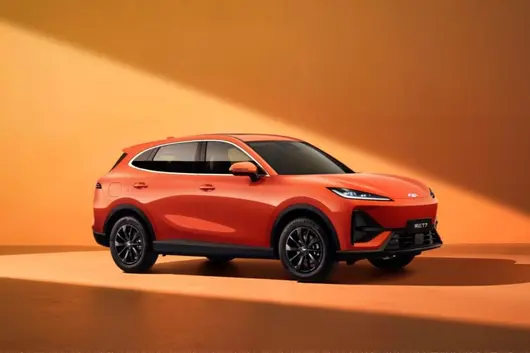
On August 12, Chery Fenyun T7 officially started pre-sales, with three models priced from 109,900 RMB to 129,900 RMB. The theme of the launch event was quite interesting — "Building good cars with patience, sorry for the wait".

In the current era where "releasing a new car every 12 months" has become an industry standard, an automaker publicly saying they are "slow" and telling users "you have waited long enough" is inherently abnormal. However, after carefully reviewing this car's development logic, you will find these two words are indeed backed by confidence.
Reverse Export: Let the Global Market "Verify the Quality" First
The conventional path for Chinese automakers is to first establish a foothold domestically before figuring out how to go global. Fenyun T7 takes the opposite direction — born global, refined upon return.
This car is not built domestically first and then sold abroad; it is a "native global car" developed for the global market from the initial project start. Relying on Chery's 23 years of global technical accumulation, Fenyun T7 pre-researched global regulations two years in advance and developed against the 2026 version E-NCAP five-star safety standard. Over 5,000 global users participated in research, and 15 typical national scenarios were included in product definition.

The verification phase also spared no cost — 2 years of planning, 3 years of R&D, 81 dedicated durability cars tested simultaneously, the whole vehicle cumulative test mileage exceeded 6 million kilometers, durability special tests measured 1.45 million kilometers. From Nordic extreme cold, Middle East high temperature exposure, to Southeast Asian rainy season wading, Brazilian gravel roads, Fenyun T7 has run through over 100 extreme road conditions globally.
The same-platform model Lepas L6 was pre-sold in South Africa and launched in Thailand first, and will next enter markets like the EU, UK, and Australia. The benefit of this "reverse export" path is very practical: Chinese users purchase a car that has been verified by various extreme climates and road conditions globally.
Three "Contrarian Moves", Breaking Industry Unwritten Rules
Fenyun T7 also does not follow the usual path in product definition.

First, range equality. The common practice for 100,000-level pure electric SUVs in the past was "trimming range for entry-level, paying extra for long range". Fenyun T7 does the opposite — the entire series is standard equipped with a 65.05kWh Rhinoceros battery, with CLTC range locked at 600 km. Actual testing even achieved over 667 km; "reverse over-claiming" is a rare move in the industry. Charging from 30% to 80% takes only 20 minutes. Dual-source wide heat pump air conditioning covers -30°C to 55°C, allowing users in the north to drive confidently in winter.
Second, safety stacked to the top. Fenyun T7 is developed according to the 2026 E-NCAP five-star standard, with functional safety reaching the ASILD highest level. A 9-horizontal-5-vertical cage body featuring 80% high-strength steel plus 18.84% hot-formed steel, equipped with 9 airbags across the series — including 48 L dual-chamber remote-end airbags and rear side airbags. The Rhinoceros battery features 6D protection, and IP68 waterproofing is 96 times the national standard.

Third, incorporating responsibility into the commitment. More noteworthy than over-specification are two back-end commitments: if thermal runaway damage occurs due to battery issues, one new car of the same model will be compensated; if an accident occurs due to assisted driving, compensation up to 5 million RMB is provided within one year of purchase. Many brands talk about safety, but few are willing to write liability compensation in black and white. Combined with the whole vehicle lifetime warranty (including three-electrics) and a 666 RMB lifetime basic maintenance package, worries about car ownership are basically cleared.

Intelligence and comfort were not neglected — an integrated cockpit-and-driving 8775 chip with 4nm process and 72 TOPS computing power; a 15.6-inch 2.5K large screen fully covering mainstream phone screen casting; Falcon 500 assisted driving system with 22 sensors and automatic parking in 300+ scenarios. 84% interior usage rate, 911 mm rear legroom, rear seats folded flat to create a 1955 mm pure flat large bed. The chassis was polished by an international team led by a former Maserati chassis tuning expert.
Final Thoughts
In today's day and age where rushed cars are frequently appearing, "slow" has instead become a scarce value proposition. What Fenyun T7 gained through three years of forward R&D and global verification is a set of solid product hard power.

But being slow also comes with a cost. Sales feedback indicates that Fenyun T7 store foot traffic is significantly lower compared to the previous Fenyun A9. The 400V platform charging speed is relatively slow, the entire series lacks LiDAR and cannot achieve urban NOA; these are all objective shortcomings. In this red ocean market of 100,000-level pure electric SUVs — where competitors like Leapmotor B10, Geely Galaxy E5, BYD Yuan PLUS, etc. surround — whether Fenyun T7 can break through with the differentiated tag of "Global Quality" still requires time to verify.
However, pre-sale data has given some positive signals: orders broke 16,787 units within 9 days of pre-sale. This indicates that the market has responded to the logic of "building good cars with patience".

The emergence of Fenyun T7 provides a sample of another car-making approach — not pursuing speed, not chasing marketing hype, using global verification to empower the domestic market in reverse. In this industry where "only the fast are invincible", this long-termist posture itself may well be a differentiated competitiveness.