首頁Fengyun T7

搜尋歷史
熱門搜尋
經銷商登入 / 註冊

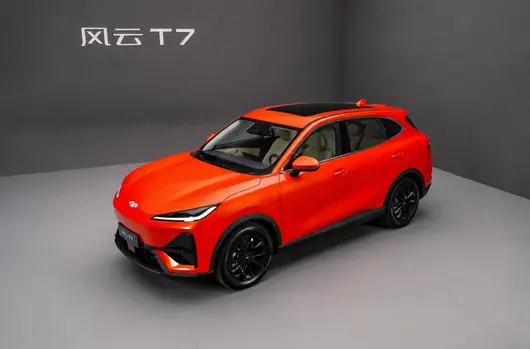
August 12, Chery Fengyun T7 officially opens pre-sale. This pre-sale event theme "Quality Cars Are Built Slowly, You've Waited Long Enough", conveys Fengyun T7's long-term manufacturing philosophy, the persistence in refining products and solidly building good cars, and also expresses the brand's sincere gratitude for users' long-term expectations. As a trusted pure electric SUV created by Chery for global families, Fengyun T7 is born from Chery's global quality manufacturing system, one-stop coverage of quality family appearance, mobility, safety, intelligence, comfort, peace of mind six major needs, reshaping the value benchmark for household pure electric SUVs with global quality.


Slow Work Yields Fine Results: Global Cars "Cannot Be Rushed"
In the current home pure electric market, "fast-track car building" has become an industry pain point. Under the tide of fast car building, Fengyun T7 chose a completely different path – slow down R&D, slow down design, slow down validation, slow down acceptance of global standard tests.
Behind this seemingly joking slogan lies Fengyun T7's persistence in the long-term manufacturing logic. 2 years planning, 3 years R&D, Fengyun T7 developed according to the 2026 Edition E-NCAP 5-star safety standard, functional safety reaches ASIL-D high level, meeting global data compliance requirements. Completed 5000+ global user research, 15 typical countries in-depth visits, global environment adaptation range covers -40℃~55℃.
Slow in R&D: 3-year R&D cycle, polished by the global 1+7+N R&D system; Slow in Design: 5000+ user co-creation, 100+ designers collaborating on design; Slow in Standards: Designed according to 2026 Edition E-NCAP standards, soon entering high-regulation European markets; Slow in Validation: 1.45 million km specialized actual tests, having undergone 5 extreme environment tests. Fengyun T7 uses a complete global validation loop to prove to users: A pure electric SUV truly forged through global beating and polishing, quality is worthy of long-term family trust.


Global Quality Confidence: #1 Export for 23 Years, Endorsed by 20 Million Users
This quality trust stems from Chery's profound global accumulation. Ranked #1 in exports of Chinese brand passenger cars for 23 consecutive years, global users exceeded 20 million, products sold to 130+ overseas markets. The same-source global car Lepas L6 has been launched in South Africa and Thailand and received recognition from overseas users, now returning with global market verification.
Fengyun T7 anchored global standards, global actual tests, global users, global durability, global quality manufacturing five systems from the beginning of R&D. Total vehicle cumulative test mileage exceeds 6 million km, durability specialized actual test 1.45 million km, covering EU, Australia/New Zealand, Middle East, South Africa, Russia, Mexico, Brazil, and other 100+ extreme road conditions environments. 81 exclusive durability cars for road testing, safety benchmarks against 2026 Edition E-NCAP strict standards – Chery accumulated 71 global 5-star safety models, strength is undeniable.
From tropical extreme humidity to Nordic extreme cold, from plateau strong UV to overseas complex road conditions, Fengyun T7 underwent all-around extreme actual vehicle trials. National standard water immersion height is only 150mm, Fengyun T7 reaches 500mm off-road level waterproofing; Heat Pump + PTC dual-source heating, -30℃ stable operation, -20℃ environment 20 minutes to heat up to 23℃, winter range achievement rate increased by 30%. Under the support of global unified smart manufacturing processes, welding automatic welding precision reaches ±0.01mm, AI+5G Eagle Eye Inspection Station 200+ visual inspection points, inspection sensitivity is 100 times that of human eyes, ensuring every car has no difference in standards.
One Car Meets 6 Major Needs: Compromise-Free Home Value Benchmark
Breaking the consumer pain points of disconnected distribution of range, safety, space, intelligent driving, comfort, and appearance on the market, allowing ordinary families not to compromise, one car covers commuting, camping, parent-child, long-distance full scenarios.

In terms of mobility, the series is standard equipped with 65.05kWh Rhino Battery, CLTC range 600km, actual test reaches 667km, 30%-80% fast charge only 22 minutes. Battery cycle life exceeds 2500 times, whole vehicle 15 years no need to replace battery. In terms of safety, 80% high-strength steel body + 18.84% hot-formed steel, nine horizontal five vertical cage body, most 9 airbags in class including 48L max volume dual-chamber far-end airbags. Rhino Battery 6D Armor 31-layer protection, IP68 waterproofing reaches 96 times national standard.
In terms of intelligence, same-class first launch 4nm Cockpit-Driving Integrated 8775 Chip, 72 TOPS NPU computing power, equipped with Lingxi Smart Cockpit 2.0 × Doubao Large Model. 15.6 inch 2.5K 1000nit anti-glare large screen, six one-touch scene modes, Falcon 500 Intelligent Driving 22 high-precision sensors achieve 200+ full-scenario automatic parking. In terms of comfort, body 4570×1852×1694mm, wheelbase 2700mm, usage rate 84%, rear leg 911mm pure flat floor. Same-class largest pure flat large bed mode 1955mm×1310mm, trunk max expansion 1550L.

Global Timeless Oriental Aesthetics: Beauty Twin Stars Shine Debut
Fengyun T7 is the wisdom of co-creation by 8 global R&D design centers, top overseas designer teams and 5000+ global users. Same-source model Lepas L6 appeared at Milan Design Week previously, receiving consistent praise of "Very attractive, very timeless". Wind-leading front fascia wind lines outline atmospheric not flamboyant. Wind blade headlights cleanly split light and shadow. Wind sculpted satin body surface curved smooth. Horizon sunset tailgate wide shoulder line creates steady power.
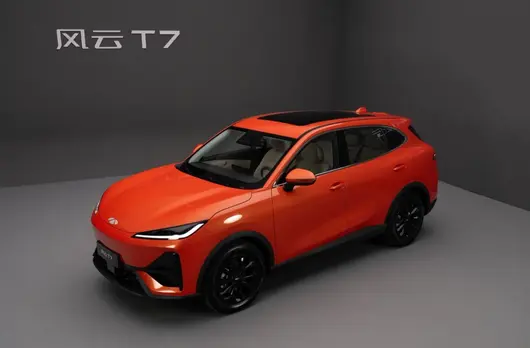
Six exclusive Oriental Aesthetics car paints – Blazing Orange, Mountain Mist Purple, Cloud Pink Beige, Flowing Light Silver, Green Bamboo Grey, Ink Stone Black, sourced from Oriental landscape natural features. Among them Blazing Orange uses same-class unique Tri-coat three-layer car paint process, paired with 2K 8-layer high appearance paint, nano pearlescent color paste presents gradient texture in different light. Cloud Wing wrap cockpit Seagull style spreading shape, jewelry grade diamond grid double-row quilting, lively water wave interior texture, large area soft wrapping feels premium.


The appearance twin stars of Sedan and SUV have become a mainstream design combination trend, Chery Fengyun A9 and Fengyun T7 are the strength appearance twin stars under Fengyun sequence. Fengyun T7 stands on global aesthetic vision, blending international design language and Oriental elegant intention – Good looking not flashy, balancing style and premium texture.

From global standard R&D to million km actual test, from 6 major needs full coverage to Oriental aesthetics global timelessness, Fengyun T7 uses "slow work" to polish out a high-quality pure electric SUV that can withstand global market inspection. In the second half of pure electric competition shifting from stacking materials to comparing quality, Fengyun T7 with global quality as the base color, brings a one-stop solution for quality families. August 12 pre-sale officially opened, Fengyun T7 will match global quality with exceptional value national price, worth looking forward to.
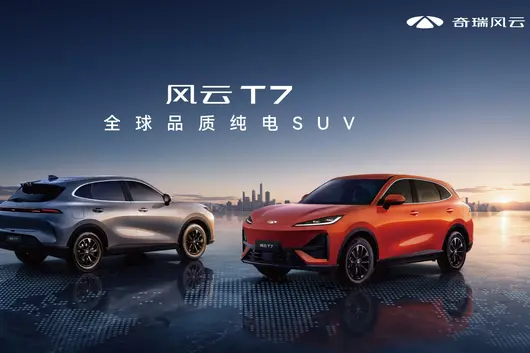

August 12, Chery Fengyun T7 officially starts pre-sale, pre-sale price 99,800 to 139,800 yuan, with the theme of "Slow Craft Builds Quality Cars, Long Wait", bringing global car quality to the 100,000-yuan level home pure electric SUV market. When the industry pursues rapid updates and fast-track car building as the norm, Fengyun T7 chooses to settle down and polish the product, facing real driving anxiety of ordinary family users with a strict global validation system.
 Fengyun T7 is not simply a domestic model modified for export, but a global model developed simultaneously for 210 countries and regions. The homologous model Lepas L6 is already launched in South Africa and Thailand, having received real testing from overseas markets, now returning to the domestic market with overseas feedback. The new car underwent 2 years of planning, 3 years of R&D, visited 15 countries, completed 5,000+ global user surveys, built according to the 2026 version E-NCAP 5-star safety standard, environmental adaptation covers -40°C to 55°C, covering 95% of global road types. 81 durability test vehicles invested for the whole car, cumulative test mileage exceeds 6 million kilometers, solving potential issues like high heat, extreme cold, high humidity, unpaved roads before launch, without letting consumers act as testers.
 In the current context where home car buying often forces trade-offs, Fengyun T7 breaks the tiered premium formula, equipping six family essentials: range, safety, intelligence, comfort, driving control, and appearance all at once. All trims standard equipped with 65.05kWh Rhino Battery, CLTC range 600km, achieving range equality, 30%-80% fast charging takes only 22 minutes, effectively alleviating range anxiety. On safety, 80% high-strength steel cage body paired with 9 airbags, Rhino Battery has 31-layer protection structure, multiple test standards far exceed national standards, protecting the whole family's travel.

Equipped with 4nm cabin-integrated driving chip in intelligence, infotainment system is smooth, supports 6 major one-click scene modes, Falcon 500 intelligent driving reduces long-distance driving burden. 2700mm wheelbase brings 84% interior space utilization rate, rear space is spacious, seats folded flat can achieve the class's largest 1955mm × 1310mm pure flat big bed mode, trunk expansion volume can reach 1,550L, commute, family travel, camping, long-distance travel can all be handled calmly. Appearance integrates global aesthetics with Eastern artistic conception, six paint colors balance appearance and anti-aging ability, looks good and is more durable.
 Slow in R&D, Slow in Design, Slow in Standards, Slow in Validation. Unlike most models launched domestically first then go overseas, Fengyun T7 first undergoes testing in high-threshold overseas markets, then brings mature products back to China. 99,800 to 139,800 yuan pre-sale range, allowing ordinary families not to pay overseas high costs, to enjoy product strength synchronized globally.
The pure electric track enters the second half, competition is no longer just about paper parameters, reliability, durability, and environmental adaptability are the core. Fengyun T7 uses a long-termist car building philosophy, setting up a new value reference for the 100,000-yuan level home pure electric SUV.

In recent years, the logic of competition in China's domestic new energy vehicle market has long been firmly tied to the word "fast". To seize the dividend of niche tracks, most brands have compressed the R&D cycle of new models to 12-18 months, with modular platforms and simulation models taking turns, seeking only to launch new products quickly and stock goods quickly. Market data can further confirm this involution. Only in the first half of 2026, hundreds of new domestic cars appeared densely, with almost a completely new model appearing every day. However, the cost of high-speed expansion came: mass cutting off of high-temperature, high-cold real road tests for large batches of models, hasty completion of electronic control and chassis calibration, "delivery first, OTA remediation later" becoming an industry unwritten rule. Subsequent mass recalls, frequent durability failures, caused "speed-made cars" controversy to continue fermenting. Regulatory levels also issued new rules to raise listing test thresholds. The whole industry began to reflect collectively: Is blindly seeking speed the wrong path?
Just in the background where the industry collectively chased speed dividends, Chery Fengyun T7 appeared remarkably out of place. The model started pre-research in 2022, underwent nearly five years of polishing before starting domestic pre-sales. The super-long development cycle made it known in the industry as "the world's slowest car". Automotive industry bloggers published public articles raising doubts. At one time, public opinion divergence was obvious. Many netizens believed that traditional car companies had bloated processes and backward R&D efficiency. Facing overwhelming questions, Chery Executive Vice President Li Xueyong gave a unified response: R&D cannot be fast, testing cannot be fast, co-creation cannot be fast.

At first glance, the long polishing cycle seems contrary to the fierce market environment now, missing the window period of seizing the market. But if jumping out of the single domestic market perspective, combined with Chery consecutive 23 years ranking first in Chinese passenger car exports and owning 20 million global users global layout, Fengyun T7's "slowness" is far from a system shortcoming, but a set of active choices serving the global market, with safety and reliability as the first standard. While the industry reflects on the shortcomings of speed-made cars, one is also suspicious of a fine craft-made slow car. This contradiction exactly introduces a proposition worthy of deep thought for the whole industry: In the matter of building cars, how should speed and quality be balanced.
Blindly seeking speed compresses R&D, overdrafting product bottom line
Looking back at the golden development stage of fuel cars, the complete R&D verification cycle of a new complete vehicle generally maintained 3 to 5 years, two winters and two summers extreme tests, hundreds of thousands of durability road tests were hard standards, enough time left for engineers to polish chassis, tune electronic control, verify vehicle body safety, vehicle durability has stable guarantee. But after the wave of electric intelligence came, development tools iterated and upgraded, many car companies saw the space to compress the cycle, began to delete practical test links without bottom line.
Originally months of global road condition calibration, compressed to merely a few weeks; high altitude, high saline-alkali, extreme cold and other extreme environment field tests, directly replaced by laboratory simulation data; chassis, battery pack durability test mileage greatly shrunk. This "cost reduction speed up" model indeed showed results in the short term, car companies could quickly launch multiple models to fill the product line, relying on configuration stacking, low-price strategy to snatch customers. But the market will not tolerate shortcuts for long, industry hidden dangers gradually exposed: new energy vehicle recall numbers increased year by year, battery leakage, chassis abnormal sound, low temperature range cliff-like decline and other batch failures are emerging one after another. Frequent after-sales maintenance, large-scale recalls, constantly consume brand reputation, car companies seem to make short-term sales, in reality carry long-term cost burden, industry overall profit margin continues to fall, falling into the vicious cycle of "low-price involution, quality decline".
Exactly because of chaos, regulation timely hand tightened standards, raised new energy vehicle listing mandatory road test mileage, from policy level called stop speed-made cars. When the whole industry was examining the drawbacks of "speed first", Fengyun T7's multi-year development cycle naturally formed a strong reverse contrast. Many people simply attributed the slow pace to Chery system old, R&D efficiency insufficient, but ignored a core difference: the vast majority of fast-landing new cars on the market only adapt to domestic single climate, road conditions and regulations, verification process can be greatly simplified; while Fengyun T7 is a model launched synchronously for multiple countries globally, to adapt to EU, Southeast Asia, Australia New Zealand, Middle East, South America completely different regulation standards and extreme usage environments, any one test link cannot be omitted, naturally cannot copy domestic model fast development model. For Chery which has deep cultivation in overseas markets for decades, short-term listing speed can yield, but facing global users' safety and durability bottom line, absolutely cannot easily compromise.
Slow is not delay, global verification builds product foundation
The core of external controversy is focused on "why spend years polishing a new car", and Chery executives proposed three layers of "cannot be fast", just exactly completely answered the origin of this long cycle. The time, manpower, test costs invested in recent years, not one cent wasted on redundant processes, all concentrated in unsimplifiable global verification engineering, massive practical test data, cross-border collaborative development, overseas market pre-verification, together support this "slow car" product confidence.
Whole vehicle R&D stage, Chery cumulative invested 963 exclusive test vehicles, completed 1.45 million km global road practical tests, test fleet visited global various extreme regions, Nordic extreme cold, plateau strong UV, tropical high humidity, Middle East high saline-alkali, South Africa muddy unpaved road, Brazil ultra-high speed bumps all covered, completely completed multi-region two winters two summers full cycle tests. Different regions' climate, road conditions brought usage pain points, engineers all targeted optimization: Nordic exclusive heat pump plus PTC dual-source heating system, 20 minutes rapid heating, winter range achievement rate improved 30%; tropical version did 500mm off-road grade wading depth, calmly cope with continuous heavy rain and water accumulation road sections; plateau vehicle strengthened anti-aging paint surface and sealing strips, strictly control interior harmful substances volatilization; African, South American road conditions poor, whole vehicle added battery front and rear anti-collision beams, withstand big pits, steep slopes, high speed bumps brought impact. Comparing industry part new cars only 20-30k km finished durability tests, Fengyun T7 million km road test logic not hard to understand: Take all extreme working conditions users may encounter in future 10 years, all verify before listing, from source prevent batch failures. Meanwhile, whole vehicle strictly benchmarked 2026 version E-NCAP severe safety standards, completed safety driving, collision avoidance, collision protection, post-collision safety four dimension evaluations, this set covered multi-country compliance requirements verification process, itself does not exist fast compression possibility.
Having only field tests not enough to support a global model, cross-regional collaborative development and user co-creation also need sufficient cycle. Fengyun T7 relied on Chery global top 10 R&D design centers, over 100 cross-border designers synchronously collaborated, supply chain selected Bosch, Sony, Valeo, Autoliv etc. global top brands, chassis handed to original Maserati senior engineers completed European tuning, interior used EU environmental friendly skin-friendly fabrics. Multi-country teams synchronously promoted design, chassis, electronic control, safety development, cross-timezone communication, different region performance adaptation debugging, will lengthen overall development duration. Car companies also jumped out of closed-off building car traditional model, linked global over 1000 users deep co-creation, collected different country family travel demands, trunk multiple anchor rings, load bearing hooks etc. details, all tailored for overseas outdoor cargo, living travel needs. In order to further verify product adaptability, same source model Lepas L6 first appeared at Milan Design Week, landed South Africa, Thailand markets, collected real overseas user feedback continuously iterate, mature experience returned domestic polishing Fengyun T7. Global co-creation, overseas advance verification model lengthened cycle, but let product truly fit global users real needs, not car company subjective conjecture configuration stacking.
Development rhythm, Fengyun T7 also jumped out of domestic car companies "first local, then overseas" conventional logic, chose global synchronously development, overseas advance landing. Same source models already in South Africa, Thailand listed, domestic opened pre-sales, Indonesia synchronously promoted listing, September enter EU, October cover Australia New Zealand, UK, Israel, Malaysia etc. markets. Chery products sold to global 130+ countries, 20 million overseas users accumulated unified quality cognition, enterprise insisted not do domestic and overseas double standard models. If for quickly seizing domestic market, simplified overseas regulations, climate, road condition tests, short term can quickly move volume, but put overseas after extremely easy to explode batch quality problems, consume years built overseas channels and brand reputation. For Chery which deep cultivation in global track, sacrificed short-term listing speed, polished a set of global unified standard reliable product, is looking long-term layout inevitable choice.
Jump out short-term involution, build global quality barrier
See clear Fengyun T7 slow polishing behind global verification system, then return to current domestic car market competition pattern, can read Chery this set difference play behind long-termism thinking. Now most brands competition vision limited to domestic short-term sales battle, relying on fast new launches, hardware configuration stacking fight for existing customers, rarely layout adapt global market high standard whole vehicle R&D, homogenization low-price involution intensified. Fengyun T7 actively slow down rhythm deep cultivation verification, essence is Chery jumped out of price war mud swamp, relying on irreproducible whole field test system, build exclusively own product quality barrier.
From business logic level deconstruct, speed-made cars seem save front R&D, test cost, but buried huge hidden danger. New car delivery frequently fault, large-scale recalls, will produce high maintenance, parts, transport costs, more importantly erode user trust, belongs to overdraft long-term value exchange short-term traffic. On the contrary Fengyun T7 front invested many test vehicles and million km road test resources, solve once multi-region working condition under product defects, after listing can significantly reduce after-sales failure rate; unified global whole vehicle quality standard, support multi-country synchronously listing put, long term down can dilute high investment cost. Again put into domestic car industry upgrade big trend look, industry from scale expansion turn to high quality overseas, overseas markets whole vehicle durability, safety, environment adaptability standards generally higher than domestic basic norms, many independent brands overseas blocked, root reason is domestic speed-made models cannot adapt overseas strict regulations and complex road conditions. Fengyun T7 sufficient verification cycle, is exactly Chery for global track advance layout, use top standard polish universal type global model, rely on mature overseas system continuously broaden overseas share, avoid domestic disorder low-price competition.
Meanwhile, domestic consumers car buying concepts also quietly turning. Early users easily attracted by new cars, fancy configurations, now everyone more looks at vehicle long-term reliability, low temperature range, chassis durability such invisible hidden quality. Slow polishing brings balanced stable usage experience, exactly can become Fengyun T7 distinguish from various speed-made models core label, continuously settle long-term user trust. In global users broke 20 million after, Chery clear adjustment overall strategy, no longer blindly participate short-term sales involution, fully turn to product quality and brand value competition, and experienced years polishing Fengyun T7, is just this new strategy landing core carrier. Market competition ultimately won't only look at one time fast slow, able to continuously stable output reliable product, can retain users, stand firm domestic and overseas markets.
When "speed-made cars" drawbacks simultaneously welcome market and regulation dual constraints, automotive industry extensive speed era already ended, entire industry have to return to building car most simple essence: cars are durable consumer goods guarding family travel safety, far from pursuing fast iteration electronic fast consumer goods. Fengyun T7 nearly 5 years long R&D, million km global whole field trial, phased multi-country market verification, surface see unable to follow industry fast new launch rhythm, in fact guarded safety, durability, compliance three building car core bottom lines.
So-called "slow work yields good quality", never is enterprise deliberately delay development schedule, but in R&D, field test, user co-creation, global compliance every key link, not willing to make compromise concession. Industry everyone all in grab faster listing, faster harvest traffic current, still have car companies willing sink heart, consume several years time polish a model adapt global multi-markets, this determination, is just independent brand impact global, towards high-end indispensable confidence. Fengyun T7 also gives whole industry clear answer: New car listing speed can only make short-term market heat, stable solid, stood through global diverse environment test product quality, is decide one car brand can go how far, go how long core foundation.
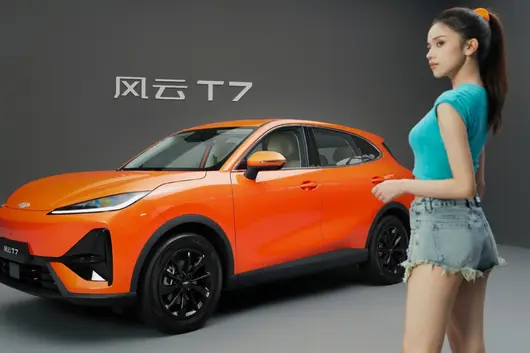
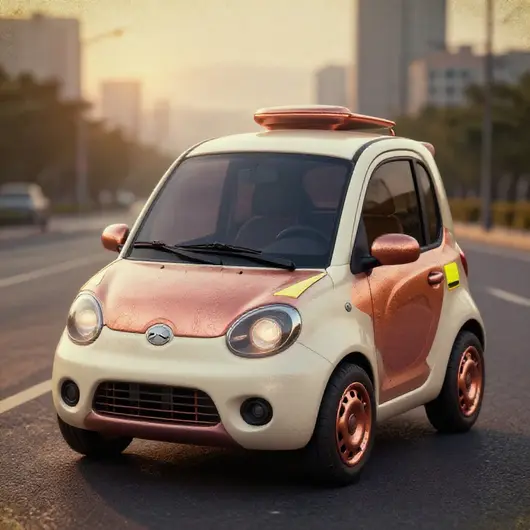
Recently, there's an interesting topic in the automotive world — "rapid-production cars are being stopped".
The issue started at the 2026 China Auto Forum, where automotive executives publicly criticized some brands for cutting necessary testing phases to accelerate market entry, effectively making consumers act as "test drivers" and creating safety hazards. At almost the same time, the National Automotive Standardization Technical Committee proposed increasing the total mileage for reliability driving tests for new energy vehicle models to 30,000 kilometers. From industry self-reflection to standard upgrades, the gears calling for "rapid-production cars" to be stopped are accelerating their rotation.
Simply put, some brands, in order to grab market share, have forcibly compressed R&D testing that should take several years down to 18 months or even shorter. In the fuel vehicle era, it generally took over 36 months from design to market launch for a new car; now many brands cut it in half. A netizen commented poignantly: "Even QQ Speed new cars have to be tested on the test server for half a year before officially launching." Virtual racing cars in games need half a year of testing, while real cars worth over 100,000 in reality, some brands only give half a year.

In this wave of "nothing works faster than speed," Chery Fengyun T7 appears a bit out of place.
On August 9, "Auto Man Old Xu" publicly questioned on Weibo: Others have finished the facelift for three generations of cars, but Fengyun T7 is still "coming soon". Is this due to poor R&D efficiency, or is there another reason? After the question was raised, Li Xueyong, Executive Vice President of Chery Automobile, gave three responses to "cannot be fast" — R&D cannot be fast, testing cannot be fast, co-creation cannot be fast.
To be honest, this response sounds quite official. But if you see what Fengyun T7 has actually been doing over the years, you might understand a bit.

Fengyun T7 is not a "China-exclusive car" — it is called LEPAS L6 overseas. South Africa has already pre-sold, Thailand has already launched, and it will subsequently enter over 130 countries and regions including the EU, Australia-New Zealand, UK, etc. A car must meet regulatory standards of so many countries at the same time; just in terms of regulatory adaptation, this cannot be completed in 18 months.
Let's look at testing. Fengyun T7 has cumulatively invested 963 test vehicles, with global durability test mileage reaching 1.45 million kilometers. Test routes cover the EU, Australia, South America, Middle East, Southeast Asia, Russia, experiencing extreme environments such as high temperature, extreme cold, high humidity, and high salinity. This is not beautiful data run out in a lab, but polished inch by inch on real extreme road conditions. Regarding safety, it benchmarks the 2026 version E-NCAP Five-Star standards, covering four dimensions: safe driving, collision avoidance, collision protection, and post-collision safety. These testing phases cannot be saved on any single one, nor can any be rushed.

Additionally, there are the top 10 global R&D design centers, over a hundred designers collaborating, and over 1,000 global users deeply co-creating. From design to verification to user feedback polishing for a car, every link requires time.
Of course, from the consumer's perspective, whether these reasons for "slowness" hold water is a topic worth discussing. After all, the market waits for no one — while you spend five years polishing a car, competitors may have already completed the iteration of two generations of products. Technology updates so fast, will long-cycle R&D lead to obsolescence upon launch? For this question, I'm afraid no one can give a standard answer.

But thinking from another angle, building cars is ultimately not building phones. If a phone has bugs, a restart fixes it; if a car has issues on the highway, that is a life-threatening matter. Rather than letting users act as "test drivers" to find issues after launch, it's better to solve all issues before launch. Fengyun T7 follows a path of "go overseas first, then return home" — first run around the globe to verify quality, then return to the domestic market. This path spends several times more time than "rapid production", but every step is unavoidable.
At the end of the day, this controversy of "fast and slow" reflects the clash of two car-building logics: one treats cars as fast-moving consumer goods, pursuing speed and traffic; the other treats cars as durable goods, obsessing over quality and safety. "Rapid-production cars" being stopped is never about the ability to iterate quickly, but rather about neglecting safety and perfunctorily handling quality.

Is Fengyun T7's "slowness" actually a shortcoming in R&D efficiency, or is it a time cost that a global car must pay? This question, perhaps only after it truly launches and stands the test of the market and time, can we get a clear answer.
Do you think, when it comes to building cars, should it be fast or should it be slow?
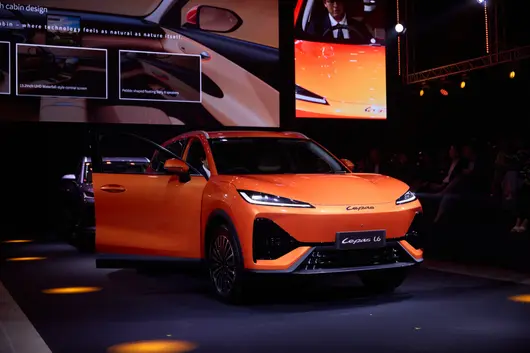
At the 2026 China Auto Forum, Beijing Hyundai GM Li Fenggang publicly criticized some brands for cutting necessary testing links to accelerate launch schedules, making consumers substitute as "test drivers". Almost simultaneously, the National Automotive Standardization Technical Committee proposed increasing the total mileage of new energy vehicle reliability driving tests to 30,000 kilometers. Both issues point in the same direction — "Rushed Cars" are being called off.

At this critical juncture, Fengyun T7 became the "center of attention": Others complete the full process from R&D to launch in 12 to 18 months, while this car is just preparing for pre-sale, having started preliminary research in 2022.
So, why is Fengyun T7 so "slow"? According to Li Xueyong, Executive Vice President of Chery Automobile, it is simply that R&D cannot be rushed, testing cannot be rushed, and co-creation cannot be rushed.

First, look at R&D. Fengyun T7 is not a "China-special car"; overseas it is called LEPAS L6. South Africa has pre-sales, Thailand has launched, and it will later enter the EU, Australia/New Zealand, UK, and over 130 other countries. Created collaboratively by top 10 global R&D design centers and hundreds of designers, with deep co-creation by 1000+ global users. Adapting to different countries' regulatory standards, road conditions, and climate environments means the R&D cycle cannot be compressed.

Next, look at testing. Fengyun T7 has cumulatively invested in 963 test vehicles, with a global durability testing mileage reaching 1.45 million kilometers. Test routes cover the EU, Australia, South America, Middle East, Southeast Asia, and Russia, enduring extreme environments including high heat, extreme cold, high humidity, and high salinity. This is not data run out in a lab, but ground up inch by inch in real extreme environments. Meanwhile, the full suite of evaluations covers four major dimensions: safe driving, collision avoidance, collision protection, and post-collision safety: these testing links cannot be saved on, nor can they be rushed.

Finally, look at co-creation. Fengyun T7 has 1000+ global users deeply participating in the R&D process; users' real feedback and actual needs from different markets are all integrated into the product definition. This co-creation model itself requires time; it cannot be hurried.
To be honest, some cars in the industry can be "fast" now by compressing testing and simplifying verification. But making cars is not making phones; a car concerns the travel safety of a family for at least several years, or up to over a decade. Rather than letting users act as "test drivers" to find problems after launch, it is better to solve all problems before launch. Fengyun T7 ran 1.45 million kilometers genuinely in global extreme environments; this "slowness" is the slowness that is responsible to users.

Simply put, Fengyun T7's "slowness" is not low efficiency, but a necessary path of positive development. It is not built in China and then tweaked and modified and sold abroad, but designed from day one according to global standards: first run a verification lap globally for quality, then return to the domestic market. This path of "first going global, then returning home" inherently requires several times the time of "rapid completion".
It can be said that Fengyun T7's "slowness" is that sense of reverence when facing the global market: reverence for safety, reverence for quality, reverence for users. This "slowness" is worth it.