


首頁Electric

搜尋歷史
熱門搜尋
經銷商登入 / 註冊

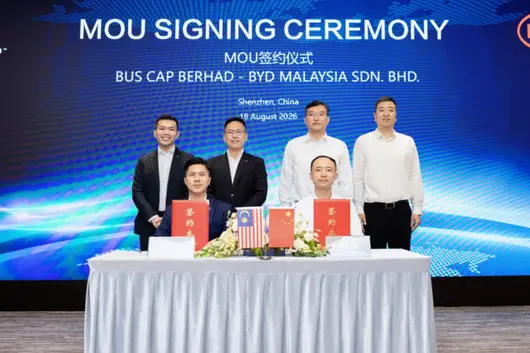
August 18, 2026, BYD Malaysia Sdn Bhd (abbreviated as "BYD Malaysia") and Malaysian bus manufacturer Bus Cap Berhad (abbreviated as "Bus Cap") signed an exclusive Memorandum of Understanding (MOU) in Shenzhen. The two parties will focus on local assembly and manufacturing of electric buses as the primary cooperation priority, jointly promoting strategic cooperation on new energy commercial vehicles in Southeast Asia with Malaysia as the base.

Bus Cap is a listed bus manufacturer in Malaysia. Its core subsidiary, SHL Coach, has been rooted in Perak since 1968 and possesses a mature local manufacturing foundation and market understanding. According to the MOU, the two parties plan to carry out cooperation around areas such as product localization, sales models, and after-sales services, and explore establishing electric bus local assembly and manufacturing facilities in Perak. BYD will leverage its leading new energy technologies, comprehensive solutions, and global marketing promotion experience, combined with Bus Cap's local industrial foundation, to lay a solid foundation for the overall development of electric buses in Malaysia.
BYD Group Vice President and General Manager of the 15th Division & Commercial Vehicle Division Luo Zhongliang stated: "This MOU is an important step for BYD Malaysia in evaluating local electric commercial vehicle opportunities. Based on this cooperation, BYD will combine localization needs to promote the R&D and production of various new energy buses, further explore various new energy commercial vehicle solutions, and continue to expand the Southeast Asian market with Malaysia as a fulcrum."
Huang Zongyang, Executive Director of Bus Cap, stated: "This MOU is an important step in Bus Cap's development journey after listing, and will establish a competitive foundation for electric bus assembly, manufacturing, and deployment in Malaysia."

This cooperation aligns with the Malaysia National Energy Transition Roadmap (NETR) and the direction of public transport electrification. The two parties will take this as a starting point to deepen cooperation in the field of new energy commercial vehicles and jointly explore broader Southeast Asian market opportunities.

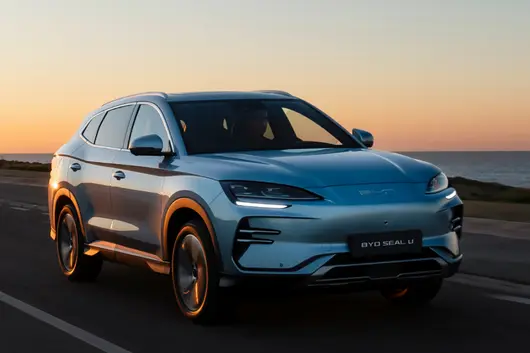
Gasgoo Auto News: Driven by falling battery costs and the rise of Chinese automakers with economies of scale in emerging markets, the average price of electric vehicles globally last year fell below that of hybrid models.
Lithium-ion batteries account for 30%-40% of total vehicle costs, while China's battery capacity is abundant, controlling about 80% of the global battery market, which has also kept battery prices continuously falling. Bloomberg New Energy Finance (BloombergNEF) estimates that between 2020 and 2025, passenger vehicle battery prices fell cumulatively by 37%.

Image Source: BYD
At the same time, major automakers are increasingly adopting Lithium Iron Phosphate (LFP) batteries without expensive cobalt elements. Although lithium iron phosphate batteries were previously considered to have lower energy density than traditional lithium batteries, their performance is continuously improving. Renault and Volkswagen both announced last year that they would equip some new models with LFP batteries.
With fierce competition in the Chinese domestic market, Chinese EV automakers are accelerating their overseas expansion, which also drove down global vehicle prices. BYD and other Chinese automakers achieved autonomous production of components from batteries to chassis by relying on vertically integrated supply chains and refining cost advantages.
Previously high prices hindered the widespread adoption of electric vehicles in most regions globally. In markets such as China and Norway, EV prices are already on par with or even lower than fuel-powered vehicles, and the pace of electrification in these regions is much faster, while emerging markets may replicate this trend.
According to data from the China Association of Automobile Manufacturers, China's EV exports reached 1.64 million units in 2025, while exports in 2020 were less than 100,000. Consumers in major export markets such as Thailand and Mexico highly value the high cost-performance ratio of Chinese models, with Chinese brands accounting for nearly 30% of new car sales in Thailand.
From the perspective of average prices in various countries, EV prices in Southeast Asian and South American countries have already fallen below those of hybrid models. Thailand is actively attracting investment to support the EV industry; both BYD and Great Wall Motor have already established factories locally. Yoshiaki Kawano, an executive at Mobility Global, stated: "Chinese automakers initially expanded market share by focusing on volume-selling compact EVs, but have now expanded their product lines to launch larger and premium models with higher profit margins."
In the past, Japanese automakers focused on the hybrid route, forming differentiated competition with lower purchase thresholds and long range. Now they are also beginning to readjust their strategies. Toyota adopted the strategy of "running multiple technology routes in parallel," launching both EVs and hybrid models simultaneously based on the needs of consumers in different markets. Nissan followed the lead of Chinese competitors, producing EVs in China for export to overseas markets.
Affected by rising oil prices due to the Middle East situation, global EV sales have surged significantly in recent months. The International Energy Agency (IEA) predicts that in 2026, purely electric and plug-in hybrid models will account for about 30% of global car sales.

[CNMO Tech News] Chinese EV firms are rapidly expanding their influence in the ASEAN market. Besides exporting complete vehicles, they are also localizing the entire supply chain, posing a threat to the dominant Japanese and South Korean automakers.

BYD Song Ultra DM-i
According to local industry data, Thailand's EV sales in 2023 grew by 80% year-on-year, surpassing 120,000 units. Among them, BYD and other Chinese brands dominate the market. Mainstream models hold a 70% to 80% market share in the pure EV market, gradually squeezing the market space of Japanese fuel vehicles. In Indonesia, where Japanese brands account for over 80% of the overall auto market, BYD's retail sales reached 6,274 units in April this year, rising to third place in total brand sales with a market share of about 4.8%. Including other Chinese brands like Wuling and Chery, the total share approaches 10%. Hyundai, which once ranked first in Indonesia's EV market, is now only tenth in sales. In Singapore, BYD's market share surpassed 30% for the first time this April, and its full-year 2023 sales exceeded Toyota, which long held the top spot, taking the brand sales lead.
To further enhance competitiveness, Chinese automakers are advancing the construction of local ASEAN supply chains, enjoying zero-tariff policies within the region while avoiding tariff barriers in Europe and the US. After BYD's Thailand factory commenced production, a new factory with an annual capacity of 150,000 units will be built in Indonesia this year. JPMorgan data shows that major Chinese automakers such as BYD, Chery, and Changan will build 14 new energy vehicle factories overseas before 2026, including multiple projects in the ASEAN region.

Image from Internet
Impacted by competition from Chinese automakers, the capacity utilization rate of Hyundai's factory in Indonesia was only 47.3% in 2023, far lower than the 94.2% in India and 100% in the US. Industry insiders stated that as ASEAN countries promote electrification transformation as a national strategy, Chinese EV companies, leveraging supply chain, price, and technology advantages, are expected to see their local market influence continue to rise.
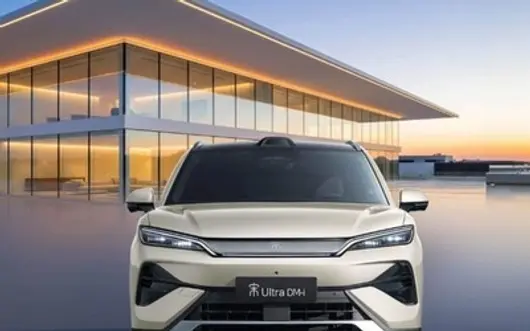

[CNMO Tech News] Chinese EV firms are rapidly expanding their influence in the ASEAN market. Besides exporting complete vehicles, they are also localizing the entire supply chain, posing a threat to the dominant Japanese and South Korean automakers.
BYD Song Ultra DM-i
According to local industry data, Thailand's EV sales in 2023 grew by 80% year-on-year, surpassing 120,000 units. Among them, BYD and other Chinese brands dominate the market. Mainstream models hold a 70% to 80% market share in the pure EV market, gradually squeezing the market space of Japanese fuel vehicles. In Indonesia, where Japanese brands account for over 80% of the overall auto market, BYD's retail sales reached 6,274 units in April this year, rising to third place in total brand sales with a market share of about 4.8%. Including other Chinese brands like Wuling and Chery, the total share approaches 10%. Hyundai, which once ranked first in Indonesia's EV market, is now only tenth in sales. In Singapore, BYD's market share surpassed 30% for the first time this April, and its full-year 2023 sales exceeded Toyota, which long held the top spot, taking the brand sales lead.
To further enhance competitiveness, Chinese automakers are advancing the construction of local ASEAN supply chains, enjoying zero-tariff policies within the region while avoiding tariff barriers in Europe and the US. After BYD's Thailand factory commenced production, a new factory with an annual capacity of 150,000 units will be built in Indonesia this year. JPMorgan data shows that major Chinese automakers such as BYD, Chery, and Changan will build 14 new energy vehicle factories overseas before 2026, including multiple projects in the ASEAN region.
Image from Internet
Impacted by competition from Chinese automakers, the capacity utilization rate of Hyundai's factory in Indonesia was only 47.3% in 2023, far lower than the 94.2% in India and 100% in the US. Industry insiders stated that as ASEAN countries promote electrification transformation as a national strategy, Chinese EV companies, leveraging supply chain, price, and technology advantages, are expected to see their local market influence continue to rise.


