


首頁Denza Z9GT

搜尋歷史
熱門搜尋
經銷商登入 / 註冊

On the evening of September 16, BYD's luxury brand Denza Z9GT was launched in Thailand, priced at 2,999,900 Thai Baht, equivalent to starting at 600,000 RMB, over 200,000 RMB more expensive than the domestic price.

On a drizzly night, witnessing the significant moment when Denza's flagship model officially entered the Thai market. Luxury design + Cutting-edge technology + Superior performance. Top-tier luxury brand.

In the Thai market, it primarily targets imported luxury GT coupes such as the BMW 8 Series, Mercedes-Benz CLS, and Audi A7.
In the European market, the Denza Z9GT starts at 115,000 Euros (≈920,000 RMB), while in Brazil it is priced at 850,000, nearly 3 times the domestic price, directly targeting the Porsche Taycan.
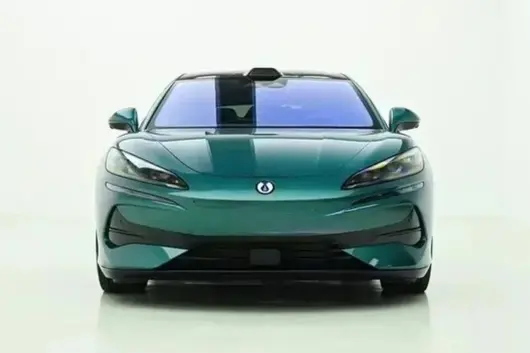

On September 15, Denza officially announced that the Denza Z9GT is scheduled to launch in the Thai market on September 16. The vehicle went on sale domestically in March this year, with 5 configurations available, priced from 269,800 to 369,800 yuan, and has already been sold in markets such as Europe and Malaysia.

Exterior: Retains family design. The front features split narrow headlight clusters, and the front bumper has a through-ventilation heat dissipation opening. New car color Fjord Green added; LiDAR moved to the roof, consistent with other family models; additionally added small blue smart driving indicator lights and brand new style 21-inch wheels. Side waistline and curved surface are integrated and coherent, with "Z" shaped decorative lines; rear features an integrated floating spoiler.

Interior: The interior features a Lava Red color scheme. Equipped with original factory colored carbon interior kit, diamond-quilted integrated sports seats, three-spoke sports steering wheel, BOOST paddles, and metal column shifter.

Configuration: Zero-gravity seats for the comfortable passenger seat, spacious rear row, streaming media side mirrors, intelligent warm and cold refrigerator, seat magnetic ecosystem, AR-HUD, etc., are all equipped.
Powertrain: Available in pure electric and plug-in hybrid powertrains. The plug-in hybrid version uses a 63.8kWh battery pack, with pure electric range of 401km and comprehensive range of 1301km; the pure electric version has a range of 1036km. The entire series is equipped with the second-generation Blade Battery and supports fast charging, official claims 5 minutes to charge sufficiently, 9 minutes to fully charge.

Gasgoo News According to foreign media reports, Chinese automotive giant BYD has postponed plans to build its own automotive assembly plant in Malaysia, turning to launch "in-depth negotiations" with local partners to achieve its production goals locally. BYD Malaysia Managing Director Jacob Ma revealed this decision at a press briefing held recently.
BYD previously announced in August 2025 plans to build an automotive assembly plant in Tanjung Malim, Perak, Malaysia. "As a clarification, the Tanjung Malim plant will not proceed further," Ma stated.
He added that BYD is currently collaborating with a mature local enterprise, "the partner possesses the capacity and capability required to meet BYD's requirements and support a complete local assembly business." Current discussions between the two parties "have entered a very advanced stage," and relevant documents are also being finalized.
"Once everything is ready, we will formally announce it to the public."

Image Source: BYD
Malaysian financial media "The Edge" reported in March this year that uncertainty arose regarding the progress of the Tanjung Malim plant project after BYD failed to reach an agreement with the Malaysian Ministry of Investment, Trade and Industry on relevant conditions.
It was reported that one of the disputes involved the requirement for the export proportion of locally assembled vehicles, meaning up to 80% of locally assembled vehicles might need to be exported.
Regarding why the self-built factory plan was postponed, Ma did not respond directly, but stated that BYD's corporate culture is "focused on long-term exploration".
In May this year, it was reported that BYD is evaluating the possibility of contract assembly cooperation with local partner Sime Motors. This cooperation may utilize factories of Sime's subsidiary located in Kulim, Kedah for production. Sime Motors is BYD's official dealer in Malaysia.
Effective July 1 this year, Malaysia began requiring the declared Minimum Cost, Insurance, and Freight (CIF) for imported fully built electric vehicles to reach 200,000 Ringgit (approx. $49,000), and requiring a minimum power output of 245 horsepower (180 kW). This new requirement was implemented after the special tax incentives for imported fully built electric vehicles in Malaysia expired at the end of 2025.
Some of BYD's main electric vehicles currently sold in Malaysia are priced below 200,000 Ringgit, therefore, the importance of local assembly has increased further.
Ma emphasized that BYD "will continue to deepen its presence in Malaysia". "The specific factory location and cooperation method may change, but our goal has not changed," Ma stated. "We still view Malaysia as an important market and an important part of BYD's future growth strategy."
Ma also said that as BYD's business continues to develop, related changes will continue to occur and company strategy might also be further "optimized". "We will continue to invest and continue to innovate."
Currently, BYD is further expanding its market layout in Malaysia. Since entering the Malaysian market in 2022, BYD has cumulatively sold over 35,000 electric vehicles. Last year, BYD sold 14,407 electric vehicles locally, becoming the best-selling EV brand in Malaysia.
Adeline Lew, Managing Director of Sime Motors Automotive, stated that in the first half of this year, BYD sold over 7,000 electric vehicles in Malaysia.
In July this year, BYD's high-end brand Denza launched the Z9GT in Kuala Lumpur, priced at 358,800 Ringgit. Analysts believe this model will bring significant competitive pressure to the high-end EV market in Malaysia.
Ma revealed that the first batch of Z9GT has sold out, the company is currently waiting for the second batch of vehicles to arrive in Malaysia, but did not reveal more details.

July 28, the 2026 Fortune Global 500 list was unveiled. BYD appeared on the list for the 5th consecutive year, ranking 91st, firmly securing a spot in the global top 100. Among the 8 domestic automakers included, BYD ranked the highest, and was the only Chinese automaker in the list to rank within the top 100.

Behind this achievement is a report card that makes all competitors look up to it.
4.6 Million Units! Global New Energy Vehicle Sales Champion, No DoubtsIn 2025, BYD's annual revenue reached 804 billion yuan, net profit 32.6 billion yuan, with new energy vehicle sales reaching 4.6 million units. What does 4.6 million units mean? It equates to selling 12,600 new energy vehicles daily, with one BYD delivered to a customer's hands every 7 seconds.
In the first half of 2026, despite the industry-wide pressure, BYD's cumulative sales still exceeded 1.8 million units. In July, BYD's 17 millionth new energy vehicle officially rolled off the production line, becoming the world's first automaker to achieve this milestone. Even more shocking, from the 16 millionth to the 17 millionth, BYD took less than 3 months—rolling off over 12,000 units daily. This manufacturing speed, placed in any automotive factory globally, is an incredible existence.

Why can BYD secure the seat of the global new energy vehicle benchmark enterprise? The answer is: willing to spend money on R&D.
In 2025, BYD's R&D investment reached 63.4 billion yuan, up 17% year-on-year, ranking first among A-share listed companies for two consecutive years. In Q1 2026, R&D investment reached 11.3 billion yuan, leading domestic mainstream automakers and top new forces. As of now, cumulative R&D investment has exceeded 250 billion yuan.
Where did the money go? In March 2026, BYD released the 2nd generation Blade Battery and Flash Charge technology. Under normal temperature, "5 minutes to charge well, 9 minutes to charge full", in -30 degree extreme cold environments, charging time is only 3 minutes longer than normal temperature. The Chief Engineer of MIIT specifically praised it at the press conference, saying it broke the technical bottleneck where "fast charging, high range, long life, and low-temperature performance cannot be obtained simultaneously". Charging is as fast as refueling, this time it really isn't boasting.

BYD also plans to build 20,000 Flash Charge stations nationwide by the end of the year, with a global layout of 6,000 overseas Flash Charge stations. In May, BYD was the first to promise a 1-year safety backstop for city pilot navigation, announcing that all models can be equipped with Sky Vision B Assisted Driving Laser Version. To date, no other automaker has followed up on this commitment.

If the domestic market is BYD's base, then the overseas market is its second growth curve.
In 2025, BYD's overseas sales broke through 1 million units for the first time, up 145% year-on-year. In the first half of 2026, overseas sales exceeded 780,000 units. Among them, European market registration reached 162,400 units in the first half, surging 136% year-on-year. The "Going Global" strategy has formed a pattern of "Latin America leading, Europe breaking through, Asia-Pacific blooming at multiple points".
This year, BYD's first overseas Cloud Rail was opened in Brazil, the Brazil factory reached the 100,000th new energy vehicle rolling off the line; Denza Z, Z9GT and D9 opened a new chapter of tech luxury in Europe; the first overseas dedicated Sea Otter model landed in Japan; the Thailand factory welcomed its second anniversary of production. As of now, BYD's business has spread across 121 countries and regions globally.

As of June 30, compared to traditional fuel vehicles, BYD new energy vehicles have cumulatively achieved carbon emission reduction of 149 million tons, equivalent to planting 2.48 billion trees. In terms of social responsibility, BYD launched a 3 billion yuan education charity fund, signed donation agreements with 127 universities nationwide, incentivizing over 6,000 students.

As a global new energy vehicle benchmark enterprise, BYD started from a battery factory, and now firmly ranks 91st on the Fortune Global 500. BYD has used more than 20 years to prove one thing: technological innovation is the only passport for Chinese automobiles to go global. As a global new energy vehicle benchmark enterprise, what is BYD's next goal? Wang Chuanfu has already given the answer - Cool the Earth by 1°C. This goal is huge, but with BYD's current pace, nothing is impossible.
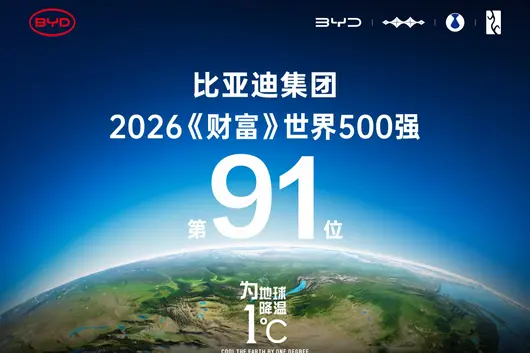

July 28, 2026, the highly anticipated Fortune Global 500 list was grandly released! BYD proudly made it to the list again; this is already the brand's fifth consecutive year joining the world's top 100. This time ranked 91st, firmly standing within the global top 100 elite enterprise camp, a benchmark enterprise for global new energy vehicles, continuously demonstrating the core strength of Chinese new energy enterprises!

Momentum soaring, full of achievements! In 2025, BYD delivered a report card sufficient to astonish the industry, with annual revenue reaching a high of 804 billion yuan, and net profit breaking through 32.6 billion yuan. Operating performance steadily climbed, with a thriving momentum! In the core sales track, BYD's annual new energy vehicle sales broke 4.6 million units, winning both the global new energy vehicle sales champion and the China market auto sales champion titles, firmly standing at the core position of the global new energy vehicle benchmark enterprise! Entering 2026, brand popularity and market momentum continued unabated, with cumulative sales in the first half successfully breaking 1.8 million units, showing very strong growth momentum! More worth cheering about is that in the same month of July, BYD welcomed a historic highlight moment—the brand's 17 millionth new energy vehicle went off the line smoothly, becoming the first auto enterprise globally to unlock this milestone achievement, once again refreshing industry records and creating a new legend!
Deep cultivation in the innovation track, sticking to the original intention of technology! Since development, BYD has always held the core development concept of "Technology is King, Innovation is Foundation", driving continuous brand iteration and leading the industry with ultra-high intensity R&D investment! In 2025, BYD's R&D investment was heavily weighted to 63.4 billion yuan, a year-on-year surge of 17%. Relying on core R&D strength, it won the top spot in R&D investment among A-share listed companies for two consecutive years, firmly securing the first place in the industry! In the first quarter of 2026, brand R&D investment reached a new high again, single quarter investment of 11.3 billion yuan, far leading domestic mainstream automakers and top new energy forces, R&D courage is unquestionable! As of now, BYD's cumulative R&D investment has forcibly broken through 250 billion yuan. Long-term, continuous, and high-amount technology deep cultivation has allowed a series of disruptive frontier technologies to accelerate implementation and iteration!
Innovation results blooming everywhere, black technology empowering universal mobility! In March 2026, BYD heavily released the second-generation Blade Battery and brand-new super-fast charging technology, completely revolutionizing the new energy mobility experience with breakthrough technologies. Meanwhile, planning to complete the layout construction of 20,000 super-fast charging stations nationwide by the end of the year, comprehensively improving the domestic energy replenishment system! Not only deepening the domestic market, BYD is also fully laying out the global energy replenishment network, planning to land 6,000 overseas super-fast charging stations, letting the convenience of Chinese intelligence benefit global users! In May of the same year, BYD once again led industry change, being the first to announce a full one-year comprehensive backing guarantee for city navigation safety, while realizing the entire series models can be equipped with the Divine Eye B Assisted Driving Laser Version, breaking industry barriers in one move, officially opening the era of universal city navigation accessible to everyone!
Setting sail overseas to expand territory, global layout momentum like a rainbow! Relying on solid product strength and brand reputation, BYD's globalization development pace accelerated to full speed, overseas market performance welcomed explosive growth! In 2025, BYD's overseas sales successfully broke through the 1 million unit mark for the first time, surging 145% year-on-year, growth speed was very astonishing! In the first half of 2026, the overseas hot-selling trend continued to extend, sales easily broke through 780,000 units, overseas market recognition continued to skyrocket! Nowadays, BYD has successfully created a new pattern of "Latin America leading, Europe breakthrough, Asia-Pacific multi-point blooming" globalization development, overseas version continuously expanding, blooming everywhere!
Many overseas landing results are bright and eye-catching: Brazil's first overseas SkyRail officially opened for operation smoothly, Brazil factory successfully completed the 100,000th new energy vehicle off the line milestone; Denza Z, Z9GT, D9 three car models joined forces to land in the European market, reshaping the European high-end new energy mobility pattern, opening a new chapter of Chinese automotive European technology luxury! The brand-new model Otter (BYD RACCO) developed specifically for overseas markets officially landed in Japan, accurately deepening the niche market; Thailand factory also fully welcomed the two-year anniversary of production, localization operation becoming more and more mature! As of now, BYD business version has covered 121 countries and regions globally, formally entering a new stage of globalization with localized deep cultivation and high-quality advancement!
Holding responsibility to travel far, green responsibility empowering the future! On the dual carbon development track, BYD has always practiced sustainable development concepts with a green original intention, delivering a stunning environmental protection report card! Data shows, as of June 30, 2026, BYD new energy vehicles compared to traditional fuel cars, in energy production and usage links cumulative achieved 149 million tons carbon emission reduction amount, equivalent to planting 2.48 billion trees, using core strength to contribute Chinese power for global carbon reduction and ecological protection!
On the path of social responsibility practice, BYD is also not stopping steps, moving forward with great love! The brand heavily set up a 3 billion yuan education charity fund, partnering with 127 universities nationwide to achieve public welfare donation cooperation, cumulatively incentivizing and helping more than 6,000 students chase dreams forward, empowering education development with public welfare power, passing on the temperature and responsibility of national enterprises!
From securing the top 500 global spot, to leading the global new energy track, BYD's every breakthrough, every leap, is the best witness to deep cultivation technology innovation, gathering global expansion, sticking to original mission! Looking forward to the future, BYD will continue to hold original intention, forge ahead, unswervingly practice sustainable development concepts, with frontier hard core technology, perfect global layout, extreme product service, continuously refreshing industry height, going all out to assist global green transformation, striving to realize the beautiful vision of "Cooling the Earth by 1°C", continuously writing the new chapter of Chinese intelligence leading the world!
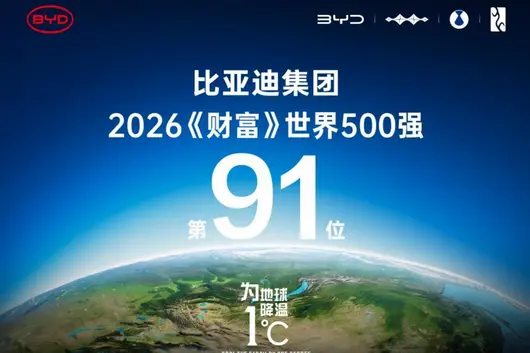

Auto Talk Magazine In-depth Report | On July 28, 2026, the 2026 Fortune Global 500 list was officially released. BYD successfully made the list for the fifth consecutive year, ranking 91st, continuously solidifying its seat among the global top 100 enterprises.
This ranking is not only a direct testament to BYD's operating scale and comprehensive strength, but also an iconic snapshot of the Chinese new energy vehicle industry moving to the center of the global stage. Relying on continuously leading market sales, long-term high-intensity R&D investment, and a steadily advancing global layout, BYD has grown into an indispensable core force in the global new energy vehicle sector.

Operating data outlines BYD's steady upward development curve. In 2025, BYD's full-year revenue reached 804 billion yuan, with a net profit of 32.6 billion yuan; New energy vehicle full-year sales reached 4.6 million units, securing both the global new energy vehicle sales champion and Chinese automaker sales champion titles at once.
Entering 2026, the growth momentum continues, with cumulative sales in the first half of the year exceeding 1.8 million units.
In July, BYD reached a historic milestone, with the brand's 17 millionth new energy vehicle officially rolling off the production line, becoming the first automaker in the world to achieve this milestone.
Behind the continuous breakthrough in production and sales scale lies a competitive moat built by a complete product matrix, a mature manufacturing system, and continuously iterated product capabilities.

For a long time, BYD has adhered to the core development philosophy of "Technology is King, Innovation is Fundamental", continuously placing R&D investment in a strategic priority position, building unreplicable technical barriers.
In 2025, BYD's R&D investment reached a high of 63.4 billion yuan, a 17% year-on-year increase, ranking first among A-share listed companies for two consecutive years; In Q1 2026, R&D investment was 11.3 billion yuan, significantly ahead of domestic mainstream automakers and top new energy brands. As of now, the company's cumulative R&D investment has exceeded 250 billion yuan.
Continuous capital investment is driving frontier technologies to accelerate from the laboratory to mass production.
In March 2026, BYD officially launched the second-generation Blade Battery and Supercharge technology, simultaneously announcing a massive charging network construction plan, striving to build 20,000 Supercharge stations domestically by the end of the year, and simultaneously laying out 6,000 Supercharge stations overseas, alleviating new energy users' charging anxiety from the root.

In May of the same year, BYD was the first to propose an industry commitment for one-year city navigation safety backup, announcing that all models can be equipped with the "God's Eye B" assisted driving laser version, lowering the threshold for high-level intelligent driving usage, and promoting the arrival of the era of nationwide city navigation. From power batteries and high-voltage charging technology to high-level intelligent driving, BYD has achieved autonomous control of core technologies, carving out a development path of self-research, self-manufacturing, and technology inclusivity.
The overseas market is becoming BYD's second growth curve. In 2025, BYD's overseas sales broke through 1 million units for the first time, a 145% surge year-on-year; In the first half of 2026, overseas sales continued an upward trend, exceeding 780,000 units. Nowadays, BYD's overseas strategy has taken shape, forming a clear pattern of "Leading in Latin America, Breaking through in Europe, Blossoming at Multiple Points in Asia-Pacific".
The first overseas SkyRail line in Brazil opened for traffic, and the 100,000th new energy vehicle rolled off the production line at the Brazil factory; Denza Z, Z9GT, D9 landed in the European market, launching the influence of Chinese high-end new energy brands; The model Sea Otter (BYD RACCO) built specifically for the overseas market landed in Japan; The Thailand factory welcomed its second anniversary of production.
As of now, BYD's business map has expanded to 121 countries and regions globally. Globalization is no longer limited to simple product exports, shifting towards a high-quality deep-plowing model of local production, local operations, and local R&D.
Beyond business growth, BYD continues to practice green development and corporate social responsibility. At the sustainable development level, as of June 30, BYD new energy vehicles have cumulatively reduced carbon emissions by 149 million tons compared to traditional fuel vehicles in energy production and usage links, equivalent to planting 2.48 billion trees, continuously helping the global carbon neutrality process.
In the field of education and public welfare, BYD established a 3 billion yuan education charity fund, established donation cooperation with 127 universities nationwide, encouraged over 6,000 young scholars to grow, feeding back industrial strength to social development, practicing corporate long-term value.
As a global new energy vehicle leader, BYD holds a steady seat in the global Top 100 of the Fortune 500, which is the inevitable result of decades of adhering to independent innovation and firmly promoting the globalization strategy.
Looking towards the future, BYD will continue to practice sustainable development goals, relying on frontier technology and a perfect global industrial layout, continuing to move forward towards the vision of "Lowering the Earth's Temperature by 1°C".

In-depth Commentary
BYD holding a firm seat in the Fortune 500 Top 100 for five consecutive years essentially verifies a development paradigm belonging to Chinese new energy automakers: adhering to long-termist technology investment, feeding back innovation with scale effects, and relying on whole industry chain advantages to balance deep cultivation of the domestic market and globalization expansion.
Unlike some automakers chasing traffic and capital dividends in the short term, BYD continues R&D investment at the level of tens of billions of yuan, building an integrated ecosystem of batteries, vehicles, intelligent driving, and energy infrastructure, breaking dependence on external core components, which is also its core confidence to continuously withstand industry cycle fluctuations.
Looking at the global automotive industry landscape, the pace of electrification transformation of traditional multinational automakers has slowed down, and the center of competition in the new energy track is accelerating transfer to Chinese enterprises. BYD's globalization has bid farewell to the primary stage of low-price exports, turning towards product customization, overseas factory building, and energy network collaborative layout, completing the leap from "Product Export" to "System Export". At the same time, we must see that overseas market trade barriers, local brand competition, and local policy differences are still long-term challenges.
In the long run, BYD's development story has long transcended the scope of a single enterprise and become a typical sample of China's manufacturing industry transformation and upgrading. The competition in the new energy vehicle industry has extended from single product competition to a comprehensive contest of technology, energy infrastructure, globalization operations, and sustainable concepts.
Continuously maintaining R&D determination, balancing domestic and international market rhythms, and continuously improving the green industry ecosystem, BYD is expected to continuously consolidate its status as a global new energy vehicle leader, continuously promoting the Chinese automotive industry to achieve a leap from "Automotive Giant" to "Automotive Powerhouse".
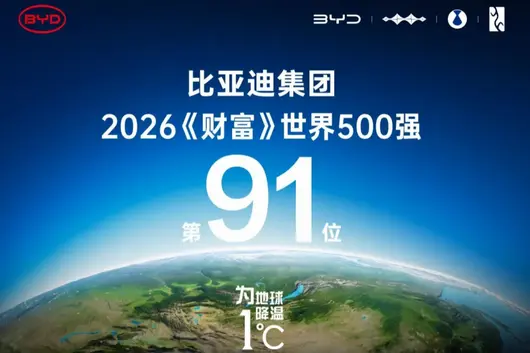

On July 28, the 2026 Fortune Global 500 list was officially released. BYD ranked 91st for the 5th consecutive year, with comprehensive strength firmly in the world's first echelon.

In 2025, BYD achieved annual revenue of 804 billion yuan and net profit of 32.6 billion yuan; new energy vehicle sales reached 4.6 million units for the year, securing the title of global new energy vehicle sales champion and China market automaker sales champion, among others. From January to June 2026, the company's cumulative sales exceeded 1.8 million units. In July, BYD's 17 millionth new energy vehicle officially rolled off the production line, becoming the first automaker to reach this milestone.
BYD has always adhered to the development concept of "Technology is King, Innovation is the Foundation". In 2025, the company's R&D investment reached 63.4 billion yuan, a year-on-year increase of 17%, ranking first among A-share listed companies for two consecutive years. In the first quarter of 2026, the company's R&D investment reached 11.3 billion yuan, leading domestic mainstream automakers and top new forces. So far, the company's cumulative R&D investment has exceeded 250 billion yuan. Continuous high-intensity technical investment has driven the accelerated implementation of more disruptive technological results. In March 2026, BYD released the second-generation Blade Battery and fast-charging technology, planning to build 20,000 fast-charging stations nationwide by the end of the year. In addition, BYD will also deploy 6,000 overseas fast-charging stations globally. In May, BYD was the first to commit to guaranteeing safety for 1 year for urban navigation, and announced that all models can be equipped with God's Eye B ADAS Laser Edition, opening an era of urban navigation for all.
In 2025, BYD's overseas sales exceeded 1 million units for the first time, a year-on-year increase of 145%; in the first half of 2026, overseas sales continued to grow, exceeding 780,000 units. The company's overseas expansion strategy has formed a pattern of "Leading in Latin America, Breaking Through in Europe, Blooming in Multiple Points in Asia and the Pacific". This year, BYD's first overseas SkyRail was opened in Brazil, and the Brazil factory reached the 100,000th new energy vehicle off the line; Denza Z, Z9GT and D9 jointly opened a new chapter of technological luxury in Europe; BYD's first overseas specialized model, Sea Otter (BYD RACCO), landed in Japan; the Thailand factory welcomed its second anniversary of production. BYD is accelerating into a new stage of globalization focusing on deep local cultivation and high-quality development. So far, BYD's business has spread to 121 countries and regions worldwide.
In terms of sustainable development, as of June 30, compared to traditional fuel vehicles, BYD's new energy vehicles have cumulatively achieved carbon emission reductions of 149 million tons in the energy production and usage links, equivalent to planting 2.48 billion trees. In terms of social responsibility implementation, BYD launched a 3 billion yuan education charity fund and reached donation agreements with 127 universities across the country, inspiring more than 6,000 students.
As a global leader in new energy vehicles, BYD's firm position in the top 100 world companies is the result of its persistence in technological innovation and global breakthrough. Looking ahead, BYD will continue to steadfastly uphold the concept of sustainable development, with more cutting-edge technology and a more complete global layout, to cool the Earth by 1°C.
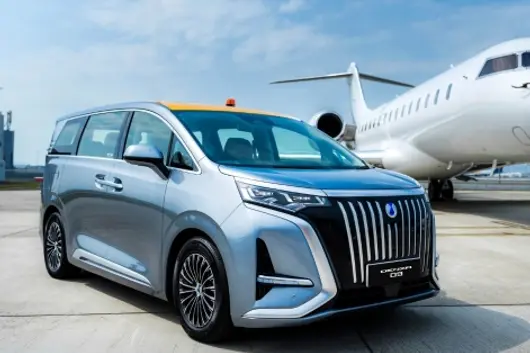

July 15, Denza brand officially launched its flagship pure electric shooting brake model — Denza Z9GT, in the Malaysian market. The new car's local official price is 358,800 Ringgit, equivalent to approximately 595,700 Yuan. This launch holds profound significance; Malaysia becomes the first Asia-Pacific overseas market in Denza Z9GT's layout, marking that Denza has completed a key move in the Southeast Asia high-end new energy segment, formally building a complete overseas product matrix.

Since officially entering the Malaysian market in February 2025, Denza relies on the local core dealer Sime Darby Group to launch flagship stores in Kuala Lumpur's core business district, steadily promoting the overseas market layout. The brand initially launched two main models: the luxury MPV Denza D9 and the high-end PHEV SUV Denza B8. Relying on mature three-electric technology, luxury cabin quality, and reliable product quality, they quickly established themselves in the local high-end new energy niche segment, accumulating a solid market reputation and user base.

As Denza's annual flagship model, Z9GT has already completed its domestic launch in March this year, gathering multiple top core technologies of the brand. The new car is equipped with e3 Intelligent Chassis Architecture, Second-generation Safety Blade Battery, Sky-Eye 5.0 Advanced Intelligent Driving System, and DiSus-A Intelligent Air Body Control System, with hardware configuration maxed out. In terms of range, the new car offers a maximum pure electric range of 1,036 kilometers, completely solving range anxiety for long-distance travel, combining ultimate performance, comfortable experience, and ultra-low energy consumption. It is a benchmark product of Denza's technology accumulation. Launching to the overseas market will further demonstrate China's new energy vehicle core manufacturing strength.
This time Denza Z9GT's entry successfully filled the brand's product gap in the high-performance luxury coupe field, allowing Denza to form a product layout covering three major categories: MPV, SUV, high-performance GT sedan in the Malaysian market, fully covering diverse scenarios of high-end home use, business reception, and performance travel, further improving brand market competitiveness.
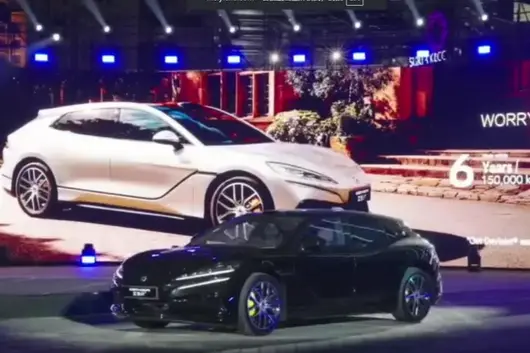


The European automotive market in 2026 is undergoing a subtle shift in power dynamics.
Data from the European Automobile Manufacturers Association (ACEA) shows that in May this year, the combined new car registrations of five Chinese automakers—BYD, SAIC MG, Geely, Chery, and Leapmotor—in 31 European countries reached 138,400 units, up 64.59% year-over-year. This achievement marks the first time Chinese cars have surpassed Japanese cars in Europe. In the pure electric segment, the share of Chinese brands in European pure electric sales has approached 15%.
JPMorgan's research report suggests that the share of Chinese automakers in the Western European market could reach 20% by 2028. Accelerated European electrification and the generational advantage in product definition by Chinese automakers are the core supports for this structural growth.
Along with sales growth, the overseas prices of Chinese cars also seem to prove the strength of this European strategy: the BYD Dolphin, starting domestically under 120,000 RMB, sold in the UK for 270,000 RMB. The Denza Z9GT, priced at 360,000 RMB domestically, was priced in Europe at over 900,000 RMB. BYD Seal and XPeng G6 prices were also generally 50% to even 100% higher than domestic.

Prices doubled, yet sales are skyrocketing. In this prosperous scenario, many views optimistically believe that Chinese EVs have successfully broken into the European market.
But in reality, have Chinese automakers truly taken root in Europe?

Sales prosperity supported by 'Relative Value'
The 'expensiveness' of Chinese EVs in Europe is largely a currency illusion.
Taking the BYD ATTO 3 sold in the German market (known as Yuan PLUS domestically) as an example, its terminal selling price is about €38,000. This includes the EU 10% base tariff, up to 35.3% countervailing duties on Chinese EVs, and Germany's 19% VAT. Plus WVTA EU Type Approval, Euro NCAP crash test compliance, logistics, and local marketing costs. After a Chinese EV crosses the ocean to arrive in Europe, the cost structure has undergone drastic changes.

Rhodium Group analysis believes that even with the EU 10% base tariff and up to 35.3% countervailing duties added, Chinese automakers' per-vehicle profit in Europe remains significantly higher than domestic. This 'European premium' constitutes a short-term profit buffer.
But if the reference is switched from 'domestic price' to 'local European market', Chinese cars in Europe have not departed from the old route of ultimate cost-performance.
The starting price of the Volkswagen ID.4 in the German market is about €45,000, which is about €7,000 more than the same-class BYD ATTO 3. In terms of configuration, the ID.4 base version often lacks panoramic sunroofs and heated seats; these require consumers to pay extra thousands of euros for option packages.
In contrast, Chinese cars usually adopt a 'fully equipped' strategy. Dataforce data shows that Chinese brand pure electric sales in Europe doubled year-on-year, and market share surpassed 15% for the first time. The core driver is precisely this 'same price, higher spec' relative cost-performance.
However, in the high-end market representing brand height, the situation is completely different.

Products like Denza Z9GT and NIO ET7 are widely discussed in the media, and their pricing also rivals same-class models of BBA (Mercedes-Benz, BMW, Audi), but actual sales are still in the climbing phase. In the first half of 2026, NIO's sales in Europe were only in the hundreds, while Zeekr and XPeng sales were only in the thousands.
Behind the huge gap in high-end product sales lies a gap in brand awareness. Most European users are still completely unfamiliar with Chinese cars. With brand awareness nearly at 0, there is no foundation for discussing brand premium and so-called 'premium'. Market research firm Civey data shows that BYD's aided awareness in Germany reached 64%, MG was at 26%, but most new Chinese brands entering Europe (Leapmotor, Lynk & Co, Deepal, Jaecoo, etc.) awareness remains between 1%-11%, mostly under 10%.
It is worth noting that in mature European markets, 'premium' is the collective subconscious forged by century-old reputation + racing history + celebrity owners + magazine long-term tests + used car value retention. The 'premium' of Mercedes-Benz, BMW, and even DS did not start in 2020; it is the accumulation of nearly a century of development and generations of use.
Denza Z9GT product strength is extremely high, but when it appears on European streets, passersby will not automatically think 'this car is really expensive' as they do seeing a Panamera.

So, the prosperity of sales data did not change a fact: the underlying color of the offensive of Chinese automakers in Europe remains cost-performance. In the past few years, the relative advantage built by Chinese cars in supply chain efficiency and technology happened to hit the window period of sluggish electrification transformation by European local automakers, but this still cannot be said to be the strategic foothold of Chinese cars in Europe.
While brand awareness is still climbing and the residual value system still needs to be established, holding the basic platform of cost-performance and respecting the mature rules of the local market is more important than hastily declaring 'conquering Europe'. After all, sales can be leveraged by pricing, but brands can only be boiled out by time.

Beware of 'Involution' Spillover
For Chinese automakers going overseas on a large scale, the real test lies not in whether high prices can create the illusion of 'high-end', but in whether they can restrain the impulse to trade short-term share using 'involution' logic.
'We need to be vigilant about signs of involution; we must not bring price wars to Europe,' said a Chinese automaker's German sales head.
The strategy of 'losing money to gain praise' might swap for beautiful report data in the short term, but in the long run it is no different than quenching thirst with poison.

Europe is a mature and rational market. Consumers, dealers, and industry associations have extremely high sensitivity to 'predatory competition'. Once Chinese automakers are seen as 'troublemakers' disrupting market order, what will follow will be stricter trade barriers and public opinion counterattacks.
The EU 'Industrial Accelerator Act' has attempted to link public subsidies with 'Made in EU' localization content. This is exactly a defensive reaction to market disorderly shocks.
Leapmotor Senior Vice President Xu Jun believes that if the price war prevalent domestically is copied overseas, it could lead to overseas profit margins lower than domestic, and brand Chinese brands with the 'low price low quality' label. Any company having issues overseas could affect the reputation of the entire Chinese brand, creating a situation of 'glory for one, glory for all; damage for one, damage for all'.
Looking back at history, the rise path of Korean cars in Europe has extremely strong reference value for Chinese automakers.
When Hyundai-Kia first entered Europe in the 1980s, their situation was more difficult than today's Chinese automakers, called 'refrigerators on wheels'. To open the market, Hyundai-Kia adopted an extremely long 'water storage' strategy. Over a period of 15 to 20 years, Korean cars were basically in a no-profit state in Europe.

They invested nearly €2 billion to build production bases in Czechia and Slovakia, set up R&D centers in Frankfurt, Germany, and employed a large number of European local engineers, just to build a car that fits European tastes. Facing consumer doubts on quality, Hyundai-Kia launched unprecedented '5 year/10 year super long warranty', using corporate credit to endorse products, rather than relying on bottomless price cuts.
Subsequently, they poached Audi designer Peter Schreyer, established family design language, set up a test center at Nürburgring Nordschleife, and hired BMW engineers to tune the chassis, gradually taking off the 'cheap' hat. Hyundai-Kia's European R&D branch also developed exclusive Hyundai Kona and Kia Ceed products for European users.
To this day, Korean cars are already an undeniable force in the European market. In 2025, the European market share of Korean pure electric cars reached 8%, second only to Volkswagen, Stellantis, and BMW Group. EV6 and IONIQ 5 even won the 'European Car of the Year' award.
In a mature automotive market, there are no shortcuts for brand elevation, only 'slow work'. Korean cars' data today is exchanged for the persistence of quality, R&D, and service for decades like one day. Current popularity of Chinese EVs in Europe is undoubtedly a phased victory achieved by industry lane change overtaking. However, high sales growth does not equal brand foundation, and price advantage does not equal brand premium.
'We would rather go slower, clumsier, but must hold the red line. For example, we registered subsidiaries in Thailand to deepen local management. Forecasting possibly losing for 8 years, but still building the system solidly, rather than trading for scale with low prices,' said Xu Jun.

Beware of involution spillover and adhere to long-termism. This should not just be a slogan. It means respecting local market rules and cultural customs, taking the time to build localized R&D, production, and after-sales service networks, and daring to sacrifice short-term sales benefits to maintain brand health.
After all, Korean cars took 45 years to get to today. The marathon of Chinese automakers in Europe might have just finished the first five kilometers.
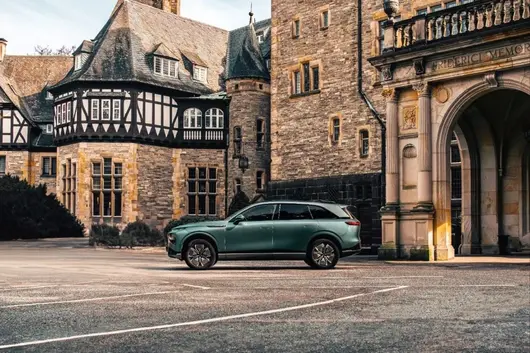

In May 2026, Daniel Craig, the former 007 actor who occupies a special place in the hearts of film fans worldwide, drove the Denza Z9 GT in an ad campaign that sparked heated discussion abroad, vividly interpreting the slogan "Technology Drives Elegance".

Even more stunning was the hammer strike of a unique crossover customized vehicle at the Cannes amfAR Charity Gala, the globally unique Denza Z9GT Chopard Edition, which was sold for 700,000 euros (approximately 5.55 million yuan).
When Chinese cars begin to define "elegance" and "scarcity", shouldn't the world update its mindset as well?
At the same time, another piece of news was more influential.

Not long ago, Kantar BrandZ released the global brand value ranking: BYD ranked fifth globally among automotive brands with a brand value of 20.362 billion USD, spiking 41% year-on-year, with the fastest growth for two consecutive years, just a step away from fourth-place Mercedes-Benz.
From the elegance of 007 to the hammer strike at Cannes, and then to the dazzling data of BrandZ, a series of "Global Moments" connected together, outlining a new landscape of the automotive industry led by Chinese brands.
Past: The Sower: That Underrated Decade
The narrative of BYD's "Global Time" must begin with a long decade of sowing.

Time returns to the 2010s, when the industry generally believed that Chinese cars could only fight price wars domestically, but BYD K9 electric buses drove into London, Paris, and Tokyo. It not only obtained strict European entry certifications but also was the first to enter the Japanese market. K9, which became the first global business card for China's new energy vehicles.
Diligence in technology would later evolve into a series of "Global Safety Stories" that went viral.

In 2026, in Jerusalem, a Yuan PLUS encountered a missile attack, the entire vehicle was overturned, the windows shattered, but the A, B, and C pillars were intact, the battery system did not experience thermal runaway, and the 5 people inside safely escaped.
In another incident, a Song PLUS DM-i belonging to a Brazilian owner was shot at by bandits with firearms, bullets failed to penetrate the car body, the driver escaped safely, and later remarked on social media: "It was BYD that saved my life."
"Safety is the ultimate luxury". BYD turned a series of deadly and real battlefield crises into a creed that wins the heart of the whole world.

The accumulation of technology was finally reflected in a full explosion in sales. In 2023, BYD surpassed Tesla to win the global new energy vehicle sales championship for the first time. In April 2026, BYD's 16 millionth new energy vehicle came off the line, from 10 million to 16 million took only 17 months.
The running speed of China's automotive industry on the global racecourse has never been so amazing. But on the world map, what BYD sowed earlier was not just products.
In 2021, BYD's first Southeast Asia factory started production in Thailand; in 2023, the Camaçari, Brazil factory was reborn; in 2025, the Hungary factory rose in Europe. Every move laid solid support for the explosion of the overseas market in the next few years.
Present: 2026, the year of global coronation
In April 2026, the global car market welcomed a historic moment. BYD topped the sales chart for all categories in Brazilian automotive retail with monthly retail sales of 14,911 units and a market share of 12.8%. Volkswagen's 20-year rule in Brazil was ended. Brazilian President Lula also became a BYD owner.

At the same time, the European battlefield was unstoppable. In Italy, BYD surpassed Volkswagen and Tesla to take the top spot in the sub-segment for the first time; in Germany, sales volume grew by more than 647% year-on-year; in the UK and Spain, year-on-year growth exceeded 600%. The Hungary factory is fully operational, with an annual capacity of 150,000 units, becoming the largest Chinese car factory in Europe.

In Southeast Asia, for every 3 pure electric vehicles sold in Thailand, at least 1 is from BYD. The Thailand factory has an annual capacity of 150,000 units, and through the ASEAN internal zero-tariff circulation system, the product touch extends to the entire Southeast Asia region.

Looking globally, in April 2026, BYD overseas sales reached 134,500 units, a year-on-year growth of 70.9%, setting a new record. Cumulative overseas sales from January to April reached 454,300 units, and overseas sales have accounted for more than 40% of the group's total sales. Penetration, scale, growth rate — all three mastered.
Brand Transformation: From Crazy Boasts to a Reality to Be Admired
Once upon a time, many people's impression of BYD stayed on "low-end" and "cheap". Do you remember in 2007, Wang Chuanfu once declared "will be No. 1 globally by 2025", when the audience was full of laughter. But when BYD surpassed Tesla in 2023 to become the global new energy vehicle sales champion, that seemingly crazy boast has been fulfilled ahead of schedule.

When Yangwang U9 Xtreme broke the global mass-produced car speed record with an actual measured top speed of 496.22 km/h, ran 6 minutes 59 seconds on the Nürburgring to become the first pure electric mass-produced vehicle to break the 7-minute mark, with a selling price of over 20 million and truly delivered to users, people's cognition underwent a thorough turnaround. Chinese cars have finally gained pricing power in the supercar field for the first time.
At the same time, the 5th Generation DM hybrid system was further evolved, with NEDC low-battery fuel consumption per 100km dropping to 2.6 liters, a full tank and full battery combined range of 2,100 kilometers, achieving "a tank of fuel from Beijing straight to Shenzhen".

The 2nd Generation Blade Battery and Flash Charge technology launched in March 2026 dropped a bombshell in the recharging link. Wang Chuanfu boldly declared on the spot: "5 minutes to full charge, 9 minutes to full, plus only 3 minutes at minus 30 degrees."

The leap in brand value is the most direct evidence. From appearing on the BrandZ Global Automotive list for the first time in 2022 ranked eighth, to reaching fifth place in 2026, BYD has used four years to grow from a "newcomer" to a core role in the global automotive brand camp.
Conclusion
Brand, Performance, Market, Cultural Premium — BYD is rewriting the landscape of the global automotive industry simultaneously on four dimensions. Boundaries between traditional and non-traditional are dissolving, ecological niches of innovators and vested interests are being reshaped.

In the pinnacle showdown of this "King of Industries", no Chinese enterprise has ever walked so deeply and so confidently.
In the past, the world saw BYD; now, the world chooses BYD; in the future, the world will watch BYD together.
This is BYD's Global Time.

It can no longer be concealed. Recently, the viral Denza Z9 GT Chopard Edition has pushed BYD's bespoke journey to a new height.


As a unique top-tier bespoke one-of-a-kind piece, this car debuted at the Cannes amfAR Charity Gala and was sold via auction hammer at a high price of 700,000 Euros (approximately 5.5256 million RMB), allowing Chinese automotive bespoke craftsmanship to officially gain recognition from the global ultra-luxury circle.
For reference, the Denza Z9 GT domestic price starts at 269,800, while the European price starts at 117,500 Euros (approx. 927,500 RMB).

Chopard was founded in 1860, specializing in high-end watch and jewelry design and production, renowned for its exquisite craftsmanship and fashionable dynamic design style. Co-created with Chopard, the Denza Z9 GT Chopard also became a "jewelry artwork on wheels".
[Denza Z9 GT Chopard]
The Denza Z9 GT Chopard features Chopard exclusive gold strips accenting the exterior appearance, possessing the shimmering texture of top-tier jewelry.
The interior is inlaid with Chopard-sourced precious amethyst, fully revealing luxury under the play of light and shadow.
Additionally, seat headrests use exquisite hand embroidery, engraved with the iconic "C" logo; welcome light carpet, wireless charging panel, center control theme interface and other details also fully integrate Chopard brand exclusive elements.

Furthermore, Chopard specifically presented two timepieces, forming an "His & Hers" exclusive watch set.
Both timepieces are crafted in rose 18K gold, jointly interpreting precision, elegance, and contemporary luxury.
Among them, the dial of the Happy Sport series 36mm watch features brilliant diamonds adorned with snow setting craftsmanship, and integrated with Denza Z9GT patterns; the Alpine Eagle series 41mm watch uses a vintage minimalist classic design, and integrates Denza exclusive elements on the case back.

Additionally, leather designer Shiro also handcrafted exclusive luggage sets for it, making Z9GT beyond the vehicle itself, becoming part of a complete luxurious lifestyle and artistic vision.

[Entering a Favorable Phase]
From the Z9GT launch at Paris Opera this April to this appearance at Cannes amfAR Charity Gala, Denza in the European market is not just talking about specifications and parameters, but using luxurious lifestyle as a link to knock open the door of European celebrity circles.
And the 700,000 Euro sky-high transaction price is even better proof of Chinese high-end new energy vehicle strength.

Of course, we also know that Denza Z9 GT Chopard is not BYD's first attempt in the bespoke market.
As the pinnacle work of YangWang Automotive, YangWang U9 Xtreme is globally limited to 30 units, with a price exceeding 20 million RMB. Upon debut, it was snapped up by global top collectors, with Thai private collector Mr. Pratarnwong Phornprapha, Brazilian famous racer Leo Sanchez and other international celebrities all being its owners.

When domestic high-end models can fetch high prices in the international market, when Chinese brand customization capability rivals world top levels, the high-end era belonging to Chinese cars has already arrived.
From YangWang U9 Xtreme creating collectible supercars with ultimate performance, to Denza Z9 GT Chopard Edition reaching the top of the global ultra-luxury circle with international collaboration, BYD's bespoke journey advances layer by layer, clear and firm, and will surely bloom more brilliance of Eastern luxury in the future.
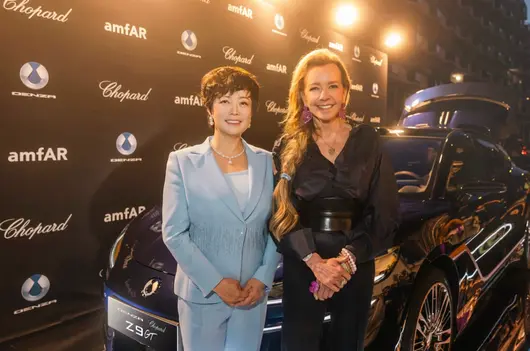

It can no longer be concealed. Recently, the viral Denza Z9 GT Chopard Edition has pushed BYD's bespoke journey to a new height.
As a unique top-tier bespoke one-of-a-kind piece, this car debuted at the Cannes amfAR Charity Gala and was sold via auction hammer at a high price of 700,000 Euros (approximately 5.5256 million RMB), allowing Chinese automotive bespoke craftsmanship to officially gain recognition from the global ultra-luxury circle.
For reference, the Denza Z9 GT domestic price starts at 269,800, while the European price starts at 117,500 Euros (approx. 927,500 RMB).
Chopard was founded in 1860, specializing in high-end watch and jewelry design and production, renowned for its exquisite craftsmanship and fashionable dynamic design style. Co-created with Chopard, the Denza Z9 GT Chopard also became a "jewelry artwork on wheels".
[Denza Z9 GT Chopard]
The Denza Z9 GT Chopard features Chopard exclusive gold strips accenting the exterior appearance, possessing the shimmering texture of top-tier jewelry.
The interior is inlaid with Chopard-sourced precious amethyst, fully revealing luxury under the play of light and shadow.
Additionally, seat headrests use exquisite hand embroidery, engraved with the iconic "C" logo; welcome light carpet, wireless charging panel, center control theme interface and other details also fully integrate Chopard brand exclusive elements.
Furthermore, Chopard specifically presented two timepieces, forming an "His & Hers" exclusive watch set.
Both timepieces are crafted in rose 18K gold, jointly interpreting precision, elegance, and contemporary luxury.
Among them, the dial of the Happy Sport series 36mm watch features brilliant diamonds adorned with snow setting craftsmanship, and integrated with Denza Z9GT patterns; the Alpine Eagle series 41mm watch uses a vintage minimalist classic design, and integrates Denza exclusive elements on the case back.
Additionally, leather designer Shiro also handcrafted exclusive luggage sets for it, making Z9GT beyond the vehicle itself, becoming part of a complete luxurious lifestyle and artistic vision.
[Entering a Favorable Phase]
From the Z9GT launch at Paris Opera this April to this appearance at Cannes amfAR Charity Gala, Denza in the European market is not just talking about specifications and parameters, but using luxurious lifestyle as a link to knock open the door of European celebrity circles.
And the 700,000 Euro sky-high transaction price is even better proof of Chinese high-end new energy vehicle strength.
Of course, we also know that Denza Z9 GT Chopard is not BYD's first attempt in the bespoke market.
As the pinnacle work of YangWang Automotive, YangWang U9 Xtreme is globally limited to 30 units, with a price exceeding 20 million RMB. Upon debut, it was snapped up by global top collectors, with Thai private collector Mr. Pratarnwong Phornprapha, Brazilian famous racer Leo Sanchez and other international celebrities all being its owners.
When domestic high-end models can fetch high prices in the international market, when Chinese brand customization capability rivals world top levels, the high-end era belonging to Chinese cars has already arrived.
From YangWang U9 Xtreme creating collectible supercars with ultimate performance, to Denza Z9 GT Chopard Edition reaching the top of the global ultra-luxury circle with international collaboration, BYD's bespoke journey advances layer by layer, clear and firm, and will surely bloom more brilliance of Eastern luxury in the future.

In May 2026, Daniel Craig, the former 007 actor who occupies a special place in the hearts of film fans worldwide, drove the Denza Z9 GT in an ad campaign that sparked heated discussion abroad, vividly interpreting the slogan "Technology Drives Elegance".
Even more stunning was the hammer strike of a unique crossover customized vehicle at the Cannes amfAR Charity Gala, the globally unique Denza Z9GT Chopard Edition, which was sold for 700,000 euros (approximately 5.55 million yuan).
When Chinese cars begin to define "elegance" and "scarcity", shouldn't the world update its mindset as well?
At the same time, another piece of news was more influential.
Not long ago, Kantar BrandZ released the global brand value ranking: BYD ranked fifth globally among automotive brands with a brand value of 20.362 billion USD, spiking 41% year-on-year, with the fastest growth for two consecutive years, just a step away from fourth-place Mercedes-Benz.
From the elegance of 007 to the hammer strike at Cannes, and then to the dazzling data of BrandZ, a series of "Global Moments" connected together, outlining a new landscape of the automotive industry led by Chinese brands.
Past: The Sower: That Underrated Decade
The narrative of BYD's "Global Time" must begin with a long decade of sowing.
Time returns to the 2010s, when the industry generally believed that Chinese cars could only fight price wars domestically, but BYD K9 electric buses drove into London, Paris, and Tokyo. It not only obtained strict European entry certifications but also was the first to enter the Japanese market. K9, which became the first global business card for China's new energy vehicles.
Diligence in technology would later evolve into a series of "Global Safety Stories" that went viral.
In 2026, in Jerusalem, a Yuan PLUS encountered a missile attack, the entire vehicle was overturned, the windows shattered, but the A, B, and C pillars were intact, the battery system did not experience thermal runaway, and the 5 people inside safely escaped.
In another incident, a Song PLUS DM-i belonging to a Brazilian owner was shot at by bandits with firearms, bullets failed to penetrate the car body, the driver escaped safely, and later remarked on social media: "It was BYD that saved my life."
"Safety is the ultimate luxury". BYD turned a series of deadly and real battlefield crises into a creed that wins the heart of the whole world.
The accumulation of technology was finally reflected in a full explosion in sales. In 2023, BYD surpassed Tesla to win the global new energy vehicle sales championship for the first time. In April 2026, BYD's 16 millionth new energy vehicle came off the line, from 10 million to 16 million took only 17 months.
The running speed of China's automotive industry on the global racecourse has never been so amazing. But on the world map, what BYD sowed earlier was not just products.
In 2021, BYD's first Southeast Asia factory started production in Thailand; in 2023, the Camaçari, Brazil factory was reborn; in 2025, the Hungary factory rose in Europe. Every move laid solid support for the explosion of the overseas market in the next few years.
Present: 2026, the year of global coronation
In April 2026, the global car market welcomed a historic moment. BYD topped the sales chart for all categories in Brazilian automotive retail with monthly retail sales of 14,911 units and a market share of 12.8%. Volkswagen's 20-year rule in Brazil was ended. Brazilian President Lula also became a BYD owner.
At the same time, the European battlefield was unstoppable. In Italy, BYD surpassed Volkswagen and Tesla to take the top spot in the sub-segment for the first time; in Germany, sales volume grew by more than 647% year-on-year; in the UK and Spain, year-on-year growth exceeded 600%. The Hungary factory is fully operational, with an annual capacity of 150,000 units, becoming the largest Chinese car factory in Europe.
In Southeast Asia, for every 3 pure electric vehicles sold in Thailand, at least 1 is from BYD. The Thailand factory has an annual capacity of 150,000 units, and through the ASEAN internal zero-tariff circulation system, the product touch extends to the entire Southeast Asia region.
Looking globally, in April 2026, BYD overseas sales reached 134,500 units, a year-on-year growth of 70.9%, setting a new record. Cumulative overseas sales from January to April reached 454,300 units, and overseas sales have accounted for more than 40% of the group's total sales. Penetration, scale, growth rate — all three mastered.
Brand Transformation: From Crazy Boasts to a Reality to Be Admired
Once upon a time, many people's impression of BYD stayed on "low-end" and "cheap". Do you remember in 2007, Wang Chuanfu once declared "will be No. 1 globally by 2025", when the audience was full of laughter. But when BYD surpassed Tesla in 2023 to become the global new energy vehicle sales champion, that seemingly crazy boast has been fulfilled ahead of schedule.
When Yangwang U9 Xtreme broke the global mass-produced car speed record with an actual measured top speed of 496.22 km/h, ran 6 minutes 59 seconds on the Nürburgring to become the first pure electric mass-produced vehicle to break the 7-minute mark, with a selling price of over 20 million and truly delivered to users, people's cognition underwent a thorough turnaround. Chinese cars have finally gained pricing power in the supercar field for the first time.
At the same time, the 5th Generation DM hybrid system was further evolved, with NEDC low-battery fuel consumption per 100km dropping to 2.6 liters, a full tank and full battery combined range of 2,100 kilometers, achieving "a tank of fuel from Beijing straight to Shenzhen".
The 2nd Generation Blade Battery and Flash Charge technology launched in March 2026 dropped a bombshell in the recharging link. Wang Chuanfu boldly declared on the spot: "5 minutes to full charge, 9 minutes to full, plus only 3 minutes at minus 30 degrees."
The leap in brand value is the most direct evidence. From appearing on the BrandZ Global Automotive list for the first time in 2022 ranked eighth, to reaching fifth place in 2026, BYD has used four years to grow from a "newcomer" to a core role in the global automotive brand camp.
Conclusion
Brand, Performance, Market, Cultural Premium — BYD is rewriting the landscape of the global automotive industry simultaneously on four dimensions. Boundaries between traditional and non-traditional are dissolving, ecological niches of innovators and vested interests are being reshaped.
In the pinnacle showdown of this "King of Industries", no Chinese enterprise has ever walked so deeply and so confidently.
In the past, the world saw BYD; now, the world chooses BYD; in the future, the world will watch BYD together.
This is BYD's Global Time.

In May 2026, Daniel Craig, the former 007 actor who occupies a special place in the hearts of film fans worldwide, drove the Denza Z9 GT in an ad campaign that sparked heated discussion abroad, vividly interpreting the slogan "Technology Drives Elegance".
Even more stunning was the hammer strike of a unique crossover customized vehicle at the Cannes amfAR Charity Gala, the globally unique Denza Z9GT Chopard Edition, which was sold for 700,000 euros (approximately 5.55 million yuan).
When Chinese cars begin to define "elegance" and "scarcity", shouldn't the world update its mindset as well?
At the same time, another piece of news was more influential.
Not long ago, Kantar BrandZ released the global brand value ranking: BYD ranked fifth globally among automotive brands with a brand value of 20.362 billion USD, spiking 41% year-on-year, with the fastest growth for two consecutive years, just a step away from fourth-place Mercedes-Benz.
From the elegance of 007 to the hammer strike at Cannes, and then to the dazzling data of BrandZ, a series of "Global Moments" connected together, outlining a new landscape of the automotive industry led by Chinese brands.
Past: The Sower: That Underrated Decade
The narrative of BYD's "Global Time" must begin with a long decade of sowing.
Time returns to the 2010s, when the industry generally believed that Chinese cars could only fight price wars domestically, but BYD K9 electric buses drove into London, Paris, and Tokyo. It not only obtained strict European entry certifications but also was the first to enter the Japanese market. K9, which became the first global business card for China's new energy vehicles.
Diligence in technology would later evolve into a series of "Global Safety Stories" that went viral.
In 2026, in Jerusalem, a Yuan PLUS encountered a missile attack, the entire vehicle was overturned, the windows shattered, but the A, B, and C pillars were intact, the battery system did not experience thermal runaway, and the 5 people inside safely escaped.
In another incident, a Song PLUS DM-i belonging to a Brazilian owner was shot at by bandits with firearms, bullets failed to penetrate the car body, the driver escaped safely, and later remarked on social media: "It was BYD that saved my life."
"Safety is the ultimate luxury". BYD turned a series of deadly and real battlefield crises into a creed that wins the heart of the whole world.
The accumulation of technology was finally reflected in a full explosion in sales. In 2023, BYD surpassed Tesla to win the global new energy vehicle sales championship for the first time. In April 2026, BYD's 16 millionth new energy vehicle came off the line, from 10 million to 16 million took only 17 months.
The running speed of China's automotive industry on the global racecourse has never been so amazing. But on the world map, what BYD sowed earlier was not just products.
In 2021, BYD's first Southeast Asia factory started production in Thailand; in 2023, the Camaçari, Brazil factory was reborn; in 2025, the Hungary factory rose in Europe. Every move laid solid support for the explosion of the overseas market in the next few years.
Present: 2026, the year of global coronation
In April 2026, the global car market welcomed a historic moment. BYD topped the sales chart for all categories in Brazilian automotive retail with monthly retail sales of 14,911 units and a market share of 12.8%. Volkswagen's 20-year rule in Brazil was ended. Brazilian President Lula also became a BYD owner.
At the same time, the European battlefield was unstoppable. In Italy, BYD surpassed Volkswagen and Tesla to take the top spot in the sub-segment for the first time; in Germany, sales volume grew by more than 647% year-on-year; in the UK and Spain, year-on-year growth exceeded 600%. The Hungary factory is fully operational, with an annual capacity of 150,000 units, becoming the largest Chinese car factory in Europe.
In Southeast Asia, for every 3 pure electric vehicles sold in Thailand, at least 1 is from BYD. The Thailand factory has an annual capacity of 150,000 units, and through the ASEAN internal zero-tariff circulation system, the product touch extends to the entire Southeast Asia region.
Looking globally, in April 2026, BYD overseas sales reached 134,500 units, a year-on-year growth of 70.9%, setting a new record. Cumulative overseas sales from January to April reached 454,300 units, and overseas sales have accounted for more than 40% of the group's total sales. Penetration, scale, growth rate — all three mastered.
Brand Transformation: From Crazy Boasts to a Reality to Be Admired
Once upon a time, many people's impression of BYD stayed on "low-end" and "cheap". Do you remember in 2007, Wang Chuanfu once declared "will be No. 1 globally by 2025", when the audience was full of laughter. But when BYD surpassed Tesla in 2023 to become the global new energy vehicle sales champion, that seemingly crazy boast has been fulfilled ahead of schedule.
When Yangwang U9 Xtreme broke the global mass-produced car speed record with an actual measured top speed of 496.22 km/h, ran 6 minutes 59 seconds on the Nürburgring to become the first pure electric mass-produced vehicle to break the 7-minute mark, with a selling price of over 20 million and truly delivered to users, people's cognition underwent a thorough turnaround. Chinese cars have finally gained pricing power in the supercar field for the first time.
At the same time, the 5th Generation DM hybrid system was further evolved, with NEDC low-battery fuel consumption per 100km dropping to 2.6 liters, a full tank and full battery combined range of 2,100 kilometers, achieving "a tank of fuel from Beijing straight to Shenzhen".
The 2nd Generation Blade Battery and Flash Charge technology launched in March 2026 dropped a bombshell in the recharging link. Wang Chuanfu boldly declared on the spot: "5 minutes to full charge, 9 minutes to full, plus only 3 minutes at minus 30 degrees."
The leap in brand value is the most direct evidence. From appearing on the BrandZ Global Automotive list for the first time in 2022 ranked eighth, to reaching fifth place in 2026, BYD has used four years to grow from a "newcomer" to a core role in the global automotive brand camp.
Conclusion
Brand, Performance, Market, Cultural Premium — BYD is rewriting the landscape of the global automotive industry simultaneously on four dimensions. Boundaries between traditional and non-traditional are dissolving, ecological niches of innovators and vested interests are being reshaped.
In the pinnacle showdown of this "King of Industries", no Chinese enterprise has ever walked so deeply and so confidently.
In the past, the world saw BYD; now, the world chooses BYD; in the future, the world will watch BYD together.
This is BYD's Global Time.


