首頁Datang

搜尋歷史
熱門搜尋
經銷商登入 / 註冊

On the evening of August 28, BYD (002594.SZ) released its financial report for the first half of 2026, with core indicators remaining robust: operating revenue 344.8 billion yuan, net profit attributable to parent company 12.3 billion yuan, R&D investment 28.9 billion yuan, cash reserves 167.4 billion yuan. Notably, net profit in the second quarter grew by 30% year-on-year, gross margin continued to rise, reaching 18.9%, setting a new high in nearly a year, with profitability steadily improving and resilient growth solidifying its industry position.

Currently, competition in the automotive industry is intensifying. Relying on a solid operational foundation and continuously optimized business structure, BYD's development trend continued to improve in the first half of the year, further consolidating its leading industry position.

Dual Drive of Overseas High-End Markets, Growth Structure Continues to Optimize
In the first half of the year, BYD's overseas sales reached 790,000 units, a 68% year-on-year increase, with business covering over 120 countries and regions. It topped the new energy vehicle brand sales chart in core markets such as the UK, Brazil, and Thailand. With the sequential release of localized overseas production capacity and the continuous improvement of the channel system, the overseas segment has become an important engine driving the company's performance growth.
During the same period, the high-end product matrix accelerated volume growth. The three brands Fangchengbao, Denza, and Yangwang achieved a combined sales volume of 228,000 units, up 61% year-on-year, accounting for 12.6% of total sales. Among them, Fangchengbao brand sales reached 160,000 units, up 163% year-on-year; Denza brand also performed brightly, with June sales breaking 20,000 units for the first time, with an average product price reaching 360,000 yuan; Yangwang is the brand with the fastest sales volume breaking 10,000 units in the domestic new energy million-class luxury car segment.

Internationalization and high-endization advance on two tracks, driving continuous optimization of the company's product structure and steadily enhanced profitability. Net profit in the second quarter grew 30% year-on-year, with gross margin reaching 18.9%, setting a new high in nearly a year. Although net profit faced short-term pressure, a closer look reveals it was mainly due to exchange losses from currency fluctuation this year. The company's main business profitability remained stable, and development resilience became increasingly prominent.

Huge R&D Investment Builds Moat, Technical Achievements Land Intensively
Operating quality steadily climbed, with the core driver being continuous technological breakthroughs. In the first half of 2026, the company invested 28.9 billion yuan in R&D, far exceeding net profit during the same period, retaining the title of "King of R&D" in A-shares. Cumulative R&D investment has exceeded 270 billion yuan.

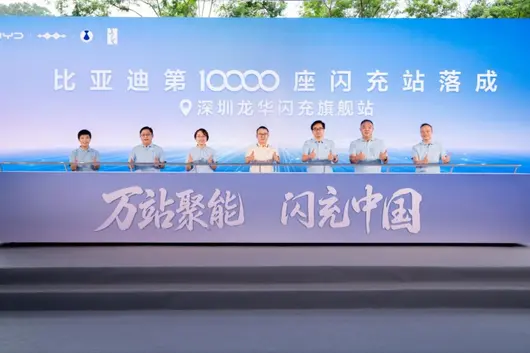
High-intensity R&D investment is accelerating conversion into perceptible technical results. The second-generation Blade Battery and Flash Charging Technology released in March this year created a global record for the fastest mass-produced charging speed, solving the world problem of "slow charging" and "difficulty in charging at low temperatures" in one go, gaining authoritative recognition from the Ministry of Industry and Information Technology. Beyond technological breakthroughs, second-generation Blade Battery production capacity and Flash Charging Station construction are speeding up synchronously. Relying on the "Flash Charge China" strategy, 10,000 Flash Charging Stations have currently been built nationwide, covering 332 cities, and there is a plan to deploy 6,000 Flash Charging Stations overseas within a year to assist global electrification leapfrog development.

Key progress has also been made in the field of intelligence. After providing a safety guarantee for intelligent parking, BYD became the first to commit to a safety guarantee for city navigation in May, becoming the world's only enterprise with a "dual guarantee" and promoting the popularization of assisted driving with practical actions. As of July 31, BYD's assisted driving vehicle holdings exceeded 3.52 million units, and Divine Eye generates data exceeding 220 million kilometers daily. The Xuanji A3 released during the same period is China's first self-developed 4nm process intelligent driving chip. From underlying chips to system software, BYD continues to promote vertical integration and full-stack self-research, leading the intelligent revolution in the global automotive industry.

Development with Responsibility, Actively Fulfilling Social Responsibility
Practicing social responsibility, BYD answers with action. In the first half of 2026, BYD's domestic tax total was 22.3 billion yuan, far exceeding net profit during the same period. In terms of sustainable development, the company firmly anchors the goal of "achieving carbon neutrality across the entire value chain by 2045", with ESG performance firmly staying in the first tier of domestic enterprises. From January to June, BYD's new energy vehicle lifecycle carbon emission reduction reached 23.17 million tons, equivalent to planting 386 million trees, contributing practical power to low-carbon transformation.

Conclusion
In the first half of 2026, the global automotive industry accelerated restructuring, with industry profitability generally under pressure. BYD broke out against the trend, with second-quarter performance reaching a new level. With technical results continuing to emerge in the second half of the year, the proportion of high-end models steadily increasing, and the global layout entering the harvest period, the company's profitability and development potential will be further highlighted. Full-year performance is expected to improve quarter by quarter and continue to climb. From technological breakthroughs to global layout, from high-end breakthroughs to responsibility, the company is reshaping growth logic with all-round competitiveness and leading global industrial transformation.
Follow Us
ID: Test Drive
Car Selection | Car Usage | Car Modification | Car Racing

Netcar Commentary A convoy departed from Xi'an, passing through Bozhou, Jingdezhen, Hangzhou, Wuyishan, Quanzhou, and Chaozhou along the way, finally arriving in Shenzhen. Fragrant herbs, porcelain, silk, and tea were written into the route map, and seven flash charging stations, two racetracks, and models from five networks and four brands were also interspersed.
When I first saw this map, my gaze first fell on the road after Shenzhen.
Shenzhen is where BYD started, it is BYD's global headquarters, and also the endpoint of this domestic journey. The convoy will continue to go overseas from here.

In recent years, Chinese car companies have been used to using roll-on/roll-off ships, overseas sales, and new factories to tell the story of going global, and BYD also has enough numbers. But when the convoy runs past highways, cities, mountain roads, and coastal roads, telling the story of China's smart manufacturing setting sail on the new Silk Road overseas, I gradually feel that how the technology in the car works, and how charging follows, might be closer to the daily life of globalization than a departure at the port.
Over twenty years in the automotive field, BYD's impression on the outside world has changed several times. Early on, people remembered its batteries, later people remembered DM-i and Blade Batteries, and in recent years, Yangwang, Fangchengbao, DiPilot, DiSus, Yi Sifang, and Flash Charge have been added.
After the number of terms increased, I also worried they would each talk their own language, until seeing different brands driving along the same route, I realized BYD is organizing the technology accumulated over these years into things that users can feel.
Nineteen Years Ago, BYD Was Already Studying Fast Charging
From 2007 to 2008, BYD participated in research and development projects such as pure electric vehicles and their fast charging systems. In December 2008, F3DM was launched in Shenzhen. This car could charge using a common 220V power source, also supported fast charging at professional charging stations. The announced charging speed at the time was a 50% charge in 10 minutes.

In that era when private new energy vehicle consumption in China was just starting, charging facilities were very scarce. Users had not yet formed the cognition of charging cars, nor had they formed the habit of charging cars.
When F3DM launched, Wang Chuanfu reminded owners on stage not to forget to charge mobile phones before going to sleep, and not to forget to charge the car either. This action which sounds quite ordinary today, even required a car company to teach users back then.
By the end of 2010, F3DM cumulative sales were only 365 units. This number is far from BYD today, but looking back from the current perspective, at that time BYD had already considered batteries, cars, and charging facilities together before the market matured, forming a sharp contrast with the blind follow-the-market car-making of many car companies today.

Eighteen years ago, F3DM already had fast charging capability, but charging facilities were far from mature. This time, the BYD convoy went south along Xi'an Lintong, Bozhou Yingquan, Hefei, Shengzhou, Wuyishan, and coastal highway. Flash charging stations are already distributed in highway service areas and urban business circles, and the number of stations is still increasing.
With the support of the second-generation Blade Battery, BYD's Flash Charge models have shortened charging time to minutes. On highways, city stops, and mountain roads, users can continue on the road with just a brief stop. The charging experience is very close to refueling a fuel vehicle.
When the convoy arrived in Shenzhen, my understanding of BYD's charging system also changed.
In the past, I often regarded batteries as its trump card for making cars. Looking at it again today, BYD has been preparing for charging for many years. And now, the most direct feeling for users is the dozens of minutes saved on the road.

Early research did not immediately bring market. BYD did not stop investment because of this. After F3DM, this thing was continued for nearly twenty years. BYD's credibility when talking about charging technology today also comes from this verifiable long-term investment.
Five Networks, Four Brands Walk on the Same Road
Around 2019, BYD began to adjust automobile sales channels. Since then, Dynasty, Ocean, Denza, Fangchengbao, and Yangwang gradually formed their own product sequences.
But in the process of BYD extending from the mass home market to luxury, ultra-luxury, off-road, and high-performance markets, external doubts have always existed.
Some say, for a brand good at mass manufacturing, entering higher-priced, more refined markets, the lessons to be made up are far more than power and configuration.
The convoy drove from Xi'an to Shenzhen. Cities, highways, mountain roads, and racetracks appeared in sequence. Dynasty and Ocean bear daily and family travel, Denza takes care of long-distance seating and luxury experience, Fangchengbao enters mountain roads and unpaved roads, Yangwang shows four-motor and body control capabilities at the racetrack.

Although there are differences in price and usage among brands and models, every car shares BYD's accumulated new energy vehicle technology and whole vehicle manufacturing capabilities.
On this road from north to south, the convoy passed urban areas, and ran on highways and mountain roads. Enabling DiPilot has become a common action during driving.
After running hundreds of kilometers, the driver can feel the heaviness and lightness of acceleration/deceleration during car following, a judgment once entering/exiting ramps, whether the takeover prompt comes a bit early or late.
A few years ago, when talking about BYD externally, the first thoughts were still batteries and hybrids. High-level assisted driving was rarely ranked at the front. This impression needs to change. Every car following, lane changing, and takeover must give people confidence.

In the past many years, BYD brought heavy-weight technologies to mass production products one after another, and made products in scale. After the formation of Five Networks Four Brands, they showed another capability. That is relying on common R&D and manufacturing foundations to enter multiple market segments and serve users with different needs.
This change is more important than adding a few brand names or models. It means BYD is growing from an automotive enterprise known for technology into an automotive group with clear brand hierarchy and wide market coverage.
From a Three-Person Office in Rotterdam to Rayong Factory
At the end of 1998, Li Ke brought an engineer and a translator to Rotterdam, Netherlands. Wang Chuanfu gave them startup resources: one shipping container of batteries and $30,000, and said, if you can reach break-even, continue. If you lose it all, stop.
Then the three people made calls to find customers during the day, wrapped battery packs together at night, and drove forklifts to deliver goods the next day.
On New Year's Day 1999, BYD's first overseas branch opened for business. At that time, the protagonist of overseas business was still batteries hidden in mobile phones.

More than twenty years later, BYD's own roll-on/roll-off ships began to shuttle between global ports, and Thailand's Rayong factory has already covered stamping, welding, painting, assembly, and parts production.
In July 2024, BYD's 8 millionth new energy vehicle rolled off this factory. Annual capacity about 150,000 units. Compared to shipping a car from Shenzhen, building a factory locally requires handling employees, supply, regulations, services, and consumption habits. Investment is heavier, and more is left behind.
In 2025, BYD's overseas sales exceeded 1 million units for the first time. Entering 2026, the overseas market is still growing rapidly, business has already covered 121 countries and regions.
From walking from the small office in Rotterdam to today, BYD's overseas operation has changed products, scale, and methods. The early approach of being close to customers and entering local markets has not lost its effectiveness.
After the convoy arrives in Shenzhen, it will continue to drive overseas. This reminds me of the three people in Rotterdam back then.
For a Chinese brand going global, the starting point can be a shipping container of batteries, or it can be a ship of new energy vehicles. But finally it must be implemented in the lives of local users.

After sales volume reached one million units, the overseas market BYD faces has become much more complex than before.
More than twenty years ago, BYD needed to make overseas customers know a battery enterprise from China. Today, what it needs to build is global consumer recognition of a Chinese automobile enterprise.
Written at the End
Thousands of years ago, camel caravans and merchant ships followed the Silk Road, transporting fragrant herbs, porcelain, silk, and tea to farther places. The world thereby recognized China's products.
Today, a convoy composed of different brand models of BYD drove from Xi'an to Shenzhen, then went to South Asia. This journey spanning mountains and rivers looked back at the traffic on the ancient Silk Road, and also let technology and vehicles undergo testing on real roads.
Electric vehicles, lithium batteries, and photovoltaic products are called China's Export "New Three Items". They represent another change in China's exports. The three fields involved in "New Three Items", BYD has been laid out for many years.
With whole vehicles accelerating into overseas markets, BYD's technology application, charging facilities, and long-term services will also quickly follow.
From single commodity output to technology, manufacturing, and service capabilities entering overseas markets together. BYD is participating in global traffic and energy transformation with green technology, creating a new business card of China's smart manufacturing belonging to this era.

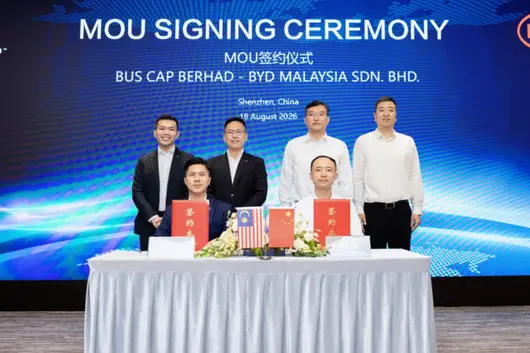
August 18, 2026, BYD Malaysia Sdn Bhd (abbreviated as "BYD Malaysia") and Malaysian bus manufacturer Bus Cap Berhad (abbreviated as "Bus Cap") signed an exclusive Memorandum of Understanding (MOU) in Shenzhen. The two parties will focus on local assembly and manufacturing of electric buses as the primary cooperation priority, jointly promoting strategic cooperation on new energy commercial vehicles in Southeast Asia with Malaysia as the base.

Bus Cap is a listed bus manufacturer in Malaysia. Its core subsidiary, SHL Coach, has been rooted in Perak since 1968 and possesses a mature local manufacturing foundation and market understanding. According to the MOU, the two parties plan to carry out cooperation around areas such as product localization, sales models, and after-sales services, and explore establishing electric bus local assembly and manufacturing facilities in Perak. BYD will leverage its leading new energy technologies, comprehensive solutions, and global marketing promotion experience, combined with Bus Cap's local industrial foundation, to lay a solid foundation for the overall development of electric buses in Malaysia.
BYD Group Vice President and General Manager of the 15th Division & Commercial Vehicle Division Luo Zhongliang stated: "This MOU is an important step for BYD Malaysia in evaluating local electric commercial vehicle opportunities. Based on this cooperation, BYD will combine localization needs to promote the R&D and production of various new energy buses, further explore various new energy commercial vehicle solutions, and continue to expand the Southeast Asian market with Malaysia as a fulcrum."
Huang Zongyang, Executive Director of Bus Cap, stated: "This MOU is an important step in Bus Cap's development journey after listing, and will establish a competitive foundation for electric bus assembly, manufacturing, and deployment in Malaysia."

This cooperation aligns with the Malaysia National Energy Transition Roadmap (NETR) and the direction of public transport electrification. The two parties will take this as a starting point to deepen cooperation in the field of new energy commercial vehicles and jointly explore broader Southeast Asian market opportunities.


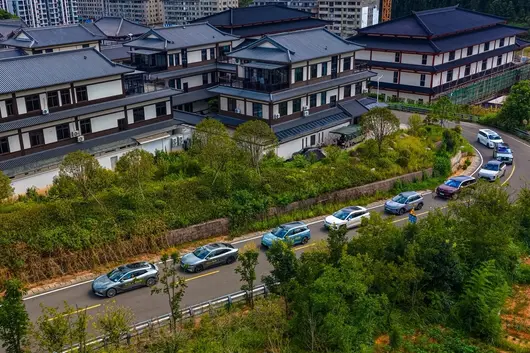
From Xi'an Datang West City to Quanzhou Ancient Port, from the thousand-year-old camel bell trail to the ten-thousand-ton roll-on/roll-off giant ship — in the midsummer of 2026, a fleet consisting of BYD's full range of new energy vehicles traveled east and south along the veins of the ancient Silk Road, finally sailing out to sea from Shenzhen Port. This journey has a grand name: "2026 Silk Road 10,000-Li Journey · Enlightened Path".

Silk Road Intersection: From Product Cards to Smart Manufacturing Cards
The ancient Silk Road consists of two channels: overland and maritime. The overland Silk Road starts from Xi'an, goes west over mountains and ridges, and reaches Rome directly. The maritime Silk Road starts from Quanzhou, sets sail for the Nanyang region, and reaches Rome. Today, the BYD fleet retraces this thousand-year-old path, while collecting civilization marks at the four intangible cultural heritage nodes, more importantly, unfolding the hard-core strength of flash charging technology and intelligent driving on the 10,000-li test journey.
Currently, BYD's overseas sales have exceeded one million vehicles, with year-on-year growth exceeding 140%, and products cover over 120 countries and regions worldwide.

Road to Overseas Expansion: From Product Export to System Export
Currently, BYD already owns 8 custom RORO ships, with an annual capacity reaching 250,000 to 300,000 vehicles, effectively supporting its overseas market expansion strategy. More importantly, BYD has upgraded "overseas expansion" from single product output to systematic output of "technology + infrastructure + industry". Landing the first flash charging station in Europe, building an exclusive energy replenishment network in Uzbekistan, and laying out localized production bases in Thailand and Brazil. This "systematic overseas expansion" model makes China's new energy technology no longer isolated "commodities", but rather "solutions" integrated into local energy structures and industrial upgrades.

Flash Charging Field Test: 5-minute Energy Replenishment Rewrites Mobility Rules
In this journey spanning thousands of kilometers, flash charging technology became the most focused topic. The BYD flash charging system equipped with the 2nd generation Blade Battery, charging from 10% to 70% battery level takes only 5 minutes at normal temperature, and charging to 97% takes less than 9 minutes; even in extreme cold environments at minus 30 degrees Celsius, charging duration is only 3 minutes longer than normal temperature.
As of the end of June 2026, BYD has cumulatively built 7,018 flash charging stations nationwide, covering 325 cities. From North to Shuangyashan, Heilongjiang, West to Kashgar, Xinjiang, South to Sanya, Hainan, truly realizing the mobility vision of "Travel China with Flash Charging".

10,000-Li Intelligent Driving: Verifying Domestic Hard Power
Aside from flash charging technology, BYD's "Heavenly Eye" high-level intelligent driving assistance system is also a core verification item of this Silk Road 10,000-Li Journey. The fleet fully activated all-scenario NOA intelligent driving functions throughout the journey under complex road conditions such as cross-city highway sections from Quanzhou to Chaozhou to Shenzhen, urban commuting sections in Chaozhou Ancient City and Quanzhou urban area, and coastal highways with strong winds. This Silk Road 10,000-Li Journey fleet gathered the five product matrices of BYD Dynasty, Ocean, Denza, Fang Cheng Bao, and Yangwang, covering full price range and full scenario vehicle usage needs from 100,000-level home use to million-level flagship.

Conclusion
When the aromatic medicines, porcelain, silk, and tea of the ancient Silk Road meet with the "New Three Items" of export represented by batteries, new energy vehicles, and photovoltaic energy storage, what we witness is not only China's era leap from commodity output to integrated export of technology, complete vehicles, and energy replenishment systems, but also a brand new Chinese name card where China's smart manufacturing reshapes the global sustainable development new order with green technology as the link.