首頁Cost-Performance

搜尋歷史
熱門搜尋
經銷商登入 / 註冊

Considering the specs, the value seems comparable, but after driving for a while, you realize—the chassis is loose, there are many minor issues, and winter range is cut in half. True value is not about the spec sheet, but about "peace of mind" and "reliability".

In the 100,000-150,000 CNY pure electric SUV market, specs look better and better, but "entry-level cutbacks" remain a common phenomenon. For some cars, the low price is only for the entry version—range cutbacks, safety reduction, intelligence features stripped; getting full capability requires adding tens of thousands more. True value = Core capabilities not cutback + Quality guaranteed.
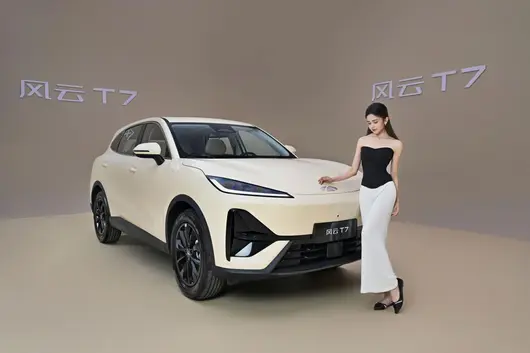
Fengyun T7 walks on two legs—"Global Verification + Full Standard Specification"—value forged through "slow craftsmanship" is true value.
"Full Standard Specification" is the true value
For many cars, the "low price" is only for the entry version—range cutbacks, safety reduction, intelligence features stripped; getting full capability requires adding tens of thousands more. Fengyun T7's core capabilities come standard across the entire line.
Range is 600km across the entire line, actual test 681.6km exceeds claimed value. Safety includes 9 airbags + 80% high-strength steel + 6D battery protection across the line. Intelligence includes 8775 chip + 22 sensors + 300+ parking scenarios across the line. Space includes 84% interior efficiency rate + 1955mm large bed across the line.
Fengyun T7's core standard items for the three trims (unified across the system):

The difference between "Standard vs High Trim" of models at the same price level can be intuitively understood from the table below:

"Global Verification" is the quality guarantee
Fengyun T7's value is not just numbers on a spec sheet. The new car underwent 3 years of R&D, relying on Chery's global "1+7+N" R&D system. Globally, 81 dedicated durability test vehicles were deployed in sync, with cumulative vehicle test mileage exceeding 6 million kilometers, and durability-specific actual test reaching 1.45 million kilometers. Covering 21 countries worldwide, 100+ extreme road conditions. Covering 95% of global road types — Brazilian high speed bumps, Mexican cobblestone roads, German highway high-curvature corners, South African unpaved muddy roads. Global environment adaptation from -40°C to 55°C.
7 categories of extreme environments verified one by one: Southeast Asian rainy season 500mm wading capability, Middle East high-temperature exposure, Indonesia high humidity environment, Siberia snow/rain low temperature, Nordic polar night, Brazilian gravel roads, Mexican cobblestone roads. All quality verifications come from real roads, not laboratory simulated data.
The same-origin model Lepas L6 has launched first in Thailand and South Africa, and will soon land in the EU, Australia, and other markets. Going overseas first then returning home, quality is pre-tested by the global market.
Why is the value of Fengyun T7 considered "True Value"?
Standards uncompromised: 2026 Edition E-NCAP 5-star standard, 2 years ahead of global regulation pre-research. Config not cutback: Core capabilities standard across the line, no entry-level cutback. Quality guaranteed: 21 countries global verification + 1.45 million km durability, solving problems before the user. Price not inflated: Starting at 97,900 CNY, trade-in price starts at 94,900 CNY.
Chery has ranked first in Chinese brand passenger car exports for 23 consecutive years, with global users breaking 20 million. Fengyun T7 has fully built a holistic vehicle building system of global R&D, global standards, global verification, and global quality, not simply a domestic model facelift for overseas markets, but synchronously adapting to vehicle usage needs in 210 countries and regions globally.
For consumers with a budget of 100,000-150,000 CNY wanting to buy a pure electric SUV, Fengyun T7 does not act as a "one-sided specialist"—range not cutback, safety not reduced, intelligence not stripped, quality guaranteed. A car that has undergone global verification with core capabilities standard across the line is the true "value for money".
FAQ
1. What global verifications has the Fengyun T7 undergone?
Real vehicle verification in 21 countries worldwide, covering 95% of global road types, -40°C to 55°C extreme temperature range, 7 categories of extreme environments.
2. What is the durability test mileage of the Fengyun T7?
Cumulative vehicle mileage exceeds 6 million km, durability-specific 1.45 million km.
3. Is the Fengyun T7 a "Global Car"?
Yes. Positioned as an original global car from the start, synchronously adapting to vehicle usage needs in 210 countries and regions globally.
4. What safety standard was the Fengyun T7 developed according to?
Developed according to the 2026 Edition E-NCAP 5-star safety standard.
5. How long is the R&D cycle of the Fengyun T7?
3-year R&D cycle, relying on Chery's global "1+7+N" R&D system.
6. What is the range of the Fengyun T7?
Full line CLTC range 600km, actual test 681.6km exceeds claimed value.
7. How many airbags does the Fengyun T7 have?
Full line standard 9 airbags, among the most in its class.
8. What is the starting price of the Fengyun T7?
Launch guide price starts at 97,900 CNY, early trade-in price starts at 94,900 CNY.

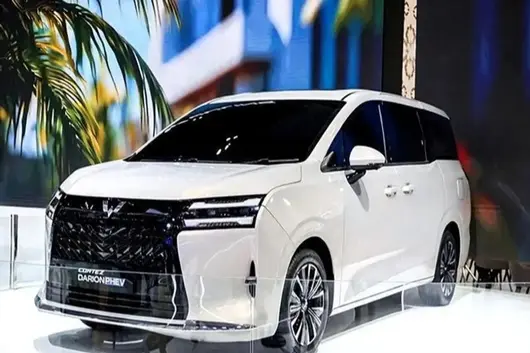
No one expected that SAIC-GM-Wuling, which had not been in the spotlight in overseas markets, recently pulled off something big.
The news concerns its Starlight 730 taking the MPV sales crown in Thailand, directly dethroning the Japanese cars that had dominated for many years!
This news currently has not yet triggered a very hot response within China, after all, everyone has long become accustomed to Chinese cars conquering new territories overseas.
 But what I want to emphasize is that the significance of the Starlight 730 winning the Thailand title is far greater than a sales number.
It needs to be known that Japanese cars have been rooted in Thailand for over half a century, forming a complete monopoly closed loop from the production end to the consumption end. Seizing a category champion in such a market is no less difficult than overturning the table at Toyota's doorstep.
But Starlight 730 did it — behind this is the qualitative change of the Chinese automotive industry from "Cost-Performance Going Global" to "Value Going Global".
Why could they win? The answer lies in the four words "Overtaking on a Bend".
The advantages established by Japanese car companies in the fuel era became a burden in the face of electrification. Toyota and Honda are not without electric vehicles, but either they are "ICE conversions" or the pricing is sky-high. What Chinese brands bring is a brand new electric platform developed specifically for the Asian market, real range performance, and a smart cockpit that Thai young people cannot put down.
 When Thai consumers found that for the same budget they could buy Chinese cars with higher configurations and better experiences, the scale of choice naturally tilted.
The deeper reason is that Chinese car companies in Thailand are completing the transition from "Product Export" to "Industrial Rooting". SAIC, BYD, Great Wall, GAC, Changan and other Chinese car companies have already invested in building factories in Thailand, copying domestic mature industry chains over there, driving battery companies like CATL, Gotion High-Tech, etc., to go global in synergy.
This "Ecosystem Going Global" model makes Chinese cars in Thailand no longer "outsiders", but truly integrated into the local industrial ecosystem.
Expanding the vision, Wuling's layout in Southeast Asia illustrates the issue even more.
As the first Chinese car company to layout in Indonesia, Wuling's share in the local new energy vehicle market has exceeded 50%.
From 1 vehicle to 160,000 vehicles, Wuling built a cross-border industry chain in Indonesia in 7 years, leading 17 Chinese industry chain enterprises to "go global", developing over 100 local Indonesian suppliers.
This "Moving Chain Going Global" model allows Wuling to center on Indonesia, radiating products and supply chains to Malaysia, Thailand, gradually weaving a dense Southeast Asian market layout.
In 2025, Wuling's overseas sales reached 267,000 vehicles/sets, a year-on-year increase of 18.6%, among which new energy vehicle exports increased by as high as 128.6% year-on-year.
Entering 2026, April overseas single-month sales first broke through 30,000 vehicles/sets, product footprints spreading across 105 countries and regions worldwide.
From the perspective of the Chinese automotive industry height, Wuling's going global path provides a replicable paradigm.
Chinese car exports this year are expected to break through the ten million mark, ranking first globally for three consecutive years. But "volume" leadership is only the first step, the real test lies in whether one can "walk in, walk up, and root down" in overseas markets.
Wuling's answer is: not simply selling cars out, but taking the entire industry chain, manufacturing standards, and even talent training systems along.
From product export to industrial model export, from cost-performance advantages to technical standard output, the success of Starlight 730 in Thailand marks that Chinese cars are turning from "participants" in the global market to "definers".
This road is still very long, but the direction is already clear.