首頁Commercial

搜尋歷史
熱門搜尋
經銷商登入 / 註冊

In the first half of 2026, the commercial vehicle market overall showed weak growth, with significant segmentation in tracks. The total commercial vehicle market cumulative year-over-year growth was only 8.28%, while head enterprises such as Foton, Sinotruk, Dongfeng, and FAW had growth rates of less than 20%. Multiple enterprises maintained single-digit growth or even saw sales declines. The industry average increased slightly in the first half, light truck sales declined slightly, and light van growth was sluggish. Industry growth was basically supported by pickups and exports, with car manufacturers generally falling into intense battles in the existing market.
Forming a stark contrast to the industry's flat trend, SAIC Commercial Vehicles followed a completely independent upward curve: June sales growth reached 52.79%, about 4.9 times the industry average, making it the only head manufacturer to cross the 50% growth threshold; cumulative sales growth for the first half was 28.37%, about 3.4 times the industry average level. Currently, the brand has achieved comprehensive breakthroughs in five major segments: light vans, light trucks, pickups, new energy, and overseas exports. Relying on self-developed technology, a full-category matrix, systematic overseas expansion, and ecosystem-based user operations, it has carved out a high-quality transformation path that is actionable and replicable, becoming a benchmark for industry transformation.

Data Source: CAAM
Leading All Tracks in Segmentation, Breaking Out from the Existing Market
Light Van Track
Light vans are the fundamental base of SAIC's light commercial vehicles and also its most dominant segment in the industry. Against the backdrop of industry growth of only 5.4% in the first half, Maxus light vans overall market share stabilized above 27%, making it the head brand with the largest share and largest increase in the light van industry. Cumulative sales reached 61,144 units in the first half, leading Changan by over 7,200 units and JMC by over 10,000 units, with the leading advantage continuing to amplify. Maxus light vans maintained a significant lead in June, with hot sales of 13,902 units in the month, surging 62% year-over-year; among them, the Dahon series sold hotly with 7,207 units in June, soaring 218% year-over-year, continuing to lead the new energy light van track.
Relying on the synergy of the Maxus and Iveco dual brands, SAIC Commercial Vehicles light vans achieved comprehensive first place in domestic insurance registration, exports, and total sales data. Unlike competitors relying on single fuel vehicle models to move volume, SAIC Commercial Vehicles light vans simultaneously deployed pure electric, super extended range, and other routes, accommodating both urban short-distance distribution and cross-city long-distance transport. Domestic city distribution demand combined with overseas logistics orders provides dual support, offering stronger adaptability and resistance to pressure in the market.

Light Truck Track
In the first half of this year, the light truck industry sales growth was weak. Most brands' electrification remained in the stage of simply adding batteries to fuel chassis, known as "fuel-to-electric conversion," but SAIC Maxus Forland defied the trend to achieve a significant sales increase. It carved out a differentiated route, using a native electric light truck architecture to adapt to electric drive, battery swapping, and extended range from the chassis stage. Native electric drive chassis completely solves the range and load-bearing shortcomings of modified models, greatly enhancing product competitiveness.
In June, Forland light vans sold hotly with 5,258 units, up 54% year-over-year; cumulative sales from January to June reached 23,864 units, with a year-over-year growth rate of 48%. Among them, new energy vehicles totaled 12,971 units, up 65% year-over-year. Electrification penetration rate and growth magnitude significantly lead peers, achieving dual optimization of sales volume and product structure during the industry downturn.

Pickup Track
The highlights of the pickup track lie in premiumization and model innovation. In the first half of 2026, cumulative domestic pickup sales were 343,000 units, up 9.4% year-over-year. This belongs to the few stable growth tracks in the industry, but the overall growth rate is flat.
As the brand with the number one high-end pickup exports in China, Maxus pickup growth resilience far exceeds the industry average. Maxus pickups ranked first in total exports in May, and in June, sold hotly with 7,871 units, a 83% surge year-over-year! What also holds industry-transforming significance is its marketing reform: the industry's first 7-day free trial model, breaking the limitations of traditional short-term test drives at the store, handing over real operational scenarios such as heavy load, long-distance, and off-road to users for experience. In the past, the pickup industry highly depended on dealer promotion, with high user decision costs. This new model centered on user experience is reconstructing the conversion logic of the pickup market.

Self-Developed New Energy Technology, Building a Moat
The leading advantage in new energy transformation is SAIC Commercial Vehicles' core moat. From January to June, the overall penetration rate of domestic new energy commercial vehicles was 30.4%. SAIC Commercial Vehicles' five major brands' overall penetration rate in the first half reached 47%, and in June, it was as high as 60%, leading the industry by nearly 17 percentage points; new energy sales volume in the first half surged 69% year-over-year, with June's single-month new energy growth at 80%, and electrification transformation progress leads the entire industry by a significant margin. Among them, Sunwin buses were the first to achieve 100% new energy across the entire series; Forland light trucks' new energy sales accounted for more than half in the first half; Maxus monthly domestic new energy penetration rate broke through 50% multiple times.

Unlike the industry's common model of outsourcing three-electric systems, SAIC Commercial Vehicles relies on self-developed bases such as Hongtu 2.0 electric architecture and StarStack pickup platforms, combined with deep co-research with CATL and Huawei, to build a complete independent technical system. For example, the Maxus Dahon super extended range light van has a CLTC comprehensive range of 1260km, solving range anxiety for pure electric models while greatly reducing long-distance fuel costs, becoming one of the optimal solutions for commercial new energy; equipped with CATL's Tianxing batteries featuring 7,000 times ultra-long cycle life, and an 8-year/600,000km ultra-long warranty, forming obvious advantages in product reliability and actual usage value.
Global Expansion Model Upgrade, Opening New Growth Space
The overseas market was the largest source of incremental volume for commercial vehicles in the first half of 2026. From January to June, domestic commercial vehicle cumulative exports were 664,000 units, up 32.5% year-over-year. SAIC Commercial Vehicles' overseas sales reached a new high in June, with single-month exports of 14,071 units, surging 70% year-over-year. Cumulative overseas sales from January to June were 65,183 units, up 33% year-over-year, outperforming the market average again, with products covering over 100 countries and regions worldwide.

Overseas benchmark orders continued to land in the first half: Kuala Lumpur Auto Show won a large order for 300 new energy light vans in Malaysia, creating the record for the largest single new energy light van order in local history; G50 PHEV went on sale in the Philippines in April and sold hotly immediately, with orders breaking 1,000 units within two months of launch; DHL Group cumulatively bulk purchased 2,500 pure electric light vans, with Maxus being the first Chinese car brand to enter the DHL German Postal delivery fleet; new pickup intention orders in Australia and Chile exceeded 800 units, with Venezuela and Chile consecutively securing bulk mining area pickup orders, with vehicle sales in many Southeast Asian countries continuing to rise.

SAIC Commercial Vehicles abandoned the industry's low-price volume overseas expansion model, shifting to an integrated output of technology, service, and ecology. Relying on product strength and localization support, it deepened its presence in the overseas market and continuously widened long-term growth space. This systematic overseas expansion strategy also provides an actionable reference path for high-end overseas expansion of domestic commercial vehicle brands.
Conclusion
The market performance in the first half is sufficient to show that the commercial vehicle industry has bid farewell to the era of rapid expansion based on dividends. Single hit products or single tracks are hard to support long-term development. Only by building a mature, complete system of technology, products, services, and global expansion can one maintain rhythm and breakthrough steadily amidst market volatility. The simultaneous rise in multiple tracks by SAIC Commercial Vehicles in the first half proves that its overall growth far exceeding the industry average is not accidental, but the result of continuous deep digging and steady iteration in multiple fields.
Shifting from purely scale expansion to high-quality value growth, SAIC Commercial Vehicles has carved out a pragmatic and feasible transformation path. Not only has it solidified the foundation for long-term development for itself, but it has also provided a new reference direction for the industrial upgrade and global development of Chinese commercial vehicle brands.

Editor's Note: Looking back at the commercial vehicle market in the first half of 2026, "cool internally, hot externally" is the appearance, while "reconstructing from price wars to value wars" is the essence.
The 2026 Chinese commercial vehicle market stands at a somewhat awkward turning point.
Data from the China Association of Automobile Manufacturers shows that commercial vehicle production and sales totaled 2.272 million and 2.297 million units in the first half of the year, with year-on-year increases of 8.2% and 8.3% respectively—the market is warming up, but the recovery is slow. Accompanying this is intensifying smoke from price wars: vehicle profits are being continuously compressed, and the new energy transition requires continued investment in R&D and production lines. Car manufacturers are cutting costs to survive on one hand and splashing cash to transform on the other; "surviving and maintaining market share" has become the common state of survival for the top-tier group.

Amid a chorus of "doom and gloom", SAIC Commercial Vehicles charted an independent curve that drew attention: sales from January to June grew 28.37% year-on-year, approximately 3.4 times the industry average, making it the only enterprise in the top-tier group to simultaneously achieve the dual advantage of "scale expansion + breakaway speed leadership". Among them, as the core force of the sector, SAIC Maxus accumulated sales of 138,000 units in the first half of the year, with commercial vehicle growth reaching 35.36%, making it the only enterprise in the top ten industry group with growth exceeding 35%.
Light Commercial Vehicles Hold the Core Base, New Energy and Global Expansion Open the Second Growth Curve
The stock competition in the commercial vehicle industry is essentially a "battle to defend the core base". Whoever stabilizes their core base has the confidence to transform.
SAIC Commercial Vehicles' confidence comes first from light commercial vehicles.
In the first half of the year, Maxus Light Commercial Vehicles sold 61,000 units cumulatively, sweeping the "double crown" for single-month and cumulative sales, with a single brand market share exceeding 27%, leading the industry's second place by 7,200 units and third place by over 10,000 units. In June, Maxus Light Commercial Vehicles single-month sales reached 13,902 units, up 62% year-on-year; among them, the Darna series sold 7,207 units in June, surging 218% year-on-year, becoming a phenomenon-level hit in the new energy light commercial vehicle track.
But what truly creates a generational gap between SAIC Commercial Vehicles and its peers is the dual-engine drive of new energy and global expansion.

On the new energy front, SAIC Commercial Vehicles' new energy sales grew 69% year-on-year in the first half of the year, with the domestic new energy penetration rate reaching 47%, far exceeding the industry's overall level of 30.4%. Yujie New Energy Light Trucks sold 12,971 units in the first half of the year, up 65% year-on-year; Darna Super Range-Extended Light Commercial Vehicles reached a CLTC comprehensive range of 1,260 kilometers, with energy consumption as low as 2.65L per 100 kilometers—this set of data directly broke through the two nerves most sensitive to commercial users: "range anxiety" and "operating costs".
On the global expansion front, SAIC Commercial Vehicles cumulatively exported 65,000 units in the first half of the year, up 33% year-on-year. In Greece, Maxus share quadrupled compared to the same period last year; in Singapore, it topped the market share for three consecutive months; in Southeast Asia, it won new energy light commercial vehicle orders one after another; and became the first Chinese commercial vehicle brand to join the DHL German postal delivery fleet.
A statement by Yang Huaijing, Chairman of the Executive Management Committee of SAIC Commercial Vehicles and General Manager of SAIC Maxus, at the 2026 SAIC Maxus Cadres Conference, happened to explain the underlying logic of this strategy: "Products are the core foundation of enterprise development and the key lever for achieving value breakthrough in secondary entrepreneurship. Price competition in the industry will ultimately return to the value of goods itself, and products with better TCO full lifecycle costs and higher TVO full lifecycle value will be more favored by the market."
From "Selling Cars" to "Operating Users", Systematic Capabilities Build Moats
If light commercial vehicles, new energy, and global expansion are the "three reports" for SAIC Commercial Vehicles in the first half of the year, then supporting these three reports is a set of systematic capabilities from technology self-research to global localization.
Technologically, SAIC Commercial Vehicles did not take the shortcut of the industry-wide "outsourcing three-electric systems", but relied on self-developed core platforms such as Hongtu 2.0 Super Commercial Electric Architecture and Xingzhan Pickup Platform to build a full-energy technology route covering pure electric, plug-in hybrid, hydrogen fuel, and super range-extended. The Xingpai Super Mini Range-Extended Technology launched in 2026 and the Tianxing Battery Technology co-researched with CATL respectively solved the three major industry pain points of range, energy consumption, and safety. This strategy of "keeping core technologies in one's own hands" allows SAIC Commercial Vehicles to avoid being choked by suppliers in the new energy transition.

Regarding globalization, SAIC Commercial Vehicles has completed the iteration from "product going global" to "systematic going global". Currently, its products cover more than 100 countries and regions, building a localized sales, service, and modification full-chain system in core markets. Yang Huaijing clearly stated at the Beijing Auto Show facing 200+ overseas dealers from more than 100 countries: "We not only follow the footsteps of the market, but also hold hands with you to jointly define the future of global mobility." At another strategic launch event, he frankly elaborated on the "no price war" global strategy: "In the SAIC Commercial Vehicles team, many are new recruits in the commercial vehicle field, and there are also veterans; only with new recruits and veterans can we better collaborate efficiently to break boundaries. We will not give up any sector; holding fingers into a fist, all five fingers clenched tightly to strike out is the most powerful."
Regarding the ecosystem, SAIC Commercial Vehicles built the Global Modification Ecosystem Alliance and 8S Full-Scenario User Experience Center, pioneering the industry's "7-Day Free Trial" mode for pickups, upgrading the traditional "car selling relationship" to a "wealth creation partnership relationship."
Looking back at the commercial vehicle market in the first half of 2026, "cool internally, hot externally" is the appearance, while "reconstructing from price wars to value wars" is the essence. CAAM predicts that full-year commercial vehicle sales in 2026 will reach 4.5 million units, with a year-on-year increase of only 4.7%—this means stock competition will become the new normal, and the days of relying on rising tides to lift all boats are gone forever.
Under this new normal, SAIC Commercial Vehicles proved one thing with a growth rate of 28.37% and a growth curve about 3.4 times the industry: the stock market is not without opportunities, but opportunities are only left for those enterprises that complete the growth momentum transition in advance.

The wheels of time carry original aspirations, and the footprints of struggle remain clear. On May 28, SAIC Group's global 100 millionth vehicle was officially delivered in Shanghai North Bund. When the digital key of IM LS9 Hyper lit up the lighthouse of a new journey, SAIC Group's 100,000,009th to 100,000,013th new cars simultaneously started delivery. SAIC Commercial Vehicle handed over five keys to users at home and abroad—from Singapore DHL's logistics hub to Shanghai Jiading's bus depot, from infrastructure construction sites in Taiyuan, Shanxi to tourism special lines on Laojun Mountain, Henan. It included light vans, light trucks, heavy trucks, and large buses. Using "five keys" as a metaphor, SAIC Commercial Vehicle has turned the page to a brand new chapter of the Chinese commercial vehicle new energy era.

These five keys not only open five new cars, but also are the wealth-creation dreams of thousands of strivers globally, the era's miniaturized version of the Chinese commercial vehicle's leap from following to leading, and more so, the original commitment of SAIC Commercial Vehicle to "Serve People's Livelihoods, Connect the World, and Drive the Future".
Every Era
Has SAIC Commercial Vehicle's Excellent Wealth-Creating Cars
Looking back, the wheels of SAIC Commercial Vehicle have always galloped at key nodes of national development. From the early days of the founding of the country when Yuejin trucks rushed to construction sites across the country, to after the Reform and Opening-up when Iveco light commercial vehicles ran across the great rivers and mountains, to the new energy era, DANA light commercial vehicles became a phenomenon-level model in the new energy light commercial vehicle market, Hongyan new energy heavy trucks support the backbone of green infrastructure, Shenwo Bus became the demonstration model of green public transport, for every era, SAIC Commercial Vehicle has wealth-creating cars belonging to this era; every good car carries the hope of a generation working hard with their hands.
Commercial vehicles are the "capillaries" of the national economy, their value lies in supporting national economy and people's livelihood. User value is the eternal origin point of SAIC Commercial Vehicle. Commercial vehicles are users' "wealth-creation tools"; every investment must be converted into tangible returns. At the 100 million vehicle delivery celebration, these five keys delivered by SAIC Commercial Vehicle precisely embedded into five major scenarios: global trade, urban-rural circulation, urban mobility, infrastructure engineering, and cultural tourism industry, building a green transportation system covering the full chain of production, circulation, and consumption, injecting new momentum into high-quality development of the real economy through technological innovation.

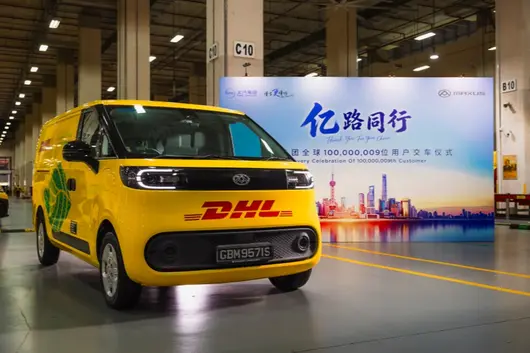
Especially in the global logistics field, SAIC MAXUS defined a new benchmark for green supply chains with Chinese solutions. Addressing Singapore's "land is precious, frequent delivery" market characteristics, SAIC MAXUS customized and developed the DANA V1 (eDeliver5) pure electric light commercial vehicle for DHL. With product advantages of sufficient range, efficient charging, and flexible loading, it fully meets local urban last-mile delivery, cross-border parcel transfer, and supermarket fresh produce transportation needs. Currently, including DHL, SAIC Commercial Vehicle has become a benchmark assistance for multiple global logistics giants exploring green logistics transformation.

In the field of urban-rural circulation grand loop, SAIC MAXUS Yuejin brand used green transportation power to solidify the foundation of common prosperity. In 2025, after nearly 10,000 DANA T1 units were put into operation by Di Shang Tie, it not only significantly reduced logistics transportation costs, but also opened two-way channels for agricultural products entering the city and industrial products going to the countryside, turning green transportation power into tangible income for thousands of workers.

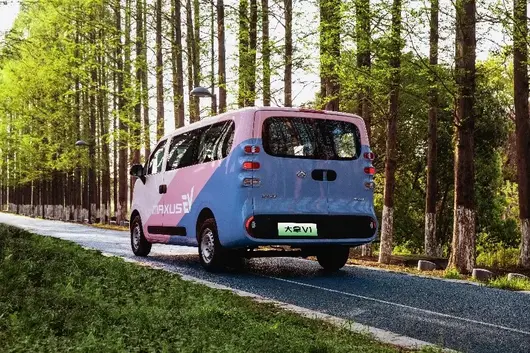
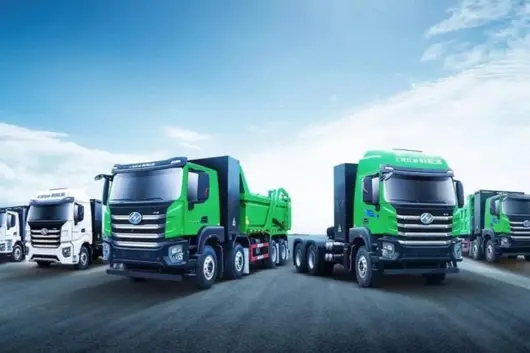
Not limited to global supply chains and urban-rural grand loops, the reach of SAIC Commercial Vehicle's green transportation power has extended to every dimension of urban operations, national infrastructure, and people's livelihood consumption. In the urban mobility field, Shenwo Bus delivered 10-series pure electric buses to Jiading Public Transport, serving as the main force of green public transport and aiding urban low-carbon transformation. In the infrastructure engineering field, Shanxi Henglongsheng again gave Hongyan a vote of confidence with 56 Hongyan New Energy 8x4 dump trucks and tractor units order. From traditional energy to green power, from loyal users to strategic partners, for 8 years, Henglongsheng and Hongyan have jointly written stories of mutual achievement. In the cultural tourism industry, Iveco Juxing EV reached a strategic cooperation with Henan Zhonglian Tourism, using green transportation power to light up local cultural tourism economies.


From global supply chains to domestic grand loops, from urban logistics to rural revitalization, from public transport to infrastructure engineering, products cover full series including heavy trucks, large buses, light trucks, light commercial vehicles, pickups, MPVs, RVs, etc. SAIC Commercial Vehicle's green wheels have deeply integrated into all aspects of national economy and people's livelihood. These five keys open doors for green development in different fields, adhering to SAIC Commercial Vehicle's unchanging original aspiration.
Five Keys, One New Chapter
Let technology serve people, let struggle have more value. These five keys at SAIC Group's 100 million vehicle delivery ceremony, while turning a new chapter of green development in various fields of commercial vehicles, highlight the leading strength of SAIC Commercial Vehicle in global commercial vehicle new energy transformation.
A company's leadership can only show its true weight when placed in the global industrial landscape. Currently, global commercial vehicle new energy transformation lags generally: 2025 Europe market penetration rate is about 10%, North America market less than 3%, Japanese top car companies are still watching. But Shenwo Bus achieved full electrification, MAXUS domestic new energy vehicle penetration rate broke 50% in single months repeatedly, Yuejin new energy light truck sales continue to grow... SAIC Commercial Vehicle, with 35% overall new energy vehicle penetration rate, is like a lighthouse, illuminating the direction of global commercial vehicle transformation.

This leadership stems from precise grasping of the pulse of era development, and more so from precise solving of core industry pain points and technological innovation. Relying on SAIC Group's R&D investment of nearly 150 billion yuan in the past decade, SAIC Commercial Vehicle did not take the shortcut of "single point breakthrough", but built a "Technology - Intelligent Manufacturing - Ecosystem" full-chain innovation system, persisting in pure electric, plug-in hybrid, range extender, and hydrogen fuel four roads advancing together, and pioneering the "Large Battery + Small Range Extender" technology route. Taking "Ultimate TVO (Total Lifecycle Value) and TCO (Total Lifecycle Cost)" as the foundation, relying on self-developed architectures like "Hongtu" "Xingzhan", from the "last mile" of livelihood wealth creation to the main artery of global logistics, full scenario empowerment, walking with strivers, forging a new energy transformation path that fits China's national conditions and can be replicated globally.

The dual advantages of technology and intelligence have been converted into competitiveness in the global market. The new energy reform has broken the monopoly pattern of Western car companies for decades, providing Chinese brands with the historical opportunity to overtake on a bend. SAIC Commercial Vehicle's map has covered over 100 countries and regions globally, building five "Ten-Thousand Unit Level Core Markets". Light commercial vehicle export volume rose to 2nd in Chinese car companies, light commercial vehicle export volume ranks 1st, pickup export volume ranks 2nd, and by integrating full-category resources under its brand to build an integrated development system, it moved from single product going global to systematic, ecosystem-based, global new development stage.
SAIC Commercial Vehicle's leadership is a gift of the era. All technical breakthroughs and market achievements stem from SAIC Commercial Vehicle's original aspiration of walking with thousands of strivers. Behind every commercial vehicle, there is a striver who treats the vehicle as home. They are urban distribution drivers shuttling through streets and alleys at 3 am, heavy truck couples running across the country, rural passenger transport masters picking up and dropping off children for school, infrastructure workers rushing against the schedule under the scorching sun... They treat the car as production materials, as the reliance for raising a family and getting rich, as a partner to realize dreams. It is exactly the trust and entrustment of tens of thousands of users that, together with SAIC Commercial Vehicle, has walked through a journey of struggle.
Five keys, one new chapter. Facing the future, SAIC Commercial Vehicle proposed the goal of "doubling sales, breaking annual sales of 500,000 vehicles" within five years, taking "Market First in China Light Commercial Vehicles", "Market First in China New Energy Light Commercial Vehicles", "Market First in Overseas Light Commercial Vehicle Exports" as three strategic pivot points, aiming at the first tier of global commercial vehicles.
Standing on the new starting point of SAIC Group delivering 100 million vehicles, SAIC Commercial Vehicle will continue to inherit the original aspiration of Chinese car companies serving the country through industry, with the determination of "Second Entrepreneurship", continuously deepening green intelligent technology, creating more wealth-creating good cars that can make money, are easy to drive, and are reliable. Not disappointing the gift of the era, not disappointing users' trust, let China's commercial vehicles' green wheels run across urban and rural lands, sailing towards the global market.
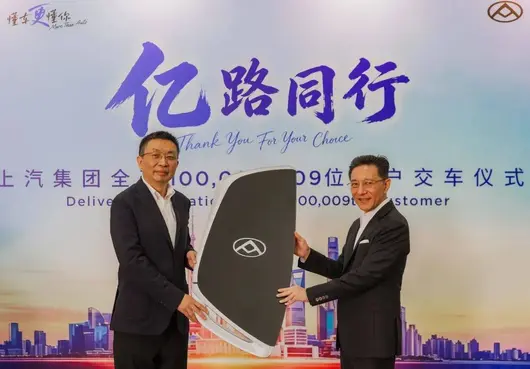

The wheels of time carry original aspirations, and the footprints of struggle remain clear. On May 28, SAIC Group's global 100 millionth vehicle was officially delivered in Shanghai North Bund. When the digital key of IM LS9 Hyper lit up the lighthouse of a new journey, SAIC Group's 100,000,009th to 100,000,013th new cars simultaneously started delivery. SAIC Commercial Vehicle handed over five keys to users at home and abroad—from Singapore DHL's logistics hub to Shanghai Jiading's bus depot, from infrastructure construction sites in Taiyuan, Shanxi to tourism special lines on Laojun Mountain, Henan. It included light vans, light trucks, heavy trucks, and large buses. Using "five keys" as a metaphor, SAIC Commercial Vehicle has turned the page to a brand new chapter of the Chinese commercial vehicle new energy era.
These five keys not only open five new cars, but also are the wealth-creation dreams of thousands of strivers globally, the era's miniaturized version of the Chinese commercial vehicle's leap from following to leading, and more so, the original commitment of SAIC Commercial Vehicle to "Serve People's Livelihoods, Connect the World, and Drive the Future".
Every Era
Has SAIC Commercial Vehicle's Excellent Wealth-Creating Cars
Looking back, the wheels of SAIC Commercial Vehicle have always galloped at key nodes of national development. From the early days of the founding of the country when Yuejin trucks rushed to construction sites across the country, to after the Reform and Opening-up when Iveco light commercial vehicles ran across the great rivers and mountains, to the new energy era, DANA light commercial vehicles became a phenomenon-level model in the new energy light commercial vehicle market, Hongyan new energy heavy trucks support the backbone of green infrastructure, Shenwo Bus became the demonstration model of green public transport, for every era, SAIC Commercial Vehicle has wealth-creating cars belonging to this era; every good car carries the hope of a generation working hard with their hands.
Commercial vehicles are the "capillaries" of the national economy, their value lies in supporting national economy and people's livelihood. User value is the eternal origin point of SAIC Commercial Vehicle. Commercial vehicles are users' "wealth-creation tools"; every investment must be converted into tangible returns. At the 100 million vehicle delivery celebration, these five keys delivered by SAIC Commercial Vehicle precisely embedded into five major scenarios: global trade, urban-rural circulation, urban mobility, infrastructure engineering, and cultural tourism industry, building a green transportation system covering the full chain of production, circulation, and consumption, injecting new momentum into high-quality development of the real economy through technological innovation.
Especially in the global logistics field, SAIC MAXUS defined a new benchmark for green supply chains with Chinese solutions. Addressing Singapore's "land is precious, frequent delivery" market characteristics, SAIC MAXUS customized and developed the DANA V1 (eDeliver5) pure electric light commercial vehicle for DHL. With product advantages of sufficient range, efficient charging, and flexible loading, it fully meets local urban last-mile delivery, cross-border parcel transfer, and supermarket fresh produce transportation needs. Currently, including DHL, SAIC Commercial Vehicle has become a benchmark assistance for multiple global logistics giants exploring green logistics transformation.
In the field of urban-rural circulation grand loop, SAIC MAXUS Yuejin brand used green transportation power to solidify the foundation of common prosperity. In 2025, after nearly 10,000 DANA T1 units were put into operation by Di Shang Tie, it not only significantly reduced logistics transportation costs, but also opened two-way channels for agricultural products entering the city and industrial products going to the countryside, turning green transportation power into tangible income for thousands of workers.
Not limited to global supply chains and urban-rural grand loops, the reach of SAIC Commercial Vehicle's green transportation power has extended to every dimension of urban operations, national infrastructure, and people's livelihood consumption. In the urban mobility field, Shenwo Bus delivered 10-series pure electric buses to Jiading Public Transport, serving as the main force of green public transport and aiding urban low-carbon transformation. In the infrastructure engineering field, Shanxi Henglongsheng again gave Hongyan a vote of confidence with 56 Hongyan New Energy 8x4 dump trucks and tractor units order. From traditional energy to green power, from loyal users to strategic partners, for 8 years, Henglongsheng and Hongyan have jointly written stories of mutual achievement. In the cultural tourism industry, Iveco Juxing EV reached a strategic cooperation with Henan Zhonglian Tourism, using green transportation power to light up local cultural tourism economies.
From global supply chains to domestic grand loops, from urban logistics to rural revitalization, from public transport to infrastructure engineering, products cover full series including heavy trucks, large buses, light trucks, light commercial vehicles, pickups, MPVs, RVs, etc. SAIC Commercial Vehicle's green wheels have deeply integrated into all aspects of national economy and people's livelihood. These five keys open doors for green development in different fields, adhering to SAIC Commercial Vehicle's unchanging original aspiration.
Five Keys, One New Chapter
Let technology serve people, let struggle have more value. These five keys at SAIC Group's 100 million vehicle delivery ceremony, while turning a new chapter of green development in various fields of commercial vehicles, highlight the leading strength of SAIC Commercial Vehicle in global commercial vehicle new energy transformation.
A company's leadership can only show its true weight when placed in the global industrial landscape. Currently, global commercial vehicle new energy transformation lags generally: 2025 Europe market penetration rate is about 10%, North America market less than 3%, Japanese top car companies are still watching. But Shenwo Bus achieved full electrification, MAXUS domestic new energy vehicle penetration rate broke 50% in single months repeatedly, Yuejin new energy light truck sales continue to grow... SAIC Commercial Vehicle, with 35% overall new energy vehicle penetration rate, is like a lighthouse, illuminating the direction of global commercial vehicle transformation.
This leadership stems from precise grasping of the pulse of era development, and more so from precise solving of core industry pain points and technological innovation. Relying on SAIC Group's R&D investment of nearly 150 billion yuan in the past decade, SAIC Commercial Vehicle did not take the shortcut of "single point breakthrough", but built a "Technology - Intelligent Manufacturing - Ecosystem" full-chain innovation system, persisting in pure electric, plug-in hybrid, range extender, and hydrogen fuel four roads advancing together, and pioneering the "Large Battery + Small Range Extender" technology route. Taking "Ultimate TVO (Total Lifecycle Value) and TCO (Total Lifecycle Cost)" as the foundation, relying on self-developed architectures like "Hongtu" "Xingzhan", from the "last mile" of livelihood wealth creation to the main artery of global logistics, full scenario empowerment, walking with strivers, forging a new energy transformation path that fits China's national conditions and can be replicated globally.
The dual advantages of technology and intelligence have been converted into competitiveness in the global market. The new energy reform has broken the monopoly pattern of Western car companies for decades, providing Chinese brands with the historical opportunity to overtake on a bend. SAIC Commercial Vehicle's map has covered over 100 countries and regions globally, building five "Ten-Thousand Unit Level Core Markets". Light commercial vehicle export volume rose to 2nd in Chinese car companies, light commercial vehicle export volume ranks 1st, pickup export volume ranks 2nd, and by integrating full-category resources under its brand to build an integrated development system, it moved from single product going global to systematic, ecosystem-based, global new development stage.
SAIC Commercial Vehicle's leadership is a gift of the era. All technical breakthroughs and market achievements stem from SAIC Commercial Vehicle's original aspiration of walking with thousands of strivers. Behind every commercial vehicle, there is a striver who treats the vehicle as home. They are urban distribution drivers shuttling through streets and alleys at 3 am, heavy truck couples running across the country, rural passenger transport masters picking up and dropping off children for school, infrastructure workers rushing against the schedule under the scorching sun... They treat the car as production materials, as the reliance for raising a family and getting rich, as a partner to realize dreams. It is exactly the trust and entrustment of tens of thousands of users that, together with SAIC Commercial Vehicle, has walked through a journey of struggle.
Five keys, one new chapter. Facing the future, SAIC Commercial Vehicle proposed the goal of "doubling sales, breaking annual sales of 500,000 vehicles" within five years, taking "Market First in China Light Commercial Vehicles", "Market First in China New Energy Light Commercial Vehicles", "Market First in Overseas Light Commercial Vehicle Exports" as three strategic pivot points, aiming at the first tier of global commercial vehicles.
Standing on the new starting point of SAIC Group delivering 100 million vehicles, SAIC Commercial Vehicle will continue to inherit the original aspiration of Chinese car companies serving the country through industry, with the determination of "Second Entrepreneurship", continuously deepening green intelligent technology, creating more wealth-creating good cars that can make money, are easy to drive, and are reliable. Not disappointing the gift of the era, not disappointing users' trust, let China's commercial vehicles' green wheels run across urban and rural lands, sailing towards the global market.

In May 2026, SAIC Commercial Vehicle sales reached 27,509 units, up 41% year-on-year; among them, new energy vehicle sales were 11,476 units, up 143% year-on-year, overseas sales were 12,392 units, up 56% year-on-year, with new energy and overseas sales lines both reaching new highs.

In the light commercial vehicle sector, SAIC Maxus sold 11,865 units in May, up 56% year-on-year. The Deliver series sales reached 5,934 units, up 197% year-on-year. Deliver V1 obtained Level 1 Energy Efficiency Certification from the China Quality Certification Centre. Regarding the Iveco brand, the Jiuxing EV completed delivery for Henan Laojun Mountain Cultural and Tourism Passenger Transport; Deyi and Jiuxing models received orders for specialized vehicles such as police and medical use.

Regarding pickups, SAIC Maxus pickup sales reached 7,223 units in May, up 58% year-on-year, and continues to implement a 7-day free trial policy. Regarding light trucks, Yuejin brand sales reached 4,287 units in May, up 41% year-on-year, with new energy models accounting for 67%, and new energy sales up 99% year-on-year. At the same time, Yuejin reached a cooperation with a Vietnamese commercial vehicle enterprise, layouting the Southeast Asian electric light truck market, and opened its first ecological operation center in Henan.

Regarding heavy trucks and buses, Hongyan delivered i Jieshi dump trucks in Taiyuan, Shanxi. Sunwin delivered 10-series low-floor pure electric city buses to Jiading Public Transport. In the parts segment, New Power Technology engine sales were 21,888 units in May, up 56.6% year-on-year, setting a new single-month sales record, maintaining double-digit growth for 5 consecutive months.

Regarding the overseas market, SAIC Commercial Vehicle exported 12,392 units in May, up 56% year-on-year. In Singapore, SAIC Maxus delivered eDeliver 5 to DHL (domestic model is Deliver V1). Plans are to launch Maxus T70 (Domestic new Interstellar L) in Australia and Chile in the second half of 2026, with current pre-market orders exceeding 800 units.