


首頁Car Manufacturers

搜尋歷史
熱門搜尋
經銷商登入 / 註冊

8% is like a door; most people cannot push it open, but among every 100 people, there are always 8 who can push it open.
How big is the 8% probability?
If the probability of rain tomorrow is 8%, I believe most people would not bring an umbrella. But if the probability of winning a prize is 8%, I believe many would participate. After all, compared to the probability of less than 1% for Pop Mart blind box hidden figures, 8% is still worth participating in.
The current domestic automotive market is also like this. Countless car manufacturers seek to break through in the market, only to compete for this 8% success probability.

According to incomplete statistics, there are currently about 700 models of new energy vehicles on sale in the domestic market, but only 56 products have a monthly sales volume of over 5,000 units, and the overall product success rate of the industry is only 8%.
Creating a hot-selling product is already the top priority for car manufacturers. After creating a hit, how to continuously maintain high sales has become the focus. Bloom for a night is the fate of most new cars. Once the three-month flowering period is over, they become nothing special.
Faced with the pressure of market competition, the transformation difficulty for traditional car manufacturers is harder than for the well-funded new forces. In the sales month approaching "Golden September and Silver October", the mid-year financial reports of car manufacturers have also been released. The answer to transformation is written in the reports.
Exports and Going Upmarket
First is BYD's semi-annual report. Cumulative sales of new energy vehicles in the first half of the year were about 1.8085 million units, down 15.72% year-on-year. Revenue from the automotive business was about 275.341 billion yuan, down 8.98% year-on-year.
At first glance, many people only see the decline in revenue and net profit attributable to the parent company, and then directly label this top dog of the new energy industry as "declining".
But if you carefully analyze BYD's financial report, you can understand the changes of this industry leader.
In the semi-annual report, BYD showed unprecedented supply chain strength, with a gross margin of 18.85%, and the gross margin in the second quarter even rose to 18.88%, up 2.61% year-on-year.
It is worth knowing that in the first half of 2026, the domestic automotive industry faced triple pressure of raw material price hikes, exchange rate fluctuations, and price wars. The average profit margin in the vehicle manufacturing link dropped to 1.5%, setting a new low in nearly ten years. However, BYD presented an upward mid-term answer.

Behind this lies BYD's transformation. According to sales data, Fang Cheng Bao, Denza, and Yangwang brands combined sales of 228,000 units, up 61% year-on-year. Their share of total sales rose to 12.6%. Moreover, the domestic full brand ASP (Average Selling Price per vehicle) rose from 133,100 yuan in March to 148,700 yuan in June.
In the domestic market, wanting to raise the price per vehicle basically means providing users with more configurations. BYD relies on technology to make consumers pay for this value add.
Only in the first half of the year, BYD showcased multiple new technologies. From the 2nd gen Blade Battery and Megawatt Supercharge at the beginning of the year to the self-developed 4nm smart driving chip Xuanji A3 and the Sky-Eye 5.0 ADAS system support, BYD demonstrated the R&D confidence and technical support capability a big factory should have.
Especially the 2nd gen Blade Battery and Megawatt Supercharge allowed BYD to achieve an upward price adjustment per vehicle. At the previous financial report meeting, Chairman Wang Chuanfu stated that currently the 2nd gen Blade Battery is in short supply, and this year's sales are fully limited by battery capacity.

On the other hand, the construction of BYD's Supercharge stations is extremely rapid. On August 28, they completed the construction of the 10,000th Supercharge station. Although compared to the 20,000 stations target set at the beginning of the year, it looks slightly slow in time, BYD guarantees to definitely complete the target this year.
From batteries to energy storage, BYD relied on lithium battery technology to achieve breakthroughs in new energy vehicles. Relying on self-developed and self-produced batteries, BYD achieved a gross margin rise despite the negative impact of upstream raw material price hikes. Furthermore, BYD's self-production covers not only batteries but a series of components like chips that are also rising in price. The core component self-supply rate exceeds 80%, which is difficult for general car manufacturers to learn quickly.
Behind these technologies, there are no other shortcuts. They are all investments BYD made with real money. Financial reports show that BYD invested 28.9 billion yuan in R&D in the first half of the year, and cumulative R&D investment exceeded 270 billion yuan. They earn 1 yuan and spend more than 2 yuan on R&D.

Of course, this is not a muddled account. Behind this is BYD's long-term investment, and now these investments have achieved returns.
Besides being firmly the champion of domestic new energy retail sales with 21.1% market share, BYD also took the first position in new energy exports with an export scale of 792,000 units.
Export growth is the main contributor to BYD's sales this year. Export sales share exceeds 40%, with a growth rate exceeding 60%. Meanwhile, revenue share exceeded half, reaching 52.7%. It can be said that more than half of the money BYD earns comes from overseas markets.
According to data, BYD's overseas vehicle profit is three times that of domestic, meaning 2 yuan of R&D earns back 3 yuan overseas.

As for BYD's overseas scale, the growth speed is as fast as the Supercharge stations. The business covers over 120 countries and regions. It topped the new energy brand sales champion in markets like the UK, Brazil, and Thailand. Inside BYD, there is even a plan to build stores in the Atlantic island nation Cape Verde this year which became popular due to the World Cup.
However, the overseas market also carries risks. In the semi-annual report, BYD attributed the main reason for profit decline to exchange losses generated by exchange rate fluctuations, losing about 4.7 billion yuan in profits. Such risks are an adjustment for global car manufacturers. Some lose on exchange rates, some profit. Japanese brands in recent years have achieved profit rises relying on exchange rates.
As a representative of domestic new energy vehicles, BYD proved with time and actions that domestic new energy can still profit in the market without price wars, whether domestic or overseas.
Pressure and Growing Pains
Changan Automobile's semi-annual report is more about changes. In the first half of 2026, the company achieved operating revenue of 65.634 billion yuan, down 9.71% year-on-year; net profit attributable to the parent company was 0.817 billion yuan, down 64.32% year-on-year, with a gross margin of 14.50%.
Different from BYD, Changan Automobile's financial report better represents the status quo of domestic car manufacturers' transformation. In the process of shifting from fuel cars to new energy, Changan Automobile faces far more difficulties than BYD. BYD can build its own new energy supply chain from scratch, but Changan Automobile needs to consider the transformation of the supply chain from the fuel car era with hundreds of upstream suppliers.
If excluding the fuel car sector, Changan Automobile's performance in new energy is still quite good. In the first half of 2026, new energy vehicle sales reached 414,000 units, down 8.3% year-on-year. However, after excluding entry-level models like Lumin, the total new energy sales in the first half of 2026 grew 11% year-on-year. Among which, new energy vehicle sales in the second quarter were 245,600 units, up 45.64% quarter-on-quarter.

Changan Qiyuan Q05 ranked number 1 in compact pure electric SUV sales for consecutive 3 months. Deepal S05 ranked champion in the niche field (120,000-180,000 pure electric compact SUV) for consecutive 4 months. Behind this is Changan's breakthrough in niche models. Rather than grandly covering all models, it is better to focus efforts at a point and find your own track.
Changan Qiyuan is exactly like this. Not exchanging price for volume, Qiyuan average price per vehicle rose 12,000 yuan year-on-year. Cumulative sales in the first 7 months of this year exceeded 210,000 units, and July single month sales also exceeded 30,000 units. And it achieved single quarter profit in Q2, taking the first step of new energy startup.
Besides the domestic market, overseas business is also Changan's main profit source. Deliveries in overseas markets in the first half were 402,000 units, up 35.1% year-on-year. Overseas business revenue was 21.942 billion yuan, up 78.77% year-on-year. Overseas gross margin remained above 20%.
Behind this is Changan Automobile adopting the "Local production + Systematic operation" strategy in overseas markets. Its Thailand Rayong factory has started production and operation, achieving localization production of hot-selling models like Deepal S05 and Changan Qiyuan Q05.

While playing well the new energy card, Changan also used "Blue Whale Super Hybrid" to provide a new solution for the fuel car market, especially to cope with lithium battery raw material price hikes and charging facility construction weak areas' vehicle usage demand.
But these advantages still cannot cover the difficulties Changan Automobile faces in transformation. Significant profit decline and negative operating cash flow all indicate that transformation costs are high and have not yet been converted into profit.
Now Changan Automobile's hopes are all bet on overseas business. 51.9% export growth and 78.8% overseas revenue growth became the only highlight in business difficulties.
Rely on Yourself
Different from BYD and Changan, GAC Group represents the transformation of more automotive SOEs. In 2025 sales, GAC was the SOE with the highest proportion of joint venture sales. 64.4% of sales were contributed by GAC Toyota and GAC Honda, with a reliance on joint ventures far higher than other SOEs.
But after fuel car sales continued to decline and the independent brand sales share broke 70%, GAC Group's situation became very subtle.
Financial reports show that GAC Group revenue grew 9.38% year-on-year to 46.121 billion yuan, but the gross margin was -2.51%, negative for two consecutive years. Among them, investment income from joint venture enterprises decreased by about 6 billion yuan year-on-year, becoming the biggest drag on performance.
From the sales data perspective, GAC's performance is not as poor as the financial report suggests. New energy vehicle sales were 260,200 units, up 68.80% year-on-year, with a growth rate significantly higher than the industry. Among which, the independent brand new energy sales share reached 62.82%, up about 14 percentage points year-on-year.

GAC Toyota sales grew 3.29%. The Zhizhi series monthly sales continuously broke 10,000. Zhizhi 3X ranked joint venture new energy sales champion for consecutive 10 months.
However, GAC Honda sales plummeted 55.82% to 68,300 units. New energy vehicle sales were only 3,276 units, becoming the biggest drag on GAC Group performance.
When joint venture brands lost combat power, GAC needs to fill the gap with independent brands. The cost of catching up is not small. Money is needed in all aspects. Expenses like R&D and marketing need to increase. R&D expense up 39%, financial expense up 243%, sales expense up 17%. Overall, this led to a situation of revenue growth but profit loss increase.
Especially the R&D investment. The 4.8 billion investment in the second quarter kept the gross margin still maintained at negative 1.28%. As for channel construction, GAC chose to sink and focus on the county economy, planning to complete 1,000 county authorized stores this year.

At the same time to achieve efficient transformation, GAC Group introduced IPD process reform. Officially stated independent brand R&D, production, supply, sales, finance integrated control, making product planning efficiency up 30%, project approval efficiency up 67%, demand decision efficiency up 85%. New car development cycle shortened to 18-21 months, and R&D cost reduced by over 10%.
But these are hard to show in financial reports in the short term. Currently the only thing visible is still export growth.
Semi-annual report shows, GAC independent brand exported 121,500 units in the first half of the year, a surge of 132% year-on-year, close to the 2025 full year export volume. Overseas business revenue was 14.013 billion yuan, up 109.27% year-on-year.

In the global layout, 7 KD factories were built, adding two factories in Cambodia and Kazakhstan. At the same time, the first overseas independent battery PACK factory is being built in Thailand, perfecting overseas power battery localization supply, achieving supply chain synchronous overseas go.
Like BYD, GAC's layout in new energy also first focuses on the power battery which has the largest cost share. Ensuring supply chain autonomy and control, no longer working for battery manufacturers, makes it possible to achieve a positive gross margin.
As a representative of transitioning from relying on joint ventures to relying on independents, GAC Group is still in the transformation difficulty period. Transformation investment surged, leading to expanded losses, and it will still be difficult to achieve change in the short term.

Overall, under the background of the domestic market first half year-on-year decline over 20%, it can better see the urgency of traditional car manufacturers' transformation. On one hand, the battlefield has already spread from domestic to overseas. Overseas markets have become the core of car manufacturers' profit, but at the same time exchange rate fluctuations have also brought uncertainty.
On the other hand, R&D investment is becoming the core to measure car manufacturers' long-term profit. BYD relies on years accumulated R&D investment, now has already formed technical advantages and converted them into profitability. Like Changan and GAC need to catch up in R&D, investing greater costs to achieve self-research.
Overall, under the first half domestic car market "cool inside hot outside" pattern, whoever can more quickly shift growth focus to overseas and premiumization can walk out of the profit valley earlier. BYD has already verified the effectiveness of this path first. Changan and GAC are still in the transformation climbing phase.
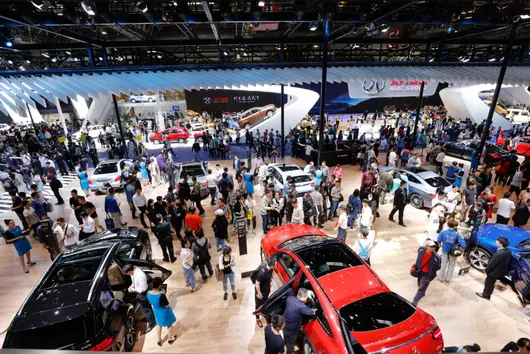
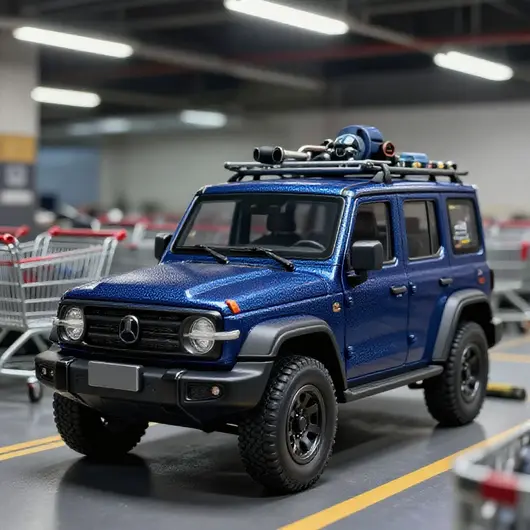

African resource countries tighten raw mineral exports, domestic new energy industry chains face supply challenges directly.
Author | Zhang Heng
Since 2026, major African mineral countries such as Zimbabwe, Democratic Republic of the Congo, Mozambique, and Malawi have successively introduced policies to tighten exports of new energy core minerals such as lithium, cobalt, and graphite.
The simultaneous policy shifts in multiple countries clearly indicate preparation, with the goal being the Chinese new energy industry chain.
Multiple African Countries Tighten Mineral Exports
This signal of policy tightening was first released by Zimbabwe. In February 2026, the country suddenly issued an emergency suspension on raw lithium and lithium concentrate exports, even intercepting some cargo that was already loaded and about to be shipped. At that time, market analysts judged that this was not a short-term temporary control.
As expected, by May, Zimbabwe officially designated 14 categories of minerals including lithium, cobalt, and graphite as national strategic resources, mandating foreign-funded mining enterprises to introduce local shareholders, while simultaneously requiring the construction of deep processing projects within the country to firmly lock the value added by the industry chain.
Following closely, the Democratic Republic of the Congo set an export quota of 96,600 tons for cobalt ore over two years, directly significantly reducing the outflow of low-end cobalt raw materials.

This wave of resource protection policies quickly spread to East Africa and Southern Africa, with multiple countries forming a consensus to unify restrictions on exporting raw ores and coarse concentrates without smelting and processing.
The highly consistent policy steps of multiple African countries have brought severe challenges to China's new energy industry chain.
Looking back at the past decade-plus of development, the heat of African resource development was highly synchronized with the rise of China's new energy vehicle industry, deeply bundled.
China's new energy industry broke out from scratch, with power batteries and complete vehicle capacity expanding at high speed year after year, but domestic reserves of lithium and cobalt resources were insufficient and mining costs were high, making it difficult to meet demand. Africa possesses world-class new energy mineral endowments, but is constrained by insufficient funds, technology, and infrastructure, unable to develop and realize value.
Under this complementarity, China and Africa formed a mature and stable industry chain division. Chinese enterprises went overseas to improve local infrastructure and invested in mines, putting funds and complete sets of mining technology into place, helping Africa's mineral development; Africa provided stable and low-cost coarse mineral raw materials to support China's new energy industry in growing stronger.
In terms of data, the Democratic Republic of the Congo contributes 76% of global cobalt production, and over 90% of China's ternary battery cobalt raw materials rely on African imports; Zimbabwe's lithium concentrates over 90% are exported to China, accounting for 15.5% of China's total imports; Mozambique and Madagascar natural graphite continue to supply China's anode materials, which are essential raw materials for power batteries.

Relying on Africa's large-volume, stable, and reliable primary mineral supply, China mastered over 80% of global cobalt smelting and over 70% of lithium salt processing capacity, building the world's largest scale power battery and new energy vehicle manufacturing system. It can be said that the rapid development of China's new energy industry in the past decade relied on resource strategic cooperation between China and Africa.
As China's new energy industry gradually matures, the attitude of overseas partners seems to have changed.
In the past decade-plus, African mineral resource countries mostly stayed in ore mining, initial classification, warehousing, and logistics links, only earning basic labor and resource mining revenue; China undertook mineral deep processing, covering downstream links such as smelting, cathode materials, and battery manufacturing.
After China's new energy industry chain became increasingly mature, African resource countries were no longer satisfied with simply exporting low-value-added primary raw ores. Countries drew lessons from Indonesia's governance of the nickel industry chain, recognized China's import dependency on their mineral resources, successively tightened raw mineral export controls and set quota thresholds, mandated foreign capital to implement deep processing factories locally, and incorporate local capital participation, forcing industry chain value-added revenue to remain in the local jurisdiction.

The bilateral mutual-benefit cooperation pattern maintained for over a decade has been broken. African resource countries attempt to reshape the distribution of industry chain interests from the upstream resource end; this move is no different from a major blow to China's new energy supply chain.
Car Manufacturer Profit Pressures Mount
Currently, profits in the domestic complete vehicle industry are extremely thin. Data from the China Association of Automobile Manufacturers shows that the average net profit margin of complete vehicle manufacturing in the first half of 2026 was only 1.5%, reaching a ten-year low.
For a vehicle with an average price of 200,000 yuan, the car manufacturer's average net profit was only 3,000 yuan, far below the average profitability level of large-scale industrial enterprises in the country. Continuous price wars for several years have compressed pricing space, leaving the industry little room to buffer cost fluctuations.
The earnings forecasts released in the second quarter of 2026 directly revealed cost pressures. Seres expects a net loss attributable to the parent company of 1.5 billion to 1.8 billion yuan in the first half of the year, while Beijing Automotive Group Blue Valley expects a net profit loss attributable to the parent company of 1.77 billion to 1.97 billion yuan in the first half of the year. Terminal market competition is fiercely intensified, car manufacturers dare not easily raise selling prices, and new costs brought by raw material price increases must be absorbed internally by the enterprise.
The rise in lithium carbonate prices is one reason for the pressure on car manufacturer profits. Battery-grade lithium carbonate has been rising from 70,000 to 100,000 yuan/ton at the end of 2025, reaching close to 200,000 yuan/ton in May 2026, with prices nearly doubling.
The industry standard calculation is that for every 10,000 yuan/ton increase in lithium carbonate, the battery cost of a pure electric vehicle with 60 kWh increases by 300 yuan; the cost increase per vehicle for long-range models can reach 400 yuan. Compared to the early year low, the rigid cost increase for large-capacity pure electric vehicles is 2,000 to 3,000 yuan, and ternary lithium battery models are burdened even heavier with the added cobalt price fluctuations.

If various African countries continue to ramp up export restrictions, and lithium and cobalt raw material prices remain at high levels, the car manufacturer's situation will further deteriorate. Weak manufacturers with insufficient capacity utilization will continue to amplify loss pressure.
Facing the hazards upstream, China's industry chain did not choose to sit idle.
On one hand, leading mining companies and car manufacturers complied with African localization requirements and implemented smelting capacity locally. Huayou Cobalt laid out lithium sulfate production lines in Zimbabwe, processing minerals locally to meet local policy requirements; China Molybdenum expanded local cobalt smelting capacity in the Democratic Republic of the Congo to avoid raw mineral export quota constraints. This kind of heavy asset investment cycle is long.
On the other hand, the sourcing layout moves towards diversification, with some companies accelerating the development of Australian and South American lithium mine resources, simultaneously exploring the potential of lithium resources in domestic Qinghai and Western Sichuan, creating a "double insurance" of "overseas multi-point supply + domestic owned minerals". BYD, CATL, Geely, and other companies broadened overseas mineral cooperation to disperse geopolitical policy risks.
In addition, reducing dependence on rare metals through technology iteration has also become an industry R&D trend. Low-cobalt and cobalt-free solutions continue to be popularized, and mid-range models are equipped with Lithium Iron Phosphate (LFP) batteries on a large scale, reducing the demand for Democratic Republic of the Congo cobalt mines. At the same time, the battery recycling system continues to improve, refining and regenerating lithium and cobalt from retired batteries, gradually forming urban mines, alleviating pressure from importing raw minerals overseas.

Multiple African countries tightening mineral exports aims to redistribute the interests of the new energy industry chain. The domestic industry chain wants to resist external resource fluctuations, cannot rely on low-price imported minerals for the long term, and must continuously advance supply chain diversification and material technology iteration to gradually get rid of constraints from overseas resources. [Copyright Notice] This article is an original work of "Auto People", copyright belongs to the publisher, unauthorized reproduction or partial copying is prohibited, violators will be held liable.
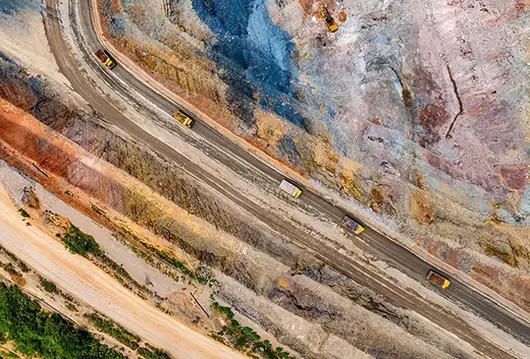

In the previous article, we discussed that the consumption tax on lithium batteries will formally begin to be levied starting from September 2026. It starts at 2%, rising to 4% after one year. Calculated out, the cost of a car increases by a few hundred yuan, at most about a thousand yuan, having a negligible impact on the final selling price.

I left a question at the end of the article: "What Remains for Car Manufacturers When Privileges Are Gone?" Over the past decade, new energy vehicles developed like the sun in the sky with the support of various policy benefits, such as tax exemption on purchase and unrestricted green license plates, making fuel car owners extremely envious. In such an environment, it was relatively easy for a new energy car manufacturer to survive.
Therefore, various industries and sectors all wanted to get a share, thus creating a strange scene. In the early years, there were cumulative hundreds of companies declaring they would start making cars, phone makers making cars, real estate developers making cars, appliance manufacturers making cars, as if making cars suddenly had no threshold.
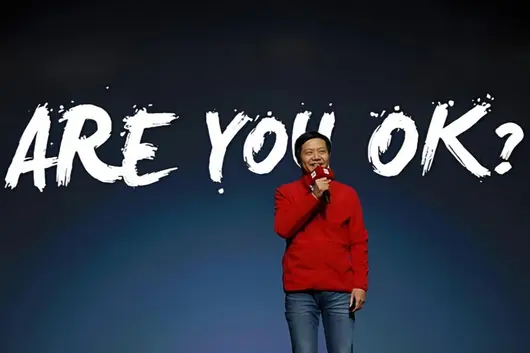
Making cars is not easy. Only after Xiaomi Auto's Lei Jun started making cars did he exclaim "Making cars is too hard", and that was when there was still policy support. Now, the truly surviving new force car manufacturers can be counted on the fingers of two hands, let alone the fact that the policy support is being withdrawn step by step now, making the survival of new energy car manufacturers even more difficult.
So what is left? Rather than saying what is left, perhaps it's about how to survive?
Those with confidence and ability to survive are those car manufacturers that still poured money into R&D and quality during the policy bonus period, focusing solely on product strength.
Take BYD as an example. Many see it selling millions of units a year, the global new energy sales champion. But looking back more than ten years, when others were lying on the "credit book" of fuel cars to make money, BYD was self-developing batteries, chips, and DM hybrid systems. These things seemed hard, tiring, and unappreciable at the time, but when battery costs became the deciding factor of competition, Blade Batteries became the ace in hand.

Therefore, when privileges are gone, what car manufacturers are left with is product strength. The three words "Product Strength" look light, but they are actually a combination of technology, cost, efficiency, quality control, etc. Each item requires time and real money to accumulate.
Some brands, established for three to five years, have iterated seven or eight models. But look closely, the tri-electric system is bought, the smart driving solution is from suppliers, the chassis is tuned by others, the only self-developed capability lies in the UI design of the vehicle system. Tell them what to compete with BYD, when BYD becomes a price butcher, who isn't gritting their teeth to follow? Everything is from others, so the cost cannot be reduced.
Previously, policy support could offer some relief, but what about after fuel and electricity truly have equal rights? Those car manufacturers without core technology, relying on low prices to stay alive, will fall one after another. Competition among top brands will shift from "who discounts more" to "who has stronger technology". The new energy vehicle industry is shifting from "policy-driven" to "technology-driven". You see, lithium batteries are taxed starting September 1st this year, but solid-state batteries and sodium-ion batteries don't require this. CPCA's Cui Dongshu said clearly, lithium battery policy adjustments mean the new energy vehicle tax "protection period" is exiting in phases and rhythmically.
Tesla's Q2 financial report shows that the reason they almost incurred losses was that they invested all the money earned from selling cars into future technologies, AI infrastructure, Robotaxi, Humanoid Robot Optimus, all hard-core high-tech work. Back then, no one was optimistic about FSD, but now aren't some car manufacturers taking it as a benchmark?

Technical barriers are the real moat.
Besides product strength, there is another dimension where a real gap has emerged in recent years — going overseas. No matter how big the domestic new energy market is, it's a bowl of over 20 million vehicles a year, and it has already become so competitive that profit margins are thin as cicada wings. If you want to break out of the internal competition and really make money, you still have to go overseas.

But going overseas is two completely different logics compared to selling cars domestically. Domestically, if the product is passable, prices are in place, and channels are spread, the basic foundation is set. Going overseas? Just the market access standards in various markets can strip a team's skin. The EU's WVTA certification, the US's FMVSS standards, tax policies of various Southeast Asian countries, every link is a hard bone to chew. Not to mention how to build after-sales networks, how to solve spare parts supply cycles, how to eliminate the natural distrust local consumers have for Chinese brands.
To be honest, these things are much harder than discounting 20,000 yuan domestically. And for enterprises that can chew through these things one by one, the gap with those who only compete on price domestically will only grow larger.
BYD exported over 400,000 units last year, being the pure electric sales champion in Thailand, Brazil, and Israel. Do you think it was sold cheap? The BYD factory in Thailand went from start to production in less than a year and a half, the factory in Uzbekistan is also running, overseas dealer networks spread to over 70 countries. This landing speed, behind it is the joint action of supply chain management capabilities, localization operation capabilities, and various comprehensive strengths.
MG sold well in Europe, last month's sales in Europe were 38,640 units, ranking high among Chinese brands, not relying on the price card. Besides the inherent European local brand awareness, a large part is also local operation. Great Wall in Russia, Chery in Brazil, also can only stand firm after rooting down.

Going overseas is like a magnifying glass. However strong your comprehensive capabilities are domestically, when put overseas, they are either amplified or reduced to their original state. What car manufacturers ultimately compete on is actually comprehensive strength.
Why is BYD dare to shout "Electricity is cheaper than Oil"? Not because of subsidies, but because it makes its own batteries, makes its own chips, vertically integrated down to the teeth. This cost capability, whether policies are opened or not, it's not afraid. Why does Tesla dare to repeatedly adjust prices in the global market? Because its manufacturing efficiency and supply chain management can support profit margins. These are the real trump cards.
Weaning is certainly unpleasant, but truly solid enterprises actually don't need that milk. Policy privileges are a crutch, leaning on it walking is naturally less effort, but there will always be the day to throw it away. And those enterprises that spent their energy polishing products, accumulating technology, and building brands during the protection period will instead thank that day for coming early enough. Because once privileges are gone, those insubstantial things will scatter. What remains are all real things.


The 2026 North American World Cup is less than two weeks away.
As usual, the core of the discussion is whether Mbappé can defend the title, whether Messi is still playing, and who is the new king of football. But if you glance away from the pitch, you might find the supporting cast of this World Cup is the most outrageous in history.

Image source: World Cup Organizing Committee
660 official designated vehicles, a Robotaxi network covering multiple stadiums, 42 electric buses from Shandong, China, humanoid robot Atlas, quadruped robot dog Spot.....
These "supporting characters" are all car companies.
Hyundai Kia's 27-Year Marathon: Money Spent, But Not Worth ItWhen discussing the relationship between car companies and the World Cup, Hyundai Kia cannot be avoided.
In 1999, Hyundai partnered with FIFA for the first time. At the 2002 Korea-Japan World Cup, they invested about 1.5 billion euros to secure official sponsorship, resulting in a 40% surge in sales in the US market that year, and brand awareness jumping from 32% to 67%. The calculation was too attractive, so Hyundai never considered withdrawing for over 20 years since then, renewing the partnership all the way to 2030.
This World Cup, Kia provides 660 official designated vehicles to handle athlete and official transport. The Korean automotive industry estimates that just from in-stadium advertising exposure, the Hyundai Motor Group's cumulative commercial value exceeds 10 trillion won.

Image source: Hyundai Kia
But can World Cup sponsorship really convert to sales?
Hyundai's own experience gives an uncertain answer. The 2002 bonus was real, but the story since then hasn't looked so good. Beijing Hyundai's sales peaked at 1.14 million units in 2016, declining ever since. By 2021, it dropped to only 382,000 units, a decline of over 66%. Nowadays, it's even worse; Hyundai Kia's sales for January to April were only over 30,000 units, less than what new EV players achieve in a month.
Throwing money at the World Cup cannot save Hyundai Kia's decline in China. Interestingly, Hyundai also seems to have realized this issue.
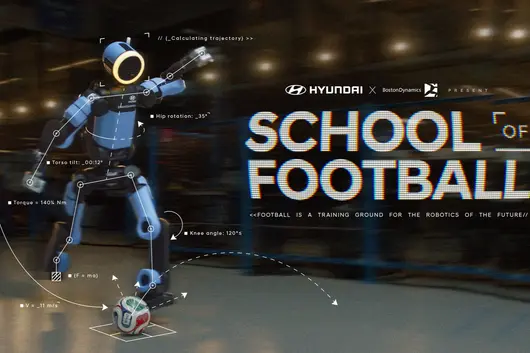
For the 2026 World Cup, Hyundai made a key adjustment: Expanding the sponsorship scope from traditional fuel vehicles to autonomous driving, robotics, and future mobility technology. Hyundai partnered with its subsidiary Boston Dynamics to deploy humanoid robot Atlas and quadruped robot Spot in designated venues, responsible for event operations and security.

Image source: Hyundai Kia
A somewhat awkward question is, are the cool-looking Atlas and Spot in the arena event operation infrastructure, or is it just an extremely expensive brand show?
Electric Vehicle Channel (ID: dianchetong233) judges it's both, but leans towards the former.
Hyundai needs to use the World Cup, the largest traffic pool globally, to send a signal to investors and consumers: We have transformed into a "Future Mobility Tech Company". Boston Dynamics' robots are the best prop to convey this signal. As for whether they can really make money, that's for the next step.
However, this World Cup is indeed a good time for Hyundai. The North American market accounts for over 20% of its global sales. The joint hosting by the US, Canada, and Mexico equals holding a press conference facing 3.5 billion viewers in one's own backyard.
The 27-year marathon has found a new narrative direction at this moment.

Image source: Boston Dynamics
Chinese Car Makers Don't Pursue Sponsorships, This World Cup Plays "Borrowing the Road"The relationship between the Chinese men's national football team and the 2026 World Cup can be summarized in one word — None. Last year, they lost away to Indonesia in the World Cup qualifiers' 18-team round and were eliminated a round early. Chinese fans don't have to worry about the time difference again.
But the relationship between Chinese car makers and this World Cup is very close. And the path they take is completely different from Hyundai Kia.
Changan is the most typical example.

Image source: Changan Automobile
On May 22, Changan signed an agreement in Lisbon with the Portuguese Football Federation, becoming the Portuguese National Team's Global Official Partner. The cooperation covers the 2026 and 2030 World Cups and the Women's World Cup cycle, with an investment of over 500 million yuan.
The logic behind choosing Portugal is very smart. This is not generalized World Cup sponsorship; Changan did not compete for the FIFA official sponsor position, but rather precisely bound with one team.
This team has Cristiano Ronaldo. Over 1 billion fans globally, 660 million Instagram followers, and the fan distribution highly overlaps with Changan's core overseas markets: Europe, Southeast Asia, South and Central America, Middle East Africa. Concentrate resources to do big things.

Image source: Changan Automobile
Using the scarcity of Cristiano Ronaldo's last World Cup as a lever to leverage brand awareness breakthrough in overseas markets. The supporting actions include the co-branded film "Sounds like Changan", the first European delivery of Deepal S05 in Italy, the European 1,000-kilometer long-distance test, and joint activities by global dealers. Every step is correct, but every step has uncertainty.
European consumers' stereotypical impression of Chinese car brands was not formed in one day, and it won't dissipate due to one sports marketing campaign. Korean and Japanese car makers opened the European market back then by relying on decades of quality accumulation and in-depth localization. Changan wants to shorten this process with a 500 million yuan cooperation with a team; results need time to verify.
Another case is Zhongtong Bus.
42 N12 dual-source trolleyless electric buses were shipped from Liaocheng, Shandong to Mexico City, undertaking public transport during the World Cup. Completely different from Changan's brand marketing route, Zhongtong follows product as marketing. The buses running in Mexico City are themselves a moving billboard.

Image source: Zhongtong Bus
In 2025, China exported 625,200 vehicles to Mexico, with Mexico surpassing Russia for the first time as China's largest automotive export destination. In the first quarter of 2026, China exported 2.226 million vehicles, up 56.7% year-on-year; new energy vehicles exported 954,000 units, up over 120% year-on-year.
Zhongtong's electric buses appearing in Mexico City is also a microcosm of the systematic penetration of China's automotive industry in the Latin American market.
What about BYD? Although they did not directly sponsor this World Cup, their sports marketing map is already the most complete Chinese car maker — 2024 Euro Cup, 2024 Copa America, 2025 European U21, plus a five-year 75 million yuan sponsorship contract with the Chinese Football Association, covering almost all mainstream football IPs. Now, BYD's single-month export in April exceeded 130,000 units, with cumulative overseas sales exceeding 450,000 units.

Image source: BYD
Nowadays, BYD no longer needs to spend a huge sum to grab a logo spot on the World Cup.
Three paths, one consensus — Chinese car makers going global have passed the stage of whether to participate in global marketing, entering the stage of how to participate more smartly. Hyundai Kia used 27 years to figure out sports marketing experience; Chinese car makers are rapidly catching up with shorter cycles and more diversified strategies.
Robotaxi and Robots: The Most Expensive Practical ExamThis World Cup saw a large number of autonomous driving and robot elements.
Let's talk about a timeline first.
In January this year, a Waymo autonomous taxi hit and injured a child near a primary school in Santa Monica. In the same month, another Waymo drove past a stopped school bus with warning lights on in Texas and was investigated by the US National Transportation Safety Board (NTSB).
On May 12, Waymo announced the recall of 3,791 Robotaxis — the autonomous driving software had perception defects on waterlogged roads, potentially causing vehicles to drive into roads submerged by water.
But it was also this month that Waymo expanded its Houston service area to nearly 50 square miles, directly covering NRG Stadium — one of the 2026 World Cup venues.

Image source: Waymo
Recalling on one side, expanding on the other. Looks contradictory, but this contradiction explains a real state — Robotaxi commercialization is experiencing a stage of fixing while running. Not perfect, but participants cannot wait for it to be perfect anymore.
It's not just Waymo. Atlanta, Dallas, Los Angeles, Miami, multiple World Cup host cities have already started Robotaxi commercial operations or pilots. In April, Tesla invested 573 vehicles at once in Dallas and Houston to launch fully unmonitored services, directly skipping the safety officer stage — but safety data for these 573 vehicles has not been disclosed so far.
Why are these companies rushing to expand densely before the World Cup?
The reason is simple: The World Cup is a global high-exposure stress test. Millions of fans flood into the city, traffic demand surges, perfectly verifying the autonomous driving system's performance under extreme load. Success is the best advertising; if problems occur, they are at least exposed in real scenarios — much more valuable than closed-door testing.

Image source: Hyundai Kia
And there is a common feature — These Robotaxi networks will not be withdrawn as the World Cup ends.
Waymo's Houston service area was not designated temporarily; it is permanent urban traffic infrastructure. Tesla's 573 vehicles in Dallas will also not stop operation after the event. The World Cup is just a node, not the end.
Back to Boston Dynamics' robots, why did Hyundai want to put them into the arena?
Because robots are the most scarce visual asset in the current automotive industry narrative. Autonomous driving is hard to perceive with the naked eye — sitting in a Waymo feels about the same as riding in an Uber. But a two-meter tall humanoid robot patrolling the arena corridor has a completely different visual impact.
What Hyundai needs is an image that can be remembered at a glance.

Image source: Boston Dynamics
The number Hyundai gave itself is: Planning to deploy 25,000 Atlas units inside factories by 2028. If this plan can land, the few on the World Cup are small-scale verification. If it can't land, then they are purely marketing props.
For now, both possibilities exist.
After the Final WhistlePutting together the automotive map of this World Cup, several lines are very clear.
Hyundai Kia used the 27 years of FIFA relationships accumulated to upgrade sponsorship scope from sticking logos to showing technology. But how much actual revenue World Cup sponsorship can bring, even Hyundai might not be able to say clearly — its defeat in the Chinese market is a warning for the future.
Looking the other way, Chinese car makers chose a smarter curved path — Changan binds the Portuguese team for branding, Zhongtong does products in Mexico City, BYD uses multi-IP coverage for the system. Three different paths, but all answer: How to make overseas consumers believe in Chinese cars.
And Robotaxi and robots are the freshest elements of this edition, and also the riskiest. Waymo recalls while expanding, Boston Dynamics' robot costs remain high — they still have a distance from truly reliable infrastructure, but car companies cannot wait anymore.

The 2026 North American World Cup is less than two weeks away.
As usual, the core of the discussion is whether Mbappé can defend the title, whether Messi is still playing, and who is the new king of football. But if you glance away from the pitch, you might find the supporting cast of this World Cup is the most outrageous in history.
Image source: World Cup Organizing Committee
660 official designated vehicles, a Robotaxi network covering multiple stadiums, 42 electric buses from Shandong, China, humanoid robot Atlas, quadruped robot dog Spot.....
These "supporting characters" are all car companies.
Hyundai Kia's 27-Year Marathon: Money Spent, But Not Worth ItWhen discussing the relationship between car companies and the World Cup, Hyundai Kia cannot be avoided.
In 1999, Hyundai partnered with FIFA for the first time. At the 2002 Korea-Japan World Cup, they invested about 1.5 billion euros to secure official sponsorship, resulting in a 40% surge in sales in the US market that year, and brand awareness jumping from 32% to 67%. The calculation was too attractive, so Hyundai never considered withdrawing for over 20 years since then, renewing the partnership all the way to 2030.
This World Cup, Kia provides 660 official designated vehicles to handle athlete and official transport. The Korean automotive industry estimates that just from in-stadium advertising exposure, the Hyundai Motor Group's cumulative commercial value exceeds 10 trillion won.
Image source: Hyundai Kia
But can World Cup sponsorship really convert to sales?
Hyundai's own experience gives an uncertain answer. The 2002 bonus was real, but the story since then hasn't looked so good. Beijing Hyundai's sales peaked at 1.14 million units in 2016, declining ever since. By 2021, it dropped to only 382,000 units, a decline of over 66%. Nowadays, it's even worse; Hyundai Kia's sales for January to April were only over 30,000 units, less than what new EV players achieve in a month.
Throwing money at the World Cup cannot save Hyundai Kia's decline in China. Interestingly, Hyundai also seems to have realized this issue.
For the 2026 World Cup, Hyundai made a key adjustment: Expanding the sponsorship scope from traditional fuel vehicles to autonomous driving, robotics, and future mobility technology. Hyundai partnered with its subsidiary Boston Dynamics to deploy humanoid robot Atlas and quadruped robot Spot in designated venues, responsible for event operations and security.
Image source: Hyundai Kia
A somewhat awkward question is, are the cool-looking Atlas and Spot in the arena event operation infrastructure, or is it just an extremely expensive brand show?
Electric Vehicle Channel (ID: dianchetong233) judges it's both, but leans towards the former.
Hyundai needs to use the World Cup, the largest traffic pool globally, to send a signal to investors and consumers: We have transformed into a "Future Mobility Tech Company". Boston Dynamics' robots are the best prop to convey this signal. As for whether they can really make money, that's for the next step.
However, this World Cup is indeed a good time for Hyundai. The North American market accounts for over 20% of its global sales. The joint hosting by the US, Canada, and Mexico equals holding a press conference facing 3.5 billion viewers in one's own backyard.
The 27-year marathon has found a new narrative direction at this moment.
Image source: Boston Dynamics
Chinese Car Makers Don't Pursue Sponsorships, This World Cup Plays "Borrowing the Road"The relationship between the Chinese men's national football team and the 2026 World Cup can be summarized in one word — None. Last year, they lost away to Indonesia in the World Cup qualifiers' 18-team round and were eliminated a round early. Chinese fans don't have to worry about the time difference again.
But the relationship between Chinese car makers and this World Cup is very close. And the path they take is completely different from Hyundai Kia.
Changan is the most typical example.
Image source: Changan Automobile
On May 22, Changan signed an agreement in Lisbon with the Portuguese Football Federation, becoming the Portuguese National Team's Global Official Partner. The cooperation covers the 2026 and 2030 World Cups and the Women's World Cup cycle, with an investment of over 500 million yuan.
The logic behind choosing Portugal is very smart. This is not generalized World Cup sponsorship; Changan did not compete for the FIFA official sponsor position, but rather precisely bound with one team.
This team has Cristiano Ronaldo. Over 1 billion fans globally, 660 million Instagram followers, and the fan distribution highly overlaps with Changan's core overseas markets: Europe, Southeast Asia, South and Central America, Middle East Africa. Concentrate resources to do big things.
Image source: Changan Automobile
Using the scarcity of Cristiano Ronaldo's last World Cup as a lever to leverage brand awareness breakthrough in overseas markets. The supporting actions include the co-branded film "Sounds like Changan", the first European delivery of Deepal S05 in Italy, the European 1,000-kilometer long-distance test, and joint activities by global dealers. Every step is correct, but every step has uncertainty.
European consumers' stereotypical impression of Chinese car brands was not formed in one day, and it won't dissipate due to one sports marketing campaign. Korean and Japanese car makers opened the European market back then by relying on decades of quality accumulation and in-depth localization. Changan wants to shorten this process with a 500 million yuan cooperation with a team; results need time to verify.
Another case is Zhongtong Bus.
42 N12 dual-source trolleyless electric buses were shipped from Liaocheng, Shandong to Mexico City, undertaking public transport during the World Cup. Completely different from Changan's brand marketing route, Zhongtong follows product as marketing. The buses running in Mexico City are themselves a moving billboard.
Image source: Zhongtong Bus
In 2025, China exported 625,200 vehicles to Mexico, with Mexico surpassing Russia for the first time as China's largest automotive export destination. In the first quarter of 2026, China exported 2.226 million vehicles, up 56.7% year-on-year; new energy vehicles exported 954,000 units, up over 120% year-on-year.
Zhongtong's electric buses appearing in Mexico City is also a microcosm of the systematic penetration of China's automotive industry in the Latin American market.
What about BYD? Although they did not directly sponsor this World Cup, their sports marketing map is already the most complete Chinese car maker — 2024 Euro Cup, 2024 Copa America, 2025 European U21, plus a five-year 75 million yuan sponsorship contract with the Chinese Football Association, covering almost all mainstream football IPs. Now, BYD's single-month export in April exceeded 130,000 units, with cumulative overseas sales exceeding 450,000 units.
Image source: BYD
Nowadays, BYD no longer needs to spend a huge sum to grab a logo spot on the World Cup.
Three paths, one consensus — Chinese car makers going global have passed the stage of whether to participate in global marketing, entering the stage of how to participate more smartly. Hyundai Kia used 27 years to figure out sports marketing experience; Chinese car makers are rapidly catching up with shorter cycles and more diversified strategies.
Robotaxi and Robots: The Most Expensive Practical ExamThis World Cup saw a large number of autonomous driving and robot elements.
Let's talk about a timeline first.
In January this year, a Waymo autonomous taxi hit and injured a child near a primary school in Santa Monica. In the same month, another Waymo drove past a stopped school bus with warning lights on in Texas and was investigated by the US National Transportation Safety Board (NTSB).
On May 12, Waymo announced the recall of 3,791 Robotaxis — the autonomous driving software had perception defects on waterlogged roads, potentially causing vehicles to drive into roads submerged by water.
But it was also this month that Waymo expanded its Houston service area to nearly 50 square miles, directly covering NRG Stadium — one of the 2026 World Cup venues.
Image source: Waymo
Recalling on one side, expanding on the other. Looks contradictory, but this contradiction explains a real state — Robotaxi commercialization is experiencing a stage of fixing while running. Not perfect, but participants cannot wait for it to be perfect anymore.
It's not just Waymo. Atlanta, Dallas, Los Angeles, Miami, multiple World Cup host cities have already started Robotaxi commercial operations or pilots. In April, Tesla invested 573 vehicles at once in Dallas and Houston to launch fully unmonitored services, directly skipping the safety officer stage — but safety data for these 573 vehicles has not been disclosed so far.
Why are these companies rushing to expand densely before the World Cup?
The reason is simple: The World Cup is a global high-exposure stress test. Millions of fans flood into the city, traffic demand surges, perfectly verifying the autonomous driving system's performance under extreme load. Success is the best advertising; if problems occur, they are at least exposed in real scenarios — much more valuable than closed-door testing.
Image source: Hyundai Kia
And there is a common feature — These Robotaxi networks will not be withdrawn as the World Cup ends.
Waymo's Houston service area was not designated temporarily; it is permanent urban traffic infrastructure. Tesla's 573 vehicles in Dallas will also not stop operation after the event. The World Cup is just a node, not the end.
Back to Boston Dynamics' robots, why did Hyundai want to put them into the arena?
Because robots are the most scarce visual asset in the current automotive industry narrative. Autonomous driving is hard to perceive with the naked eye — sitting in a Waymo feels about the same as riding in an Uber. But a two-meter tall humanoid robot patrolling the arena corridor has a completely different visual impact.
What Hyundai needs is an image that can be remembered at a glance.
Image source: Boston Dynamics
The number Hyundai gave itself is: Planning to deploy 25,000 Atlas units inside factories by 2028. If this plan can land, the few on the World Cup are small-scale verification. If it can't land, then they are purely marketing props.
For now, both possibilities exist.
After the Final WhistlePutting together the automotive map of this World Cup, several lines are very clear.
Hyundai Kia used the 27 years of FIFA relationships accumulated to upgrade sponsorship scope from sticking logos to showing technology. But how much actual revenue World Cup sponsorship can bring, even Hyundai might not be able to say clearly — its defeat in the Chinese market is a warning for the future.
Looking the other way, Chinese car makers chose a smarter curved path — Changan binds the Portuguese team for branding, Zhongtong does products in Mexico City, BYD uses multi-IP coverage for the system. Three different paths, but all answer: How to make overseas consumers believe in Chinese cars.
And Robotaxi and robots are the freshest elements of this edition, and also the riskiest. Waymo recalls while expanding, Boston Dynamics' robot costs remain high — they still have a distance from truly reliable infrastructure, but car companies cannot wait anymore.


