


首頁Cannon

搜尋歷史
熱門搜尋
經銷商登入 / 註冊

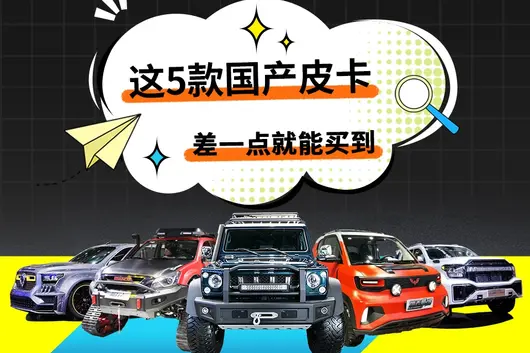
When we see overseas pickup modifications or designs, we always sigh, why haven't domestic pickup companies officially launched these cars? Actually, domestic car companies also have a deep understanding of pickup modifications, but constrained by various regulations, many very interesting models cannot be mass-produced, which is indeed a pity. However, I believe that with the progress and iteration of regulations, these types of vehicles will eventually gain recognition from the management and be legally allowed on the road. So today let's take a look at what very interesting but not mass-produced pickup products there are domestically.

3 Types of 6-Wheel Pickups:
BJ80 6x6 Pickup Version, Wuling Hongguang MINI EV 6-Wheel Pickup, Great Wall Cannon CYBERP!CKUP Chaojing Co-Creation Edition
In the past when domestic pickups were not blooming everywhere, when we saw high-definition large pictures of those overseas high-performance cars, Mercedes-Benz 6x6 often appeared. This pickup almost became the ultimate dream model for many people, little did we know that multiple 6x6 pickup products had also appeared in our country.
The earliest one is the BJ80 6x6 pickup from Beijing Automotive Group at that time. At the 2018 Beijing Auto Show, BAIC launched this tall and mighty pickup built on the BJ80. It added a rear axle on the original car basis, and the rear part was changed to an open cargo box style, becoming a 6-wheel pickup. The power part adopts a plug-in hybrid system. The last axle is driven by a motor, but there is also a drive shaft from the middle axle to the last axle. Moreover, all wheels of this car used portal axles to increase ground clearance. The rear two axles use a helical spring multi-link structure. The car attracted many people's attention at the auto show scene at that time, but based on the market situation at the time, it was destined to be just for display purposes and cannot be mass-produced.


At the 2020 Chengdu Auto Show, another 6x6 pickup product appeared, and this car was even less likely to be mass-produced than the previously introduced BJ80 6x6. It is the Wuling Hongguang MINI EV Special Edition. This is because Wuling Hongguang MINI EV was sold extremely hotly that year, it is an absolute internet-famous product. So Wuling took advantage of the heat and jointly launched this 6-wheel heavily modified pickup with a modifier, used for promotion and attraction at the auto show.


This small 6-wheel pickup added a cargo box design on the original car basis, and to carry this cargo box, an axle was added directly to the rear, forming the form of a 6-wheel pickup. From the chassis form, this car still retains the original drive form, "middle axle" motor drive. With such a small volume and load capacity, it is absolutely impossible to mass-produce.

The most hopeful mass production one is the Great Wall Cannon 6x6 model CYBERP!CKUP co-created with Chaojing launched by Great Wall Cannon at the 2023 Shanghai Auto Show. This car is said to come from the first Chinese 6X6 super off-road platform built by Great Wall, which will break the situation of foreign enterprises dominating 6x6. This car is equipped with a 3.0T V6+9HAT hybrid system, outputting 260kW/500N・m, pure electric range 110km (CLTC), comprehensive fuel consumption 8.5L/100km. In terms of off-road configuration, standard equipment includes 5 electronic differential locks, all-terrain adaptive system can realize 8 road conditions, and equipped with 33-inch Cooper AT3 tires. Because it is a hybrid model, considering battery safety, the battery group is 750mm off the ground to prevent collision, and the vehicle can also achieve 3.3kW external discharge to meet camping power consumption.


Whether looking from the publicity direction, or from the so transparent release of specific vehicle parameters, Great Wall obviously intended to mass-produce it; but to this day there is no specific mass production news, which is bound to make people regret.
Great Wall Cannon Hypercar Pickup
As the leader of domestic pickups, Great Wall Pickup is absolutely all-around in "showcasing creativity". Previously we introduced 6-wheel pickups, and at the 2021 Guangzhou Auto Show, a Great Wall Cannon Hypercar Pickup was also launched. So Great Wall Pickup has not only products in the "off-road performance direction", but also works in the "track performance direction".

This Hypercar Pickup also had a naming activity at that time, expected to be listed in the "Bullet" series. The car has an ultra-wide widebody kit, and the body height is reduced, presenting a low-slung style overall. This modification style has relatively faithful fans in Thailand, and its appearance in China is the top pickup modification. The engine hood middle part rises, with air intake holes. The front bar, wheel arches, side skirts, and rear are equipped with widebody kits, making the horizontal visual of the whole car look very wide. Front and rear wheels also adopted the multi-spoke style commonly used in performance cars, matched with 285/40R22 tires, and the front wheels have a slight outward angle, improving the cornering stability of the whole vehicle.


The rear cargo box of the vehicle has a sports roll cage, and there is also a spoiler commonly used in performance cars on the top and above the tailgate, plus a huge diffuser in the middle of the rear bar, giving the whole car better aerodynamic structure and also more aesthetically pleasing. The bottom of the cargo box has a huge dual-side dual-out exhaust, looking full of performance. If this car can be mass-produced, it will definitely be a very personalized product in the performance car field, and will definitely expand influence, bringing pickups into the market of track performance cars.


Jiangxi Isuzu Fulfiller (D-MAX Modified Crawler Vehicle)
In addition to domestic brands, joint-venture pickups have also launched some interesting products in China. D-MAX has always been a favorite of many off-road players. Even if the manufacturer does not launch modified cars, there are also many experts in the civilian sector modifying D-MAX that look very good. But the manufacturer still wants to build a brand image in terms of off-road, so D-MAX modified cars can often be seen at auto shows.

At the 2020 Chengdu Auto Show, Jiangxi Isuzu displayed a D-MAX track vehicle, named Fulfiller. The upper part of the whole vehicle basically has no big change, the shape still retains the factory design. A luggage rack was added to the roof, a gantry was added to the rear, and there is a snorkel on the right, very much off-road style. The place that makes it more "wild" is mainly the lower part.


The tire part was directly changed to tracks, increasing the contact area with the road surface, making the vehicle less prone to getting stuck. The track wheels are directly connected on the factory flange, with a huge gear shape driving the tracks to roll. The fixing device of the tracks is connected to the suspension. Such a design should have greater usage value in mud and snow, and the visual impact is also comparable to 6-wheel pickups. If this pickup can really be mass-produced, then this car should be often seen galloping in the winter of the northern grasslands.

Summary:
It is not that domestic enterprises do not have innovation and creativity awareness, from the above models, it can be seen that pickups still have huge potential in modification, and modifications in all directions can extend imaginative schemes. But due to restrictions in various aspects, it led to these cars not being able to go from the showroom to mass production, which is also a very regrettable thing. Do you think these pickups are interesting? Welcome to discuss with us in the comments section.

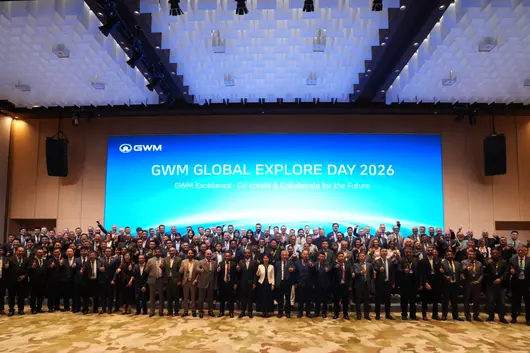
Recently, investors from six continents worldwidegathered at Great Wall Motor's global headquarters. Through complete sessions including full industry chain visits, all-scenario product test drives, strategic briefings, and cultural experiences, they comprehensively experienced Great Wall Motor's technical foundation and global layout, jointly discussing long-term cooperation and development paths.
As a core representative of Chinese car brands going global, Great Wall Motor has established a full-chain localization layout of R&D, production, supply, sales, and service in global markets. Fully processed production bases have been built in Thailand and Brazil, driving the cultivation of local supply chains and talent systems, achieving symbiosis and win-win outcomes between industrial landing and regional development. As of June 2026, Great Wall Motor's overseas sales channels exceed 1,600, with cumulative overseas sales surpassing 2 million units and the global user base exceeding 16 million. From January to June 2026, Great Wall Motor's cumulative overseas sales reached 291,426 vehicles, a year-over-year increase of 47.44%; single-month overseas sales in June were 60,168 vehicles, a year-over-year increase of 50.16%. Overseas business has become the core engine for the group's growth.
Full-Link Open Tracing, Jointly Witness Full Industry Chain Strength
This event broke away from the conventional meeting mode, centering on "Full-Process Immersive Verification." Merging the three core links of R&D, manufacturing, and products, it invited global investors to trace the technical background of Great Wall Motor from the source. On the R&D front, investors visited the Technology Center exhibition hall, advanced laboratories, and Powertrain Institute, covering frontier verification fields such as NVH, EMC electromagnetic, environmental wind tunnel, safety crash, and power durability. They also visited industry chain supporting units like Jinggong Auto, Weishi Energy, and FinDreams Energy. From underlying technology to supply chain systems, they clearly and intuitively understood Great Wall Motor's R&D investment intensity and full-chain quality control standards.

Now, Great Wall Motor has established a "Forest Ecosystem" system with the complete vehicle as the core and multiple technology industries developing in synergy. Three component enterprises have already entered the global auto component top 100 list. Great Wall Motor's R&D investment has exceeded 10 billion for consecutive years, with an engineering R&D team of 27,000 people. It possesses a safety laboratory with an investment exceeding 500 million and multi-angle crash test capability, a comprehensive test field, the world's first nested smart connected vehicle test field, and other verification positions, building a solid foundation for all-domain safety R&D. All technology investments ultimately focus on improving product reliability and guaranteeing user safety, laying a foundation for the enterprise's terminal operations and long-term development.

The models showcased in this event cover diverse power forms including fuel, hybrid, PHEV, and pure electric, all native to the Guanyuan Platform. They possess the ability to flexibly adapt to the policies, regulations, and consumption demands of different global market regions, verifying Great Wall Motor's excellent global market adaptability from all dimensions. At the Xushui Smart Factory and Test Field, investors visited the complete vehicle manufacturing production line and completed dynamic ride and drive of multi-category core products on professional test sites including the high-speed ring, test hill, dynamic plaza, and handling track. At the Global Off-Road Camping Base, in extreme scenarios like water wading and mountain climbing, global investors comprehensively experienced the hardcore performance of off-road models such as Haval, Tank SUV, and Great Wall Cannon. Diverse modification potential of the off-road ecology is also of concern to users. Modified models such as Tank 300 and Shanhai Cannon on display also attracted the attention of global investors.

All-Dimensional Analysis of Core Value, Clarify Global Win-Win Path
At the Global Strategy Briefing Meeting held on July 22, Great Wall Motor President Mu Feng and senior executives from technology, R&D, design, and new business sectors appeared collectively, unfolding multi-dimensional systematic sharing around global cooperation value. In the keynote speech titled "Working Together for Long-Term Symbiosis and Winning the New Global Automotive Landscape Together," Mu Feng set the communication tone as "Mutual Recognition, Mutual Efforts, Shared Success," systematically interpreting Great Wall Motor's long-term operational logic and globalization underlying support from six dimensions: corporate values, financial self-generation ability, R&D endurance, technical penetration, industry mastery, and brand growth.
On site, Mu Feng clarified three core guarantees for cooperation: Strong product adaptability, the full-power, all-scenario product matrix can meet diverse market demands; Outstanding operational risk resistance capability, the independent industry chain and healthy financial system can guarantee triple stability of supply, policy, and price; Profit growth is sustainable, adhering to not engaging in vicious price wars and not transferring operational pressure to partners.
Great Wall Motor CTO Wu Huixiao shared on the technology strategy with the theme "Zero Time Difference, Rooted Globally." She interpreted Great Wall Motor's full-power technology layout covering fuel, hybrid, PHEV, pure electric, and hydrogen by combining the differentiated status of infrastructure levels, driving scenarios, and consumption habits in various regions around the world, emphasizing not betting on a single technology route but using pragmatic strategies to flexibly adapt to diverse global market demands.
At the same time, Vehicle Integration Chief Engineer Adam Thomson, VP of Design Andrew Dyson, and Great Wall Soul Motorcycle President Zhao Shengguang also expounded on Great Wall Motor's full-power technology reserves, product design featuring Chinese traditional culture to meet global aesthetics, and the development potential of Chinese-style luxury heavyweight motorcycles in the global market during the briefing, enhancing the confidence and expectations of global investors from more aspects.
During the briefing, Great Wall Motor Brazil Market COO Diego Fernandes shared the successful experience of the brand working hand in hand with dealers in the Brazil market, Malaysia Market COO Roslan Abdullah shared the successful case of WEY G9 breaking through in the Malaysia market, and Great Wall Commercial Vehicles Overseas Director Shi Kaiwen also introduced Great Wall Commercial Vehicles product information and overseas plans to global dealers. This provided more successful case references and more cooperation opportunity choices for global investors.
Anchor Cooperation Consensus, Build a Solid Foundation for High-Quality Going Global

Standing at a key node of the century-old transformation of the global automotive industry, Great Wall Motor broke the template narration of traditional business activities. With an open posture, it fully displayed the full industry chain strength to global partners, using full-process immersive verification and professional perspective empirical proof to make technical strength, product quality, and cooperation value perceivable, verifiable, and trustworthy. This is both a deepening implementation of the "Ecosystem Going Global" strategy and also highlights the operational background of long-termism of Chinese car brands.
This event was not only a centralized display of products and technology but also the concrete implementation of Great Wall Motor's win-win concept—based on technology, promising based on integrity, and based on symbiosis as the Dao, building a long-term symbiotic development ecosystem with global partners. Through this Global Exploration Seminar Day, Great Wall Motor will further lock in global quality peers, consolidate the overseas channel network, and inject continuous power for high-quality global development.

Recently, according to multiple media reports including People's Daily Online and Guangming Net, Chongqing investigated the first AI fake advertising case – the queueing to buy car footage was all fake! In the video, the store was packed with people, grabbing cars like grabbing cabbages, with captions "Blind orders are really too hot".
The result was that law enforcement officers found not a single real person and no real transactions; it was purely an AI performance of a hot sales drama.
My God, this is not selling cars? Even hiring actors would be considered troublesome! Intentionally faking facts and concealing the truth to create anxiety of "if you don't buy now it's gone", forcing you to follow the trend and place orders, isn't this naked consumer fraud? Thinking it was done flawlessly, once the regulation checked it, the true face was exposed.


•The trust crack caused by AI-car making is tearing up the entire industry
AI faking is not new in the auto circle, but this recent operation is absolutely outrageous. Have you seen screenshots of "Lei Jun live streaming sales of AITO M9" or "Yu Chengdong standing up for Xiaomi SU7"? The interface layout, character expressions, and bullet screen interactions were highly realistic; if not for official rumor refutation, the public opinion impact would have been huge.
These fake content spreads extremely fast, often covering millions of users within a few hours, bringing immense public opinion pressure to brands.
Even more absurdly, some accounts even let Lei Jun "sell" cars from other brands, and Yu Chengdong "promoted" Xiaomi, making "cross-brand standing" in the AI era completely handled by algorithms.

If the big bosses bringing each other counts as "entertaining memes", then the malicious tampering targeting specific car models is the real tumor shaking the industry foundation. During the release of Voyah Tai Shan X8, an image of "Chairman Lu Fang posing with the new car, trunk turned into 'Man's Wardrobe'" swept the entire internet.


The scene was complete and people looked natural, causing many users to believe it, even asking about the press conference location. The truth was: the original photo was a group photo of other public figures, and after AI fast face swap, scene replacement, and copy modification, it became a "news photo" misleading the market in minutes.
Finally, the Chairman of Voyah had to step out personally to clarify, stopping the spread of rumors.
Similar events have erupted intensively in the past two years; almost all mainstream brands have not escaped. Xiaomi Auto has released official statements 2 to 3 times in the past two years, refuting AI-generated content including fake executive appointments, forged model function copy, etc.;
During the Guangzhou Auto Show, Xpeng Cars encountered AI-generated vulgar exhibition hall videos spread maliciously, with the Legal Department urgently refuting the rumor;
Xpeng GX interior "spy photos" were massively forwarded, seeming like real sneak shots, but the rearview mirror proportion was distorted and interior lines misaligned, typical AI loopholes were spotted at a glance;
Avatr also released a legal statement pointing out that the false publicity images severely infringed on the brand reputation.

From the current industry phenomenon, car circle AI images can be roughly divided into three categories, with hazards increasing step by step:
The first category is the entertaining "wish list images", such as free new car replacement, high points gifts, etc., leaning towards memes, relatively harmless spreading;
The second category is the "half-real images" with realistic details, tampering with configuration, parameters, interior, and prices based on real car models, professional, extremely difficult for ordinary consumers to distinguish;
The third category is the malicious defamation "black PR images", attacking brands through vulgar, distorted, and fabricated content, causing huge damage to reputation.
What truly shakes the industry foundation is those fake-looking real high-fake contents in the middle zone, like Shangjie Z7 winter test official photos. Clearly real car shots, just because of abnormal wheel hub visuals, were directly judged by netizens as "AI generated", and the official had to clarify specifically that it was just a confidentiality design.


Official promotional photos of brands like AITO, Li Auto, Xpeng, etc., are also frequently enlarged by netizens to compare light and shadow, lines, and pick out details. As long as there is a slight visual deviation, they will be labeled "fake photos".
More terrifying than AI faking is the whole industry falling into a weird loop of "proving innocence". In the past, when car companies released official photos, winter test videos, spy photos, users tacitly believed them to be real. Now, official content instead has to accept the whole internet "authentication".
Car companies are forced into a vicious cycle, releasing content – being questioned – urgently refuting – being questioned again. When reality needs repeated self-proof, industry trust has quietly collapsed.
Industry data shows that the judicial appraisal cost of a single AI image has exceeded 50,000 yuan; more than 90% of fake content is spread after more than 10 reposts, the source tracing difficulty is huge; the legal boundary between entertainment memes and commercial defamation is blurred, evidence collection cycle is long, rights protection efficiency is low.

For car companies, whether letting it go or enforcing accountability, they have to pay high costs. This is already not the dilemma of a single brand, but a systemic problem facing the whole industry together.
And this Chongqing case of "enterprise actively using AI to fake queueing" pushes this crisis to a new height; it is the first case of enterprise active faking to mislead consumers as announced by officials.
Today can use AI to fake hot sales, tomorrow can use AI to fake sales volume, reputation, review. Don't always think about going the wrong way to play tricks, relying on false publicity to gain traffic and scam customers, in the end it will only bring stones to break one's own feet.

The essence of this crisis is the collision between digital technology and traditional industrial civilization.
The auto industry is inherently focused on precision, rigor, and safety; users buy real chassis, power, handling, safety performance, not a beautiful picture.
When AI makes text, images, and videos unreliable, real experience and authoritative data are becoming the new trust cornerstone. 16 million new energy vehicles sold in the whole of 2025, penetration rate broke through 50% for the first time; in some months in 2026 even pushed above 55%. The more white-hot market competition, the more likely those companies relying on AI "adding extra scenes" will be backfired.
Fortunately, regulations have already acted. On April 26, 2026, the State Administration for Market Regulation launched a six-month Internet advertising rectification action, explicitly listing "AI generative advertising" as one of the six key points.
Then on May 26, the Ministry of Industry and Information Technology released "2026 Automotive Standardization Work Points", systematically laying out automotive AI standards. According to experts: "AI will become a booster for mobile intelligent agents, but misuse is a rollover accelerator."

•Real products and user reputation are the best advertising
The opposite of "fake queueing" is exactly those players speaking with hard power. When the "hot" forged by AI becomes a joke, the real hotness is happening in the factories and delivery centers of BYD, Deepal, Xpeng, and SAIC.
At the 2026 Beijing Auto Show, BYD booked the entire E3 Hall, directly setting up a "-30°C low temperature flash charging" actual test area and full scenario parking experience area;
Deepal L06 Max limited time starting from 118,900 yuan, all series standard with CATL Golden Bell Battery, even bringing magnetic rheological chassis which only million-level luxury cars have.
When others are still "adding scenes" in the editing room, these brands are already betting with real technology.
Look at intelligent driving again. Among Xpeng Ultra users, the proportion of "opening intelligent driving every day" in the first week of new cars soared to 98.52%, March Ultra model orders increased by 118% month-on-month. He Xiaopeng's original words: "Intelligent driving has changed from showing off skills to a rigid decision point."

SAIC even launched the concept car of "Global First AI Native Car" Jia Yue 07, making the whole vehicle hardware customized for the AI underlying layer.
Even Shangjie, which has been troubled by AI rumors, insisted on releasing original test data after the Z7 winter test controversy, using real parameters to fight back questions.
Industry change has quietly occurred, more and more brands choose to release original data of actual tests, Li Auto and other brands actively strengthen information transparency; China Automotive Technology and Research Center and other authoritative institutions' crash tests, professional review traffic increased by about 30% year-on-year; offline test drives, real human actual tests, live car teardown, etc. verifiable content is more convincing than refined text and images.
Consumers are not stupid either; whose product can withstand real road tests, whose data dares to face third-party teardown, that is who will win the next round of voting.

Big boss speeches are also getting more realistic. In May this year, at the Shenzhen Future Automotive Pioneer Conference, Avatr Chairman Wang Hui spoke directly: "Sales without profit is fake sales."
Wang Lang added a knife: "Rather than exhausting in internal involution, grow in value."
Li Auto's Li Bin gave data: January to April cumulative delivery over 112,000 vehicles, year-on-year growth 71%, operating profit profit for two consecutive quarters.
BYD's Wang Chuanfu's sentence "Building high-end brands is never a one-step process", perhaps is the clearest footnote to the industry.
Pull the lens back to see – 2025 Chinese car exports 6.8 million vehicles, accounting for 18.6% of total sales. In Europe, Chinese share 7.4% surpassed Korea for the first time; in Thailand, Chinese brand share 34.3% firmly No. 1; in Brazil, new energy field already holds half.
Chery exports nearly 1.2 million vehicles to become the "export number one"; SAIC MG delivered 250,000 in Europe, year-on-year growth over 20%. I ask: If Chinese cars cannot present solid technology and products, can they conquer so many markets globally at the same time?
In the era where AI can "create" everything, truth is the longest lasting competitiveness. Just like Dali Lun for Great Wall Motor that heartfelt "Great Wall Cannon" – that is a real emotional expression, no script, no AI rendering, just happened to become the most scarce content for brands now.
When your product can be liked by real users, can be spread out in reality, then your brand itself is the cheapest and most effective advertising. This is the two-way rush towards real human touch.

•Electric EV:
The person in charge of Chongqing Liangjiang New Area Market Regulation Bureau said clearly: "AI is a normal technical tool, but it absolutely cannot become the 'shield' for false publicity."
A series of absurd events are all throwing out the same question: In an era where algorithms can easily copy all visual appearances, what is the most irreplaceable core of the auto industry?
Chinese cars are charging to the world at unprecedented speed, rather than using AI to fabricate "hotness", better to light up the market with products, what do you think?


On June 1, Great Wall Motor released sales data for May 2026. New car sales for the month were 100,399 units, a slight decrease of 1.79% compared to the same period last year. However, looking at the cumulative performance from January to May, total sales reached 475,815 units, a 3.64% year-over-year increase. The cumulative growth rate has turned positive, and the core business remains solid.
 The domestic passenger car market overall faced pressure in May, with only a few top domestic brands achieving month-over-month growth. In this environment, Great Wall maintaining the monthly sales threshold of 100,000 units was not easy in itself. More noteworthy is that behind this report card lie two entirely different growth curves—the rapid progress of the overseas market and the uneven performance among its sub-brands.
 The most milestone change in May sales comes from the overseas business. Data shows Great Wall Motor's export volume reached 50,688 units that month, a sharp 46.75% year-over-year increase. The proportion in total sales broke through 50% at 50.49%. In other words, for every two cars sold by Great Wall, one is driven away by overseas consumers. This marks the first time Great Wall Motor's export share exceeds domestic sales, signifying its globalization strategy has officially upgraded from an "added bonus" to "half the market".
Looking at the entire domestic brand camp, exports are becoming the common growth pole for all top automakers. In May, Chery's export share was as high as 73.39%, while BYD reached 41.89%. Great Wall entered the first tier of exports with a share exceeding 50%. According to the 2026 overseas sales target of 600,000 units set at the beginning of the year, 231,300 units were completed in the first five months, the progress bar pulled to about 38.6%. Considering the second half of the year is usually the peak season for overseas delivery, the pressure to complete the annual target is not great, and there might even be a possibility to increase it.
From the perspective of regional layout, Great Wall's overseas strongholds are concentrated in Eastern Europe, Central Asia, the Middle East, and Southeast Asia. The Thailand factory has achieved localized production and radiates to surrounding areas. The recognition of models such as Tank and Pickup in the Middle East market continues to rise. From "Product Going Global" to "Ecosystem Going Global", Great Wall's globalization story is moving from quantitative change to qualitative change.
02 Brand Differentiation: WEY and ORA Surge, Haval and Tank Under Pressure
 Beneath the total volume of 100,000 units in May, the performance divergence among the five major brands is significant.
WEY sold 8,119 units that month, a 31.78% year-over-year increase. As the high-end representative of Great Wall, WEY gradually opened the high-end market with configuration upgrades on models such as Gaoshan and Lanshan (such as Coffee AI Sound audio, new smart cockpit). ORA even welcomed a highlight moment. May sales were 6,018 units, skyrocketing 206.88% year-over-year. Although the base last year was low, such double-digit growth still indicates that ORA's brand recognition in the pure electric compact car market is accelerating its return.
GWM Pickup continues to play the role of a "stabilizer", selling 13,628 units in May. The Great Wall Cannon series continues to lead the sub-market.
At the other end of the growth spectrum, the two pillar brands Haval and Tank are both under pressure. Haval sold 55,478 units in May, a 3.84% decline year-over-year. Although the volume is still the largest, this downward signal is worth being alert - the compact and mid-size SUV market is experiencing a fierce impact from new energy competitors. Tank brand sold 17,067 units in May, a significant 18.34% drop year-over-year. The demand for the hard-core off-road market has obvious cyclical characteristics. After the explosive growth in the early stage, it has entered a rational correction interval, which belongs to normal fluctuations, but it also reminds Tank to accelerate product iteration and new energy steps.
In addition, Great Wall Motor has previously clearly stated that in 2026 it will focus on terminal channel upgrades, product matrix enrichment, and brand awareness enhancement. From the brand performance in May, the implementation of this strategy has become imperative.
03 New Energy and New Car Rhythm: Accumulating Power for Launch On the new energy track, Great Wall Motor sold 30,447 new energy vehicles in May. Horizontal comparison with peers—BYD's single-month new energy has exceeded 350,000 units, Geely broke through 130,000 units, and Chery also passed the 100,000 unit threshold—Great Wall still has considerable catching-up space in the new energy segment. ORA's high growth is gratifying, but the absolute volume is relatively small, and its structural contribution to the entire group is limited.
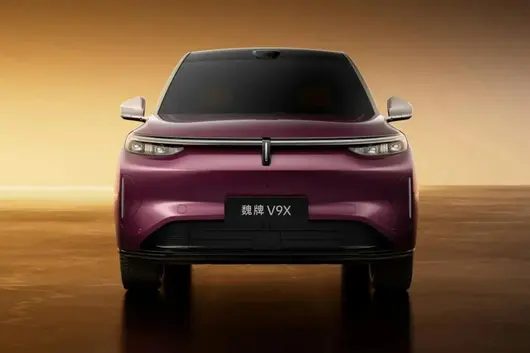
On the product front, May was exactly the intensive landing period for multiple heavy new cars from Great Wall. WEY flagship six-seat SUV "V9X" went on sale on May 18. Relying on the positioning of the first mass-produced model of the Guiyuan S platform, dual VLA large model AI agents, and hard-core configurations such as standard rear-wheel steering + dual-chamber air suspension for the entire series, it bears the task of breaking through the brand upward. Haval Mongoose PLUS went on sale on May 15. With "5-seater + 7-seater" dual layout, Hi4 electric four-wheel drive, and up to 255km CLTC pure electric range, it focuses on the 160,000-200,000 yuan boxy SUV market. These new cars take time from listing to batch delivery. May data has not fully reflected their contribution. True volume increase may have to wait until the second half of the year.
04 Financials and Strategy: Short-term Pain, Long-term Layout
 Beyond sales, Great Wall Motor's Q1 2026 financial data also reflects the pain of the transformation period. Q1 revenue grew year-over-year, but net profit attributable to the parent company was only 945 million yuan, a significant 46.01% drop year-over-year. The company explained that the decline in net profit was mainly affected by exchange rate fluctuations brought by last year's same period exchange gains, which is a non-recurring factor.
More importantly, the long-term layout at the strategic level. In January this year, Great Wall officially released the Guiyuan Vehicle Platform. This platform is compatible with five power forms: fuel, hybrid, plug-in hybrid, pure electric, and hydrogen fuel cell. The parts universality rate is as high as 80%. The unification of this underlying capability will provide systematic advantages for subsequent model cost control and product iteration, which is the core chip for Great Wall to cope with competition in the next five years.
From an industry perspective, the Chinese auto market in May 2026 has clearly presented a structural characteristic of "weak domestic demand, strong exports". Great Wall Motor proved itself occupying a favorable position in this wave of going global with an export share exceeding 50%. In the second half of the year, with the continuous volume increase of overseas markets, the delivery ramp-up of domestic new cars, and the further effort of new energy products, whether Great Wall can achieve a double breakthrough in total volume and structure is worth continued attention.
May's 100,000 unit sales volume is a passing paper, but also a differentiated test paper. Overseas market surpassed domestic for the first time, writing new coordinates in Great Wall's globalization process; WEY and ORA's high growth provided imaginative space for brand upward; Haval and Tank's decline sent a clear signal that competition upgrades must be accelerated.
"If you don't go global, you're out" is becoming a true portrayal of the 2026 Chinese auto market. Great Wall gave its own answer with an export share exceeding half. The highlights to watch next are clear: Whether overseas volume can maintain high growth, whether new energy products can break the "low base" label, and whether the new cars launched intensively in May can rapidly ramp up volume at the terminal. The 2026 elimination round continues, and Great Wall has already prepared an extra moat for itself.

On June 1, Great Wall Motor released sales data for May 2026. New car sales for the month were 100,399 units, a slight decrease of 1.79% compared to the same period last year. However, looking at the cumulative performance from January to May, total sales reached 475,815 units, a 3.64% year-over-year increase. The cumulative growth rate has turned positive, and the core business remains solid.
The domestic passenger car market overall faced pressure in May, with only a few top domestic brands achieving month-over-month growth. In this environment, Great Wall maintaining the monthly sales threshold of 100,000 units was not easy in itself. More noteworthy is that behind this report card lie two entirely different growth curves—the rapid progress of the overseas market and the uneven performance among its sub-brands.
The most milestone change in May sales comes from the overseas business. Data shows Great Wall Motor's export volume reached 50,688 units that month, a sharp 46.75% year-over-year increase. The proportion in total sales broke through 50% at 50.49%. In other words, for every two cars sold by Great Wall, one is driven away by overseas consumers. This marks the first time Great Wall Motor's export share exceeds domestic sales, signifying its globalization strategy has officially upgraded from an "added bonus" to "half the market".
Looking at the entire domestic brand camp, exports are becoming the common growth pole for all top automakers. In May, Chery's export share was as high as 73.39%, while BYD reached 41.89%. Great Wall entered the first tier of exports with a share exceeding 50%. According to the 2026 overseas sales target of 600,000 units set at the beginning of the year, 231,300 units were completed in the first five months, the progress bar pulled to about 38.6%. Considering the second half of the year is usually the peak season for overseas delivery, the pressure to complete the annual target is not great, and there might even be a possibility to increase it.
From the perspective of regional layout, Great Wall's overseas strongholds are concentrated in Eastern Europe, Central Asia, the Middle East, and Southeast Asia. The Thailand factory has achieved localized production and radiates to surrounding areas. The recognition of models such as Tank and Pickup in the Middle East market continues to rise. From "Product Going Global" to "Ecosystem Going Global", Great Wall's globalization story is moving from quantitative change to qualitative change.
02 Brand Differentiation: WEY and ORA Surge, Haval and Tank Under PressureBeneath the total volume of 100,000 units in May, the performance divergence among the five major brands is significant.
WEY sold 8,119 units that month, a 31.78% year-over-year increase. As the high-end representative of Great Wall, WEY gradually opened the high-end market with configuration upgrades on models such as Gaoshan and Lanshan (such as Coffee AI Sound audio, new smart cockpit). ORA even welcomed a highlight moment. May sales were 6,018 units, skyrocketing 206.88% year-over-year. Although the base last year was low, such double-digit growth still indicates that ORA's brand recognition in the pure electric compact car market is accelerating its return.
GWM Pickup continues to play the role of a "stabilizer", selling 13,628 units in May. The Great Wall Cannon series continues to lead the sub-market.
At the other end of the growth spectrum, the two pillar brands Haval and Tank are both under pressure. Haval sold 55,478 units in May, a 3.84% decline year-over-year. Although the volume is still the largest, this downward signal is worth being alert - the compact and mid-size SUV market is experiencing a fierce impact from new energy competitors. Tank brand sold 17,067 units in May, a significant 18.34% drop year-over-year. The demand for the hard-core off-road market has obvious cyclical characteristics. After the explosive growth in the early stage, it has entered a rational correction interval, which belongs to normal fluctuations, but it also reminds Tank to accelerate product iteration and new energy steps.
In addition, Great Wall Motor has previously clearly stated that in 2026 it will focus on terminal channel upgrades, product matrix enrichment, and brand awareness enhancement. From the brand performance in May, the implementation of this strategy has become imperative.
03 New Energy and New Car Rhythm: Accumulating Power for LaunchOn the new energy track, Great Wall Motor sold 30,447 new energy vehicles in May. Horizontal comparison with peers—BYD's single-month new energy has exceeded 350,000 units, Geely broke through 130,000 units, and Chery also passed the 100,000 unit threshold—Great Wall still has considerable catching-up space in the new energy segment. ORA's high growth is gratifying, but the absolute volume is relatively small, and its structural contribution to the entire group is limited.
On the product front, May was exactly the intensive landing period for multiple heavy new cars from Great Wall. WEY flagship six-seat SUV "V9X" went on sale on May 18. Relying on the positioning of the first mass-produced model of the Guiyuan S platform, dual VLA large model AI agents, and hard-core configurations such as standard rear-wheel steering + dual-chamber air suspension for the entire series, it bears the task of breaking through the brand upward. Haval Mongoose PLUS went on sale on May 15. With "5-seater + 7-seater" dual layout, Hi4 electric four-wheel drive, and up to 255km CLTC pure electric range, it focuses on the 160,000-200,000 yuan boxy SUV market. These new cars take time from listing to batch delivery. May data has not fully reflected their contribution. True volume increase may have to wait until the second half of the year.
04 Financials and Strategy: Short-term Pain, Long-term LayoutBeyond sales, Great Wall Motor's Q1 2026 financial data also reflects the pain of the transformation period. Q1 revenue grew year-over-year, but net profit attributable to the parent company was only 945 million yuan, a significant 46.01% drop year-over-year. The company explained that the decline in net profit was mainly affected by exchange rate fluctuations brought by last year's same period exchange gains, which is a non-recurring factor.
More importantly, the long-term layout at the strategic level. In January this year, Great Wall officially released the Guiyuan Vehicle Platform. This platform is compatible with five power forms: fuel, hybrid, plug-in hybrid, pure electric, and hydrogen fuel cell. The parts universality rate is as high as 80%. The unification of this underlying capability will provide systematic advantages for subsequent model cost control and product iteration, which is the core chip for Great Wall to cope with competition in the next five years.
From an industry perspective, the Chinese auto market in May 2026 has clearly presented a structural characteristic of "weak domestic demand, strong exports". Great Wall Motor proved itself occupying a favorable position in this wave of going global with an export share exceeding 50%. In the second half of the year, with the continuous volume increase of overseas markets, the delivery ramp-up of domestic new cars, and the further effort of new energy products, whether Great Wall can achieve a double breakthrough in total volume and structure is worth continued attention.
May's 100,000 unit sales volume is a passing paper, but also a differentiated test paper. Overseas market surpassed domestic for the first time, writing new coordinates in Great Wall's globalization process; WEY and ORA's high growth provided imaginative space for brand upward; Haval and Tank's decline sent a clear signal that competition upgrades must be accelerated.
"If you don't go global, you're out" is becoming a true portrayal of the 2026 Chinese auto market. Great Wall gave its own answer with an export share exceeding half. The highlights to watch next are clear: Whether overseas volume can maintain high growth, whether new energy products can break the "low base" label, and whether the new cars launched intensively in May can rapidly ramp up volume at the terminal. The 2026 elimination round continues, and Great Wall has already prepared an extra moat for itself.


