首頁Business

搜尋歷史
熱門搜尋
經銷商登入 / 註冊

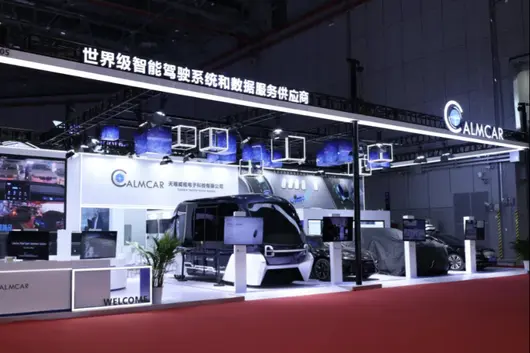
[CNMO Tech News] On September 9, at the 2026 Private Economy Innovation Development Conference held in Wenzhou, Zhejiang, the All-China Federation of Industry and Commerce officially released the "2026 Cases of Private Enterprises Developing New Quality Productive Forces". Global autonomous driving technology company WeRide was successfully selected based on systematic practice in core technology innovation of autonomous driving and scaled commercial operations.

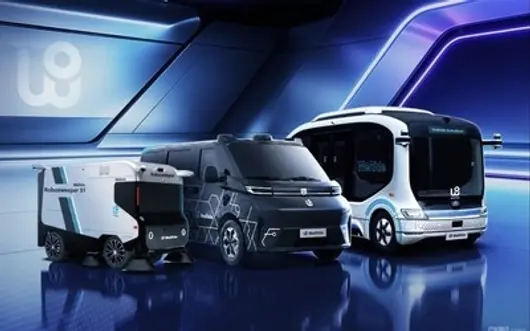
WeRide Product
The conference was co-hosted by the All-China Federation of Industry and Commerce and the People's Government of Zhejiang Province, with the theme "Innovation Gathering Power · Empowering the Future". Also released concurrently were "2026 Report on Innovation Status of the Top 1000 Private Enterprises in R&D Investment", "2026 Private Enterprise R&D Investment and Invention Patent Top 500 List", and other important results.
Since its establishment in Guangzhou in 2017, WeRide has always adhered to promoting industrial innovation through technological innovation. As a local high-quality private technology enterprise in Guangzhou, WeRide is a typical private benchmark for Guangdong to layout new tracks in autonomous driving and cultivate new quality productive forces.
Relying on the self-developed WeRide One autonomous driving general technology platform, WeRide landed open road Robotaxi commercial operation, autonomous driving shuttle paid operation, unmanned sanitation and unmanned freight and other full-scenario applications in Guangzhou first, effectively reducing the cost of scaled deployment. This platform modularizes software algorithms, hardware modules, and cloud architectures, allowing taxis, shuttles, sanitation vehicles, freight vehicles, etc., to share about 90% of the underlying algorithms. The HPC 3.0 computing platform equipped on the vehicle has computing power up to 2000 TOPS, completing 2 trillion operations per second.

WeRide Product
In the 2023 "59 Companies Changing the World" selection by the American "Fortune" magazine, WeRide ranked eighth, being the only Chinese enterprise selected.
As of now, WeRide's autonomous driving business has covered 13 countries and over 60 cities globally. The company is the only technology enterprise globally to simultaneously hold autonomous driving licenses from eight countries: China, UAE, Singapore, France, USA, Saudi Arabia, Belgium, and Switzerland.
Regarding fleet scale, as of July 31, 2026, WeRide's global L4 autonomous driving fleet scale is about 3400 vehicles, among which pure unmanned Robotaxis exceed 1800 units, having become one of the largest scale commercial Robotaxi fleets globally. Some overseas regional businesses have achieved phased operational profitability.
In the first half of 2026, WeRide achieved revenue of 346 million yuan, a year-on-year increase of 73.3%; overseas revenue increased year-on-year by 154.4%; gross profit margin increased from 30.6% in the same period of the previous year to 36.6%. In the second quarter, overseas revenue increased year-on-year by 164% and quarter-on-quarter by 169%.

An enterprise in the new energy sector hosted a Southeast Asian industry summit, receiving 40 delegates from 6 countries. It required arranging pick-up, inspection, and banquet vehicles in Bangkok and Jakarta within 3 days. Complex itineraries, high vehicle demand, difficult inter-city scheduling — the challenges faced by business reception vehicle services are far more complex than individual customer reception.
How to efficiently handle high-specification, multi-national, and cross-city business reception needs? Grab For Business, operating deeply in Southeast Asia, provides a systematic answer. Relying on Grab's mobility network covering 8 countries and over 900 cities in Southeast Asia, the platform supports multi-user, multi-vehicle simultaneous booking and unified corporate settlement, providing a complete solution from scheduling to settlement for enterprise business reception. So how to choose vehicle services for business reception in Southeast Asia? Corely look at three capabilities — multi-vehicle coordination, unified management, and expense control.

The difference between business reception and customer reception lies in scale; simultaneous multi-vehicle scheduling is a core capability. 40 delegates divided into 8 vehicles travel from the hotel to the inspection point, requiring simultaneous departure, unified route, and unified arrival. Traditional modes require calling and confirming vehicles one by one, administrative staff are exhausted by coordination, and efficiency is extremely low.
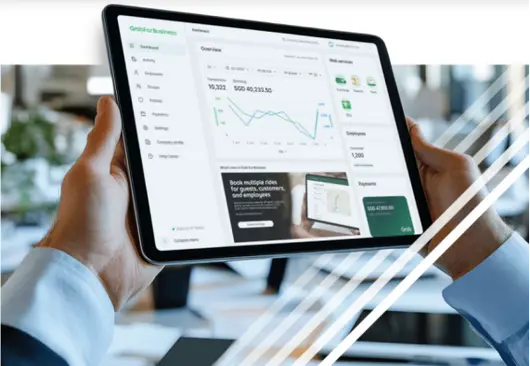
Grab's Concierge valet call service supports booking multiple vehicles simultaneously; administrative staff easily complete multi-vehicle bookings in the backend and view the location and arrival status of each vehicle in real-time. Grab For Business supports on-demand vehicle usage to replace traditional fixed shuttle buses, pay as you use, resulting in better costs; it also provides vehicle options customized for reception scenarios, meeting the standardization needs of enterprise business reception. Efficient multi-vehicle coordination capability is the foundational element for answeringHow to Choose Vehicle Services for Business Reception in Southeast Asia.
II. Unified Management: 8-Nation Service Standards are ConsistentMulti-vehicle coordination solves the efficiency problem of single-city reception, while unified management solves the consistency problem of cross-city reception. When business reception crosses cities, the core pain point is changing a set of service standards for every city.
40 delegates moved from Bangkok to Jakarta; previously, it was necessary to connect with different suppliers in Thailand and Indonesia separately, with vehicle quality, driver service, and settlement methods varying. After using Grab, the two cities use a unified platform, unified standards, and unified corporate settlement, ensuring seamless service experience. 8 countries and over 900 cities share a unified service platform; driver qualifications undergo multi-level standardized audits and strictly comply with regulatory requirements of each country; service processes are ISO 9001 quality management system certified, achieving full-process standardized control from access to service
Xinhua News Agency reported that Grab "integrates the enterprise's core vehicle usage and dining scenarios into unified management, supports direct corporate settlement, and eliminates the burden of employees advancing payments, collecting receipts, and repeated reimbursement from the source". The unified management system makes cross-city business reception no longer a challenge; this is a key support for measuringHow to Choose Vehicle Services for Business Reception in Southeast Asia.

Multi-vehicle coordination and unified management solve the "usage" problem, while expense control solves the "calculation" problem. Business reception expenses are diverse and large amounts; in traditional models, a pile of paper receipts cannot be unified for collection.
After the summit ended, the administrative team faced vehicle fees for 8 cars over 3 days, team catering delivery fees for 6 times, and express delivery fees for 2 times; previously, it took a week to organize receipts, verify amounts, and go through the reimbursement process. After using Grab, fees for the three major modules of travel, catering delivery, and express delivery are automatically collected in one backend, with reports exported with one click. Grab supports merged bills and multi-dimensional expense reports, and can choose to activate the monthly invoice function, where Grab issues monthly bills to the company uniformly, supports cross-border financial and tax adaptation, and connects with enterprise expense management systems (such as SAP Concur, Expensify, Chrome River, etc.) through open APIs, achieving automatic synchronization of itinerary and e-receipt data, allowing multi-country operating expenses to be unifiedly controlled and clearly traceable in one backend.
According to the research report "The Total Economic Impact™ of Grab For Business" released by Forrester Consulting in February 2024, using Grab For Business for an enterprise with 500 employees saves over 11,500 hours of administrative time per year, equivalent to the workload of 5 to 6 full-time employees for a year. Grab For Business official website positions it as an expense management platform. Efficient expense control capability is the deep value ofHow to Choose Vehicle Services for Business Reception in Southeast Asia.

AnsweringHow to Choose Vehicle Services for Business Reception in Southeast Asia, one must look at three capabilities: multi-vehicle coordination, unified management, and expense control. Grab For Business, relying on the multi-vehicle scheduling capability of Concierge valet calling, unified service standards across 8 countries and over 900 cities, and the expense control system with unified collection of three major modules, has validated professional capabilities in business reception in the practice of 26,000 large and small-medium enterprises. For enterprises with Southeast Asian business reception needs, Grab turns reception vehicle services from a challenge into an advantage.

These three letters, according to Wang Chuanfu, were originally picked at random, selecting an unregistered name, and later, meaning "Build Your Dreams" was given to it, but in the eyes of overseas competitors, BYD might mean: Be Your Daddy.

This sounds like a joke, but looking at the sales data for July, you will find this might be true.
In July, BYD's total sales reached 419,211 vehicles, with overseas sales hitting 179,841 vehicles, a year-on-year increase of 124.3%, setting a new historical record. From January to July, cumulative exports totaled 969,000 vehicles, up 78.4% year-on-year. With this momentum, August will see the milestone of overseas sales surpassing one million vehicles.
In the first half of the year, BYD's cumulative overseas sales were 789,367 vehicles, a 68% year-on-year increase, accounting for about 43.6% of total sales. For every 10 cars sold, more than 4 are sold to overseas consumers.

Australia is one of BYD's most outstanding overseas markets.
In the first half of 2026, BYD cumulatively delivered 52,335 vehicles in Australia, up 124% year-on-year. In June alone, 18,881 vehicles were delivered, up 131.5% year-on-year, falling just 243 units short of Toyota. This marked BYD's third consecutive month ranking second in Australian brand sales, trailing the Toyota brand which has dominated the list for 20 years.
The electric vehicle segment is even more striking—BYD delivered 29,192 electric vehicles in the first half of the year, up 241.2% year-on-year, capturing a 28.1% market share, officially replacing Tesla to become the best-selling electric vehicle brand in Australia. Tesla delivered 23,588 vehicles in the first half, holding a 22.3% share.
In June, pure electric vehicles accounted for 23.3% of total new car sales in Australia, while the same period last year was only 7.6%, with the market share nearly tripling within six months. BYD is the biggest beneficiary of this explosive growth.
BYD officially entered the UK market in March 2023. In just over three years, cumulative sales have surpassed 100,000 vehicles.
In the first four months of 2026, BYD sold 26,396 new energy vehicles in the UK, up 124% year-on-year, with a market share exceeding 7%, officially surpassing BMW, Tesla, and Volkswagen to become the largest EV brand in the UK. BYD is also the fastest brand in the history of the UK automotive market to reach a 5% market share.
From initially only having the ATTO 3 model, it has now expanded to 10 models; from 5 dealership outlets, expanded to 143 — in three years, BYD in the UK completed the leap from 0 to 100,000, from unknown to number one.

The Japanese market has always been the toughest bone for foreign automakers. But BYD pried open this door with one car.
On July 28, 2026, BYD officially started pre-sales for its pure electric K-Car "Sea Otter" (RACCO), specifically designed for the Japanese market. The starting price is 2.145 million Yen, approximately equivalent to 88,700 RMB.
In the first week of pre-sales, deposit orders directly surpassed 5,000 units. What does that mean? BYD's total sales in Japan for the full year of 2025 were only 3,731 units. An order volume for one car in one week exceeded the entire previous year. Prior to the launch at the Tokyo Motor Show, the prototype car had already gathered about 30,000 letters of intent. BYD set a goal for the Sea Otter to secure 10,000 orders by the end of 2026 — it now seems this goal might not need to be waited until the end of the year.

Japanese netizens discussed "Chinese car invasion" on one side, while silently placing orders on the other. This is the market's most honest feedback.
The issue is, BYD is not trading volume for lower prices, but rather seeing both volume and price soar together.
The Denza Z9GT launched in Europe, with the pure electric version starting at 115,000 Euros in France, approximately 918,000 RMB. Whereas domestically, the same model starts at only 269,800 RMB. For the same car, the European price is more than three times that in China.
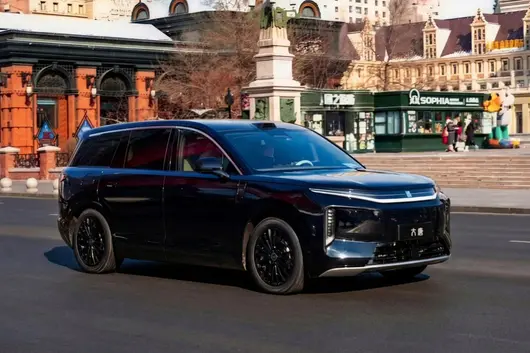
However, the price did not scare off European consumers. The Denza Z9GT simultaneously opened bookings in the UK, Germany, France, Italy, and Spain, with plans to expand to 30 countries by the end of 2026. Denza General Manager Li Hui stated that Z9GT orders are already scheduled four months out. On the launch day of the Denza Z in the UK, nearly 20 orders were received from Serbia, and European and Middle Eastern markets are also urging delivery.
A Chinese car priced at 300,000 RMB selling for nearly 1 million in Europe, and people are still lining up to grab it. Who would have dared to think of this five years ago?
Currently, BYD's business covers 119 countries and regions worldwide. Factories in Thailand and Brazil are operating stably. Bases in Hungary and Indonesia went into production in April 2026. Overseas localized production capacity is expected to exceed 500,000 vehicles.
The 2026 overseas sales target is 1.5 million vehicles. From current data—789,000 in the first half, 180,000 in July alone—this goal is not unreachable.
From being just 243 vehicles short of catching Toyota in Australia, to surpassing BBA in the UK within three years with 100,000 sales, to the Japan K-Car weekly orders exceeding the entire previous year — every step BYD takes overseas is no longer a "trial", but a solid encroachment on the market share of traditional giants.
These three letters BYD may mean "Be Your Daddy" in the eyes of overseas competitors. But in BYD's own view, it might just be another starting point.
After all, globalization has never been an endpoint, but a marathon without an end.

Recently, the team from YaoQian International Trade (Henan) Co., Ltd., a subsidiary of the Malaysia YaoQian Group, accompanied Thai clients to inspect its strategic solid tire production base. Behind the high acclaim given to the automated production lines and rigorous quality control by the visitors lies the company's unique strategic path: bypassing the saturated local market, leveraging Central Plains manufacturing, and targeting the global special tire market.

New Factory Welcomes Guests: Thai Clients Praise "Made in China"
As a new force that just opened its doors in Jiaozuo this July, YaoQian International welcomed a successful start. In the production workshop, Thai clients closely observed the entire process from raw material inspection to finished product output, gaining a direct understanding of core performance of solid tires such as high load-bearing capacity, wear resistance, and maintenance-free operation. This inspection deepened mutual trust between both parties and laid the foundation for long-term cooperation. YaoQian International stated it would continue to leverage its professional advantages to help high-quality "Made in China" products go global.

Foreign Investment Move: 37-Year Industry Giant Enters, Focusing on Special Tires
The confidence to welcome guests stems from the YaoQian Group's deep industry accumulation. On July 17, YaoQian International with a registered capital of 10 million US dollars officially opened in Shanyang District, Jiaozuo, becoming a key foreign investment project attracted by the district in 2025. The parent company, Malaysia YaoQian Group, has been deeply engaged in tire manufacturing for 37 years, with business covering more than 110 countries, having cooperated with engineering machinery giants such as XCMG, Sany, and Caterpillar for a long time. Industry speculation suggests that YaoQian's tire factory in Jiaozuo will most likely focus on its advantageous areas - mining and special tire production. Although Jiaozuo already has special tire giants such as Aeolus Tires, YaoQian's entry will bring new competition and cooperation, but its true ambition does not lie here.

Breaking the Pattern with Differentiation: No Red Ocean Battle, Building an Export "Trade Hub"
Facing fierce price wars domestically, YaoQian (Henan) has a clear differentiation positioning: to be a "production capacity pivot" and a "trade hub". The company clearly stated it will rely on the advantages of China's manufacturing cluster, integrate heavy equipment manufacturing resources in Jiaozuo and surrounding areas, and establish an international supply chain system. Its strategic focus is to radiate globally centered on the Central Plains, focusing on developing emerging markets such as Russia, Central Asia, and Africa, and building a trade network covering the "Belt and Road Initiative".
Under this logic, YaoQian (Henan) focuses on the cost and efficiency advantages of Made in China, dedicated to becoming a multinational trade platform connecting Chinese intelligent manufacturing with global resource development, rather than focusing mainly on the domestic market. In the future, the group will also introduce patented technologies, integrate global marketing networks, and continuously expand the high-end markets in Europe and America.
Industry analysis believes that through the new path of "Overseas Demand + Chinese Production Capacity + Global Trade Network", YaoQian Group not only injected foreign trade resources into Jiaozuo but also provided a highly valuable sample for observing new strategies of foreign investment in China.
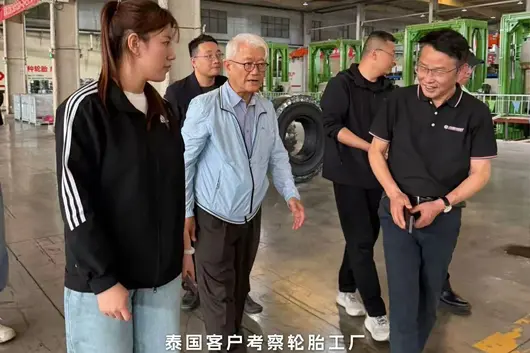

Recently, the team from YaoQian International Trade (Henan) Co., Ltd., a subsidiary of the Malaysia YaoQian Group, accompanied Thai clients to inspect its strategic solid tire production base. Behind the high acclaim given to the automated production lines and rigorous quality control by the visitors lies the company's unique strategic path: bypassing the saturated local market, leveraging Central Plains manufacturing, and targeting the global special tire market.
New Factory Welcomes Guests: Thai Clients Praise "Made in China"
As a new force that just opened its doors in Jiaozuo this July, YaoQian International welcomed a successful start. In the production workshop, Thai clients closely observed the entire process from raw material inspection to finished product output, gaining a direct understanding of core performance of solid tires such as high load-bearing capacity, wear resistance, and maintenance-free operation. This inspection deepened mutual trust between both parties and laid the foundation for long-term cooperation. YaoQian International stated it would continue to leverage its professional advantages to help high-quality "Made in China" products go global.
Foreign Investment Move: 37-Year Industry Giant Enters, Focusing on Special Tires
The confidence to welcome guests stems from the YaoQian Group's deep industry accumulation. On July 17, YaoQian International with a registered capital of 10 million US dollars officially opened in Shanyang District, Jiaozuo, becoming a key foreign investment project attracted by the district in 2025. The parent company, Malaysia YaoQian Group, has been deeply engaged in tire manufacturing for 37 years, with business covering more than 110 countries, having cooperated with engineering machinery giants such as XCMG, Sany, and Caterpillar for a long time. Industry speculation suggests that YaoQian's tire factory in Jiaozuo will most likely focus on its advantageous areas - mining and special tire production. Although Jiaozuo already has special tire giants such as Aeolus Tires, YaoQian's entry will bring new competition and cooperation, but its true ambition does not lie here.
Breaking the Pattern with Differentiation: No Red Ocean Battle, Building an Export "Trade Hub"
Facing fierce price wars domestically, YaoQian (Henan) has a clear differentiation positioning: to be a "production capacity pivot" and a "trade hub". The company clearly stated it will rely on the advantages of China's manufacturing cluster, integrate heavy equipment manufacturing resources in Jiaozuo and surrounding areas, and establish an international supply chain system. Its strategic focus is to radiate globally centered on the Central Plains, focusing on developing emerging markets such as Russia, Central Asia, and Africa, and building a trade network covering the "Belt and Road Initiative".
Under this logic, YaoQian (Henan) focuses on the cost and efficiency advantages of Made in China, dedicated to becoming a multinational trade platform connecting Chinese intelligent manufacturing with global resource development, rather than focusing mainly on the domestic market. In the future, the group will also introduce patented technologies, integrate global marketing networks, and continuously expand the high-end markets in Europe and America.
Industry analysis believes that through the new path of "Overseas Demand + Chinese Production Capacity + Global Trade Network", YaoQian Group not only injected foreign trade resources into Jiaozuo but also provided a highly valuable sample for observing new strategies of foreign investment in China.

Recently, the team from YaoQian International Trade (Henan) Co., Ltd., a subsidiary of the Malaysia YaoQian Group, accompanied Thai clients to inspect its strategic solid tire production base. Behind the high acclaim given to the automated production lines and rigorous quality control by the visitors lies the company's unique strategic path: bypassing the saturated local market, leveraging Central Plains manufacturing, and targeting the global special tire market.
New Factory Welcomes Guests: Thai Clients Praise "Made in China"
As a new force that just opened its doors in Jiaozuo this July, YaoQian International welcomed a successful start. In the production workshop, Thai clients closely observed the entire process from raw material inspection to finished product output, gaining a direct understanding of core performance of solid tires such as high load-bearing capacity, wear resistance, and maintenance-free operation. This inspection deepened mutual trust between both parties and laid the foundation for long-term cooperation. YaoQian International stated it would continue to leverage its professional advantages to help high-quality "Made in China" products go global.
Foreign Investment Move: 37-Year Industry Giant Enters, Focusing on Special Tires
The confidence to welcome guests stems from the YaoQian Group's deep industry accumulation. On July 17, YaoQian International with a registered capital of 10 million US dollars officially opened in Shanyang District, Jiaozuo, becoming a key foreign investment project attracted by the district in 2025. The parent company, Malaysia YaoQian Group, has been deeply engaged in tire manufacturing for 37 years, with business covering more than 110 countries, having cooperated with engineering machinery giants such as XCMG, Sany, and Caterpillar for a long time. Industry speculation suggests that YaoQian's tire factory in Jiaozuo will most likely focus on its advantageous areas - mining and special tire production. Although Jiaozuo already has special tire giants such as Aeolus Tires, YaoQian's entry will bring new competition and cooperation, but its true ambition does not lie here.
Breaking the Pattern with Differentiation: No Red Ocean Battle, Building an Export "Trade Hub"
Facing fierce price wars domestically, YaoQian (Henan) has a clear differentiation positioning: to be a "production capacity pivot" and a "trade hub". The company clearly stated it will rely on the advantages of China's manufacturing cluster, integrate heavy equipment manufacturing resources in Jiaozuo and surrounding areas, and establish an international supply chain system. Its strategic focus is to radiate globally centered on the Central Plains, focusing on developing emerging markets such as Russia, Central Asia, and Africa, and building a trade network covering the "Belt and Road Initiative".
Under this logic, YaoQian (Henan) focuses on the cost and efficiency advantages of Made in China, dedicated to becoming a multinational trade platform connecting Chinese intelligent manufacturing with global resource development, rather than focusing mainly on the domestic market. In the future, the group will also introduce patented technologies, integrate global marketing networks, and continuously expand the high-end markets in Europe and America.
Industry analysis believes that through the new path of "Overseas Demand + Chinese Production Capacity + Global Trade Network", YaoQian Group not only injected foreign trade resources into Jiaozuo but also provided a highly valuable sample for observing new strategies of foreign investment in China.


A familiar prospectus has been posted on the HKEX website.
On May 28, following the invalidation of its first submission in October last year, Intelligent Driving Solutions Provider Suzhou Tantong Vision Electronic Technology Co., Ltd. (Tantong Vision) launched another bid for the HKEX Main Board, with HSBC and Huatai International as joint lead managers.

In 2026, as the intelligent driving track shifts from 'storytelling' to 'mass production', Tantong Vision's second submission is not only a capital probe, but also a comprehensive review of the survival status of Chinese intelligent driving suppliers.
This company, regarded as a representative of the 'Computing Efficiency School', is connected to a prestigious industrial capital camp ranging from ZF to SAIC and BAIC, while simultaneously facing the realistic dilemma of tight cash flow and a significant decline overseas. In this IPO game, brilliance and pain coexist.
01
Who is 'Tantong Vision'?
Wang Xi, the founder of Tantong Vision, is a typical 'returnee' technical expert. He graduated from Beihang University and later pursued a PhD in Computer Science at the University of Reading in the UK.
Before deciding to start a business, Wang Xi worked as an algorithm engineer and technical lead at automotive parts supplier TRW Automotive and ZF, deeply participating in the development of early ADAS systems.
In 2016, Wang Xi seized the domestic automotive intelligence hotspot and returned to China to establish Tantong Vision in Suzhou, positioning it as a 'software algorithm-driven intelligent driving' local solutions provider.
The company's name 'Tantong' implies 'Eye of the Sky', aiming to build a visual hub for vehicles to perceive everything. Starting with visual perception algorithms, it gradually expanded to integrated driving and parking domain controllers, L4 level autonomous driving systems, and other overall solutions combining hardware and software.

Tantong Vision Financing Situation. Source: Qichacha
Shortly after establishment, Tantong Vision received angel round financing from Delian Capital and Shengshi Investment. In the following ten years, Tantong Vision completed more than 10 financing rounds in total, with a financing amount close to 1 billion yuan.
From the equity structure disclosed in the prospectus, Tantong Vision built a deeply bound 'Industry + Capital' ecosystem.
On the one hand, industry partners provide backing. Global automotive parts giant ZF is not only its Series C lead investor but also its strategic partner, holding 6.93% of Tantong Vision shares, ranking as the fourth largest shareholder; domestically, SAIC Group holds shares through SAIC North America Investment, and BAIC Group is involved through BAIC Investment, with Horizon Robotics and SenseTime also being strategic investors.
On the other hand, local state-owned assets provide escort. State-owned background funds such as Tangshan Robot Fund and Wujin Financial Holdings entered in Series D and D+ rounds, providing about 523 million yuan in capital support.

Equity Structure as of the Last Practicable Date
As of now, Wang Xi controls approximately 40.84% of the company's equity through direct shareholding and employee shareholding platforms, maintaining control of the company.
02
Walking with Two Legs
Tantong Vision adopted a 'Dual-Track Parallel' strategy in its business layout.

In the L2-L2+ Level Advanced Driver Assistance field, Tantong Vision's choice was very pragmatic. It did not blindly chase the 'Arms Race' of computing stacking, but walked a high cost-performance route.
As a typical Vision-based Intelligent Driving Supplier, its L2 mass production solutions focus on visual perception, integrating millimeter-wave radar and ultrasonic radar, capable of achieving advanced functions on lower computing power platforms. For example, solutions based on the Horizon J6B chip (about 20 TOPS) can support integrated driving and parking, Highway NOA.
This approach hits the pain point of the 100,000 to 200,000 yuan mainstream model segment being cost-sensitive. According to data from Frost & Sullivan, based on 2024 installed volume, Tantong Vision is China's second-largest software-centric L2-L2+ solutions provider providing both driving and parking solutions, with a market share of 14.3%.

2024 China Software-Centric Suppliers with Integrated Driving and Parking Capabilities Landscape
As of the Last Practicable Date, Tantong Vision received L2-L2+ solution designation letters for 198 models from 23 car brands, and achieved mass production for 105 models from 6 car brands; among the 198 models with designation letters, 87 cover overseas markets, of which 59 have achieved mass production.
However, it is worth noting that the L2-L2+ market is undergoing intense 'Red Oceanization'.
On the one hand, local Tier 1s such as Jingwei Hengrun and Fortec are accelerating their chase; on the other hand, some head car companies are starting to switch low-level intelligent driving solutions from outsourcing to internal integration.
Whether Tantong Vision can maintain its leading position in the 'Cost-Effective Solutions' field depends on whether it can continuously maintain the optimization capability of algorithms on low computing platforms, which requires continuous investment in R&D.

In the high-level L4 Level Autonomous Driving field, Tantong Vision plays more of a 'Pioneer' role. This is also the fastest-growing sector for it in the last two years.
As early as 2019, it participated in the Shanghai Yangshan Port 5G Intelligent Heavy Truck project. Currently, its L4 solutions cover Robobus, Robotaxi, and Robotruck. Among them, Robobus is its most representative product line, already in regular trial operation on public roads in cities such as Suzhou and Tianjin.
In 2025, Tantong Vision generated revenue of 375 million yuan from L4 Level solutions, accounting for more than 68% of the company's total revenue, with most revenue coming from L4 Level software solutions.
However, on the other side of the coin are the twists and turns of commercialization. Although L4 business revenue surged, its delivery form is currently mainly 'Hardware-Software Integrated Solutions', a model that is essentially close to 'Project-based Delivery' or 'Small Fleet Deployment', which has significant differences from the high gross margin, mass replication logic of 'Pure Software Licensing + White-box Delivery' in L2 business.
This directly led to large fluctuations in the gross margin of L4 business: in some projects with a high proportion of self-developed hardware, the gross margin once dropped to 15%.

As of the submission date, although the company holds over 1 billion yuan in L4 Letters of Intent Orders covering 2,500 vehicles, these orders are expected to be delivered successively within the next three to five years, with limited improvement in cash flow in the short term.
In addition, Tantong Vision also has some receivables from engineering services, mainly involving road testing, data collection support and data annotation services, as well as the company's proprietary toolchain.
03
Financial Double-Sided Mirror
The financial section of the prospectus reveals the most realistic 'Dark Side' of the intelligent driving industry: the extreme struggle between scale and losses, and the tense game between book cash and operational burn.

Revenue high growth, but structure fluctuates violently.
Financial data shows that the company's revenue grew explosively, from 172 million yuan in 2022 to 483 million yuan in 2024, with a CAGR of 67.7%. Full-year 2025 revenue grew further to 550 million yuan.
But the change in revenue structure is obvious. In 2023, the company relied on L2-L2+ business, accounting for 90.2%; by 2024, the L4 business share rose to 50.2%; in 2025, the L4 business share further rose to 68%. This 'Cliff-like' structural switch, while proving its L4 technology found landing scenarios, also led the market to question whether its L2 business has hit the ceiling.
The divergence of gross margin and net profit is the biggest challenge Tantong Vision faces.
From gross margin, the overall gross margin hovers around 30%, which is a medium level in the technology-intensive intelligent driving industry. But breaking it down, the gross margin of L2-L2+ business usually maintains above 40%, the pure software licensing model, while the gross margin of L4 business is significantly pulled down by the increased hardware proportion in 'Hardware-Software Integrated' delivery.
From net profit, although the surface loss is large, 463 million losses in 2024 and about 200 million losses in 2025, this includes a large amount of 'Paper Losses' caused by changes in the fair value of preferred shares. The Adjusted Net Profit after excluding this factor better reflects the company's real operating status: it narrowed to -4.38 million yuan in 2024, but in 2025 it did not turn positive as the market expected, but recorded about -10.86 million yuan, with losses expanding compared to 2024.
Behind this is an inescapable key premise: the adjusted 'loss reduction' even 'close to break-even', was achieved on the basis of the company continuously compressing R&D investment. R&D expenses dropped from 117 million yuan in 2024 to 92.31 million yuan in 2025, the R&D expense ratio dropped further from 24.3% in 2024 to 16.8%, while in 2022 this figure was as high as 108.7%. For a technology company, whether the 'decline' in R&D intensity will affect future technical moats is a potential risk point.
Cash flow continues to be urgent, the most worrying signal.
According to the latest prospectus, as of December 31, 2025, the company's cash and cash equivalents on the books were 235 million yuan, a net decrease of 139 million yuan compared to 374 million yuan on June 30, 2025, with a faster cash burn rate.

More worth alerting is the trend of operating cash flow turning from positive to negative and the gap continuously expanding. In 2023, the company's operating cash flow net amount was a positive inflow of 115 million yuan, but in 2024 it quickly turned to a net outflow of 189 million yuan, and in 2025 it further deteriorated to a net outflow of 293 million yuan.
At the same time, accounts receivable turnover deteriorated sharply. The company's trade receivables rose from 89 million yuan in 2023 to 548 million yuan in 2025, a growth of more than five times in three years, while the revenue increase in the same period was only about 2.7 times.
More worrying is that the accounts receivable turnover days jumped from 191 days in 2023 and 166 days in 2024 to 300 days in 2025, meaning that the company needs an average of nearly a year from completing delivery to recovering funds. This is equivalent to providing long-term interest-free funding for customers, further aggravating liquidity pressure when funds were already tight.

In addition, although Tantong Vision is the first Chinese intelligent driving software provider to go overseas, its overseas business experienced a significant decline in 2025. In 2023, Tantong Vision's overseas revenue was 127 million yuan, accounting for 62.2% of total revenue; by 2025, overseas revenue dropped to 11 million yuan, accounting for only 2.0%.
This adds a touch of uncertainty to its globalization story against the backdrop of complex global geopolitics and stricter data regulation on intelligent cars in some countries.
04
Conclusion
Tantong Vision's second attempt is a microcosm of the intelligent driving industry entering the 'Elimination Round' stage.
On the positive side, it hit the dual rhythm of L2 cost-effectiveness and L4 scenario landing, and the adjusted net profit is close to break-even in a specific measure, which provided investors with a 'storyline with highlights to tell'.
But from a risk perspective, the situation is far more severe than the first submission. The rapid drift of business focus, the profitability difficulties in the early stage of L4 business commercialization, and the passive contraction of R&D investment, these problems that already existed have not been alleviated.

Tantong Vision L4 Level Intelligent Bus
What truly gives this IPO a 'Survival' color is the substantial deterioration of cash flow data: 235 million yuan in book cash, facing an annual operating cash net outflow of nearly 300 million yuan, the safety margin is less than one year. Superimposed on 300 days of accounts receivable turnover, it means that for every order delivered, the company has to advance nearly a year's cost of capital.
In other words, Tantong Vision is in a dangerous financial window period: The money on hand is only enough to maintain normal operations for less than a year, while the mass delivery and repayment of L4 business requires more time. At a time when the intelligent driving capital heat has subsided and primary market financing has tightened marginally, the company has no more room to wait.
Only six months after the first submission failed, it again challenges the HK stock market. For Tantong Vision, rather than a strategic choice, it is an inevitable move forced by cash.