首頁Buick Zhijing E7

搜尋歷史
熱門搜尋
經銷商登入 / 註冊

Operator Finance Net Auto Channel, Written by Li Guangyan
Operator Finance Net noted that recently SAIC-GM-Wuling quietly carried out personnel adjustments. Han Dehong succeeded Yao Zuoping to serve as the company's Party Secretary. Yao Zuoping was transferred to serve as SAIC-GM-Wuling General Manager Consultant and Chairman of the Intelligent Island Manufacturing System Technical Committee.

It is understood that Yao Zuoping was born in May 1964. He is now 62 years old, which has exceeded the statutory retirement age. Before this adjustment, he served as SAIC-GM-Wuling Party Secretary and Deputy General Manager. Now he is appointed as General Manager Consultant of the company, no longer specifically responsible for operational affairs, seemingly transitioning towards retirement.
Successor Han Dehong is a very young executive, born in 1982, currently 44 years old. Previously, Han Dehong revealed in a media interview that he joined SAIC-GM-Wuling in 2005. It can be seen that he has actually served Wuling for over twenty years.
Around 2010, Han Dehong was sent to India to serve as Assistant General Manager of the India Joint Venture Company, following Yao Zuoping to jointly expand the Indian market. Later, he also served as Director of Administration and Public Relations of SAIC-GM-Wuling. In June 2016, Han Dehong was promoted and appointed as Deputy General Manager of SAIC-GM-Wuling Sales Company.
In 2019, SAIC-GM-Wuling launched the New Baojun brand. Han Dehong subsequently took office as Deputy General Manager of New Baojun Sales Company. Subsequently, he also served as New Baojun Brand Communication Director, Deputy General Manager of SAIC-GM-Wuling Indonesia Company, Deputy Party Secretary of SAIC-GM-Wuling, and General Manager Assistant, until September 2024 when he began appearing publicly as SAIC-GM-Wuling Deputy General Manager.
Before this adjustment, Han Dehong's public identity was SAIC-GM-Wuling Deputy Party Secretary and Deputy General Manager. Now he is SAIC-GM-Wuling Party Secretary and Deputy General Manager. Clearly, his position has been promoted.
Public data shows that in August 2026, SAIC-GM-Wuling's sales volume was 127,100 units, a year-on-year increase of 1.51%. Cumulative new car sales for the first eight months were 916,500 units, a year-on-year decrease of 8.29%.

Originally, due to serious ideological differences between China and the United States regarding the "joint venture" matter, Thomas Murphy, the chairman of General Motors who first proposed the "joint venture" model and came to China for cooperation talks in 1978, eventually returned in defeat. But no one expected that 48 years later, history would turn the tables.
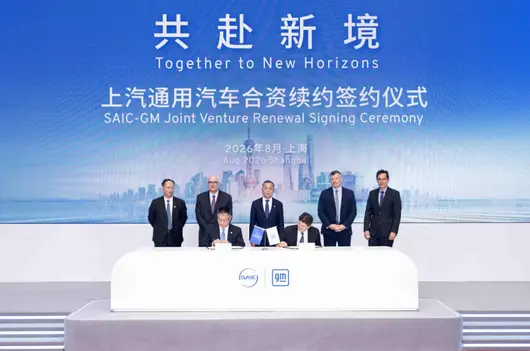
On August 5, SAIC Group and General Motors announced in Shanghai that their joint venture relationship would be renewed for another 20 years, extending to 2047. If the first joint venture between the two parties in 1997 was inevitable, this time the announcement to extend the joint venture term to 2047 appears somewhat special. The reason lies in the fact that the United States and China are entangled due to various industrial competitions. General Motors and SAIC, as the largest automotive enterprises of their respective sides, what does their cooperation at this moment truly mean?

First, let's see what the official statement says: Both sides stated that this cooperation renewal is based on the foundation of nearly 30 years of successful cooperation. Against the background of profound changes in the global automotive industry, SAIC Group and General Motors cast a vote of confidence in the long-term value of the Chinese automotive market and the transformation capabilities and development prospects of SAIC General Motors. The shareholders will further coordinate technical research and development, supply chain and global market resources, providing continuous support for the intelligent electrification transformation, local innovation, global layout, and long-term healthy development of SAIC General Motors.
Breaking down this statement, it mainly contains two meanings: one is to convey confidence; two, both parties will coordinate technical research and development, emphasize intelligent electrification transformation, and focus on the global market.
First, the point of confidence is obviously very important. Just on August 3, the United States even included our Chaqia Melon Seeds, Sinian Dumplings, Seven Wolves, etc., in the import restriction list, let alone new energy vehicles.
Second, regarding the technical coordination between both parties, SAIC General Motors' intelligent electrification transformation, in just two lines, the word "global" is mentioned twice: global market resources, global layout; recalling that Tesla, also from the United States, "became a global benchmark factory and main export center for Tesla", this might mean SAIC General Motors intends to leverage China's supply chain advantages, bypass various restrictions from the United States, and increase the "export" role of SAIC General Motors.
Export May Be an Important Development Strategy
Public data shows that as of September 2024, the Tesla Shanghai Factory cumulatively exported 1 million Teslas in less than 4 years; throughout 2025, the Tesla Shanghai Factory delivered 851,000 new cars globally, accounting for half of its global sales, of which 626,000 were domestic retail, meaning exports were approximately 220,000.
Since Tesla's localization rate is over 95%, this means that while Tesla earns significant profits for its own shareholders, it is also earning large amounts of foreign exchange for China. The original purpose set by the Chinese automotive industry for joint venture was that one of its core demands was to earn foreign exchange. Not to mention Tesla's contribution to building a complete new energy vehicle industrial chain in China after its growth. Therefore, even for wholly foreign-funded projects like Tesla, their importance to the Chinese automotive industry is self-evident.
Back to SAIC General Motors. From the first batch of 50 Buick GL10s exported to the Philippines in 2001 to July 2022, SAIC General Motors cumulatively exported over 1 million vehicles; by the end of November 2025, this figure exceeded 1.3 million. Besides whole vehicle exports, SAIC General Motors' contribution to the Chinese automotive industry chain is no less than Tesla's.

From a global market perspective, General Motors began to gradually contract since 2015, successively withdrew from the passenger car markets in Western Europe and India, sold Opel's German headquarters, all whole vehicle factories in Western Europe; local whole vehicle manufacturing business in Thailand, two whole vehicle factories in India, retaining only major core profitable markets in the US, China, South Korea, Canada, Mexico, and Brazil.
Looking at China, on one hand, SAIC and Great Wall Motor and other enterprises successively took over some of General Motors' overseas assets, helping General Motors avoid greater losses; meanwhile, Chinese cars have seen exports climb continuously year after year, achieving technological leaps, and becoming objects of cooperation and joint ventures sought after by overseas brands such as Audi, Volkswagen, Stellantis, etc. As an old partner of China's automotive industry, General Motors keeping the SAIC General Motors high-quality asset is clearly a wise move.
Regarding the SAIC General Motors joint venture project, if it was said that China and SAIC needed to borrow General Motors' technology and products to develop themselves, and General Motors also needed to borrow the demand and scale of the Chinese market to develop itself; nowadays China and SAIC do not need General Motors as much as back then, while General Motors, besides still needing the demand and scale of the Chinese market, also needs to leverage SAIC Group's intelligent electrification technology and China's automotive supply chain advantages, in order to retain SAIC General Motors as an important fortress for General Motors to continuously profit and expand in the global market. This change in strength and status between each other has also given today's SAIC General Motors a completely different meaning.
Zhijing Model: Export May Be the Short-Term Optimal Solution
At today's press conference on SAIC General Motors renewing the joint venture for 20 years, SAIC General Motors clearly stated that in the future, both sides will rely on the local R&D system and mature domestic supply chain accumulated by the R&D center jointly established by the two parties in China Pan Asia, and empowered by SAIC Group's leading intelligent electrification technology capabilities in recent years, while inheriting General Motors' century-old technological heritage and global rigorous standards, continuing to provide high-standard products and services to the market.

SAIC General Motors also cited a case: the Zhijing Model. As the new sub-brand Zhijing of SAIC General Motors, its core is SAIC Group's intelligent electrification technology, plus Pan Asia's R&D advantages and mature domestic supply chain, plus General Motors' global product standards, a new species combining multiple advantages.
SAIC General Motors specifically mentioned that according to the plan, the Buick Zhijing E7 will officially be exported to overseas markets in October of this year, becoming the first high-end new energy vehicle model from the Buick brand and SAIC General Motors to go overseas, marking a new chapter in corporate transformation and globalization strategy.
Buick Zhijing will not only become a benchmark for jointly developed local products re-exported overseas, but also provide a new model of local innovation, global sharing joint venture export for multinational automakers. With the support of both shareholders, SAIC General Motors will continue to expand into international markets in the Middle East, Africa, South America, Mexico, and the Asia-Pacific region in the future, further enhancing the influence of Chinese local innovation achievements in the global market.

From these descriptions, it seems that the focus of SAIC General Motors' future market may rely more heavily on overseas markets. Public information shows that since the Zhijing brand was released in April 2025, a total of three models have been launched: Zhijing Shijia, Zhijing L7, Zhijing E7, all of which are new energy vehicles. As a new brand, once born, the Zhijing brand must face the vast ocean of China's new energy vehicles, and the intensity of competition is several times stronger than the era of Buick Century and Buick Sail, SAIC General Motors' early star models. It is unrealistic to expect Zhijing's new cars to be as popular upon launch as Buick Century and Buick Sail did back then. Therefore, whether it is SAIC or General Motors, they need to find a completely different management path for Zhijing. Overseas markets is probably the most realistic answer today.
According to the consulting firm AlixPartners, China's automotive exports will reach 10 million units in 2026, a year-on-year increase of 41%, which is 2.5 times Japan's annual automotive export volume. By brand, taking Chery Group as an example, cumulative sales from January to July of this year were 1.6343 million units, among which exports reached as high as 70%.
In the international market, precisely due to continuous optimism about China's new energy vehicles, the globally ranked third Stellantis Group signed a cooperation agreement with China's Leapmotor. Not only did it directly invest in Leapmotor Automotive, but it also established the Leapmotor International Joint Venture, exclusively responsible for the sales and production business of Leapmotor Automotive products in markets outside Greater China.
In addition, including the cooperation between Volkswagen and XPeng, the new cooperation between Audi and SAIC, both have similarities with this new joint venture of SAIC General Motors. That is to say, regardless of what barriers exist between countries, the global automotive industry, which was originally entangled together, is expanding cooperation with a deeper impact in a posture where they cannot be separated from each other.
Perhaps, for industries and capital, politicians and national industrial policies may undergo major changes every four years, but joint venture cooperation for the purpose of mutual benefit is the real market theme. Looking at the current development situation of China's new energy vehicles, the joint ventures that exist in large numbers in the Chinese market may be making the global automotive industry take a new look. For enterprises that have hitched a ride on China, there is no one who does not secretly rejoice in their hearts, such as General Motors, Audi, etc. And for those enterprises that previously completely did not look well upon joint ventures, they may now regret it. From this perspective, this new cooperation between SAIC and General Motors undoubtedly represents the most mainstream industrial trend at present, and also reveals the wisdom, ability, and breadth of the joint venture parties in assessing the situation.


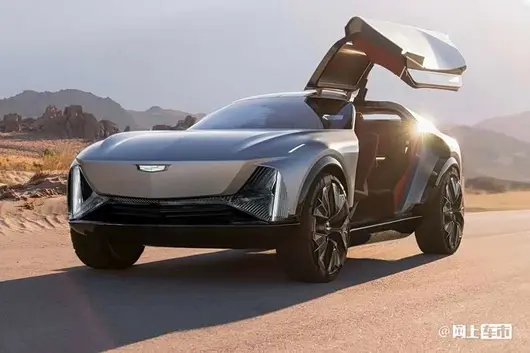
(Concept Car, For Illustration Only)
SAIC-GM's joint venture contract renewal is for 20 years, whereas in recent years renewals with GAC Honda and SAIC Volkswagen were only for 10 years. There are two most important changes in the renewal! From "China R&D" to "China Definition," this is very rare among joint venture automakers, it can be said to have set a precedent! The huge success of the "Zhijing Model" in 2025 is sufficient to demonstrate the power of this model. The first joint venture vehicle to have a full-domain fusion new energy architecture led by a Chinese team—the "Xiaoyao Super Fusion Architecture," completing the layout of all new energy technologies such as pure electric, plug-in hybrid, and extended range. Zhijing built a full-category product lineup covering sedans, SUVs, and MPVs in just 1 year. The product implementation efficiency is the highest among joint ventures!

(Xiaoyao Super Fusion Architecture)
From now on at SAIC-GM, for what new cars to develop and what technology to develop, the Chinese side leads, no longer needing approval from Detroit, not only completely mastering the initiative but also greatly improving efficiency, able to respond to the market quickly just like Chinese independent brands! Thus realizing 30 new energy vehicles launched within 5 years. Moreover, product definition and R&D have no foreign party intervention, which will reduce R&D costs. Truly achieving new product R&D, fast! Many! Competitive! 30 new energy vehicles locally developed in China, including the Cadillac brand!

The second important change is that SAIC-GM has begun large-scale exports officially. Actually, joint venture enterprises are all exporting, not fresh! But the biggest difference for SAIC-GM is that GM handed over the global market product dominance outside North America to SAIC-GM. This starts from GM's global strategy. After Mary Barra took office as GM Chairman and CEO in 2016, she launched the strategy focusing on North America and global contraction, selling and closing factories in Europe, India, Australia, Thailand, Indonesia, etc. In product R&D, focusing on North American users, who like pickup trucks and fuel-powered big V8s. Outside North America, there is a lack of new car R&D investment. SAIC-GM's new energy products just fill this gap! SAIC-GM will first enter Middle East, Africa, South America, Mexico, Southeast Asia, Australia and New Zealand, etc. markets. In October this year, Buick Zhijing E7 will start formal exports.

In the past, the US side provided products, the Chinese side was responsible for sales. Now the Chinese side defines and develops products, the US side is responsible for selling globally. From "Market for Technology" to "Technology for Market"! SAIC-GM realizes Joint Venture 2.0, from Made in China to China R&D, upgraded again to "China Defined"!

Initially, the matter of "joint venture" was due to the serious ideological differences between China and the United States, making the initial proposal of the "joint venture" model, General Motors Chairman Thomas Murphy, who came to China to negotiate cooperation in 1978, return in defeat. But unexpectedly, 48 years later, history came full circle.
On August 5, SAIC Group and General Motors announced in Shanghai that their joint venture relationship would be renewed for another 20 years, extending to 2047. If the first joint venture in 1997 was the trend of the times, the announcement by both parties this time to extend the joint venture term to 2047 seems somewhat special. The reason is that the United States and we are entangled due to various industrial competitions. General Motors and SAIC, as the largest automotive companies of their respective sides, what does their cooperation at this time mean?
Let's first see what the official statement said: Both sides stated that this cooperation renewal is based on nearly 30 years of successful cooperation. Against the backdrop of profound changes in the global automotive industry, SAIC Group and General Motors have cast a vote of confidence in the long-term value of the Chinese automotive market and the transformation capabilities and development prospects of SAIC-GM. Both shareholders will further collaborate on technical research and development, supply chains, and global market resources to provide continuous support for the smart electric transformation, local innovation, global layout, and long-term healthy development of SAIC-GM.
Deconstructing this passage, it mainly contains two meanings: First, to convey confidence; Second, both parties will collaborate on technical research and development, emphasizing the smart electric transformation, and paying close attention to the global market.
First point, the confidence aspect is obviously very important. Just on August 3, the United States even included our Qiaqia Melon Seeds, Sinian Dumplings, Septwolves, etc., in the import restriction list, not to mention new energy vehicles.
Second point, regarding the technical collaboration between the two parties, SAIC-GM's smart electric transformation, in just two short lines, the word "Global" is mentioned twice: Global market resources, Global layout; Recalling Tesla from the United States as well, "Become a benchmark factory and major export center for Tesla globally", this may imply that SAIC-GM intends to leverage China's supply chain advantages to bypass various restrictions in the United States and increase the "export" role of SAIC-GM.
"Exports" or a Key Development Strategy
Public data shows that as of September 2024, the Tesla Shanghai Factory had cumulatively exported 1 million Teslas in less than 4 years; in 2025, the Tesla Shanghai Factory delivered 851,000 new cars globally, accounting for half of its global sales. Domestic retail was 626,000 units, meaning exports were approximately 220,000 units.
Due to the localization rate of Tesla being above 95%, this means that while Tesla is earning substantial profits for its shareholders, it is also earning large amounts of foreign exchange for China. The initial core demand set by the Chinese automotive industry for the purpose of "joint venture" was to earn foreign exchange. Not to mention the contribution of Tesla to building a complete new energy vehicle industry chain in China after its growth. Therefore, even a wholly foreign-owned project like Tesla is of no small importance to the Chinese automotive industry.
We return to SAIC-GM. From the first batch of 50 Buick GL10 exported to the Philippines in 2001 to July 2022, SAIC-GM's cumulative exports surpassed 1 million units. As of the end of November 2025, this figure has exceeded 1.3 million units. Besides complete vehicle exports, the contribution of SAIC-GM to the Chinese automotive industry chain is even greater than Tesla.
From a global market perspective, General Motors began to gradually shrink since 2015, withdrawing successively from the passenger car markets in Western Europe and India, selling Opel's German headquarters, all passenger car factories in Western Europe; Thailand local complete vehicle manufacturing business, two complete vehicle factories in India, retaining only the US, China, South Korea, Canada, Mexico, Brazil and other major core profitable markets.
On the Chinese side, on the one hand, SAIC and Great Wall and other enterprises have successively taken over some of General Motors' overseas assets, allowing General Motors to avoid greater losses; at the same time, Chinese-made cars have seen continuous growth in exports for many years, achieving technical leaps and becoming objects of cooperation and joint ventures for overseas brands such as Audi, Volkswagen, and Stellantis. As an old partner of the Chinese automotive industry, retaining "SAIC-GM" as this high-quality asset is clearly a wise move for General Motors.
Looking at the "SAIC-GM" joint venture project, if the past China and SAIC needed to borrow General Motors' technology and products to develop themselves, and General Motors also needed to borrow China's market demand and scale to develop itself; the current China and SAIC are no longer as dependent on General Motors as they were back then, while General Motors, besides still needing China's market demand and scale, also needs to leverage SAIC Group's smart electric technology and China's automotive supply chain advantages, to retain SAIC-GM as a key bridgehead for General Motors to continue to profit and expand in the global market. This change in strength and status between the two has also given today's "SAIC-GM" a completely different meaning.
"Zhijing Model": Exports or the Short-term Optimal Solution
At the press conference for the renewal of SAIC-GM joint venture for another 20 years today, SAIC-GM clearly stated that in the future, both parties will rely on the local research and development system accumulated in the R&D center established jointly in China by the two parties — Pan Asia — and the mature domestic supply chain, as well as the empowerment of SAIC Group's leading smart electric technology capabilities in recent years. At the same time, inheriting General Motors' century-old technical heritage and global rigorous standards, they will continue to provide high-standard products and services to the market.
SAIC-GM also gave an example: the Zhijing model. As the new sub-brand of SAIC-GM "Zhijing", its core is SAIC Group's smart electric technology, combined with Pan Asia's R&D advantages and mature domestic supply chain, plus General Motors' global product standards, a new species combining multiple advantages.
SAIC-GM specifically mentioned that according to the plan, Buick Zhijing E7 will be officially exported to overseas markets in October this year, becoming the first high-end new energy vehicle of the Buick brand and SAIC-GM Motors to go overseas, marking the opening of a new chapter in enterprise transformation and globalization strategy.
Buick Zhijing will not only become a benchmark for joint ventures developed locally and exported in reverse to overseas markets, but also provide a new model of "local innovation, global sharing" for joint venture exports for multinational automotive companies. With the support of both shareholders, SAIC-GM Motors will continue to expand into international markets in the Middle East, Africa, South America, Mexico and Asia-Pacific in the future, further enhancing the influence of China's local innovation results in the global market.
From these descriptions, it seems that the future market focus of SAIC-GM may rely more on overseas markets. Public information shows that since the Zhijing brand was launched in April 2025, a total of three models have been launched: Zhijing Shijia, Zhijing L7, and Zhijing E7. All three cars are new energy vehicles. As a new brand, the Zhijing brand had to face the vast ocean of China's new energy competition as soon as it was born, with fierce competition far stronger than the era when Buick's early star models Buick Century and Buick Sail were located. It is unrealistic to want Zhijing's new cars to sell well like Buick Century and Sail back then. Therefore, whether it is SAIC or General Motors, they need to find a completely different business path for Zhijing. "Overseas markets" are probably the most realistic answer at this time.
According to consultancy firm AlixPartners forecasts, Chinese car exports in 2026 will reach 10 million units, an increase of 41% year-on-year, 2.5 times the annual export volume of Japanese cars. Looking at brands, taking Chery Group as an example, the cumulative sales from January to July this year were 1.6343 million units, of which exports were as high as 70%.
In the international market, precisely out of continued看好 of Chinese new energy vehicles, the third-ranked Stellantis Group in the world signed a cooperation agreement with Leapmotor, not only directly investing in Leapmotor Automobile but also establishing a Leapmotor International joint venture company to exclusively be responsible for the sales and production business of Leapmotor Automobile products in markets outside Greater China.
In addition, including the cooperation between Volkswagen and Xpeng, the new cooperation between Audi and SAIC, all have similarities with this time SAIC-GM's "new joint venture". In other words, no matter what barriers exist between nations, the global automotive industry that was originally entangled is now carrying out cooperation with a more profound impact in a posture where they cannot live without each other.
Perhaps, for industry and capital, politicians and national industrial policies may produce major changes every four years, but joint venture cooperation for the purpose of win-win is the true market main melody. Looking at the current development situation of Chinese new energy vehicles, the "joint venture enterprises" widely existing in China's market may be making the global automotive industry look anew. For those enterprises that have boarded China's train, they are all secretly grateful in their hearts, such as General Motors, Audi, etc. And for those enterprises that previously completely did not看好 "joint ventures", they probably regret it now. From this perspective, this new cooperation between SAIC and General Motors undoubtedly represents the most mainstream industrial trend at the moment, and also reveals the high ability and vision of the joint venture parties to adapt to the times.


Recently, the "SAIC Motor Group Global 100 Millionth User Delivery Ceremony" was held in Shanghai. This makes SAIC the first Chinese automotive group to accumulate sales volume exceeding 100 million units, reaching a height that other domestic peers have not yet achieved.

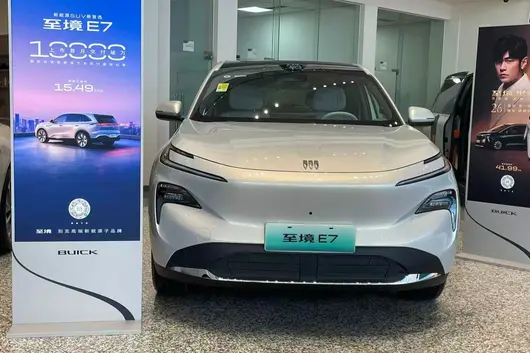
Upholding the user philosophy of "Knows Cars Better, Knows You Better," SAIC Motor Group has maintained a steady pace in both the traditional internal combustion engine era and the new energy intelligence era. After entering the "second half of the new energy game," SAIC has maximized hardcore technology and product advantages — regarding this point, the Buick Zhijing E7, which exceeded 10,000 deliveries in its first month on the market, validates this.
Interior and Exterior Design: Abandoning Traditional Heaviness
Overall, the Buick Zhijing E7 can be said to be a joint venture product closest to mainstream domestic new energy vehicles. Its appearance looks fashionable and atmospheric, with a closed front fascia combined with split water-flow headlights bringing full technological feel, combining fashionable elements of current mainstream new energy vehicles with a sporty vibe.

Looking at the interior, this car combines the unique concise and atmospheric design connotations and premium feel of current mainstream new energy vehicles, especially the multi-screen combination of a 15.6-inch Rhine Eye-Protection Central Control Screen + 8.8-inch LCD Instrument Panel + Rear 15.6-inch Ceiling Cinema Screen, making the technology feel overwhelming.

As for body dimensions, the vehicle's length, width, and height are 4850/1910/1676mm, and the wheelbase is 2850mm. The large five-seat layout can well meet the comfort needs of family cars.

Additionally, the entire car is standard-equipped with Cloud Feel Floating Layer Seats, and the passenger seat adopts an Eames Zero-G Recliner, further enhancing driving comfort — from this point alone, the manufacturer's sincerity can be fully felt. It can be said that the Zhijing E7 is more dedicated in creating an ultimate comfort experience than many other brands.

Power and Handling: Solving User Pain Points
Looking at power, this car is equipped with the True Dragon Plug-in Hybrid Pro system across the entire series, offering 1.5L/1.5T two versions to choose from. Among them, the former's pure electric range is 235km, and the comprehensive range reaches 1630km; the latter's pure electric range is 230km, and the comprehensive range reaches 1600km. With fast charging technology, the vehicle requires only 15 minutes to charge from 30% to 80%, and also supports 6kW external discharge, well meeting consumers' electricity needs during outdoor camping.

As for the chassis, this car is equipped with a Preview RTD Continuous Damping Variable Suspension, which can accurately adapt to different road conditions, with sufficient effectiveness in filtering bumps; meanwhile, the exclusive anti-nausea chassis and eBoost Comfort Braking System can also significantly reduce travel discomfort for people prone to motion sickness, further enhancing the driving experience.

In terms of assisted driving, the high-spec Zhijing E7 models are equipped with the Momenta R6 High-level Intelligent Driving System, and the entire vehicle is equipped with 27 sensing hardware including LiDAR. Based on the Reinforcement Learning Large Model, this car can achieve Highway NOA, Uninterrupted City NOA, Full Scenario Automatic Parking, Active Avoidance and many other functions — rich intelligent configurations will bring a safer and more reassuring intelligent travel experience to Chinese consumers.

"Car 1 Circle" Viewpoint: Adherence and Innovation are not only the confidence for SAIC Motor Group to become the "First Chinese Automotive Group to Accumulate Sales Volume Exceeding 100 Million Units", but also win leading opportunities for the enterprise's sustainable development.

From launching joint venture cooperation, to creating "Shanghai Speed", to launching the world's first internet car, and to comprehensively transforming towards new energy intelligence, launching high-end intelligent electric brands, etc. — It can be said that every choice of SAIC Motor Group was very firm, and the timing was just right.
Through the Buick Zhijing E7, we can clearly feel the manufacturer's implementation of "localization" in the process of building joint venture new energy products. This not only creates favorable conditions for the car's "Hot Sales at Launch", but also profoundly reflects SAIC Motor Group's respect for Chinese consumers and attention to the market.
Currently, the brands and models under SAIC Motor Group can be described as "Strong and Robust", and also possess over 100 parts production bases overseas, over 3000 dealer network stores, and have built 3 major R&D innovation centers including London, and 4 production manufacturing centers in Thailand, Indonesia, India, and Pakistan. Deeply cultivating the overseas market for many years, SAIC Motor Group has always aimed to be a "Global Enterprise", continuously creating outstanding achievements.

Additionally, SAIC Motor Group is also very "down-to-earth" in marketing promotion, and deeply implements the "Knows Cars Better, Knows You Better" philosophy, able to attract Luo Zhenyu to become the No. 001 Experience Officer of Hujing S, and also gain the favor of former national player Yang Chen for ID. ERA 9X. During this event, SAIC-GM General Manager Xue Haitao also personally handed over a Buick Zhijing E7 to charity barber Liu Jia.

According to the introduction, this charity blogger has been cutting hair and sending companionship to left-behind children in Guangxi mountain areas for five consecutive years. Looking at the Buick Zhijing E7 again, besides creating a full-score cockpit for children based on "children's growth needs" as the origin of product R&D, it also expressed support for Liu Jia protecting the growth of more mountain children with practical actions — A series of touching stories, while witnessing SAIC Motor Group's responsibility and accountability, are also the most vivid interpretation of "Knows Cars Better, Knows You Better".

From the first user to the 100 millionth user, SAIC Motor Group used more than 70 years. Looking to the future, on the road of innovation and challenges, SAIC Motor Group will continue to create a "New Era of Beautiful Travel" together with global users.