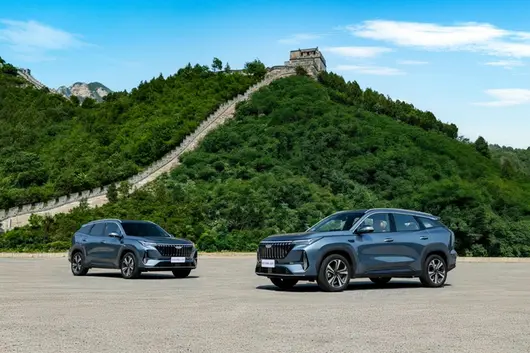
首頁Boyue

搜尋歷史
熱門搜尋
經銷商登入 / 註冊

In the Brazilian car market, BYD leaving everyone else in the dust is a well-worn topic, but what truly deserves close examination is Geely's skyrocketing speed.
July just delivered a sales report of 7,458 units, stubbornly competing with Chery until there was only a 105-unit gap, maximally heightening the suspense of who is the third Chinese brand; the single EX2 model sold nearly 4,000 units, firmly ranking in the top 10 for EV sales in Brazil, with the full month brand sales likely to stay steadily above 7,000 units.

It is worth noting that Geely's official announcement of entering Brazil was just one year ago. In one year, going from zero to selling over 7,000 units a month and breaking into the top 11 of the brand rankings, this speed counts as first-tier level across the entire history of Chinese automakers going global.
Many people only focus on that exaggerated 26,535.7% year-on-year growth, joke about it being a "low base number game", and move on from this. But few dig deep into why it was precisely Geely that was able to solidify sales in such a short time? The answer, bluntly put, is not complex – this "asset-light joint venture global expansion" strategy of theirs is too mature and too practical.
Don't be deceived by the percentage, over 7,000 units is a solid foothold
The 26,535.7% year-on-year growth rate is essentially because in July 2025, Geely had not officially started sales, there were only dozens of exhibition cars and test drive cars registered that month, the denominator was extremely small, so the calculated percentage naturally exploded. But setting aside this statistical number, looking at absolute sales: July 7,458 units, exceeding old-brand joint venture players like Jeep and Nissan, and only 105 units away from Chery which has cultivated the Brazilian market for years, this is no longer a number game.

As of early August 2026, Geely has just completed one year in Brazil, cumulative sales have already broken through 25,000 units. For a brand new brand, this achievement is highly valuable. It is worth knowing that for many Chinese brands entering emerging markets, stable monthly sales of 3,000 units in the first two years is considered passing. Geely directly touched the threshold of 7,000 units in just one year, and is still climbing upwards.
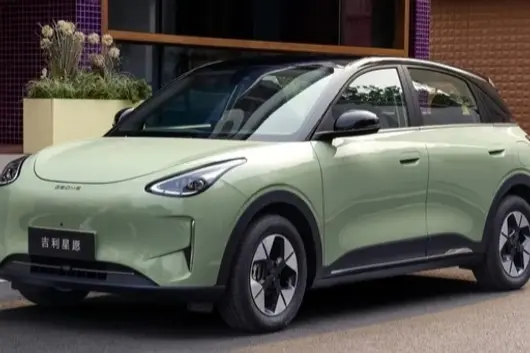
The core supporting this sales volume is the EX2 car, which is the Xingyuan in China. Compact pure electric, rear-drive layout, sufficient range and space, plus precise pricing, just hit the market gap for entry-level EVs in Brazil. But product strength is just the foundation, what truly allowed it to quickly stock and deliver was the path Geely chose that was completely different from BYD and Great Wall.
Core Password: Don't forcefully invest in heavy assets, enter directly by borrowing Renault's express lane
BYD bought Ford's old factory to renovate it themselves, Great Wall took over Mercedes' old factory and then expanded capacity, both walking the heavy asset route of "building factories themselves, building channels themselves" – the benefit is having full control, the downside is high costs and long cycles, volume doesn't start without three to five years.
Geely chose the completely opposite path: in 2025 established a joint venture with Renault, acquired 26.4% of shares of Renault Brazil, directly letting Renault serve as their General Distributor in Brazil.

How ruthless is this move? It is equivalent to directly grabbing all of Renault's assets accumulated over decades of operation in Brazil:
Ready-made distribution system: Renault Brazil originally had 263 dealership outlets, covering major cities nationwide, familiar with local dealer rules and consumer habits. Geely didn't need to recruit from scratch, directly relied on this system to expand authorized stores, opening 43 standard 4S stores and 13 mall experience points in one year, covering 24 states and over 50 cities. If another brand did it themselves, this coverage would take at least 3 years.
Ready-made after-sales and parts system: Brazil has vast territory, parts warehousing and after-sales repair are the fatal weaknesses of new brands. Renault has mature nationwide parts warehouses and after-sales standards, Geely directly accessed them, consumers buying cars don't worry about not being able to repair or waiting for parts for half a year, naturally adding a layer of trust.
Ready-made factory capacity: No need to buy land and build factories, directly started production of EX2 at Renault's Ayrton Senna Industrial Park, achieved local mass production in June 2026, just avoided Brazil's gradually rising import tariffs, costs directly dropped a notch, supply volume no longer restricted by sea transport.
Put simply, others going global is "starting from scratch", Geely directly brought product technology, "moving in ready-furnished" to others' mature industrial systems. Less money spent, fewer pitfalls stepped into, volume growth speed naturally became faster.
This is not a last-minute rush, it is Geely's mature strategy played over nearly 10 years
Many people think this is the first time Geely is doing this, actually quite the opposite, this "equity investment in local automakers, outputting technology products, reusing partner channel capacity" model, Geely had already worked it out in Malaysia long ago.
In 2017, Geely acquired 49.9% shares of the Malaysian national brand Proton. At that time Proton had been losing money for consecutive years, annual sales dropped from a peak of over 200,000 units to 70,000 units, market share left only 15%, even Volkswagen and Peugeot were unwilling to take over. Geely didn't grab controlling equity, only took operation management rights, exported their car models, technology, management system into it, the first car was the Proton X70 built based on Boyue.

How was the result? Proton sales volume increased by 50% year-on-year in the second year, directly turned from loss to profit in 2019, by 2024 annual sales had rushed to 152,000 units, sitting second in the Malaysian market steadily for 6 consecutive years, market share close to 19%. Geely not only revitalized a local brand, but also by using Proton's identity, smoothly obtained the entry ticket to the entire ASEAN market, avoiding high regional trade barriers.
The Brazil model is essentially an upgraded version of the Proton model. The subsequent Korean Renault cooperation, Spanish Ford joint venture, all follow the same train of thought: do not pursue wholly-owned control, do not directly confront the local market, but find a partner with capacity, channels, and understanding of local rules, I provide technology and products, you provide sites and networks, we share the money together, make the market bigger together.
Why say this model is worth most Chinese automakers learning
Now talking about Chinese automakers going global, many people open with "build factories themselves, cultivate locally", as if without spending billions to build a factory, it's not considered truly going global. But the reality is, not all automakers have the volume and cash flow of BYD, capable of withstanding the pressure of investment without output in the first few years.

The value of Geely's asset-light model lies in that it offers another feasibility:
First, fast results, low trial and error costs. No need to wait two or three years for factory construction and channel expansion, cooperation landing can stock goods, if selling well add more, if selling poorly won't cause major damage.
Second, low local resistance, easier to land. Compared to the impression of "Chinese automakers coming to snatch the market", this "cooperating with local enterprises, revitalizing idle capacity, creating jobs" model, whether government or consumers, acceptance is much higher, and not easy to become a target of local industry associations.
Third, extremely high replicability. From Southeast Asia to South America, then to Europe, as long as a local partner with capacity and channels can be found, this model can be quickly reused, no need to explore from zero for every market.
Conclusion: Of course it doesn't mean the heavy asset model is bad. BYD and Great Wall's route, although can firmly hold the brand and profit in their own hands, but the initial investment is undoubtedly higher. For more Chinese brands wanting to go global and also quickly open the market, Geely's "taking advantage of the trend" strategy is clearly more pragmatic and more universal.

The Brazilian market is just a microcosm. In the next few years, Chinese automakers going global will shift from "swarming in" to "competing in refined operations", by that time, whoever can find a landing method more suitable for themselves will truly survive and thrive. And the asset-light joint venture idea Geely has verified over nearly 10 years and multiple markets is obviously an assignment worth serious reference.

Halfway through 2026, the NEV penetration rate in China's auto market continues to climb, with almost all major automakers reducing fuel vehicle R&D and accelerating electrification transitions.
However, real sales data presents a different picture: From January to May this year, domestic fuel passenger car cumulative sales reached 3.87 million units, accounting for a still-high 52%. More than 25,000 fuel vehicles are still being delivered to users daily, with over 200 million fuel vehicles running on roads nationwide.
In this "unpromising" market, a fuel SUV presented a report card no one could ignore—4th Gen Boyue L, dominating the sales chart for all-brand fuel SUVs for 5 consecutive months in 2026, claiming A-class fuel SUV sales champion for 11 consecutive months, with monthly sales exceeding 30,000 units, meaning a new owner chooses it every 1.08 minutes.

While most automakers choose to reduce fuel vehicle R&D and accelerate the "stop fuel" transition, Geely took a different path: Persisting in a "Multi-Energy Parallel" strategy, continuously injecting smart fresh blood into fuel vehicles. The dominance of 4th Gen Boyue L is a victory of strategic patience.
Persist in doing difficult but correct things
For the past two to three years, almost all traffic, capital, and public opinion have flowed towards new energy, with many automakers explicitly announcing schedules to stop selling fuel vehicles, with fuel vehicle R&D budgets significantly cut.
But Geely's choice was completely different. In Geely's view, fuel vehicles, hybrids, and pure electric vehicles are not replacement relationships, but long-term coexistence relationships. Over 200 million fuel vehicles in domestic inventory, nearly 10 million annual fuel new vehicle demands, these figures behind are countless real users' travel necessities, not a market that can be easily "skipped". So Geely did not follow the trend to "abandon oil for electricity", but proposed a "Multi-Energy Parallel" strategy—no matter which energy form, Geely will do it the best.
This stability requires huge courage and resource support. Relying on five global R&D centers, Xingrui Intelligent Computing Center 2.0, and industry-leading large AI models, Geely systematically empowered fuel vehicles with intelligent capabilities originally belonging to electric vehicles. GEEA 3.0 Electronic and Electrical Architecture, Xingrui AI-Drive Digital Tuning Technology, FlymeAuto Smart Cockpit... these technologies sounding like "new forces" were used by Geely without hesitation on the 4th Gen Boyue L.

Data doesn't lie. Currently, Geely's L2 and above assisted driving vehicle inventory exceeds 7.5 million units, cumulative assisted driving mileage exceeded 10 billion kilometers, with a significant portion coming from fuel vehicle users. This means Geely not only didn't abandon fuel vehicles, but instead relied on the huge fuel vehicle user group to build China's leading smart driving data pool for automakers.
Conversely, some automakers in the industry rushing to reduce fuel vehicle business and promote stop-sale plans, faced many challenges such as user group continuity and single technical route during transition. Geely proved with action: Not following trends, not having weaknesses, doing every technical route well is the greatest respect for users.
How to concentrate the release of "Multi-Energy" advantages?
Strategic stability must ultimately land on products. The reason 4th Gen Boyue L can dominate against the trend is because it is no longer a "traditional fuel vehicle", but an "all-rounder" gathering the best of Geely's multi-energy technology system.

First look at smart driving. 4th Gen Boyue L Small Blue Light Edition is equipped with Qianli Haohan H3 Assisted Driving Solution, becoming the only fuel SUV within 120,000 yuan equipped with high-end smart driving. This system is based on Horizon Journey J6M high computing power chip, computing power reaches 128 TOPS, matching 3 millimeter-wave radars, 11 high-sensitivity cameras and 12 ultrasonic radars, can achieve Highway and Elevated High-level Navigation Assisted Driving (HNOA), Urban Congestion Cruise (ICC), Multi-scenario Parking Assist and other functions. Pure Visual Map-Free Solution covers 380,000 km highway and 30,000 km elevated roads nationwide, can drive new roads, can drive with network.
User feedback data is more intuitive: Small Blue Light Edition smart driving activation rate is as high as 75%, single user longest assisted driving mileage exceeded 50,000 kilometers, single vehicle cumulative parking times up to 2,091 times. From "curious try" to "can't leave daily", Boyue L truly brought fuel vehicle smart driving experience into users' lives.

Second look at smart cockpit. FlymeAuto system standard on all series, along with Huawei HarmonyOS, Xiaomi HyperOS known as three giants of domestic cockpits. 15.4-inch 2.5K HD Full Screen, 16-speaker FlymeSound audio (1000W independent amplifier, 7.1.2 surround sound), 25.6-inch AR-HUD head-up display... these configurations put on any 200,000 yuan level new energy vehicle are not out of place, but Boyue L brought them to the 120,000 yuan level fuel vehicle market.
More importantly, based on GEEA 3.0 Electronic and Electrical Architecture, Boyue L supports full-domain FOTA upgrade, often used often new like electric vehicles. Users don't need to worry "become outdated after buying home", because its intelligence will evolve with OTA.

Mechanical quality is equally not vague. CMA Global Premium Architecture is same source as Volvo, Lynk & Co, brought 79 km/h Moose Test score and 35.8-meter racing-grade braking distance. 2.0TD engine max power 160kW, peak torque 325 N·m, 0-100 km/h acceleration 7.4 seconds, fuels with 92 octane gasoline can be used, usage cost is 8% lower than peer models.
In space, 84.27% same class maximum space utilization rate, 2,785 mm wheelbase, flat rear floor, let family sit comfortably; 650L super large trunk plus two-layer magic partition, snowboards, strollers can be easily loaded.

4th Gen Boyue L fully transplanted pure electric intelligence, architecture, experience originally belonging to pure electric onto fuel vehicles, letting users enjoy the cutting-edge product power of the times without changing energy habits. This is the power of Multi-Energy Strategy—not betting on one road, but letting every road lead to good products.
The secret of Boyue Family 10 years long success
Stretching the timeline, you will find that since Boyue Family 1st Gen model launch in 2016, after 9 years 4 iterations, global cumulative sales exceeded 2.4 million units. It took 25 months to exceed 500,000 units, 52 months to reach 1 million units, 82nd month to exceed 1.5 million units, 99th month to exceed 1.8 million units, February 2025 to exceed 2 million units, now standing at the high ground of 2.4 million units. In China SUV market, models capable of maintaining such long-period, high-intensity hot sales momentum are few.
So, why was Boyue able to and how could it cross the cycle?

1st Gen Boyue "Hello, Boyue" pioneered China's SUV smart connectivity, letting voice interaction no longer be a plot in sci-fi movies; 2nd Gen Boyue focused on smart safety, changed AEB Pre-collision System from luxury car patent to standard of people's cars; 3rd Gen Boyue based on CMA Architecture, first brought NOA Highway Navigation Assist into fuel vehicle field, broke monopoly of "High-end Smart Driving = Electric Vehicles"; to 4th Gen Boyue L, directly opened "Fuel Vehicle AI Intelligence Equality Era", GEEA 3.0 Architecture, Xingrui AI-Drive, FlymeAuto... every generation upgrade, Boyue was not following trends, but doing out things users "want but haven't spoken" in advance.
Behind this capability is Geely's deep insight into user needs and long-termism of technical investment. Boyue Family has now received true choice of 2.4 million users, these users come from over 60 countries and regions. In Belarus, Malaysia, Boyue achieved localized production, becoming China's first SUV model realizing product, technology, management full export. In Costa Rica, Moldova and other countries, Boyue ranks first in Chinese brand sub-market. It can be said, it has become a true Chinese SUV global name card.

Back to "Multi-Energy Strategy", Boyue Family's long success, precisely proves Geely strategy's foresight. When other automakers all "stop fuel", Boyue kept deepening in fuel vehicle market, won users' long-term trust with generations of evolution. January to May 2026 fuel SUV sales champion, not a surprise from the sky, but the result of Geely persisting for ten years like one day, the result of those abandoned fuel vehicle users voting with feet.
More importantly, fuel vehicle business's steady performance, provided continuous cash flow and user data for Geely's huge R&D investment in electrification, intelligence. 7.5 million smart driving vehicles, 10 billion kilometers driving mileage, these data feed back Geely's AI algorithms and smart driving models, letting every Geely car, no matter burning oil or electricity, get smarter the further it drives. From this meaning, cannot say "Multi-Energy" is conservative, rather it is a more advanced offensive posture.

At the crossroads of industrial transformation, following trends betting is easy, staying focused is hardest. Users never care what name your energy strategy is called, only care if your car is easy to drive, easy to park, easy to use. Geely proved, as long as products are strong enough, fuel vehicles can also become leaders of the times.
Dominating charts for 5 months might just be the start, with 4th Gen Boyue L continuing hot sales, overseas market accelerating expansion, and Geely in intelligence, global field continuous deepening, Boyue Family's legendary story, is still accelerating上演。And that phrase "Oil vs. Electric debate will end, standards for good cars will never go out of date", maybe that is the best annotation for this era.