首頁Auto People

搜尋歷史
熱門搜尋
經銷商登入 / 註冊

African resource countries tighten raw mineral exports, domestic new energy industry chains face supply challenges directly.
Author | Zhang Heng
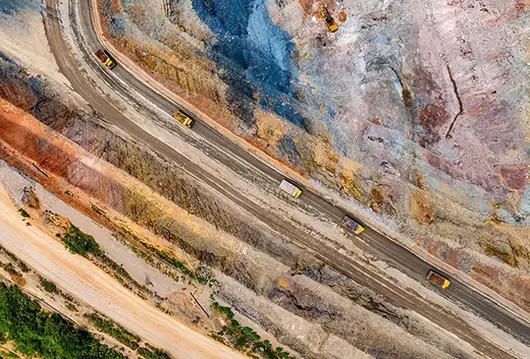
Since 2026, major African mineral countries such as Zimbabwe, Democratic Republic of the Congo, Mozambique, and Malawi have successively introduced policies to tighten exports of new energy core minerals such as lithium, cobalt, and graphite.
The simultaneous policy shifts in multiple countries clearly indicate preparation, with the goal being the Chinese new energy industry chain.
Multiple African Countries Tighten Mineral Exports
This signal of policy tightening was first released by Zimbabwe. In February 2026, the country suddenly issued an emergency suspension on raw lithium and lithium concentrate exports, even intercepting some cargo that was already loaded and about to be shipped. At that time, market analysts judged that this was not a short-term temporary control.
As expected, by May, Zimbabwe officially designated 14 categories of minerals including lithium, cobalt, and graphite as national strategic resources, mandating foreign-funded mining enterprises to introduce local shareholders, while simultaneously requiring the construction of deep processing projects within the country to firmly lock the value added by the industry chain.
Following closely, the Democratic Republic of the Congo set an export quota of 96,600 tons for cobalt ore over two years, directly significantly reducing the outflow of low-end cobalt raw materials.

This wave of resource protection policies quickly spread to East Africa and Southern Africa, with multiple countries forming a consensus to unify restrictions on exporting raw ores and coarse concentrates without smelting and processing.
The highly consistent policy steps of multiple African countries have brought severe challenges to China's new energy industry chain.
Looking back at the past decade-plus of development, the heat of African resource development was highly synchronized with the rise of China's new energy vehicle industry, deeply bundled.
China's new energy industry broke out from scratch, with power batteries and complete vehicle capacity expanding at high speed year after year, but domestic reserves of lithium and cobalt resources were insufficient and mining costs were high, making it difficult to meet demand. Africa possesses world-class new energy mineral endowments, but is constrained by insufficient funds, technology, and infrastructure, unable to develop and realize value.
Under this complementarity, China and Africa formed a mature and stable industry chain division. Chinese enterprises went overseas to improve local infrastructure and invested in mines, putting funds and complete sets of mining technology into place, helping Africa's mineral development; Africa provided stable and low-cost coarse mineral raw materials to support China's new energy industry in growing stronger.
In terms of data, the Democratic Republic of the Congo contributes 76% of global cobalt production, and over 90% of China's ternary battery cobalt raw materials rely on African imports; Zimbabwe's lithium concentrates over 90% are exported to China, accounting for 15.5% of China's total imports; Mozambique and Madagascar natural graphite continue to supply China's anode materials, which are essential raw materials for power batteries.

Relying on Africa's large-volume, stable, and reliable primary mineral supply, China mastered over 80% of global cobalt smelting and over 70% of lithium salt processing capacity, building the world's largest scale power battery and new energy vehicle manufacturing system. It can be said that the rapid development of China's new energy industry in the past decade relied on resource strategic cooperation between China and Africa.
As China's new energy industry gradually matures, the attitude of overseas partners seems to have changed.
In the past decade-plus, African mineral resource countries mostly stayed in ore mining, initial classification, warehousing, and logistics links, only earning basic labor and resource mining revenue; China undertook mineral deep processing, covering downstream links such as smelting, cathode materials, and battery manufacturing.
After China's new energy industry chain became increasingly mature, African resource countries were no longer satisfied with simply exporting low-value-added primary raw ores. Countries drew lessons from Indonesia's governance of the nickel industry chain, recognized China's import dependency on their mineral resources, successively tightened raw mineral export controls and set quota thresholds, mandated foreign capital to implement deep processing factories locally, and incorporate local capital participation, forcing industry chain value-added revenue to remain in the local jurisdiction.

The bilateral mutual-benefit cooperation pattern maintained for over a decade has been broken. African resource countries attempt to reshape the distribution of industry chain interests from the upstream resource end; this move is no different from a major blow to China's new energy supply chain.
Car Manufacturer Profit Pressures Mount
Currently, profits in the domestic complete vehicle industry are extremely thin. Data from the China Association of Automobile Manufacturers shows that the average net profit margin of complete vehicle manufacturing in the first half of 2026 was only 1.5%, reaching a ten-year low.
For a vehicle with an average price of 200,000 yuan, the car manufacturer's average net profit was only 3,000 yuan, far below the average profitability level of large-scale industrial enterprises in the country. Continuous price wars for several years have compressed pricing space, leaving the industry little room to buffer cost fluctuations.
The earnings forecasts released in the second quarter of 2026 directly revealed cost pressures. Seres expects a net loss attributable to the parent company of 1.5 billion to 1.8 billion yuan in the first half of the year, while Beijing Automotive Group Blue Valley expects a net profit loss attributable to the parent company of 1.77 billion to 1.97 billion yuan in the first half of the year. Terminal market competition is fiercely intensified, car manufacturers dare not easily raise selling prices, and new costs brought by raw material price increases must be absorbed internally by the enterprise.
The rise in lithium carbonate prices is one reason for the pressure on car manufacturer profits. Battery-grade lithium carbonate has been rising from 70,000 to 100,000 yuan/ton at the end of 2025, reaching close to 200,000 yuan/ton in May 2026, with prices nearly doubling.
The industry standard calculation is that for every 10,000 yuan/ton increase in lithium carbonate, the battery cost of a pure electric vehicle with 60 kWh increases by 300 yuan; the cost increase per vehicle for long-range models can reach 400 yuan. Compared to the early year low, the rigid cost increase for large-capacity pure electric vehicles is 2,000 to 3,000 yuan, and ternary lithium battery models are burdened even heavier with the added cobalt price fluctuations.

If various African countries continue to ramp up export restrictions, and lithium and cobalt raw material prices remain at high levels, the car manufacturer's situation will further deteriorate. Weak manufacturers with insufficient capacity utilization will continue to amplify loss pressure.
Facing the hazards upstream, China's industry chain did not choose to sit idle.
On one hand, leading mining companies and car manufacturers complied with African localization requirements and implemented smelting capacity locally. Huayou Cobalt laid out lithium sulfate production lines in Zimbabwe, processing minerals locally to meet local policy requirements; China Molybdenum expanded local cobalt smelting capacity in the Democratic Republic of the Congo to avoid raw mineral export quota constraints. This kind of heavy asset investment cycle is long.
On the other hand, the sourcing layout moves towards diversification, with some companies accelerating the development of Australian and South American lithium mine resources, simultaneously exploring the potential of lithium resources in domestic Qinghai and Western Sichuan, creating a "double insurance" of "overseas multi-point supply + domestic owned minerals". BYD, CATL, Geely, and other companies broadened overseas mineral cooperation to disperse geopolitical policy risks.
In addition, reducing dependence on rare metals through technology iteration has also become an industry R&D trend. Low-cobalt and cobalt-free solutions continue to be popularized, and mid-range models are equipped with Lithium Iron Phosphate (LFP) batteries on a large scale, reducing the demand for Democratic Republic of the Congo cobalt mines. At the same time, the battery recycling system continues to improve, refining and regenerating lithium and cobalt from retired batteries, gradually forming urban mines, alleviating pressure from importing raw minerals overseas.

Multiple African countries tightening mineral exports aims to redistribute the interests of the new energy industry chain. The domestic industry chain wants to resist external resource fluctuations, cannot rely on low-price imported minerals for the long term, and must continuously advance supply chain diversification and material technology iteration to gradually get rid of constraints from overseas resources. [Copyright Notice] This article is an original work of "Auto People", copyright belongs to the publisher, unauthorized reproduction or partial copying is prohibited, violators will be held liable.