首頁Auto Exports

搜尋歷史
熱門搜尋
經銷商登入 / 註冊


Chinese auto overseas expansion has been the hottest topic in the industry in recent years. Now that China has become the world's largest auto exporter, what challenges does Chinese auto overseas expansion face?
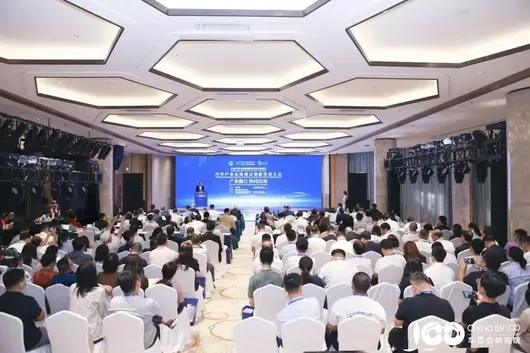
On November 1, 2026, the conference on innovation and development of auto industry overseas expansion models, jointly organized by the Chaihui Institute and Hainan Qinglan ZhiLian Technology Co., Ltd., was held in Chengmai, Hainan. From export situation, overseas after-sales, cross-border data to insurance pricing, the judgments of eight speakers point to the same conclusion: Chinese autos have passed the scale threshold. The next thing to prove is whether they can exist long-term overseas, while after-sales, parts, data, insurance and these 'invisible capabilities' determine this matter.
After 8 Million Units, A New Threshold Appears
Sun Xiaohong, former Secretary-General of the Automotive Branch of the China Council for the Promotion of International Trade in Machinery and Electronic Products, provided the following data: Customs data (excluding low-speed electric vehicles) showed China's auto exports reached 7.89 million units in 2025, nearing 8 million, with new energy vehicles accounting for over 35% of the total export volume. From January to September 2026, auto exports were about 8.63 million units, a year-on-year increase of over 50%; new energy passenger vehicles were nearly 4 million units, with an increase of over 70%; commercial vehicles were 1.15 million units, with an increase of 35%-40%.

However, if calculated by cargo value, Germany remained first in 2025, China second, surpassing Japan to move up one rank. Sun Xiaohong reminded that although Germany's quantity is lower than China's, its unit price is higher, and its overall strength is still stronger than China's. In terms of export region ranking (January to August), the EU, Latin America, Eurasian Economic Union, ASEAN, Africa, Middle East, US-Canada-Mexico, and Oceania were listed in order. He predicted that commercial vehicle exports in 2026 could reach 1.5 million units, and including passenger vehicles, total vehicle exports would exceed 10 million units.
Sun Xiaohong compressed the focus of the '15th Five-Year Plan' into six words: 'Stand Firm, Return Successfully'. 'Stand Firm' means holding onto the markets opened up during the '14th Five-Year Plan', not letting them slip and be regained; 'Return Successfully' means overseas revenue flowing back domestically to form a closed loop with R&D investment. Compared to 'Going Global 1.0' (2021-2025, from 1 million to 8 million), the new stage is shifting from selling products to whole industry chain overseas expansion and ecological overseas expansion.
Tariffs and Localization Under the Tripartite Balance
Trade barriers are cutting the global market into separate, non-interconnected blocks.
Mexico's tariffs rose to 50% this year, Brazil restored to 35% and required localization layout. Indonesia requires reaching an 80% localization rate before 2030 and must adopt nickel-containing batteries. Thailand's EV 3.5 regulation stipulates for every one imported, two must be locally produced, rising to three by 2027; the Gulf Cooperation Council six countries have tariffs around 5%, and Australia has zero tariffs due to free trade agreements.
Besides the 2024 EV countervailing duties, the EU formally filed an investigation on safeguard measures for hybrid cars on October 30, determining that hybrid exports to Europe grew 49% from 2023 to 2025, and feedback must be given within 21 days. China proposed three principles: using 2025 year-end export volume as the base, measures must not target only China, and retaining countermeasure capabilities under the WTO framework.
Sun Xiaohong stated that the greatest uncertainty impact comes from the Foreign Subsidy Regulation (FSR), 'investigation interference when business promotion is smooth, the situation is very serious'. He also reminded of the EU anti-evasion red line: relying on local assembly and OEM to avoid taxes, the origin country proportion must not exceed 60%.
After-sales is the First Link to Have Problems
Zhang Yanhua, President of the China Automotive Maintenance Industry Association, judged: the speed of after-sales capability accumulation lags behind the speed of sales expansion. This contradiction was previously covered up by the relatively stable initial quality of Chinese cars. As stock accumulates, pressure will concentrate and show up in two to three years.

The gap is significant: Chinese automakers have about 30 overseas spare parts warehouses, international brands have 600, a 20-fold difference; service network density is about 1/8 to 1/10 of major competitors, and the industry hopes to catch up in five years. He advocates exploring a multi-brand shared regional spare parts guarantee system, operated by professional supply chain service providers, and emphasizes that 'sharing does not mean merging', enterprises still need to bear product quality and service management responsibilities.

Wen Hua, Deputy General Manager of Dongfeng Liuzhou Automobile Import & Export Company, has years of overseas front-line experience. He added some details: the company shrank its overseas service radius from 160 kilometers to 102 kilometers over the past three years, 106 kilometers in 2026, with a goal to continue shrinking to 65 kilometers.
He opposes using one platform for the whole world. In Thailand, heavy rain and maximum A/C power will suck rainwater into the car. For Kuwait customers with A/C failure, designers need to go to the site to feel 60+ degrees high temperature to understand the problem. He mentioned Brazil has no more than 10 high-voltage charging stations nationwide, so they developed range-extender trucks; right-hand drive products are not modifications but redesigns.
He also proposed a common industry bottleneck: damaged parts need to be sent back to China for analysis, but importing old parts is controlled.

'Trust is never advertised, trust is cultivated.' Zhang Xiaodong, Deputy Director of the Technical Management Center of Geely Auto Group, stated that exports of 472,000 units in the first half of the year were already equivalent to the full year of last year. The first issues exposed were spare parts prediction and scheduling. The company responds with a Dutch central warehouse plus regional warehouses in key countries, and established Geely CARE service standards and technician certification systems.
Data Has Become the Second Supply Chain
Chu Huabin, General Manager of Qindarui (China) Information Technology Co., Ltd., proposed that the product supply chain determines whether cars can go overseas, and the data supply chain determines whether they can maintain continuous leadership.

Intelligent driving road tests in multiple Southeast Asian cities generate hundreds of G of street scene images and decision logs daily, which are key assets for optimizing overseas intelligent driving models. However, raw images of privacy data such as faces and license plates must not leave the country, requiring irreversible blurring and tokenization to be completed locally. The company's approach strings together local preprocessing, compliance assessment, cross-border transmission, Chengmai processing, and R&D feedback into a link. Currently, 8 types of trusted data subspaces in the automotive industry have been built locally, and 86 automotive industry data scenarios have been sorted out.

Hou Weiqiang, China Sales Vice President of LexisNexis Risk Solutions, provided insurance-side evidence: the UK market average premium is 646 pounds (about 5000-6000 yuan), insuring Chinese exported cars is 901 pounds (about 8000 yuan). The population and environment remain unchanged, the difference comes from insufficient information from overseas underwriting institutions.
He pointed out an anti-intuitive phenomenon: many intelligent driving hardware, computing power chips and complex cameras, overseas insurance companies will judge higher maintenance costs, the ability that could lower accident rates instead became a deduction point.
Hainan Free Trade Port 'One-Stop Bridgehead'
Zhang Xiaodong suggested Hainan build an auto overseas expansion service middle platform, a one-stop inspection and certification system, connect the Southeast Asia mutual recognition, cross-border data chain (including overseas OTA updates), and spare parts warehousing and bonded maintenance under zero tariff and low tax rates.

Linglong Tire President Zhou Lingkun proposed doing container splicing and value-added manufacturing centers, global service and compliance digital hubs, three-port linkage combining sea and air transport, and suggested building a global testing and certification center relying on Hainan's unique tropical region conditions.

Thailand's investment attraction logic has also shifted from complete vehicles to the whole value chain. Chen Weili, Director of the Guangzhou Office of the Thailand Board of Investment, introduced that from 2021 to the first half of 2026, China's investment declaration projects exceeded 2,700, with a total amount of 136 billion yuan. The number of projects increased from 108 in 2022 to 970 in 2025. She mentioned that the Thai local association is worried about an 'industrial cliff' appearing after EV policies expire in 2027, as automakers switch to import substitution causing local supply chains to idle.
The final judgment given by Sun Xiaohong is that price wars have no way out, competition must shift to whole lifecycle cost management, including residual value guarantee, TCO transparency, intelligent driving reducing accidents thereby lowering premiums, financial guarantees, etc.
Big Company Perspectives
Chinese autos have already proved they can sell to the whole world. The next thing to prove is that if cars break, there is someone to fix them, parts arrive quickly, data flows compliantly, and insurance pricing is clear. None of these four things can be completed independently by a single enterprise, which is also the reason this conference turns 'going overseas' from a trade topic into a systematic topic.

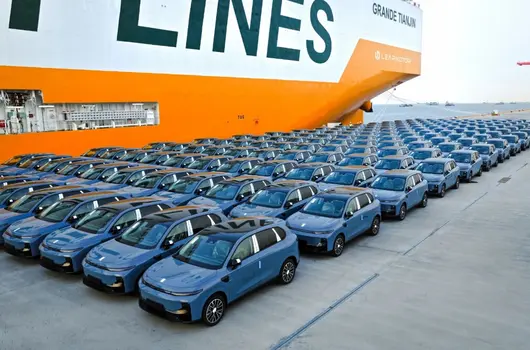
China's auto exports in 2026 are still surging ahead. Monthly exports broke the 1 million mark for the first time, with cumulative exports in the first half exceeding 5.3 million vehicles, a year-on-year growth rate of over 50%. The position of the world's top export nation is becoming increasingly secure.
Behind the dazzling growth figures, a discussion about "when exports will peak" is quietly heating up within the industry chain.
Gu Huai (all names in this article are pseudonyms), who just returned from touring overseas markets, is an insider at a Chinese Tier 1 supplier that began its overseas layout relatively early. In his view, the node for export ceilings is likely to occur in 2029, corresponding to a peak scale of about 12 million vehicles.
This is not just one company's opinion. At a salon event held recently by the Gasgoo Auto Research Institute, several industry insiders from the automotive industry chain converged on the peak window pointing to 2028-2030. As for the peak scale, industry predictions range from 12 million to 15 million vehicles. The core of the disagreement lies in the timing of tightening trade barriers and the speed of overseas capacity implementation.

Image source: Leapmotor
Growth still surging, peak zone emerging
If we rewind time to two years ago, industry predictions on the export peak were earlier.
The logic back then was very clear: overseas factories of leading automakers would concentrate production in 2025-2026, whole vehicle exports would be quickly replaced by localized capacity, and the growth curve would flatten quickly. However, the endurance of exports far exceeded industry expectations. The "ceiling" considered at that time to be about to be touched has now been overturned by actual data that broke through continuously.
According to data from the General Administration of Customs organized by the China Association of Automobile Manufacturers, China's passenger vehicle exports in January-June 2026 reached 5.307 million vehicles, with year-on-year growth of 52.8%. The export volume for January-July counted by the China Passenger Car Association has reached 6.4 million units, with year-on-year growth of 54%. Extrapolating based on the current pace, breaking through 10 million vehicles for the whole year is almost without suspense.
In front of these scalding data figures, the industry also has more realistic judgments on the point when exports will hit the peak.
Chen Mo, an insider at a global cabin electronics Tier 1 supplier, frankly admitted, "Previously we judged that this year or next year would be the export peak, after all overseas factories have successively started localized production. But now looking at it, this time node needs to be pushed back."
In his view, the resilience of exports comes from a diversified market layout. Leading domestic automakers are expanding simultaneously in Southeast Asia, South America, and Europe. The growth rhythms of different regions are staggered, supporting the overall export scale. "In the future, it won't surge like before, but is likely to remain stable, possibly even a slight decline, with no cliff-like drop."
Similar judgments are not uncommon within the industry chain, just that different enterprises have different observation dimensions.
Jiang Yu, an insider at a domestic automotive semiconductor manufacturer, believes that exports will continue to grow in two to three years, until exports touch around 15 million vehicles, will encounter the true bottleneck. This means China's share of the global automotive market will climb to a higher level, necessarily triggering more intensive trade protection measures.
Lu Ming, head of overseas business at a leading domestic automotive interior and exterior enterprise, values the rhythm of the capacity cycle more. In his observation, Chinese automakers' overseas capacity will be gradually implemented and released in 2027, 2028. Exports won't brake immediately, rather, it will continue to walk along with the capacity ramp-up. The true balance state between exports and overseas capacity will likely appear between 2028 and 2029.
Zhou Yan, head of overseas business at a global automotive parts giant, provided more granular inflection point judgments from observing the supply chain frontlines: Looking at different metrics, pure CBU vehicle exports will likely welcome a scale inflection point in 2028, with export volume seeing a substantive decline. If KD kits are included in the full statistics, data fluctuations will be relatively flat, but the downward trend of pure vehicle exports is quite clear.
Tian Tao, an analyst at a consulting institution in the automotive industry, stated that geopolitics, tariff policies, and localized capacity superimpose three factors, and the export ceiling will likely fall around 2030.

Image source: Chery
Of course, all these industry insiders emphasize: export ceiling does not equal the overseas sales peak of Chinese automakers.
Su Wan, head of overseas business expansion for intelligent cabins at a parts enterprise, said very clearly, "The momentum of exports rushing towards 10 million vehicles this year is indeed astonishing, and in the next few years, export volume will likely enter a bottleneck period, stabilizing growth and no longer skyrocketing. But if sales from localized production are included, the overall scale will still steadily rise. Exports have an upper limit, but the globalization of Chinese automakers has no upper limit. This is not the same thing at all."
Zhao Kai, head of enterprise development at a German automotive parts supplier, also confirmed this from industrial logic. In his view, new energy vehicles becoming the export main force itself extends the growth cycle. The battery technology iteration behind electric vehicles formed a synergy with national energy storage strategies, making China's automotive industrial advantages more solid than in the fuel vehicle era, and the resilience of export growth also far exceeds initial industry expectations.
Barriers and Capacity, Two Major Reality Constraints
Although the momentum of growth is fierce, no one believes exports will always rise. Two ceilings hanging above exports are slowly pressing down. One is the trade policy barrier being built higher and higher, the other is the localized capacity replacement proactively pushed by automakers.
Europe is the market that felt the chill first.
EU anti-subsidy tariffs targeting Chinese pure electric vehicles have taken effect. Multiple domestic automakers apply to different additional tax rates. After adding basic tariffs, comprehensive tariff costs for some brands have risen significantly, valid for as long as several years. This is just the first gate, and more systematic rule reshaping is on the way.
Lin Zhou, an insider at a Spanish-backed joint venture parts enterprise, revealed that the 'Industrial Accelerator Act' the EU is pushing is currently still in the legislative draft stage. According to general extrapolations by industry institutions, the bill is expected to complete legislation in 2027. Constraint clauses related to automobiles will land successively after the bill takes effect, and the overall time window is concentrated in 2027-2028. Final progress still depends on negotiation progress between the European Parliament and Council.
The core logic of the bill is very straightforward: through localized content requirements, public procurement restrictions, investment review means, it aims to protect and support the European local automotive industry.
"2026 is a key node," Lin Zhou added. The head new energy brand's Hungary factory officially operated this year, but carbon emission qualification accounting will land in 2027. The EU will introduce third-party audit agencies to check 2026 data and calculate final carbon emission indicators. And this indicator is tightening year by year; if standards are not met, additional tariffs must be levied. Besides the EU-level unified bill, individual member states are also issuing local policies, explicitly and implicitly guiding Chinese automakers to invest and build factories locally. Essentially, all are using rules to force localization.
Fang Cheng, an insider at a domestic automotive electronics enterprise, spoke even more directly: "We are not just going to earn Europeans' money, but also reconstructing the local industrial landscape. For European players guarding century-old industrial foundations, earning money can be tolerated, but having rice bowls snatched and tracks changed by latecomers equates to slapping in public. Resistance will only get more intense. Trade protection is not a question of whether it will come; it has already come, and it will increase more."
In his view, relying on high-speed growth of whole vehicle exports is naturally unsustainable, will soon touch the policy red line, and localization is the core path to break the situation.
More fundamental than policy barriers is the localization route chosen proactively by automakers. When export scale reaches a certain level, coupled with the rise of tariff costs, building factories locally for production became the inevitable choice.
Currently, overseas factories of leading automakers have already entered the concentrated production launch period.
BYD's Hungary Szeged factory will start whole vehicle assembly in the fourth quarter of 2026. Its Thailand Rayong, Brazil Camacari two factories have already achieved mass production, and capacity is still continuously ramping up. Chery's Spain Barcelona joint venture factory, Malaysia Intelligent Auto Industrial Park, and South Africa Rosslyn factory will all be put into production successively in 2027. SAIC MG's European production base located in Port Ferrol, Spain is planned to officially start operations at the end of 2028.

Image source: BYD
In the industry's view, whole vehicle exports were originally a transitional stage of overseas layout. Once the costs and efficiency of local factories are worked out, combined with the consideration of tariff and logistics costs, the priority of whole vehicle exports will naturally gradually decline.
Lu Ming's viewpoint also confirms this logic: The process of overseas capacity landing and release is the process of exports being gradually replaced. In the initial phase of capacity ramp-up, it may still need to export some parts or whole vehicles to supplement market gaps. After capacity is fully released, the incremental space for exports will be greatly compressed.
But this replacement is not a zero-sum game. Su Wan repeatedly emphasized: Exports and localized production are not a replacement relationship of mutual exclusion; it is a baton-passing progressive relationship. Exports are responsible for quickly opening markets and building brand awareness, localization is responsible for reducing costs and digging deep into user markets, both together expanding the overseas basic board of Chinese automakers.
Exports are not the destination, Going overseas heads to deep waters
When whole vehicle export growth gradually hits the top, China Auto's globalization layout will also synchronously enter the real deep waters.
As Jiang Yu said, when whole vehicle export scale approaches 15 million vehicles level, resistance for further growth will significantly increase. This is not a decline in Chinese automakers' competitiveness, but overseas localized capacity entering a concentrated release period, gradually replacing whole vehicle exports. On the surface, export number growth slows down, but Chinese automakers' global market share is still rising, it is just that the growth carrier has shifted from "whole vehicle exports" to "local manufacturing".
This is also the consensus of all industry chain personnel: The next stage of Chinese auto going overseas is shifting from "selling products" to "outputting industry". Going out with the vehicle factories is not just cars, but also the whole supply chain system.
Gu Huai's overseas survey confirms this trend. He summarized three mainstream models of current automakers going overseas: One is pure whole vehicle exports to fight the market; Two is cooperating with local factories to produce and reduce costs; Three is building factories and ecosystems solely like leading new energy brands. In the process of the three models blending promotion, parts, glass, chips, electronics systems and other supply chain links will also gradually complete localization along with them.
"At normal pace, around 2028, Chinese automakers' overseas industrial layout will be able to reach a relatively large scale. Not just selling cars over there, but moving the whole industrial ecosystem over there," Gu Huai said.
Tier 1 suppliers have already walked ahead. Multiple global parts enterprises are adjusting global capacity layouts, fully cooperating with the overseas rhythm of Chinese mainstream OEMs. Su Wan revealed that factories of the enterprise where he is located around the world are docking with Chinese automakers' overseas projects. Following the customer's factory building rhythm, synchronously landing capacity, from cabin systems to interior modules, are all rapidly promoting localization support capabilities.
The pace of local supply chain going overseas is also accelerating. Fang Cheng revealed that as a chip manufacturer, the company is planning to go overseas with the OEM, partner with domestic parts enterprises, and jointly achieve overseas localized production. "Automaker going overseas is never fighting alone; it must be the whole industry chain going out together to truly take root."

AI Generated Image; Source: Doubao
Of course, challenges are far more than imagined. Moving factories over does not guarantee localization success.
Shen Yan, an insider at an Italian enterprise, reminded that what Chinese brands forbid most is directly moving domestic tactics overseas. European market consumers' sensitivity to vehicle long-term value retention, brand reputation and terminal service is far higher than short-term price. If only relying on price wars, rapid model iteration, without valuing core user maintenance and service system construction, even if completing local factory building, it is also very difficult to truly stand firm in mature markets.
"2028 to 2030, export growth will gradually slow down, but won't immediately hit the ceiling. The real test has never been how much export volume rushes to, but whether China's new energy brands can truly stand in European mature markets," Shen Yan emphasized. Relying on B-side low price volume mode doesn't work in Europe; taking quality route and doing terminal service well is the key to long-term survival.
Zhou Yan suggested that there is no need to fix eyes only on Europe. South America, Africa and other regions' automotive consumption is still in rising period, trade environment is also more friendly, will be a new growth point continuously upwards. Dispersing market layout is itself the best way to hedge single market policy risks.
Zheng Ze, an insider at a German capital parts enterprise, then gave judgment from a more macro perspective: China Auto's product competitiveness is already strong enough. The one truly deciding ceiling height has never been the product itself, but national strategy and industrial discourse power. Whether can break trade barriers, strive for more fair market environment, is the core variable deciding China Auto globalization upper limit.
From a longer term industrial cycle perspective, the peak of China Auto exports is essentially a switch of growth mode. In the past few years, we relied on whole vehicle export's high growth to take the position of the world's top export nation. Next, we will through localization's deep layout, gradually strive for global automotive industry's discourse power.
Under the ceiling of export numbers is a wider globalization space.
(Note: All names in this article are pseudonyms, and some personally identifiable information has been blurred)