首頁鲍鱼

搜尋歷史
熱門搜尋
經銷商登入 / 註冊

喺馬來西亞嘅 SUV 市場,好多買家喺揀車嘅時候都會拿 Proton X90 同 Hyundai Tucson 嚟比較。這兩款車喺價位同定位上都幾相近,今日我哋就從多個方面做一個詳細比較,幫你節省咗做功課嘅時間。
Proton X90 喺馬來西亞嘅 OTR 售價係 RM 106,800 - 122,800,一共有 4 個版本,包括 2026 1.5T Prime X(RM 122,800)、2026 1.5T Prime(RM 116,800)、2026 1.5T Lite(RM 106,800) 等。
Hyundai Tucson 喺馬來西亞嘅 OTR 售價係 RM 143,888 - 197,888,一共有 5 個版本,包括 2025 HEV 1.6T AT 2WD Prestige(RM 197,888)、2025 1.6T DCT 4WD Prestige(RM 186,888)、2025 1.6T DCT 2WD Prime(RM 164,888) 等。
從價錢嚟睇,Proton X90 嘅起步價確實比 Hyundai Tucson 平咗 RM 37,088。如果你預算有限,Proton 嘅入門版已經可以滿足日常需求。但都要注意,平嘅嗰幾千塊,可能喺配備上會有取捨,具體要睇你嘅需求。

Proton X90 嘅安全評級係 5★ (ASEAN NCAP),主動安全系統包括 ADAS (ACC, AEB, LKA, LDA, BSM, RCTA)。
Hyundai Tucson 嘅安全評級係 5★ (ASEAN NCAP),主動安全系統包括 SmartSense。
兩款車嘅安全評級一樣,喺呢個級別入面安全配備都算畀得好齊全。而家嘅新車安全性都唔差,唔使太擔心呢一點。

Proton X90 採用 FWD 驅動方式。
Hyundai Tucson 採用 FWD 驅動方式。
兩款車嘅驅動方式一樣,都係 FWD,日常駕駛感受唔會有太大分別。

Proton X90 同 Hyundai Tucson 都係馬來西亞市場嘅主流選擇,適合家庭使用、日常通勤。如果你更睇重品牌口碑同二手價,可以優先考慮口碑更好嗰一款;如果你更在意性價比同配備,那就揀配備更豐富嗰款。最終都係建議兩款都去試駕,親身體驗先係最重要嘅。

總嘅嚟講,Proton X90 同 Hyundai Tucson 都係馬來西亞市場好唔錯嘅車款。揀邊架,關鍵都要睇你嘅個人需求同預算。建議大家做好功課,多比較幾間車行嘅報價,再去試駕做最終決定。買車係件大事,花啲時間做功課絕對唔會錯。


喺馬來西亞嘅 SUV 市場,好多買家喺揀車嘅時候都會拿 Proton X90 同 GWM Haval H6 做比較。這兩款車喺價位同定位上都幾近,今日我哋就從多個方面做一個詳細嘅比較,幫你省下做功課嘅時間。
Proton X90 喺馬來西亞嘅 OTR 售價係 RM 106,800 - 122,800,一總共有 4 個版本,包括 2026 1.5T Prime X(RM 122,800)、2026 1.5T Prime(RM 116,800)、2026 1.5T Lite(RM 106,800) 等。
GWM Haval H6 喺馬來西亞嘅 OTR 售價係 RM 139,750 - 139,750,一總共有 2 個版本,包括 1.5L Turbo Standard(RM 140,000)、1.5L Turbo Premium(RM 155,000) 等。
從價錢睇,Proton X90 嘅起步價確實比 GWM Haval H6 平咗 RM 32,950。如果你預算有限,Proton 嘅入門版已經可以滿足日常需要。但亦都要注意,平嗰幾千蚊,可能喺配備上會有取捨,具體要看你嘅需要。
Proton X90 車身長 4400 mm,後備箱 400 L。
GWM Haval H6 車身長 4400 mm,後備箱 400 L。
兩款車嘅尺寸幾乎一樣,車內空間差別唔大。呢個級別嘅車,日常使用完全足夠。
Proton X90 保修 5 年/150,000km,保養間隔 每 10,000km 或 6 個月。
GWM Haval H6 保修 7 年/150,000km,保養間隔 每 10,000km 或 6 個月。
Proton X90 同 GWM Haval H6 都係馬來西亞市場嘅主流選擇,適合家庭使用、日常通勤。如果你更加重視品牌口碑同二手價,可以優先考慮口碑更好嗰一款;如果你更加在意性價比同配備,嗰就揀配置更豐富嗰款。最終都係建議兩款都去試駕,親身體驗先係最重要嘅。
總體嚟講,Proton X90 同 GWM Haval H6 都係馬來西亞市場好唔錯嘅車型。揀邊輛,關鍵係要睇你嘅個人需要同預算。建議大家做好功課,多比較幾間車行嘅報價,再去試駕先做最終決定。買車係件大事,花啲時間做功課絕對唔會錯。

中国汽车在欧洲,正在发生一件比“卖了多少辆”更耐人寻味的事。
2026年春天,巴塞罗那。前曼城主帅瓜迪奥拉走进比亚迪门店,提走一辆海狮07 EV。不是什么商务合作,就是单纯买车。他的球员凯尔·沃克、菲尔·福登,也先后被曝光是比亚迪车主。
几个月后,2026年夏天,另一段视频在海外社交平台爆了。身高2.11米的NBA球星“字母哥”坐进一辆中国A0级纯电小车,轻松跷起二郎腿,脱口而出:“So smart, so mini, so cute, so big。”一个两米多的壮汉,在一辆中国小车里喊so big。

而德国顶级改装品牌MANSORY——过去只改奔驰、宝马和保时捷的“欧洲豪车整容院”——在极氪9X五座版上市仅一天后,宣布首批采购200辆,用于全球定制销售。
三件事,三个圈层:球星、教练、改装厂。看似无关,却指向同一个事实——中国汽车在欧洲,正在完成一次最重要的身份转换。越来越多站在聚光灯下的人,开始主动选择中国品牌。
比亚迪海豹在西班牙卖4.699万欧元;奇瑞欧萌达9在意大利为5.19万欧元;仰望U8在欧洲定价超过130万元人民币,基本都已经和BBA一个等级。
过去我们卖的是“便宜”,今天卖的是“值这个价”。过去进的是低端市场,今天冲的是欧洲汽车工业最核心、利润最高,也最难啃的高端市场。
一场关于中国汽车全球价值跃迁的故事,才刚刚开始。
中国汽车,成为欧洲街景
走在德国街头,中国车的“在场”正变得越来越具体。某次在一个景区,比亚迪、奇瑞、吉利的车型已并肩而立——就与德系品牌列在一起。
今年5月,吉利、上汽、比亚迪、奇瑞、零跑5家中国车企在欧洲合计销售13.84万辆乘用车,首次超过丰田、日产、本田、马自达、铃木、三菱6家日系车企13.04万辆的总销量;6月,中国车企继续扩大领先优势,单月销量达到17.16万辆,比日系高出约1.3万辆,市场份额提升至12.2%。
整个上半年,五家中国车企累计在欧洲销售约79.2万辆汽车,占据约11%的市场份额。根据Dataforce最新数据,2026年6月,中国品牌插混车型已经拿下欧洲34%的市场份额,意味着欧洲每卖出3辆插混车,就有1辆来自中国品牌。
中国品牌也再也不被看作是便宜的标签。法国汽车媒体《L'Argus》将腾势称作“中国版保时捷”,德国《焦点》周刊则直言,中国品牌正以“高质高价”进入奔驰、宝马的大本营。

为什么能发生这样的变化?不是欧洲消费者变了,而是豪华汽车的评价体系变了。
在西班牙或者奥地利,一个普通家庭拿出的购车预算通常在3万到4万欧元之间。过去,如果拿着这笔钱走进欧洲本土汽车品牌的展厅,现实往往是骨感的。奥地利市场的汽车销售负责人Matthias对此深有体会:在欧洲,这个价位能选择的电动车数量不多,更要命的是,你只能买到一辆裸配的车。
过去一百多年,欧洲豪华品牌定义的是机械时代的豪华:发动机、底盘、操控、工艺和品牌历史,共同构成一辆豪华车的价值。进入新能源汽车时代,消费者更看重的却是另一套能力——智能座舱、辅助驾驶、OTA升级,以及车辆持续进化的能力。
而这,恰恰是中国新能源汽车最擅长的赛道。
中国市场激烈竞争倒逼技术快速迭代。800V高压平台、激光雷达、高阶辅助驾驶、智能语音、座椅按摩、车载冰箱等曾经属于百万级豪车的配置,被迅速下放到主流车型,而且大多是标配,而非加价选装。
相比之下,欧洲豪华品牌长期依赖成熟的选装体系维持高利润率,消费者买到的往往只是“基础版”,想要更好的体验,就需要不断加钱。
两套商业逻辑在此正面相撞。当同样的预算可以买到更先进的技术、更完整的配置和更智能的交互时,“豪华”的标尺已然位移。过去,国外品牌卖的是品牌溢价;今天,中国品牌卖的是技术溢价。过去,豪华代表身份;今天,豪华更意味着体验。
真正越洋的,不只是配置单
如果说销量证明中国汽车进入了欧洲,那么产业体系,才决定中国汽车能否留在欧洲。
过去二十多年,中国车企的出海逻辑很简单:国内研发、国内制造,再把整车运到海外销售。欧洲只是市场,不是阵地。而今天,这套逻辑正在被彻底改写。越来越多中国企业开始把工厂建到欧洲,把研发放到欧洲,把供应链扎进欧洲,把整个产业体系嵌入欧洲汽车工业。
说得更直白一点,中国企业已经不满足于“把车卖过去”,而是开始走进欧洲汽车工业的腹地。
吉利就是一个典型案例。2026年7月,吉利投资2.21亿欧元,拿下福特西班牙瓦伦西亚工厂34%的股权。这座始建于1976年的老工厂,曾是福特在美国之外最大的生产基地,累计生产汽车超过1100万辆。但随着欧洲汽车工业调整,工厂一度陷入低负荷运行,50万辆的年产能,实际产量却不足10万辆。吉利没有选择另起炉灶,而是接过这座老牌工厂,计划于2028年投产新能源车型。签约当天,西班牙首相桑切斯亲自出席,因为所有人都明白,这不仅意味着一家工厂重获新生,更意味着当地汽车产业链和数千个就业岗位得以延续。

奇瑞则与西班牙EV Motors合作,让已经停摆的日产巴塞罗那Zona Franca工厂重新点亮生产线,以EBRO品牌生产新能源汽车。
制造只是第一步,更深层的竞争发生在研发。例如长城汽车就在慕尼黑设立欧洲总部,统筹整个欧洲大陆市场的研产销。比亚迪在匈牙利投资40亿欧元建设欧洲超级工厂的同时,也设立了欧洲总部和研发中心,把产品开发、本地法规适配和技术研发直接放到欧洲完成。
真正决定一场产业竞争能否长期持续的,是整车,更是供应链。
作为全球动力电池龙头,宁德时代正在把新能源汽车最核心的产业链环节扎根欧洲。2025年在香港完成二次上市后,宁德时代将大部分资金投入匈牙利电池生产基地建设。未来,这里生产的动力电池不仅将供应中国品牌,也将进入奔驰、宝马、大众等欧洲主流车企的供应体系。

这背后的意义远比一座电池工厂更大。当奔驰、宝马等开始使用中国制造的动力电池,当越来越多欧洲车企离不开中国供应链,中国企业在欧洲扮演的角色,就不再只是竞争者,而是整个新能源汽车产业链的重要参与者。
与此同时,中国品牌也在加速完善欧洲市场的商业网络。岚图等品牌不断扩大销售和服务体系,覆盖德国、法国、西班牙、意大利等核心市场,越来越多欧洲大型汽车经销集团开始主动申请代理中国品牌。

所以,这已经不是几家中国车企的出海故事。
真正进入欧洲的,也不仅仅是一辆辆中国汽车,而是一整套围绕智能化、电动化、供应链效率和用户体验建立起来的新工业体系。当中国企业开始在欧洲建工厂、做研发、掌握供应链、完善渠道,它们竞争的就不再是一款产品,而是一整个产业生态。
老钱未退,新贵未立
中国汽车闯荡欧洲的今天,像极了当年欧洲车驶入中国时的镜像。几十年前,我们是考场外的学生,默认欧洲才是标准答案、才是满分卷。如今,考场换了位置,交卷的人也开始互换。
然而,这条出海之路远非坦途。一个看似矛盾的现实是:中国车已经拿到了欧洲市场的入场券,却尚未拿到长期饭票。
从本质上看,当前中国品牌在海外市场仍未摆脱以“性价比”换取份额的思维惯性。数据显示,中国汽车在欧洲的平均售价仍比同级德系品牌低20%至30%;即便腾势、仰望等高端品牌定价已对标传统豪华阵营,也并未完全获得同等的品牌认可度。
更深层的挑战在于,欧洲从来不是一个统一市场,而是由数十个消费习惯、产业基础和品牌文化截然不同的板块拼接而成。赢下巴伐利亚的展厅,不等于赢下巴尔干的街头。

当我们把视角从挪威、荷兰等新能源渗透率较高的市场,扩大到整个欧洲大陆,便会看到另一番景象:在波兰、捷克、斯洛伐克等中东欧国家,街头最常见的依然是斯柯达、大众、雷诺等传统品牌,中国汽车的存在感依然稀薄。
而且,欧洲绝不会让你那么轻易地“走进去”,还能“走上去”。
品牌壁垒,体现在那些看不见的地方,中国汽车在海外的合规成本正在快速攀升。中国汽车技术研究中心首席专家王军雷在2026中国汽车论坛上披露,近一年来针对中国车企的海外诉讼数量大幅上涨。4G/5G标准必要专利持有方向整车企业收取高额许可费,单车成本可能增加20至32美元,行业每年因此需支付约40亿元的专利许可费。欧盟有GDPR、155/156法规、AI法案,美国有网联车辆供应链禁令,巴西和土耳其对永久漫游设置法律红线。
比市场份额更紧迫的,是一个中国汽车绝对不能在海外重演的问题——内卷外溢。

把国内几大出口集团的产品矩阵摆在一起,会发现重合度高度惊人,走量主力都是SUV、价格带都集中在10万—20万之间。产品本身拉不开差距时,只能比谁更便宜。这样带来的结果是没有定价权、没有利润、没有估值。这是一条完整的传导链,也是所有内卷行业都逃不过的估值陷阱。
中国贸促会汽车行业委员会会长王侠也强调,海外市场应该成为品牌增值的新高地,而不是新的价格战战场。企业必须尽快实现从“卖出去”到“融进去”的战略转变,与当地实现项目共建、价值共享、风险共担,而非简单地将国内的低价竞争模式复制到海外。
产品可以一年一迭代,品牌却只能一代人一代人地建立。
中国汽车已经证明,自己有能力敲开欧洲的大门;下一步需要证明的,是能否成为欧洲消费者长期信赖的品牌。只有当中国品牌真正跨过这最后一道门槛,欧洲汽车市场的竞争格局,才会迎来真正意义上的改写。


In the Malaysian SUV market, many buyers often compare Proton X90 and Honda CR-V when choosing a car. These two cars are quite close in price and positioning. Today, we will conduct a detailed comparison from multiple aspects to help you save time on research.
The OTR price of Proton X90 in Malaysia is RM 106,800 - 122,800, with a total of 4 versions, including 2026 1.5T Prime X (RM 122,800), 2026 1.5T Prime (RM 116,800), 2026 1.5T Lite (RM 106,800), etc.
The OTR price of Honda CR-V in Malaysia is RM 178,200 - 195,900, with a total of 4 versions, including 2026 e:HEV 2.0L 2WD RS (RM 195,900), 2026 1.5T 4WD V (RM 181,900), 2026 e:HEV 2.0L 2WD E (RM 178,200), etc.
Looking at the price, the starting price of Proton X90 is indeed RM 71,400 cheaper than Honda CR-V. If your budget is limited, Proton's entry-level version can already meet daily needs. However, note that the lower price might involve trade-offs in features, depending on your specific needs.
Proton X90 comes equipped with a 1.5L Turbo, 140 hp. Official fuel consumption 7.0 L/100km.
Honda CR-V comes equipped with a 2.0L 4-cyl, 170 hp. Official fuel consumption 8.0 L/100km.
In terms of power, Honda CR-V's 2.0L 4-cyl has 30 hp more than Proton X90's 1.5L Turbo. However, for daily city driving, the power of both cars is sufficient and will not feel inadequate.
Proton X90 safety rating is 5★ (ASEAN NCAP), active safety systems include ADAS (ACC, AEB, LKA, LDA, BSM, RCTA).
Honda CR-V safety rating is 5★ (ASEAN NCAP), active safety systems include Honda SENSING (ACC, CMBS, LKAS, RDM).
Both cars have the same safety rating; safety features in this class are quite comprehensive. New cars nowadays generally have good safety, no need to worry too much about this.
Proton X90 warranty 5 years / 150,000km, maintenance interval every 10,000km or 6 months.
Honda CR-V warranty 5 years / unlimited mileage, maintenance interval every 10,000km or 6 months.

Proton X90 and Honda CR-V are both mainstream choices in the Malaysian market, suitable for family use and daily commuting. If you value brand reputation and resale value more, consider the one with better reputation first; if you care more about cost-performance ratio and features, choose the one with richer configuration. Ultimately, it is recommended to test drive both models; personal experience is the most important.

Overall, Proton X90 and Honda CR-V are both very good models in the Malaysian market. Which one to choose mainly depends on your personal needs and budget. It is recommended to do your homework, compare quotes from several dealerships, and test drive to make the final decision. Buying a car is a major decision; spending time researching will never be wrong.

喺馬來西亞嘅 SUV 市場,好多買家喺揀車嘅時候都會拿 Proton X90 同 Toyota Yaris Cross 嚟比較。这两款车喺價位同定位上都好接近,今日我哋就從多個方面做一个詳細比較,幫你省返做功課嘅時間。
Proton X90 喺馬來西亞嘅 OTR 售價係 RM 106,800 - 122,800,總共 4 個版本,包括 2026 1.5T Prime X(RM 122,800)、2026 1.5T Prime(RM 116,800)、2026 1.5T Lite(RM 106,800)等等。
Toyota Yaris Cross 喺馬來西亞嘅 OTR 售價係 RM 99,900 - 109,900,總共 2 個版本,包括 2026 1.5L Standard(RM 99,900)、2026 HEV 1.5L Standard(RM 109,900)等等。
由價錢睇,Toyota Yaris Cross 嘅起頭價比 Proton X90 平咗 RM 6,900。坦白講,喺呢個價位段,幾千蚊嘅差距其實唔算大,重點始終係睇整體嘅性價比同長期使用成本。
Proton X90 嘅安全評級係 5★ (ASEAN NCAP),主動安全系統包括 ADAS (ACC, AEB, LKA, LDA, BSM, RCTA)。
Toyota Yaris Cross 嘅安全評級係 5★ (ASEAN NCAP),主動安全系統包括 TSS。
兩款車嘅安全評級一樣,喺呢個級別入面安全配備都算好齊全。而家嘅新車安全性都唔差,唔使太擔心呢一點。
Proton X90 採用 FWD 驅動方式。
Toyota Yaris Cross 採用 FWD 驅動方式。
兩款車嘅驅動方式一樣,都係 FWD,日常駕駛感受唔會有太大分別。
Proton X90 保養 5 年/150,000km,保養間隔 每 10,000km 或 6 個月。
Toyota Yaris Cross 保養 5 年/無限制里程,保養間隔 每 10,000km 或 6 個月。

總括嚟講,Proton X90 同 Toyota Yaris Cross 都係馬來西亞市場好好嘅車型。揀邊架,關鍵始終係睇你嘅個人需求同預算。建議大家做足功課,多比較幾間車行嘅報價,再試駕先做最後決定。買車係件大事,花少少時間做功課絕對唔錯。
喺馬來西亞嘅 SUV 市場,好多買家喺揀車嗰陣都會拎 Proton X50 同 Chery Tiggo 8 PHEV 嚟比較。呢兩款車喺價位同定位上都幾接近,今日我哋就從多個方面嚟做一個詳細對比,幫你節省做功課嘅時間。
Proton X50 喺馬來西亞嘅 OTR 售價係 RM 89,800 - 113,300,一共有 4 個版本,包括 1.5T Executive(RM 89,800)、1.5T Premium(RM 101,800)、1.5T Flagship(RM 113,300) 等。
Chery Tiggo 8 PHEV 喺馬來西亞嘅 OTR 售價係 RM 159,750 - 159,750,一共有 2 個版本,包括 1.6L Turbo Standard(RM 130,000)、1.6L Turbo Premium(RM 145,000) 等。
從價錢嚟睇,Proton X50 嘅起步價確實比 Chery Tiggo 8 PHEV 平咗 RM 69,950。如果你預算有限,Proton 嘅入門版已經可以滿足日常需要。但都要留意,平嗰幾千蚊,可能喺配備上會有取舍,具體要睇你嘅需要。

Proton X50 嘅安全評級係 5★ (ASEAN NCAP),主動安全系統包括 ADAS (ACC, AEB, LKA, LDA, BSM, RCTA)。
Chery Tiggo 8 PHEV 嘅安全評級係 TBD,主動安全系統包括 Basic。
安全配備方面,兩款車都拿到唔錯嘅評級。不過 Proton X50 嘅 ADAS (ACC, AEB, LKA, LDA, BSM, RCTA) 同 Chery Tiggo 8 PHEV 嘅 Basic 喺功能上有少少分別,如果你比較重視主動安全嘅話,可以仔細對比一下兩者嘅功能清單。

Proton X50 車身長 4400 mm,行李箱 400 L。
Chery Tiggo 8 PHEV 車身長 4400 mm,行李箱 400 L。
兩款車嘅尺寸幾乎一樣,車內空間分別唔大。呢個級別嘅車,日常使用完全夠用。

Proton X50 同 Chery Tiggo 8 PHEV 都係馬來西亞市場嘅主流選擇,適合家庭使用、日常通勤。如果你更重視品牌口碑同二手價,可以優先考慮口碑更好嗰一款;如果你更在意性價比同配備,那就揀配置更豐富嗰款。最終都係建議兩款都去試駕,親身體驗先係最重要嘅。
總嘅嚟講,Proton X50 同 Chery Tiggo 8 PHEV 都係馬來西亞市場好唔錯嘅車型。揀邊一部,關鍵都係要睇你個人需要同預算。建議大家做好功課,多比較幾間車行嘅報價,再去試駕做最終決定。買車係件大事,花少少時間做功課絕對唔會錯。


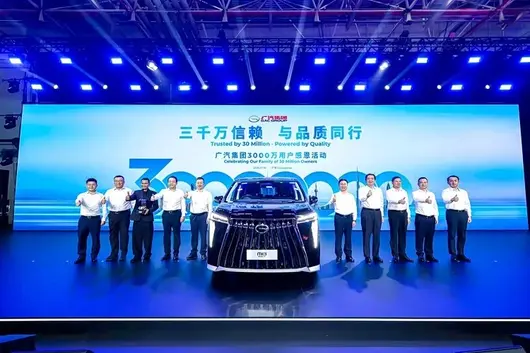
On July 16, engine sounds and applause intertwined inside the GAC Trumpchi plant. When a right-hand drive GAC Trumpchi M8 PHEV slowly rolled off the production line and the spotlight hit the car body, GAC Group officially announced that it had welcomed its 30 millionth user in its development history. This day, leaders from Guangdong Province, Guangzhou City, and Panyu District, Fu Bingfeng, Executive Vice President and Secretary-General of China Association of Automobile Manufacturers, Feng Xingya, Chairman of GAC Group, He Xianqing, General Manager, and other core management personnel, along with global suppliers, dealers, owners from home and abroad, and media representatives were all present to witness this historic snapshot defined as "from scale expansion to value leap".

From GAC's establishment in 1997 to the first whole vehicle rolling off the line, and to today's breakthrough of the 30 million level, GAC took 29 years. If we break down this timeline: from 0 to 10 million vehicles, it took 20 years; from 10 million to 30 million vehicles, it took only 9 years. This acceleration is not just the enterprise's own growth curve, but also a microcosm of the Chinese automobile industry from joint venture introduction, self-owned rise to global breakthrough. But beyond flowers and numbers, through this "30 Million User Gratitude Event", we can see more clearly a veteran automotive group's persistence and shift during the deep reshaping period of the industry.
The Significance of 30 Million: Not a Single Myth, but Matrix Synergy
There was a highly symbolic detail at the event site: GAC's multiple global production bases connected synchronously, GAC Honda P7, GAC Toyota BZ7, Qijing GT7, GAC Aion N60, GAC Hyper S600, respectively rolled off the line as vehicles numbered from 29,999,995 to 29,999,999, subsequently the 30 millionth whole vehicle — right-hand drive Trumpchi M8 PHEV appeared at the center of the stage. The full line of new energy vehicle matrix appeared collectively, which is not common in past milestone celebrations.

This arrangement reveals two signals: Firstly, GAC's 30 million volume does not rely on any "god car" or single sector to pull, but the result of joint ventures (GAC Honda, GAC Toyota), self-owned (Trumpchi, Aion, Hyper), new sequences (Qijing), and new energy transformation parallel lines; Secondly, the 30 millionth vehicle chose a right-hand drive plug-in hybrid MPV and was delivered to Thai owner Tony Jaa (famous movie star "Ong Bak" leading actor), clearly tying together the two main threads of "new energy transformation" and "globalization and going overseas". This is not only for domestic users to see, but also to convey confidence to the global market: GAC's product structure has thoroughly crossed the boundaries of the pure fuel era.

Data supports this shift. In the first half of 2026, GAC Group cumulative sales reached 773,100 vehicles, a year-on-year growth of 2.35%; among them, new energy vehicle sales reached 260,200 vehicles, a significant year-on-year increase of 68.8%, the proportion of energy-saving and new energy vehicle models has been raised to 62.82%; overseas exports also broke through 120,000 vehicles, a year-on-year growth of 132%, simultaneous high growth in five major regions: Americas, Asia-Pacific, Middle East, Africa, and Europe. Against the background of pressure on the industry overall market, new energy and going overseas have become GAC's dual engines to cross the cycle.
"Old-school Stubbornness" on the Quality Bottom Line: Slowing Down in a Fast Era
In the speech, one sentence by Feng Xingya was repeatedly quoted: "Quality is the bottom line GAC will never cede." "Some things can seek speed and newness, some things absolutely cannot seek quantity or strength." Today when intelligentization, price wars, and iteration speed are infinitely amplified, this statement seems somewhat "old-fashioned", but precisely it is the foundation behind the 30 million sales.
GAC's quality philosophy has its historical origins. As one of the earliest car enterprises in China to systematically introduce joint venture experience, GAC absorbed Honda's Total Quality Management (TQM) and Toyota's Lean Production Method (TPS) early on, then integrating Lingnan pragmatist culture, built an "Integration and Innovation" quality management model. This gene has been continued to independent R&D and manufacturing links: before each new car hits the market, it must undergo extreme environment tests such as "high cold, high heat, high altitude, high humidity, high corrosion, mountainous areas, sand and dust" known as "Five Highs, One Mountain, One Dust", complete "Two Winters, One Summer" field road tests; whole vehicle verification covers 12 major items and over 1,500 sub-items; GAC Aion Smart Ecological Factory as the world's first new energy vehicle "Lighthouse Factory", ensuring mass production consistency with digital intelligent manufacturing.

In safety technology, GAC proposed "Safety must be defined by automakers". Xingling Safety Protection System builds four major protection dimensions, eight key systems adopt dual redundancy design, has protected nearly 2 million users, avoided 6.28 million potential travel risks; Magazine Battery cumulative installation of 1.5 million vehicles, safe driving over 160 billion kilometers. Targeting user anxiety, GAC took the lead in the industry to launch the self-owned brand "Three Commitments" policy, actively underwriting for battery and intelligent driving assistance issues. These invisible investments constitute the implicit costs for the 30 million users to "drive with peace of mind".

From Engineer Thinking to User Thinking: The Turn of Organizational Mechanism
"In the past, we always stood from the engineer's perspective to polish technology, today we must completely stand from the user's perspective to examine experience." Feng Xingya summarized the 30 million moment with four words: "Gratitude, Persistence, Sincerity, Co-journey", among which "Sincerity" points directly to the reconstruction of user relationships.
This reconstruction is not a slogan. GAC regularly holds "User All Open Mic" events, inviting users to headquarters to "nitpick" face-to-face, and establish a full-process closed-loop management mechanism, ensuring every suggestion is traceable, common issues fully optimized; organizationally established a dedicated User Insight Department, promoting the full-process transformation from problem discovery to solution. Service network is also sinking: planned to add 1,000 county-level authorized stores this year, currently 600 recognized; online and offline "Super Butler" service, committed to 5-second response, 2-hour request handling; recharging end built "9 Verticals, 10 Horizontals" network, covering 31 provinces, 213 cities, self-operated charging piles over 27,000, in core urban areas a station must be within 1 km straight line. From the frontline where guns can be heard to backend mechanisms, GAC attempts to bring "people-oriented" down to executable details.

Long Slope and Thick Snow: From Commuting Tool to Ecosystem Tech
30 million is a milestone, and also a new starting point. On the electrification and intelligence tracks, GAC presents a systematic technology matrix rather than point breakthroughs:
Power Field: "National Excellent Engineer Team" developed Xingyuan Power covers Xingyuan Range Extender, Xingyuan Plug-in Hybrid, Xingyuan Super Twin three technologies, every product passed 100,000 hours bench and equivalent over 10 million kilometers verification;

Three Electrics Field: Completed all-solid-state battery pilot production line, Quark Electric Drive Motor maximum efficiency broke through 99%, tackling ultra-fast charging and low-range endurance pain points;
Intelligent Connectivity: Super Brain Xingling Architecture 4.0 connects intelligent driving, cockpit, powertrain, chassis, body, and vehicle networking six domains, comprehensive performance improved by 40%; Galaxy Smart Cockpit Terminal-Cloud Integrated, integrating Qianwen Large Model, letting cars evolve from commuting tools to "thinking partners";
Open Ecosystem: Co-building AI Intelligent Ecosystem with Huawei, CATL, Didi, Tencent, Alibaba, etc., cumulative R&D investment over 62 billion yuan, global R&D team over 6,800 people.
The direction of these technology investments is very clear: GAC aims to advance from traditional manufacturing enterprise to "Ecosystem Tech GAC", products will extend from mobile space to green energy ecosystem.
When Feng Xingya handed the 30 millionth vehicle key to Thai owner Tony Jaa, what the lens froze was not just a number, but the crossing-the-sea moment of Made in China from "sold out" to "trusted". 30 million users are a mirror, revealing GAC's 29 years of persistence and transformation, also revealing the exam question of the next stage: in the future of global competition, tech iteration, and user needs fragmentation, how to use the same quality determination and user sincerity to run the next 30 million well?
The answer might be written in the "GAC Group 30 Million Vehicle Rollout · Renewal Gratitude Season" launched that day — six major brands simultaneously launched new purchase, trade-in, and additional purchase feedback policies, responding to companionship with tangible benefits. But a longer-term answer than short-term feedback is hidden in those extreme environment test mileages, in Xingling Architecture's redundancy design, in county store signboards, and in every suggestion seriously handled after every "User All Open Mic".

30 million is not the end, but the next starting line of "mutual journey" between GAC and global users.

喺馬來西亞嘅轎車市場,好多買家喺揀車嘅時候都會拿 Proton S70 同 Honda Civic 嚟做比較。這兩款車喺價位同定位上都幾近嚟,今日我哋就從多個方面做一個詳細嘅比較,幫你省下做功課嘅時間。
Proton S70 喺馬來西亞嘅 OTR 售價係 RM 73,800 - 94,800,一共有 5 個版本,包括 2026 1.5T Flagship X(RM 94,800)、2026 1.5T Flagship(RM 89,800)、2026 1.5T Premium(RM 79,800) 等。
Honda Civic 喺馬來西亞嘅 OTR 售價係 RM 133,900 - 167,900,一共有 5 個版本,包括 2025 e:HEV 2.0L RS(RM 167,900)、2025 1.5T RS(RM 149,900)、2025 1.5T V(RM 144,900) 等。
從價錢睇,Proton S70 嘅起步價確實比 Honda Civic 平咗 RM 60,100。如果你預算有限,Proton 嘅入門版已經可以滿足日常需要。不過都要留意,平嗰幾千蚊,可能喺配備上會有取捨,具體要睇你嘅需要。

Proton S70 車身長 4400 mm,後尾箱 400 L。
Honda Civic 車身長 4450 mm,後尾箱 470 L。
空間方面,Honda Civic 嘅車身比 Proton S70 長咗 50 mm,乘坐空間更有優勢。不過 Proton S70 喺城市入面泊車會靈活啲,各有取捨。

Proton S70 採用 FWD 驅動方式。
Honda Civic 採用 FWD 驅動方式。
兩款車嘅驅動方式一樣,都係 FWD,日常駕駛感受唔會有太大分別。

Proton S70 同 Honda Civic 都係馬來西亞市場嘅主流選擇,適合家庭使用、日常通勤。如果你更重視品牌口碑同二手價,可以優先考慮口碑更好嗰一款;如果你更在意性價比同配備,那就揀配置更豐富嗰款。最終係建議兩款都去試駕,親身體驗先係最重要。

總而言之,Proton S70 同 Honda Civic 都係馬來西亞市場幾唔錯嘅車型。選擇邊一辆,關鍵仲要睇你嘅個人需要同預算。建議大家做好功課,多比較幾間車行嘅報價,再去試駕做最終決定。買車係件大事,花少少時間做功課絕對唔會錯。


比亞迪正式發布 2026 年 5 月產銷快報,全品牌新能源汽車單月銷量 383453 輛,同比微增 0.26%,時隔十個月實現單月銷量同比轉正;其中乘用車交付 376990 輛,環比大漲 19.4%,一掃前期車型換代陣痛,呈現國內基本盤穩固、海外銷量狂飆、高端品牌全線放量的全新格局,在國內新能源內捲加劇、特斯拉 FSD 入華、自主新品密集上市的市場環境中,走出獨有的結構性增長路線。

王朝 + 海洋兩大主力品牌 5 月合計售出 330215 輛,佔據集團總銷量超八成,仍是比亞迪銷量壓艙石,全系列共 8 款車型單月銷量突破 2 萬台,產品從 5 萬入門代步到 20 萬家用 SUV 實現全覆蓋。

王朝網內部,元家族 56691 輛、宋家族 51370 輛。雙雙跨過五萬門檻,成為品牌兩大銷量支柱,兼顧家用代步與城鄉出行需求;秦家族緊隨其後交出 28360 台穩定表現,漢、唐系列月銷維持六千級體量,深耕中大型家用轎車、SUV 細分市場;全新車型夏處於市場培育期,單月交付 1810 台,後續隨渠道鋪開有望穩步上量。
海洋網增長勢頭更為迅猛,全系五款車型跨入兩萬俱樂部:海獅 42615 台、海豹 34117 台、海鷗 39919 台、海豚 22260 台、宋 PLUS 27755 台。其中海鷗憑藉 6-8 萬親民定價穩居入門代步銷冠,海獅作為全新走量車型上市即站穩四萬量級,補齊海洋網中型 SUV 產品空白,完善海洋產品梯隊佈局。從代步小車到緊湊 SUV,兩大主品牌依托 DM-i 混動與純電雙線技術,牢牢鎖住 15 萬以內國內主流家用市場份額。
方程豹同比暴漲 139.7% 品牌向上落地見效騰勢、方程豹、仰望組成的高端矩陣 5 月合計銷售 46489 輛,正式擺脫小眾定位,成為比亞迪品牌溢價與利潤增長新支點,打破自主品牌高端化難破局的行業魔咒。

越野品牌方程豹單月 30186 輛,同比暴漲 139.7%,創下品牌上市以來月度銷量新高,旗下鎦 7 單月 18280 台,豹 5、豹 8 穩定輸出,在 25-40 萬硬派越野細分市場持續擠壓合資、進口車型生存空間。

騰勢 5 月交付 16303 台,MPV 標桿 D9 售出 6721 台,Z9 系列近 6000 台,MPV、中大型轎車雙線發力,站穩豪華新能源賽道;百萬元級超豪華品牌仰望穩步爬坡,當月交付 286 台,同比增幅 105.8%,完成自主品牌天花板產品的市場驗證,形成從十幾萬家用、三四十萬越野、五十萬豪華 MPV 到百萬元級旗艦的全價格帶產品佈局。

5 月比亞迪乘用車和皮卡海外銷量 160177 輛,同比大漲 80.7%,出口佔全系總銷量突破 42%,創下品牌出海歷史新高,成為穩住 5 月整體銷量、實現同比轉正的核心驅動力。
東南亞、歐洲、拉美成為主力增量市場,海鷗、宋 PLUS、元系列持續登頂多國新能源熱銷榜單,SHARK 皮卡連續兩月單月出口突破 4000 台;依托泰國、巴西、匈牙利、烏茲別克斯坦四大海外整車工廠落地投產,本地化生產持續落地,規避關稅同時快速下沉終端渠道。在國內車市存量競爭、價格戰常態化背景下,高速擴容的海外市場有效對沖國內車型換代帶來的銷量波動,正式從補充市場升級為比亞迪核心增長引擎。截至當前,比亞迪新能源汽車全球累計銷量已經突破 1650 萬輛,全球化版圖持續拓寬。
智駕賦能產品迭代 下半年新品蓄力衝量5 月比亞迪智能化落地迎來關鍵節點,天神之眼智駕系統成為車型核心加分項:全品牌搭載高級智駕車型保有量突破 315 萬輛,日均路測數據超 2 億公里;當月比亞迪落地城市領航、智能泊車雙安全兜底服務,成為全球首家實現兩項智駕兜底的車企,政策落地三天後,搭載天神之眼系統車型的城市 NOA 激活率暴漲 50%,智能化體驗升級直接拉動終端到店訂單轉化,為後續車型持續走量築牢產品競爭力,直面 FSD 入華帶來的智駕市場衝擊。
從數據細節來看,2026 年 1-5 月比亞迪累計銷量 1405039 輛,同比下滑 20.32%,核心誘因是全系主力車型集中換代、第二代閃充刀片電池產能爬坡受限。新款閃充電池升級快充與低溫性能,全系換代車型優先換裝新電池,但產線改造拖累產能釋放,熱門車型訂單積壓、交付延後,一定程度壓縮 5 月交付體量。
隨著二季度末二代刀片電池產能持續釋放,疊加騰勢 N8L、方程豹鎦 7 純電版、海獅 05、夏 L 等多款新車陸續登陸市場,業內普遍預判比亞迪 6 月全品牌銷量有望突破 40 萬輛。依托低端走量鎖份額、高端提利潤、海外衝增量、智能化提產品力的四維發展邏輯,在國內新能源淘汰賽加劇的當下,比亞迪全品類佈局優勢持續放大,坐穩國內新能源龍頭,加速向著全球頭部車企穩步邁進。